# 1 position
Most Affordable Pharmacy Technician Schools & Training in Nebraska for 2027
Audited and Verified:
Our Editorial and Data Verification Process
Research.com uses government datasets, official education statistics and primary institutional information to support its career and degree guides. Our review process checks factual accuracy, occupational definitions, source dates and the requirements associated with the credentials discussed.
How This Article Was Fact-Checked
Our editorial team verifies salary estimates, employment projections, education requirements and program information against original data providers and official organizations. Salary figures are checked against the relevant occupational definitions and reporting periods. Information about licensure, accreditation and required in-person training is reviewed separately.
Fact-checked and verified on:

Co-Founder and Chief Data Scientist

Reviewed by Karolina Broda
Fact-Checker and Data Verification
The cheapest pharmacy technician program is not necessarily the least expensive route to a job: fees, travel, practical training, and time away from work all matter. The Research.com team of data scientists created a Most Affordable Pharmacy Technician Trade Schools in Nebraska for 2027 ranking to help students make an informed choice about programs worth considering. With U.S. pharmacy technician employment projected to grow 6.4% from 2025 to 2035, according to the U.S. Bureau of Labor Statistics, this guide helps you compare costs, credentials, training formats, and Nebraska's entry requirements.
Key findings about pharmacy technician degrees in Nebraska
- There is no reliable single statewide price for a 2027 pharmacy technician program: compare each provider's full job-ready cost, including fees, practical training, exams, and travel, not tuition alone.
- U.S. pharmacy technicians had a $45,750 median annual wage in May 2025, according to the U.S. Bureau of Labor Statistics. That national figure is not an entry-level pay estimate or a Nebraska wage quote.
- Before paying for training, verify how its coursework and hands-on experience fit Nebraska Department of Health and Human Services requirements and any certification an intended employer expects.
Table of Contents
- Most Affordable Pharmacy Technician Schools & Training in Nebraska for 2027
- What can I expect from a pharmacy technician trade school program in Nebraska?
- Where can I work with a pharmacy technician trade school training in Nebraska?
What can I expect from a pharmacy technician trade school program in Nebraska?
Expect training for work under a pharmacist's supervision: processing prescriptions, measuring and packaging medications, maintaining inventory, handling records, and communicating accurately with patients and pharmacy staff. A pharmacy technician program may award a certificate or diploma; some college pathways award an associate degree. The credential's name alone does not show how much supervised practice it includes. The U.S. Bureau of Labor Statistics describes these duties as central to the occupation.
Classroom or online instruction should be paired with a clear plan for practicing dispensing workflows, calculations, and safety procedures. A supervised placement can be especially valuable if you have never worked in a pharmacy, but ask who arranges it and whether travel is required. If you already have an employer willing to train you, compare its paid pathway with a school program before paying tuition.
Where can I work with a pharmacy technician trade school training in Nebraska?
Retail and grocery pharmacies, hospitals, and other healthcare settings employ pharmacy technicians, according to the U.S. Bureau of Labor Statistics. The setting changes the training you should prioritize: retail work emphasizes prescription intake and customer interaction, while hospital roles may involve medication distribution and preparation under closer institutional protocols.
Location matters when comparing programs. A placement or job near Omaha or Lincoln may involve a different commute and employer mix from one in a smaller Nebraska community. Ask a provider which employers host its practical training and whether those placements are reachable from where you live; a low-priced program can become costly if required shifts demand frequent long-distance travel.
The U.S. Bureau of Labor Statistics reports a $45,750 national median annual wage for pharmacy technicians in May 2025. This is the midpoint for employed technicians nationwide, not a Nebraska starting salary or a forecast of what a program graduate will earn. Pay can differ by setting, experience, schedule, and location.
For a useful local comparison, ask prospective employers about their starting hourly range, paid training, benefits, and shift differentials. Compare those offers with your current earnings and the time you would spend training. National median pay alone cannot establish whether a particular Nebraska program will pay off.
Completion time depends on the credential, course schedule, and practical component. A focused certificate can take less time than an associate-degree pathway, while part-time attendance or waiting for a placement can extend either route. Nebraska students should request the provider's actual calendar - not just its advertised classroom duration - and ask when they could meet the applicable requirements for work.
Do not assume there is one universal Nebraska school-hour requirement for every training route. Ask for the program's classroom, lab, and supervised-work hours in writing, and check those details against Nebraska Department of Health and Human Services rules and the eligibility criteria of any certification you intend to pursue. If speed is your main priority, compare a short credential with employer training rather than assuming that quick degree programs that pay well describe this particular occupation's entry route.
Online coursework can make terminology, calculations, law, and recordkeeping easier to study around a work schedule. Campus or employer-site training gives students a place to practice medication-handling workflows and receive immediate feedback. A hybrid program combines those formats; its value depends on how reliably it delivers the in-person component.
"Online" does not mean "no travel." Ask where labs or supervised experience take place, who secures a site, and whether a site is available near your Nebraska address. That question matters especially outside major population centers. Even if you are comparing a top online associate degree in 6 months, do not infer from the format or timeline that pharmacy-specific practical or credential requirements have been met.
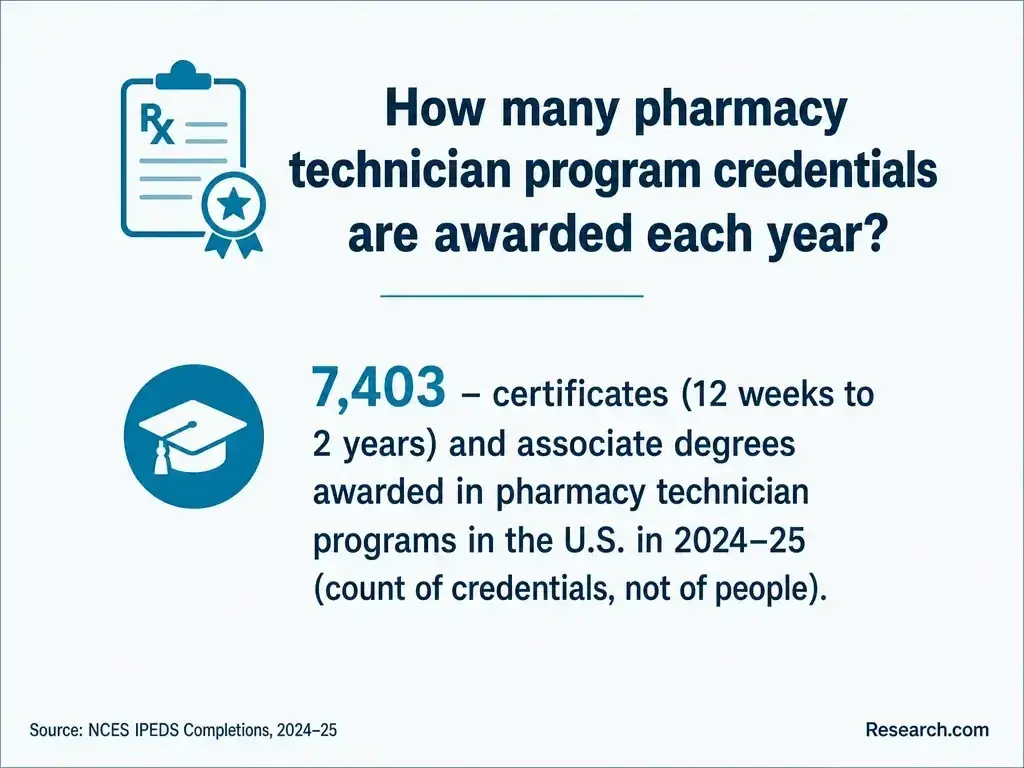
A defensible statewide average for the full cost of a 2027 pharmacy technician program is not available here. Published tuition may omit required fees, books or software, immunizations or background checks where required by a placement site, certification examinations, state application charges, and travel. Request a current itemized quote from each provider, including any resident-tuition conditions and charges that could change before enrollment.
Compare net job-ready cost, not sticker price: subtract grants or employer-paid training from required expenses, then account for wages you may forgo while studying. Federal aid depends on the student's and program's eligibility; confirm both with the provider and Federal Student Aid. A paid employer route may cost less out of pocket, while a school route may offer a more structured curriculum. Neither is automatically the better investment.
The school credential may be a certificate, diploma, or, for an applicable college program, an associate degree. These are educational awards - not the same thing as state authorization to work or a professional certification. Ask exactly what appears on the completion document and whether the curriculum prepares students for the Pharmacy Technician Certification Board's PTCE or the National Healthcareer Association's ExCPT, if that is your goal.
Certification is awarded by a certifying organization after its requirements are met; a school cannot award it simply by issuing a completion certificate. Likewise, institutional accreditation concerns the school, while programmatic accreditation or recognition concerns a particular program. Check each separately rather than treating one label as proof of employment eligibility.
Providers set their own admissions rules, which may address prior schooling, basic math, age, and readiness for a practical placement. A placement site may impose additional screening or health requirements. Ask for the requirements of both the school and the placement site before enrolling, particularly if a delayed placement would prevent you from finishing on schedule.
Admission is also distinct from permission to perform pharmacy technician duties in Nebraska. Before committing, compare the school's stated entry prerequisites with current Nebraska Department of Health and Human Services requirements and ask the provider to explain any gap. If you are entering through an employer instead, ask when you may begin training and which duties you may perform at each stage.
A useful curriculum connects pharmacy calculations, drug names and forms, prescription processing, inventory control, patient privacy, and error prevention to realistic dispensing tasks. Practical instruction should show how students apply those skills under a pharmacist's supervision, not merely test whether they can recall terms. The U.S. Bureau of Labor Statistics identifies accuracy and attention to detail as especially important in this work.
Ask to see the course outline and the skills assessed during labs or placements. For students who prefer focused, detail-oriented tasks, pharmacy work may be worth exploring alongside other career ideas for introverts; however, technicians still communicate with patients and coworkers, particularly in retail settings.
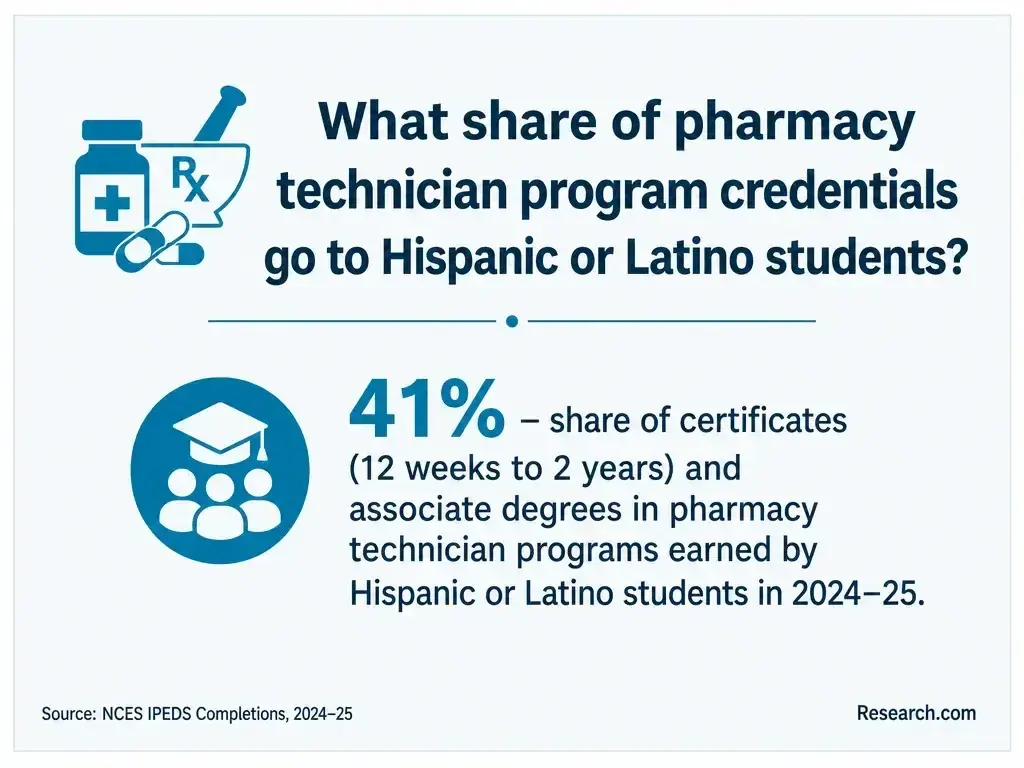
Nebraska pharmacy technician work is subject to Nebraska Department of Health and Human Services requirements. Before accepting a job or enrolling, check the department's current rules for the credential or registration applicable to your intended duties, its timing, and any education or examination conditions. Do not assume that finishing a school program automatically supplies state authorization.
National professional certification is a separate question. The Pharmacy Technician Certification Board and National Healthcareer Association set their own examination eligibility rules; employers may also state a certification preference or requirement for a particular role. Ask a prospective employer which credential it expects, then verify that your chosen training route supports it.
Start with the job you want, then compare programs on entry eligibility, practical experience, total cost, and your ability to complete the schedule. An affordability ranking is a useful shortlist, but its score does not evaluate instructional quality. For example, compare an available program at Southeast Community College Area or Central Community College with employer training only after confirming each option's current offerings and requirements.
Use these questions to uncover differences that a tuition figure or similarly named credential can hide:
- What credential will I receive, and what classroom, lab, and supervised-work experience will I complete?
- How does the program support the Nebraska requirements and certification eligibility relevant to my intended job?
- Who arranges practical training, where is it located, and what happens if a placement is delayed?
- What is the full required cost after aid, and what share of students complete the program?
Request written answers and a current cost sheet. Red flags include promises of guaranteed employment, unclear placement arrangements, and claims that school accreditation alone qualifies you to work. To assess value, consider completion probability, aid, debt, foregone earnings, and realistic starting pay - not institution type or tuition alone.
Training can support entry into retail or institutional pharmacy work, followed by more specialized duties as experience and employer requirements permit. Experienced technicians may seek roles involving inventory, medication distribution, training, or supervision. Additional certification can help with some opportunities, but it should be evaluated against a specific employer's requirements rather than purchased on the assumption that it guarantees promotion.
For someone changing careers, this is a practical-skills route into healthcare rather than an academic progression to unrelated programs such as what are the easiest masters degrees. If your long-term goal is pharmacy technician work, ask employers which experience they value for advancement before paying for additional training.
The U.S. Bureau of Labor Statistics projects 6.4% growth in pharmacy technician employment nationwide from 2025 to 2035. This indicates a growing national occupation, not a Nebraska-specific forecast or a guarantee of openings where you live. Local opportunities depend on employers, vacancies, and your willingness to commute or work particular shifts.
Before choosing a training site, review current Nebraska postings for the setting you want and note their certification, experience, and scheduling expectations. That is more useful for an immediate decision than applying a national growth figure to one community. A search for phd online no dissertation addresses a fundamentally different education decision; for this trade, practical readiness and eligibility for local jobs should drive the investment.
Most Affordable Pharmacy Technician Schools & Training in Nebraska for 2027
Investing in occupational training is an important decision. Research.com created the ranking to help readers compare pharmacy technician programs with other programs in the same occupation and location, rather than with unrelated schools. The team uses multiple education and industry sources to check the quality and credibility of its information; only programs reporting completions to IPEDS qualify for inclusion.
Most affordable rankings evaluate tuition, cost of attendance, median student debt, and federal loan default rates. Indicator weights are assigned using an entropy-based method. Accreditation, student support, and other quality measures do not contribute to the affordability score. By contrast, Research.com's separate best-program rankings consider outcomes, earnings, costs, accreditation or industry recognition, and support services. Readers should therefore treat this ranking as a cost comparison, not as proof of certification eligibility or instructional quality.
The ranking draws on the following data sources. Some cover education broadly, while others provide occupation-specific context; inclusion as a source does not mean every source supplies a pharmacy technician measure.
- IPEDS database - program completions and institutional education data.
- National Center for Education Statistics - federal education data and definitions.
- College Scorecard database - available cost, debt, and outcomes information.
- Peterson's database - institutional and program information.
- Commission on Accreditation of Allied Health Education Programs (CAAHEP) - health-program accreditation context.
- Accrediting Bureau of Health Education Schools (ABHES) - health-school and program accreditation context.
- Commission on Dental Accreditation (CODA) - allied-trade accreditation reference data.
- Dental Assisting National Board (DANB) - allied-trade credential reference data.
- National Center for Construction Education and Research (NCCER) - trade-credential reference data.
- Apprenticeship.gov Partner Finder - work-based training-provider context.
IPEDS-based coverage excludes providers that do not report completions to that database; it does not establish that an omitted employer training program or other provider is unavailable or inferior. Use the ranking to narrow your cost search, then confirm current charges and Nebraska job-entry requirements directly. More detail about Research.com's approach appears on its methodology page.
# 2 position
Central Community College - Pharmacy Technician/Assistant.
associate# 3 position
Central Community College - Pharmacy Technician/Assistant.
certificate or diplomaFrequently asked questions about pharmacy technician programs in Nebraska
Is the cheapest pharmacy technician program the best value?
Not necessarily. Compare mandatory charges, travel, placement access, completion prospects, and whether the training supports the job and credentials you want. A lower tuition price can cost more overall if it delays entry to work.
Can I become a pharmacy technician without attending trade school?
Employer-supported training may be an alternative. Check Nebraska Department of Health and Human Services requirements for the duties you would perform, and ask the employer how its training prepares you for any expected certification.
Can I complete pharmacy technician training entirely online?
Some coursework may be online, but practical skills or a supervised placement may require in-person participation. Confirm the program's arrangements and the requirements of the credential and employer you are targeting.
Does a program certificate make me nationally certified?
No. A school certificate documents completion of that program. National certification has separate eligibility and examination requirements set by the certifying organization.
How should I compare a school program with paid employer training?
Compare net costs and lost earnings, the structure and location of hands-on training, time to job readiness, and support for the credentials your intended employer requires. Obtain the terms of either route in writing.
- U.S. Bureau of Labor Statistics - Pharmacy Technicians
Used to verify salary, employment outlook, and typical education requirements.
https://www.bls.gov/ooh/healthcare/pharmacy-technicians.htm - NCES College Navigator (IPEDS)
Used to verify programs offered and institutional accreditation.
https://nces.ed.gov/collegenavigator/ - NHA - ExCPT Pharmacy Technician
Professional certification reference for graduates of this occupation.
https://www.nhanow.com/certifications/pharmacy-technician - Southeast Community College Area - official website
Official school website (programs, tuition, admissions).
https://www.southeast.edu/ - Central Community College - official website
Official school website (programs, tuition, admissions).
https://www.cccneb.edu/