# 1 position
Best Dental Assistant Training Programs & Trade Schools in Brainerd for 2027
Audited and Verified:
Our Editorial and Data Verification Process
Research.com uses government datasets, official education statistics and primary institutional information to support its career and degree guides. Our review process checks factual accuracy, occupational definitions, source dates and the requirements associated with the credentials discussed.
How This Article Was Fact-Checked
Our editorial team verifies salary estimates, employment projections, education requirements and program information against original data providers and official organizations. Salary figures are checked against the relevant occupational definitions and reporting periods. Information about licensure, accreditation and required in-person training is reviewed separately.
Fact-checked and verified on:

Co-Founder and Chief Data Scientist

Reviewed by Karolina Broda
Fact-Checker and Data Verification
Choosing dental assistant training in Brainerd means looking beyond a program's name: will its clinical practice and credential qualify you for the work you want to do in Minnesota? The U.S. Bureau of Labor Statistics projects 7.4% national employment growth for dental assistants from 2025 to 2035. This guide explains local training options, costs, registration rules, and career prospects. It also accompanies the Best Dental Assistant Trade Schools in Brainerd for 2027 ranking, created by the Research.com team of data scientists to help students identify programs worth considering.
Key findings about dental assistant degrees in Brainerd
- Check registration eligibility first: In Minnesota, entry-level unlicensed assisting and registered dental assisting are different pathways; a program's title alone does not establish eligibility for registration (Minnesota Board of Dentistry).
- Compare practical training, not just delivery format: Chairside skills and clinical experience require in-person practice, making access to a workable Brainerd-area placement decisive.
- Use pay data as context, not a promise: The national median for dental assistants was $48,070 in May 2025; that figure is neither a Brainerd wage nor an expected starting offer (U.S. Bureau of Labor Statistics).
Table of Contents
- Best Dental Assistant Training Programs & Trade Schools in Brainerd for 2027
- What can I expect from a dental assistant trade school program in Brainerd?
- Where can I work with a dental assistant trade school training in Brainerd?
What can I expect from a dental assistant trade school program in Brainerd?
Expect a pathway into chairside patient care, not simply classroom instruction. Dental assistants prepare treatment areas, support dentists during procedures, handle instruments, explain post-treatment instructions, and maintain records; permitted duties depend on training and Minnesota rules (U.S. Bureau of Labor Statistics; Minnesota Board of Dentistry).
Central Lakes College-Brainerd is the named local school to investigate. Ask which dental-assisting credentials it currently awards, where each program's labs and clinical placements occur, and whether your intended credential meets the Minnesota Board of Dentistry's current registered dental assistant requirements. A shorter training route may fit someone seeking an entry-level, unlicensed position; someone aiming for registered duties should establish eligibility before enrolling. Dental assisting is not generally organized around a journeyman-style apprenticeship. Supervised employment can be an alternative entry route for basic duties, but it does not automatically replace education, examinations, or registration requirements.
Where can I work with a dental assistant trade school training in Brainerd?
Most dental assistants work in dentists' offices, with other positions in physician offices and government settings nationally (U.S. Bureau of Labor Statistics). For a Brainerd job search, compare general dental practices with specialty offices and ask whether they hire unlicensed assistants, registered assistants, or both. That distinction affects which training investment makes sense.
A clinical placement can also reveal whether a practice's hours, patient mix, and supervision fit you. Because Brainerd offers a smaller commuting area than a major metropolitan market, confirm both placement distance and realistic post-training commuting options before committing to a schedule or transportation expense.
The national median annual wage for dental assistants was $48,070 in May 2025 (U.S. Bureau of Labor Statistics, Occupational Outlook Handbook). This is the midpoint for employed assistants nationwide, across experience levels - not a Brainerd-specific rate or a graduate's starting salary. Ask local employers about posted hourly pay, benefits, and whether registered duties affect their pay scale before estimating your return on training.
For context, lists of top paying trade school jobs cover occupations with different training and licensing requirements. Compare those alternatives only if you would actually consider their work and total preparation time; a higher occupational median alone does not make a different path a better investment.
Duration depends on the credential, enrollment pace, and clinical schedule. A short entry-level course, a diploma or certificate program, and an associate-degree program should not be treated as interchangeable: each can involve different coursework, supervised practice, and eligibility for Minnesota registration. Ask Central Lakes College-Brainerd for the current catalog's credits or contact hours, lab hours, clinical requirements, start dates, and expected completion time for your chosen route.
Guides to 6-month certificate programs that pay well can help frame the time-versus-cost question, but a short completion timeline is not proof of dental-assisting registration eligibility. If you need to keep working, compare part-time availability and the hours when clinical placements actually operate - not just the advertised length.
Online coursework can make subjects such as terminology, records, and infection-control theory easier to schedule. It cannot, by itself, demonstrate chairside instrument transfer, sterilization practice, radiography technique, or supervised patient care. An on-campus or hybrid route is useful when its labs and clinical sites are accessible; an online-heavy route only works if it also arranges the required in-person training and meets your intended credential's rules.
Flexible-study searches, including college courses for older adults online, address a different question from clinical readiness. Before paying for remote dental-assisting instruction, obtain written answers identifying who arranges the placement, where it occurs, who supervises it, and whether the Minnesota Board of Dentistry accepts the resulting education for your intended role.
A reliable Brainerd-wide average is not available from the program information discussed here, and a tuition quote would understate what many students need to spend. Request a written, credential-specific estimate from Central Lakes College-Brainerd. Include mandatory fees, books and supplies, uniforms and protective equipment, required screening or immunizations, examination and application charges, and travel to labs and clinical sites. Add earnings you may forgo if the schedule reduces your paid work.
Then subtract aid you actually qualify for - not aid merely advertised. Ask the school whether the specific credential is eligible for federal student aid, Minnesota assistance, scholarships, or workforce funding, and compare that net cost with an employer-trained entry route. Federal aid eligibility is program-specific (Federal Student Aid). A lower-priced course is not cheaper overall if it requires further training to reach your intended job.
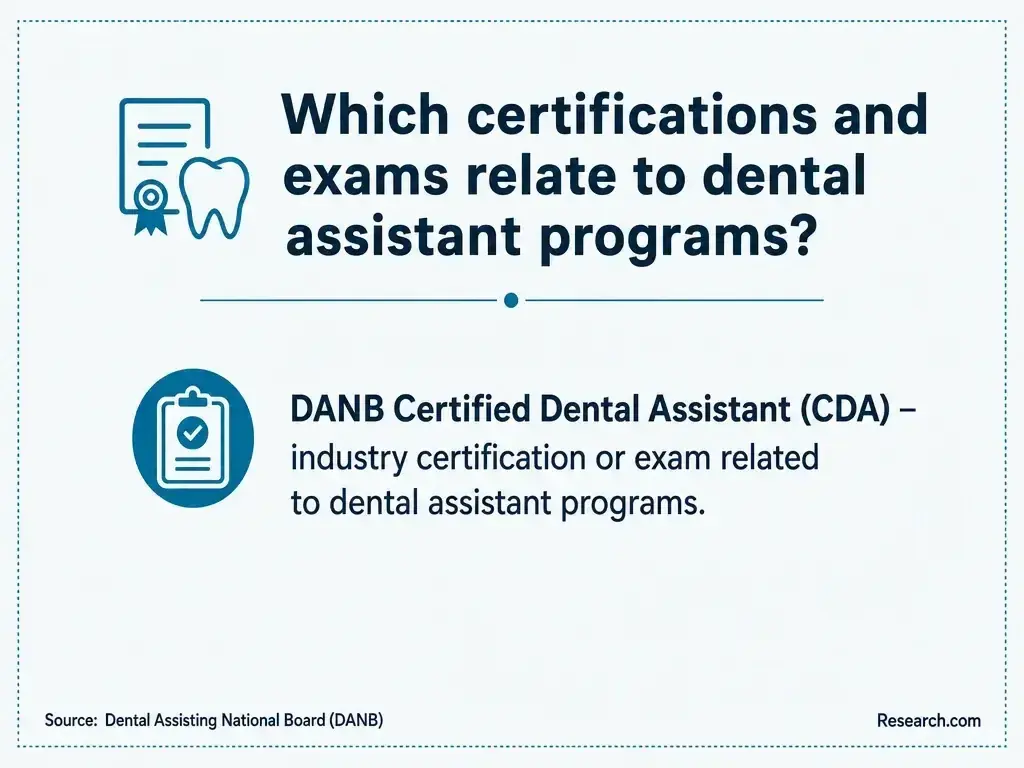
The school credential may be a certificate, diploma, or, for a program that awards one, an associate degree. These document completed education. They are distinct from Dental Assisting National Board certification and from Minnesota registered dental assistant status, which have separate requirements (Dental Assisting National Board; Minnesota Board of Dentistry).
Ask for the exact credential name and its current curriculum, then verify whether that specific program - not merely the institution - has Commission on Dental Accreditation recognition if your registration route requires it. Institutional accreditation, programmatic accreditation, state authorization, professional certification, and occupational registration answer different questions. None should be treated as a substitute for checking the board's full eligibility rules.
Start with the current Central Lakes College-Brainerd admissions and dental-assisting program requirements rather than assuming general college admission guarantees a clinical seat. Confirm any prerequisite coursework, application deadline, health documentation, immunizations, background-check conditions, and clinical-site requirements before setting a start date. These conditions can differ between credentials and placements.
If you already have healthcare coursework or dental-office experience, ask whether it earns transfer or prior-learning credit and whether clinical competencies still must be completed in person. For direct employer training, ask which duties you may perform while unlicensed and what supervision the practice provides; an employer's willingness to train does not establish eligibility for registered duties (Minnesota Board of Dentistry).
Dental-assisting training typically combines oral anatomy, infection prevention, instruments and materials, patient communication, records, and chairside procedures with supervised practice (U.S. Bureau of Labor Statistics). Radiography and any expanded duties deserve special scrutiny because Minnesota regulates who may perform particular functions (Minnesota Board of Dentistry).
Compare programs by what students actually practice and how competence is assessed. Ask to see the current lab and clinical requirements, the procedures students perform under supervision, and whether local clinical sites provide enough exposure to the work you want. Two similarly named credentials may prepare students for materially different duties.
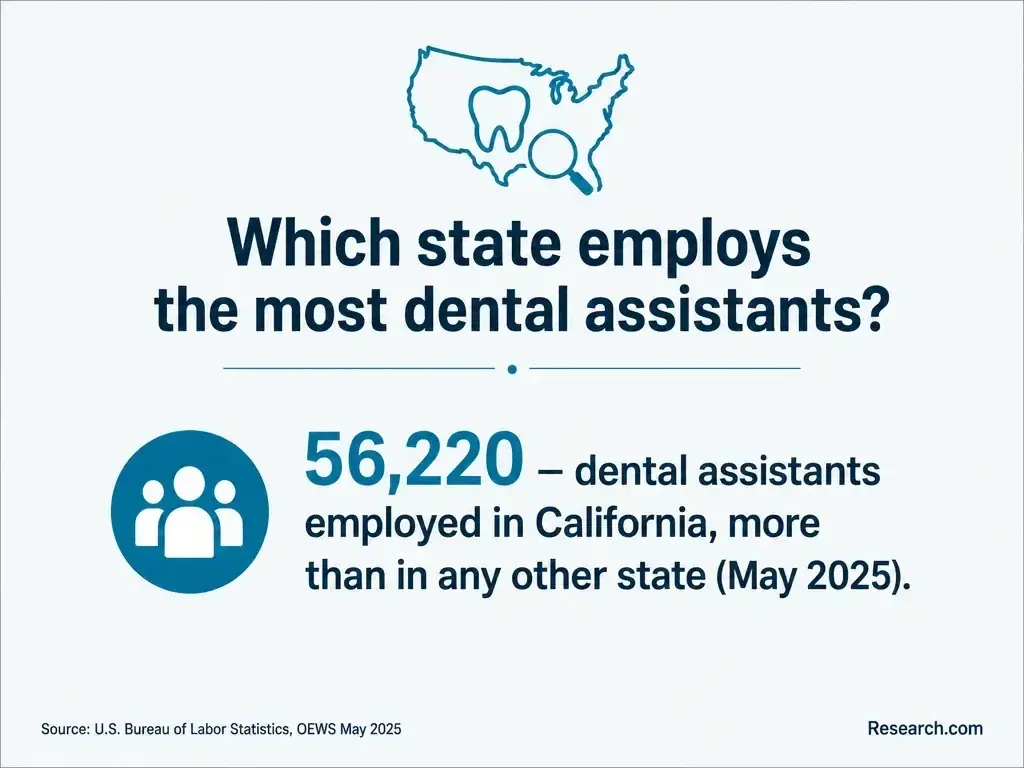
Not for every dental-assisting role. Minnesota distinguishes unlicensed dental assistants, who may perform permitted supportive duties under applicable supervision, from registered dental assistants, whose scope and entry requirements differ (Minnesota Board of Dentistry). Do not assume that graduating - or holding a national certification - automatically grants Minnesota registration.
If registered dental assisting is your goal, check the board's current education-route rules, accepted examinations, jurisprudence requirements, application process, and any duty-specific training before enrolling. Confirm your precise program's eligibility with the board and ask the school which requirements graduates must still complete. The Dental Assisting National Board administers national credentials; Minnesota determines the conditions for practice in Minnesota (Dental Assisting National Board; Minnesota Board of Dentistry).
Choose the least costly complete route to your intended role, not simply the shortest course or highest-ranked school. Begin with the duties you want to perform, then compare the credential, Minnesota eligibility, hands-on preparation, and net cost. A ranking helps identify options, but it cannot tell you whether a clinical schedule fits your life.
Use these questions when speaking with admissions and program staff; request answers for the specific credential and catalog year you would enter.
- Does this exact program satisfy the Minnesota Board of Dentistry education route for the duties or registration I want, and how can I verify that independently?
- Where are the labs and clinical placements, who arranges them, and what happens if a placement is delayed?
- What is the full cost through job entry, including examinations, application fees, supplies, and travel, after aid I am eligible to receive?
- What are the program's recent completion and placement measures, how are they defined, and how many students do they cover?
Do not mistake an unrelated advanced-study shortcut - such as the quickest way to get a master's degree - for an answer to this occupational-entry decision. For dental assisting, verified practical training and Minnesota eligibility matter more than a credential's apparent speed.
A realistic first decision is between seeking permitted entry-level duties through supervised employer training and preparing for registered dental assistant responsibilities through an eligible program and the required registration steps. With experience, an assistant may pursue specialty-practice work, office coordination, or additional duty-specific training where permitted. These are possibilities, not automatic promotions or guaranteed pay increases (U.S. Bureau of Labor Statistics; Minnesota Board of Dentistry).
Keep the training pathway tied to the job. Searches for short PhD programs do not clarify which dental-assisting duties Minnesota permits or what a Brainerd employer needs. Ask prospective employers which responsibilities they assign to unlicensed and registered assistants, then invest in the credential that matches the work you want.
The U.S. Bureau of Labor Statistics projects 7.4% growth in dental assistant employment nationally from 2025 to 2035. That supports considering the occupation, but it does not measure openings in Brainerd or guarantee a local position. For a smaller labor market, the practical question is how many reachable practices seek assistants with your intended scope of duties.
Check current postings across a commute you would accept and note whether they ask for Minnesota registration, radiography-related qualifications, experience, or particular working hours. Recheck near graduation: national projections describe a long-term occupation trend, while a local hiring decision depends on vacancies at the time you apply.
Best Dental Assistant Training Programs & Trade Schools in Brainerd for 2027
Education is a significant investment, so the Research.com team designed the accompanying ranking to compare dental-assisting programs with other programs in the same occupation and location. The team checks multiple education and occupational sources to improve the ranking's quality, credibility, and accuracy. Only programs reporting completions to IPEDS are eligible; an omitted employer-training route or other provider should not be assumed to be unsuitable.
Best-program scores cover student outcomes; earnings and return on investment; costs and debt; and quality and recognition. Occupation-relevant programmatic accreditation or industry recognition receives 20% of the score, institutional accreditation 10%, and student support services 10%. The remaining 60% covers completion and full- and part-time retention, earnings one year after completion relative to annual attendance cost, tuition, attendance cost, median debt - including for students who withdrew - and federal loan default rates. An entropy-based method assigns more weight to indicators that differ more across programs. Most-affordable-program rankings instead score only tuition, attendance cost, median debt, and federal loan default rate, using entropy-based weights; accreditation and other quality measures are not part of that score.
The ranking draws on the following sources. They serve different purposes: for example, a general accreditation or apprenticeship reference is not evidence that a particular dental-assisting program has that recognition or offers an apprenticeship.
- IPEDS database - reported program completions and institutional education data.
- National Center for Education Statistics - federal education data and definitions.
- College Scorecard database - available institutional cost, debt, and earnings measures.
- Peterson's database - supplemental institutional and program information.
- Commission on Accreditation of Allied Health Education Programs - allied-health accreditation reference.
- Accrediting Bureau of Health Education Schools - health-education accreditation reference.
- Commission on Dental Accreditation - dental-assisting program accreditation reference.
- Dental Assisting National Board - dental-assisting certification reference.
- National Center for Construction Education and Research - cross-occupation industry-recognition reference, not dental accreditation.
- Apprenticeship.gov Partner Finder - registered-apprenticeship reference; inclusion does not establish a local dental-assisting apprenticeship.
Use the ranking to narrow your search, then confirm each program's current clinical placements, full price, and Minnesota registration eligibility directly. More detail on the scoring approach appears in Research.com's methodology.
# 2 position
Central Lakes College-Brainerd - Dental Assisting/Assistant.
certificate or diplomaFrequently asked questions about dental assistant programs in Brainerd
Can I become a dental assistant without trade school?
Some Minnesota dental offices may train people for permitted unlicensed duties under required supervision. If you want registered duties, verify the Minnesota Board of Dentistry's education and examination routes before choosing employer training instead of a program.
Is a dental-assisting certificate the same as Minnesota registration?
No. A school certificate records completed training; Minnesota registration requires meeting the board's separate requirements (Minnesota Board of Dentistry).
Can I complete dental assistant training entirely online?
Online coursework may cover theory, but chairside, lab, and clinical competencies require in-person practice. Confirm how any hybrid program provides and documents that experience.
Is dental assistant training in Brainerd worth the cost?
It may be if the program qualifies you for your intended duties and its net cost, clinical schedule, and likely employment options fit your circumstances. Compare it with supervised employer entry before borrowing or enrolling.
What should I verify before applying to Central Lakes College-Brainerd?
Confirm the exact credential, current program requirements, clinical location and schedule, total estimated cost, available aid, and Minnesota registration eligibility for the specific route you plan to take.
- U.S. Bureau of Labor Statistics - Dental Assistants
Used to verify salary, employment outlook, and typical education requirements.
https://www.bls.gov/ooh/healthcare/dental-assistants.htm - CODA - Find a Dental Program
Used to verify programmatic accreditation or industry recognition of programs.
https://coda.ada.org/find-a-program - DANB - Certified Dental Assistant (CDA) exam
Professional certification reference for graduates of this occupation.
https://www.danb.org/exams/exam/cda-exam - Central Lakes College-Brainerd - official website
Official school website (programs, tuition, admissions).
https://www.clcmn.edu/