# 1 position


Audited and Verified:
Our Editorial and Data Verification Process
Research.com uses government datasets, official education statistics and primary institutional information to support its career and degree guides. Our review process checks factual accuracy, occupational definitions, source dates and the requirements associated with the credentials discussed.
How This Article Was Fact-Checked
Our editorial team verifies salary estimates, employment projections, education requirements and program information against original data providers and official organizations. Salary figures are checked against the relevant occupational definitions and reporting periods. Information about licensure, accreditation and required in-person training is reviewed separately.
Fact-checked and verified on:

Co-Founder and Chief Data Scientist

Reviewed by Karolina Broda
Fact-Checker and Data Verification
Choosing dental assistant training in Hibbing means deciding whether a program offers enough hands-on practice and the right preparation for the duties you want to perform in Minnesota. The U.S. Bureau of Labor Statistics (BLS) projects 7.4% national employment growth for dental assistants from 2025 to 2035. This guide compares training routes, costs, credentials, and career prospects. It also accompanies the Best Dental Assistant Trade Schools in Hibbing for 2027 ranking, created by the Research.com team of data scientists to help students make an informed choice about programs worth considering.
Expect instruction in infection control, dental terminology, instruments, patient preparation, chairside assistance, and office workflow, followed by supervised practice. A certificate or diploma can be a shorter route to entry-level work; an associate-degree program may include more general coursework. Neither credential name alone establishes eligibility for Minnesota licensed dental assistant duties. Compare the curriculum, clinical placement, and licensing pathway rather than assuming similarly named programs are interchangeable (Minnesota Board of Dentistry; CODA).
In a smaller market such as Hibbing, ask Minnesota North College where its dental assisting instruction and clinical experiences are currently delivered. A placement outside town may add travel time and expense. Employer training can be an alternative for someone seeking an unlicensed entry role, but it may not provide the education needed for a planned licensed scope of practice. Lists of fast certifications that pay well can help frame a broader career search; for dental assisting, the decisive question is whether training prepares you for actual chairside duties.
Dental assistants primarily work in dental offices, including general and specialty practices, according to BLS. A Hibbing-area job search may therefore extend to practices in other Iron Range communities. That wider search matters if a preferred specialty or clinical placement is not available close to home.
Work may combine chairside support, sterilization, records, scheduling, and patient communication. Ask prospective employers which duties they assign to unlicensed assistants and which require a Minnesota license or other documented qualification; training for one position does not automatically authorize every task in another (Minnesota Board of Dentistry).
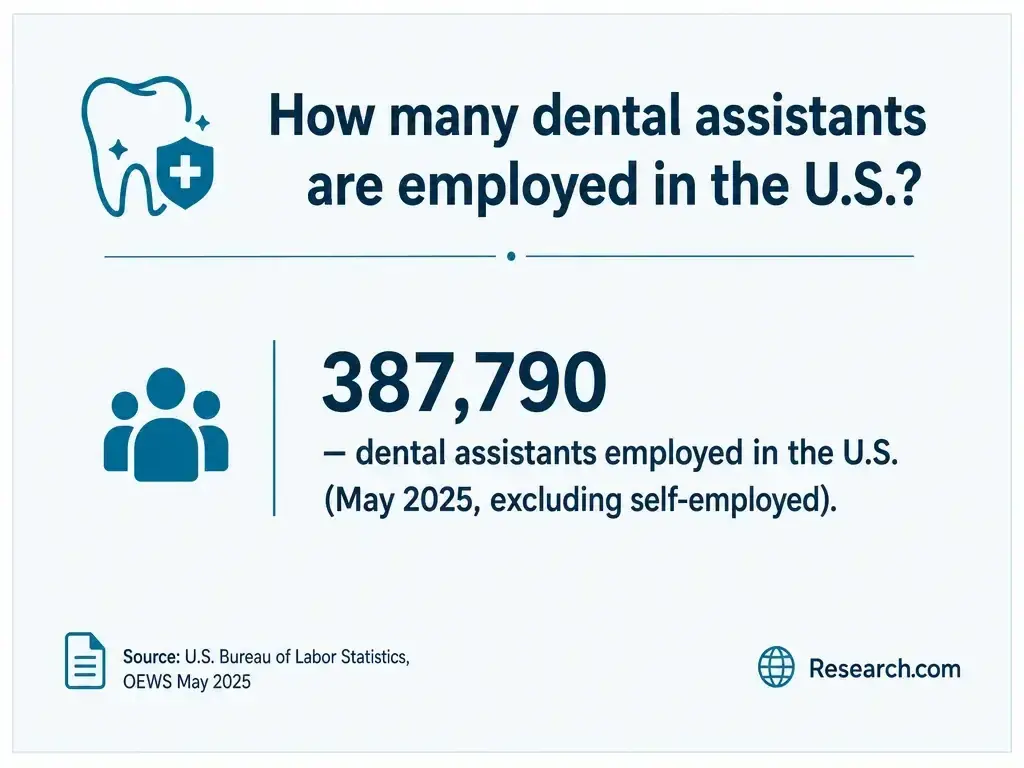
A verified Hibbing-specific wage is not available here, so the national figure is a reference point rather than a local pay estimate: dental assistants had a $48,070 median annual wage in May 2025 (BLS Occupational Outlook Handbook). The median describes workers across experience levels and locations, not what a new graduate should expect from a first offer.
For a realistic comparison, request current offers from Hibbing-area practices and check Minnesota Department of Employment and Economic Development occupational wage data for the closest available geography. Compare base pay alongside hours, benefits, commuting costs, and whether the role uses licensed duties. A higher wage farther away may leave less after travel expenses.
Length depends on the credential, course schedule, and clinical requirements. BLS describes postsecondary dental assisting programs as commonly taking about a year, while some states also allow on-the-job entry routes. An associate-degree pathway generally takes longer because it includes additional coursework. Ask Minnesota North College for the current program map and expected completion time rather than relying on a credential label alone (BLS; Minnesota North College).
Request the required lab, clinical, and any externship hours in writing. Then check whether clinical sites can accommodate your work schedule: a short classroom timetable is not necessarily a short route to employment. If you are comparing a quickest associates degree online option, do not assume its accelerated calendar can replace supervised dental assisting practice.
Online delivery can make lectures, terminology, and some administrative coursework easier to fit around work. It cannot substitute for learning instrument transfer, infection-control routines, and chairside teamwork with equipment and patients. A hybrid program is useful only if its in-person labs and clinical placements are accessible and meet the requirements of the intended Minnesota role (Minnesota Board of Dentistry; CODA).
The comparison below separates scheduling convenience from the practical training a prospective assistant needs.
| Format | Potential advantage | Decision-critical limitation |
| On campus | Regular access to supervised labs and equipment | Travel and fixed attendance times |
| Hybrid | Remote coursework with scheduled in-person training | Lab and clinical-site travel still required |
| Online-only coursework | Flexible study of theory | Does not, by itself, demonstrate chairside competence or licensing eligibility |
Before enrolling in a remote program, obtain its clinical-site policy and ask the Minnesota Board of Dentistry whether the complete training route - not just the online coursework - supports the duties you intend to perform.
There is no verified Hibbing program-price average to quote. Use a current, itemized estimate from Minnesota North College and any alternative provider rather than treating advertised tuition as the total cost of becoming job-ready. Financial aid eligibility also depends on the student and program; check the provider's aid office and Federal Student Aid before assuming a short credential qualifies.
For a useful comparison, put these costs on the same worksheet for each route:
Choose the lower-cost route only after checking what it prepares you to do. A cheaper course that omits needed clinical training may cost more in time and additional education later.
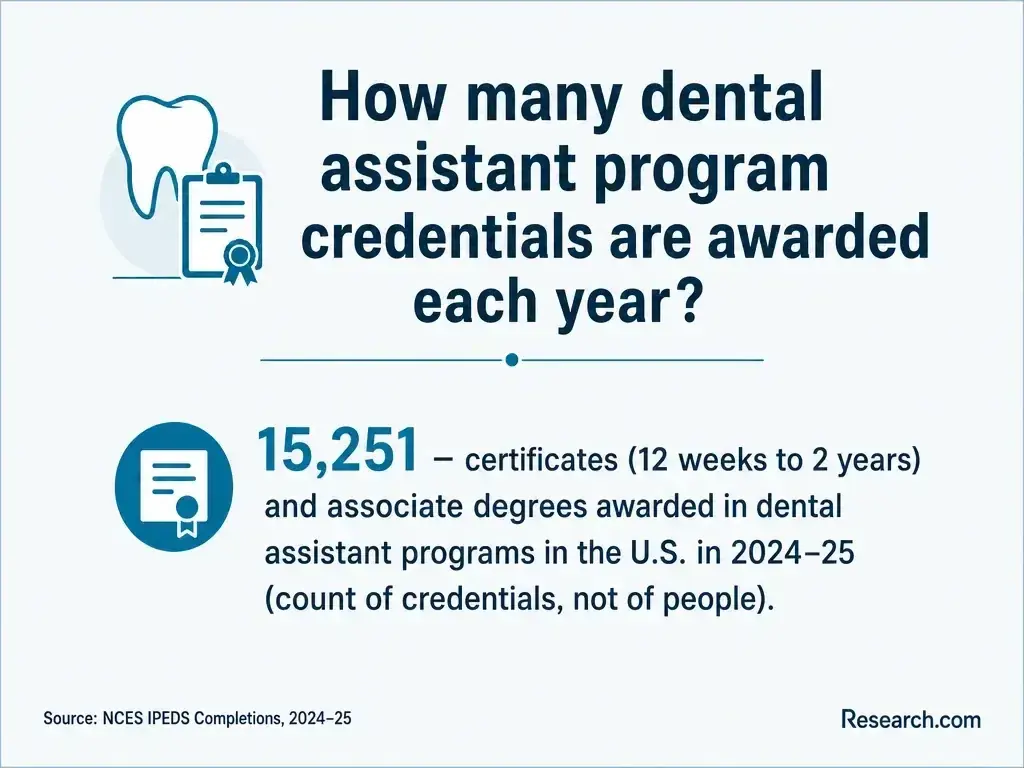
The award depends on the program: it may be a certificate, diploma, or associate degree. The school-issued credential documents completion; it is distinct from CODA programmatic accreditation, DANB professional certification, and a Minnesota dental assistant license. Institutional accreditation is another separate status and does not itself authorize licensed duties (CODA; DANB; Minnesota Board of Dentistry).
Ask Minnesota North College for the exact award shown on the transcript and whether its current dental assisting program holds CODA accreditation. If you might later continue within a college pathway, also ask whether completed credits transfer or count toward another credential. Get that answer before enrolling; credit acceptance is determined by the receiving program.
Admission rules are program-specific. A provider may distinguish general college admission from entry into its dental assisting cohort and may require prerequisite coursework or documentation before clinical placement. Minnesota North College is the appropriate source for its current application deadlines, prerequisites, and clinical-site conditions.
Ask whether a placement requires immunization records, health screening, a background check, or reliable transportation, and when each requirement becomes due. Also distinguish school admission from later licensing eligibility: acceptance into a program is not approval by the Minnesota Board of Dentistry to perform licensed duties.
Dental assisting training typically combines anatomy and terminology with infection prevention, instrument identification, patient support, dental materials, records, and supervised chairside procedures. Radiography and other expanded duties require particular attention because Minnesota regulates who may perform them; confirm the instruction and eligibility associated with each duty you hope to use at work (BLS; Minnesota Board of Dentistry).
Look beyond a course list for evidence of practice: supervised lab sessions, feedback on clinical technique, and a clear process for arranging patient-facing experience. Those details matter more to job readiness than whether an advertisement calls a program "hands-on."
Not every dental assisting role requires the same credential. Minnesota permits unlicensed dental assistant work within a restricted scope and separately regulates licensed dental assistant duties. DANB certification, CODA accreditation, and state licensure are different things; do not assume that earning one automatically confers another (Minnesota Board of Dentistry; DANB; CODA).
If licensed duties are your goal, review the Minnesota Board of Dentistry's current licensed dental assistant requirements before paying a deposit. Confirm that the specific program satisfies the applicable education route, then identify the required examinations and application steps. Ask the school to document how recent graduates have met those requirements, without treating past outcomes as a guarantee of your eligibility.
The best choice is the route that prepares you for your intended duties at a cost and schedule you can sustain. A ranking is a useful shortlist, not a substitute for checking current program details. Even a well-regarded school may be a poor fit if its clinical location conflicts with your work hours.
Use these checks before committing:
A common mistake is choosing by speed or tuition while leaving clinical placement unresolved. Broader guides to what are the best college majors for the future answer a different planning question; for this decision, verify the specific dental assisting route into work.
A new assistant may begin with permitted chairside and office-support duties, then pursue a licensed scope if eligible. With experience, assistants may concentrate on a dental specialty, help coordinate a practice's clinical workflow, or move toward office administration. Additional duties depend on Minnesota rules and employer needs; experience alone does not replace a required license (BLS; Minnesota Board of Dentistry).
Decide whether you want patient-facing clinical work before paying for training. If the appeal is primarily flexible office work, ask employers about direct-entry administrative roles instead. Likewise, a cheap accelerated bachelor's degree online comparison addresses a different educational investment, not a substitute for dental assisting clinical preparation.
BLS projects 7.4% growth for U.S. dental assistant employment from 2025 to 2035. That national projection suggests continuing demand for the occupation, but it cannot predict openings in Hibbing. A smaller local market may have fewer employers to choose from, so consider how far you would travel for clinical placement and a first job.
Check current postings across the communities you could realistically commute to, and note whether they request licensure, radiography qualifications, or particular experience. That evidence is more useful for a near-term decision than a national growth rate alone. A guide to a one year phd concerns a different career path; it offers no shortcut into chairside practice.
Education is a consequential investment, so the Research.com team designed this ranking to compare dental assistant programs with other programs serving the same occupation and location. The team checks outcomes, costs, recognition, and student support using multiple sources. Only programs with completions reported to IPEDS are eligible for the ranking: an unlisted employer training route or career school is not necessarily unsuitable or unapproved.
Best-program rankings assess student completion and full-time and part-time retention; earnings one year after completion and earnings relative to annual attendance cost; tuition, attendance cost, debt - including debt held by students who withdrew - and federal loan default rates; and accreditation, occupation-relevant recognition, and support services. Programmatic accreditation or relevant industry recognition receives 20% of the score, institutional accreditation 10%, and student support 10%. The remaining 60% covers outcomes, earnings, and costs, with entropy-based weighting that gives more weight to indicators that vary more across programs. Separate most-affordable rankings score only cost and debt measures, using entropy-based weights; they do not include accreditation or other quality measures in the score.
The following sources inform the ranking and its verification checks. Their inclusion does not mean every source accredits dental assisting programs; readers should check which authority applies to a particular credential.
The ranking can narrow a search, but it cannot establish that a particular graduate qualifies for a Minnesota license or that an unpublished local training option is inferior. Read more about how Research.com creates its rankings, then verify each shortlisted program's current clinical training, costs, and licensing alignment directly.
# 1 position
# 2 position
Start with Minnesota North College, but confirm its current dental assisting offerings, teaching location, clinical sites, and application schedule directly. Program availability can change.
An employer-trained, unlicensed entry route may be possible within Minnesota's permitted scope. If you want licensed duties, check the Minnesota Board of Dentistry's education and examination requirements before relying on employer training alone.
Do not assume so. Ask the board whether the complete program meets its requirements and where supervised practical training occurs.
It may be if the program supports your target role and its total cost, completion schedule, and likely local job options fit your finances. Compare that route with employer training if an unlicensed role would meet your goal.
No. Professional certification and state licensure are separate credentials. Verify which, if either, your intended duties require with the Minnesota Board of Dentistry and DANB.