
2027 Software Engineering Degree Recruiter Preference Report: What Employers Value Most in New Graduates

Co-Founder and Chief Data Scientist
Entry-level software engineering hiring has become more selective as employers expect graduates to prove job-ready coding, collaboration, and AI-aware development skills before the first interview. The U.S. Bureau of Labor Statistics projects 17% growth for software developers, quality assurance analysts, and testers from 2023 to 2033, but competition is strongest at the junior level.
This guide is for software engineering students, recent graduates, and career changers who want to understand recruiter preferences, technical screening standards, interview benchmarks, and practical ways to tailor resumes, prepare for assessments, and improve offer chances.
Key Things to Know About Recruiter Preferences in the Software Engineering Industry
- Recruiters value applied proof over coursework alone: internships, capstones, deployed projects, GitHub activity, and clear evidence of debugging, testing, code review, and collaboration often separate interview-ready applicants from degree-only candidates.
- Current demand remains favorable but selective: BLS projects 17% growth for software developers, quality assurance analysts, and testers from 2023 to 2033, while May 2024 wage data shows the 10th percentile for software developers at $77,020, a useful lower-bound proxy for early-career salary expectations rather than a guarantee.
- Certifications are optional for most entry-level software engineering roles, but targeted credentials can help when they match the job stack; common cloud exams such as AWS associate-level certifications cost about $150, so the ROI is strongest when paired with portfolio projects using the same platform.
- Key Things to Know About Recruiter Preferences in the Software Engineering Industry
- Do Software Engineering jobs require a degree?
- What are the top qualities employers look for in Software Engineering graduates today?
- Which technical skills are most requested by recruiters hiring Software Engineering degree graduates?
- Are specialized Software Engineering certifications necessary for landing entry-level roles?
- How heavily do recruiters weigh GPA and academic honors for Software Engineering roles?
- Where do top employers of Software Engineering professionals actively recruit new talent?
- What are the technical assessments or interview formats used for Software Engineering applicants?
- What red flags cause recruiters to reject Software Engineering job applicants during screening?
- How can Software Engineering degree graduates tailor their resumes and online profiles to pass recruiter screening?
- Top Trending Software Engineering Rankings
Do Software Engineering jobs require a degree?
A software engineering degree is not legally required for most developer roles in the U.S., but it remains a strong recruiter signal for entry-level candidates because it indicates structured training in programming, algorithms, databases, systems, software design, and team projects.
Employers hiring for regulated, defense, embedded systems, fintech, healthcare technology, or large enterprise roles may prefer or require a bachelor's degree in software engineering, computer science, computer engineering, or a related technical field.
The practical answer is that a degree helps most when the applicant has limited work experience. Skills-based hiring has grown, but recruiters still need quick ways to compare large applicant pools. A degree reduces uncertainty; a portfolio, internship, and strong technical interview performance then prove that the candidate can build and maintain real systems.
The table below compares common entry paths and how recruiters usually interpret them for junior software engineering roles. Use it to decide whether your next investment should be a degree, a certificate, a portfolio, or work experience:
| Entry path | Recruiter signal | Best fit | Main limitation |
| Software engineering or computer science degree | Strong foundation in algorithms, systems, databases, and software design | Students targeting corporate, enterprise, government contractor, or structured new-grad programs | Weak if not supported by projects, internships, or modern tooling |
| Bootcamp or intensive certificate | Practical, job-focused training in a narrower stack | Career changers targeting web, QA automation, or junior full-stack roles | May not satisfy degree filters at some large employers |
| Self-taught portfolio route | Evidence of initiative and independent learning | Candidates with strong public projects, open-source contributions, or prior technical work | Requires extra proof because recruiters cannot infer curriculum depth |
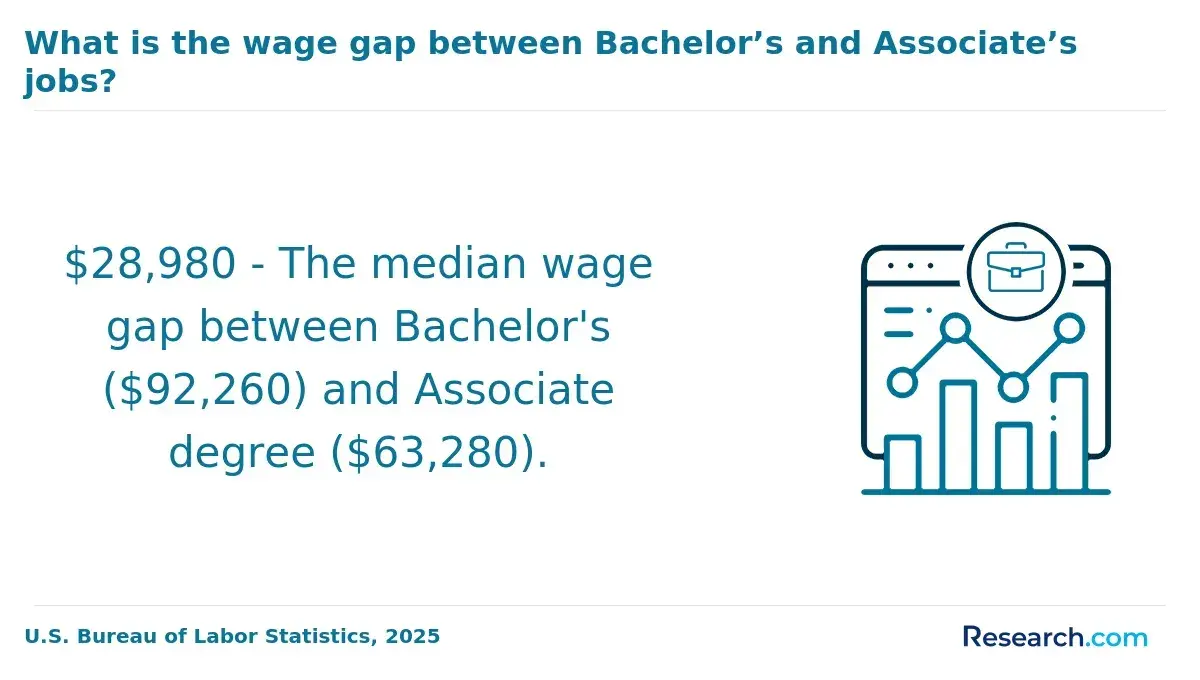
| Associate degree plus projects | Some formal technical training with lower cost and shorter timeline | Transfer students, local employer pipelines, help desk-to-developer transitions | May face bachelor's-preferred screening for some roles |
A formal software engineering degree makes the most sense if you are early in your career, want access to campus recruiting, or are targeting employers with structured graduate hiring. A certificate or bootcamp makes more sense if you already hold a degree in another field, need a focused stack quickly, and can build projects that match job descriptions.
If you are comparing technical education with broader business graduate options such as the easiest MBA program to get into, remember that recruiters for entry-level developer roles usually prioritize code evidence over general management coursework.
What are the top qualities employers look for in Software Engineering graduates today?
Employers want new graduates who can learn quickly, ship reliable code, and work well inside a team. Technical ability matters, but recruiters repeatedly look for evidence that a candidate can turn ambiguous requirements into maintainable software without creating avoidable risk for the engineering team.
One labor-market signal is the scale of ongoing demand: BLS estimates about 140,100 annual openings for software developers, quality assurance analysts, and testers over the 2023 to 2033 period. That does not mean every junior candidate will be hired quickly; it means employers need talent, but they can be selective about proof of readiness.
The table below summarizes the qualities recruiters tend to value and the type of evidence that makes those qualities credible. It is designed to help graduates move from vague claims to proof-based positioning:
| Employer-valued quality | What it means in entry-level hiring | Evidence recruiters trust |
| Problem-solving discipline | Can break down a vague task, choose an approach, and explain trade-offs | Technical interview reasoning, capstone architecture notes, issue-tracking history |
| Code quality mindset | Writes readable, testable, maintainable code rather than only "working" code | Unit tests, code reviews, refactoring examples, clean repository structure |
| Collaboration | Can work in sprints, accept feedback, and communicate blockers | Team projects, internship evaluations, pull request discussions |
| Learning agility | Can pick up unfamiliar frameworks, libraries, and tools | Projects using multiple technologies, concise explanations of what was learned |
| Product awareness | Understands users, requirements, reliability, and business constraints | Deployed apps, user stories, performance improvements, bug reports |
To demonstrate these qualities in applications, graduates should convert academic work into employer language. A class assignment becomes stronger when framed as a feature, performance improvement, test suite, API integration, or production-like deployment rather than a course requirement.
Use the following sequence to strengthen your proof before applying. It focuses on recruiter-readable evidence rather than generic self-description:
- Select two or three projects that best match your target roles, such as backend APIs, full-stack applications, mobile apps, data tools, or QA automation suites.
- Rewrite each project description around the problem, your technical choices, the outcome, and what you would improve next.
- Add evidence of collaboration, such as Git history, issue tickets, pull requests, team roles, or sprint artifacts.
- Prepare a short verbal explanation of one technical trade-off, one bug you fixed, and one design decision for each project.
Which technical skills are most requested by recruiters hiring Software Engineering degree graduates?
Recruiters hiring software engineering graduates usually screen for a blend of programming fundamentals, backend or frontend stack knowledge, data structures, databases, testing, version control, and basic cloud literacy. The exact mix depends on the role, but graduates who can show depth in one stack and fluency in core concepts are easier to evaluate than candidates who list many tools superficially.
BLS May 2024 wage data reports a median annual wage of $133,080 for software developers across experience levels. For graduates, the important lesson is not to expect the median immediately; it is that employers attach strong value to candidates who can contribute to software design, implementation, maintenance, and reliability at professional standards.
The table below groups high-demand skills by common entry-level role. It can help you choose which skills to emphasize based on the jobs you are actually applying for:
| Entry-level target role | Core technical skills recruiters expect | Stronger differentiators |
| Junior backend engineer | Java, Python, C#, Go, SQL, REST APIs, data structures, authentication basics | Distributed systems basics, caching, message queues, cloud deployment |
| Junior frontend engineer | JavaScript, TypeScript, HTML, CSS, React or similar framework, accessibility basics | Performance optimization, state management, testing, design-system experience |
| Junior full-stack engineer | Frontend framework, backend API, relational database, Git, testing, deployment workflow | End-to-end project ownership and production-style monitoring |
| QA automation engineer | Test planning, scripting, Selenium or Playwright, API testing, CI integration | Flaky test reduction, performance testing, security testing awareness |
| DevOps or cloud junior engineer | Linux, scripting, Git, CI/CD, containers, basic networking, cloud fundamentals | Infrastructure as code, observability, incident response practice |
| Data or ML engineering associate | Python, SQL, data pipelines, APIs, basic statistics, version control | Model deployment, workflow orchestration, data quality testing |
AI-assisted development is also changing expectations. Recruiters do not usually hire new graduates just because they can use AI coding tools; they value candidates who can use them responsibly, verify generated code, write tests, protect confidential data, and explain the final implementation. Treat AI as a productivity aid, not a substitute for fundamentals.
When choosing what to learn next, use job descriptions as your filter. If 10 target postings repeatedly mention Java, Spring Boot, SQL, REST, Git, and AWS, a focused backend project using those tools will usually be more persuasive than adding unrelated technologies to your resume.
What tools or software must a Software Engineering degree graduate master to impress employers?
Recruiters do not expect entry-level graduates to master every enterprise tool, but they do expect fluency with the development workflow used by professional teams. Tool competence matters because it reduces onboarding time and shows that the candidate understands how code moves from an idea to production.
The table below summarizes tool categories that commonly appear in junior software engineering hiring. It helps graduates audit whether their projects look like school assignments or professional engineering work:
| Tool category | Examples recruiters recognize | Why it matters |
| Version control | Git, GitHub, GitLab, Bitbucket | Shows collaboration, change tracking, branching, and pull request discipline |
| IDE and coding environment | VS Code, IntelliJ IDEA, PyCharm, Visual Studio | Indicates day-to-day productivity and debugging familiarity |
| Issue tracking and agile workflow | Jira, Trello, GitHub Issues, Azure Boards | Shows comfort with tickets, sprints, acceptance criteria, and team coordination |
| Testing tools | JUnit, pytest, Jest, Cypress, Playwright, Postman | Signals that the candidate can validate code and reduce production defects |
| Cloud and deployment | AWS, Microsoft Azure, Google Cloud, Vercel, Netlify, Docker | Demonstrates understanding of deployment, environments, and operational constraints |
| Databases | PostgreSQL, MySQL, MongoDB, Redis | Shows ability to store, query, model, and optimize application data |
| CI/CD and automation | GitHub Actions, GitLab CI, Jenkins | Shows awareness of automated testing and release workflows |
A practical way to impress employers is to make one project look production-aware. That does not require a large app; it requires evidence that you understand engineering discipline:
- Create a clean README that explains the problem, stack, setup steps, test commands, and deployment link if available.
- Use Git branches and meaningful commit messages instead of uploading a finished project all at once.
- Add automated tests for core functions, API routes, or UI behavior.
- Include environment variables, basic error handling, and input validation where appropriate.
- Deploy the project or provide screenshots and architecture notes if deployment is not practical.
The most common mistake is listing tools without proof. "Docker, AWS, React, PostgreSQL" is weaker than a project that shows how those tools were used together to solve a specific problem.
Are specialized Software Engineering certifications necessary for landing entry-level roles?
Specialized certifications are usually not necessary for entry-level software engineering roles, but they can help in targeted situations. Recruiters give the most credit when a certification aligns with the job description and is supported by a project, internship, or lab that proves hands-on use.
Certification ROI depends on cost, role fit, and opportunity cost. For example, many associate-level cloud certification exams cost about $150, while some foundational exams cost about $99 to $100. That is modest compared with degree tuition, but the time spent studying should produce portfolio evidence, not just a badge.
The table below outlines when certifications tend to be useful for new graduates and when they are less likely to change recruiter decisions:
| Certification type | Potential value for entry-level applicants | Best used for | Common limitation |
| Cloud fundamentals or associate cloud certification | Shows familiarity with cloud services, deployment, IAM, and infrastructure basics | Cloud, backend, DevOps, platform, or enterprise software roles | Weak without a deployed project or lab evidence |
| Security fundamentals certification | Signals awareness of secure systems, vulnerabilities, and risk | Security-adjacent development, fintech, healthcare technology, government contractors | May not replace coding ability for developer roles |
| Scrum or agile certification | Shows knowledge of team workflow terminology | Internships, product-focused teams, project coordination-heavy roles | Often less persuasive than actual team project experience |
| Language-specific certification | May validate syntax and platform knowledge | Java, cloud platform, or vendor-specific enterprise environments | Can be seen as too narrow if not linked to a project |
Choose a certification only if it supports a clear role strategy. A graduate targeting backend cloud roles might benefit from AWS, Azure, or Google Cloud training, while a frontend candidate may get more value from building an accessible, tested, deployed application.
If your longer-term plan includes technical leadership rather than immediate developer hiring, broader business programs such as an AACSB online MBA may become relevant later, but they are not a substitute for entry-level engineering proof.
Before paying for a certification, ask yourself three questions. These checks prevent credential collecting and keep your job-search strategy focused:
- Does the certification appear in several target job descriptions, or is it only interesting to me?
- Can I build a project that uses the same technology and add it to my portfolio?
- Will the study time improve my interview performance, or would coding practice produce a better return?
How heavily do recruiters weigh GPA and academic honors for Software Engineering roles?
GPA matters most for internships, campus recruiting, highly structured new-graduate programs, and employers that use academic cutoffs to manage applicant volume. It matters less once a candidate has strong internships, projects, open-source work, or relevant experience. Recruiters generally treat GPA as one signal, not a complete measure of engineering potential.
For candidates with limited experience, a strong GPA can reassure recruiters that the applicant handled rigorous technical coursework. For candidates with a lower GPA, practical evidence becomes more important: shipped software, test coverage, technical writing, leadership in a capstone, or part-time technical work can offset academic concerns.
The table below explains how recruiters often weigh academic factors alongside practical proof. It is a decision-support tool, not a universal rule, because employer standards vary by company, role, and hiring channel:
| Candidate profile | How GPA is likely interpreted | What should carry the application |
| High GPA with limited projects | Positive academic signal but incomplete job-readiness proof | Capstone details, coding samples, internships, technical interview preparation |
| Average GPA with strong projects | Usually acceptable if the work is relevant and well explained | Portfolio, GitHub, deployed apps, project outcomes, collaboration evidence |
| Low GPA with internship experience | Concern may be reduced if workplace performance is strong | Internship achievements, supervisor references, measurable contributions |
| Academic honors with no applied evidence | Helpful but not enough for engineering screening | Technical artifacts that prove coding, testing, and debugging ability |
If your GPA is strong, include it near your education section, especially for campus recruiting. If it is not strong, you can omit it unless the employer asks, then use your resume space to show applied engineering strengths. Avoid long explanations on the resume; save context for interviews if asked.
Some graduates consider additional degrees to strengthen credentials, but advanced study should match the career target. A research-oriented doctorate may fit candidates aiming for academia, advanced AI research, or specialized systems research; for most entry-level software engineering jobs, it is unnecessary.
If you are comparing future graduate options, resources on the easiest doctorate to get can help with general planning, but recruiters for junior developer roles will still look first for software-building evidence.
Where do top employers of Software Engineering professionals actively recruit new talent?
Top employers recruit software engineering graduates through multiple channels because no single pipeline captures all qualified candidates. Large companies often use campus recruiting and structured new-grad portals, while startups, agencies, and mid-sized companies may rely more on referrals, LinkedIn, GitHub, specialized job boards, and local tech communities.
The strongest channel for you depends on your profile. Students at target campuses should use university career fairs and alumni networks heavily. Candidates from smaller programs, online programs, bootcamps, or nontraditional backgrounds often need a broader outreach strategy that combines applications, networking, portfolio visibility, and recruiter engagement.
The table below compares major recruitment channels and what they are best suited for. Use it to prioritize effort instead of applying randomly:
| Recruitment channel | Common employers using it | Best fit for candidates | Typical advantage |
| University career fairs and campus portals | Large tech firms, banks, defense contractors, consulting firms, enterprise employers | Students and recent graduates with access to school recruiting | Clear new-grad pipelines and recruiter contact |
| Company new-graduate career pages | Major technology companies, cloud providers, finance firms, retailers, healthcare technology firms | Candidates targeting structured software engineering programs | Role requirements are usually explicit |
| LinkedIn recruiter search | Nearly all employer sizes | Candidates with optimized profiles and visible project keywords | Passive discovery and recruiter outreach |
| Referrals and alumni networks | Companies with employee referral programs | Candidates who can build relationships before applying | Can increase the chance of human review |
| GitHub and open-source communities | Developer-tool companies, startups, engineering-led teams | Candidates with public code and contributions | Direct evidence of engineering work |
| Local meetups and hackathons | Startups, civic tech groups, local employers, accelerators | Candidates needing visibility outside campus pipelines | Relationship-building and practical proof |
Use a balanced weekly search rhythm so you are not dependent on one source. The sequence below is especially useful for graduates without access to elite campus recruiting.
- Identify 20 target employers by industry, tech stack, location preference, and new-grad hiring history.
- Apply through the official posting, then look for an alum, recruiter, or engineer who can provide context or referral guidance.
- Update your LinkedIn headline and About section around the roles you want, such as junior backend engineer or QA automation engineer.
- Post or pin one strong project with a short explanation of the problem, stack, and result.
- Track applications, referral conversations, interview stages, and follow-ups in a spreadsheet or job-search tool.
Regional hiring also matters. Software engineering roles exist across technology, finance, insurance, healthcare, retail, manufacturing, logistics, education technology, and government contracting. Graduates who look beyond famous tech companies often find more entry-level openings with practical business software teams.
What are the technical assessments or interview formats used for Software Engineering applicants?
Software engineering applicants are commonly evaluated through a mix of recruiter screens, coding assessments, technical interviews, project discussions, behavioral interviews, and sometimes take-home assignments. The goal is to test whether candidates can code, reason, communicate, and learn under realistic constraints.
Assessment formats vary by employer. Large technology companies may emphasize algorithms and data structures, while product companies, agencies, and enterprise teams may focus more on debugging, APIs, databases, testing, and system design fundamentals.
The table below summarizes common interview formats and what each one is designed to evaluate. It can help graduates prepare for the likely signal behind each stage:
| Interview or assessment format | What employers evaluate | Common entry-level focus |
| Recruiter screen | Role fit, work authorization, location, salary alignment, communication | Clear explanation of background, projects, and target role |
| Online coding assessment | Programming fundamentals, problem-solving speed, data structures | Arrays, strings, hash maps, recursion, sorting, complexity analysis |
| Live technical interview | Reasoning, coding clarity, communication, debugging | Thinking aloud, edge cases, trade-offs, test cases |
| Take-home project | Practical implementation, code structure, testing, documentation | Small feature, API, UI, data task, or automation challenge |
| Project deep dive | Authenticity, ownership, architectural understanding | Explaining design choices, bugs, constraints, and improvements |
| Behavioral interview | Teamwork, conflict handling, accountability, learning mindset | Internship stories, capstone collaboration, feedback response |
Preparation should be role-specific. A backend candidate should practice APIs, SQL, and debugging in addition to algorithms; a frontend candidate should practice JavaScript, UI state, accessibility, and browser debugging; a QA automation candidate should practice test design and automation frameworks.
Use this preparation plan before interviews. It turns broad practice into targeted readiness:
- Collect five job descriptions for the same role type and highlight repeated languages, frameworks, tools, and responsibilities.
- Practice data structures and algorithms at a level appropriate for entry-level screens, focusing on explaining your reasoning clearly.
- Rebuild one portfolio project from memory or add a feature so you can discuss real engineering decisions confidently.
- Prepare stories using situation, task, action, and result for teamwork, failure, ambiguity, and learning.
- Run mock interviews that include both coding and project explanation, not just isolated algorithm drills.
A common mistake is preparing only for algorithm challenges while ignoring the resume projects that interviewers will ask about. If you cannot explain your own architecture, dependencies, trade-offs, and bugs, recruiters may doubt your ownership even if the project looks impressive.
What red flags cause recruiters to reject Software Engineering job applicants during screening?
Recruiters reject software engineering applicants when the resume or profile creates uncertainty that could have been avoided. Some red flags are technical, such as no evidence of coding ability. Others are communication issues, such as vague descriptions, sloppy formatting, or inconsistent dates.
Automated applicant tracking systems and recruiter keyword searches make clarity especially important. A resume that hides relevant skills in dense paragraphs or uses unusual formatting may be overlooked even if the candidate is qualified.
The table below identifies common screening red flags and why they matter. It is meant to help applicants diagnose preventable issues before submitting another application:
| Screening red flag | Why recruiters worry | Stronger alternative |
| Generic resume used for every role | Suggests weak fit and may miss required keywords | Role-targeted resume emphasizing the stack and responsibilities in the posting |
| Projects described only as class assignments | Does not show practical ownership or impact | Project bullets framed around problem, implementation, testing, and outcome |
| Long list of technologies with no evidence | Looks inflated and hard to verify | Focused skills section tied to specific projects or internships |
| No GitHub, portfolio, or project links when experience is limited | Leaves recruiters with little proof beyond coursework | Clean repositories, README files, demos, screenshots, or technical write-ups |
| Unexplained employment or education gaps | Creates uncertainty during quick screening | Brief, factual context through experience, projects, education, or profile summary |
| Sloppy formatting, typos, or inconsistent dates | Raises concerns about attention to detail | Simple ATS-friendly formatting and careful proofreading |
| Overstated AI tool use or copied project claims | Raises authenticity concerns | Transparent explanation of your own work, tests, revisions, and decisions |
Graduates should also avoid misalignment. Applying to senior roles, listing every language ever used, or claiming expert-level skill in a framework learned last week can cause recruiters to discount the application. Honest positioning is stronger than inflated wording.
Before submitting an application, run a quick rejection-risk audit. This checklist focuses on issues recruiters can spot in seconds:
- Confirm that the target job title, top programming language, and core framework appear naturally in the resume if they match your actual skills.
- Remove unsupported skill claims that are not connected to a project, internship, course, or work example.
- Check that each project bullet explains what you built, how you built it, and what technical result it produced.
- Use standard section headings such as Education, Skills, Projects, Experience, and Certifications.
- Test all links to GitHub, portfolio pages, demos, and LinkedIn before applying.
How can Software Engineering degree graduates tailor their resumes and online profiles to pass recruiter screening?
A strong entry-level software engineering resume is not a biography; it is a matching document. Its job is to show, quickly and truthfully, that your education, projects, tools, and experience align with the role. Recruiters often review junior resumes quickly, so the most relevant evidence must be easy to find.
Start with the job description. If the posting asks for Python, SQL, REST APIs, Git, and cloud exposure, your resume should show where you used those skills. Do not stuff keywords; connect each skill to a credible project, internship, or academic experience.
The table below shows how to turn common weak resume content into recruiter-friendly evidence. Use it to strengthen your resume before applying to high-volume entry-level roles:
| Weak resume wording | Why it underperforms | Stronger recruiter-ready framing |
| Worked on a web app for class | Too vague and course-centered | Built a full-stack task management app using React, Node.js, PostgreSQL, and JWT authentication |
| Knowledge of testing | No proof of application | Added unit and integration tests for API endpoints using pytest, improving reliability during feature changes |
| Team player | Unsupported soft skill claim | Collaborated with four-person capstone team using GitHub pull requests, issue tracking, and weekly sprint reviews |
| Familiar with cloud | Too broad to evaluate | Deployed containerized backend service to AWS and documented environment setup in README |
| Used AI tools | May raise quality or originality concerns | Used AI coding assistance for boilerplate, then reviewed, tested, and refactored generated code before submission |
LinkedIn and GitHub should support the same story as your resume. If your resume says backend engineer, your headline, featured projects, skills, and repositories should reinforce backend capabilities rather than presenting an unfocused mix of unrelated interests.
If you are exploring unrelated fields, such as counseling or therapy education through LMFT programs, keep that research separate from a software engineering recruiter profile unless you are intentionally targeting health-tech roles where the connection is relevant.
Use the following steps to tailor each application efficiently. This process is practical for high-volume job searches without turning every resume into a full rewrite:
- Copy the job description into a document and highlight required languages, frameworks, tools, degree requirements, and responsibilities.
- Choose the two or three projects or experiences that best match those requirements.
- Rewrite bullet points to include the matching technology, the engineering task, and the result or scope.
- Place the most relevant skills first in your Skills section and remove technologies that distract from the target role.
- Update your LinkedIn headline and Featured section to match your current target role before recruiter outreach.
- Save each resume version with a clear filename that includes your name and target role.
For online profiles, the best improvement is specificity. "Software engineering graduate seeking opportunities" is weaker than "Junior backend developer focused on Java, Spring Boot, SQL, REST APIs, and cloud deployment." Recruiters search by role and skill, so clear positioning makes you easier to find and easier to evaluate.
Other Things You Should Know About Software Engineering
The timeline varies by location, hiring season, portfolio strength, interview readiness, and target employers. Graduates applying only to large technology companies may face longer cycles, while those also targeting finance, healthcare, insurance, retail, logistics, and local software teams may find more openings to pursue.
Yes, but remote junior roles can be more competitive because they attract national applicant pools. Graduates should also consider hybrid and local roles, where employers may be more willing to mentor entry-level engineers and where recruiter competition may be lower.
Yes, if you use them responsibly and can explain the final code. Employers may view AI-assisted work positively when you verify output, write tests, protect sensitive data, and clearly understand the architecture and debugging decisions.
Two or three strong, relevant projects are usually better than many unfinished projects. Recruiters respond best to projects with clean documentation, readable code, evidence of testing, and a clear connection to the role being targeted.
Top Trending Software Engineering Rankings
References
- Soft Skills Every Software Engineer Should Have https://www.mcsgroup.jobs/resources/blog/soft-skills-every-software-engineer-should-have/
- Navigating Your First Tech Role: Big Tech, Startup, or Mid-Sized? https://www.dice.com/career-advice/navigating-your-first-tech-role-big-tech-startup-or-mid-sized
- The Importance of Internships: Gaining Practical Experience Before Graduation https://www.alliedonesource.com/the-importance-of-internships-gaining-practical-experience-before-graduation
- Corporate Graduate Programs on the rise https://www.emerging.fr/post/corporate-graduate-programs
- What Is a Software Developer? | Skills and Career Paths https://www.computerscience.org/careers/software-developer/
- What Nearly 1 Million U.S. Job Postings Reveal About Today’s Most In-Demand Programming Languages https://www.finopotamus.com/post/what-nearly-1-million-u-s-job-postings-reveal-about-today-s-most-in-demand-programming-languages
- 10 Useful Non-Tech Skills Software Developers Need https://motionrecruitment.com/blog/ten-useful-non-tech-skills-software-developers-need
- Why Soft Skills Are The Hidden Skills Employers Look For in Tech [2025 Guide] https://ntinow.edu/soft-skills-employers-look-for-in-it-careers/
- Most In-demand Programming Languages for 2026 https://www.itransition.com/developers/in-demand-programming-languages
- CRA Group Limited - A Complete Guide On Startups vs Big Companies https://www.civicrecruitment.co.uk/blog/2025/05/a-complete-guide-on-startups-vs-big-companies


