
2027 Most Affordable Social Work Degree Programs Ranking in Greensboro

Co-Founder and Chief Data Scientist
Choosing the right social work degree program is a big step toward a fulfilling career in helping others. For students in Greensboro, finding an affordable option without compromising quality is key to success.
This article features the 2027 Most Affordable Social Work Degree Programs Ranking in Greensboro, created by the Research.com team of data scientists to guide you through the best choices available. By exploring this ranking, you'll gain clear insights that make your decision easier and more confident.
Getting a social work degree opens doors to meaningful work and personal growth. Discover the programs worth considering and take the first step toward your rewarding future today.
Key benefits of getting social work degree in Greensboro
- Graduates with a social work degree in Greensboro can expect competitive salaries, such as Social Workers earning a mean annual wage of $68,800 and Community Organizers making around $83,400, offering financial stability and rewarding careers.
- Career paths for social work graduates in Greensboro are diverse, ranging from Child Welfare Specialists to Youth Workers, allowing you to make a positive impact in various community and healthcare settings.
- Choosing an online social work degree provides flexibility for busy students, as seen with local online graduates who balance work and study effectively while gaining the same respected credentials as traditional programs.
- 2027 Most Affordable Social Work Degree Programs Ranking in Greensboro
- What can I expect from social work degree in Greensboro?
- Where can I work with social work degree in Greensboro?
What can I expect from social work degree in Greensboro?
The average cost of a social work degree in Greensboro can range widely depending on the institution and level of study, but students often find the investment worthwhile given the career-ready skills they gain. Graduates from schools like the University of North Carolina at Greensboro report tuition and fees that typically range from $8,000 to $15,000 per year for in-state undergraduates, with graduate MSW programs sometimes costing closer to $20,000 annually.
Many students share how scholarships and financial aid tailored for social work majors helped ease their financial burden, allowing them to focus on gaining valuable field experience. For instance, completing internships at local community centers or healthcare facilities-common at Greensboro colleges-builds confidence and real-world competence.
Looking forward, as social work roles evolve with tech integration and new community demands, the value of investing in these programs is expected to grow. Graduates anticipate that ongoing support from their universities in funding and placement opportunities will help them launch fulfilling careers without overwhelming debt.
Where can I work with social work degree in Greensboro?
Graduates from social work programs at local institutions like the University of North Carolina at Greensboro often find promising career paths across diverse sectors in the city. Many begin their careers in healthcare settings such as Cone Health, where they provide crucial mental health support and care coordination, bringing relief and hope to patients and families during challenging times.
Others pursue roles within Guilford County's public social service agencies, directly impacting community welfare by helping residents access resources and protection programs. This hands-on work deeply resonates with graduates who cherish making tangible differences in people's lives.
Social work alumni also frequently join Greensboro's public schools, offering counseling and crisis intervention that foster student resilience and growth. Their stories often reflect rewarding moments when students overcome personal hardships with their guidance.
Emerging trends show increased demand in mental health and substance abuse centers, highlighting exciting new opportunities for licensed clinical social workers. Graduates envision careers where innovative interventions and advocacy blend, especially within nonprofit organizations that champion underserved populations.
Correctional facilities too are evolving workplaces for social workers, where graduates apply rehabilitative skills to foster positive change, fueling a future where social work expands beyond traditional settings.
- Annual tuition for social work degrees in Greensboro ranges from $7,000 to $10,000 at public schools and $15,000 to $25,000 at private schools for in-state students.
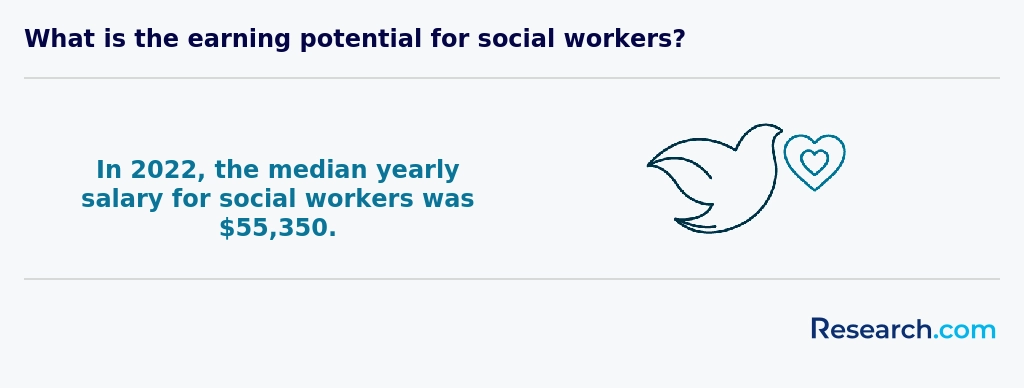
- Median starting salary for social work graduates in Greensboro is about $42,000 per year, based on entry-level positions.
- Experienced social workers with advanced credentials in Greensboro earn median salaries between $55,000 and $60,000 annually.
- The job outlook in Greensboro is strong, with local demand and a national growth rate of about 12% for social work positions over the next decade.
- Most social work degree programs in Greensboro are accredited by the Council on Social Work Education, essential for licensure and employment.
- Many programs include field practicum opportunities through local agency partnerships to help students gain practical experience.
To further assist prospective social work students in their search for affordable education, it is essential to consider the various options available across North Carolina. For those looking for the cheapest social work school in north carolina, researching institutions that offer competitive tuition rates without compromising on the quality of education is crucial. This involves comparing programs, their accreditation, curriculum, and the opportunities they provide for hands-on experience and specialization. By doing so, students can make informed decisions that balance their financial constraints with their career aspirations in social work, ultimately leading to a rewarding and impactful profession.
The average cost of obtaining a social work degree in Greensboro varies significantly based on residency and institution type. In-state students typically experience a median total cost around $7,237, making it more accessible for those living locally. Graduates from popular local universities often share stories of balancing part-time work and studies, feeling motivated by the knowledge that their investment, though manageable, opens doors to impactful careers. This sense of accomplishment is echoed by many who appreciate the affordability compared to out-of-state tuition, which can be substantially higher, often near the median total cost of $36,256.
For students focused on Greensboro affordable social work degree tuition, public universities are frequently the preferred choice due to their reasonable cost structures. Many students find themselves reassured by institutional financial aid, scholarships, and university-supported employment programs that help ease financial burdens, allowing them to fully engage in fieldwork and community projects. These experiences strengthen their connection to the local community and make the financial journey feel worthwhile.
Looking ahead, it's possible that tuition rates could evolve with new educational models and funding options. Students considering social work degrees in the area might explore pathways that blend online coursework and in-person practice, potentially lowering expenses while preserving quality. For detailed cost comparisons, prospective students can review listings such as the cheapest social work school in north carolina, which highlights options tailored to budget-conscious learners.
Earning a Social Work degree in Greensboro, NC is only the first step toward professional practice; graduates must also secure state licensure through the North Carolina Board of Social Work Examiners. To qualify for the Licensed Bachelor Social Worker (LBSW) credential, candidates need a CSWE-accredited bachelor’s degree, completion of 2,000 supervised practice hours, and a passing score on the Association of Social Work Boards (ASWB) Bachelor Examination. Those pursuing the Licensed Master Social Worker (LMSW) must hold a CSWE-accredited master’s degree and pass the ASWB Master Examination, while the Licensed Clinical Social Worker (LCSW) requires an additional 3,000 hours of post-master’s supervised clinical experience and a successful ASWB Clinical Exam result. Key steps and requirements:
- Accredited Education: Graduation from a CSWE-accredited BSW or MSW program.
- Supervision: 2,000 hours for LBSW; 3,000 hours post-MSW for LCSW, overseen by a qualified supervisor.
- Examinations: ASWB Bachelor, Master, or Clinical Exam, depending on licensure level.
- Application Fees: Vary by license type, generally ranging from $100 to $200.
- Continuing Education: Licensees must complete 40 hours of approved CEUs every two years to maintain active status. Maintaining clear records of coursework, supervision logs, and exam results streamlines the licensure process and ensures compliance with North Carolina regulations. For prospective students comparing cost-effective programs beyond Greensboro, view our Most Affordable Social Work Degree Programs Ranking in Chicago, IL.
After completing your Master of Social Work, the next critical step is obtaining state licensure. In North Carolina, aspiring Licensed Clinical Social Workers (LCSWs) must: 1. Hold a CSWE-accredited MSW degree. If you’re seeking the most cost-effective path to an accredited program, explore the cheapest msw degree options that meet licensure prerequisites. 2. Accumulate 3,000 hours of supervised clinical practice under a Board-approved LCSW supervisor, typically over two years. 3. Pass the Association of Social Work Boards (ASWB) Clinical Exam with a minimum scaled score of 85. 4. Submit a completed licensure application to the North Carolina Social Work Certification and Licensure Board, including official transcripts, exam results, supervisor verification, and application fees (currently $125). 5. Maintain licensure through 40 hours of continuing education every two years, covering ethics, cultural competence, and clinical intervention strategies. Navigating the licensure process ensures you can legally practice clinical social work in Greensboro, NC, strengthen your professional credibility, and unlock higher earning potential in healthcare, mental health, or private practice settings.
Enrolling in social work degree programs in Greensboro typically starts with completing a high school diploma or equivalent, a stepping stone many local graduates recall as the moment their aspirations began to take shape. At institutions like North Carolina A&T State University or the University of North Carolina at Greensboro, hopeful undergraduates find that having a solid GPA and foundational coursework in psychology or sociology can open doors more smoothly.
Looking ahead, students pursuing a Master of Social Work may need to showcase more than just academic readiness; personal statements and letters of recommendation often reveal their genuine commitment to community well-being, a common theme in testimonials from recent graduates. These narratives highlight how volunteer experiences in local shelters or community centers, while not always mandatory, significantly boost their confidence and appeal to admissions committees.
As social work education evolves, emerging trends suggest that practical experience combined with emotional intelligence will become even more critical, reflecting the strong empathetic spirit that Greensboro's social work students proudly embody.
Ensuring your social work degree comes from a CSWE-accredited program is crucial for licensure in North Carolina.
Follow these core steps:
- Verify CSWE accreditation for your BSW or MSW program.
- Complete required coursework and field practicum hours.
- Pass the ASWB licensure exam (Bachelors for LBSW, Clinical for LCSW).
- For LCSW, log 3,000+ supervised clinical hours under an approved supervisor.
- Submit your application and fees to the NC Social Work Certification and Licensure Board.
Graduate students can fast-track requirements through msw accelerated programs online that meet state standards.
Choosing the best social work degree in Greensboro means focusing on accredited programs that open doors to licensure and meaningful careers. Graduates from the University of North Carolina at Greensboro, for example, often share how their CSWE-accredited MSW program gave them confidence and credibility when entering clinical and community roles. Many students emphasize the value of hands-on internships with local nonprofits or hospitals, which transform theory into impactful practice amidst Greensboro's rich social service network.
Future social work students should imagine a degree that balances flexibility and affordability, especially as part-time or online options grow. Considering cheapest msw degree alternatives can significantly reduce financial stress while offering competitive education. Graduates frequently recall how manageable class sizes and supportive faculty enriched their learning experience, making education feel personalized and inspiring.
Those seeking the best social work schools in Greensboro NC increasingly value programs that respond to evolving community needs. They appreciate institutions fostering inclusive environments where diverse populations and social justice themes are central, preparing them for tomorrow's challenges with resilience and empathy.
2027 Most Affordable Social Work Degree Programs Ranking in Greensboro
Investing in your education is a significant decision that can shape your future, and the Research.com team understands the importance of making informed choices. To assist prospective students in Greensboro, we have meticulously crafted the "2027 Most Affordable Social Work Degree Programs Ranking in Greensboro." Our commitment to quality, credibility, and accuracy is reflected in the extensive research and analysis conducted to compile this ranking.
We utilized the following reputable data sources to ensure a comprehensive evaluation of social work degree programs:
By exploring this ranking, readers will gain valuable insights into the most affordable social work degree programs in Greensboro, empowering them to make well-informed decisions about their educational investments. For more information about our methodology, please visit our Research.com methodology page.


Frequently Asked Questions About social work
Social work degree students in Greensboro can maximize their learning experience by combining academic studies with hands-on practice. Engaging in internships with local organizations such as the Greensboro Housing Coalition or local healthcare providers offers valuable real-world exposure. According to the National Association of Social Workers, practical experience enhances skill development and employability.
Additionally, Greensboro's proximity to several universities allows students to attend workshops and network with professionals in the field. Students should also utilize campus resources like career services and participate in social work-related student groups.
Maintaining a strong GPA while seeking mentorship from experienced social workers further enriches the educational journey and prepares students for licensure requirements in North Carolina.
Emerging niches within the social work field increasingly reflect evolving community needs and healthcare trends. In Greensboro, specialized areas like gerontological social work are gaining attention due to the region's growing aging population, which grew by 12% from 2010 to 2020 according to the U.S. Census Bureau. This niche focuses on assisting older adults with healthcare, housing, and social support.
Another expanding area is clinical social work in mental health, driven by rising awareness of mental wellness and substance abuse issues. Additionally, school social work is vital in Greensboro schools as professionals address student behavior and family challenges. These niches offer focused career paths for social work graduates in the area.
After earning a social work degree in Greensboro, preparing for the job market involves several strategic steps. First, gaining practical experience through internships or volunteer work is essential, as Greensboro has many nonprofit organizations and government agencies seeking social work interns. According to the North Carolina Department of Commerce, social work employment in the Greensboro metropolitan area is projected to grow by 10% from 2020 to 2030, signaling good job prospects.
Graduates should also consider obtaining state licensure, such as the Licensed Clinical Social Worker (LCSW), to increase employability. Networking locally through professional groups like the North Carolina Chapter of the National Association of Social Workers helps connect job seekers with potential employers. Additionally, sharpening skills in evidence-based practices and cultural competency will meet the growing demand for qualified social workers in Greensboro's diverse communities.
Employers in Greensboro prioritize strong interpersonal and communication skills for social work graduates. These skills are essential for effectively engaging with diverse populations and building trust within the community. According to the North Carolina Department of Health and Human Services, social workers in the region must demonstrate cultural competence to serve Greensboro's growing and varied demographic groups.
Critical thinking and problem-solving abilities are also highly valued. Graduates should be prepared to assess complex situations and develop appropriate intervention plans. Additionally, organizational skills and knowledge of social welfare policies improve job performance in local agencies.
Familiarity with electronic case management systems is increasingly important, reflecting wider trends in digital record keeping within Greensboro's social service sector.
Finding internships in Greensboro related to a social work degree involves connecting with local organizations and educational institutions. The University of North Carolina at Greensboro (UNCG) offers strong partnerships with community agencies, which often provide internship placements for social work students. These internships are essential for gaining practical experience and meeting licensure requirements.
Students should explore opportunities at places like the Greensboro Housing Coalition and the Mental Health Association in Greensboro. These organizations frequently offer internships focusing on housing support and mental health services.
Professional networks such as the North Carolina Chapter of the National Association of Social Workers (NASW-NC) can also provide valuable internship leads and guidance. Additionally, checking with university career centers and attending local social work events can help students find openings.
A social work degree in Greensboro significantly enhances career mobility and advancement opportunities. Many employers in local government agencies, healthcare, and nonprofit organizations require a Bachelor's or Master's in Social Work (BSW/MSW) for higher-level positions. According to the North Carolina Department of Commerce, the demand for social workers in Greensboro is projected to grow by 12% through 2030, faster than many other professions.
Graduates with an MSW often qualify for clinical licensure, allowing for specialized roles in counseling and therapy with higher salaries. Additionally, holding a degree from an accredited program shows a commitment to professional standards, which employers value when promoting or hiring for supervisory roles.
Networking and internships available through Greensboro universities also contribute to career growth, connecting students with local agencies. Overall, a social work degree in Greensboro opens doors to diverse career paths within a growing local job market.
Studying for a social work degree in Greensboro offers strong preparation for interdisciplinary roles by emphasizing collaboration across various fields. Local programs often integrate coursework in psychology, healthcare, education, and criminal justice, reflecting the diverse needs of the community.
Greensboro's social work education promotes practical experience through partnerships with hospitals, schools, and social service agencies. According to the University of North Carolina at Greensboro's School of Health and Human Sciences, students engage in field placements that develop skills in teamwork and communication with professionals from multiple disciplines.
This approach aligns with workforce data from the North Carolina Department of Commerce, showing a rising demand for social workers adept at coordinating with healthcare providers, policymakers, and educators in the region.
When choosing between a thesis and a non-thesis social work degree program in Greensboro, consider your career goals carefully. Thesis programs typically require original research, which suits students interested in academic careers or advanced graduate study, such as pursuing a PhD. Non-thesis options focus more on practical skills and fieldwork, ideal for those aiming to work directly in social services or agencies.
In Greensboro, many accredited universities offer both formats. According to the Council on Social Work Education, approximately 40% of students in North Carolina select thesis tracks for research experience. However, local employers often value field experience gained through non-thesis programs more highly for entry-level roles.
Financial and time commitments also differ: thesis programs usually demand longer study periods due to research obligations. Non-thesis tracks can be completed faster and with fewer additional costs. Reviewing course details and speaking with advisors at Greensboro institutions can help clarify which path aligns with your professional ambitions.
Students in Greensboro interested in studying social work abroad have several options through partnerships and exchange programs offered by local universities. Institutions like the University of North Carolina at Greensboro (UNCG) provide study abroad opportunities that allow social work majors to gain international experience while earning credit toward their degree. These programs often include placements in countries with diverse social welfare systems, enhancing students' global perspectives.
Additionally, some programs facilitate internships overseas, offering hands-on experience in community development and social services.
While there is no dedicated social work degree fully offered abroad specifically for Greensboro students, study abroad advisors recommend planning early to integrate these experiences with in-state degree requirements.
In Greensboro, several part-time job options can effectively complement a social work degree education. Positions such as case aide or community outreach assistant offer valuable hands-on experience while balancing academic commitments. These roles often involve supporting social workers in agencies like the Greensboro Department of Health and Human Services or local nonprofits.
Additionally, opportunities as peer mentors or behavioral health technicians in mental health facilities provide practical skills in client interaction and crisis management. According to the North Carolina Department of Commerce, social service roles in Greensboro grew by approximately 5% from 2020 to 2023, indicating increasing demand.
Such part-time jobs enable students to apply classroom knowledge directly in community settings, enhancing both learning and professional networking.
Social work students in Greensboro benefit from numerous networking opportunities, primarily through local universities such as the University of North Carolina at Greensboro (UNCG). UNCG's School of Health and Human Sciences frequently hosts events connecting students with local social service providers and alumni working in the field. Additionally, students can engage with the North Carolina Chapter of the National Association of Social Workers (NC NASW), which offers regular meetings and conferences in the Greensboro area. These gatherings provide valuable chances to build professional relationships and learn about internships and job openings. Community organizations and nonprofit events also serve as practical spaces for networking.
Alumni networks provide valuable support to social work degree students in Greensboro by connecting them with experienced professionals in the field. These networks often facilitate mentorship opportunities, helping students navigate academic challenges and career planning. Through regular events, workshops, and online platforms, students gain insight into local job markets and emerging social work practices.
According to the National Association of Social Workers, strong professional networks can increase job placement rates by up to 20%, which is significant for graduates in Greensboro's competitive social services sector. Additionally, alumni connections may offer internship placements and guidance on licensing requirements specific to North Carolina.
Students benefit from access to a community familiar with the unique social issues in Greensboro, such as poverty and healthcare disparities, enabling more effective learning and professional growth.
To customize your social work degree program in Greensboro, start by selecting courses that align with your career goals. Many local universities offer electives in areas such as clinical practice, community development, or policy advocacy. This allows you to focus on specialties like mental health, child welfare, or nonprofit management.
Greensboro's programs often include field placements at regional agencies, giving practical experience in your chosen sector. You can discuss placement options with your academic advisor to target environments relevant to your interests.
Additionally, consider certificate programs or workshops available through Greensboro institutions that complement your degree and enhance specific skills. The National Association of Social Workers (NASW) also provides resources on professional development in North Carolina.
Social work students in Greensboro face several common challenges during their studies. Balancing rigorous coursework with field placements is often demanding, as practical experience is essential for licensure and skill development. According to the North Carolina Social Work Education Consortium, many students report stress due to managing these dual commitments.
Financial barriers also impact students, with tuition and living costs posing difficulties. While some local universities offer scholarships, funding remains limited compared to demand. Additionally, students encounter emotional strain from engaging with vulnerable populations during internships, requiring strong resilience and support systems.
Lastly, adapting to evolving state licensing requirements and national accreditation standards can be complex and time-consuming, necessitating careful academic planning in Greensboro's higher education institutions.
With a social work degree earned in Greensboro, graduates can pursue several professional certifications to enhance their career opportunities. The two primary licenses in North Carolina are the Licensed Clinical Social Worker (LCSW) and the Licensed Certified Social Worker (LCSW-A).
The LCSW requires a Master of Social Work (MSW) degree, supervised clinical hours, and passing a national exam. This credential allows professionals to provide clinical therapy and counseling independently. Meanwhile, the LCSW-A is an entry-level license for those beginning clinical practice under supervision.
Other certifications like Certified School Social Worker (CSSW) or certifications focused on substance abuse counseling can complement a social work degree and expand job roles in Greensboro's community agencies. According to the North Carolina Social Work Certification and Licensure Board, holding an accredited credential increases employment prospects in healthcare, education, and social service sectors.
When applying to a social work program in Greensboro, start by thoroughly researching local schools such as the University of North Carolina at Greensboro, which offers accredited Bachelor's and Master's degrees. Strong applications include a well-written personal statement emphasizing your commitment to community service and understanding of social issues in the area. Admissions committees often look for relevant volunteer or work experience, so highlight any roles in local nonprofits or healthcare settings. Additionally, maintain a competitive GPA; successful candidates typically have GPAs above 3.0. Finally, secure strong recommendation letters from professionals familiar with your dedication to social welfare.
Social work as a career holds significant global value, emphasizing social justice, human rights, and community development. In the United States, including Greensboro, social workers focus on supporting vulnerable populations through diverse settings like healthcare, schools, and government agencies. According to the U.S. Bureau of Labor Statistics, employment of social workers is projected to grow 12% from 2022 to 2032, reflecting ongoing demand.
Globally, social work education often aligns with U.S. standards, especially under the influence of the Council on Social Work Education (CSWE), which accredits many programs nationally, including those in Greensboro. Graduates gain skills relevant to both local and international humanitarian efforts.
Gaining practical experience while studying for a social work degree in Greensboro is essential for career readiness. Many local colleges require field placements or internships as part of their Bachelor or Master of Social Work programs. These opportunities allow students to work directly with community agencies, nonprofit organizations, hospitals, or schools.
The Greensboro region has a strong network of social service providers, including organizations like the United Way of Greater Greensboro and local health departments, which frequently collaborate with educational institutions to provide supervised practice hours.
According to the Council on Social Work Education, accredited programs mandate a minimum of 400 field hours for undergraduates and 900 hours for graduate students. This ensures students acquire hands-on skills in real-world settings.
Students can also join local professional groups such as the North Carolina chapter of the National Association of Social Workers to network and find volunteer opportunities relevant to their studies.
Choosing the right concentration within a social work degree program in Greensboro involves understanding both your career interests and local community needs. Social work programs often offer areas like clinical social work, child and family services, or community development. Consider what populations you feel passionate about assisting and what skills you want to develop.
Research local job markets to identify growing social work fields in Greensboro. For example, the North Carolina Department of Commerce highlights increasing demand for mental health and healthcare social workers in the region. Accreditation and faculty expertise at the program you select also matter for quality education and licensure eligibility.
- 2027 Most Affordable Social Work Degree Programs Ranking in Raleigh
- 2027 Most Affordable Social Work Degree Programs Ranking in Charlotte
- 2027 Most Affordable Social Work Degree Programs Ranking in Fayetteville
- 2027 Most Affordable Social Work Degree Programs Ranking in Columbia
- 2027 Most Affordable Social Work Degree Programs Ranking in Knoxville
- 2027 Most Affordable Social Work Degree Programs Ranking in Washington
- 2027 Most Affordable Social Work Degree Programs Ranking in Baltimore
- 2027 Most Affordable Social Work Degree Programs Ranking in Pittsburgh
- 2027 Most Affordable Social Work Degree Programs Ranking in Atlanta
- 2027 Most Affordable Social Work Degree Programs Ranking in Columbus
See What Experts Have To Say About Studying Social Work
Read our interview with Social Work experts

- Preparing For A Career In Social Work: Tips For New Graduates https://www.tripodpartners.com/career-advice/social-work/preparing-for-a-career-in-social-work-tips-for-new-graduates/
- Interdisciplinary Collaboration in Social Work and the ASWB Exam https://agentsofchangeprep.com/blog/interdisciplinary-collaboration-in-social-work-and-the-aswb-exam/
- The Importance of Professional Networking in Social Work https://www.onlinemswprograms.com/resources/social-work-networking/
- How to become a social worker https://basw.co.uk/careers/how-become-social-worker
- My social work journey: from experience to practice https://socialworkwithadults.blog.gov.uk/2023/09/26/my-social-work-journey-from-experience-to-practice/
- Become a Social Worker in North Carolina https://socialworklicensemap.com/social-work-licensure/become-a-social-worker-in-north-carolina/
- Social Work Internships https://www.stjude.org/education-training/professional-development/internships/social-work.html
- Social Work News https://www.mysocialworknews.com/article/how-to-find-your-social-work-niche
- 5 Career Planning Steps for Success in Social Work https://www.twrecruitment.com.au/blog/2026/02/5-career-planning-steps-for-success-in-social-work
- Web Exclusive https://www.socialworktoday.com/archive/exc_081823.shtml


