
2027 Most Popular Social Work Degree Programs Ranking in Rochester

Co-Founder and Chief Data Scientist
Choosing the right social work degree program in Rochester can feel overwhelming. Fortunately, this article offers a clear guide to help you navigate your options.
The 2027 Most Popular Social Work Degree Programs Ranking in Rochester, created by the Research.com team of data scientists, provides trusted insights based on data. This ranking highlights programs that stand out for their quality and relevance.
Exploring these programs can open doors to rewarding careers where you make a meaningful difference. Investing time in this article will support your journey toward a fulfilling future.
Key benefits of getting social work degree in Rochester
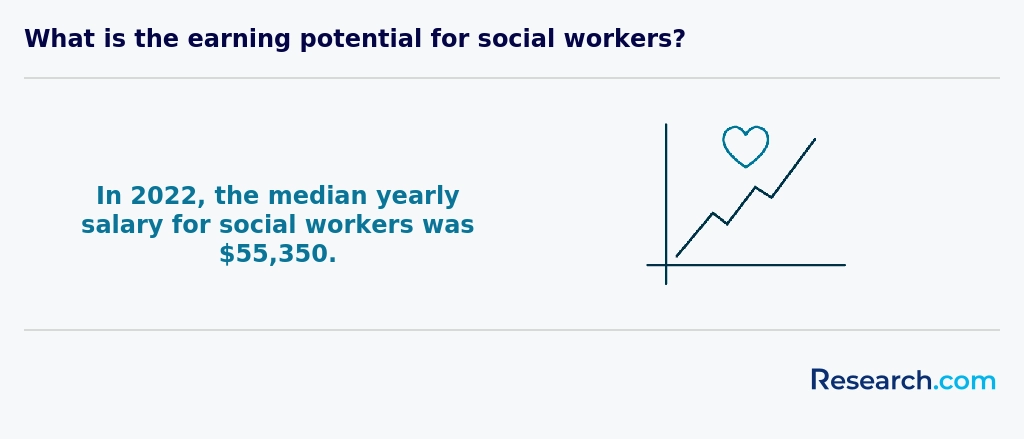
- Social work degree graduates in Rochester can expect competitive salaries, with Social Workers earning a mean annual wage of $68,800 and Community Organizers and Youth Workers making about $83,400 per year, offering financial stability and rewarding career opportunities.
- Graduates from well-known Rochester universities often find diverse career paths in child welfare, community organizing, and residential counseling, allowing them to make meaningful impacts across different social services.
- Choosing an online social work degree from Rochester's reputable institutions offers flexibility and convenience, enabling students to balance studies with personal commitments while preparing for a successful career in social work.
- 2027 Most Popular Social Work Degree Programs Ranking in Rochester
- What can I expect from social work degree in Rochester?
- Where can I work with social work degree in Rochester?
What can I expect from social work degree in Rochester?
The average cost of pursuing a social work degree in Rochester largely depends on whether you attend a public university or a private college. Graduates from public institutions often mention the relief of manageable tuition fees, especially for in-state students, which makes their journey through social work education feel more accessible and less financially stressful.
Conversely, students at private colleges might face higher tuition, but many highlight the advantage of scholarships and financial aid that helped ease their burden. One graduate recalled how these financial supports allowed them to focus deeply on practicums and internships rather than worrying about expenses.
These experiences reflect a broader pattern in Rochester: public schools typically offer more affordable tuition, while private schools provide competitive aid packages. Whether you are navigating the costs at a well-known public university or a respected private college in Rochester, the investment often feels worthwhile due to the hands-on experience and community connections you gain.
Where can I work with social work degree in Rochester?
Graduates from social work programs at institutions like the University of Rochester often find themselves drawn to healthcare settings such as local hospitals, where they provide vital mental health support and help patients transition smoothly from hospital to home. Many share that this direct impact fuels a strong sense of fulfillment and purpose daily.
Others discover rewarding careers within nonprofit organizations like Catholic Family Center or Jewish Senior Life, working closely with vulnerable populations including children and the elderly. These roles frequently involve advocacy and case management, offering graduates opportunities to witness the positive changes brought by their dedication.
Some graduates choose to work within the Rochester City School District, assisting students through emotional and academic challenges. This path reflects a commitment to nurturing the younger generation and addressing community needs at the grassroots level.
Many emphasize that obtaining the Licensed Clinical Social Worker (LCSW) credential in New York State dramatically broadens local career options, from government agencies handling child welfare to nonprofits focusing on homelessness. The abundant opportunities across Rochester's diverse social service landscape make it clear that pursuing a social work degree here opens meaningful and varied career paths.
- Rochester offers accredited social work programs at both bachelor's (BSW) and master's (MSW) levels required for licensure in New York.
- BSW tuition ranges from $10,000 to $25,000 per year for in-state students, while MSW programs cost between $15,000 and $35,000 annually, excluding fees and living expenses.
- Entry-level social workers typically earn $45,000 to $50,000 annually, with mid-career salaries rising to $65,000 to $75,000 depending on role and experience.
- Employment for social workers in Rochester is growing, with opportunities in healthcare, schools, government, and nonprofit sectors.
- Licensure requires an accredited degree, supervised clinical experience, and passing a state exam, with local agencies providing field placements for students.
To practice in New York State, social work graduates must secure appropriate licensure:
- Graduate from a CSWE-accredited BSW or MSW program.
- Pass the ASWB exam to earn the Licensed Master Social Worker (LMSW) credential.
- Complete at least 3,000 hours of supervised clinical experience under LMSW supervision.
- Pass the ASWB Clinical exam to obtain the Licensed Clinical Social Worker (LCSW) license.
- Fulfill continuing education requirements every three years to maintain licensure.
Students seeking flexible MSW options may explore cheapest online msw programs that meet accreditation and exam-eligibility standards.
Evaluating the return on investment for a Social Work degree in Rochester, NY is essential for students weighing program costs against long-term earnings and career satisfaction. On average, graduates from local BSW programs carry $25,000–$35,000 in student loan debt, while MSW holders report debts ranging from $40,000 to $60,000. Considering the mean starting salary of $64,360 for Social Workers and $79,310 for Community Organizers, Rochester graduates typically recoup their undergraduate investment within 5–7 years and their MSW investment within 6–8 years, assuming full-time employment and standard loan repayment plans. Job placement rates for Rochester social work programs exceed 90% within six months of graduation, reflecting strong partnerships between institutions and local agencies. University of Rochester’s MSW students benefit from a 98% placement rate in clinical and policy roles, while Nazareth College reports a 92% placement rate in community-based positions. These outcomes compare favorably to national averages and underscore the value of hands-on field practicum in securing early career positions. To maximize ROI, consider leveraging affordable program options and financial aid. For example, prospective students exploring cost-efficient paths may also find valuable insights in the Affordable Social Work Degree Programs Ranking in Indianapolis, IN, which highlights low-tuition alternatives and innovative scholarship models. By aligning your career goals with a program’s cost structure, alumni network strength, and internship opportunities, you can ensure both financial sustainability and professional growth in the social work field.
The average cost of a social work degree in Rochester reflects a balance between quality education and financial investment. For many students, the median total tuition and fees hover around $55,420, with in-state students often paying closer to $40,638. This variation illustrates how residency status can significantly influence the total cost. Graduates from popular Rochester institutions often recall the initial weight of these expenses but also emphasize the value they gained through comprehensive programs and practical fieldwork.
Consider the experience of students attending well-known universities offering social work degrees in Rochester. Many found that, despite the financial commitment, the strong community support and access to local practicums enriched their learning journey. These real-world experiences often help students connect deeply to their studies, bringing joy and purpose that outweigh the cost concerns. When weighing the average cost of social work degree in Rochester, it's essential to factor in these experiential benefits alongside the tuition itself.
Students also navigate costs by seeking financial aid or scholarships specifically designed for social work majors. Engaging with local agencies through field placements often reduces ancillary expenses, helping students manage transportation and supplies more effectively. For those researching the landscape of social work education, it's helpful to explore in demand social work schools in Rochester to identify programs that align financially and academically with their goals.
To get the most out of your social work education in Rochester, NY, it's essential to consider various factors, including accreditation, program format, and specializations. When researching the best social work programs in Rochester NY, ensure that the programs you consider have the necessary accreditation and specializations that align with your career goals. For instance, those interested in the most in-demand fields can explore in demand social work schools to find programs that cater to their aspirations. By doing so, you can set yourself up for success in this rewarding field, whether you're interested in clinical social work, community organizing, or other areas of social work practice.
When considering a Social Work degree, it’s essential not only to focus on academic excellence and hands-on experience but also to assess the long-term return on investment (ROI) that the degree offers. Prospective students benefit from understanding how tuition costs, potential earnings, networking opportunities, and career growth align with their professional and personal goals. In this section, we delve into practical strategies for evaluating your investment, including comparing local market trends, salary projections, and alumni career trajectories. A key part of this evaluation is analyzing how the skills and experiences gained from a Social Work program translate into career success. Many graduates discover that aside from competitive starting salaries, additional benefits such as specialized training, partnerships with community organizations, and opportunities for advancement contribute significantly to their overall ROI. To help you weigh these factors, consider examining detailed cost-benefit analyses and success stories from alumni who have navigated similar educational paths. For a deeper insight into how the financial and personal rewards compare with the investment, you may want to check out is social work worth it. Furthermore, stay informed about emerging trends in social work, such as evolving licensure requirements and shifting community needs, which can influence future market prospects. Whether you are beginning your studies or in the process of planning your career path, taking a holistic approach to evaluating ROI will empower you to make an informed decision that aligns with both your financial goals and your passion for making a positive impact through social work.
Enrolling in a social work degree program in Rochester typically begins with solid academic preparation. Graduates from universities such as the University of Rochester often reflect on how meeting prerequisites like a high school diploma or GED, combined with coursework in psychology and sociology, built their confidence before starting the Bachelor of Social Work (BSW) journey. Many recall how a GPA around 2.5 or higher opened doors to these programs, even as some schools in Rochester have moved to test-optional admissions, easing stress around SAT or ACT scores.
For those pursuing a Master of Social Work (MSW), the path is both exciting and rigorous. Successful applicants hold bachelor's degrees and share stories of how submitting thoughtful personal statements and obtaining strong letters of recommendation from dedicated professionals helped showcase their passion for social justice. Volunteering with local Rochester social service agencies before applying brought not only experience but also a sense of purpose that resonated deeply throughout their studies.
Many graduates emphasize the value of completing prerequisite courses like statistics, which proved essential for navigating advanced topics and contributed to their feeling well-prepared for graduate challenges.

Many prospective social work students in Rochester, NY, are seeking budget-friendly pathways to earn their MSW without compromising on quality or accreditation. Online formats not only eliminate relocation and campus fees but also often offer reduced per-credit tuition and flexible term schedules. To simplify your search, explore our curated list of the cheapest masters in social work, where programs start as low as $400 per credit hour and still maintain CSWE accreditation. Key cost-saving strategies and program features:
- Tuition Transparency: Look for institutions that publish flat-rate tuition, capped per semester, or offer tiered pricing based on residency.
- Accelerated Tracks: Accelerated online MSW pathways can reduce overall credit requirements, shaving months off your timeline and thousands off your total cost.
- Scholarship and Grant Integration: Many online programs automatically consider applicants for institutional scholarships, reducing the reliance on loans.
- Payment Plans and Deferred Billing: Spreading tuition over multiple installments can ease cash-flow pressures, especially for working professionals. By focusing on these criteria, you’ll find an affordable online MSW program that balances cost, quality of instruction, and rigorous field practicum requirements-ensuring you graduate ready for licensure and equipped to serve your community.
Choosing the best social work degree programs Rochester offers means focusing on accreditation, cost, and flexibility tailored to your lifestyle. Graduates from the University of Rochester often emphasize the confidence gained through CSWE-accredited programs, which ensure their degrees hold weight with New York licensing boards. It's common to hear about the relief they felt seeing their practicum integrated smoothly with local agencies, fostering real-world skills and meaningful community connections.
Cost considerations are key, especially when comparing tuition between the University of Rochester and Rochester Institute of Technology. Many students find that reviewing total expenses, including textbooks and transportation, helps avoid surprises. Some have discovered the value of exploring the cheapest masters in social work to balance quality with affordability.
Flexibility plays a crucial role, too. Those juggling work with studies often praise part-time or evening classes, available at several Rochester schools, as a lifeline. Aligning your choice with career goals-whether clinical social work or child welfare-makes the journey more meaningful. This careful matching of program focus and your personal aspirations is what makes you truly embrace your path in social work.

2027 Most Popular Social Work Degree Programs Ranking in Rochester
Investing in your education is a significant decision that can shape your future, and the Research.com team understands the importance of making informed choices. To assist prospective students in Rochester, we have meticulously crafted the "2027 Most Popular Social Work Degree Programs Ranking in Rochester." Our commitment to quality, credibility, and accuracy is reflected in the extensive research and analysis conducted to compile this ranking.
We utilized the following reputable data sources to ensure a comprehensive evaluation of social work programs:
By exploring this ranking, readers will gain valuable insights into the most popular social work degree programs available in Rochester, helping them make well-informed decisions about their educational paths. For more details on our methodology, please visit our Research.com methodology page.


Frequently Asked Questions About social work
Social work degree students in Rochester can maximize their learning experience by engaging in a variety of practical and academic opportunities. Local universities often offer internships at reputable agencies, such as the Rochester Childfirst Network, which provide real-world exposure and help build essential skills. Participating in community-based projects also deepens understanding of local social issues.
Students should take advantage of networking events hosted by the Rochester-Monroe County Council of Social Services to connect with professionals. According to the Bureau of Labor Statistics, practical experience improves employability for social work graduates by up to 30%. Additionally, enrolling in courses with a focus on culturally competent care prepares students to serve Rochester's diverse population effectively.
Emerging niches within the social work field reflect shifting societal needs and growing specialized demands. In Rochester, particular attention is given to geriatric social work due to the city's expanding elderly population, aligning with national trends reported by the National Association of Social Workers (NASW). This specialty focuses on eldercare, chronic illness management, and end-of-life planning.
Another growing area is health care social work, where practitioners assist patients in navigating complex medical systems, especially in Rochester's robust hospital network. Additionally, social work in technology and digital mental health is gaining traction, addressing access gaps through teletherapy and online platforms.
Trauma-informed care, particularly for veterans and victims of domestic violence, is also increasingly emphasized. These niches offer promising career paths for students pursuing social work degrees in Rochester, reflecting both local community needs and broader U.S. labor trends.
After completing a social work degree in Rochester, preparing for the job market involves several key steps. First, gaining practical experience through internships or volunteer work is essential, as employers value hands-on skills. The New York State Education Department requires social workers to obtain licensure, such as the LCSW, which involves supervised experience and passing a standardized exam.
The Rochester area has a growing demand for social workers in healthcare, education, and child welfare sectors, reflecting national trends projected by the Bureau of Labor Statistics with a 12% employment growth for social workers through 2032.
Networking is also crucial; joining organizations like the National Association of Social Workers can help connect graduates to local job opportunities.
Employers in Rochester seek social work graduates with strong communication and interpersonal skills. These abilities are crucial for effectively engaging with diverse populations and addressing individual client needs.
Critical thinking and problem-solving are highly valued, as social workers often navigate complex cases requiring sound judgment. Familiarity with local policies and resources specific to Rochester enhances a graduate's capability to support clients effectively.
According to the Bureau of Labor Statistics, social workers in New York State must demonstrate cultural competence and adaptability due to the region's diverse communities. Additionally, proficiency in documentation and case management software is increasingly important for accurate record-keeping and compliance.
Finding internships in Rochester for social work degrees involves a few strategic steps. Start by contacting local universities like the University of Rochester and St. John Fisher College, both offering social work programs with established internship connections. These schools often collaborate with community organizations and agencies in Rochester to place students in relevant fieldwork.
Additionally, explore partnerships with Rochester-based social service providers, such as Lifespan and Catholic Family Center, which frequently offer internships for social work students. The New York State Office of Children and Family Services also provides listings of approved internship opportunities.
Networking through local professional groups, like the Rochester Chapter of the National Association of Social Workers, can further increase internship prospects. According to the Bureau of Labor Statistics, internships with direct client contact enhance job placement success in this region.
Holding a social work degree in Rochester significantly enhances career mobility and advancement opportunities. According to the U.S. Bureau of Labor Statistics, social workers with a bachelor's degree experience faster job placement and higher earning potential compared to those without formal education. In Rochester, the demand for licensed clinical social workers is growing steadily, driven by expanding healthcare and social services sectors.
The degree equips graduates with essential skills and credentials required for specialized roles, such as medical social work or school social work. Additionally, many employers in Rochester prefer or require a Master of Social Work (MSW) for supervisory or administrative positions, providing pathways to leadership roles.
Local institutions often offer internships and practicum placements, enhancing practical experience and professional networking, key factors in career progression. Data from New York's Department of Labor highlights that social workers with degrees in Rochester see a median annual wage above the state average, reflecting strong regional career prospects.
Studying for a social work degree in Rochester equips students with skills to collaborate across various professional fields. Local programs emphasize interdisciplinary training by integrating courses in psychology, public health, education, and criminal justice.
Rochester's social work schools often partner with community organizations and healthcare providers, offering practical experience in diverse settings. According to the University of Rochester's Warner School, students engage with teams of professionals to address complex social issues, preparing them for real-world collaboration.
Data from the National Association of Social Workers shows that 68% of social workers in New York work in multidisciplinary teams, highlighting the importance of such training for career readiness.
Choosing between a thesis and a non-thesis social work degree in Rochester depends on your career goals and learning preferences. A thesis program involves original research and a written dissertation, which suits students interested in clinical practice, policy analysis, or pursuing a PhD. Non-thesis programs typically emphasize practical experience and internships, ideal for those aiming to enter the workforce quickly.
In Rochester, accredited institutions like the University of Rochester offer both options. According to the Council on Social Work Education, about 40% of Rochester social work students select thesis tracks, reflecting a strong research orientation in the region.
Consider your professional objectives and time commitment when choosing your path.
Students based in Rochester seeking to study social work abroad have several pathways, primarily through exchange programs and partnerships facilitated by local universities. The University of Rochester and Rochester Institute of Technology offer study-abroad opportunities linked to their social work or human services programs. These programs often include placements or coursework in countries such as the United Kingdom, Australia, and Canada, where social work practices align closely with U.S. standards.
Additionally, students can consider accredited online programs from international universities recognized by the Council on Social Work Education (CSWE), allowing global perspectives without leaving Rochester. According to the National Association of Social Workers, gaining international experience can enhance cultural competency, a vital skill in the Rochester job market, which saw a 12% growth in social work roles from 2018 to 2023.
Part-time job opportunities in Rochester that complement social work degree education often involve roles in local nonprofits, healthcare facilities, and community outreach programs. Positions such as case aides, behavioral health technicians, or patient advocates provide practical experience directly related to social work.
According to the New York State Department of Labor, healthcare and social assistance sectors in Rochester have seen consistent growth, increasing demand for support staff trained in social work principles. These jobs typically offer flexible hours suitable for students balancing coursework.
Additionally, volunteering or part-time roles at organizations like the Rochester Area Community Foundation or mental health clinics can enhance skills in client interaction, assessment, and advocacy, crucial for social work careers.
Social work students in Rochester benefit from strong networking opportunities supported by local universities and community organizations. Institutions such as the University of Rochester and Rochester Institute of Technology often facilitate student engagement through social work clubs, guest lectures, and career fairs focused on social services.
The Rochester Social Work Action Network offers a platform for students and professionals to connect, exchange ideas, and collaborate on local social issues. Additionally, students can participate in internships and fieldwork placements at nearby agencies like the Rochester-based Lifespan and Hillside Work-Scholarship Connection, which enhance professional relationships.
According to the National Association of Social Workers in Rochester, nearly 70% of recent graduates found employment through contacts made during their academic programs. These opportunities support career growth and provide valuable insight into the city's social service landscape.
Alumni networks play a crucial role for social work degree students in Rochester by providing valuable professional connections. Graduates from Rochester institutions often access mentorship opportunities through these networks, which can help guide career choices and field placements.
Local alumni frequently share job openings and internships specific to Rochester's social service sector, increasing students' chances of securing relevant positions. According to the Council on Social Work Education, strong networks contribute to higher employment rates after graduation.
Additionally, alumni events and seminars foster ongoing learning and community engagement, important for social workers focused on Rochester's diverse populations and urban challenges.
In Rochester, students pursuing social work degrees can tailor their programs to align with specific career goals through elective courses and specialized tracks. Many local institutions offer concentrations such as clinical social work, community policy, or child welfare. These options allow students to develop targeted skills relevant to their interests.
Field placements are another opportunity for customization; students often complete internships at Rochester-based agencies, hospitals, or schools, gaining hands-on experience in their preferred area.
Additionally, part-time, online, and evening classes provide flexible scheduling to fit working professionals' needs.
According to the National Association of Social Workers, Rochester sees steady demand for social workers in healthcare and mental health sectors, guiding program focus choices.
Social work students in Rochester face several common challenges during their studies. One major issue is balancing demanding coursework with field placements, which often require 15 to 20 hours per week. According to data from the Rochester Institute of Technology, many students report stress related to managing time between classroom learning and practical experience.
Financial strain is another challenge. The average annual tuition for social work programs in Rochester ranges from $10,000 to $25,000, and many students must cover living expenses in a higher-cost urban area.
Additionally, adapting to emotionally difficult situations encountered during internships can impact mental health. Support services are available but often underutilized.
Finally, navigating licensure requirements post-graduation adds complexity to career planning in social work.
With a social work degree in Rochester, students can pursue several professional certifications to enhance their careers. The most prominent is the Licensed Master Social Worker (LMSW) credential, which allows graduates to practice clinically under supervision. After gaining experience, many aim for the Licensed Clinical Social Worker (LCSW) license, required for independent clinical work.
Additional certifications include those in school social work, gerontology, or substance abuse counseling, which align with specialized career paths. According to the New York State Education Department, Rochester's social work professionals benefit from targeted certifications addressing community and mental health needs.
These credentials increase job opportunities and potential earnings in the Rochester area's social services sector.
To write a winning application for a social work program in Rochester, start by thoroughly researching local universities such as the University of Rochester and Rochester Institute of Technology. Highlight your understanding of Rochester's diverse communities and social challenges. Admissions committees often look for strong personal statements that reflect your motivation, experience, and commitment to social justice. Include any relevant volunteer or work experience, particularly within local agencies or nonprofits. Ensure your letters of recommendation come from professionals familiar with your dedication to social work. Rochester's programs value applicants who demonstrate both academic ability and practical readiness for field placements.
The global perspective on a social work career emphasizes its vital role in addressing complex social issues worldwide. For students in Rochester considering this path, understanding international trends is crucial. Social work practices often focus on human rights, social justice, and community development. Globally, demand for skilled social workers continues to grow due to increasing social challenges such as migration, poverty, and mental health.
In the U.S., including Rochester, social work graduates benefit from rigorous accreditation standards set by the Council on Social Work Education (CSWE), which align with international competencies. According to the Bureau of Labor Statistics, social worker employment in New York State is expected to grow by 13% from 2022 to 2032, reflecting strong job prospects locally and beyond.
Moreover, global collaboration through organizations like the International Federation of Social Workers broadens career opportunities, enabling professionals to adopt best practices across cultures while addressing local needs effectively.
Gaining practical experience while studying for a social work degree in Rochester typically involves completing internships or field placements required by accredited programs. These experiences allow students to apply classroom knowledge in real-world settings such as hospitals, social service agencies, and community organizations. The Council on Social Work Education (CSWE) mandates these supervised field experiences to ensure readiness for professional practice.
Many Rochester institutions partner with local agencies to provide diverse placement options. According to the New York State Education Department, students often complete between 400 and 900 hours of fieldwork before graduation.
This hands-on training enhances skills like client assessment, case management, and advocacy, crucial for success in social work careers.
Choosing the right concentration within a social work degree program in Rochester involves assessing your career goals and local community needs. Rochester's social services focus heavily on mental health, child welfare, and substance abuse treatment, reflecting broader New York State priorities outlined by the New York State Office of Addiction Services and Supports.
Many local social work programs, like those at the University of Rochester and Nazareth College, offer specialized tracks in clinical social work, policy, or administration. Consider which population you want to serve and if you prefer direct practice or organizational roles. Reviewing curriculum details and internship opportunities in Rochester agencies can clarify your options.
Additionally, check if the concentration supports licensure goals, such as becoming a Licensed Clinical Social Worker (LCSW), a requirement for many advanced positions in the region.
- 2027 Most Popular Social Work Degree Programs Ranking in Albany
- 2027 Most Popular Social Work Degree Programs Ranking in Pittsburgh
- 2027 Most Popular Social Work Degree Programs Ranking in Cleveland
- 2027 Most Popular Social Work Degree Programs Ranking in New Brunswick
- 2027 Most Popular Social Work Degree Programs Ranking in Bronx
- 2027 Most Popular Social Work Degree Programs Ranking in New York
- 2027 Most Popular Social Work Degree Programs Ranking in Philadelphia
- 2027 Most Popular Social Work Degree Programs Ranking in Garden City
- 2027 Most Popular Social Work Degree Programs Ranking in Baltimore
- 2027 Most Popular Social Work Degree Programs Ranking in Detroit
See What Experts Have To Say About Studying Social Work
Read our interview with Social Work experts

- Grand Challenges for Social Work https://grandchallengesforsocialwork.org/
- Top Skills Employers Look for in Qualified Social Workers Today - Vitalis https://www.vitalissocialcare.co.uk/career-development/top-skills-employers-look-for-in-social-workers-today/
- Social Work https://international.pwsztar.edu.pl/studying/faculty-of-administration-and-economics/social-work/
- Social Work, B.S.W. | Roberts Wesleyan University https://www.roberts.edu/all-programs/graduate-accelerated/social-work-bsw/
- 2022 Guide to Social Work Scholarships and Financial Aid https://www.onlinemswprograms.com/resources/scholarships-financial-aid-guide/
- Tripod Partners https://www.tripodpartners.com/career-advice/social-work/advancing-your-social-work-career-tips-for-promotion/
- 1+ Social Worker Cover Letter Examples (with In-Depth Guidance) https://www.tealhq.com/cover-letter-examples/social-worker
- Global Definition of Social Work https://www.ifsw.org/what-is-social-work/global-definition-of-social-work/
- Global Perspectives in Social Work https://www.gu.se/en/study-in-gothenburg/exchange-student/courses/sw1118
- Social Work https://www.wits.ac.za/course-finder/undergraduate/humanities/social-work/


