
2027 Most Popular Social Work Degree Programs Ranking in New York

Co-Founder and Chief Data Scientist
Exploring your future in social work starts with knowing which degree programs offer the best opportunities. Our article presents the 2027 Most Popular Social Work Degree Programs Ranking in New York, crafted by the Research.com team of data scientists. This carefully researched ranking helps you find programs that align with your goals and values.
Choosing the right social work degree can open doors to meaningful careers that positively impact communities. By reading this article, you'll gain clarity and confidence to take the next step on your professional journey.
Key benefits of getting social work degree in New York
- Graduates with a social work degree in New York can expect strong salary potential, such as $68,800 annually for Social Workers and up to $83,400 for roles like Community Organizer or Youth Worker, offering financial stability and growth.
- A social work degree opens diverse career paths, from Child Welfare Specialist to Residential Counselor, allowing graduates from New York colleges to find fulfilling roles that match their passion for helping others.
- Choosing an online social work degree offers flexibility and convenience, making it easier for busy New Yorkers to balance studies with work or family while earning a recognized qualification.
- Key benefits of getting social work degree in New York
- What can I expect from social work degree in New York?
- Where can I work with social work degree in New York?
- How much can I make with social work degree in New York?
- 2027 Most Popular Social Work Degree Programs Ranking in New York
- Key Findings
- How long does it take to complete social work degree in New York?
- Affordability and Financial Planning for Social Work Students in New York
- What's the difference between online and on-campus social work degree?
- New York Social Work Licensure Requirements
- What is the average cost of social work degree in New York?
- Emerging Trends and Innovations in Social Work Education
- What financial aid is available to social work degree students in New York?
- Licensing and Certification Requirements in New York
- What are the prerequisites for enrolling in social work degree program in New York?
- Licensing Requirements and Path to Licensure in New York
- What courses are typically in social work degree programs in New York?
- What types of specializations are available in social work degree programs in New York?
- How do you choose the best social work degree in New York?
- What career paths are available for social work degree students in New York?
- What is the job market for social work degree in New York?
- Related Social Work Rankings for Nearby States
- Top Trending Social Work Rankings
- See What Experts Have To Say About Studying Social Work
What can I expect from social work degree in New York?
The average cost of a social work degree in New York varies significantly depending on the institution and level of study. For example, graduates from Hunter College report paying around $6,000 per year for in-state undergraduate tuition, making a Bachelor of Social Work (BSW) more accessible. In contrast, pursuing a Master of Social Work (MSW) at Columbia University can exceed $60,000 annually, reflecting its Ivy League status and extensive resources.
Many students weigh these costs against long-term benefits. Graduates often recall the practical value of field placements in hospitals or community agencies, experiences that felt worth every dollar, as they directly prepared them for real-world social work roles.
For those budget-conscious, public universities like the University at Buffalo offer quality MSW programs around $15,000 to $20,000 per year for in-state students, balancing affordability and reputation. Working professionals appreciate that some programs offer part-time and online options, allowing income without pausing careers.
Where can I work with social work degree in New York?
Graduates with a social work degree from well-known New York programs like Hunter College or Fordham University often find rewarding roles in hospitals and clinics. For example, many work in discharge planning or crisis intervention, directly helping patients and their families manage tough medical situations. This hands-on experience in healthcare settings builds confidence and practical skills quickly.
Another common path is with child welfare agencies such as the NYC Administration for Children's Services. Graduates describe feeling a real sense of purpose investigating abuse cases and supporting families, which requires knowledge of local laws and collaboration with multiple social services.
Working in schools is also popular, with social workers addressing behavioral challenges and counseling students. Former students from SUNY programs emphasize how these roles allow them to make an immediate difference in young lives while connecting families with community resources.
Community nonprofits, government offices, and private employee assistance programs round out typical employers. Graduates often highlight how diverse these settings are, offering opportunities to focus on mental health, housing assistance, or veteran support-matching varied interests and strengths.
How much can I make with social work degree in New York?
Graduates from social work programs at institutions like Columbia University and Hunter College in New York can expect starting salaries aligning with local data. Entry-level roles such as Child Welfare Specialists or Residential Counselors typically earn about $59,190 annually. This steady income supports living expenses in New York while gaining valuable field experience.
For those who advance to roles like Community Organizers or Youth Workers, the mean annual wage rises significantly-to approximately $83,400-reflecting increased responsibility and skill. Several graduates have noted that internships and networking through their schools greatly contribute to securing these higher-paying positions.
General Social Workers earn an average of $68,800 per year in New York, balancing rewarding work with a competitive wage. Graduates often find this salary a strong foundation, especially when pursuing further certifications such as the Licensed Clinical Social Worker (LCSW) license, which can elevate earnings further.
By focusing on specialization and gaining experience, social work graduates quickly improve their financial outlook. Practical exposure through local social service agencies helps new professionals build confidence and see the real-world impact of their roles in communities across New York.
2027 Most Popular Social Work Degree Programs Ranking in New York
How do we rank schools?
Investing in your education is a significant decision that can shape your future, and the Research.com team understands the importance of making informed choices. To assist prospective students in New York, we have carefully developed the "2027 Most Popular Social Work Degree Programs Ranking in New York." Our dedication to quality, credibility, and accuracy is demonstrated through thorough research and detailed analysis in compiling this ranking.
We utilized the following reputable data sources to ensure a comprehensive evaluation of social work degree programs:
By exploring this ranking, readers will gain valuable insights into the most popular social work degree programs offered in New York, enabling them to make well-informed decisions about their education and career paths. For more information on how this ranking was created, please visit our Research.com methodology page.


Key Findings
- New York offers accredited social work programs including Bachelor of Social Work (BSW) and Master of Social Work (MSW), with the MSW needed for clinical work and advanced roles.
- Tuition costs vary: BSW programs cost $7,000 to $15,000 per year at public schools and $20,000 to $35,000 at private schools; MSW programs range from $15,000 to $40,000 annually.
- Starting salaries for social workers with a BSW are around $50,000 to $60,000, while those with an MSW generally begin near $60,000 or more, especially in clinical roles.
- Licensed clinical social workers (LCSWs) earn between $70,000 and $90,000 annually, with some earning over $100,000 in senior or private practice positions.
- The social work job market in New York is growing at about 8% over the next decade, with high demand in cities like New York City and specialized roles in rural areas.
How long does it take to complete social work degree in New York?
Completing a Bachelor of Social Work (BSW) in New York generally takes about four years of full-time study at schools like the City University of New York (CUNY) or Fordham University. Graduates often share how the steady pace allows for balanced coursework and hands-on field experiences, making the process manageable and fulfilling.
If you're aiming for clinical licensure, plan on an additional two years for a full-time Master of Social Work (MSW) after your bachelor's degree. Some students at New York University (NYU) take advantage of accelerated MSW programs, finishing in just one year if they already hold a BSW from a CSWE-accredited program. This option is perfect if you want to jump quickly into advanced practice without sacrificing quality.
Working professionals often choose part-time MSW programs, extending study to three or more years. Graduates appreciate this flexibility as it lets them balance jobs while advancing their careers, though it requires solid time management skills. New York's licensing rules require completing the MSW plus supervised experience, so treat this timeline as part of your journey to becoming a licensed clinical social worker.
Affordability and Financial Planning for Social Work Students in New York
When considering a Social Work degree in New York, it's essential to think about the financial implications and plan accordingly. One crucial aspect to explore is the cost of tuition, which can vary significantly between institutions. Prospective students should research the affordable social work school in New York to find options that fit their budget. Additionally, understanding the various forms of financial aid available, such as scholarships, grants, and loans, can help make a Social Work degree more accessible. By carefully planning and exploring affordable options, students can focus on their studies and future careers in social work without undue financial stress.
What's the difference between online and on-campus social work degree?
Choosing between online and on-campus social work degrees in New York largely comes down to your daily routine and learning preferences. Graduates from a well-known university in New York City often recall how on-campus programs offered them instant face-to-face support-from professors to peers-which helped them navigate the intense internships required by the state's licensing board. This was vital when coordinating placements at nearby community agencies or hospitals.
Meanwhile, students enrolled online praised the flexibility to juggle jobs and family while earning their degrees. Programs accredited by the Council on Social Work Education ensure online learners meet the same standards, even if they're coordinating field internships independently across different regions of New York.
On-campus students also benefit from easy access to counseling and career centers, which can boost confidence through personal guidance. Online students, on the other hand, find that strong self-discipline and careful scheduling become their greatest allies. Either path demands real-world fieldwork, but both prepare you thoroughly for licensed practice in New York.
New York Social Work Licensure Requirements
To practice as a social worker in New York, you must obtain state licensure. Two common credentials are the Licensed Master Social Worker (LMSW) and the Licensed Clinical Social Worker (LCSW).
- Earn a CSWE-accredited degree (BSW for LMSW, MSW for LCSW).
- Complete supervised field hours:
- LMSW: 0–3,000 hours of supervised experience, depending on degree level.
- LCSW: 3,000 hours of post-MSW clinical supervision.
- Pass the appropriate ASWB exam:
- LMSW: Bachelor’s or Master’s level exam.
- LCSW: Clinical level exam.
- Submit application and fees to the New York State Education Department.
- Fulfill continuing education: minimum of 36 contact hours every three years.
Many students pursue msw online programs to meet academic requirements and field practicum in flexible formats.
What is the average cost of social work degree in New York?
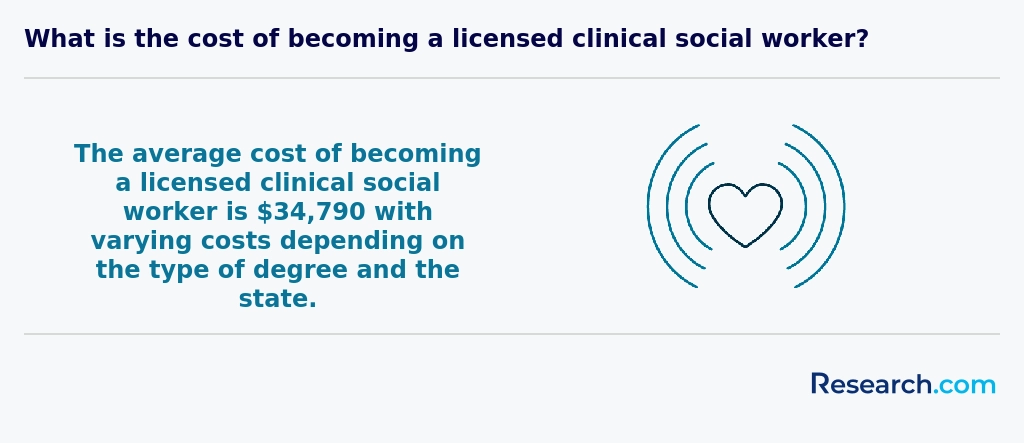
The average cost of a social work degree in New York can vary significantly depending on whether you attend a public or private institution and whether you are an in-state or out-of-state student. On average, students will face a median total cost around $35,884 for in-state programs and about $50,327 if attending as an out-of-state student. These figures reflect the whole cost of the program, including tuition, fees, and other educational expenses.
For students at popular social work colleges in New York, such as those in New York City or upstate campuses, budgeting carefully for these costs is key. Graduates often recall balancing part-time jobs and scholarships to manage finances, especially when pursuing the Master of Social Work (MSW) degree, which typically carries higher expenses than undergraduate studies. Understanding the typical total expenses social work program NY can help you plan realistically and avoid surprises.
Additional expenses like textbooks, field placements, and mandatory fees add to the overall financial picture. Still, many students find a rewarding career in social work is worth the investment. Financial aid, scholarships, and grants can dramatically reduce out-of-pocket costs. To see options that fit your budget and goals, exploring an affordable social work school in New York is a practical step toward managing costs while pursuing your degree.
Ultimately, understanding the average cost social work degree New York helps you prepare fully for your educational journey, making it easier to focus on what matters most: gaining the skills to make a difference in your community.

Emerging Trends and Innovations in Social Work Education
In today’s rapidly evolving educational landscape, social work programs in New York are embracing innovative approaches to better prepare students for the complex challenges of modern practice. Recent trends include the integration of advanced digital learning platforms, virtual field experiences, and interdisciplinary curricula that combine traditional social work principles with complementary fields such as mental health technology and data analytics. Programs are increasingly incorporating telehealth modules and real-time case simulations, which not only enhance theoretical learning but also offer hands-on experiences that mirror real-world scenarios. For instance, students exploring advanced options, like doctorate in social work programs, are at the forefront of blending academic knowledge with practical skills through virtual internships and collaborative research projects. These innovative strategies are designed to improve student engagement and ensure that graduates remain responsive to emerging community needs, underscoring the commitment to quality education and adaptability in a continuously changing professional environment.
What financial aid is available to social work degree students in New York?
Social work students in New York can access several financial aid options that make their education more affordable. Federal aid is a common starting point-Pell Grants can cover up to $7,395 yearly without repayment, helping students manage upfront costs. Federal student loans, with low-interest rates and flexible repayment, fill in gaps when grants fall short.
Many local students take advantage of New York's Tuition Assistance Program (TAP), which offers up to $5,665 annually to residents meeting income and academic criteria. Graduates from schools like NYU Silver School of Social Work often mention how TAP significantly reduced their tuition burden.
Private scholarships, offered by institutions such as Fordham's Graduate School of Social Service, reward both merit and financial need. These awards provide crucial relief for students juggling work and studies.
Graduate students frequently find assistantships or fellowships that waive tuition and provide stipends in exchange for research or teaching. Such roles not only ease finances but build valuable experience. Finally, programs like Public Service Loan Forgiveness reward social workers who commit to underserved New York communities by forgiving federal loans after ten years.
Licensing and Certification Requirements in New York
In New York, social work graduates must obtain state licensure to practice, ensuring clients receive competent, ethical care. Whether you earn your degree through a traditional campus or even a cheap social work bachelor degree online, you’ll need to complete the following steps:
- Earn a CSWE-accredited BSW or MSW: Degrees must be from programs accredited by the Council on Social Work Education.
- Apply for the LMSW (Licensed Master Social Worker): Submit official transcripts and a $390 fee to NYSED.
- Complete supervised practice: Accumulate 3,000 post-master’s supervised clinical hours under an LCSW-supervisor, typically over two to three years.
- Pass the ASWB Clinical Exam: Register with the Association of Social Work Boards, prepare using state-specific content outlines, and schedule your exam.
- Upgrade to LCSW: After passing the clinical exam and finishing supervision, apply for the LCSW license with New York State Education Department and pay the $245 application fee.
- Maintain continuing education: Complete 36 contact hours of approved courses every three years, including ethics, child abuse identification and reporting, and social work jurisprudence. Understanding these requirements early helps you select programs with built-in practicum partnerships and robust exam prep support. Meeting licensure milestones not only validates your expertise but also positions you for advanced clinical roles and leadership in New York’s diverse social service systems.
What are the prerequisites for enrolling in social work degree program in New York?
To enroll in a social work degree program in New York, you'll first need to meet clear academic standards. For a Bachelor of Social Work (BSW), public universities like SUNY or private colleges such as Hunter College generally require a high school diploma or equivalent with a solid GPA, often around 2.5 to 3.0. Applicants benefit from strong backgrounds in English, psychology, or sociology, which helped many graduates engage confidently with coursework and fieldwork.
If you're aiming for a Master of Social Work (MSW), you must hold a bachelor's degree, not necessarily in social work, but ideally related to social sciences. For example, several MSW students at Columbia University found that volunteering in community centers before applying enriched their applications and gave them a real-world edge.
Universities expect key application materials: official transcripts, letters of recommendation, a personal statement, and a resume detailing relevant experiences. Some schools may still require GRE scores, but this is becoming rare.
Importantly, your chosen program must be accredited by the Council on Social Work Education, ensuring it meets New York's licensing requirements. This guarantees your time and investment lead to professional opportunities post-graduation.
Licensing Requirements and Path to Licensure in New York
Becoming a licensed social worker in New York involves a clear, multi-step process designed to ensure practitioners meet rigorous standards of competency and ethics. First, candidates must earn a Master of Social Work (MSW) from a program accredited by the Council on Social Work Education (CSWE) and approved by the New York State Education Department (NYSED). Next, graduates must complete 3,000 hours of supervised post-graduate experience under an NYSED-licensed clinical supervisor. During this period, supervisees refine clinical assessment, diagnostic, and intervention skills essential for effective practice. Upon completing supervised hours, applicants must pass the Association of Social Work Boards (ASWB) Clinical Level Exam. Registration and scheduling are handled through the ASWB portal, and scores are sent directly to NYSED for review. Once the exam is passed and all documentation is verified, candidates apply for licensure online via the NYSED Office of the Professions. Typical processing time ranges from 4 to 8 weeks. Continuing education is also mandatory: LCSWs in New York must complete 36 contact hours of approved coursework every three years, including six hours of professional ethics and three hours focused on child abuse identification and reporting. These requirements uphold high standards of care and reinforce lifelong learning. When comparing program costs and outcomes, students may also wish to explore affordability rankings in other states. For example, our Most Affordable Social Work Degree Programs Ranking in Arkansas offers insights into cost-effective alternatives that maintain CSWE accreditation and strong licensure pass rates.
What courses are typically in social work degree programs in New York?
Social work degrees in New York typically include courses that balance theory and practical application, preparing students for real-world challenges. Graduates from well-known programs at universities like Hunter College or Fordham often highlight key foundational classes such as Human Behavior and the Social Environment, which helps them understand how families navigate complex social systems daily.
Students also dive into Social Welfare Policy and Services, learning about the history and impact of policies shaping New York's diverse communities. For example, one recent graduate shared how studying these policies informed their work with local nonprofits fighting housing instability in the Bronx.
Another essential course is Social Work Practice, which equips students with client engagement strategies through interactive role-playing and field exercises. Many find this especially rewarding as it builds confidence before entering their internships.
Research Methods is critical too, teaching students to analyze data to improve program outcomes. Graduates often reflect on how this skill was invaluable when evaluating initiatives at community health centers in Queens.
What types of specializations are available in social work degree programs in New York?
In New York, social work degree specializations equip students with targeted skills to meet diverse community needs. Graduates from well-known colleges often choose clinical social work, focusing on mental health therapy and counseling, a practical path for those aiming to become Licensed Clinical Social Workers (LCSW). For example, students describe their hands-on clinical training in urban hospitals as both challenging and rewarding, reinforcing their confidence in addressing real-world mental health issues.
Other popular options include child and family social work, where graduates engage in foster care and adoption services, often sharing stories of working directly with vulnerable children in city agencies. Health care social work is another specialization, prepping students to assist patients managing chronic illnesses in hospitals and clinics throughout New York's healthcare system. Many find this specialization deeply fulfilling due to its direct impact on patient well-being.
Additional specializations like school social work and gerontological social work prepare students for roles in educational settings and elder care, respectively. When exploring types of social work programs in New York, graduates emphasize the value of accredited programs that combine theory with fieldwork. Those considering advanced study can also look into doctorate in social work programs available to deepen expertise.
How do you choose the best social work degree in New York?
Start by confirming the program's accreditation through the Council on Social Work Education (CSWE), a requirement for licensure in New York. Graduates from well-known New York schools often mention relief and confidence knowing their degree qualifies them to become Licensed Master Social Workers (LMSW) or Licensed Clinical Social Workers (LCSW). Look into Bachelor of Social Work (BSW) and Master of Social Work (MSW) options; MSW programs commonly offer specializations such as child welfare or mental health, fitting specific career paths.
Evaluate tuition and additional costs carefully. Some graduates from popular New York colleges share how they balanced expenses by choosing public universities or exploring affordable options like the cheap social work bachelor degree online. Location matters too-programs near NYC enhance internship access through local agencies, a factor many students say boosted their hands-on learning and employment prospects.
Finally, review program outcomes. Graduates often recommend seeking schools with high job placement rates and supportive alumni networks to help navigate New York's competitive social work field. Choosing the best social work programs in New York means aligning your studies with both practical needs and career goals.
What career paths are available for social work degree students in New York?
Graduates with a social work degree in New York find diverse and rewarding career paths. Many pursue clinical social work, providing licensed mental health therapy in hospitals or community centers, a choice popular among graduates from institutions like Columbia University or Hunter College. These roles involve real-world impact, supporting individuals through emotional challenges and crises.
Other graduates explore jobs with social work degree New York in child welfare, collaborating with the state's Office of Children and Family Services to protect at-risk children, or in school settings where they assist students with academic and personal struggles. For example, social workers trained at Fordham University often enter school social work, where they make a visible difference daily.
Healthcare social work is another common avenue, with professionals working in hospitals and rehab centers to aid patients managing chronic illnesses. Community organization and substance abuse counseling also remain strong sectors. Those interested in affordable education should check the Most Affordable Social Work Degree Programs Ranking in Arkansas to compare options and factor costs into their planning.
What is the job market for social work degree in New York?
The social work job outlook New York offers steady opportunities, especially for graduates from well-known programs such as those at SUNY Albany or Columbia University. These graduates often find themselves working in hospitals, schools, or government agencies addressing pressing social issues like homelessness or mental health. Many report that hands-on internships during their studies helped them connect with local social service organizations, leading to job offers upon graduation.
Employment opportunities for social workers in New York are strongest in urban centers like New York City, where demand is propelled by diverse populations needing mental health support and family services. Average salaries near $69,000 provide a practical earning potential despite the higher cost of living. For students concerned about expenses, financial aid and loan forgiveness programs can alleviate debt, making careers viable after completing programs that usually span two years. Some graduates recommend supplementing social work credentials with healthcare certifications that pay well to boost job prospects and salary growth.
Frequently Asked Questions About social work
Social work degree students in New York can maximize their learning by engaging actively in field placements, a key component of accredited programs. New York requires a minimum of 900 hours of supervised practicum experience, offering students diverse settings to apply theory to real-world problems. Participating in internships at hospitals, schools, or community organizations enhances professional skills and networking opportunities.
Additionally, students should utilize resources from the New York State Office of Addiction Services and Supports and the Department of Health to stay informed about policy changes affecting social work practice.
Joining professional associations like the New York State Society for Clinical Social Work provides access to workshops and conferences, fostering continuous learning beyond the classroom.
Emerging niches within the social work field in New York reflect shifting societal needs and increased specialization. Areas like geriatric social work are growing rapidly due to New York's aging population, with estimates from the New York State Office for the Aging showing seniors will comprise nearly 19% of the state by 2035. Another expanding niche is healthcare social work, especially in mental health and chronic illness management, driven by New York's focus on integrated care systems.
Additionally, social workers specializing in school-based mental health support are increasingly in demand, as nearly 1.1 million students attend public schools across the state. Environmental social work is also gaining interest, addressing climate change impacts on vulnerable communities.
After completing a social work degree in New York, preparing for the job market involves several important steps. First, obtaining licensure is crucial; New York requires candidates to pass the Licensed Master Social Worker (LMSW) or Licensed Clinical Social Worker (LCSW) exam, depending on career goals. According to the New York State Education Department, over 80% of social work graduates pursue this licensure to enhance employability.
Networking through internships and joining state organizations like the New York State Society for Clinical Social Work can also provide valuable connections. The U.S. Bureau of Labor Statistics forecasts a 12% employment growth for social workers in New York by 2031, emphasizing the need for practical experience and specialization.
Employers in New York seek social work graduates with strong communication skills, both verbal and written, essential for effective client interactions. Critical thinking and problem-solving abilities are also highly valued, helping professionals navigate complex social issues. Cultural competence is crucial, given New York's diverse population, enabling social workers to respect and understand various backgrounds.
Knowledge of state laws and ethical standards specific to New York is important, as compliance ensures professional accountability. Additionally, proficiency in case management and familiarity with digital record-keeping systems are increasingly required in public and private agencies.
According to the New York State Office of Children and Family Services, interpersonal skills rank among top employer priorities, reflecting the relational nature of social work roles in the region.
Finding internships in New York relevant to a social work degree involves several strategic steps. Start by contacting your college's social work department or career services office, as many New York universities maintain partnerships with local agencies. According to the New York State Education Department, over 70% of accredited social work programs require supervised field placements. This creates strong connections with nonprofits, hospitals, and government agencies across the state.
Additionally, exploring listings on the New York State Social Work Education Association website can reveal available internship opportunities. Networking through local Chapter of the National Association of Social Workers (NASW) also helps. Many internships provide practical experience working with populations specific to New York City's diverse communities.
Online platforms like Handshake and Indeed often list social work internships in New York, but verifying their relevance to accredited programs is essential. Early application is recommended due to high demand in this field.
A social work degree significantly impacts career mobility and advancement in New York by meeting state licensure requirements essential for employment. The New York State Office of Children and Family Services (OCFS) requires a Bachelor's or Master's in Social Work for Licensed Social Worker (LSW) or Licensed Master Social Worker (LMSW) credentials. These licenses open doors to roles in healthcare, child welfare, and mental health services.
According to the Bureau of Labor Statistics, social workers in New York earn a median annual wage of approximately $67,000, reflecting increased earning potential with advanced degrees. Higher education also enhances eligibility for supervisory and clinical positions, which require an LMSW or Licensed Clinical Social Worker (LCSW) license.
Graduates with accredited social work degrees are often preferred by New York agencies, nonprofits, and hospitals, improving career growth prospects in a competitive job market.
Studying for a social work degree in New York equips students with the skills necessary for interdisciplinary collaboration across healthcare, education, and criminal justice systems. Many New York programs emphasize practical fieldwork in diverse settings, encouraging partnerships with professionals like nurses, teachers, and law enforcement. This approach reflects New York State's broad social service infrastructure, where 28% of licensed social workers report working in healthcare and community agencies, according to the New York State Education Department. Courses often integrate policy analysis, human behavior, and ethics, fostering a well-rounded understanding that supports teamwork in complex environments.
Choosing between a thesis and a non-thesis social work degree program in New York depends on your career goals and academic interests. Thesis options typically require conducting independent research, which suits students aiming for clinical practice or further graduate study. Non-thesis tracks focus more on coursework and practical training, ideal for those seeking immediate entry into social work professions.
New York State requires licensure for social workers, with over 100,000 licensed professionals as of 2023 (New York State Education Department). A thesis can strengthen your understanding of complex social issues but may extend program duration. Non-thesis paths usually offer a faster route to licensure and employment.
Consider how much time you can commit and whether your goal includes research, teaching, or direct practice. Consulting program advisors at New York universities can also clarify which option aligns best with your professional plans.
Students based in New York seeking social work degrees abroad have several options through U.S. universities offering study abroad programs. Many accredited social work programs in New York, such as those at Hunter College and Columbia University, provide partnerships with international institutions for semester- or year-long exchanges. These opportunities allow students to gain global perspectives while earning credits transferable to their U.S. degree.
The Council on Social Work Education (CSWE) accredits programs ensuring quality, and New York schools often comply with its guidelines for international study.
Furthermore, scholarships and grants administered by New York-based organizations can support study abroad expenses. The 2022 statistics from the New York State Education Department show growing interest in international social work experiences among students, highlighting their value in preparing for diverse practice environments.
Students pursuing social work degrees in New York can find various part-time job opportunities that complement their education and foster hands-on experience. Many local agencies and nonprofits offer positions such as case aides, community outreach assistants, or shelter support workers. These roles provide direct exposure to vulnerable populations, a key component of social work practice. According to New York State's Department of Labor, social assistance jobs are growing steadily, reflecting a strong demand for entry-level support roles.
Working part-time in healthcare facilities or school counseling offices is another viable option, allowing students to observe multidisciplinary teamwork and apply social work theories. These experiences can enhance understanding of social systems and client advocacy.
Volunteering or paid internships within child welfare or mental health organizations in New York City also add valuable insight and networking opportunities. Engaging in such work while studying can improve employment prospects upon graduation, as many agencies prefer applicants with field experience.
Social work students in New York benefit from numerous networking opportunities across academic and professional settings. Many universities partner with local agencies, offering internships where students connect with experienced social workers and community leaders. Organizations like the New York State Chapter of the National Association of Social Workers (NASW-NYS) provide events, workshops, and conferences that foster professional relationships.
Additionally, New York City hosts networking events attracting social work professionals nationwide, presenting chances for mentorship and job discovery. According to NASW-NYS, attending these gatherings significantly enhances employment prospects for graduates entering the competitive social work field in New York.
Alumni networks play a crucial role for social work degree students in New York by offering valuable connections within the professional community. Graduates from New York's social work programs often access job opportunities through alumni referrals, which can increase employment rates in a competitive field. According to the New York State Office of Mental Health, the demand for licensed social workers is growing, making these networks essential for early career support.
These networks also provide mentorship programs where experienced alumni guide current students through licensure processes and career development. Networking events and online platforms enable easy sharing of local internship openings and continuing education resources. Overall, alumni engagement enhances both practical and professional growth for social work students in the state.
Customizing a social work degree program in New York allows students to align their education with specific career goals. Many New York schools offer concentrations such as clinical social work, policy advocacy, or community organizing. Selecting internships within local agencies can provide practical experience tailored to areas like child welfare or mental health.
The New York State Office of Children and Family Services reports that over 20% of social workers specialize in child and family services, highlighting the importance of targeted training. Additionally, students may choose elective courses focusing on issues prevalent in New York, such as urban poverty or immigration.
Flexible program formats, including part-time and online options, further help students balance education with professional or personal commitments. Advisors and faculty support can guide customization to meet licensing requirements and career ambitions.
Social work students in New York face several challenges during their studies. One key difficulty is managing the demanding coursework alongside required field placements, which can total 900 hours for licensure. These placements often expose students to high-stress environments, including vulnerable populations such as homeless individuals or those with mental health issues. According to the New York State Education Department, balancing practical experience with academic responsibilities is a common struggle.
Financial stress is another significant challenge. Tuition for social work programs in New York can range widely, with public in-state schools being more affordable than private colleges. The cost, combined with living expenses in cities like New York City, adds economic pressure. Additionally, ensuring access to mental health support for students themselves is an emerging concern in the context of rising burnout rates documented by local social work associations.
Graduates with a social work degree in New York can pursue several professional certifications to enhance their careers. The most common certification is the Licensed Master Social Worker (LMSW), which requires passing the Association of Social Work Boards (ASWB) exam and meeting state-specific criteria. Many social workers then advance to the Licensed Clinical Social Worker (LCSW) credential, allowing clinical practice and independent client care.
Additional certifications include Certified School Social Work Specialist (C-SSWS) for those working in educational settings. According to the New York State Education Department, over 30,000 social workers hold active licenses, reflecting strong professional standards across the state.
Writing a winning application for a social work program in New York requires a clear demonstration of your commitment and understanding of the field. Most programs seek candidates with strong empathetic skills, academic readiness, and relevant volunteer or work experience. Highlight any community service or internships related to social work, as New York schools emphasize practical engagement.
In your personal statement, clearly explain your motivation to pursue social work and how you plan to contribute to diverse urban populations prevalent in New York. According to the New York State Education Department, programs often value applicants who are aware of local social issues such as housing, mental health, and child welfare.
Ensure you meet all academic prerequisites, including minimum GPA requirements, usually around 3.0 for top programs. Standardized test scores may not be required, but strong letters of recommendation, preferably from mentors familiar with your social work passion, strengthen your application.
The global perspective on social work careers highlights the profession's vital role in promoting social justice and improving well-being worldwide. In the US, and particularly in New York, social work education aligns with international standards set by organizations like the International Federation of Social Workers (IFSW).
New York offers diverse programs reflecting global challenges such as migration, poverty, and mental health. According to the Bureau of Labor Statistics, social work employment in New York is expected to grow 10% by 2031, reflecting increased demand locally and global awareness. This growth supports the profession's expanding role in humanitarian efforts and policy development across borders.
Social workers trained in New York often engage with multicultural populations and global issues, benefiting from curricula infused with international case studies. This prepares graduates to contribute effectively not only in the US but also in international contexts.
Gaining practical experience is a key component of social work degrees in New York. Most accredited programs require students to complete supervised field placements or internships in real-world settings. These placements often take place at hospitals, schools, community organizations, or government agencies across New York State.
The Clinical Social Work Association notes that such hands-on opportunities help students develop essential skills and meet licensing requirements. According to the New York State Education Department, students must complete a minimum of 900 hours of supervised fieldwork to qualify for licensure as a Licensed Master Social Worker (LMSW).
Additionally, some programs offer specialized labs and service-learning projects that allow students to engage with local populations directly. These experiences enhance understanding of New York's diverse social challenges.
Choosing the right concentration within a social work degree in New York depends on your career goals and interests. Common concentrations include clinical social work, school social work, and community organization. New York State requires specific licensing for clinical social workers, which affects program selection. According to the New York State Education Department, about 35% of social workers pursue clinical licensure, emphasizing mental health and therapy skills.
Consider the populations you want to serve, such as children, families, or the elderly. Research programs accredited by the Council on Social Work Education (CSWE) to ensure quality education. Additionally, check internship opportunities, as real-world experience is vital in New York's diverse communities.
Related Social Work Rankings for Nearby States
- 2027 Most Popular Social Work Degree Programs Ranking in Connecticut
- 2027 Most Popular Social Work Degree Programs Ranking in Massachusetts
- 2027 Most Popular Social Work Degree Programs Ranking in Ohio
- 2027 Most Popular Social Work Degree Programs Ranking in Maine
- 2027 Most Popular Social Work Degree Programs Ranking in Kentucky
- 2027 Most Popular Social Work Degree Programs Ranking in North Carolina
- 2027 Most Popular Social Work Degree Programs Ranking in Indiana
- 2027 Most Popular Social Work Degree Programs Ranking in Georgia
- 2027 Most Popular Social Work Degree Programs Ranking in Florida
- 2027 Most Popular Social Work Degree Programs Ranking in Alabama
Top Trending Social Work Rankings
See What Experts Have To Say About Studying Social Work
Read our interview with Social Work experts

References
- Social Work Salary with Masters on the Rise https://newmanu.edu/nth-degree/social-work-salary-with-masters-on-the-rise
- Social Work https://www.wits.ac.za/course-finder/undergraduate/humanities/social-work/
- The Power of Finding Your Niche as a Social Worker https://www.credentialedapparel.com/blogs/news/the-power-of-finding-your-niche-as-a-social-worker
- Social Work Networking Nights - National Association of Social Workers https://www.naswma.org/page/218
- Social Work Careers https://socialworklicensemap.com/social-work-careers/
- Social Work https://international.pwsztar.edu.pl/studying/faculty-of-administration-and-economics/social-work/
- Types of Social Work Jobs: 4 Career Paths https://onlinedegrees.keuka.edu/blog/types-of-social-work-jobs
- Social Work Education: Interdisciplinary teams a growing area of training https://www.socialworkblog.org/featured-articles/2018/04/social-work-education-interdisciplinary-teams-a-growing-area-of-training/
- Interdisciplinary Collaboration in Social Work and the ASWB Exam https://agentsofchangeprep.com/blog/interdisciplinary-collaboration-in-social-work-and-the-aswb-exam/
- New York's Most Affordable Bachelor of Social Work (BSW) Programs - NewYorkSocialWorkEDU https://newyorksocialworkedu.org/new-yorks-most-affordable-bachelor-of-social-work-programs/


