University at Buffalo
- Type:
- Public
- Programs:
- 4 years or more


Cost
- Cost / year
- $31,688
- Tuition & fees
- $11,036
- Avg. aid
- $10,093
- Receiving aid
- 86%
Admissions
- Acceptance rate
- 74%
- SAT range
- 1210–1380
- ACT range
- 27–32
Outcomes
- Graduation rate
- 75%
- Median salary
- $49,466
- 1 yr after graduation
What is the history of University at Buffalo?
The University at Buffalo (UB) began in 1846 as a private medical school in Buffalo, New York. Millard Fillmore, a former U.S. president, served as its first chancellor. The institution expanded into other professional and academic fields before joining the State University of New York system in 1962.
That transition helped shape UB as a large public research university. Its South Campus retains much of the older university setting, while the North Campus in Amherst developed as its principal center for many undergraduate programs. UB's downtown presence expanded further when the Jacobs School of Medicine and Biomedical Sciences moved into a new building on the Buffalo Niagara Medical Campus in 2017. These developments explain why an applicant's classes and clinical experiences may be spread across more than one campus.
What are the faculties and departments at University at Buffalo?
UB offers bachelor's, master's, doctoral and professional degrees through a broad collection of schools and colleges. Undergraduates can study subjects ranging from English and biology to computer science, engineering, business and nursing; graduate and professional students have additional options in fields such as law, medicine and dentistry.
Its academic units include the College of Arts and Sciences; the schools of Architecture and Planning, Engineering and Applied Sciences, Management, Nursing, Pharmacy and Pharmaceutical Sciences, Public Health and Health Professions, and Social Work; the Graduate School of Education; the School of Dental Medicine; the School of Law; and the Jacobs School of Medicine and Biomedical Sciences. Program choice matters because admission standards, course sequencing, clinical placements and campus locations can differ substantially. Students should use the catalog for their intended entry year to distinguish a major from a professional program that requires a separate application.
Undergraduates also complete the UB Curriculum, the university's general education program. Students planning to change majors or transfer should check how its requirements fit alongside those of their chosen degree.
What is the location of University at Buffalo?
UB operates across the Buffalo area rather than on one compact campus. North Campus is in suburban Amherst; South Campus is in Buffalo's University Heights area; and the Downtown Campus includes health-related facilities near the Buffalo Niagara Medical Campus.
This layout affects daily travel. UB provides transportation between major campus locations, and the NFTA Metro Rail serves the South Campus area and downtown Buffalo. North Campus is not on the rail line, so students combining classes or activities across campuses should allow time for shuttles, buses or driving. Parking rules and permit costs vary by location. Buffalo Niagara International Airport is the area's principal airport and may be useful to students traveling from farther away.
What is the mission and vision of University at Buffalo?
UB describes its mission as combining education, research and public service at a public university. Its stated priorities include creating knowledge, educating a diverse student body and applying scholarship to problems beyond campus.
Those aims are reflected in the university's mix of undergraduate teaching, graduate study, professional education and research. For a prospective student, the practical question is how those activities reach a particular program: access to research, community-based learning or specialized facilities depends on the major and on available opportunities. UB is a public SUNY institution, not a religiously affiliated university.
University at Buffalo Rankings
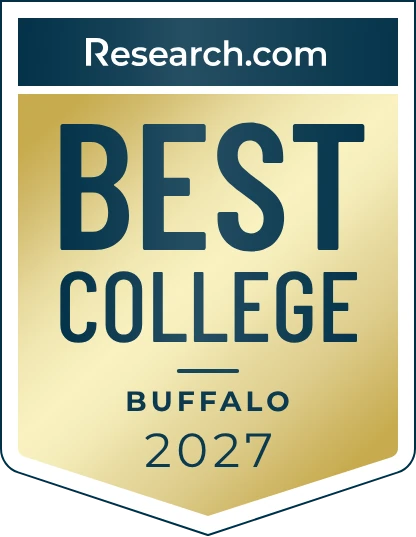
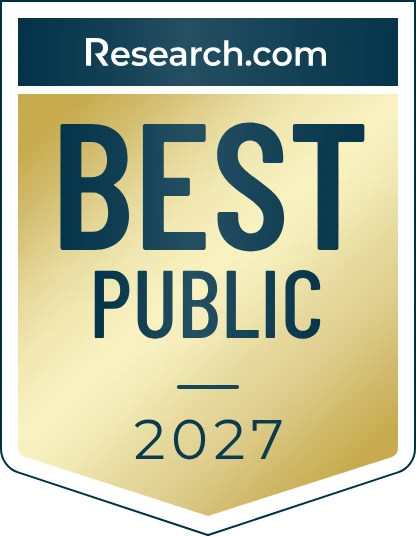
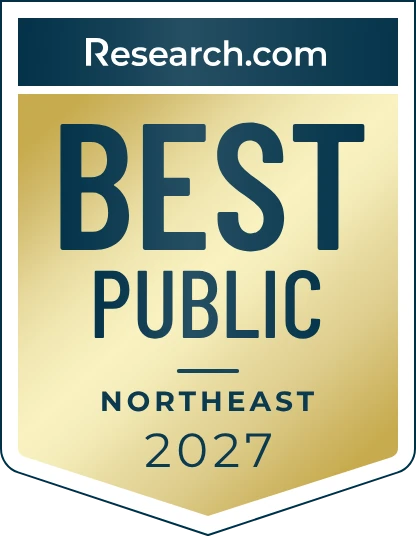
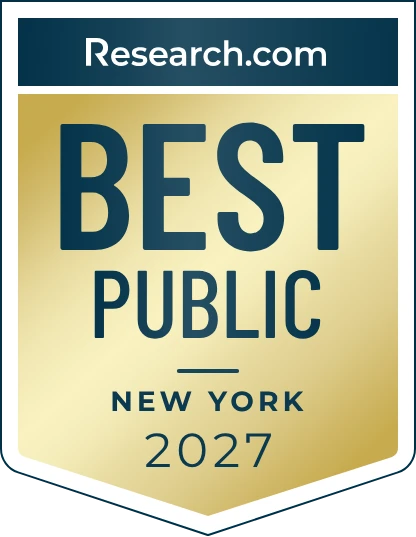
Research.com Awards








University at Buffalo Profile - Basic Information
Name of the institution
University at BuffaloLevel of institution
Four or more yearsControl of institution
PublicSetting type
Suburb: LargeInstitutional Category
Degree - granting, primarily baccalaureate or aboveInstitution size category
20,000 and aboveSchool type
UniversityMain student body
CoeducationalCalendar system
SemestersFoundation year
1846University at Buffalo Accreditation
University at Buffalo is institutionally accredited by the Middle States Commission on Higher Education, an accrediting agency recognized by the U.S. Department of Education. Accreditation confirms that the school meets quality standards and is required for students to receive federal financial aid.
University at Buffalo Programs and Degrees
 Certificate of at least 1 year, but less than 2 yearsBachelor's degreePostbaccalaureate certificateMaster's degreePost-master's certificateDoctor's degree - research/scholarshipDoctor's degree - professional practice
Data last updated on November 5, 2026
Data sources: IPEDS 2024-25, Peterson 2026, College Scorecard 10/2026, Clery 2024 (2023-24), OpenAlex 2026
Figures on this profile come from federal and third-party datasets in the editions listed above and are refreshed periodically, so they may differ from what the institution currently reports. Confirm costs, deadlines and requirements with the school before making decisions.