2027 Most Popular Psychology Degree Programs Ranking in College Park

Co-Founder and Chief Data Scientist
Choosing the right psychology degree program is an exciting step for students in College Park. This article introduces the 2027 Most Popular Psychology Degree Programs Ranking in College Park, created by the Research.com team of data scientists. It aims to help you find programs that match your goals and interests.
By exploring this ranking, you'll gain valuable insights to make a confident decision about your education. Earning a psychology degree opens doors to meaningful careers and personal growth. Let's explore the top options together to support your path forward.
Key benefits of getting psychology degree in College Park
- Salary for psychology degree graduates: Graduates can expect competitive wages, such as a Human Resources Specialist earning an average of $76,060 annually or a Marketing Research Analyst making around $83,190 per year.
- Potential career paths: Psychology degree holders from College Park universities can pursue diverse roles like Clinical Research Associate or Survey Researcher, both offering meaningful work with salaries near $62,370 annually.
- Benefits of an online psychology degree: An online degree from a College Park institution offers flexibility and convenience, allowing graduates to balance work and study while achieving similar job opportunities as traditional degrees.
- 2027 Most Popular Psychology Degree Programs Ranking in College Park
- What can I expect from psychology degree in College Park?
- Where can I work with psychology degree in College Park?
What can I expect from psychology degree in College Park?
The average cost of pursuing a psychology degree in College Park, particularly at the University of Maryland, typically reflects in-state tuition rates around $10,000 annually, while out-of-state students may face costs closer to $36,000 per year. Graduates often recall balancing these expenses with financial aid, scholarships, and part-time work, easing the financial load. Many describe this investment as worthwhile because of the hands-on research opportunities and the access to renowned faculty that enrich their learning experience.
Students appreciate how the university's programs connect them with real-world experiences, such as internships in nearby Washington, D.C., which not only sharpen their skills but also build meaningful professional networks. These practical aspects provide a strong return on investment, fostering confidence and excitement about future career prospects in psychology and related fields.
While cost is a significant consideration, the vibrant academic community and extensive resources at College Park help students feel supported, making the financial commitment feel more manageable and purposeful.
Where can I work with psychology degree in College Park?
Graduates from psychology programs in College Park often discover a variety of rewarding career paths that align with their passion for helping others. Many find fulfilling roles in healthcare facilities such as hospitals or mental health clinics, including the renowned University of Maryland Medical Center nearby, where practical experience complements academic learning. This setting offers a chance to directly impact patient well-being, reinforcing the meaningful nature of this work.
Others channel their skills into education, supporting students as school psychologists or counselors within Prince George's County schools. These roles create daily opportunities to foster mental health and learning, making the educational environment a deeply satisfying place to apply psychology.
Social service agencies in the region also attract graduates eager to engage in community outreach or mental health advocacy. Working in nonprofit organizations or local government, they contribute to social growth and resilience, often feeling a profound connection to their community.
Some graduates embrace psychology's versatility by stepping into business roles, where understanding human behavior enhances employee development and market strategies. The diverse options within College Park reveal how a psychology degree can open doors to genuinely impactful and enriching work experiences.
Graduates with a psychology degree from institutions around College Park often find salary opportunities that reflect their education level and chosen career path. For example, many bachelor's degree holders step into roles like human resources specialists, where the mean annual wage is about $76,060 according to the latest data. This represents a solid starting point, especially for those eager to apply their understanding of human behavior in workplace settings.
Some graduates pursue positions such as marketing research analysts, earning an average yearly salary near $83,190. Here, the ability to analyze data and consumer behavior becomes a valuable asset, particularly within local companies or agencies in the College Park area.
Others may begin as clinical research associates or survey researchers, roles typically offering mean wages around $62,370. These positions let graduates engage with research projects, often connected to the academic community at esteemed universities in College Park, which adds rewarding experience alongside steady pay.
The diversity of salaries reflects real-life stories from recent graduates, who find that while a psychology degree opens many doors, tailoring one's skills toward specific roles greatly influences earnings. For those passionate about working directly with people, human resources roles bring not only good pay but also fulfilling daily interactions.
- In-state undergraduate tuition at the University of Maryland is about $11,700 per year, while out-of-state students pay around $39,000 annually.
- Graduate psychology programs cost approximately $25,000 to $30,000 per year for in-state students, excluding fees and living expenses.
- Entry-level psychology jobs in College Park offer salaries between $45,000 and $55,000 per year shortly after graduation.
- Experienced psychologists or those with advanced degrees can earn $70,000 to $100,000 annually depending on specialization.
- The local job market is strong with opportunities in healthcare, education, government research, and private institutions.
- Licensure for many psychology careers requires a doctoral degree and supervised clinical hours, and the program supports preparation for these requirements.
Completing a psychology degree in College Park typically takes about four years of dedicated full-time study at institutions like the University of Maryland. Graduates often recall the rewarding challenge of balancing around 120 to 130 credit hours, which mix general education with core psychology courses. Many found the hands-on experiences-such as internships or research projects-particularly fulfilling, as these opportunities enriched their learning without stretching the usual timeframe.
For those pursuing advanced degrees, the journey extends thoughtfully. Master's programs generally add about two more years, providing space for deeper research and skill refinement. Doctoral students, immersed in original research and clinical practice, experience a more variable duration, usually between five to seven years beyond their bachelor's degree. Many who have walked this path appreciate the rigorous yet empowering process, recognizing how it prepares them thoroughly for professional life in psychology.
Choosing psychology in College Park means embracing a well-structured timeline while enjoying rich academic and practical experiences that many graduates look back on with pride and satisfaction.
When considering a psychology program in College Park, MD, it's essential to evaluate several factors that can impact your educational experience and future career. One crucial aspect is the program's accreditation and reputation, as this can affect the value of your degree and job prospects upon graduation. Another important consideration is the curriculum and available specializations, such as counseling psychology or behavioral neuroscience, which can help you tailor your education to your interests and career goals. Additionally, opportunities for research, internships, and practical experience can provide valuable hands-on training and enhance your employability. For those interested in exploring top-rated programs, visiting a popular psychology school can offer insights into the academic environment, faculty expertise, and alumni success stories, helping you make an informed decision about your educational path.
Choosing between online and on-campus psychology degrees in College Park often comes down to how students experience learning and connection. Graduates from the University of Maryland recall the energizing atmosphere of face-to-face classes, where lively discussions and hands-on lab work deepen understanding. Being on campus means quick access to resources like counseling centers and study groups, fostering a sense of community that many find reassuring and motivating.
In contrast, those who pursued their psychology degrees online appreciated the flexibility to balance work and family while studying at their own pace. However, some found that missing out on physical internships or lab hours made it trickier to gain clinical experience. Many online students at institutions offering remote programs in Maryland describe the need for strong self-discipline but value the ability to tailor their schedules without commuting hassles.
The financial aspect also colors these choices. On-campus students in College Park often face higher tuition plus living expenses, while online learners benefit from potentially lower costs and the convenience of studying from home. Both paths maintain rigorous standards, but the day-to-day realities shape each student's journey uniquely.
After earning a psychology degree in College Park, MD, many graduates pursue state licensure or national certification to practice clinically or in specialized roles. Below are the key steps and requirements: 1. Accredited Degree Completion • Obtain a bachelor’s degree from a regionally accredited institution. • For clinical roles, enroll in a CACREP-accredited master’s or APA-accredited doctoral program in psychology. 2. Supervised Professional Experience • Maryland requires at least 2,000 hours of supervised experience for the Licensed Graduate Professional Counselor (LGPC) license, or 1,500 hours for the Licensed Clinical Professional Counselor (LCPC). • Aspiring clinical psychologists must complete a 1-year, 1,500-hour internship as part of a doctoral program. 3. Examination Requirements • Pass the Examination for Professional Practice in Psychology (EPPP) for psychologist licensure. • Counselors and marriage-family therapists take the National Counselor Examination (NCE) or state-approved equivalents. 4. State Board Application • Submit official transcripts, supervisor evaluations, and exam scores to the Maryland Board of Examiners of Psychologists or the Board of Professional Counselors and Therapists. • Pay application fees and complete background checks. 5. Continuing Education and Renewal • Maintain licensure with 40 hours of approved continuing education every two years. • Advanced certifications-such as board certification in clinical neuropsychology-often require additional specialized training and peer-reviewed publications. If you’re debating career paths beyond traditional licensure or pondering alternative mental health roles, you might ask is becoming a therapist worth it to explore non-degree-based routes to practice.
The average cost of a psychology degree in College Park reflects a clear divide between in-state and out-of-state students, with median total costs standing around $11,809 for in-state and $58,808 for out-of-state students. Many graduates recall the initial shock of these figures, especially out-of-state attendees, but they also emphasize the value they gained by investing in a program known for its strong academic reputation and research opportunities at institutions like the University of Maryland, College Park.
Students pursuing psychology here often share how managing these costs was challenging yet rewarding. In-state students appreciate the more accessible tuition and fees, which enable them to focus more on learning and less on financial stress. This affordability plays a significant role in nurturing their enthusiasm for the field. The College Park psychology degree tuition and fees clearly shape each student's experience, balancing aspirations with practical budgeting strategies.
Graduate students, meanwhile, face varied expenses, but many have found financial relief through assistantships or fellowships, allowing them to immerse themselves in groundbreaking research without excessive burdens. For those aiming to build a career in psychology or related areas, it's worth exploring opportunities tied to neuropsychology job growth, which can offer both meaningful work and financial stability.

Planning ahead ensures you meet all requirements and maximize funding opportunities.
- August–October: Research College Park psychology programs, attend virtual/info sessions, request official transcripts.
- November 1: Early action/priority deadline for University of Maryland and many four-year programs.
- December 1–January 15: Submit FAFSA and Maryland state grant applications.
- January 15–February 15: Regular decision deadline for fall admission; finalize essays and recommendation letters.
- Rolling Deadline: Community colleges like Prince George’s Community College accept applications through June for fall start.
- Graduate Deadlines: Master’s programs often close by December; explore cheap psychology masters programs for flexible options.
Financial aid for psychology students in College Park often becomes a pivotal support, shaping the academic journey with relief and encouragement. Graduates from institutions like the University of Maryland frequently reflect on the difference federal aid made, especially grants like the Federal Pell Grant, which can cover a substantial portion of tuition without requiring repayment.
Many found Direct Subsidized Loans a vital resource, easing their worries with low-interest rates and government-covered interest during active enrollment. Graduate psychology students often appreciate Direct Unsubsidized Loans for maintaining their education momentum, despite the accruing interest, which feels manageable when balanced with scholarships or assistantships.
State grants such as the Guaranteed Access Grant are another beacon of hope for many Maryland residents, reducing the financial strain and often unlocking opportunities otherwise out of reach. Some have benefited from departmental scholarships offered by psychology programs, which recognize academic dedication and research promise.
Work-study positions hold particular value, blending financial support with hands-on experience-imagine working in a counseling center or assisting research projects, gaining skills while funding your studies. Such experiences often become cherished milestones, fueling both confidence and professional growth.
Understanding and exploring these options early can transform the College Park psychology experience from daunting to empowering, allowing students to focus more fully on their passions and vocations.
Becoming a licensed psychologist or counselor in Maryland involves meeting education, supervision and exam requirements:
- Earn a psychology degree from an accredited institution
- Complete supervised clinical experience (e.g., 3,000 hours for a licensed psychologist; two years post-master’s for an LPC)
- Pass the national exam (EPPP for psychologists; NCMHCE for professional counselors)
- Submit an application to the Maryland Board of Examiners in Psychology or the Board of Professional Counselors and Therapists
- Fulfill continuing education credits every license renewal period
For students balancing work and study, consider an affordable online option like cheapest online psychology degree psychology to satisfy coursework requirements.
Enrolling in a psychology degree in College Park typically begins with a solid academic foundation, as many graduates recall that meeting the requirement of a high school diploma or equivalent was just the start. Students at renowned institutions here often emphasize the importance of a competitive GPA-usually around 3.0 or higher-which reflects dedication and helps navigate the challenging coursework ahead.
Many found that strong performances in core subjects like English, math, and science not only built confidence but also prepared them for the analytical nature of psychology studies. Some universities near College Park have even adopted test-optional policies, yet submitting good SAT or ACT scores often gave applicants an extra boost in their applications.
Graduate hopefuls shared how a bachelor's degree in psychology or related fields, alongside completed courses in statistics and research methods, became essential stepping stones. For example, experiencing hands-on research or internships locally helped deepen their understanding and forged meaningful professional connections, making their academic journey more engaging and fulfilling.

College Park universities not only offer top-notch academic programs but also provide a vibrant campus life that enhances the overall educational journey. Students benefit from a wide range of extracurricular activities, from student-led clubs and organizations to comprehensive wellness and counseling services that support both academic and personal growth. Many institutions host career fairs, networking events, and community service initiatives, helping students build valuable connections and explore career opportunities early on. Furthermore, state-of-the-art facilities, such as research labs, libraries, and technology centers, create an environment that fosters innovation and collaboration. For those seeking flexibility while maintaining quality education, exploring online options can be a great alternative; you can learn more about what are the best online psyd programs available to suit your lifestyle. Overall, the supportive campus resources and diverse student life activities in College Park play a crucial role in shaping a well-rounded, enriching college experience.
Students pursuing psychology degrees in College Park, particularly at well-known universities like the University of Maryland, often find their studies enriched by a thoughtfully structured curriculum. Graduates frequently reflect on core courses such as Introduction to Psychology, which grounds them in the fundamentals of human behavior and mental processes, creating a solid foundation for more advanced topics.
The Research Methods in Psychology course stands out as a turning point, where many recall the excitement of designing experiments and analyzing real data-skills that transform abstract theories into tangible understandings. Equally impactful are classes like Biological Psychology and Cognitive Psychology, where the intricate connections between brain functions and thoughts come alive, deepening students' curiosity about the mind.
Developmental and Social Psychology courses often inspire reflection on personal growth and social influences, offering relatable insights that students carry beyond the classroom. Electives in areas such as clinical or industrial-organizational psychology further allow learners to tailor their education, making their College Park experience both comprehensive and personally meaningful.

Psychology degree specializations College Park students encounter are thoughtfully designed to align with both academic interests and practical career aspirations. Graduates from the University of Maryland, College Park often appreciate how their clinical psychology focus enabled them to confidently engage in diagnosing mental health disorders, combining theory with hands-on internships. Those pursuing cognitive neuroscience found excitement in understanding brain processes that shape behavior, which opened doors to experimental psychology or neurological rehabilitation careers.
College Park psychology program focus areas also include developmental psychology, a path many chose to better grasp human growth from infancy to old age-preparing them for counseling, education, or research roles. Social psychology students frequently shared how their experiences studying interpersonal influences gave them a keen edge in organizational dynamics and marketing sectors. Health psychology, another specialization, attracted those passionate about integrating psychological principles with public health and behavioral medicine.
Additionally, students interested in broader mental health roles sometimes explore pathways leading to becoming a licensed clinical social worker california, reflecting the practical versatility highlighted within these programs. These diverse options create enriching opportunities for a well-rounded education rooted in the realities of College Park's academic environment.
Choosing the best psychology degree in College Park means balancing your passion with practical considerations. Graduates from the University of Maryland often highlight how the regionally accredited programs gave them confidence that their degree held weight with employers. Picking between a B.A. or B.S. degree is crucial; many students found that a B.A. fits well if they enjoy broader social sciences, while a B.S. prepares those eager for research-intensive careers. When exploring affordable psychology degrees College Park offers, keep in mind that in-state tuition often makes public universities an attractive choice without sacrificing quality.
One graduate shared that hands-on research and community internships at local hospitals profoundly shaped their understanding and boosted employability. Programs that support real-world experience like these build valuable skills beyond textbooks. Faculty mentorship also surfaced repeatedly as a key factor in student success, providing guidance throughout the academic journey and beyond. For those considering clinical paths, attending lpc workshops wisconsin helped some graduates clarify career goals after college.
Graduates with a psychology degree in College Park discover a variety of fulfilling career paths tailored to their passions and skills. Many find clinical psychology rewarding, drawing from their graduate studies and supervised experience at local institutions to support mental health in community settings. Others thrive in industrial-organizational psychology, using insights gained near government agencies and private firms to enhance workplace culture and productivity. These roles often provide a sense of accomplishment through tangible impacts on employee well-being.
School psychology is another meaningful avenue, where graduates contribute to student success by addressing emotional and behavioral challenges within Maryland's educational system. Their work fosters positive change and personal connection, reflecting a deep commitment to community care. Additionally, careers in research-whether at universities or agencies-allow graduates to engage with ongoing studies, including cognitive psychology publications, enriching knowledge in the field.
For students exploring psychology degree careers in College Park, these diverse roles highlight the area's unique opportunities to merge academic learning with real-world impact.

The psychology degree job outlook College Park reveals a dynamic range of opportunities shaped by the University of Maryland's strong program and the area's proximity to government and healthcare institutions. Graduates speak positively about their ability to engage in real-world research projects, especially in neuroscience and behavioral studies, which enrich classroom learning with hands-on experience. This connection creates a network that often leads to advanced clinical or research roles, a reality that many find inspiring as they transition from study to practice.
Career opportunities for psychology graduates College Park are particularly robust for those advancing beyond bachelor's degrees. Entry-level roles such as behavioral health technicians offer a valuable stepping stone, while master's and doctoral holders often find rewarding positions in counseling, organizational psychology, and federal research agencies like NIH. These roles typically offer salaries ranging broadly from $40,000 at the start to over $100,000 for specialized professionals, reflecting growth tied to expertise and location.
Students often weigh these prospects against the cost of local education, which remains reasonable at the University of Maryland. Many secure assistantships that ease financial pressures while gaining vital experience. Prospective students should also explore how these local advantages compare to wider markets through perspectives found in psychology degrees new york job prospects, helping frame their own journey in College Park's market.
2027 Most Popular Psychology Degree Programs Ranking in College Park
Investing in your education is a significant decision that can shape your future, and the Research.com team understands the importance of making informed choices. To assist prospective students in College Park, we have meticulously crafted the "2027 Most Popular Psychology Degree Programs Ranking in College Park." Our commitment to quality, credibility, and accuracy is reflected in the extensive research and analysis conducted to compile this ranking.
We utilized the following reputable data sources to ensure a comprehensive evaluation of psychology degree programs:
By exploring this ranking, readers will gain valuable insights into the most popular psychology degree programs available in College Park, helping them make well-informed decisions about their educational journeys. For more details on our methodology, please visit our Research.com methodology page.

Frequently Asked Questions About psychology
Psychology degree students in College Park can maximize their learning by actively engaging in research opportunities offered by the University of Maryland, which hosts one of the top psychology programs nationally. Participating in faculty-led projects or independent studies helps deepen understanding beyond textbooks. According to the American Psychological Association, hands-on research experiences enhance critical thinking and practical skills crucial for careers in psychology.
Students should also take advantage of internship programs in nearby clinical, educational, or social service settings. These real-world experiences provide valuable context and networking benefits.
Additionally, joining student organizations connected to mental health and psychology can foster peer support and professional growth. Utilizing campus resources such as counseling centers or workshops on experimental methods and data analysis further enhances academic success.
The field of psychology continues to evolve, creating new specializations attractive to students in College Park and beyond. One emerging niche is neuropsychology, which examines brain-behavior relationships and benefits from advances in brain imaging technology. The University of Maryland near College Park supports strong research in this area.
Another growing area is health psychology, focused on how psychological factors affect physical health and illness management. Demand for professionals in this niche rises alongside increasing attention to holistic health care in the US.
Additionally, industrial-organizational psychology, which applies psychological principles to workplace issues, is expanding as businesses seek to improve productivity and employee well-being.
According to the U.S. Bureau of Labor Statistics, these specialties are expected to grow faster than average by 2030, signaling promising career paths for psychology graduates in College Park.
Graduates with a psychology degree in College Park should focus on building practical experience to enhance their job prospects. Internships and research assistant positions are valuable, as local organizations often seek candidates familiar with psychological research methods. The University of Maryland, College Park, offers connections to numerous labs and clinical settings that support hands-on learning.
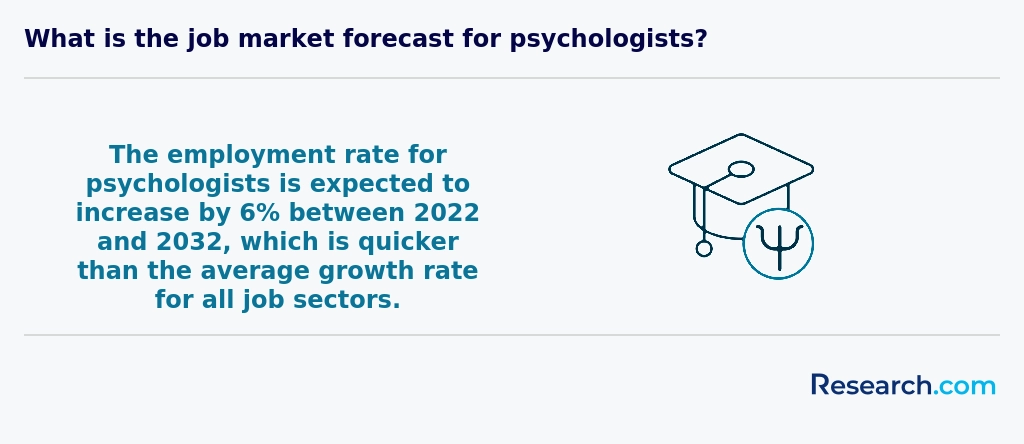
Networking is essential; attending local psychology conferences and joining groups like Psi Chi can open doors. According to the Bureau of Labor Statistics, employment for psychologists is projected to grow 8% from 2021 to 2031, emphasizing demand for skilled professionals.
Finally, consider certifications or graduate school to specialize, which increases competitiveness in the job market.
Employers in College Park value psychology graduates who demonstrate strong critical thinking and analytical skills. These abilities enable graduates to interpret research data effectively and apply psychological theories in practical settings. Communication skills are also essential, as many roles require explaining complex concepts to clients or collaborating with multidisciplinary teams.
Additionally, proficiency in research methods and statistical analysis is crucial, reflecting the growing emphasis on evidence-based practice in psychology careers. According to the American Psychological Association, nearly 65% of employers seek candidates with hands-on research experience. Familiarity with ethical guidelines and cultural competence is increasingly important in diverse communities such as College Park.
Finding internships in College Park for psychology students involves leveraging university resources and local opportunities. The University of Maryland, College Park, offers a psychology department internship program connecting students with placements in research labs, clinics, and community organizations. Students can access the UMD Career Center, which lists internships and provides resume and interview workshops tailored to psychology fields.
Local hospitals, mental health clinics, and nonprofit organizations in the College Park area also offer internships related to psychology. Networking through professors and attending psychology department events can increase chances of securing meaningful internships.
According to the American Psychological Association, internships are vital for gaining practical experience, and UMD's psychology internship programs have a placement rate of approximately 65% each year.
A psychology degree in College Park can significantly enhance career mobility and advancement opportunities. The demand for professionals with psychology backgrounds continues to grow, especially in healthcare, education, and business sectors. According to the U.S. Bureau of Labor Statistics, careers related to psychology are projected to grow 8% from 2021 to 2031, faster than average for all occupations.
College Park's proximity to government agencies and research institutions provides added advantage for psychology graduates seeking internships and jobs in applied settings. Graduates often pursue roles in counseling, human resources, and social services, where advanced knowledge of human behavior is valued.
Further specialization through graduate studies or certifications can improve salary prospects and leadership roles, reflecting the importance of advanced education in this field.
Studying for a psychology degree in College Park offers a strong foundation for interdisciplinary roles by integrating diverse fields such as neuroscience, sociology, and education. Programs emphasize research methods, critical thinking, and data analysis, skills highly valued across multiple disciplines.
Many psychology courses in College Park incorporate collaborative projects with departments like computer science and public health, enhancing students' ability to work in varied settings. According to the University of Maryland's Department of Psychology, nearly 40% of graduates engage in interdisciplinary careers.
This interdisciplinary training equips students to address complex real-world issues, preparing them for roles in healthcare, technology, and social services. The curriculum's flexibility allows students to tailor learning toward emerging fields such as cognitive science and behavioral economics.
Choosing between a thesis and a non-thesis psychology degree program in College Park depends largely on your career goals and interests. A thesis option typically suits students aiming for research roles or doctoral programs, as it involves conducting original research and writing an extensive paper. According to the University of Maryland, College Park, 35% of psychology master's students opt for the thesis track, reflecting its importance for academic advancement.
Non-thesis programs focus more on coursework and practical skills, ideal for those pursuing professional practice or entry-level jobs in psychology. This pathway might require a comprehensive exam instead of a research project. Understanding these differences helps in making an informed decision aligned with your future plans.
Students based in College Park interested in studying psychology abroad have several viable options through U.S. universities' study abroad programs. Many psychology departments partner with universities worldwide, allowing students to earn credits while gaining international experience. For example, the University of Maryland, College Park offers programs in Europe, Asia, and Australia that include psychology coursework.
According to the Institute of International Education, nearly 10% of U.S. students studying abroad in recent years chose social sciences, including psychology. Popular destinations for psychology students include the United Kingdom and the Netherlands, where research opportunities and internships complement academic studies. These programs often focus on cross-cultural psychology and global mental health.
Students should consult their college's study abroad office to find psychology-specific placements and verify credit transfer policies to ensure their degree progression remains on track.
Students pursuing psychology degrees in College Park have several part-time job opportunities that can enhance their academic experience. Common roles include research assistant positions at the University of Maryland's Psychology Department, where students support studies in areas like cognitive science and behavioral psychology. According to the university's career center, research assistants often earn around $12 to $15 per hour.
Other options include roles as peer counselors or crisis hotline operators, providing hands-on experience in mental health support. Local clinics and nonprofit organizations in College Park also seek part-time interns to assist with administrative and client services related to psychology.
Psychology students in College Park benefit from numerous networking opportunities that enhance their academic and professional growth. The University of Maryland, a major institution in the area, hosts regular events such as research symposiums, guest lectures, and career fairs focused on psychology and related fields. According to the university's 2023 career engagement report, over 70% of psychology students participated in at least one networking event annually.
Additionally, local chapters of national psychology organizations, like Psi Chi and the American Psychological Association student affiliates, provide forums for students to connect with peers and professionals. Internship programs linked with nearby hospitals, clinics, and research centers offer practical experience and valuable professional contacts. These opportunities collectively support students in building strong networks essential for their future careers in psychology.
Alumni networks provide significant advantages to psychology degree students in College Park by fostering professional connections and mentorship opportunities. Graduates who remain active in these networks often offer career guidance, internships, and job leads, vital in the competitive field of psychology.
According to the University of Maryland's School of Public Health, which houses a respected psychology program, alumni engagement rates exceed 60%. This involvement helps current students access local and national opportunities, including research collaborations and volunteer positions in mental health settings.
Networking events and online platforms connect students with experienced practitioners, aiding in résumé building and interview preparation. Such support can increase graduate employability, with alumni networks cited as a major factor in job placement success in US higher education studies.
Customizing a psychology degree program in College Park involves selecting courses and experiences aligned with your career goals. Many local universities offer flexible curricula, allowing students to focus on specialties such as clinical, cognitive, developmental, or social psychology.
Internships and research opportunities are vital for practical experience. Institutions often collaborate with nearby hospitals and organizations, providing hands-on learning that enhances job readiness. According to the University System of Maryland's 2023 report, over 70% of psychology students secure internships before graduation.
Additionally, students can participate in specialized labs or independent studies to deepen expertise in their chosen field. Advisors and faculty play an important role in helping tailor course selections to meet individual aspirations.
Psychology students in College Park often face rigorous academic demands, as the field requires mastering both theoretical concepts and practical research skills. Many students report challenges balancing coursework, research projects, and internships simultaneously, which is common in strong psychology programs within the US system. According to U.S. News & World Report, maintaining a competitive GPA while gaining hands-on experience is a frequent stressor for students aiming for graduate school or clinical careers.
Additionally, students must develop strong quantitative skills, especially in statistics and data analysis, which can be difficult for those without a strong math background. Navigating the competitive environment for research opportunities at College Park can also pose challenges, with limited spots in labs and clinics.
Many also experience emotional strain managing sensitive topics encountered during clinical training. Support services are often necessary to assist students with mental health during their studies.
With a psychology degree in College Park, graduates can pursue a variety of professional certifications that enhance career prospects. Common certifications include the Certified Alcohol and Drug Counselor (CADC) and the Board Certified Behavior Analyst (BCBA). The CADC credential prepares professionals for roles in substance abuse counseling, a growing field in Maryland and nationwide.
The BCBA certification focuses on applied behavior analysis and is valuable for those working with individuals with developmental disorders. Additionally, further graduate education allows eligibility for licenses such as Licensed Clinical Professional Counselor (LCPC) or Licensed Psychologist, which require state-specific exams and supervised experience.
According to the Maryland Higher Education Commission, over 40% of psychology graduates in the College Park area pursue certifications that boost employability in health and social services.
Applying to a psychology program in College Park requires a well-crafted application that highlights both academic achievements and personal motivation. College Park home to the University of Maryland, a top U.S. school for psychology, often expects strong undergraduate GPA, preferably above 3.5, and competitive GRE scores. Including relevant research experience or internships can significantly strengthen your profile.
Clearly articulate your interest in psychology through a compelling personal statement. Discuss specific areas like cognitive, clinical, or developmental psychology to show focus. Letters of recommendation from faculty familiar with your work add credibility. Familiarize yourself with College Park's program requirements and tailor your application accordingly.
Global perspectives on a psychology career emphasize the increasing importance of cross-cultural understanding and international research collaboration. Psychology graduates in the US, including those in College Park, benefit from curricula that incorporate global mental health trends and diverse populations.
According to the American Psychological Association, demand for psychology professionals worldwide is growing, with mental health awareness rising in various countries. College Park's universities often prepare students to work in global contexts through study abroad opportunities and international research projects.
In addition, psychology careers are expanding beyond traditional clinical roles to include global health, education, and technology sectors, reflecting worldwide shifts in mental health priorities.
Gaining practical experience while studying psychology in College Park can significantly enhance your education and career prospects. Many local universities, including the University of Maryland, offer psychology students opportunities to participate in research assistantships, where they work directly with faculty on real projects.
Internships are another key avenue, often available through partnerships with nearby hospitals, schools, and mental health clinics. These experiences allow students to apply theoretical knowledge in real-world settings, crucial for those pursuing clinical or counseling psychology careers.
Additionally, students can engage in volunteer work or join psychology clubs that facilitate hands-on workshops and community outreach. According to the University of Maryland's Department of Psychology, over 60% of students gain some form of practical experience before graduation.
Choosing the right concentration within a psychology degree program in College Park involves understanding your career goals and interests. Psychology is a broad field, covering areas such as clinical, developmental, cognitive, and social psychology. According to the University of Maryland, College Park, the most popular concentrations are clinical and health psychology, reflecting growing demand in mental health careers.
Students should also consider available faculty expertise and research opportunities, which can vary between programs. Exploring internships and career services in College Park can clarify how each concentration aligns with job markets. Additionally, reviewing national Bureau of Labor Statistics data can help, as clinical psychologists are expected to grow 8% by 2031, indicating strong future demand.
- 2027 Most Popular Psychology Degree Programs Ranking in New York
- 2027 Most Popular Psychology Degree Programs Ranking in Queens
- 2027 Most Popular Psychology Degree Programs Ranking in Bronx
- 2027 Most Popular Psychology Degree Programs Ranking in Durham
- 2027 Most Popular Psychology Degree Programs Ranking in Raleigh
- 2027 Most Popular Psychology Degree Programs Ranking in Greensboro
- 2027 Most Popular Psychology Degree Programs Ranking in Buffalo
- 2027 Most Popular Psychology Degree Programs Ranking in Rochester
- 2027 Most Popular Psychology Degree Programs Ranking in Albany
- 2027 Most Popular Psychology Degree Programs Ranking in Cleveland
See What Experts Have To Say About Studying Psychology
Read our interview with Psychology experts

Catherine Caldwell-Harris, Ph.D.
Psychology Expert
Associate Professor of Psychology
Boston University

Robin M. Kowalski. Ph.D.
Psychology Expert
Professor of Psychology
Clemson University

Joann Farrell Quinn, Ph.D., MBA
Psychology Expert
Director at the College of Medicine Department of Medical Education
Morsani College of Medicine

- Have You Found a Niche? https://www.apaservices.org/practice/business/marketing/building/niche
- Community Psychology in Global Perspective http://siba-ese.unisalento.it/index.php/cpgp
- How to help students cope with mental health challenges https://www.eaie.org/resource/help-students-cope-mental-health-challenges.html
- 2026 University of Maryland-College Park Psychology Degree Programs https://psychologyonlinedegrees.org/programs/maryland/university-of-maryland-college-park/
- Masters in Clinical Psychological Science at University of Maryland - College Park | YMGrad https://ymgrad.com/university-of-maryland-college-park/masters-in-clinical-psychological-science
- Psychology https://www.pointpark.edu/academics/schools/schoolofartsandsciences/departments/psychology/ba-psychology
- Psychology Degree Requirements | University of Bridgeport https://www.bridgeport.edu/news/psychology-education-requirements/
- Financial Aid For Psychology Students | Psychology.org https://www.psychology.org/resources/financial-aid/
- Study Psychology Abroad https://astarfuture.co.uk/study_psychology_abroad.html
- Ontario Psychological Association - Networking and Community Resources https://www.psych.on.ca/become-a-member-(1)/member-services/networking-and-community-resources