
2027 Best Psychology Degree Programs Ranking in Tulsa

Co-Founder and Chief Data Scientist
Choosing the right psychology degree program can be a life-changing decision, especially for students in Tulsa who want to build a meaningful career. This article introduces the 2027 Best Psychology Degree Programs Ranking in Tulsa, created by the Research.com team of data scientists to help you make an informed choice.
By exploring this ranking, you'll discover programs that offer quality education and valuable opportunities. Pursuing a psychology degree opens doors to understanding human behavior and making a real impact. Let this guide support your path toward a rewarding future in psychology.
Key benefits of getting psychology degree in Tulsa
- Psychology degree graduates in Tulsa can expect rewarding salaries in roles like Marketing Research Analyst with an average annual wage of $83,190 or Human Resources Specialist earning around $76,060, providing strong financial stability.
- Career paths include clinical research, human resources, and survey research, offering diverse opportunities for meaningful work that can positively impact communities in Tulsa and beyond.
- Completing a psychology degree online from a Tulsa-based institution offers flexibility to balance work and study, making education more accessible and helping graduates enter the workforce faster without sacrificing quality.
- 2027 Best Psychology Degree Programs Ranking in Tulsa
- What can I expect from psychology degree in Tulsa?
- Where can I work with psychology degree in Tulsa?
What can I expect from psychology degree in Tulsa?
Paying for a psychology degree in Tulsa usually feels like navigating a river with both calm stretches and unexpected rapids. Public universities nearby often welcome in-state students with tuition bills hovering between $9,000 and $11,000 per year, a price that many graduates remember as both manageable and worth every penny. Picture a student at a Tulsa-based public university carefully budgeting while juggling part-time work and enriching internships at local clinics; the cost feels like an investment in their future self.
On the flip side, private colleges may carry steeper price tags, sometimes stretching the financial landscape higher. Yet, graduates often recall the personalized attention and unique resources offered that make the added expense a seed for professional growth. Many psychology students tap into scholarships or financial aid tailored specifically for mental health fields, smoothing the path like lanterns in a dim corridor.
Ultimately, the cost here isn't just numbers-it's the blend of opportunity, real-world connections, and personal triumphs woven through Tulsa's vibrant academic scene.
Where can I work with psychology degree in Tulsa?
Picture a psychology graduate from the University of Tulsa stepping confidently into a bustling Tulsa Mental Health Association office, ready to lend support as a licensed clinical psychologist. Their days pulse with the rewarding challenge of counseling patients and conducting psychological assessments, turning academic theory into healing practice. Meanwhile, a fresh Oral Roberts University graduate finds purpose working within Tulsa Public Schools, guiding children through emotional hurdles as a compassionate school psychologist, witnessing firsthand the spark of progress in young minds.
Other graduates embrace community roles, weaving empathy into social service agencies where every conversation can transform a family's story. Corporate corridors buzz with another breed of psychology professionals applying behavioral insights to sharpen hiring strategies or boost employee wellness in Tulsa's growing business scene. The city's diverse opportunities reflect a tapestry of real-world impact, where psychology donates not just knowledge, but a vibrant human touch that graduates cherish daily.
Graduates with a psychology degree from Tulsa-area schools often find themselves stepping into roles like human resources specialists, marketing research analysts, or clinical research associates, where the paycheck reflects both skill and savvy. For instance, a human resources specialist earns a mean annual wage of about $76,060, blending people skills with organizational insight in vibrant Tulsa companies.
Marketing research analysts, who dive deep into data to decode consumer behavior, pull in around $83,190 a year, turning those psychology lessons from the University of Tulsa into tangible market magic. Meanwhile, clinical research associates, often fresh out of a master's program, start near $62,370, engaging in meaningful studies that push the boundaries of mental health science.
Picture a graduate navigating Tulsa's lively job market, armed with a degree and a bright enthusiasm for people. Whether supporting developmental programs or analyzing trends, these roles demonstrate solid financial footholds right here, in Tulsa's welcoming community.
- Tulsa offers psychology degrees at public and private schools, including associate, bachelor's, and graduate programs.
- In-state public university tuition ranges from $8,000 to $12,000 per year, while private schools charge between $15,000 and $25,000 annually.
- Starting salaries for psychology graduates in Tulsa are typically between $45,000 and $50,000 per year, increasing to around $70,000 or more with experience and advanced licensure.
- Internships and practicum placements are widely available through healthcare facilities and community agencies, fulfilling licensure requirements.
- Programs should be accredited by the American Psychological Association or regional agencies to ensure eligibility for licensure and employment.
In Tulsa, diving into a psychology degree feels like embarking on a vibrant journey through the mind's labyrinth, with timelines that reflect the rhythm of your life. Picture a bachelor's degree at the University of Tulsa: four years packed with core courses in research methods and psychology's many fascinating branches, just enough time to build a solid foundation before stepping into the professional world.
Some graduates recall balancing evening classes with day jobs through part-time options at Tulsa Community College, stretching their bachelor's timeline beyond four years but gaining invaluable real-world experience along the way. For those stepping further into the field, the master's programs-available at institutions like Oral Roberts University-open doors after about two years, focusing deeply on specialties like clinical or counseling psychology.
Doctoral candidates at Tulsa's top universities often spend five to six years weaving coursework, clinical practice, and dissertations into a robust tapestry of expertise, fueling excitement about their future impact on mental health. This flexible pace allows Tulsa students to tailor their path, blending ambition with life's unpredictable beats.
Earning a psychology degree in Tulsa is just the first step toward professional practice. To become a licensed psychologist in Oklahoma, graduates must complete the following: 1. Graduate Education • Hold a doctoral degree (PhD or PsyD) from an APA-accredited program. • Ensure your curriculum includes required supervised practicum hours and a full-time internship. 2. Pre-Doctoral Internship • Complete at least 1,750 hours of supervised internship, with at least 800 hours of direct client contact. • Verify that your placement site and supervisor meet Oklahoma Board of Behavioral Health licensure standards. 3. Post-Doctoral Supervised Experience • Accumulate 3,500 hours of supervised practice post-degree, including a minimum of 1,750 hours of direct client work. • Work under an approved supervisor to develop clinical competencies in assessment, diagnosis, and intervention. 4. Examination Requirements • Pass the Examination for Professional Practice in Psychology (EPPP). • Satisfy the Oklahoma Jurisprudence and Professional Ethics Exam for Psychologists. 5. Application and Fees • Submit a licensure application to the Oklahoma Board of Behavioral Health, including official transcripts, verification of supervised hours, and exam scores. • Pay the required application and licensing fees, which vary by application type. 6. Continuing Education • Complete 40 hours of continuing education every two years, with 20 hours in ethics and 2 hours in suicide prevention. Navigating licensure can be costly. Students seeking ways to minimize debt may compare program expenses across states-for example, see our Low Cost Psychology Degree Programs Ranking in Louisiana-to optimize financial planning before beginning their licensing journey.
Think of on-campus psychology degrees in Tulsa as a vibrant mosaic of midsession coffee chats and spontaneous debates beneath the towering oaks of local universities. Graduates often recall the electric buzz of in-person classes, where animated discussions with professors and peers transform complex theories into tangible insights. Imagine stepping into the rich resources of a Tulsa campus-libraries brimming with psychology texts, cozy counseling centers, and bustling research labs-spaces that cultivate both curiosity and connection. Tuition here floats between $8,000 and $15,000 yearly, reflecting that immersive experience.
Contrast this with online programs, where flexibility reigns supreme. Graduates describe weaving lectures and assignments seamlessly into hectic Tulsa days, whether during a lunch break at home or after a late shift. Without the commute or campus fees, online study feels like psychology education tailored to your rhythm. Yet, the essence remains-fieldwork and practical training still anchor the degree, ensuring edge-of-the-seat readiness for Tulsa's mental health challenges. The digital threads bind you to a network of peers, albeit in pixels, crafting a different but equally valuable tapestry of learning.
Graduates pursuing a psychology degree in Tulsa, OK, can further enhance their career prospects by considering comprehensive continuing education and professional development strategies. As the job market evolves, advanced qualifications-such as specialized certifications or graduate-level studies-play a crucial role in differentiating candidates and driving career growth. Expanding your expertise with targeted skills not only increases your marketability but also positions you for leadership roles in clinical settings, research, and organizational development. For those looking to fast-track their education and career, exploring opportunities like accelerated psychology masters programs may provide the competitive edge needed to stay ahead in a rapidly changing field. Investing in continuing education through workshops, seminars, and accredited online programs supports lifelong learning and ensures that you remain updated on emerging trends and innovative practices in psychology. Furthermore, connecting with alumni networks and professional organizations can offer valuable mentorship, job referrals, and insights into the latest industry standards. Maintaining an active role in these communities not only builds stronger professional relationships but also supports personal growth and ongoing professional development in the dynamic world of psychology.
Imagine stepping onto the campus of the University of Tulsa, buzzing with the hopeful energy of psychology students eager to unlock the mysteries of the human mind. The average cost of a psychology degree in Tulsa hovers around $42,765 for in-state students, a figure that brings a mix of relief and ambition for many. Graduates, having walked those same halls, often speak of their investment as more than tuition-it's a ticket to transformation, powered through both public avenues like Oklahoma State University-Tulsa and private institutions with pricier tags.
For those chasing the Tulsa psychology degree tuition and fees, the journey is tangible: tuition may range widely but generally settles near that in-state median. Public university attendees share stories of manageable costs paired with valuable hands-on learning, while private university graduates emphasize the broader networking and tailored mentorship worth the leap toward higher expenses. Students often budget not just tuition but an extra $10,000 to $15,000 annually to cover living essentials, textbooks, and the subtle joys of college life like coffee runs between lectures.
One graduate's experience at OSU-Tulsa's counseling psychology program illustrates the balance well-tuition between $12,000 and $20,000 for the degree overall, allowing focus on growth rather than just bills. If affordability is your priority, consider exploring the affordable psychology school in Oklahoma options, which blend cost-conscious planning with solid educational foundations. Navigating the average cost of psychology degree in Tulsa means embracing a uniquely enriching path where expenses translate into opportunities for change and discovery.

To make an informed decision about which psychology program to attend in Tulsa, OK, it's essential to consider several factors, including program focus, accreditation, practical experience, faculty qualifications, career outcomes, and financial considerations. One crucial step in this process is researching the cost and affordability of programs, which can vary significantly. For instance, students looking for an affordable psychology school in Oklahoma can find valuable information and resources to help them make a decision that aligns with their budget and career aspirations. By weighing these factors and exploring available options, prospective students can choose a psychology program that not only meets their academic needs but also sets them up for success in their future careers.
Imagine a psychology student navigating Tulsa's vibrant campuses, like the University of Tulsa or Oklahoma State University-Tulsa, fueled by a mix of curiosity and financial hope. For many, federal Pell Grants - those magical need-based boosts up to $7,395 - feel like a lifeline, turning dreams into reality without the shadow of repayment. Just like one graduate recalls, "FAFSA opened doors I didn't know existed."
Then there are the smart loans: Direct Unsubsidized and Graduate PLUS Loans, with flexible repayment plans that feel less like chains and more like stepping stones. Scholarships tailored for psychology majors stand out too, handed out by beacons like the American Psychological Association or local Tulsa foundations, gently lifting financial weight from shoulders.
State programs, like Oklahoma's Tuition Aid Grant, add an extra thread of support, while on-campus work-study gigs stitch together valuable experience and some extra cash, creating a comforting safety net woven with opportunity and care.
In Oklahoma, earning a psychology degree is just the first step toward practicing professionally; graduates must meet state licensure and certification requirements to provide clinical services. To become a Licensed Psychologist, you’ll need a doctoral degree in psychology, completion of at least 3,000 supervised internship hours, and a passing score on the Examination for Professional Practice in Psychology (EPPP). For those seeking counseling roles, the Licensed Professional Counselor (LPC) credential requires a master’s in counseling or related field, 3,000 hours of supervised clinical experience, and successful completion of the National Counselor Examination (NCE). Students often explore flexible study options to satisfy these educational prerequisites-many choose an online masters in psychology degree to gain advanced knowledge while balancing work and personal commitments. Make sure your program is accredited by the American Psychological Association (APA) for doctoral paths or meets the Council for Accreditation of Counseling & Related Educational Programs (CACREP) standards for counseling tracks. After graduation, you must apply to the Oklahoma Board of Behavioral Health Licensure, submit official transcripts, verification of supervised hours, and pass any additional state jurisprudence exams. Maintaining licensure involves completing 20 hours of continuing education annually, including at least 2 hours in ethics. By understanding and planning for these requirements early-through internships, mentorships, and licensure prep courses-you’ll streamline your path from graduation to a thriving psychology career in Tulsa.
To step into the world of psychology in Tulsa, you first need a high school diploma or GED-your golden ticket. Imagine a graduate from the University of Tulsa who recalls how completing foundational courses in English, math, and science smoothed their path into psychology's fascinating maze of the mind. These basics aren't just boxes to check; they're the gears that turn your brain's engine for understanding complex theories and statistics.
Test scores like the SAT or ACT? Tulsa institutions like Oral Roberts University have embraced test-optional policies, easing the pressure cooker. Yet, those who bring strong scores often feel their application spark a little brighter, especially in competitive corners. Graduates often share stories of how involvement in psychology clubs or volunteer work became the heartbeat behind their application, showcasing genuine passion beyond grades.
Letters of recommendation and personal essays act like unique melodies, telling admissions who you are beyond transcripts. Tulsa's vibrant psychology programs might also ask you to dive into placement tests or orientation sessions-small rituals that prepare your mind for the journey ahead. These elements blend into an open door, inviting curious minds ready to explore human behavior.
When budgeting for a psychology degree, it’s important to weigh the tuition and fees of Tulsa institutions against more affordable out-of-state options. While in-state tuition at public colleges in Tulsa averages around $7,070 per year, many out-of-state public universities and online programs can offer competitive rates-especially when financial aid and scholarships are factored in. For a broader perspective on cost-efficient psychology programs, you may also explore the Low Cost Psychology Degree Programs Ranking in Louisiana, which highlights institutions with some of the lowest overall expenses in the region. Beyond sticker price, consider hidden costs like mandatory student fees, materials, and practicum placement expenses. Some out-of-state programs bundle clinical practicums into standard tuition, effectively lowering the total cost of attendance. Compare each school’s fee breakdown and look for programs that include access to lab equipment, online library resources, and supervised internship placements without additional charges. Finally, review financial aid opportunities specific to each state. Oklahoma residents benefit from state-sponsored grants, but comparable support often exists in neighboring states and through professional psychology associations. Contact admissions and financial aid offices to inquire about merit-based scholarships, graduate assistantships, and fee waivers that can significantly reduce your net cost-whether you ultimately choose a Tulsa campus or a more budget-friendly program elsewhere.
Imagine stepping into a Tulsa classroom at a university where psychology isn't just theory but a vibrant exploration of the mind. Graduates often recall diving into General Psychology, where they first untangled the web of human thoughts and emotions in real-world discussions. They quickly found themselves designing quirky experiments in Research Methods in Psychology, hands steady and curiosity sparked, eager to decode how behavior springs from unseen neural sparks.
Courses like Statistics for Behavioral Sciences transformed daunting numbers into insightful stories, empowering students to see patterns behind human quirks. Walking the campus, many remember the thrill of Biological Psychology, connecting brain mechanics to the mysteries of emotion and memory. These foundational classes form the heartbeat of Tulsa's programs, setting a dynamic tone.
Further along, students eagerly explore the human saga through Developmental Psychology, witnessing growth curves and life shifts like a cinematic narrative. Social Psychology classes turn abstract theories of influence into lively conversations reflecting Tulsa's community spirit. And when tackling Abnormal Psychology, students embrace compassion, preparing to transform challenges into healing. All these experiences at Tulsa schools blend rigor with a deep human connection.
In Tulsa, psychology degree specializations paint a vibrant mosaic of possibilities-each tailored to ignite different passions. Imagine graduates from the University of Tulsa who thrived in Clinical Psychology, now confidently navigating mental health clinics, or those from Oklahoma State University-Tulsa diving deep into Industrial-Organizational Psychology, fine-tuning company cultures and boosting employee well-being. Counseling Psychology graduates tell tales of transforming lives through empathetic therapy, while others embraced Forensic Psychology, unraveling criminal minds in courtroom dramas. The child and adolescent specialization taps into youthful curiosity, offering insights that shape nurturing environments, and Health Psychology graduates explore the delicate dance between mind and body. These diverse paths reflect the ever-growing demand in Tulsa's mental health sector, encouraging students to dream boldly. For those eager to expedite their journey, Tulsa even supports accelerated routes to mastery through accelerated psychology masters programs, making personalized, impactful psychology careers within striking reach.
When exploring psychology concentrations available in Tulsa, students find a lively academic stage where theory meets real-world pulse. Hands-on research opportunities and focused clinical training amplify learning in master's and doctoral tracks. This blend shapes professionals ready to serve Tulsa's evolving community needs, whether in hospitals, schools, or businesses. The city's varied offerings invite every psychology enthusiast to find their niche and thrive emotionally and intellectually amid Tulsa's supportive academic sphere.
Imagine stepping into a Tulsa classroom where a graduate whispers that choosing the best psychology degree programs Tulsa isn't just about textbooks-it's about trusting a program accredited by bodies like the APA or the Higher Learning Commission. These seals of approval unlock doors to licensure and credibility, shaping your future as a therapist or researcher.
Picture another graduate juggling evening classes at a local Tulsa university, praising the flexibility of online and part-time options that blend seamlessly with a busy life. They emphasize matching your degree level-whether bachelor's, master's, or doctoral-to your career dreams, reminding you that master's programs often dive into specialties like counseling or clinical psychology, while doctoral paths propel you into licensed practice or academia.
Financial worries fade when you tap into Tulsa's affordable psychology degrees in Tulsa, where scholarships and assistantships ease tuition burdens. For those craving a blend of work and study, exploring online masters in psychology degree routes adds freedom without compromise, making your academic journey a vivid, empowering reality.

Graduates with a psychology degree in Tulsa find themselves at a thrilling crossroads of career possibilities that ripple through the city's vibrant sectors. Whether stepping into the shoes of clinical psychologists healing minds in cozy community centers or schools, or embracing roles as school psychologists navigating the educational maze in Tulsa Public Schools, the path is rich and rewarding. Many graduates from the University of Tulsa or Oklahoma State University-Tulsa share stories of diving into research roles, blending science and curiosity to advance behavioral studies that echo beyond local walls.
For those energized by corporate puzzles, industrial-organizational psychology offers a pulse on Tulsa's bustling business headquarters, shaping workplace culture and human potential. Social services roles, from rehabilitation to substance abuse counseling, spark meaningful change across Tulsa's nonprofits, where psychology graduates transform empathy into action. If cost is a consideration, emerging students often explore financial pathways inspired by the Low Cost Psychology Degree Programs Ranking in Louisiana, reflecting an eye toward smart investment in their futures. Tulsa's psychology landscape is a thriving ecosystem welcoming all curious minds.
Exploring job opportunities with psychology degree Tulsa reveals a mosaic of enriching, stable careers powered by the city's expanding healthcare and education sectors, making this local degree a passport to growth and impact.
The job market for psychology degree job opportunities Tulsa offers is a vibrant mosaic of possibilities, energized by an expanding healthcare and social services landscape. Graduates from Tulsa's well-regarded universities often find themselves stepping into roles at regional hospitals and nonprofit organizations, where they witness firsthand the vital healing power of psychology in community health. These experiences inspire them, blending classroom theory with the rewarding challenge of supporting mental well-being in real time.
Tulsa psychology career outlook 2027 shines brightly for those aiming higher than entry-level roles. Many graduates, fueled by passion and rigorous study, pursue advanced degrees unlocking doors to licensed practitioner paths such as clinical or school psychologists. As salary ranges increase with specialization, so does the sense of purpose, especially when working alongside educators or public health advocates who are shaping the city's approach to mental wellness.
Students balancing tuition costs at local institutions appreciate the value of affordable, quality education paired with dynamic job prospects. Those curious about how their choice fits with broader career trends might explore college degrees with best job outlook to map their future in Tulsa's nuanced psychology landscape.
2027 Best Psychology Degree Programs Ranking in Tulsa
Investing in your education is a significant decision that can shape your future, and the Research.com team understands the importance of making informed choices. To assist prospective students in Tulsa, we have meticulously crafted the "2027 Best Psychology Degree Programs Ranking in Tulsa." Our commitment to quality, credibility, and accuracy is reflected in the extensive research and analysis conducted to compile this ranking.
We utilized the following reputable data sources to ensure a comprehensive evaluation of psychology programs:
By exploring this ranking, readers will gain valuable insights into the best psychology degree programs available in Tulsa, empowering them to make informed decisions about their educational journeys. For more details on our methodology, please visit our Research.com methodology page.


Frequently Asked Questions About psychology
Psychology degree students in Tulsa can maximize their learning by engaging actively with both academic and practical experiences. Tulsa is home to several institutions like the University of Tulsa and Tulsa Community College, which offer accredited psychology programs. Students should take advantage of research opportunities often available through faculty projects, as research participation enhances understanding of psychological theories and methods.
Internships and volunteer positions at local mental health clinics, such as those affiliated with the Tulsa Center for Behavioral Health, provide hands-on experience critical for professional growth. According to the Oklahoma State Regents for Higher Education, nearly 60% of psychology graduates in Tulsa gain internship experience, boosting employment prospects.
Joining psychology clubs and attending local conferences can also expand networking and learning beyond the classroom. Active involvement in these areas helps students build valuable professional connections and stay updated on emerging trends in mental health.
The field of psychology is evolving rapidly, with several emerging niches gaining attention among students and professionals in Tulsa and across the United States. One notable area is neuropsychology, which focuses on how brain injuries and diseases affect behavior and cognitive function. Demand for neuropsychologists is expected to grow by about 13% nationally through 2030, according to the U.S. Bureau of Labor Statistics.
Another expanding niche is forensic psychology, integrating psychological principles with legal systems. Tulsa's growing legal and correctional sectors provide opportunities in this field. Additionally, health psychology, which explores psychological factors in physical health and chronic illness management, is gaining prominence due to an aging population and increased awareness of mental health's impact on physical conditions.
These specialized fields offer promising career paths for those pursuing psychology degrees in Tulsa, reflecting broader national trends reported by the American Psychological Association.
After completing a psychology degree in Tulsa, preparing for the job market involves a combination of gaining practical experience and understanding local employment trends. Tulsa's healthcare and social services sectors offer numerous opportunities for psychology graduates, with positions in counseling, case management, and behavioral health support growing steadily.
Students should seek internships or volunteer roles in organizations such as the Tulsa Center for Behavioral Health or local clinics to build hands-on skills. According to the Bureau of Labor Statistics, employment for psychologists in Oklahoma is expected to grow by 8% from 2021 to 2031, aligning with national averages.
Networking with Tulsa-area professionals and joining local psychology associations can also enhance job prospects. Additionally, obtaining relevant certifications or pursuing graduate education can further improve competitiveness in this evolving field.
Employers in Tulsa value psychology degree graduates who demonstrate strong communication and critical thinking skills. These abilities are essential for effectively understanding and addressing client needs in clinical, counseling, and organizational settings. According to the U.S. Bureau of Labor Statistics, psychology-related jobs in Oklahoma are expected to grow by 10% between 2022 and 2032, highlighting the importance of adaptable graduates.
Additionally, employers look for proficiency in data analysis and research methodologies, crucial for evidence-based practice. Familiarity with ethical standards and cultural competence is also highly regarded due to Tulsa's diverse population. Practical experience through internships or practica often enhances a candidate's desirability in the local job market.
Finding internships in Tulsa relevant to a psychology degree involves researching local healthcare facilities, educational institutions, and community organizations. Tulsa hosts several hospitals such as Ascension St. John and Saint Francis Health System, where psychology students may find clinical internship opportunities. Additionally, Tulsa-area universities often partner with mental health clinics to provide hands-on experience. The University of Tulsa and Tulsa Community College both have career services that list psychology internships. According to the Bureau of Labor Statistics, internships are essential for gaining practical skills and improving employability in psychology fields. Networking through professional groups like the Oklahoma Psychological Association can also open doors to placements.
A psychology degree in Tulsa can significantly enhance career mobility and advancement opportunities. Graduates often qualify for diverse roles in counseling, social services, education, and business sectors, which are growing steadily in the area. According to the U.S. Bureau of Labor Statistics, Tulsa's demand for psychologists and related professions is projected to increase by 10% through 2030, slightly above the national average.
Local employers value degrees from accredited programs, as they provide essential skills in critical thinking, research, and human behavior analysis. Advanced degrees often lead to higher-paying positions and leadership roles.
Networking opportunities through Tulsa's universities also support career progression by connecting students with local mental health clinics, schools, and corporate organizations.
Studying for a psychology degree in Tulsa equips students with skills applicable across various interdisciplinary fields such as healthcare, education, and business. Tulsa's programs often emphasize research methods, critical thinking, and human behavior understanding, which are essential in roles integrating psychology with social work, counseling, or organizational development.
Local universities collaborate with community agencies, offering internships that foster practical experience in multidisciplinary teams. According to Tulsa Community College and University of Tulsa course catalogs, curricula include courses on neuroscience, statistics, and ethics, preparing students for diverse roles requiring cross-disciplinary knowledge.
Graduates from Tulsa psychology programs tend to enter professions that combine psychology with public health, criminal justice, and education, reflecting the region's growing demand for versatile professionals. This practical and theoretical foundation helps students adapt to complex, real-world challenges.
Choosing between a thesis and a non-thesis psychology degree program in Tulsa depends on your career goals and learning preferences. Thesis programs often suit students aiming for research careers or doctoral studies, as they develop skills in data analysis and scholarly writing. Non-thesis options focus more on practical coursework and may appeal to those seeking immediate employment in clinical, counseling, or human services roles.
In Tulsa, universities like the University of Tulsa offer both types, with thesis tracks typically requiring original research completed under faculty supervision. According to the National Center for Education Statistics, about 60% of Tulsa psychology graduates choose non-thesis paths, favoring quicker completion and professional application.
Consider your future plans: research roles or academia benefit from thesis experience, whereas non-thesis is ideal for applied psychology careers. Financial and time commitments are also factors, as thesis programs often require additional semesters. Consulting with academic advisors at local institutions can clarify which aligns best with your ambitions.
Students based in Tulsa who wish to study psychology abroad have several pathways through their local universities. Institutions like the University of Tulsa and Tulsa Community College often have partnerships with international universities, facilitating exchange programs or study abroad opportunities focused on psychology disciplines.
Typically, these programs allow students to spend a semester or year at universities in countries with strong psychology research traditions, such as the United Kingdom, Canada, or Australia. Credits earned abroad usually transfer back to the home institution, ensuring progression toward a psychology degree.
According to the Institute of International Education, nearly 40% of U.S. psychology undergraduates consider study abroad options, but Tulsa-specific statistics remain limited. Students should consult their academic advisors early to align study abroad plans with degree requirements and licensure goals.
Additionally, virtual exchange programs are growing, offering remote international learning experiences suitable for Tulsa students unable to travel. These alternatives can complement traditional study abroad for psychology majors.
Part-time job opportunities in Tulsa that align well with psychology degree studies often include roles in community mental health centers, educational support, and social services. For example, Tulsa is home to numerous nonprofit organizations where students can work as case managers or behavioral health aides, gaining practical experience in client interaction and mental health support.
Local schools and tutoring centers also offer positions as teacher's aides or tutors, allowing psychology students to observe developmental and educational psychology principles firsthand. According to the Oklahoma Employment Security Commission, healthcare support roles in Tulsa grew by 8% between 2019 and 2023, indicating expanding opportunities in this sector.
Additionally, university research assistant positions often become available, providing exposure to psychological research methods and data collection. These jobs help build valuable skills that complement academic knowledge and enhance future employability.
Psychology students in Tulsa benefit from several valuable networking opportunities that help connect them with professionals and peers in the field. Local institutions like the University of Tulsa and Oral Roberts University often host psychology clubs and guest lectures featuring practicing psychologists and researchers.
Additionally, Tulsa is home to the Oklahoma Psychological Association (OPA), which offers student memberships. Through OPA, students can attend conferences, workshops, and networking events tailored specifically to psychology careers in Oklahoma.
Many Tulsa-area hospitals, clinics, and counseling centers also partner with universities to provide internships, giving students direct contact with practitioners and potential mentors.
These opportunities allow students to build professional relationships essential for career growth and licensure requirements.
Alumni networks play a significant role in supporting psychology degree students in Tulsa. These networks connect current students with graduates who have experience in diverse psychology fields, such as clinical, counseling, and industrial-organizational psychology. According to the National Association of Colleges and Employers, students engaged in alumni networks have a 15% higher job placement rate within six months of graduation.
In Tulsa, strong ties between universities and local mental health agencies facilitate internships and employment opportunities via alumni referrals. This local professional community helps reduce barriers to networking, crucial in a competitive job market. Additionally, alumni often provide mentorship, career advice, and guidance on graduate school applications, which can be invaluable during students' academic and professional development.
In Tulsa, customizing a psychology degree program to align with career goals involves selecting specialized courses, internships, and research opportunities offered by local institutions. Many Tulsa universities provide concentrations such as clinical, counseling, or industrial-organizational psychology, allowing students to focus on their preferred field. Engaging in internships at Tulsa-area clinics or organizations can enhance practical experience, which is crucial for employment.
Students may also choose elective courses that support specific career paths, like child psychology or behavioral health. According to the Oklahoma State Regents for Higher Education, personalized academic advising helps students tailor their programs effectively. This flexibility ensures graduates are well-prepared for the diverse psychology job market in Tulsa and beyond.
Psychology students in Tulsa commonly face several challenges related to academic rigor and practical experience. Many find balancing coursework with field placements difficult, as hands-on opportunities in clinical settings are competitive and limited. According to the Oklahoma State Regents for Higher Education, psychology programs often require extensive internships, which can be time-consuming alongside full class loads.
Another challenge is the cost of education. Tulsa institutions generally have lower tuition rates compared to national averages, but additional expenses like textbooks and licensing exam fees add financial pressure. Students also report difficulty navigating the pathway to licensure due to varied state requirements and comprehensive examinations.
Lastly, maintaining mental health while studying psychology can be paradoxical. Students frequently face emotional stress when dealing with sensitive topics during their training. Support services exist but may not meet the full demand, creating an added hurdle in completing their degrees.
With a psychology degree in Tulsa, graduates can pursue various professional certifications that enhance their career opportunities. One common certification is the Licensed Professional Counselor (LPC), which requires a master's degree plus supervised clinical hours and passing a licensing exam. This credential allows you to provide counseling services in Oklahoma.
Other options include the Certified Alcohol and Drug Counselor (CADC), crucial for those interested in addiction treatment. Additionally, certifications like Board Certified Behavior Analyst (BCBA) are available for those focusing on applied behavior analysis.
According to the Oklahoma Board of Behavioral Health Licensure, pursuing these certifications aligns well with local job market needs, especially in Tulsa's growing mental health sector.
Applying for a psychology program in Tulsa requires a clear, well-structured approach. Start by researching local schools such as the University of Tulsa and Oral Roberts University, both known for strong psychology offerings. Highlight your academic achievements, focusing on courses related to psychology, as admissions committees value relevant coursework.
Include a compelling personal statement that explains your motivation for studying psychology and your career goals. Tulsa programs often look for applicants who demonstrate an understanding of community mental health challenges, reflecting the city's diverse population. Strong recommendation letters from professors or professionals familiar with your skills are critical.
Finally, ensure your application meets all deadlines and requirements listed by the schools, including standardized tests if required. The Oklahoma State Regents for Higher Education provides updated guidance on admission standards for psychology programs across Tulsa institutions.
Psychology careers in the United States, including Tulsa, benefit from a growing global recognition of the field's importance. Across many countries, psychology is valued for addressing mental health, educational needs, and organizational behavior. In the US, psychology professionals often engage with international research and best practices, contributing to a diverse understanding of human behavior.
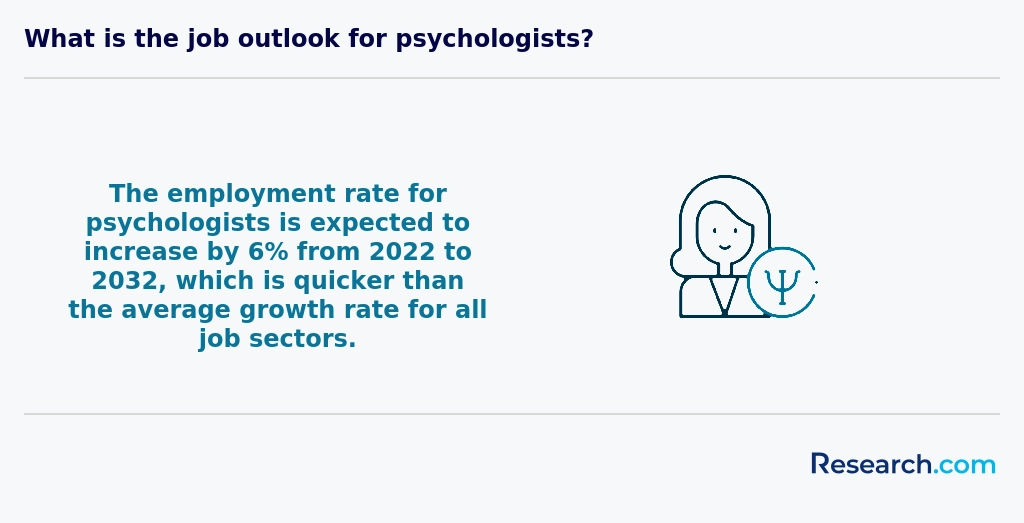
According to the Bureau of Labor Statistics, employment in psychology-related fields is projected to grow 8% nationally from 2022 to 2032, reflecting strong demand. Tulsa's universities align their programs with these trends, preparing graduates for both local and global opportunities.
Global perspectives emphasize cultural competence and ethical practices, skills highly relevant to Tulsa's diverse population. Psychology graduates here can expect to participate in cross-cultural research or international collaborations, enhancing their career scope. Such global integration increases the relevance and impact of psychology degrees earned in Tulsa.
Gaining practical experience while studying for a psychology degree in Tulsa is essential for career readiness. Many local universities, such as the University of Tulsa and Oral Roberts University, offer internship programs that connect students with hospitals, mental health clinics, and social service agencies in the region.
These internships allow students to apply classroom knowledge in real-world settings, improving both skills and professional networks. Tulsa also has opportunities through community organizations that focus on behavioral health, providing volunteer roles that are valuable for hands-on learning.
The Oklahoma State Board of Licensed Social Workers reports that supervised experience hours are often required for licensure, making internships a crucial step in fulfilling these requirements early. Additionally, attending psychology-related workshops and conferences in Tulsa helps students stay updated with industry trends and expand their practical insight.
Choosing the right concentration within a psychology degree program in Tulsa involves understanding your career goals and interests. Common concentrations include clinical, counseling, industrial-organizational, and developmental psychology. Tulsa schools like the University of Tulsa and Oklahoma State University offer diverse options tailored to local workforce demands.
According to the U.S. Bureau of Labor Statistics, Tulsa's demand for clinical and counseling psychologists is expected to grow by 10% through 2030, reflecting regional healthcare trends. Research from the Oklahoma Board of Licensed Professional Counselors indicates a rising need for culturally competent mental health professionals.
It is important to review course offerings and faculty expertise at Tulsa institutions. Connecting with advisors and exploring internship opportunities in Tulsa clinics or businesses can help clarify which concentration aligns best with your skills and the local job market.
- 2027 Best Psychology Degree Programs Ranking in Wichita
- 2027 Best Psychology Degree Programs Ranking in Springfield
- 2027 Best Psychology Degree Programs Ranking in Kansas City
- 2027 Best Psychology Degree Programs Ranking in Lincoln
- 2027 Best Psychology Degree Programs Ranking in Saint Louis
- 2027 Best Psychology Degree Programs Ranking in Baton Rouge
- 2027 Best Psychology Degree Programs Ranking in Hattiesburg
- 2027 Best Psychology Degree Programs Ranking in New Orleans
- 2027 Best Psychology Degree Programs Ranking in Denver
- 2027 Best Psychology Degree Programs Ranking in Birmingham
See What Experts Have To Say About Studying Psychology
Read our interview with Psychology experts

Catherine Caldwell-Harris, Ph.D.
Psychology Expert
Associate Professor of Psychology
Boston University

Elizabeth L. Jeglic Ph.D.
Psychology Expert
Professor of Psychology
City University of New York

Robin M. Kowalski. Ph.D.
Psychology Expert
Professor of Psychology
Clemson University

- A Guide to Psychology Internships | Psychology Degree Guide https://psychologydegreeguide.org/resources/internships/
- Know more about thesis vs non- thesis: what is the difference? https://studyfans.com/en/blogs/816
- Sample letters in psychology https://www.mystudies.com/en-in/human-and-social-sciences/psychology/letter-model/
- Best Types Of Online Psychology Degrees 2025 https://www.psychology.org/degrees/
- Study Psychology Abroad | Go Overseas https://www.gooverseas.com/study-abroad/psychology
- Call for papers https://www.hogrefe.com/us/journal/international-perspectives-in-psychology-research-practice-consultation
- Alumni Network - https://efpsa.org/alumni-network/
- Society for the Teaching of Psychology https://teachpsych.org/page-1784686/8675326
- Mental Health Challenges Faced by Psychology Students | The Healthcare Guys https://healthcareguys.com/2023/11/23/mental-health-challenges-faced-by-psychology-students/
- Psychology - SWPS University https://english.swps.pl/academics/warsaw/ba-programs/psychology


