2027 Best Online Psychology Degree Programs Ranking in the USA

Co-Founder and Chief Data Scientist
Choosing the right online psychology degree can feel overwhelming, but finding the best program is a crucial step toward a rewarding career. This article features the 2027 Best Online Psychology Degree Programs Ranking in the USA, developed by the Research.com team of data scientists to guide you through the top options available.
By exploring this ranking, you'll gain valuable insights to help make confident decisions about your education. A psychology degree opens doors to many paths, offering personal growth and meaningful work opportunities.
We're here to support your journey toward a fulfilling future.
Key benefits of getting online psychology degree in America
- Psychology degree graduates in roles like Human Resources Specialists earn a mean annual wage of $76,060, while Marketing Research Analysts make about $83,190, showing strong salary potential.
- Career paths include positions such as Clinical Research Associate or Survey Researcher, offering diverse opportunities in research, healthcare, and business fields.
- Online psychology degrees provide flexible schedules and the same quality education as traditional programs, helping graduates balance life and study effectively.
- 2027 Best Online Psychology Degree Programs Ranking in the USA
- What can I expect from online psychology degree in America?
- Where can I work with online psychology degree in America?
What can I expect from online psychology degree in America?
The average cost of an online psychology degree in America varies significantly depending on the institution and program level. For example, graduates from respected universities like Arizona State University or Pennsylvania State University report tuition ranges between $10,000 and $25,000 per year for undergraduate programs. Master's programs may cost more, typically between $15,000 and $35,000 annually, reflecting the advanced curriculum and faculty expertise.
Many students appreciate the affordability of online learning compared to traditional campus-based options, noting savings on commuting, housing, and campus fees. One graduate shared that the flexible tuition payment plans at institutions such as the University of Florida eased financial stress, allowing them to balance work and study effectively.
The cost-efficiency combined with asynchronous classes makes these programs highly appealing to working professionals in America. However, students are encouraged to verify program accreditation and potential additional expenses like clinical placements or study materials when estimating the total investment.
Where can I work with online psychology degree in America?
Graduates holding an online psychology degree from reputable programs such as those at Arizona State University or the University of Florida often find rewarding career paths in mental health services. Many secure positions as psychiatric technicians or behavioral health specialists in hospitals, rehabilitation centers, and community clinics, where they contribute meaningfully to patient care and support. For instance, mental health counselors, a role projected to grow by 23% over the next decade according to the U.S. Bureau of Labor Statistics, frequently emerge from these programs feeling prepared and optimistic about their impact.
Others venture into educational roles, becoming school counselors or behavioral interventionists, where they employ psychological principles to foster student well-being. Graduates recount feeling fulfilled working in public schools or educational support organizations, where their skills help create positive environments for youth development.
Additionally, many graduates find opportunities in research and data analysis at institutions such as Princeton or government agencies, supporting studies on human behavior and health trends. Business sectors also present avenues, with roles in human resources or organizational development increasingly valuing psychological expertise.
Graduates with an online psychology degree in America can anticipate varied earning potential depending on their chosen career path and level of education. For example, alumni from prominent programs at universities like Arizona State or the University of Florida often find roles as Human Resources Specialists, earning a mean annual wage of approximately $76,060 according to the latest BLS data. This role leverages understanding of human behavior to optimize workplace dynamics.
Those pursuing more research-oriented positions, such as Clinical Research Associates, typically start with an average salary near $62,370 annually. This is a common outcome for graduates who completed psychology programs offering strong research methodology training.
Marketing Research Analysts, a popular option for psychology majors interested in consumer behavior, report a mean annual wage around $83,190. Graduates from respected psychology schools often express satisfaction in applying their scientific insight to real-world market challenges.
Entry-level roles like Childcare Workers earn lower wages, averaging $32,070 yearly, yet these positions provide invaluable experience for psychology students focusing on developmental work. Survey Researchers also average $62,370 annually, blending statistical skills with psychological science to interpret social trends.
- Online psychology degrees in the US are offered by many accredited universities as fully online or hybrid programs, recognized by regional bodies or the APA for licensure.
- Bachelor's degree tuition ranges from $15,000 to $40,000, while graduate programs typically cost between $20,000 and $60,000.
- Entry-level psychology jobs pay around $50,000 annually, with licensed clinical psychologists earning median salaries over $80,000.
- The job market for psychology careers is expected to grow about 8% from 2021 to 2031, faster than average for all occupations.
- Online programs can reduce extra costs like commuting and housing compared to traditional on-campus study options.
In America, completing an online psychology degree typically depends on the level of study and program flexibility. For example, students pursuing a bachelor's degree at well-known institutions like Arizona State University or the University of Florida often follow a four-year timeline, mirroring traditional undergraduate programs. Many graduates appreciate the flexibility, allowing them to balance work or family commitments while progressing toward their degree.
Associate degrees generally take about two years and serve as a stepping stone to bachelor's programs or entry-level roles in mental health fields. Master's students at colleges such as Walden University or Capella often complete their online degrees within 1.5 to 3 years, depending on whether they study full-time or part-time.
Doctoral students pursuing a PsyD or PhD at universities that offer hybrid or online options face a longer commitment of 4 to 7 years, accounting for research and internships. Graduates express satisfaction with how online formats accommodate their busy lives without compromising academic rigor.
Not every online psychology degree includes field experience, but many applied, counseling, clinical, school, and behavior-focused programs require a practicum or internship. These experiences matter because they connect classroom theory with supervised work in real settings. They may also affect eligibility for graduate admission, certification, or licensure, depending on the program and state.
Programs that require field placements commonly expect 300–600 supervised hours in settings such as mental health clinics, school counseling centers, community agencies, hospitals, rehabilitation programs, research labs, or approved virtual environments. Requirements vary by degree level and specialization, so you should ask for details before you enroll.
When evaluating practicum support, look for clear answers to these questions:
- Who finds the placement? Some schools place students directly, while others expect students to identify approved local sites.
- What qualifications must the supervisor have? Licensure boards and certification bodies may require specific supervisor credentials.
- Can placements be completed near your home? Online coursework does not always mean all experiential requirements are remote.
- Are telehealth or virtual practicum options allowed? If available, confirm they meet program and state requirements.
- How is progress evaluated? Strong programs use regular documentation, supervisor feedback, and faculty review.
Students interested in behavioral intervention may also compare programs that connect psychology coursework with applied behavior analysis training. In some cases, learners supplement a psychology practicum with online aba certificate programs to build more focused skills in behavior assessment and intervention.
The key is to verify requirements in writing. A program with strong online courses but weak placement support can delay graduation or create problems later if your field hours do not match employer, certification, or licensure expectations.
Online and on-campus psychology degrees in America differ primarily in delivery and experience. On-campus programs, such as those at the University of California or the University of Michigan, require physical presence for scheduled classes and direct interaction with faculty and peers. Graduates often recall the energizing atmosphere of campus life, spontaneous debates after lectures, and hands-on access to resources like psychology labs and counseling centers.
Conversely, online psychology degrees offer flexible scheduling through digital platforms, enabling students to balance coursework with work or family commitments-an advantage noted by graduates from reputable programs like Arizona State University. Though virtual discussions replace face-to-face interactions, online students develop strong self-discipline and benefit from personalized pacing.
Both formats adhere to rigorous accreditation standards, including internships locally arranged by online learners and university-affiliated placements for on-campus students. Overall, these pathways ensure graduates are fully prepared for further study or licensure, reflecting the quality and adaptability of psychology education across American institutions.
Online psychology programs reward students who are organized, consistent, and willing to participate. The flexibility is valuable, but it also means you must create the structure that a campus schedule would normally provide.
Start by building a weekly study plan around course deadlines, readings, discussion posts, quizzes, and writing assignments. Psychology courses often require more reading and research writing than students expect, especially in statistics, research methods, abnormal psychology, and upper-division electives.
To perform well, use the online format actively rather than passively:
- Set a fixed study routine. Treat online classes like scheduled appointments, not tasks to fit in only when time is left over.
- Participate early in discussions. Strong discussion-board participation can improve learning and help you build relationships with classmates.
- Use faculty office hours. Ask about research interests, graduate-school preparation, career options, and course concepts before you fall behind.
- Practice academic writing. Many psychology assignments require APA-style citations, literature reviews, and evidence-based argumentation.
- Use support services. Digital libraries, tutoring, writing centers, accessibility services, and career counseling can materially affect your success.
Students planning to continue into graduate study should map the path early. Some learners compare flexible or accelerated options, including an accelerated online bachelor's degree in psychology, when they want a faster route toward advanced credentials. Before choosing any accelerated path, confirm that the pace is realistic and that the program still includes the prerequisites graduate schools expect.
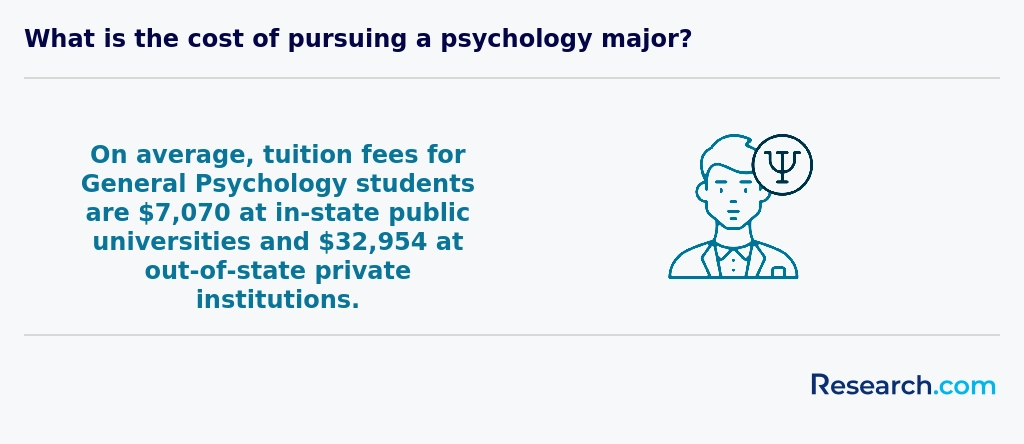
The average cost of an online psychology degree in America varies significantly depending on residency status and institution type. Data indicates a median total cost of approximately $45,600 for completing such a degree. In-state students often benefit from reduced tuition fees, averaging around $37,920, while out-of-state students can expect to pay closer to $53,790. These figures reflect the total tuition and fees for psychology degree USA programs and provide a realistic perspective for prospective students budgeting their education.
Many graduates from well-known colleges report that the investment in an online psychology degree was worthwhile, describing the financial commitment as manageable given the flexibility and reputation of the institutions they attended. For example, students attending popular public universities appreciated the lower in-state tuition combined with access to quality faculty and resources. They often balanced their studies with work, supported by financial aid and employer tuition assistance programs.
Private universities tend to have higher tuition costs but often offer scholarships and financial incentives that can significantly reduce out-of-pocket expenses. Additionally, some programs charge per-credit rates, which can range from $300 to over $1,000 per credit, adding complexity to cost considerations. Prospective students should explore details carefully and can find guidance on the most affordable psychology programs available in America to better estimate their expenses in line with the average cost of online psychology degree USA.
Accreditation is one of the most important quality checks for an online psychology degree. It affects transfer credit, graduate-school admission, employer recognition, federal financial aid eligibility, and, in some cases, licensure preparation.
For most students, the first requirement is institutional accreditation from a recognized accrediting body. Regional accreditation is generally preferred for students who may transfer credits or apply to graduate school. National accreditation may be acceptable in some contexts, but it can limit future options, so review the implications carefully before enrolling.
Programmatic accreditation also matters at advanced levels. The American Psychological Association (APA) is especially important for doctoral programs in clinical, counseling, and school psychology when students plan to pursue psychologist licensure. APA accreditation is not typically the standard for undergraduate psychology majors, so bachelor’s students should focus first on institutional accreditation, curriculum quality, faculty expertise, research opportunities, and graduate-school preparation.
Licensure pathways differ by career goal:
- Bachelor’s degree. A psychology bachelor’s degree can prepare graduates for roles such as research assistant, case manager, behavioral health technician, human services assistant, or human resources support roles. It is not sufficient for independent clinical practice.
- Master’s degree. A master’s degree may support counseling, behavioral health, school, or related licensure routes depending on the state and program. Students interested in Licensed Professional Counselor (LPC), marriage and family therapy, or related credentials should verify state-specific requirements.
- Doctoral degree. A PhD or PsyD is typically required for independent practice as a licensed psychologist.
Most licensure paths also involve supervised experience. Post-degree practicum and internship hours may include 1,500–2,000 hours under a licensed supervisor, and some boards may require a clinical residency or fellowship. Examinations may include the Examination for Professional Practice in Psychology (EPPP), a state jurisprudence exam, an oral exam, or continuing education units (CEUs) after licensure.
If you are balancing cost and licensure preparation, compare only schools that are transparent about accreditation, supervised experience, and state authorization. You can also review the Cheapest Psychology Degree Programs Ranking in Idaho for examples of affordable options to examine more closely.
Online psychology students in America typically access a variety of financial aid options to manage tuition costs, which can range widely between public and private institutions. For instance, graduates from well-known universities such as the University of California or Michigan State have noted how Pell Grants-providing up to $7,395 annually-were instrumental in covering part of their expenses without the burden of repayment. Many rely on federal loans, including subsidized and unsubsidized options, which offer flexible repayment schedules tailored to the student's academic year and dependency status.
Scholarships serve as a crucial resource, often awarded based on merit or financial need, with organizations like the American Psychological Association offering targeted support for psychology majors. Institutional aid is another key factor; several prominent colleges provide exclusive scholarships and tuition discounts for online learners, easing financial strain and allowing students to focus on their studies with confidence.
Veterans benefit significantly from GI Bill programs, which can cover large portions of tuition. Furthermore, numerous students appreciate employer tuition reimbursements when their coursework aligns with their professional roles. These combined options offer a reassuring foundation for students dedicated to advancing their psychology careers online.
Cost should be one of the first filters you apply when comparing online psychology programs. Tuition for online psychology programs in the US can range from $300 to $600 per credit hour, which can place the total cost for a standard 120-credit bachelor's degree between $36,000 and $72,000. The published tuition rate, however, is only part of the full price.
Before enrolling, review the total cost of attendance, including technology fees, textbooks, online course fees, transfer-credit limits, practicum expenses, graduation fees, and any required campus visits. A program that looks inexpensive per credit may cost more if it accepts fewer transfer credits or charges separate online fees.
Students comparing value should look at four practical questions:
- How many credits will you actually need to complete? Transfer credits, prior learning credit, and military credit can significantly affect the final bill.
- Is tuition different for in-state and out-of-state online students? Some public universities offer online rates that differ from campus rates.
- Does the program offer enough flexibility to keep working? Staying employed can reduce borrowing, even if the program takes longer.
- What financial aid is available? Federal loans, grants, institutional scholarships, employer tuition assistance, and state aid can all reduce out-of-pocket cost.
If affordability is your primary concern, compare ranked options with dedicated lists of most affordable psychology programs. The best financial choice is not always the lowest sticker price; it is the accredited program that helps you finish with manageable debt and a credential that supports your next step.
Enrolling in an online psychology degree program in America requires meeting specific academic and administrative prerequisites tailored to the degree level. For undergraduate applicants, most universities like the University of Florida or Arizona State University ask for a high school diploma or GED and a minimum GPA often between 2.5 and 3.0. Many students appreciate that test scores such as the SAT or ACT are no longer mandatory at several institutions, reducing stress during the application process.
Graduate-level programs at schools with strong reputations, such as Boston University or University of Southern California, expect candidates to hold a bachelor's degree, preferably in psychology or a closely related field. Students share that having completed foundational courses in psychology, statistics, and research methods creates confidence and readiness for advanced study. A higher undergraduate GPA, typically 3.0 or above, reflects the rigor necessary for these programs.
Additional requirements often include letters of recommendation, a statement of purpose, and relevant professional or research experience. Some graduates recall submitting GRE scores for clinical psychology programs, though this is becoming less common. Candidates should also be prepared for assessments or interviews gauging their self-discipline and aptitude for online learning. Reliable internet and suitable tech, while essential, are standard expectations. These prerequisites ensure students can thrive in respected American online psychology programs.
An online psychology degree can support several career paths, but becoming a licensed psychologist requires more than completing a degree. Licensure is controlled by individual state boards, and requirements vary. Most states require advanced education, supervised experience, examinations, and a formal application process.
Common steps include:
- Completion of supervised clinical hours. Many pathways require 1,500 to 3,000 hours under a qualified supervisor.
- Passing the Examination for Professional Practice in Psychology (EPPP). This standardized exam assesses core psychology knowledge.
- State jurisprudence exam or ethics assessment. Some states require proof that applicants understand state law and professional standards.
- Application and background check. Applicants typically submit official transcripts, supervised-practice verification, fees, and other documentation to the state licensing board.
After graduation, some students pursue postdoctoral fellowships, associate licensure, or supervised practice roles to build experience before applying for full independent practice authority. Maintaining licensure also usually requires continuing education (CE) credits in areas such as ethics, cultural competence, assessment, treatment methods, and emerging research.
Because licensure rules differ by state, do not rely only on a school’s general statement that a program is “licensure-focused.” Ask whether the curriculum, practicum, internship, and supervision structure align with the state where you plan to practice. Students comparing lower-cost regional options may also review the Cheapest Psychology Degree Programs Ranking in Idaho as part of a broader affordability and licensure-planning search.
The safest approach is to contact your state licensing board before enrolling and again before beginning supervised hours. That step can prevent costly delays after graduation.
Online psychology degree programs in America typically include foundational courses such as introduction to psychology, covering developmental, cognitive, social, and abnormal psychology. Graduates from popular universities in the U.S. often recall how understanding these core disciplines helped them relate theory to everyday situations, like recognizing social dynamics in group projects or applying cognitive principles to decision-making at work.
Research methods and statistics are emphasized to develop critical thinking and analytical skills, with students gaining hands-on experience in data analysis and experimental design. Many graduates from well-regarded colleges appreciate how this training prepared them for real-world challenges, such as evaluating behavioral studies or conducting surveys in clinical settings.
- Biopsychology, exploring the biological basis of behavior
- Developmental psychology, studying human growth across the lifespan
- Abnormal psychology, focusing on mental disorders and treatments
- Social psychology, examining group behaviors and social influences
- Cognitive psychology, investigating memory and perception
- Ethics, ensuring professional and research integrity
- Capstone projects or internships for practical application
Many students find electives in forensic, industrial-organizational, or health psychology valuable, enabling them to tailor their education to career aspirations.
Online psychology degree specializations USA encompass a broad spectrum of focused areas reflecting diverse career paths. Graduates from prominent American universities often share their enthusiasm for clinical psychology, where they gain skills to diagnose and treat mental health conditions, preparing for licensure and therapeutic roles. Counseling psychology is another widely chosen path, emphasizing emotional and social support across the lifespan, which resonates deeply with students driven by helping professions.
Industrial-organizational psychology appeals to those interested in workplace dynamics and organizational strategy, combining psychology with business-a specialization increasingly offered in online psychology degree programs in America. Many students appreciate how this specialization aligns with real-world HR and consulting careers at respected colleges nationwide.
Research-oriented learners frequently opt for experimental or cognitive psychology, engaging with the scientific study of mental processes, an option familiar to graduates from institutions renowned for rigorous online curricula. Additionally, developmental, forensic, and health psychology tracks enrich the available psychology specialization options in America, allowing students to pursue niches like lifespan development, legal-psychological intersections, and health behavior.
Those seeking flexibility often explore an accelerated online bachelor's degree in psychology to swiftly advance their expertise while balancing other commitments.
Choosing the best online psychology degree in America begins with confirming the institution's regional accreditation, a step graduates often emphasize as crucial for licensure and employment opportunities. Many online programs at renowned universities offer diverse specializations, allowing students to tailor their studies to areas like clinical or industrial-organizational psychology, enhancing career relevance and satisfaction. Graduates from Midwest and East Coast institutions highlight the value of flexible, asynchronous classes that fit around work and family commitments, illustrating program adaptability as a key factor for success.
Cost considerations also play a vital role; some students report significant savings through in-state tuition rates or per-credit pricing, especially when compared to private institutions. Exploring scholarships and financial aid enhances affordability, which can directly impact a student's ability to persist and thrive. Prospective learners eager to deepen their expertise might also explore related fields through online aba certificate programs, complementing their psychology degree.
Evaluating student outcomes such as graduation rates and job placement statistics from popular psychology programs in America helps ensure the chosen degree provides tangible benefits. By focusing on these factors, those seeking the best online psychology degree programs USA can make an informed decision aligned with their professional and personal goals.

Graduates holding an online psychology degree in America find numerous career paths aligned with their interests and educational background. Common roles include licensed clinical psychologists, counselors, and therapists, which generally require a master's or doctoral degree plus state licensure. Many graduates from universities renowned for psychology programs experience rewarding careers in social services or behavioral health support after earning their bachelor's degrees.
Other prominent opportunities involve specialized fields such as Industrial-Organizational Psychology, where professionals enhance workplace productivity and employee well-being, and Educational Psychology, which supports student development in schools. Research roles in academic or government settings also attract graduates passionate about advancing psychological knowledge. Those pursuing advanced study often secure positions in clinical psychology or neuropsychology with competitive salaries near $83,000 annually.
For students exploring various options, public institutions provide affordable pathways, as seen in the Cheapest Psychology Degree Programs Ranking in Idaho. This accessibility encourages many to embark on psychology job opportunities in America, fostering fulfilling careers that positively impact communities.
The job market for an online psychology degree in America is expanding steadily, reflecting a rising demand for mental health professionals across various sectors. Graduates from well-regarded programs at universities popular for psychology studies often find employment in hospitals, schools, and corporate settings where their skills support behavioral health and organizational development. Many graduates report feeling optimistic about entering roles such as behavioral health technicians or rehabilitation counseling assistants, which are accessible with a bachelor's degree. Those pursuing advanced clinical roles understand that earning a master's or doctoral degree-often through flexible online pathways-opens doors to licensed positions requiring supervised experience and state certification. This positive labor outlook aligns with growing recognition of online degrees, boosting confidence among prospective students considering programs in America's top-ranked institutions. When researching opportunities, it is practical to explore accredited colleges online with free application options to keep education affordable while pursuing these promising careers.
Psychology degree employment opportunities America-wide include a variety of meaningful roles in human services and education, with many graduates finding rewarding work in mental health clinics or social service agencies. The ability to balance study and life commitments through online programs contributes significantly to this opportunity growth and accessibility.
2027 Best Online Psychology Degree Programs Ranking in the USA
Investing in your education is a significant decision that can shape your future, and the Research.com team understands the importance of making informed choices. To assist prospective students, we have meticulously crafted the "2027 Best Online Psychology Degree Programs Ranking in the USA." Our commitment to quality, credibility, and accuracy is reflected in the extensive research and analysis conducted to compile this ranking.
We utilized the following reputable data sources to ensure a comprehensive evaluation of online psychology programs:
By exploring this ranking, readers will gain valuable insights into the top online psychology degree programs available nationwide, helping them make informed decisions about their educational and professional futures. For more details on our methodology, please visit our Research.com methodology page.


# 4 position
University of Wisconsin-Madison
Master of Educational Psychology: Professional Educators


# 8 position
Amridge University
Doctor of Family Therapy


# 12 position
Kansas State University
Master of Psychology with an emphasis in Industrial and Organizational Psychology

# 13 position
Amridge University
Master of Professional Counseling
# 15 position
University of Missouri
Doctor of Psychiatric Mental Health Nurse Practitioner (Across the Lifespan)

# 18 position
Augustana University
M.Ed. SPED-ABA Master of Education in Special Education-Applied Behavior Analysis


Frequently Asked Questions About psychology
Online psychology degree students in America can maximize their learning experience by actively engaging with course materials and participating in virtual discussions. Research from the American Psychological Association emphasizes the importance of applying theoretical knowledge through practical assignments and case studies to improve comprehension.
Effective time management is crucial-students should create structured schedules to balance coursework and personal commitments. Utilizing university resources such as virtual tutoring and academic advising also supports success. According to the National Center for Education Statistics, 35% of online learners reported higher satisfaction when interacting regularly with instructors.
Additionally, students benefit from joining psychology forums and networking groups to exchange ideas and stay updated on industry trends.
The psychology field in the United States is rapidly expanding into several emerging niches, reflecting broader societal changes and scientific advancements. One growing area is neuropsychology, which explores brain-behavior relationships and is vital in treating neurological disorders. According to the Bureau of Labor Statistics, jobs in neuropsychology-related roles are expected to grow by 14% from 2022 to 2032, much faster than average.
Another niche gaining traction is health psychology, focusing on how psychological factors affect physical health. This is especially pertinent in managing chronic illnesses and promoting wellness. The increasing demand for integrated care in hospitals supports this trend.
Additionally, forensic psychology is becoming more prominent, influenced by rising legal and criminal justice system needs. Professionals in this field assist in assessments, expert testimony, and rehabilitation planning.
These niches offer valuable paths for students pursuing online psychology degrees, presenting diverse career opportunities aligned with current market demands.
After completing an online psychology degree in America, preparing for the job market involves several key steps. First, gaining relevant experience through internships or volunteer opportunities enhances employability. According to the American Psychological Association (APA), hands-on experience is critical in psychology careers.
Next, obtaining appropriate licensure or certification is essential for clinical roles; licensure requirements vary by state and often require supervised hours and passing the Examination for Professional Practice in Psychology (EPPP).
Networking with professionals and joining organizations like the APA can provide job leads and mentorship.
Finally, developing skills in data analysis and research methods improves competitiveness, as many psychology roles demand these abilities.
Employers seeking psychology graduates in America prioritize a blend of technical and interpersonal skills. Critical thinking tops the list, enabling graduates to analyze complex human behaviors and apply research effectively. Communication skills, both written and verbal, are essential for clear presentation of findings and collaboration in multidisciplinary teams.
Data from the American Psychological Association highlights the growing importance of research skills, including familiarity with statistical software like SPSS or R. Ethical awareness is also crucial, as psychologists must navigate sensitive information responsibly.
Lastly, employers value adaptability and cultural competence, reflecting the diverse populations psychologists serve nationwide. These skills equip graduates for roles in healthcare, education, and corporate environments.
Finding internships relevant to a psychology degree in America requires strategic research and networking. Start by consulting your online program's career services, as many universities partner with local clinics, hospitals, and organizations offering psychology internships. The American Psychological Association (APA) provides an internship database that lists accredited opportunities nationwide.
Additionally, use platforms like Handshake and LinkedIn, which often feature internship listings tailored to psychology students. According to the APA's 2023 internship report, over 70% of psychology students secured internships through university referrals or professional associations.
Joining psychology clubs and attending virtual career fairs can also increase your chances by connecting you with professionals in your field.
Obtaining an online psychology degree in America can significantly improve career mobility and advancement opportunities. According to the U.S. Bureau of Labor Statistics, employment of psychologists is projected to grow 8% from 2021 to 2031, faster than the average for all occupations. An online degree offers flexibility for working adults to earn credentials without pausing their careers, enabling timely progression into higher roles.
Many employers recognize accredited online degrees, allowing graduates to qualify for licensure or specialized positions in counseling, human resources, or research. Graduates often report salary increases and expanded job prospects after completing online psychology programs.
Furthermore, online programs frequently provide networking and internship opportunities relevant to the national psychology job market. This combination of education, credentials, and practical experience can help students advance in a competitive industry.
Studying for a psychology degree in America equips students with skills applicable across various fields, fostering interdisciplinary collaboration. Accredited online programs emphasize critical thinking, research methods, and human behavior, which are foundational in disciplines like healthcare, education, and business.
According to the American Psychological Association (APA), nearly 70% of psychology graduates work in roles blending psychology with other specialties such as social work, counseling, or organizational leadership. Coursework often includes statistics, biology, and sociology, broadening perspectives and allowing integration of diverse knowledge areas.
This multidisciplinary training prepares students to address complex problems in settings ranging from hospitals to corporate environments, making psychology graduates valuable assets in today's interconnected workforce.
When choosing between a thesis and a non-thesis psychology degree program in America, consider your career goals carefully. Thesis programs focus on original research and often appeal to students aiming for doctoral studies or research roles. According to the American Psychological Association, about 30% of master's psychology programs require a thesis.
Non-thesis programs typically emphasize coursework and practical skills, catering to students pursuing professional licensure or applied careers. These programs may include internships or capstone projects instead of a research thesis.
Time commitment is another factor: thesis paths often require more months of study to complete data collection and writing, while non-thesis programs can be completed faster.
Evaluate your interest in research and your future plans to decide which format aligns best with your goals.
Students based in America who want to study psychology abroad have several online options provided by international universities. Many institutions now offer fully online psychology degrees that comply with U.S. accreditation standards, allowing credits to transfer more easily. This flexibility supports students seeking global perspectives without relocating. According to the American Psychological Association, ensuring program accreditation by organizations like the APA or regional U.S. accreditors is crucial for future licensure. Additionally, some programs include international research opportunities or virtual internships to broaden experience. This approach aligns with the growing trend in the U.S., where 30% of psychology graduate students engage in online learning as reported by the National Center for Education Statistics.
Part-time job opportunities that complement psychology degree education in America often involve roles that build relevant skills and practical experience. Common positions include research assistantships, which provide hands-on exposure to experimental design and data analysis in university or healthcare settings. According to the American Psychological Association, these roles are valuable for students aspiring to clinical or academic careers.
Other popular options include mental health technician or behavioral health aide roles. These jobs allow students to observe patient care and develop communication skills, often in hospitals or community centers. Additionally, tutoring or teaching assistant positions enable psychology students to reinforce their knowledge while gaining instructional experience.
Employment in crisis helplines or social service agencies also offers practical benefits by enhancing empathy and counseling skills. This practical work can significantly strengthen graduate school applications and professional resumes.
Online psychology students in America have a variety of networking opportunities despite not attending campus in person. Many accredited programs offer virtual student organizations and psychology clubs, enabling interaction with peers and professionals. The American Psychological Association (APA) also provides resources and forums for students to connect nationally.
In addition, online students often participate in internships or practicums within local organizations, allowing for face-to-face networking in real-world settings. According to the APA, nearly 70% of psychology internships report accepting online students, helping them build professional contacts.
Furthermore, virtual conferences and webinars have grown in availability, offering access to experts and fellow students across the country. These activities foster essential connections for career development in psychology.
Alumni networks play a crucial role for students enrolled in online psychology degree programs in America. These networks connect current students with graduates who have successfully entered the workforce. This access provides valuable mentorship opportunities and guidance relevant to the American psychology job market. According to the American Psychological Association, nearly 80% of psychology students cited networking as a key factor in securing internships and jobs.
Moreover, alumni connections often lead to exclusive job postings and professional events unavailable to the general public. For online students, this strengthens ties that might otherwise be limited due to remote learning. The shared experience within the U.S. psychology community fosters career growth and lifelong professional support.
In the US, many online psychology degree programs offer customizable tracks to align with your career goals. You can often choose electives focused on clinical, counseling, industrial-organizational, or developmental psychology. Selecting the right specialization helps tailor your skills for specific job markets. Some programs also allow internships or research projects relevant to your interests, which is valuable since the US Bureau of Labor Statistics projects a 8% growth in psychology-related jobs through 2032. Additionally, accreditation by the American Psychological Association (APA) is important for licensure, so ensure your program meets these standards if you aim to become a licensed psychologist.
Online psychology students in America often face challenges related to maintaining motivation and time management. A 2023 report from the American Psychological Association highlights that nearly 40% of online learners struggle to balance coursework with personal and professional responsibilities. Many also encounter difficulties with limited access to hands-on experience, which is crucial for developing clinical skills in psychology programs.
Technical issues are another common barrier. Reliable internet and familiarity with digital platforms are essential, yet 25% of students in a recent EDUCAUSE survey reported connectivity problems that hindered their learning process.
With an online psychology degree in America, graduates can pursue several professional certifications to enhance their career opportunities. A common path is becoming a Licensed Professional Counselor (LPC), which requires a master's degree and supervised clinical hours, followed by a state exam. Another certification is the Certified Alcohol and Drug Counselor (CADC), ideal for those interested in addiction treatment.
Many graduates also seek certification as a Behavior Analyst (BCBA), especially relevant in applied behavior analysis roles. The American Psychological Association (APA) provides guidelines for some credentials, though APA accreditation is more pertinent to doctoral programs. According to the Bureau of Labor Statistics, roles requiring certification often offer higher earning potential and job security in psychology-related fields.
Writing a winning application for an online psychology program in America begins with thoroughly researching accredited schools recognized by the American Psychological Association (APA). Highlight your academic achievements, especially in science and social science courses, as admissions committees often seek strong foundational knowledge.
Include clear career goals that align with psychology, emphasizing why an online program suits your needs and learning style. Admissions officers value well-articulated motivations supported by relevant experience such as volunteer work or internships.
Standardized test requirements vary by institution, but many programs have become test-optional recently.
Letters of recommendation should come from educators or professionals familiar with your aptitude for psychology. Proofreading and adhering strictly to each program's application instructions also boost your chances of acceptance.
The field of psychology offers unique global career opportunities, reflecting diverse cultural and healthcare needs. In the United States, psychology is a rapidly growing profession, with the Bureau of Labor Statistics projecting a 10% employment growth from 2022 to 2032, faster than the average for all occupations.
Internationally, American-trained psychologists often work in research, clinical practice, or consultancy roles that impact global health policies. U.S. clinical psychology programs, accredited by the APA, are recognized worldwide for their rigor, making graduates competitive in many countries.
Moreover, online psychology degrees accredited in the U.S. provide flexible access to quality education, allowing students to engage with global psychological theories and practices. This prepares graduates to address mental health challenges across cultures.
Professional licensing varies globally, but American degrees often facilitate easier credential recognition, especially in Western countries. This broadens career prospects internationally while maintaining strong ties to U.S.-based professional standards.
Gaining practical experience is essential when studying for an online psychology degree in America. Many programs incorporate virtual internships or practicum placements, allowing students to work remotely with licensed professionals. According to the American Psychological Association (APA), these hands-on experiences are crucial for developing clinical skills and meeting licensure requirements.
Students can also seek local opportunities, such as volunteering at mental health clinics, hospitals, or community centers. These experiences provide exposure to diverse populations and real-world challenges.
Additionally, some universities partner with agencies nationwide to facilitate supervised fieldwork, ensuring students meet state standards.
Choosing the right concentration within an online psychology degree in America involves understanding your career goals and interests. Psychology offers diverse areas such as clinical, counseling, forensic, and industrial-organizational psychology. Each concentration prepares graduates for specific roles, influencing job prospects and salary potential. For example, industrial-organizational psychologists earned a median annual wage of $105,310 in 2022, according to the U.S. Bureau of Labor Statistics.
Consider licensing requirements in your state, as some concentrations, like clinical psychology, often require further education and supervised experience. Reviewing course content and faculty expertise can also help identify the best fit.
Researching job growth projections is useful; the BLS expects psychology jobs to grow 8% from 2021 to 2031.
See What Experts Have To Say About Studying Psychology
Read our interview with Psychology experts

Robin M. Kowalski. Ph.D.
Psychology Expert
Professor of Psychology
Clemson University

Joann Farrell Quinn, Ph.D., MBA
Psychology Expert
Director at the College of Medicine Department of Medical Education
Morsani College of Medicine

Elizabeth L. Jeglic Ph.D.
Psychology Expert
Professor of Psychology
City University of New York

- Nine Under-the-Radar Psychology Careers https://www.psychologytoday.com/us/blog/how-to-do-life/201610/nine-under-the-radar-psychology-careers
- Community Psychology in Global Perspective http://siba-ese.unisalento.it/index.php/cpgp
- Why Get a Psychology Degree Online? | University of Bridgeport https://www.bridgeport.edu/news/reasons-to-get-your-psychology-degree-online/
- Fastest Growing Careers In Psychology | Psychology.org https://www.psychology.org/resources/fastest-growing-careers-in-psychology/
- Mental Health Challenges Faced by Psychology Students | The Healthcare Guys https://healthcareguys.com/2023/11/23/mental-health-challenges-faced-by-psychology-students/
- Alumni Perspectives - Meet Our FPN Alumni https://www.aanmelder.nl/alumni-perspectives-june-2023
- Online Psychology Degree Salary by Career Path: What the Data Actually Shows in 2026 https://www.collegetransitions.com/blog/online-psychology-degree-salary-by-career-path/
- How to Pay for Your Psychology Education in California - Psychology California https://psychologyca.org/how-to-pay/
- How to help students cope with mental health challenges https://www.eaie.org/resource/help-students-cope-mental-health-challenges.html
- Study Psychology Abroad https://astarfuture.co.uk/study_psychology_abroad.html