2027 Human Resources Degree Recruiter Preference Report: What Employers Value Most in New Graduates

Co-Founder and Chief Data Scientist
ATS screening, HRIS experience, and evidence-based people judgment now shape entry-level Human Resources hiring. The U.S. Bureau of Labor Statistics reports that Human Resources specialist roles are projected to grow 8% from 2023 to 2033, faster than average, which means opportunity is real but competition is structured.
This guide is for HR graduates, career changers, and near-graduates who want to understand recruiter preferences, technical skills, screening standards, and interview benchmarks so they can tailor resumes, prepare for assessments, and compete for offers with fewer wasted applications.
Key Things to Know About Recruiter Preferences in the Human Resources Industry
- Employers usually prefer a bachelor's degree for HR specialist roles, but recruiters increasingly evaluate proof of applied skills: internships, HRIS exposure, compliance awareness, analytics projects, and credible work samples.
- The strongest entry-level HR candidates combine people skills with technical fluency; BLS lists the 2024 median annual wage for Human Resources specialists at $72,910, but early-career pay varies widely by region, industry, and role scope.
- Certifications are helpful but not always required; aPHR or SHRM-CP can strengthen screening results when paired with internships or projects, but they rarely compensate for a generic resume, weak communication, or no evidence of hands-on HR work.
- Do Human Resources jobs require a degree?
- What are the top qualities employers look for in Human Resources graduates today?
Do Human Resources jobs require a degree?
Most professional Human Resources jobs do not have a legal degree requirement, but many employers use a bachelor's degree as a preferred or baseline screening filter for HR coordinator, HR generalist, recruiter, benefits, and employee relations roles. The BLS states that Human Resources specialists typically need a bachelor's degree, which is why degree holders often clear initial screening more easily than applicants with only informal experience.
That said, "degree required" is not the same as "degree alone is enough." Recruiters increasingly look for candidates who can show they understand hiring workflows, employee records, workplace compliance, onboarding, confidentiality, and HR technology.
A degree is strongest when it is paired with an internship, campus HR assistant role, student employment office experience, payroll exposure, or a capstone project tied to workforce analytics or policy review.
The best path depends on the role you want and how much relevant experience you already have. This table shows how recruiters commonly interpret different entry routes for entry-level HR hiring:
| Entry path | Best fit | How recruiters usually view it | Main limitation |
| Bachelor's degree in HR, business, psychology, or related field | HR coordinator, recruiting coordinator, HR specialist trainee | Strong academic foundation and easier ATS screening for degree-filtered roles | Needs evidence of practical HR tasks, not just coursework |
| Associate degree plus office or administrative experience | HR assistant, staffing assistant, payroll support | Viable when the resume shows accuracy, discretion, and records management | May be screened out of roles requiring a bachelor's degree |
| Certificate or certification without a degree | Career changers targeting HR assistant or recruiting support roles | Useful signal of commitment, especially with transferable work experience | May not satisfy employer education filters for HR specialist jobs |
| Internship, temp staffing, or campus employment experience | Applicants building first HR experience | Highly valuable because it shows exposure to real HR workflows | May need a degree or certification to compete for broader specialist roles |
| Graduate business pathway | Future HR leadership, workforce strategy, compensation, or organizational development | Relevant for candidates aiming beyond entry-level administration | Usually not necessary for a first HR job |
For candidates considering long-term HR leadership rather than only entry-level hiring, business graduate options such as an online EMBA may make more sense after gaining work experience. For a first HR role, however, recruiters usually value applied experience and job-specific tools more than an advanced degree.
What are the top qualities employers look for in Human Resources graduates today?
Recruiters hiring HR graduates look for more than "good with people." Entry-level HR employees handle sensitive information, communicate policy, support managers, and keep processes moving, so employers want maturity, judgment, accuracy, and evidence that the candidate can balance employee care with business needs.
Employer surveys from groups such as NACE continue to place problem-solving, teamwork, and written communication among the most valued new-graduate attributes. For HR applicants, those qualities matter because even junior roles involve policy interpretation, candidate communication, onboarding coordination, and documentation that can affect compliance.
The table below summarizes the qualities that most often separate strong HR graduates from applicants who sound interested in HR but not yet job-ready:
| Employer-valued quality | Why it matters in HR | Strong evidence recruiters notice |
| Discretion and confidentiality | HR staff see pay, discipline, medical leave, and personnel records | Work involving sensitive data, FERPA-covered records, payroll support, or supervisor references |
| Clear written communication | HR teams send policies, offer updates, interview notes, and onboarding instructions | Policy memos, employee guides, recruiting emails, or writing-intensive internship work |
| Bias-aware judgment | Recruiting and employee relations decisions must be fair, consistent, and defensible | Structured interview projects, DEI coursework applied to hiring, or rubric-based evaluation examples |
| Process discipline | Missed forms, late I-9 steps, or inconsistent documentation create risk | Experience tracking deadlines, maintaining records, auditing files, or coordinating multi-step workflows |
| Business orientation | HR supports retention, productivity, workforce planning, and manager effectiveness | Projects tied to turnover, engagement, compensation, training ROI, or staffing metrics |
| Adaptability with technology | HR teams are adopting automation, AI screening, and self-service HR platforms | HRIS training, spreadsheet dashboards, ATS exposure, or AI-use policies in projects |
Graduates who enjoy employee communication, training, change management, or internal messaging may also compare HR roles with communication-focused careers. In that case, an online masters in communication can be relevant later for roles in employee engagement, corporate communications, or organizational development.
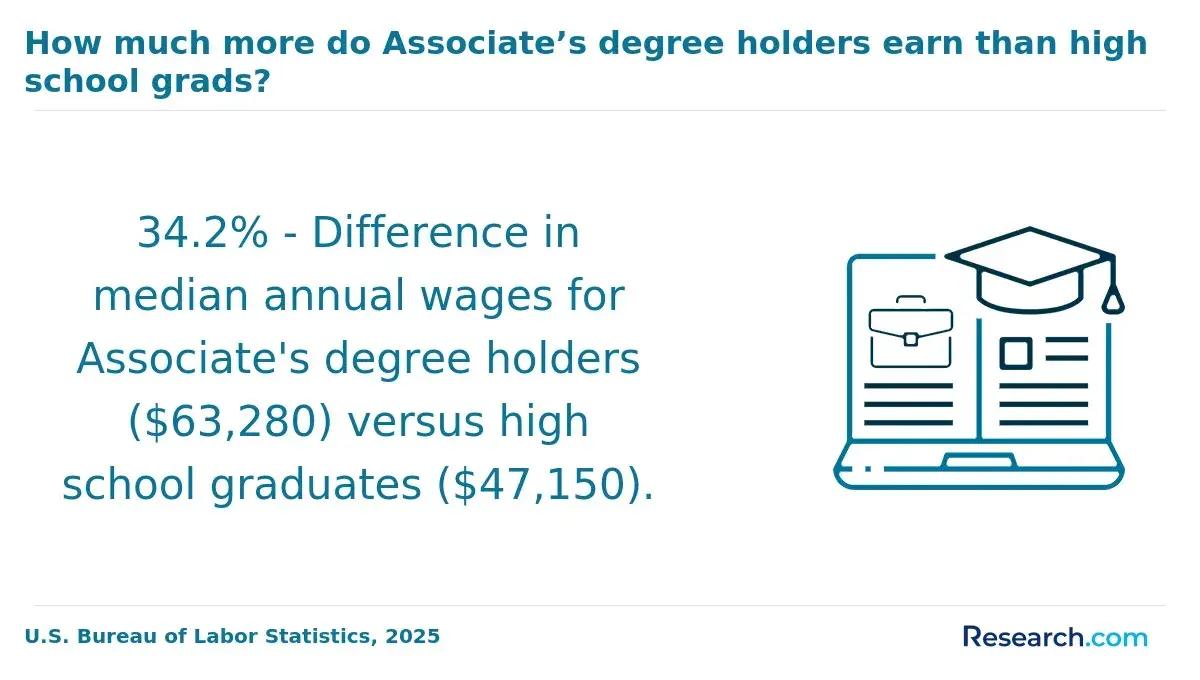
Entry-level HR is becoming more technical because employers expect new hires to work inside digital systems, read workforce data, and follow compliance procedures accurately. Recruiters do not expect a new graduate to be a labor attorney or HR analytics expert, but they do expect enough technical fluency to avoid costly mistakes and reduce training time.
The most requested skills vary by role, but the pattern is clear: HR graduates need to show they can operate processes, not simply describe theories from class. The table below connects common entry-level HR roles with the technical skill clusters recruiters tend to value:
| Entry-level HR role | Most requested technical skills | What the skill helps the employer do |
| HR assistant | Employee records, data entry accuracy, onboarding documentation, file audits | Maintain clean personnel records and reduce administrative errors |
| Recruiting coordinator | ATS workflow, interview scheduling, candidate communication, job posting coordination | Move candidates through hiring steps efficiently and consistently |
| HR coordinator | HRIS updates, reporting, onboarding, compliance checklists, benefits support | Support daily HR operations across the employee lifecycle |
| Payroll or benefits assistant | Payroll cycles, benefits eligibility, Excel, data reconciliation, confidentiality | Prevent pay and enrollment errors that affect employees directly |
| Learning and development assistant | LMS administration, training records, survey tools, completion tracking | Document training participation and support employee development programs |
| People analytics assistant | Excel, dashboards, basic statistics, turnover metrics, data visualization | Help HR teams identify patterns in hiring, retention, attendance, and engagement |
To make these skills visible, translate coursework into business outputs. Instead of writing "completed HR analytics class," a stronger resume line might say you built a turnover dashboard using anonymized employee data, summarized patterns by department, and recommended retention questions for manager follow-up.
Technical skills that most often help HR graduates pass recruiter screening include the following clusters. Use this list as a self-audit before applying to HR coordinator or specialist roles:
- HR operations: Onboarding checklists, employee file maintenance, I-9 awareness, policy acknowledgment tracking, and separation documentation basics.
- Recruiting operations: Job posting support, resume screening rubrics, candidate communication, interview scheduling, and applicant status tracking.
- Data and reporting: Excel formulas, pivot tables, data cleaning, basic charts, headcount reports, turnover calculations, and survey summaries.
- Compliance literacy: Equal employment opportunity concepts, wage and hour awareness, leave documentation basics, confidentiality, and consistent recordkeeping.
- Employee support: Benefits enrollment assistance, training records, internal service tickets, escalation judgment, and professional email communication.
Specialized HR certifications are usually helpful, not mandatory, for entry-level roles. They can improve credibility when a candidate lacks internship experience, is changing careers, or is applying to employers that mention SHRM, HRCI, payroll, benefits, or recruiting credentials in job descriptions.
The trade-off is cost and timing. A certification can strengthen your resume, but it should not delay applications if you already have a degree, internship, HRIS exposure, and a well-targeted resume. Published certification fees change, but recent U.S. fee structures commonly place entry-level HR exams in the low-to-mid hundreds before optional preparation materials.
Common cost considerations include the following. Verify current fees with the certifying body before registering because member status, exam window, and preparation options can change the final amount:
- aPHR from HRCI: Often around $400 when application and exam fees are combined, before optional study materials.
- SHRM-CP: Commonly around $410 to $510 depending on membership status and registration timing, before optional learning systems.
- Payroll or benefits microcredentials: Costs vary widely and may be better after you choose a payroll, benefits, or compensation-focused path.
Certification is most valuable when it solves a specific weakness in your profile. If your resume lacks formal HR coursework, an entry-level certification can show commitment. If your resume lacks practical examples, a certification alone is less persuasive than a portfolio, internship, or temp HR assignment.
Use this decision rule before paying for a credential. If at least half of your target job postings mention SHRM, HRCI, payroll, benefits, or HR compliance credentials, certification may improve screening. If postings focus more on HRIS, ATS, Excel, scheduling, onboarding, and communication, prioritize practical projects and tool fluency first.
Candidates who are weighing HR against broader business graduate routes can also compare accessible MBA options, including the easiest MBA programs to get into, but an MBA is rarely the most efficient credential for a first HR assistant or coordinator role.
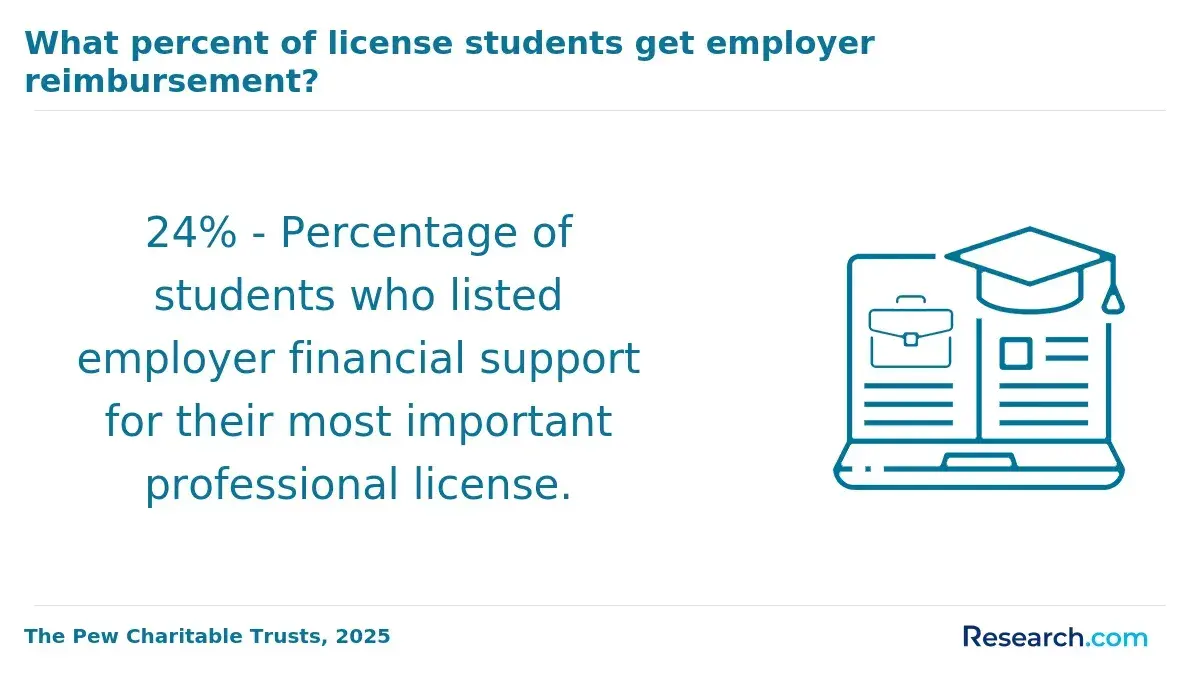
Recruiters may notice GPA and academic honors, but they usually weigh them less heavily than internships, communication quality, HR-relevant experience, and evidence of judgment. GPA matters most in structured campus recruiting, rotational programs, competitive corporate internships, and early-career leadership programs where employers compare many students with limited work history.
A high GPA can help you get attention, but it does not prove you can handle confidential employee issues or execute HR workflows. A lower GPA does not automatically block you, especially if your resume shows work experience, leadership, projects, or a clear improvement trend.
The table below shows how recruiters commonly interpret academic signals in entry-level HR screening:
| Academic signal | Recruiter interpretation | Best use on resume |
| GPA of 3.5 or higher | Positive academic signal, especially for campus recruiting | Include if it strengthens the profile and the employer asks for it |
| GPA between 3.0 and 3.49 | Generally acceptable for many entry-level HR roles | Include when requested or when paired with relevant coursework and experience |
| GPA below 3.0 | May raise questions only if the employer has a stated cutoff | Omit unless required and emphasize experience, projects, and upward trend |
| Dean's list or honors | Signals consistency and discipline | Use briefly; do not let honors replace work evidence |
| Relevant coursework | Useful when the candidate lacks experience | List only courses tied to HR law, staffing, compensation, analytics, or organizational behavior |
| Capstone or research project | Stronger than a course list when it produced a business-style output | Describe the problem, method, tool, and outcome in one concise bullet |
If your GPA is not a strength, do not overexplain it in the resume. Instead, move your education section below experience, add HR-relevant projects, quantify administrative work, and prepare a calm interview answer if asked. Recruiters care more about accountability than excuses.
Top employers recruit HR graduates through a mix of campus pipelines, internship conversions, employee referrals, LinkedIn outreach, staffing agencies, professional associations, and direct applications. Large employers often post early-career HR roles under titles such as HR assistant, recruiting coordinator, talent acquisition coordinator, people operations coordinator, benefits assistant, payroll assistant, or HR rotational associate.
BLS projects about 86,200 openings for Human Resources specialists each year on average from 2023 to 2033. That figure includes growth and replacement needs, so graduates should treat the market as active but not automatic: targeted applications and warm referrals still matter.
The table below compares common recruitment channels and the type of HR applicant each channel tends to favor:
| Recruitment channel | Employers commonly using it | Candidate profile it favors |
| Campus career centers | Large corporations, hospitals, universities, government contractors | Students and recent graduates with internships, leadership, or strong academic records |
| Internship conversion | Enterprise employers, healthcare systems, financial services, manufacturing firms | Candidates who have already proven reliability inside the organization |
| LinkedIn recruiting | Corporate HR teams, staffing firms, startups, professional services firms | Applicants with keyword-rich profiles, clear role targets, and visible HR projects |
| Staffing and temp agencies | Employers needing HR assistants, recruiting support, payroll help, or leave coverage | Career changers and graduates seeking first hands-on HR experience |
| Professional associations | Local HR chapters, nonprofit employers, municipal employers, specialized HR teams | Candidates who network consistently and can discuss HR issues professionally |
| Direct employer sites | Hospitals, universities, retailers, logistics companies, insurance firms, tech employers | Applicants who tailor resumes closely to each job description |
Healthcare systems are especially active HR employers because they manage complex staffing, credentialing, scheduling, employee relations, and training needs. If you are deciding between HR work in healthcare and a clinical path, comparing options such as online SLP master's programs can clarify whether you want to support healthcare workers through HR or become a licensed practitioner yourself.
For better response rates, apply where your background matches the employer's workforce. Retail and logistics may value scheduling and high-volume hiring experience. Universities may value student employment or records experience. Hospitals may value confidentiality, compliance, and credential tracking. Startups may value HRIS comfort, ambiguity tolerance, and fast communication.
Entry-level HR interviews are usually practical rather than purely theoretical. Recruiters want to see how you communicate, organize information, protect confidentiality, and respond to realistic workplace situations.
Assessment formats vary by employer size and role type. The table below shows common formats and what each one is designed to evaluate:
| Assessment or interview format | What recruiters evaluate | Common entry-level HR roles using it |
| Behavioral interview | Communication, accountability, teamwork, conflict handling, judgment | HR assistant, HR coordinator, recruiting coordinator |
| Scenario-based questions | Confidentiality, fairness, escalation decisions, employee service mindset | HR coordinator, employee relations assistant, people operations associate |
| Writing sample or email exercise | Clarity, tone, professionalism, policy communication, attention to detail | Recruiting coordinator, HR coordinator, training assistant |
| Excel or data task | Accuracy, formulas, sorting, filtering, pivot tables, basic reporting | HR operations, payroll support, benefits assistant, people analytics assistant |
| Scheduling or prioritization exercise | Organization, urgency judgment, stakeholder coordination | Recruiting coordinator, HR assistant |
| Case interview light | Structured thinking about turnover, hiring delays, onboarding gaps, or employee complaints | Rotational HR programs, analyst-track HR roles |
| Panel interview | Professional presence, consistency, communication with managers and HR peers | Corporate HR programs, public sector HR roles, healthcare HR roles |
Preparation should focus on examples, not memorized definitions. Build a short bank of stories that prove you can handle sensitive information, learn systems, correct mistakes, manage deadlines, and communicate with frustrated people.
Use this interview preparation sequence before final-round interviews. It helps you practice the exact behaviors recruiters are trying to measure:
- Choose five HR-relevant examples from internships, student work, customer service, leadership, or administrative jobs.
- Rewrite each example using the situation, task, action, and result structure, keeping the result honest even if it is qualitative.
- Prepare one confidentiality example, one conflict example, one data accuracy example, one deadline example, and one learning-new-software example.
- Practice a writing sample by drafting a polite candidate update, an onboarding reminder, and a policy clarification email.
- Refresh Excel basics, especially sorting, filtering, conditional formatting, simple formulas, and pivot tables.
- Prepare two questions about the employer's HRIS, onboarding process, hiring volume, or early-career training structure.
Recruiters reject many HR applicants for reasons that are preventable. Because HR roles require accuracy, discretion, and professional communication, small mistakes on an application can carry more weight than they might in less documentation-heavy fields.
The table below identifies common red flags and why they matter during HR screening:
| Screening red flag | Why it concerns recruiters | Likely screening outcome |
| Generic resume with no HR keywords | Suggests the candidate did not read the job description or may not pass ATS matching | Low interview probability for competitive postings |
| No evidence of confidentiality | HR roles handle sensitive employee and candidate information | Recruiter may question readiness for HR work |
| Listing soft skills without examples | Claims like "people person" are not evidence of performance | Application blends in with weaker candidates |
| Sloppy formatting or typos | Signals poor attention to detail in a documentation-heavy function | Fast rejection for roles requiring employee records or communications |
| Overstating software proficiency | Creates risk if the interview includes tool-specific questions or work samples | Trust can drop quickly during screening |
| Unexplained employment gaps or role changes | Raises questions when the resume provides no context | Recruiter may deprioritize the application |
| No customization for industry | Healthcare, retail, manufacturing, education, and tech HR have different priorities | Resume may appear misaligned with employer needs |
Most red flags can be fixed before applying. Run this quick screen on every HR application you submit:
- Check whether your resume includes the exact role title, such as HR coordinator, recruiting coordinator, HR assistant, payroll assistant, or benefits assistant.
- Match your top skills section to the posting's language, especially HRIS, ATS, onboarding, Excel, compliance, scheduling, or employee records.
- Replace vague soft skills with evidence, such as "coordinated 40 weekly interview slots" or "maintained confidential student employment records."
- Remove inflated claims, including software tools you cannot explain in an interview.
- Proofread names, dates, punctuation, and formatting because HR recruiters often treat these as signals of records accuracy.
- Explain career gaps briefly in the resume or cover letter when context would reduce uncertainty.
To pass recruiter screening, HR graduates need to make the resume easy for both ATS software and human reviewers to understand. The goal is not keyword stuffing; it is clear alignment between the job description and your evidence.
Start by building one master resume, then customize it for each role family. A recruiting coordinator resume should emphasize ATS workflows, scheduling, candidate communication, and interview logistics. An HR coordinator resume should emphasize onboarding, HRIS, employee records, compliance checklists, and cross-functional support.
Use this step-by-step process before submitting applications. It is designed to help you pass the first screen and give recruiters concrete reasons to invite you to interview:
- Copy the job description into a document and highlight repeated requirements, especially tools, workflows, compliance terms, and role titles.
- Rewrite your summary in two to three lines that name your target role, HR focus area, and strongest evidence.
- Create a skills section with honest, searchable terms such as HRIS, ATS, onboarding, employee records, Excel, interview scheduling, benefits administration, payroll support, and compliance documentation.
- Turn coursework into outcomes by naming the project, tool, dataset or policy issue, and business purpose.
- Quantify administrative work where possible, including number of records handled, events coordinated, candidates scheduled, reports produced, or employees supported.
- Use standard headings such as Education, Experience, Projects, Certifications, and Skills so ATS systems can parse the document cleanly.
- Mirror your LinkedIn headline to your target role, such as "Entry-Level HR Coordinator | HRIS, Onboarding, Employee Records, Excel."
- Add a short LinkedIn About section that explains your HR interests, practical strengths, and the roles you are seeking.
- Upload or describe portfolio items only when they are sanitized, nonconfidential, and clearly labeled as academic, simulated, or professional work.
- Ask a career advisor, HR professor, internship supervisor, or working HR professional to review the resume against one specific job posting.
Your online profile should support the same story as your resume. Recruiters should be able to see your target role, location preference, graduation status, relevant tools, and proof of HR interest within a few seconds. If your profile reads like a general business student profile, you may lose searches for HR-specific terms.
For graduates considering whether to broaden beyond HR into management, operations, or executive leadership later, compare the timing and purpose of business credentials carefully. Advanced degrees can help at the leadership stage, but early HR hiring still rewards relevant experience, tool fluency, and strong screening materials first.
Recruiters rarely expect a fresh HR graduate to master every enterprise platform, but they do want proof that the candidate can learn HR systems quickly. Because many employers use HRIS, ATS, payroll, learning management, and ticketing platforms, tool fluency has become a practical hiring signal.
Applicants should focus on tool categories first, then name specific platforms when they have actually used them. The table below shows the software categories most relevant to entry-level HR work:
| Tool category | Examples of platforms recruiters may recognize | Why it matters for entry-level HR |
| HRIS and HCM systems | Workday, UKG, ADP, Paycom, BambooHR, Oracle HCM | Central systems for employee records, job changes, onboarding, and reporting |
| Applicant tracking systems | Greenhouse, Lever, iCIMS, Workday Recruiting, SmartRecruiters | Used to manage candidates, interview stages, requisitions, and hiring workflows |
| Spreadsheet and reporting tools | Microsoft Excel, Google Sheets, Power BI, Tableau | Needed for headcount reports, audits, payroll checks, and HR metrics |
| Payroll and benefits platforms | ADP, Paychex, Gusto, UKG, Rippling | Supports pay cycles, deductions, timekeeping, and benefits administration |
| Learning management systems | Cornerstone, Docebo, Canvas, Moodle, LinkedIn Learning administration tools | Tracks training completion, compliance learning, and employee development activity |
| Collaboration and case tools | Microsoft Teams, Slack, ServiceNow, Jira Service Management, Zendesk | Used for internal HR requests, documentation, and cross-functional communication |
| AI-enabled productivity tools | Microsoft Copilot, ChatGPT Enterprise, platform-native AI assistants | Increasingly used for drafting, summarizing, workflow support, and data review under employer policy |
The safest way to present software skills is to be specific about what you did. "Workday exposure" is weaker than "updated employee records in a training environment and generated basic headcount reports." If you only completed simulations, label them honestly as academic or training projects.
Graduates can build credible tool evidence without paid access to enterprise software. Useful portfolio pieces include an Excel turnover dashboard, an onboarding checklist, a mock requisition workflow, a structured interview scorecard, or a benefits communication FAQ written for employees.
Other Things You Should Know About Human Resources
Yes. Modern HR combines employee support with data-driven work such as turnover tracking, hiring metrics, engagement surveys, benefits reports, and compliance documentation. Candidates who enjoy communication and structured analysis often fit well.
Apply to both if you meet most requirements. HR assistant roles can be a faster entry point if you lack internship experience, while HR coordinator roles are more realistic when you already have HRIS, onboarding, recruiting, payroll, or records experience.
It can count as supporting evidence if it involved recruiting members, training volunteers, resolving conflicts, scheduling, maintaining records, or communicating policies. Label it honestly and connect it to HR tasks rather than presenting it as formal HR employment.
Salary varies by location, industry, employer size, and role title. Use the BLS median for Human Resources specialists as a broad benchmark, then compare local postings for HR assistant, HR coordinator, recruiting coordinator, payroll assistant, and benefits assistant roles before negotiating.
See What Experts Have To Say About Studying Human Resources
Read our interview with Human Resources experts

Thomas Kochan
Human Resources Expert
Professor of Management
Massachusetts Institute of Technology

Rick Hackett
Human Resources Expert
Professor, Human Resources & Management
McMaster University

Chester S. Spell
Human Resources Expert
Professor of Management
Rutgers University

- What Skills Are Commonly Needed for HR Recruiting Roles? https://www.aiuniv.edu/blog/2016/march/7-skills-every-hr-job-recruiter-needs
- Keys to competency-based selection in Human Resources - aggity https://aggity.com/keys-to-competency-based-selection-in-human-resources/
- HR Internships | Higherin https://higherin.com/career-guides/hr-recruitment/hr-internships
- Accredited vs Non-Accredited Training: Understanding Your Options https://www.qahe.org/article/accredited-vs-non-accredited-training-understanding-your-options/
- HR Certifications That Employers Prefer in 2025 https://hrcertification.com/blog/hr-certifications-employers-prefer-2025-biid1000210
- Recruiter Skills: Building Your Talent Acquisition Toolkit https://www.manatal.com/blog/recruiter-skills
- 2025 Employee Recruitment & Training Statistics: The Power of Continued Education https://escoffierglobal.com/blog/employee-recruitment-and-training-statistics/
- The Importance of Internships and Early Career Growth | CA Global https://www.caglobalint.com/post/the-hidden-power-of-internships-and-why-they-matter-more-than-you-think/
- How do I start a career in HR with no experience? | Leading HR Recruitment Agency in Dublin | https://www.hrhire.ie/blog/how-do-i-start-in-hr-with-no-experience