2027 Human Resources Degree Underemployment Report: Which Graduates Are Most Likely to Work Below Their Education Level

Co-Founder and Chief Data Scientist
Human Resources graduates often face a practical dilemma: take an administrative job quickly or keep competing for degree-level HR work. National research from the Burning Glass Institute and Strada Education Foundation found that 52% of bachelor's graduates are underemployed one year after graduation, making overqualification a real risk for HR majors entering a crowded entry-level market.
This guide is for HR students, recent graduates, and career changers who want to understand underemployment risk, curriculum gaps, salary trade-offs, certifications, and concrete steps that improve the odds of landing HR roles that actually use a degree.
Key Things to Know About Underemployment in Human Resources Industry
- Human Resources underemployment risk is real because many entry-level HR openings blend degree-level responsibilities with administrative tasks; national graduate research shows 52% of bachelor's graduates are underemployed one year after graduation.
- Degree-level HR roles usually require more than general coursework: employers increasingly look for HRIS exposure, labor law literacy, analytics, recruiting systems, employee relations judgment, and internship-backed experience.
- The financial difference can be substantial: the BLS listed 2024 median pay for human resources specialists at $72,910, while common low-credential fallback roles such as receptionists, customer service representatives, and general office clerks typically sit far lower.
- Key Things to Know About Underemployment in Human Resources Industry
- How likely is it for Human Resources graduates to become underemployed?
- Is the college curricula for Human Resources keeping up with employer expectations?
- How does underemployment for Human Resources graduates compare with other majors?
- Does taking on low-credential roles affect the career growth of Human Resources professionals?
- What is the salary gap between underemployed Human Resources graduates and those in degree-level jobs?
- What barriers force Human Resources graduates into low-credential roles?
- How can Human Resources graduates position their resumes for degree-level positions?
- Are there certifications that Human Resources graduates can secure to qualify for degree-level roles?
- What steps can Human Resources students take to improve their chances of securing degree-level roles?
- Top Trending Human Resources Rankings
- See What Experts Have To Say About Studying Human Resources
How likely is it for Human Resources graduates to become underemployed?
Human Resources graduates face a moderate-to-high underemployment risk, especially when they leave college without internships, HR software exposure, or evidence that they can handle compliance-sensitive work.
Underemployment means working in a job that does not normally require a bachelor's degree, even if the worker has one. In HR, that can include receptionist, payroll clerk, staffing assistant, office coordinator, or customer service roles that touch HR processes but do not require degree-level decision-making.
The best national benchmark is the 2024 Burning Glass Institute and Strada Education Foundation analysis, which found that 52% of bachelor's degree holders were underemployed one year after graduation. That figure should not be read as an HR-specific guarantee, but it is a useful warning: the first job after graduation strongly shapes whether a graduate moves into degree-level work or gets routed into support roles.
For HR majors, the risk is highest when the first role is mostly clerical and does not build evidence of higher-value HR capabilities. A recruiting coordinator job that uses applicant tracking systems, structured interviewing, and compliance documentation is a better gateway than a front-desk job that only occasionally assists with onboarding paperwork.
The table below separates common HR-related entry roles by how well they typically use a bachelor's-level HR education. The point is not that low-credential jobs are always bad, but that graduates should know whether a job is a bridge or a trap:
| Entry role | Typical degree alignment | Underemployment risk | What to look for |
| HR coordinator | Moderate to strong | Lower if duties include onboarding, HRIS, benefits, compliance, and reporting | Access to HR systems, policy work, and promotion path to HR specialist |
| Recruiting coordinator | Moderate to strong | Lower if the role includes sourcing, metrics, ATS workflows, and hiring manager contact | ATS experience, structured interview support, and requisition management |
| Payroll or benefits assistant | Moderate | Depends on whether the work is analytical or purely transactional | Exposure to audits, leave administration, benefits data, or payroll compliance |
| Administrative assistant | Weak to moderate | Higher unless it has a formal HR promotion track | Clear transfer route into HR operations, employee records, or talent acquisition |
| Receptionist or general office clerk | Weak | High if duties are unrelated to HR decision support | Short time limit, internal mobility, and documented HR projects |
Is the college curricula for Human Resources keeping up with employer expectations?
Many Human Resources curricula cover the right foundations, but they do not always keep pace with what entry-level employers now expect from job-ready candidates. A typical HR degree may include staffing, compensation, training, employment law, organizational behavior, and labor relations. Those subjects matter, but employers often screen early-career applicants for proof that they can use tools, data, and judgment in real HR workflows.
The curriculum gap is especially important because AI and automation are changing entry-level HR work. Resume screening, interview scheduling, onboarding reminders, employee FAQs, and HR ticket routing are increasingly handled by software.
That does not eliminate HR jobs, but it does reduce the value of purely administrative work and raises the premium on candidates who can interpret data, manage systems, and communicate with employees responsibly.
The table below shows where HR programs often align with employer needs and where students may need to build additional evidence outside the classroom:
| Employer expectation | Common classroom coverage | Typical gap for students | Why it affects underemployment risk |
| HRIS and ATS experience | Often discussed conceptually | Limited hands-on use of systems such as Workday, UKG, ADP, Greenhouse, or iCIMS | Employers may prefer candidates who can be productive without long system training |
| Employment law and compliance | Usually included | Students may know legal concepts but lack documentation practice | HR roles involve sensitive decisions, so employers are cautious with inexperienced hires |
| People analytics | Varies widely | Limited Excel, dashboard, turnover, compensation, or recruiting funnel analysis | Analytics helps separate degree-level HR candidates from clerical applicants |
| Employee communication | Covered through presentations or writing assignments | Less practice writing policy messages, manager guidance, or employee relations notes | Clear communication reduces risk in benefits, compliance, and employee relations work |
| Internship-backed judgment | Required in some programs, optional in others | Students may graduate without supervised HR experience | Employers often use internships as a signal that a candidate understands workplace realities |
Students who notice communication-heavy gaps can use electives, certificates, or graduate options to strengthen their employee relations profile. For example, an online masters in communication may be relevant for HR professionals targeting internal communications, training, change management, or employee engagement roles rather than purely administrative HR support.
How does underemployment for Human Resources graduates compare with other majors?
Human Resources does not usually fall into the lowest-risk category for underemployment, because it is not as licensure-protected as nursing, accounting, education, or some engineering paths. It also is not as broadly overexposed as some majors with fewer direct occupational pipelines. HR sits in a middle zone: there are degree-level roles, but graduates must prove practical readiness early.
The New York Fed's labor market data for recent college graduates has continued to show that underemployment varies sharply by major, with technical, licensed, and quantitatively intensive fields generally posting lower risk than broad, less occupationally specific fields.
The useful lesson for HR students is that the major alone is not enough; the combination of degree, internship, software skills, and specialization determines whether the graduate competes for HR specialist roles or general office work.
The table below compares HR with common major categories using labor-market logic rather than promising a fixed outcome for every graduate. Local hiring demand, school reputation, internships, and employer type can shift an individual's risk significantly:
| Major or field type | Typical underemployment risk pattern | Reason | Implication for HR students |
| Human Resources | Moderate to high without experience; lower with internships and HRIS skills | Clear HR career path exists, but many entry openings are administrative | Build proof of job-ready HR tasks before graduation |
| Engineering and computer-related fields | Generally lower | Technical skill requirements screen jobs more tightly around degree-level work | HR students can reduce risk by adding analytics and systems skills |
| Nursing, education, and licensure-linked fields | Generally lower when graduates meet licensure requirements | Credentials map directly to regulated roles | HR lacks a universal license, so certifications and experience carry more signaling weight |
| General business | Moderate | Broad degree can lead to many paths but may lack specialization | HR students should avoid looking like generic business applicants |
| Liberal arts and broad social science fields | Often higher without a career-specific skill stack | Transferable skills may not be tied to a specific entry occupation | HR can be a strong applied pathway if paired with recruiting, compliance, or analytics evidence |
Do Human Resources graduates typically stay long in low-credential roles?
Some HR graduates leave low-credential roles quickly, especially when the role gives them direct exposure to onboarding, recruiting coordination, payroll, benefits, or employee records. Others stay longer than planned because their job title and daily tasks do not create a strong case for HR specialist openings.
The long-term risk is supported by the 2024 Burning Glass Institute and Strada Education Foundation study: graduates who start out underemployed are much more likely to remain underemployed years later, and 45% of those underemployed one year after graduation were still underemployed 10 years after graduation. For an HR graduate, that means the first job should be evaluated not only by immediate income but also by whether it creates evidence for the next HR role.
A low-credential role is more defensible when it has a defined exit plan. Before accepting, graduates should ask whether the position includes HR systems, policy exposure, manager contact, or internal postings into HR specialist tracks.
These signs suggest a low-credential HR-adjacent job may be a useful bridge rather than a long-term mismatch:
- The manager can name the next role graduates commonly move into, such as HR coordinator, recruiter, benefits analyst, or HR operations specialist.
- The job includes measurable HR work, such as onboarding completion rates, candidate pipeline reporting, benefits enrollment support, or employee records audits.
- The employer uses recognized HR technology and will train entry-level staff on it.
- The graduate can build portfolio evidence from sanitized projects, dashboards, process maps, or policy-writing samples.
- The role has a time-bound development plan, ideally with a review after six to 12 months.
By contrast, a role becomes risky when it is labeled "HR" but consists mostly of front-desk coverage, calendar management, filing, or customer service with no path into recruiting, employee relations, benefits, compliance, or workforce analytics.
Does taking on low-credential roles affect the career growth of Human Resources professionals?
Taking a low-credential role does not permanently damage an HR career, but staying too long in one can slow wage growth, weaken professional identity, and make it harder to pass applicant tracking filters for degree-level HR jobs. Employers often infer skill level from recent job titles, tools used, and measurable responsibilities. If a graduate's first two years show only clerical duties, hiring teams may not see evidence of HR judgment.
The biggest career-growth issue is opportunity cost. A graduate working in a degree-level HR specialist track may build experience in recruiting strategy, employee relations, compliance, compensation, or HR analytics. A graduate in a low-credential support job may spend the same period building general office skills that are useful but less differentiating.
There are situations where taking the lower-level role makes sense. It can be a smart move when the employer is respected, the HR department promotes internally, the role gives access to HR technology, or the graduate needs income while completing a certification. It is less attractive when the job is unrelated to HR, has no internal mobility, or pays too little to support loan repayment and upskilling.
HR professionals who already have several years of experience and want to move into leadership may eventually compare graduate business options, including an online EMBA. For recent graduates, however, a master's degree is usually not the fastest fix for underemployment unless it is paired with experience, a clear specialization, and a realistic target role.
What is the salary gap between underemployed Human Resources graduates and those in degree-level jobs?
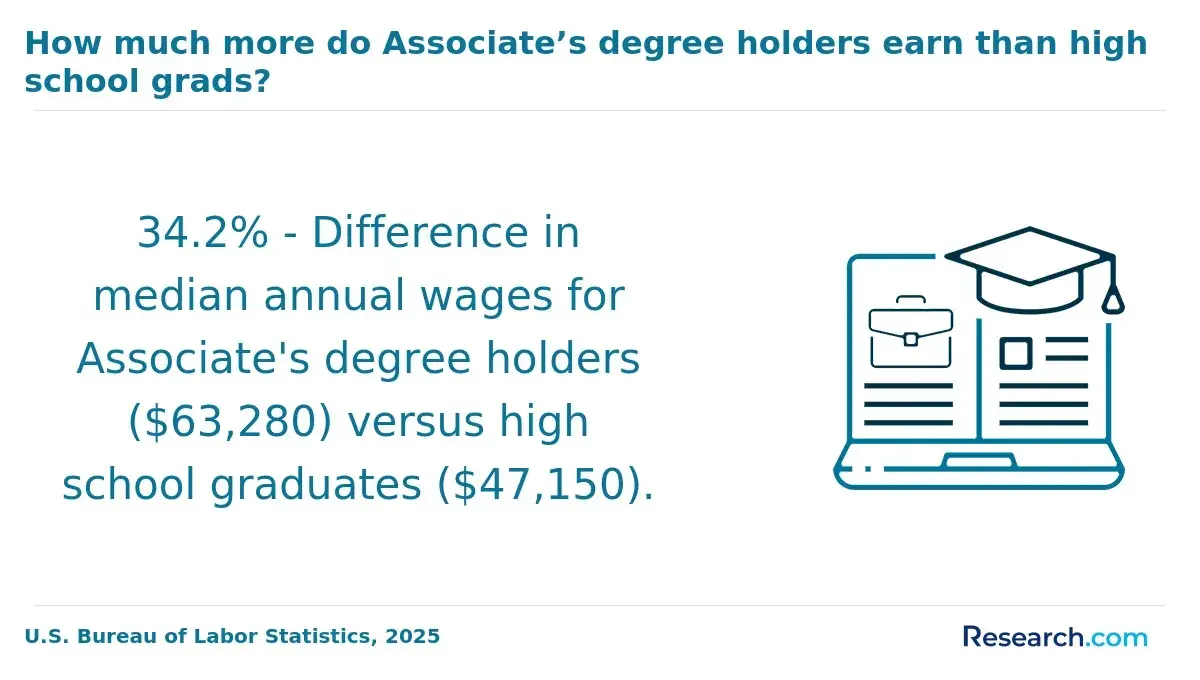
The salary gap between underemployed HR graduates and those in degree-level HR jobs can be large enough to affect loan repayment, savings, and the ability to invest in certifications. The BLS listed the 2024 median pay for human resources specialists at $72,910. By comparison, common fallback roles such as customer service representative, receptionist, and general office clerk are typically much lower in BLS wage data.
The table below compares degree-level HR work with common low-credential alternatives. These are occupational medians, not guaranteed salaries, and actual pay varies by metro area, industry, employer size, and prior experience:
| Role category | Example roles | Degree utilization | Recent US wage context | Career interpretation |
| Degree-level HR track | Human resources specialist, recruiter, benefits specialist, HR operations analyst | Strong | BLS 2024 median pay for human resources specialists: $72,910 | Best fit when the role includes judgment, systems, compliance, and measurable HR outcomes |
| HR-adjacent support track | HR assistant, payroll assistant, recruiting coordinator | Moderate | Typically below HR specialist pay but may create advancement evidence | Can be worthwhile if it builds HRIS, payroll, benefits, or recruiting experience |
| General administrative fallback | Administrative assistant, office clerk, receptionist | Weak to moderate | Often in the high-$30,000s to $40,000s range in BLS wage data | Risky if the role does not include HR projects or internal mobility |
| Customer-facing fallback | Customer service representative, call center associate | Weak | Often far below HR specialist pay in national wage data | May build communication skills but usually does not signal HR readiness by itself |
A practical way to think about the gap is this: if a graduate spends multiple years in work that pays roughly $25,000 to $35,000 less than a degree-level HR specialist role, the cost is not only annual income. It also includes delayed retirement contributions, slower debt repayment, fewer employer-paid development opportunities, and weaker bargaining power for the next job.
What barriers force Human Resources graduates into low-credential roles?
Human Resources underemployment usually happens for a combination of reasons rather than one simple failure. Some barriers are market-driven, such as heavy competition for entry-level HR coordinator roles. Others are preventable, such as graduating without internships or applying with a resume that reads like a list of coursework instead of evidence.
The most common barriers fall into several patterns. Understanding them helps students fix the right problem instead of applying to hundreds of jobs with the same weak positioning:
- No internship or applied HR experience: Employers often hesitate to put inexperienced graduates into roles involving employee data, compliance, or confidential conversations.
- Generic business positioning: A resume that says "business administration" or "human resources coursework" without recruiting, compliance, HRIS, or analytics evidence may blend into the applicant pool.
- Limited technology exposure: Many entry-level HR jobs now mention ATS, HRIS, payroll systems, Excel, reporting, or onboarding platforms.
- Weak labor law and documentation confidence: HR work involves sensitive topics such as leave, accommodations, discipline, wage rules, and employee records.
- Late job-search timing: Students who wait until after graduation may miss internship-to-full-time conversion cycles and campus recruiting windows.
- Unclear specialization: Graduates who cannot say whether they are targeting recruiting, benefits, HR operations, training, compensation, or employee relations may appear unfocused.
- Local labor-market mismatch: Smaller markets may have fewer HR specialist openings, so graduates may need to target larger employers, healthcare systems, universities, manufacturing firms, staffing firms, or remote-friendly HR operations teams.
Common mistakes make these barriers worse. The biggest misstep is accepting a non-degree fallback job with no exit strategy. Another is assuming that a bachelor's degree alone will overcome the lack of internship experience.
A third is applying only to jobs with "HR generalist" in the title, even though many true entry points use titles such as recruiting coordinator, talent acquisition coordinator, benefits associate, HR operations coordinator, or people operations associate.
How can Human Resources graduates position their resumes for degree-level positions?
A strong HR resume should make the employer confident that the graduate can handle real HR work on day one with supervision. That means the resume should not simply list courses. It should translate coursework, internships, student employment, volunteer leadership, and projects into HR outcomes.
The most effective resumes for degree-level HR roles usually do three things: they match the job description's language, show tools and processes, and quantify work where possible. This helps both applicant tracking systems and human reviewers see the candidate as HR-ready rather than generally employable.
Use the following steps to reposition an HR resume for degree-level roles:
- Choose one target lane first, such as recruiting, HR operations, benefits, learning and development, employee relations support, or compensation support.
- Collect 10 current job postings for that lane and highlight repeated requirements, especially HRIS, ATS, Excel, onboarding, compliance, reporting, and communication tasks.
- Rewrite the summary section around the target lane instead of using broad phrases such as "hardworking HR graduate."
- Move HR-relevant projects above unrelated work experience if those projects better prove readiness for the target role.
- Convert class assignments into business-style project bullets, such as building a structured interview guide, analyzing turnover drivers, writing an onboarding checklist, or comparing compensation benchmarks.
- Include software and data skills honestly, separating hands-on tools from conceptual familiarity.
- Quantify experience where accurate, such as number of employee records audited, candidates scheduled, training participants supported, or survey responses analyzed.
- Add a short certification, training, or professional development section if it directly supports the job target.
A weak bullet says, "Studied recruitment and selection." A stronger bullet says, "Created a structured interview rubric and candidate scoring matrix for an entry-level sales role, aligning questions with job competencies and reducing subjective evaluation criteria." The second version gives the employer something to evaluate.
Are there certifications that Human Resources graduates can secure to qualify for degree-level roles?
Certifications can help HR graduates signal job readiness, but they work best when paired with internships, projects, or entry-level HR experience. A certification is not a substitute for a degree, and it does not guarantee employment.
Its value depends on the target role, eligibility rules, employer recognition, and whether the graduate can apply the knowledge in interviews.
The table below summarizes common HR credentials and related skill-building options. Students should always check current eligibility requirements directly with the issuing organization because rules can change:
| Credential or training path | Best fit | How it may reduce underemployment risk | Important limitation |
| SHRM-CP | Early-career HR professionals and students seeking broad HR credibility | Signals knowledge of HR competencies, workplace scenarios, and applied HR practice | Most valuable when supported by internships or HR work examples |
| PHR | HR professionals focused on technical HR knowledge and US employment practices | Can strengthen credibility for HR coordinator, benefits, compliance, or generalist tracks | Eligibility requirements may limit access for new graduates without experience |
| aPHR | Students and early-career candidates entering HR | Offers an entry-level credential for candidates still building experience | May not carry the same weight as experience-based credentials |
| HR analytics or Excel certification | Students targeting HR operations, people analytics, compensation, or recruiting operations | Shows ability to work with data, dashboards, and workforce metrics | Should be tied to a portfolio project, not just a badge |
| HRIS, payroll, or ATS training | Students targeting HR assistant, payroll, recruiting, or operations roles | Improves readiness for systems-heavy entry-level jobs | Vendor-specific access may be limited outside an employer setting |
Some HR graduates consider an MBA when they struggle to land a degree-level role. That can make sense for candidates targeting management, consulting, or business partner tracks, but it is not always the fastest return on investment for a new graduate.
If the goal is a broader business credential, comparing admissions flexibility through resources on the easiest MBA programs to get into can be useful, but students should still ask whether a shorter HR certification plus internship experience would solve the immediate employment problem more efficiently.
What steps can Human Resources students take to improve their chances of securing degree-level roles?
Human Resources students can lower underemployment risk by treating the degree as only one part of a job-readiness strategy. The strongest candidates graduate with a target role, internship experience, software exposure, a small portfolio, and a network that includes HR professionals.
The most effective steps are practical and time-sensitive. Students who start early have more options than graduates trying to repair a weak resume after commencement.
- Pick a target HR lane by sophomore or junior year. Recruiting, HR operations, benefits, training, compensation, and employee relations require overlapping but different evidence.
- Complete at least one HR-relevant internship, co-op, or part-time role. If a formal HR internship is unavailable, target student employment, nonprofit administration, campus recruiting, residence life, payroll support, or training coordination projects.
- Audit coursework against job postings every semester. Compare assignments with current entry-level HR postings and identify missing tools, metrics, or compliance topics.
- Build a small HR portfolio. Include sanitized examples such as onboarding checklists, interview guides, turnover dashboards, training outlines, policy summaries, or benefits communication drafts.
- Learn the language of HR technology. Even if direct access to enterprise systems is limited, understand HRIS, ATS, payroll, learning management systems, employee engagement platforms, and basic reporting workflows.
- Use alumni and professional associations before applying cold. Informational interviews can reveal which entry roles are true gateways and which are dead ends.
- Apply to gateway titles, not only ideal titles. Recruiting coordinator, HR operations coordinator, benefits associate, talent acquisition coordinator, and people operations associate may be better early targets than HR generalist.
- Evaluate every offer for skill growth. Ask what HR systems the role uses, what metrics are tracked, who the role reports to, and what promotion path exists.
- Set an exit timeline for low-credential work. If you accept a fallback job, define the projects, certification, networking, and application schedule that will move you into degree-level HR work.
Students comparing HR with other people-focused careers should also consider how credential structures differ. For example, licensed fields such as speech-language pathology often require graduate training and clinical requirements, so exploring online SLP master's programs is a very different decision from entering HR, where employability depends more on internships, skills, certifications, and employer-specific expectations than on a universal license.
The smartest strategy is not to avoid all entry-level support work. It is to choose roles that create evidence for the next step. A lower-level HR job with systems access, measurable projects, and promotion potential can be a good bridge. A low-credential job with no HR duties, no development plan, and no network access should be treated as temporary while the graduate continues building the credentials and experience needed for degree-level roles.
Other Things You Should Know About Human Resources
Not automatically. Employers usually care more about accreditation, internships, HR projects, software exposure, and work experience than whether the degree was online or campus-based. The risk rises when an online program lacks career services, employer connections, or applied assignments.
Large employers tend to offer better entry pathways because they have defined HR teams. Healthcare systems, universities, manufacturing companies, logistics firms, staffing agencies, government offices, and large retailers often have structured HR operations, recruiting, payroll, and benefits functions.
Relocation can help when a local market has few HR specialist openings, but it should be based on job postings, cost of living, and employer concentration. Graduates should compare metro areas with large employers and apply before moving whenever possible.
They can be, especially for graduates targeting recruiting or talent acquisition. The role is stronger if it includes sourcing, screening, client communication, ATS use, and hiring metrics. It is weaker if it is mostly call-center work with little recruiting judgment.
Top Trending Human Resources Rankings
See What Experts Have To Say About Studying Human Resources
Read our interview with Human Resources experts


Rick Hackett
Human Resources Expert
Professor, Human Resources & Management
McMaster University

Chester S. Spell
Human Resources Expert
Professor of Management
Rutgers University

References
- A Guide To Human Resource Jobs: Career Overview https://scionstaffing.com/a-guide-to-human-resource-jobs-career-overview/
- Getting into Human Resources without an HR Degree - UCPath Jobs https://ucpathjobs.org/human-resources/getting-human-resources-without-hr-degree/
- Report: More Than Half Of Recent 4-Year College Grads Are Underemployed https://poetsandquantsforundergrads.com/news/report-more-than-half-of-recent-4-year-college-grads-are-underemployed/
- Annual Grad Report - ZipRecruiter Economic Research https://www.ziprecruiter-research.org/annual-grad-report