2027 Human Resources Degree Career Mobility Report: Which Paths Create the Best Promotion and Leadership Potential

Co-Founder and Chief Data Scientist
Choosing an HR career path is not just about the first job; it is about which role can lead to influence, higher pay, and leadership. BLS May 2024 wage data reports median pay of $72,910 for human resources specialists and $140,030 for human resources managers, showing a large responsibility premium for those who reach management. This guide is for HR students, recent graduates, and working professionals who want to compare recruiting, HR business partner, compensation, employee relations, learning, and people analytics tracks before committing to a direction.
Key Things You Should Know
- The strongest promotion pipelines for many HR degree graduates usually start in talent acquisition, HR generalist, HR operations, or rotational HR programs because these roles expose employees to hiring, compliance, employee relations, manager coaching, and workforce planning.
- Leadership mobility is generally strongest on the HR business partner, total rewards, people analytics, employee relations, and learning-and-development management tracks; BLS May 2024 data shows HR managers at a $140,030 median wage compared with $72,910 for HR specialists.
- BLS does not publish universal HR promotion timelines, and advancement depends on employer structure, but HR manager roles typically require several years of related experience, so early role choice, project scope, analytics ability, and manager-facing work matter more than job title alone.
- What Does Career Mobility Look Like for Human Resources Degree Graduates?
- Which Entry-Level Human Resources Degree Jobs Create the Strongest Promotion Pipeline?
What Does Career Mobility Look Like for Human Resources Degree Graduates?
Career mobility means the ability to move into higher-responsibility roles, better-paid positions, broader business functions, or leadership jobs over time. For human resources degree graduates, promotion potential is not measured only by title changes; it also includes access to confidential workforce decisions, manager advisory work, labor strategy, compensation design, compliance risk, and executive planning.
A leadership pathway is the sequence of roles that can move someone from individual contributor to manager, director, vice president, or chief human resources officer. The best HR pathways usually combine technical credibility with business judgment: a recruiter who understands workforce planning, a compensation analyst who can explain pay strategy, or an HR generalist who can coach managers through performance and employee relations issues.
The table below compares common HR tracks by the kind of mobility they tend to create. Use it to identify which path matches your preferred balance of people work, data work, policy work, and leadership access.
| HR career track | Typical early roles | Primary promotion direction | Leadership potential | Best fit |
| HR generalist / HR business partner | HR assistant, HR coordinator, junior generalist | HR generalist, HR business partner, HR manager, HR director | Very strong because the work connects directly to managers and business units | People who want broad HR responsibility and management influence |
| Talent acquisition | Recruiting coordinator, sourcer, recruiter | Senior recruiter, recruiting manager, talent acquisition director | Strong in growth companies and high-volume hiring environments | People who like hiring strategy, candidate evaluation, and stakeholder management |
| Total rewards | Benefits assistant, compensation analyst, HRIS compensation support | Compensation manager, benefits manager, total rewards director | Strong for specialists who want strategic influence without starting in a generalist role | People who enjoy pay, incentives, benefits, numbers, and policy design |
| Employee relations / labor relations | HR coordinator, employee relations associate, labor relations assistant | Employee relations manager, labor relations manager, HR director | Strong where compliance, investigations, unions, or workforce risk are important | People who are comfortable with conflict, documentation, policy, and judgment calls |
| Learning and development | Training coordinator, L&D specialist, onboarding specialist | L&D manager, talent development director, organizational development leader | Strong when tied to leadership development and performance strategy | People who like coaching, curriculum, facilitation, and capability building |
| People analytics / HRIS | HRIS analyst, people analytics associate, HR operations analyst | HR analytics manager, HR technology leader, workforce planning director | Rising because HR leaders increasingly need evidence-based workforce decisions | People who like systems, data, reporting, automation, and process improvement |
One important limitation: job titles vary widely. An "HR specialist" at a large employer may have narrower duties than an "HR manager" at a small company, while an HR business partner may have more strategic influence than a manager who mainly processes paperwork. Compare scope, decision rights, and exposure to senior leaders before assuming a title is a promotion.
Which Entry-Level Human Resources Degree Jobs Create the Strongest Promotion Pipeline?
The best entry-level HR job is not always the one with the highest starting pay. A stronger promotion pipeline is usually created by roles that build portable skills, give access to managers, and make performance easy to prove with measurable outcomes.
The comparison below shows how common first jobs differ in mobility value. It focuses on practical promotion signals rather than assuming every entry-level HR role leads to the same future.
| Entry-level role | Why it can help mobility | Promotion risk | Best next move |
| HR coordinator | Builds exposure to onboarding, employee records, benefits, compliance, and HR operations | Can become administrative if the role lacks project work | Move into HR generalist, HR operations analyst, or employee relations support |
| Recruiting coordinator | Provides hiring-process knowledge and stakeholder contact early | May stay process-heavy unless it includes sourcing or requisition ownership | Move into recruiter, sourcer, campus recruiting, or talent acquisition operations |
| Junior recruiter | Builds measurable results through time-to-fill, quality of hire, and hiring manager satisfaction | Can be vulnerable when hiring slows | Move into senior recruiter, talent acquisition partner, or workforce planning support |
| Benefits or payroll assistant | Develops precision, compliance awareness, and employee-service skills | May have limited leadership exposure if work is purely transactional | Move into benefits analyst, HRIS, total rewards, or HR operations |
| HR rotational analyst | Creates broad exposure to multiple HR functions and leaders | Often competitive and more common at larger employers | Move into HR business partner, total rewards, people analytics, or leadership development roles |
For graduates choosing between offers, the strongest early roles usually have a clear ladder, documented competencies, and opportunities to own projects. Before accepting, ask what skills are expected at the next level and how promotions have worked for past employees in the same role.
These questions help reveal whether an entry-level job is a real career platform or just an HR support seat:
- Will I support managers directly, or will all communication be routed through senior HR staff?
- Does the role include projects such as process improvement, reporting, onboarding redesign, or policy updates?
- What is the typical next role for high performers in this job?
- How often are internal HR openings filled from the coordinator, analyst, or associate level?
- Will I learn HRIS, compliance documentation, recruiting metrics, benefits administration, or employee relations basics?
BLS 2024-2034 projections show employment for human resources specialists growing 6%, which suggests steady demand but not automatic advancement. Graduates who use entry-level roles to build measurable project experience are usually better positioned than those who wait for tenure alone to create a promotion.
The best route to HR management depends on whether you want to lead a team, advise executives, own a technical specialty, or shape organization-wide strategy. In general, the HR business partner route is the most direct path to broad leadership, while total rewards, people analytics, and employee relations can create powerful specialist-to-leader pathways.
The following comparison highlights which tracks most often build the experience needed for management and executive credibility.
| Leadership route | Why it can lead to management | Common leadership roles | Trade-off |
| HR business partner | Develops business-unit advisory skills, workforce planning, manager coaching, and change support | HR manager, senior HRBP, HR director, VP of HR | Requires comfort with ambiguity, conflict, and business metrics |
| Total rewards | Connects HR to compensation cost, benefits strategy, incentives, and executive decision-making | Compensation manager, benefits manager, total rewards director | Can require stronger quantitative and regulatory expertise |
| People analytics / HR technology | Supports workforce planning, retention analysis, automation, and executive dashboards | People analytics manager, HRIS director, workforce planning leader | May be less people-facing unless paired with consulting skills |
| Employee relations / labor relations | Builds judgment in investigations, policy application, risk management, and manager guidance | Employee relations manager, labor relations director, HR director | Can be emotionally demanding and documentation-heavy |
| Learning and development | Links talent growth to performance, succession planning, and leadership readiness | L&D manager, talent development director, organizational development leader | Advancement is strongest when programs are tied to business outcomes, not only training delivery |
BLS May 2024 data places the median wage for human resources managers at $140,030, which reflects the premium employers place on roles that manage HR teams, handle strategy, and advise leadership. The key takeaway is not that every HR professional should chase management; it is that leadership roles usually require broader accountability than technical execution alone.
If your goal is executive leadership, prioritize roles that put you near decisions about workforce cost, organizational design, retention, performance, employee risk, and leadership succession. If your goal is senior specialist status, focus on depth in compensation, labor relations, HR technology, or analytics and build influence without necessarily managing a large team.
Promotion-ready HR professionals combine trust, judgment, data fluency, and communication. Technical knowledge gets you into HR; influence gets you promoted. As AI, HRIS platforms, analytics dashboards, and automated recruiting tools become more common, the most mobile HR graduates are those who can use technology without losing human judgment.
The skills below are especially important because they transfer across HR tracks and signal readiness for higher responsibility.
- Business literacy: Understand revenue, labor cost, turnover, productivity, and how workforce decisions affect operations.
- Employee relations judgment: Document carefully, apply policy consistently, and know when to escalate legal or ethical risks.
- Data and HR analytics: Interpret dashboards, explain trends, and connect metrics such as retention, hiring funnel health, and engagement to decisions.
- Manager coaching: Help supervisors handle performance, conflict, feedback, and team communication without taking over their responsibilities.
- Change management: Support reorganizations, new systems, policy rollouts, hybrid work changes, and culture initiatives.
- Clear communication: Write policies, summarize sensitive issues, present recommendations, and adjust messages for employees, managers, and executives.
Communication deserves special attention because HR professionals often translate complex policies into decisions people can understand. Professionals who want to strengthen that capability may compare an online masters in communication with HR-focused credentials, especially if they are targeting employee communications, change management, or leadership development roles.
BLS 2024-2034 projections show HR manager employment growing 5%, which means leadership opportunities should exist but still require differentiation. In practical terms, candidates who can combine people skills with analytics and business recommendations are likely to stand out more than candidates who rely only on HR process knowledge.
Advanced degrees and certifications can improve leadership potential, but they work best when matched to a clear career goal. A credential rarely substitutes for experience; its value comes from helping you qualify for broader responsibilities, signal commitment, and fill skill gaps that your current job does not provide.
Use the comparison below to think about credential fit. The right choice depends on whether you need HR credibility, business strategy, communication depth, legal knowledge, or analytics capability.
| Credential option | Best use case | Leadership value | Important limitation |
| Bachelor's degree in HR, business, psychology, or related field | Entry into HR coordinator, recruiter, generalist, or analyst roles | Provides baseline eligibility for many HR roles | May not be enough alone for management without experience |
| SHRM-CP or PHR | Early to mid-career HR professionals proving applied HR knowledge | Can strengthen credibility for generalist and HRBP progression | Eligibility rules, exam content, and employer preferences vary |
| SHRM-SCP or SPHR | Experienced professionals targeting senior HR leadership | Signals strategic HR experience and policy judgment | Most useful when paired with leadership accomplishments |
| MBA or executive MBA | HR professionals moving toward director, VP, or business leadership roles | Builds finance, strategy, operations, and executive decision-making perspective | Can be expensive, so ROI depends on career stage and employer support |
| Master's in HR, industrial-organizational psychology, analytics, or organizational leadership | Specialists seeking depth in people strategy, measurement, or organizational design | Can support movement into talent management, people analytics, or organizational development | Program quality and relevance vary significantly |
An online EMBA may make sense for experienced HR professionals who already advise leaders and need stronger finance, strategy, and executive communication skills. For someone still trying to land a first HR role, a certification, HRIS experience, or analyst role may be a better near-term investment.
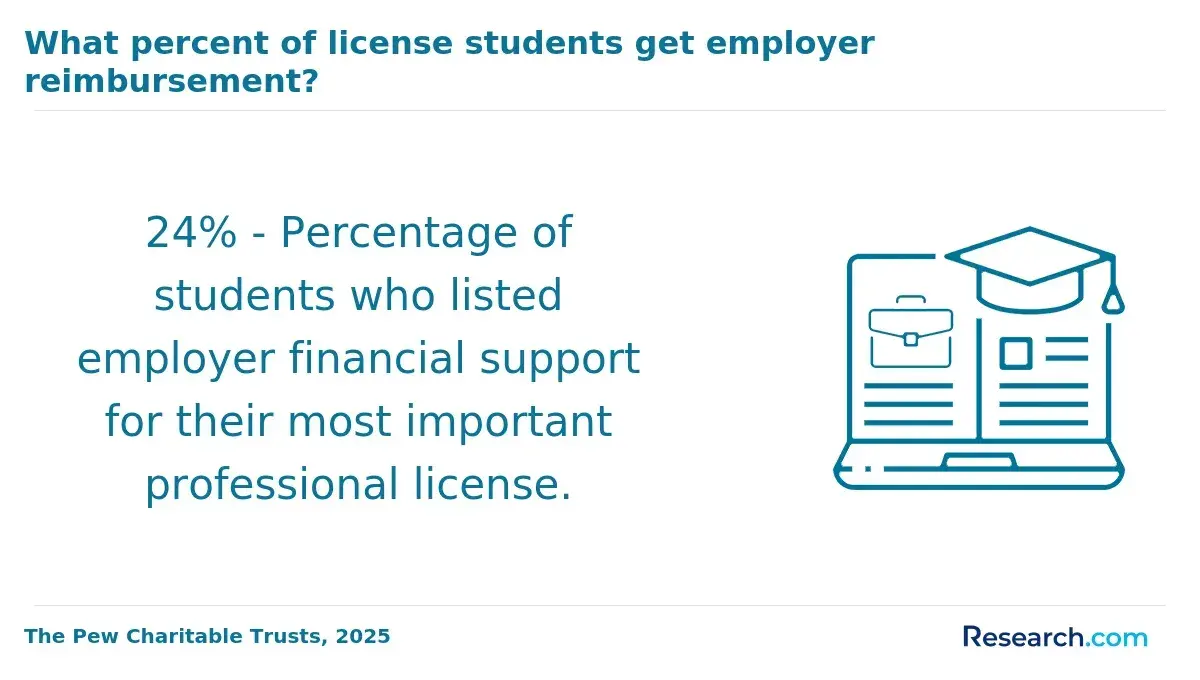
Before paying for any credential, ask whether your target employers actually request it in job postings and whether your current organization rewards it in promotion decisions. If your employer offers tuition assistance or exam reimbursement, the credential's risk is lower, but you should still connect it to a specific next role.
The best mix of pay growth and promotion potential usually comes from paths that either lead to management or place the HR professional close to expensive business decisions. Compensation, benefits, HR management, people analytics, and HR business partner roles often perform well because they affect labor cost, retention, compliance, and workforce planning.
The table below uses BLS May 2024 median wage data where available to provide salary context. Use these figures as labor-market benchmarks, not as promises for any individual graduate.
| Role or path | BLS May 2024 median wage | Promotion potential | Why pay can grow |
| Human resources specialist | $72,910 | Moderate to strong, depending on specialization and project scope | Can move into senior specialist, generalist, HRBP, or manager roles |
| Human resources manager | $140,030 | Strong for those who build leadership and business-unit experience | Includes team leadership, strategy, compliance risk, and executive advising |
| Compensation and benefits manager | $140,360 | Strong specialist leadership track | Controls pay structures, benefits strategy, incentives, and cost-sensitive decisions |
| Training and development manager | $125,040 | Strong when tied to performance, succession, and leadership development | Supports enterprise capability building rather than only classroom training |
| Labor relations specialist | $89,980 | Strong in unionized or highly regulated workplaces | Requires negotiation, policy, documentation, and risk management skills |
Total rewards and HR management stand out for pay growth because they connect directly to organizational cost and risk. However, they are not automatically better for every person. If you dislike quantitative work, compensation may feel draining; if you dislike conflict or ambiguity, an HRBP path may be stressful.
A practical way to compare paths is to evaluate both the ceiling and the fit. Consider whether the role builds skills that remain valuable in different industries, whether it gives you access to senior decision-makers, and whether performance can be measured clearly enough to support a promotion case.
Internal promotion and changing employers can both improve HR career mobility, but they solve different problems. Internal promotion is strongest when your organization has visible ladders, supportive managers, and expanding HR needs. Changing employers can be better when your current role has no advancement path, your title understates your scope, or the organization rarely promotes HR talent.
Because HR work depends heavily on trust, internal candidates can have an advantage when they already understand the culture, managers, systems, and employee issues. The downside is that internal candidates can be typecast as coordinators, recruiters, or administrators even after they are ready for broader responsibility.
Use these signals to decide whether to stay or move:
- Stay and pursue internal promotion if you have a sponsor, documented promotion criteria, access to stretch projects, and a manager who supports your next step.
- Consider changing employers if your duties have expanded but your title and pay have not, or if higher-level HR roles are consistently hired externally.
- Move laterally inside the company if you need experience in compensation, employee relations, HRIS, or HRBP work before you can credibly move up.
- Avoid moving only for title if the new role has less scope, weaker mentorship, or limited exposure to decision-makers.
For HR professionals considering graduate business education to support an external move, comparing the easiest MBA programs to get into can be useful only after clarifying career goals, accreditation, cost, and employer recognition. Easier admission does not necessarily mean stronger mobility if the program does not build relevant business skills or a credible network.
A smart external move should add something your current employer cannot provide: a bigger workforce, a more strategic HR function, a regulated environment, a new specialty, a manager title, or closer contact with executives. Otherwise, job hopping can create movement without real mobility.
Promotion barriers in HR are often subtle. Many professionals work hard and still stall because they remain associated with transactions, avoid measurable projects, or choose roles that do not expose them to managers and business decisions.
The most common mistakes below can limit leadership opportunities. Each one is avoidable if you evaluate roles by scope, evidence, and future positioning rather than title alone.
- Choosing a role without checking the promotion pathway: Ask what the next role is, how long high performers usually remain in the job, and whether previous employees advanced internally.
- Focusing only on starting salary: A slightly higher-paying administrative role may have weaker mobility than a lower-paying analyst or rotational role with stronger exposure.
- Assuming every manager title means leadership: Some manager roles supervise paperwork rather than people, strategy, or business decisions.
- Avoiding data and technology: HR professionals who cannot use HRIS reports, dashboards, or AI-supported tools may be less competitive for strategic roles.
- Neglecting employee relations judgment: Poor documentation, inconsistent policy application, or weak confidentiality can quickly damage promotion readiness.
- Staying too long in a narrow function: Deep specialization can be valuable, but it should be paired with broader business understanding if leadership is the goal.
Current HR trends make these barriers more important. Employers are using AI-assisted recruiting tools, pay transparency practices, skills-based hiring, hybrid-work policies, and people analytics more often, which means promotion-ready HR professionals must be able to explain decisions clearly and ethically. Technology can improve efficiency, but it also raises questions about bias, privacy, and employee trust.
The safest way to avoid career stagnation is to build a portfolio of accomplishments. Examples include reducing onboarding delays, improving reporting accuracy, supporting a compensation review, helping managers resolve recurring performance issues, or redesigning a training process with measurable participation and feedback.
A five-year HR mobility plan should connect your current role to a specific leadership or specialist destination. The goal is not to predict every job change; it is to make sure each year adds experience that employers recognize as promotion-ready.
The sequence below gives HR degree holders a practical way to build momentum while leaving room for employer differences and market changes.
- Year 1: Build a credible foundation. Learn HRIS, recruiting or onboarding workflows, documentation standards, compliance basics, and employee-service expectations while asking for small process-improvement projects.
- Year 2: Add measurable responsibility. Own a recurring report, hiring process segment, onboarding improvement, benefits communication project, or training initiative that produces evidence of impact.
- Year 3: Move closer to managers. Seek HR generalist, recruiter, analyst, employee relations support, compensation analyst, or HRBP associate work that requires advising stakeholders.
- Year 4: Choose a leadership lane. Decide whether your strongest path is HRBP, total rewards, talent acquisition leadership, employee relations, L&D, people analytics, or HR operations management.
- Year 5: Compete for manager-level scope. Build a promotion case using projects, metrics, manager feedback, cross-functional work, and evidence that you can coach others or lead a function.
At least twice a year, review your progress against target job postings. If manager roles require skills you are not getting, such as compensation analysis, investigations, labor relations, or workforce planning, look for stretch assignments, internal transfers, certifications, or a strategic employer change.
The best HR career plans are flexible but intentional. If your current organization offers sponsorship, complex projects, and internal mobility, staying may be wise. If it limits you to transactions, a well-timed move can create the broader scope needed for long-term leadership.
Industry choice can accelerate or slow HR mobility because employers differ in size, regulation, growth rate, HR budget, and leadership structure. Large employers often provide clearer job ladders and specialist roles, while smaller organizations may offer faster breadth but fewer formal promotion levels.
The table below summarizes advancement conditions by employer type. It helps degree holders compare where they are most likely to gain scope, not just where job openings exist.
| Employer or industry setting | Mobility strengths | Potential drawback | Best HR career fit |
| Large corporations | Structured job ladders, HR centers of excellence, rotational programs, leadership development | Promotion can be competitive and slower without visibility | HRBP, total rewards, people analytics, talent acquisition |
| Healthcare systems | High staffing complexity, compliance needs, credential tracking, employee relations demand | Workforce shortages and scheduling pressure can make HR work intense | Recruiting, employee relations, workforce planning, learning and development |
| Technology and professional services | Strong need for talent strategy, compensation design, retention, and workforce analytics | Hiring cycles can shift quickly with market conditions | Talent acquisition, people analytics, compensation, HRBP |
| Manufacturing, logistics, and retail | High-volume workforce operations, labor relations, safety, scheduling, and frontline management support | Some roles may be operationally demanding with irregular hours | Employee relations, HR operations, labor relations, training |
| Government and education | Stable HR functions, formal classifications, benefits administration, compliance | Promotion pace may be tied to civil service rules or budget cycles | Benefits, classification, labor relations, compliance-focused HR |
| Startups and small organizations | Fast exposure to multiple functions and leadership conversations | Fewer mentors, fewer formal levels, and less infrastructure | HR generalist, people operations, recruiting operations |
Healthcare is a useful example of how industry complexity can shape HR opportunity. A hospital HR team may support credentialing, staffing models, clinical hiring, labor policies, and specialized roles, so professionals who understand workforce pipelines may even monitor education trends such as online SLP master's programs when planning talent supply for hard-to-fill clinical positions.
When comparing employers, look for internal mobility evidence rather than broad promises. Strong signs include published job families, promotion criteria, tuition support, manager training, succession planning, and a history of filling HR manager roles internally.
Other Things You Should Know About Human Resources
The HR business partner path often has the strongest broad promotion potential because it develops manager advising, workforce planning, employee relations, and business-unit experience. Total rewards, people analytics, and employee relations can also lead to strong leadership roles, especially in larger or more regulated organizations.
Yes, but the recruiter usually needs to broaden beyond filling jobs. The strongest moves include talent acquisition strategy, workforce planning, hiring manager coaching, HR operations, employee relations exposure, or a lateral move into an HR generalist or HRBP role.
Not always. Many HR leaders advance through experience, strong performance, certifications, and business knowledge. A master's degree or MBA can help when it fills a clear gap, such as strategy, analytics, organizational development, or executive communication.
Large corporations, healthcare systems, technology companies, professional services firms, manufacturing, logistics, and regulated employers can offer strong HR mobility because they need structured hiring, compliance, compensation, employee relations, and workforce planning. Advancement still depends on employer culture, internal ladders, and the scope of the role.
See What Experts Have To Say About Studying Human Resources
Read our interview with Human Resources experts

Thomas Kochan
Human Resources Expert
Professor of Management
Massachusetts Institute of Technology

Rick Hackett
Human Resources Expert
Professor, Human Resources & Management
McMaster University


- HR Leadership and the Role of Human Resources in Developing Organizati https://www.leadershipiq.com/blogs/leadershipiq/hr-leadership-and-the-role-of-human-resources-in-developing-organizational-leaders
- HR Professionals: Lots of Transferable Skills, Lots of Career Opportunities - Andrew Hudson's Jobs List https://andrewhudsonsjobslist.com/hr-professionals-lots-of-transferable-skills-lots-of-career-opportunities/
- Polish Graduate tracking system - articles https://ela.nauka.gov.pl/en/labor-market/graduates_with_the_strongest_work_experience_before_commencing_their_studies
- 18 HR Skills Every HR Professional Needs [2025 Guide] - AIHR https://www.aihr.com/blog/hr-skills/
- The Power of Professional Certifications: Why CHRM’s Programs Stand Out - College of Human Resource Management https://www.chrm.or.ke/the-power-of-professional-certifications-why-chrms-programs-stand-out/
- HR Career Path Guide UK: Start Without a Degree or Experience https://www.avadolearning.com/blog/navigating-your-career-in-hr/
- The Importance of HR Certification in Today’s Workplace Article https://auroratrainingadvantage.com/articles/importance-of-hr-certification/
- What Jobs Can You Get With a B.S. Degree in HR Management? | CSU Global https://csuglobal.edu/blog/what-jobs-can-you-get-bs-hr-management
- Unlocking Career Opportunities: How a Degree in Human Resources Can Propel Your Professional Journey https://www.euroeducation.net/articles/unlocking-career-opportunities-how-a-degree-in-human-resources-can-propel-your-professional-journey.htm
- Core Skills Every HR Professional Must Master in 2026 https://learnerring.com/blog/core-skills-every-hr-professional-must-master/