2027 Human Resources Degree Licensure Outcomes Report: Pass Rates, Barriers, and Career Impact

Co-Founder and Chief Data Scientist
Choosing a Human Resources degree is not just about finishing courses; it is about whether the credential leads to the HR role you want. The U. S. Bureau of Labor Statistics projects employment for human resources specialists to grow 8% from 2023 to 2033, faster than average, making credential choices more consequential. This report explains when HR graduates need professional certification rather than state licensure, how pass-rate evidence should be interpreted, what barriers delay credentialing, and how licensing-like credentials can affect pay, mobility, and advancement.
Key Things You Should Know
- Most Human Resources jobs do not require a state-issued license; career mobility is more often shaped by employer-recognized certifications such as SHRM-CP, SHRM-SCP, PHR, SPHR, aPHR, and related specialty credentials.
- Pass-rate data in HR is less standardized than in licensed fields; students should distinguish first-time pass rates, repeat-attempt pass rates, cohort size, exam eligibility, and whether a school reports outcomes at all.
- Credential barriers usually involve work-experience eligibility, exam fees, test preparation, recertification requirements, and employer expectations; these factors can influence access to HR generalist, HR business partner, compliance, and management roles.
- Key Things You Should Know
- Is Professional Licensure Required for Human Resources Degree Careers?
- How Do Human Resources Degree Graduates Qualify for Professional Licensure?
- What Do Human Resources Licensure Exam Pass Rates Reveal About Graduate Outcomes?
- What Barriers Most Often Prevent Human Resources Graduates From Becoming Licensed?
- How Can Human Resources Students Prepare for Licensing Exams, Retakes, and Remediation?
- How Do State Requirements and Reciprocity Affect Human Resources Licensure?
- How Much Does Human Resources Licensure Cost, and How Long Does It Take?
- How Does Licensure Affect Pay, Employment, and Advancement for Human Resources Graduates?
- What Career Options Exist for Human Resources Graduates Without a Professional License?
- Top Trending Human Resources Rankings
- See What Experts Have To Say About Studying Human Resources
Is Professional Licensure Required for Human Resources Degree Careers?
For most Human Resources degree careers, professional licensure is not legally required. HR is generally not regulated like nursing, teaching, counseling, law, or speech-language pathology. Instead, employers often use voluntary professional certifications as evidence that a candidate understands employment law, workforce planning, compensation, employee relations, analytics, and ethical HR practice.
This distinction matters because a student evaluating "licensure outcomes" for an HR degree should not expect the same state-board pass-rate reporting used in clinical or regulated professions. Unlike programs such as online SLP master's programs, HR programs usually do not lead to a state license that controls legal practice rights. The key outcome question is whether the degree prepares graduates for employer-valued credentials and the kinds of roles that require HR judgment.
The table below clarifies the difference between legal licensure and HR certification so readers can evaluate program claims more accurately.
| Credential type | How it applies to HR graduates | Why it matters |
| State professional license | Usually not required for HR specialist, generalist, recruiter, benefits, payroll, or HR manager roles | Graduation from an HR degree normally does not trigger a state board licensing pathway |
| Professional certification | Commonly offered by HR associations and credentialing bodies | Can strengthen candidacy, especially for HR generalist, HR business partner, compliance, and leadership roles |
| Employer-required credential | Some employers prefer or require SHRM, HRCI, payroll, benefits, or compensation credentials | Requirements vary by industry, seniority, geography, and job description |
| Internal compliance training | Often required after hiring for topics such as harassment prevention, labor rules, privacy, and safety | May affect job readiness but is not the same as a portable professional license |
A common mistake is assuming that "HR licensure" works the same way across every employer. The safer approach is to review job postings for the exact roles you want and note whether they list certification as required, preferred, or unnecessary.
How Do Human Resources Degree Graduates Qualify for Professional Licensure?
Human Resources graduates typically qualify for professional credentials through a combination of education, work experience, exam registration, and continuing education. The exact pathway depends on the credentialing body, the candidate's degree level, and whether the exam is designed for entry-level, mid-career, or senior HR professionals.
Students should treat eligibility as a planning issue, not an afterthought. Many HR certification exams are not based on graduation alone; some require documented professional HR experience or are best attempted after the candidate has practiced core HR tasks.
The most common pathway includes several checkpoints that help determine whether the degree supports credential readiness.
- Identify the target HR role, such as recruiter, HR generalist, benefits specialist, employee relations specialist, HR business partner, or HR manager.
- Match that role to the most relevant credential, such as an entry-level HR certification, professional HR certification, senior HR certification, payroll credential, benefits credential, or compensation credential.
- Confirm eligibility rules before enrolling or before paying exam fees, especially if the credential requires HR work experience in addition to education.
- Choose courses and electives that map to the exam content, including employment law, compensation, training, workforce planning, analytics, labor relations, and organizational behavior.
- Build practical experience through internships, HR assistant roles, recruiting coordination, payroll support, benefits administration, or student HR projects.
- Budget for exam preparation, exam registration, retakes if needed, and recertification activities after passing.
When comparing programs, ask whether the curriculum aligns with recognized HR competency frameworks and whether students receive exam-preparation support. A degree can be academically strong but still weak for certification readiness if it lacks applied HR law, analytics, casework, or workforce-planning practice.
What Do Human Resources Licensure Exam Pass Rates Reveal About Graduate Outcomes?
Human Resources licensure exam pass rates are harder to interpret than pass rates in state-regulated professions because there is no single national HR licensing exam. Certification bodies may publish exam statistics, but schools often do not report program-level first-time pass rates for HR credentials. That makes outcome evaluation more dependent on transparent school disclosures, alumni feedback, and job-placement evidence.
The most important distinction is between first-time pass rate and overall pass rate. A first-time pass rate measures how many candidates pass on their first attempt, while an overall pass rate may include repeat test-takers who eventually pass. For students, first-time results are usually the clearer signal of preparation quality because retakes add time, cost, and stress.
The table below shows how to read pass-rate evidence when a Human Resources program or credential provider reports outcomes. It does not replace official credential-body data, but it helps readers judge whether a statistic is meaningful.
| Outcome measure | What it tells you | What to verify before trusting it |
| First-time pass rate | How well candidates were prepared before their first exam attempt | Reporting year, cohort size, exam type, and whether all eligible graduates were included |
| Overall pass rate | How many candidates eventually passed after one or more attempts | Whether retakes are included and how long candidates took to pass |
| Exam participation rate | How many graduates actually attempted the credential exam | Whether low participation makes pass rates look better than actual graduate readiness |
| Credential attainment rate | How many graduates earned the credential, not just completed the degree | Whether graduates were eligible and whether the program tracks post-graduation outcomes |
| Employment alignment | Whether graduates entered HR roles where the credential is valued | Job titles, industries, employer types, and whether roles required HR decision-making |
One red flag is a program that advertises "certification preparation" without reporting how many graduates sit for exams or pass them. A stronger program can explain how courses map to certification competencies, what support is available for exam preparation, and how graduates use the credential in the labor market.
How Do Accreditation and Program Quality Affect Human Resources Licensure Outcomes?
Accreditation affects HR licensure outcomes indirectly. Because most HR roles are not licensed by state boards, accreditation does not usually determine legal eligibility to practice. However, institutional accreditation still matters because it affects transfer credits, federal financial aid eligibility, graduate-school admission, employer confidence, and the credibility of the degree.
Program quality also matters for certification readiness. A strong HR degree should combine management theory with applied practice in employment law, compensation, talent acquisition, performance management, HR information systems, data analysis, diversity and inclusion, and employee relations. Students considering broader leadership pathways may also compare HR degrees with options such as an online EMBA, especially if their goal is senior leadership rather than an HR-specific certification.
The table below summarizes the quality signals that are most relevant when evaluating whether a Human Resources degree can support certification and career outcomes.
| Quality factor | Why it matters for HR outcomes | Risk if missing |
| Institutional accreditation | Supports degree recognition, transferability, and access to federal aid | Credits may not transfer, and employers may question the credential |
| HR-aligned curriculum | Builds knowledge tested in professional HR certification exams | Graduates may need extensive outside exam preparation |
| Applied assignments | Helps students practice investigations, compensation analysis, policy writing, and workforce planning | Graduates may understand concepts but lack workplace-ready skills |
| Internship or experiential option | Helps students build eligibility-relevant experience and job references | Entry-level graduates may struggle to compete for HR roles |
| Outcome transparency | Shows whether students complete, attempt credentials, pass exams, and enter HR jobs | Students may overestimate the program's return on investment |
Online and campus programs can both support HR certification outcomes if they offer rigorous coursework, faculty access, applied projects, and career support. The format matters less than whether the program helps students gain HR experience and verify credential eligibility.
What Barriers Most Often Prevent Human Resources Graduates From Becoming Licensed?
The most common barriers to HR credentialing are not state-board denials; they are practical obstacles that prevent graduates from becoming exam-ready, eligible, or competitive. These barriers can delay advancement even after a student has earned the degree.
The barriers below matter because each one can add cost, time, or uncertainty to the path from graduation to credentialed HR employment.
- Misunderstanding credential eligibility: Some students assume a degree alone qualifies them for every HR credential, but certain exams are designed for candidates with specific levels of HR experience.
- Lack of HR work experience: Graduates without internships, assistant roles, payroll exposure, recruiting coordination, or employee-relations experience may be less prepared for scenario-based exams and HR job interviews.
- Weak preparation in employment law and compliance: HR exams and employers often emphasize risk management, documentation, discrimination law, wage-and-hour rules, and workplace investigations.
- Exam and retake costs: Certification exams, study materials, practice tests, and retakes can raise the total cost beyond tuition, especially for students who do not pass on the first attempt.
- Low program transparency: If a school does not disclose exam participation, pass rates, completion rates, or HR placement outcomes, students have less evidence for estimating credential readiness.
- Employer variation: Some employers strongly value HR certification, while others prioritize experience, HRIS skills, labor-relations background, or industry knowledge.
One practical way to reduce risk is to collect evidence before enrolling. Ask admissions advisors whether graduates attempt HR certification exams, what support is available, and whether the school tracks job titles rather than only broad employment rates.
How Can Human Resources Students Prepare for Licensing Exams, Retakes, and Remediation?
Human Resources students can improve credential outcomes by planning for certification before graduation. The best preparation strategy combines coursework, applied experience, exam practice, and a realistic retake plan.
The following steps are useful because they address the most common reasons HR graduates delay or fail certification attempts.
- Choose the credential based on career stage, not prestige; entry-level candidates should not automatically target senior-level exams before they have the required experience.
- Map each exam content area to completed courses and identify gaps in employment law, compensation, labor relations, HR analytics, risk management, or strategic planning.
- Use practice questions early to determine whether you understand scenario-based reasoning, not just definitions.
- Build experience through internships, HR assistant work, recruiting coordination, payroll support, benefits administration, or volunteer HR projects for student organizations or nonprofits.
- Create a study schedule that includes review, timed practice, weak-area remediation, and final exam simulation.
- Budget for a retake even if you expect to pass; this prevents one failed attempt from stopping your credential plan.
- After a failed attempt, review the score report, wait-period rules, and weak domains before registering again.
A common mistake is waiting until after graduation to think about certification. Students who align electives, projects, internships, and exam preparation earlier are better positioned to move from degree completion to credential readiness without a long delay.
How Do State Requirements and Reciprocity Affect Human Resources Licensure?
State requirements affect Human Resources graduates differently than they affect graduates in licensed professions. Because HR does not usually require a state license, reciprocity is rarely the central issue. Instead, mobility depends on whether the candidate understands state-specific employment laws and whether employers recognize the chosen certification across locations.
This is especially important for remote HR roles, multi-state employers, and HR professionals who handle compliance across several jurisdictions. A credential may be nationally portable, but HR practice still requires awareness of state wage rules, leave laws, pay transparency requirements, background-check limits, and workplace-training mandates.
Students should check several issues before assuming an HR degree will travel easily across state lines.
- Review job postings in the state where you plan to work and note whether HR certification is required, preferred, or not mentioned.
- Confirm whether the role involves state-specific compliance, union environments, public-sector HR, healthcare HR, education HR, or government contracting.
- Ask whether the program includes employment-law coursework that distinguishes federal rules from state and local requirements.
- For online programs, verify that internships, practicums, or experiential requirements can be completed in your state if the program includes them.
- If you plan to move, prioritize broadly recognized credentials and maintain documentation of continuing education for recertification.
The biggest portability risk is not losing a license; it is being underprepared for local compliance responsibilities. HR students who want national mobility should develop both broad HR competencies and the ability to research state-specific employment rules.
How Much Does Human Resources Licensure Cost, and How Long Does It Take?
The cost and timeline for Human Resources credentialing vary because students may pursue different degrees, certifications, prep programs, and work-experience pathways. The degree itself may take from several months for a certificate to four years for a bachelor's degree, while graduate programs usually take one to two years depending on enrollment status and transfer credit.
Certification costs are separate from tuition. Students should estimate the full credential pathway rather than comparing tuition alone, because exam fees, preparation materials, retakes, membership fees, and recertification can affect return on investment.
The table below summarizes the major cost and time categories that HR students should include in a realistic licensure-or-certification budget.
| Cost or time factor | Typical impact on HR students | Decision question |
| Degree tuition and fees | Largest education cost and varies by institution, residency, credits, and delivery format | Does the program's cost align with the HR roles you are targeting? |
| Books, software, and HRIS exposure | May include textbooks, case platforms, analytics tools, or HR technology practice | Will the program help you build job-ready technical skills? |
| Certification exam fee | Separate from tuition and required when sitting for a professional HR credential | Can you afford the exam at the point when you become eligible? |
| Exam preparation | May include review courses, practice tests, study guides, or tutoring | Does the school provide preparation, or will you pay independently? |
| Retake planning | Can add cost and delay if the first attempt is unsuccessful | Have you budgeted for a second attempt without disrupting your career plan? |
| Recertification | Usually requires continuing education or professional development over time | Will your employer support ongoing credential maintenance? |
Students comparing graduate options should also consider opportunity cost. If your goal is leadership, HR strategy, or organizational communication, an online masters in communication may support related career goals without focusing exclusively on HR certification preparation.
How Does Licensure Affect Pay, Employment, and Advancement for Human Resources Graduates?
Licensure-like HR credentials can affect pay, employment, and advancement, but they do not guarantee a job or salary. Their value depends on role level, employer expectations, industry, geographic market, and whether the candidate also has practical experience. The strongest career impact usually occurs when certification complements a relevant degree and credible HR work history.
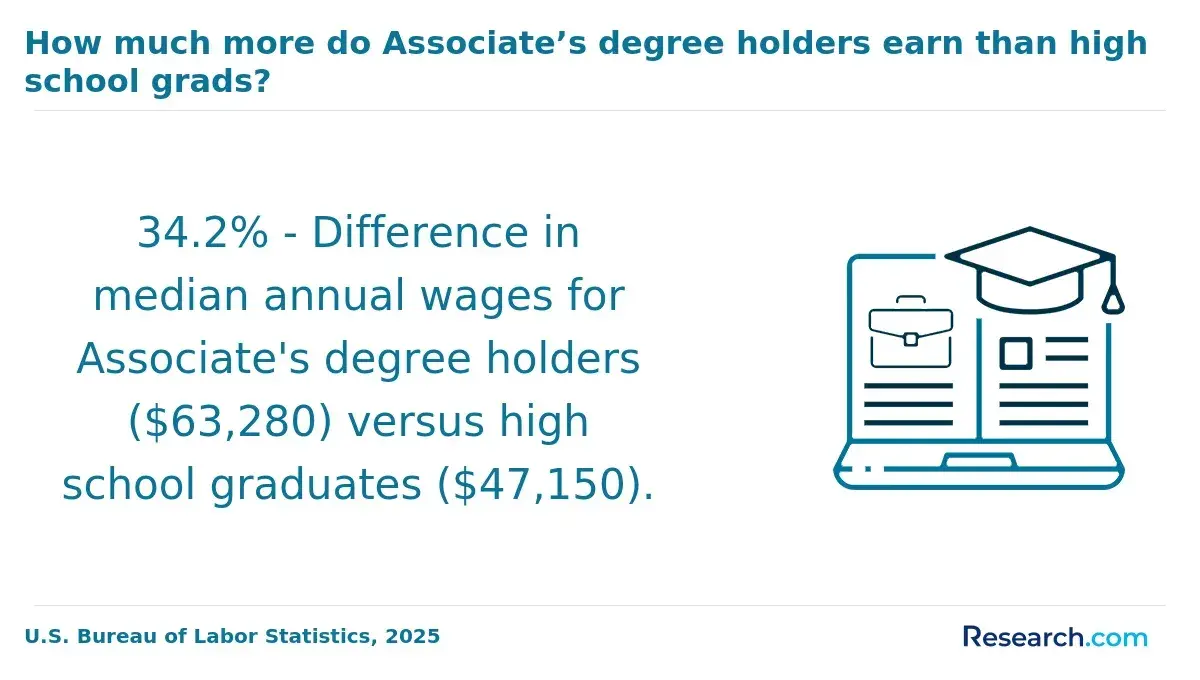
The U.S. Bureau of Labor Statistics reported a median annual wage of $67,650 for human resources specialists in May 2023, while human resources managers had a median annual wage of $136,350. The gap does not mean certification alone causes higher pay; it shows that advancement into management can substantially change earning potential, and credentials may help candidates compete for those higher-responsibility roles.
The table below compares how certification tends to affect common HR career paths. Use it to judge whether pursuing a credential matches the job level you want.
| Career path | How certification may help | Limitations |
| HR assistant or coordinator | Can signal commitment and help with entry-level screening | Experience, software skills, and administrative accuracy may matter more at first |
| Recruiter or talent acquisition specialist | Can support knowledge of fair hiring, workforce planning, and compliance | Sales ability, sourcing tools, industry knowledge, and metrics often carry heavy weight |
| HR generalist | Often valuable because the role spans employee relations, compliance, benefits, and performance issues | Employers may still require hands-on HR experience |
| Compensation or benefits specialist | Can complement specialized knowledge in pay structures, benefits, and compliance | Specialized compensation, payroll, or benefits credentials may be more relevant |
| HR business partner or HR manager | Can strengthen credibility for strategic, advisory, and leadership responsibilities | Leadership record, business acumen, and change-management experience are critical |
The best ROI comes when the credential removes a real barrier for the target role. Before paying for an exam, review job postings and speak with HR professionals in your target industry to see whether certification is required, preferred, or merely optional.
What Career Options Exist for Human Resources Graduates Without a Professional License?
Human Resources graduates can build strong careers without a professional license or certification, especially in roles where employers prioritize experience, communication, data skills, recruiting ability, HR technology, or industry knowledge. Certification becomes more important when a role involves broad HR judgment, compliance risk, employee relations, or advancement into leadership.
Students who are unsure about certification should compare HR roles that are credential-sensitive with roles where a degree and experience may be enough. The table below helps clarify those options.
| Career option without a professional license | Typical focus | When certification may become useful |
| Recruiting coordinator | Scheduling, candidate communication, applicant tracking, and interview support | When moving into talent strategy or compliance-heavy recruiting |
| HR assistant | Records, onboarding, benefits paperwork, personnel files, and employee support | When moving into HR generalist responsibilities |
| Training coordinator | Learning logistics, training records, employee development support, and vendor coordination | When advancing into learning and development management |
| Payroll or benefits assistant | Employee data, pay cycles, benefits enrollment, and compliance documentation | When specializing in payroll, benefits, or compensation analysis |
| People operations analyst | HR metrics, dashboards, workforce data, and process improvement | When the role expands into HR strategy or policy influence |
| Office manager with HR duties | Administrative operations, hiring support, employee records, and vendor management | When HR responsibilities become formal, regulated, or organization-wide |
Some graduates may decide that a broader business degree is a better fit than an HR-specific pathway. For example, candidates comparing management routes may research the easiest MBA programs to get into if they want flexible admission options and broader business mobility.
A good decision rule is simple: pursue HR certification when it clearly supports the job postings, advancement path, and compliance responsibilities you want. If your target role values experience more than credentials, prioritize internships, HRIS tools, analytics, employment-law literacy, and measurable workplace achievements first.
Other Things You Should Know About Human Resources
Usually no. Most HR jobs in the U.S. do not require a state-issued license. Employers may prefer professional certification, but that is different from legal licensure.
No. Licensure pass rates usually relate to state-regulated professions, while HR pass rates relate to voluntary professional certification exams. Students should check whether reported results are first-time pass rates, overall pass rates, or only selected candidate outcomes.
Yes, if the program is accredited, covers HR competency areas, offers applied assignments, and helps students gain experience. The online format itself is less important than curriculum quality, career support, and eligibility alignment.
It can be worth it if your target employers prefer certification or if you want to move into HR generalist, compliance, business partner, or management roles. It may be less urgent for entry-level administrative or recruiting-support roles where experience and software skills matter more.
Top Trending Human Resources Rankings
See What Experts Have To Say About Studying Human Resources
Read our interview with Human Resources experts


Chester S. Spell
Human Resources Expert
Professor of Management
Rutgers University

Thomas Kochan
Human Resources Expert
Professor of Management
Massachusetts Institute of Technology

References
- 3 Reasons to Consider Pursuing Your HR Certification Online https://www.umassglobal.edu/blog-news/3-reasons-consider-pursuing-your-hr-certification-online
- Is HR Certification Really Worth It? https://pihra.org/is-hr-certification-really-worth-it/
- PE Exam Pass Rates and How Employers Reduce Failures https://schoolofpe.com/blogs/news/pe-exam-pass-rates
- Pass Rates https://www.hrci.org/pass-rates
- The Obstacles that HR Faces When It Comes to Recruitment and Selection | CGP Thailand https://www.cgpthailand.com/news/the-obstacles-that-hr-faces-when-it-comes-to-recruitment-and-selection/
- New rules would require states to rate teacher preparation ... https://archive.jsonline.com/news/new-rules-would-require-states-to-rate-teacher-preparation-programs-b99397919z1-283980081.html
- Real Estate Exam Pass Rates by State: A Comprehensive Guide https://www.colibrirealestate.com/career-hub/blog/real-estate-exam-pass-rates/
- Top 7 HR Challenges Recruiters Face in 2026 and How to Solve Them https://www.testtrick.com/blogs/hr-challenges
- Top Benefits of Earning an HR Certificate | HR Certification https://hrcertification.com/blog/benefits-human-resources-certificate-biid1000167
- State Licensure Pass Rates | Erikson Institute https://www.erikson.edu/accreditation-consumer-information/state-licensure-pass-rates/