2027 Human Resources Degree Specialization Pay Report: Which Academic Tracks Lead to the Highest Earnings

Co-Founder and Chief Data Scientist
Choosing a Human Resources specialization can shape whether you move toward recruiting, compensation, analytics, labor relations, learning, or executive HR leadership. That matters because pay varies sharply by role: BLS May 2024 data places the median annual wage for human resources managers at $140,030, while many specialist roles sit lower.
This guide is for students comparing HR academic tracks, costs, credentials, and career paths so they can choose a concentration with stronger earning potential, realistic expectations, and a better return on education investment.
Key Things You Should Know
- Compensation and benefits, HR management/strategy, and HR analytics tend to show the strongest pay signals because they connect HR decisions to budgets, workforce planning, compliance risk, and business performance.
- BLS May 2024 data reports median pay of $140,360 for compensation and benefits managers, $140,030 for human resources managers, $89,980 for labor relations specialists, and $72,910 for human resources specialists, showing why role level matters as much as concentration.
- The best-paying HR specialization is not automatically the best choice; degree level, industry, location, experience, certifications, quantitative skills, and program cost all affect whether a track creates good long-term value.
- Which Human Resources Degree Specializations Lead to the Highest Earnings?
- How Does Human Resources Specialization Pay Vary by Degree Level?
Which Human Resources Degree Specializations Lead to the Highest Earnings?
The highest-earning Human Resources degree specializations are usually the tracks that prepare students for strategic, financial, analytical, or compliance-heavy roles. A specialization is not a salary guarantee, but it can influence the first roles you qualify for, the industries that recruit you, and how quickly you can move from coordinator or analyst work into management.
The table below ranks common HR academic tracks by their strongest national pay signals. The salary figures use BLS May 2024 occupational wage data for the closest related U.S. occupations, so they should be treated as role-based benchmarks rather than exact outcomes for every graduate:
| HR academic track | Common career direction | 2024 U.S. pay signal | Best fit | Main trade-off |
| Compensation and benefits | Compensation analyst, benefits analyst, total rewards manager | Compensation and benefits managers: $140,360 median annual wage | Students who like pay structures, benefits strategy, finance, compliance, and market pricing | Requires comfort with data, regulations, spreadsheets, and executive-level cost discussions |
| HR management and strategy | HR business partner, HR manager, HR director | Human resources managers: $140,030 median annual wage | Students aiming for leadership, organizational planning, employee relations, and broad HR responsibility | Higher pay usually depends on experience, people leadership, and industry exposure |
| HR analytics and workforce planning | People analytics analyst, workforce planning analyst, HRIS analyst | Management analysts: $101,190 median annual wage | Students who want a data-forward HR career using dashboards, forecasting, AI tools, and business metrics | Some roles expect strong statistics, HR systems, SQL, Excel, or business intelligence skills |
| Labor relations and employee relations | Labor relations specialist, employee relations consultant, compliance-focused HR specialist | Labor relations specialists: $89,980 median annual wage | Students interested in unions, collective bargaining, investigations, workplace policy, and risk management | Demand can depend heavily on region, industry, union presence, and public-sector hiring |
| Talent acquisition and recruiting | Recruiter, talent acquisition specialist, campus recruiting coordinator | Human resources specialists: $72,910 median annual wage | Students who enjoy interviewing, sourcing, employer branding, and fast-paced hiring cycles | Pay can be more sensitive to economic cycles, employer growth, and commission or bonus structures |
| Learning and development | Training specialist, instructional designer, learning manager | Training and development specialists: $66,660 median annual wage; managers: $127,090 median annual wage | Students who like coaching, curriculum design, employee development, and performance improvement | Entry-level pay may be modest unless the role connects learning outcomes to measurable business results |
The strongest overall pay profile usually belongs to compensation and benefits or HR management, while HR analytics may offer the best growth-oriented blend of pay, portability, and technology relevance. Talent acquisition and learning tracks can still be valuable, especially for students who build industry expertise or move into management, but their early-career salaries may vary more widely.
How Does Human Resources Specialization Pay Vary by Degree Level?
Degree level affects HR specialization pay because employers often reserve higher-paying roles for candidates who combine HR knowledge with business judgment, employment law awareness, analytics skills, and several years of experience.
A bachelor's degree is commonly sufficient for many HR specialist and generalist roles, while management, consulting, and executive paths may reward graduate study or substantial experience.
The table below shows how the same HR specialization can look different by credential level. Use it to compare whether you need a broader business degree, a focused HR program, or a graduate option to reach your target role:
| Degree level | Typical HR role access | Specializations with stronger pay leverage | What to watch |
| Associate degree or HR certificate | HR assistant, payroll assistant, recruiting coordinator | Payroll, HR operations, benefits administration | Can be cost-effective for entry, but advancement may require a bachelor's degree |
| Bachelor's degree | HR specialist, recruiter, benefits analyst, HR generalist | Compensation, HR analytics, employee relations, talent acquisition | Internships and HR systems experience can matter as much as the concentration name |
| Master's in HR or industrial-organizational psychology | HR business partner, people analytics analyst, organizational development consultant | HR strategy, analytics, organizational development, labor relations | Best value when the curriculum builds technical or leadership depth not already gained at work |
| MBA, executive MBA, or management graduate degree | HR manager, HR director, total rewards leader, chief people officer pathway | HR strategy, compensation, workforce planning, organizational leadership | Usually most useful for experienced professionals moving toward cross-functional leadership |
| Doctoral study | Research, academia, advanced organizational psychology, consulting | Industrial-organizational psychology, organizational behavior, workforce research | High opportunity cost; strongest fit for research-intensive or expert consulting goals |
Students comparing graduate routes should avoid assuming that more education is always the highest-ROI move. HR professionals weighing specialized graduate study against other professional programs, such as online SLP master's programs, should compare tuition, licensure or credential requirements, time away from work, and whether the degree directly unlocks roles they could not otherwise pursue.
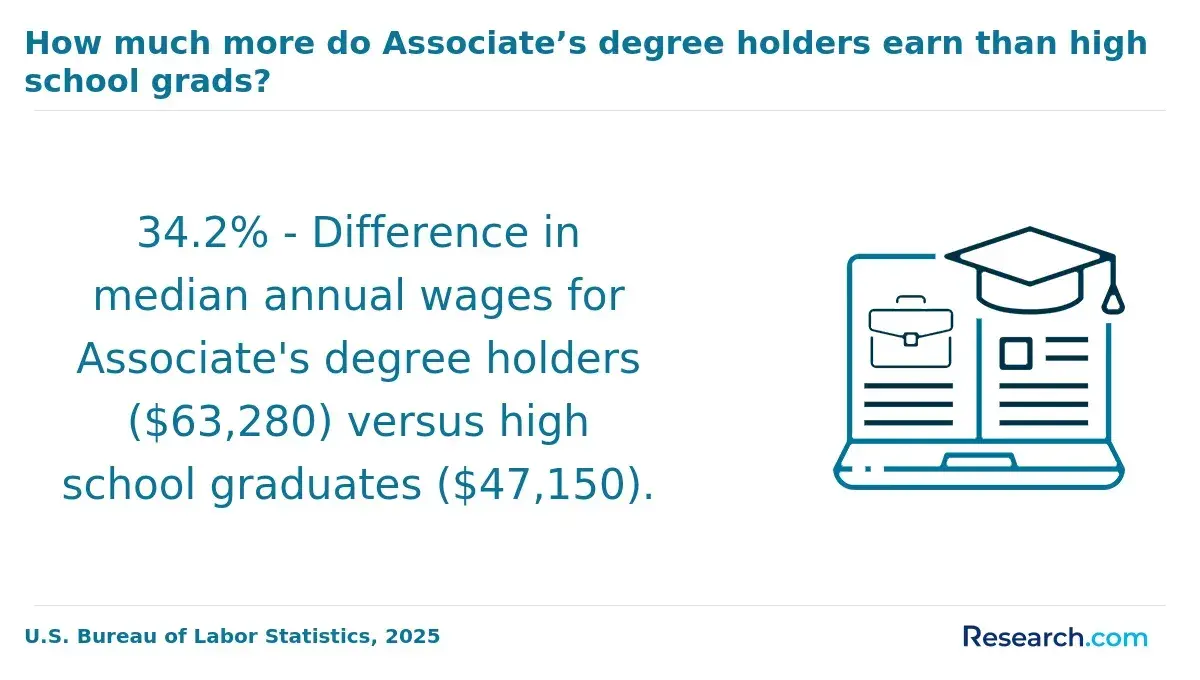
Industry can change HR specialization pay as much as the academic track itself. Compensation, analytics, and HR strategy roles often pay more in industries where workforce decisions are expensive, regulated, competitive, or closely tied to revenue, such as finance, technology, professional services, healthcare systems, advanced manufacturing, energy, and corporate headquarters environments.
The table below summarizes where different HR tracks tend to have the strongest pay upside. It focuses on industry logic rather than promising a fixed wage, because individual employers, job levels, and locations can shift offers significantly:
| HR specialization | Industries where pay signals are often stronger | Why the track is valued | Best student strategy |
| Compensation and benefits | Finance, technology, healthcare systems, corporate headquarters, consulting | Pay design, incentives, executive compensation, and benefits costs directly affect budgets and retention | Take coursework in compensation design, benefits law, analytics, finance, and spreadsheet modeling |
| HR analytics | Technology, professional services, large retail, healthcare, logistics, finance | Large employers need workforce forecasting, turnover analysis, productivity dashboards, and HRIS reporting | Build a portfolio using Excel, SQL basics, HRIS tools, data visualization, and people metrics |
| Labor relations | Government, education, transportation, utilities, healthcare, manufacturing | Employers need bargaining, grievance handling, investigations, and policy expertise | Study employment law, collective bargaining, negotiation, conflict resolution, and documentation |
| Talent acquisition | Technology, healthcare, engineering, professional services, high-growth firms | Hiring scarce talent quickly can protect revenue and project delivery | Pair recruiting coursework with labor market research, sourcing tools, employer branding, and industry specialization |
| Learning and development | Healthcare, technology, financial services, corporate training, compliance-heavy employers | Training supports safety, compliance, software adoption, leadership development, and performance improvement | Add instructional design, learning analytics, facilitation, and change management skills |
| HR management and strategy | Large employers, multinational firms, consulting, healthcare systems, finance, manufacturing | Senior HR leaders connect people strategy to growth, compliance, restructuring, and culture | Gain broad exposure across employee relations, compensation, talent, analytics, and operations |
A practical way to evaluate an HR track is to look at the employers near you or in your desired remote market. If a region has many hospitals, unionized public employers, or manufacturing plants, labor relations and compliance may be more valuable; if the market is dominated by headquarters, tech firms, or consulting companies, compensation, analytics, and HR strategy may have stronger upside.
Long-term advancement in HR depends on whether a specialization can expand from task execution into decision-making. The tracks with the strongest advancement potential usually build toward budget authority, executive advising, risk management, organizational change, or enterprise workforce planning.
The list below ranks HR degree tracks by advancement potential rather than first-job accessibility. It is most useful for students deciding whether they want a specialist career, a managerial career, or a cross-functional business leadership path:
- HR management and strategy: Best for students who want to move from HR generalist or business partner roles into HR manager, director, vice president, or chief people officer positions.
- Compensation and total rewards: Strong for advancement because pay, incentives, benefits, and executive compensation affect retention, compliance, and labor costs.
- HR analytics and workforce planning: Increasingly valuable as employers use dashboards, AI-assisted tools, and workforce forecasting to make staffing and productivity decisions.
- Organizational development and learning leadership: Strongest when paired with measurable outcomes such as leadership pipeline strength, productivity, retention, and change adoption.
- Labor and employee relations: Valuable for advancement in unionized, regulated, public-sector, healthcare, transportation, and manufacturing environments.
Graduate business education can make sense when a student or working HR professional wants broader finance, strategy, and operations exposure. For example, someone comparing HR leadership preparation with an online EMBA should ask whether the program includes workforce strategy, organizational behavior, analytics, negotiation, and executive communication rather than only general management coursework.
The main red flag is choosing a narrow specialization without a path to broader responsibility. A compensation analyst, recruiter, or learning specialist can build an excellent career, but higher-level advancement usually requires learning how the function affects revenue, risk, employee productivity, and leadership decisions.
Location affects HR specialization pay because employers price roles around local labor markets, industry concentration, cost of living, and the difficulty of filling specific HR jobs. A compensation analyst in a corporate headquarters market, a labor relations specialist in a heavily unionized region, and an HRIS analyst supporting a national remote workforce may see very different opportunities even with similar degrees.
Remote work has also changed the way HR students should evaluate specialization pay. Some HR functions, such as HR analytics, HRIS administration, recruiting operations, compensation benchmarking, and learning design, can be more remote-friendly than roles requiring frequent onsite employee relations, investigations, plant labor relations, or in-person training.
When comparing regional and remote pay, students should use a consistent process rather than relying on national averages alone. The following steps can help separate real opportunity from inflated expectations:
- Check BLS state and metro wage data for the closest HR occupation, then compare it with job postings in your target city or remote market.
- Look at the industry mix in the region, because HR pay tends to rise when employers compete for specialized talent in finance, technology, healthcare systems, consulting, or corporate headquarters.
- Compare remote postings carefully to see whether the employer pays nationally, by headquarters location, or by employee location.
- Adjust salary expectations for cost of living, commuting, relocation, taxes, and benefits quality rather than focusing only on the base wage.
- Ask career services where recent HR graduates were hired and whether those roles were local, hybrid, remote, or relocation-based.
The best location strategy is specialization-specific. Students who want labor relations may benefit from regions with unionized employers, while students who want analytics or compensation may find more portable options if they build technical skills that support remote or multi-state HR teams.
The most marketable HR specializations combine people knowledge with business, data, technology, and communication skills. Employers increasingly expect HR graduates to understand compliance and employee experience while also working with HRIS platforms, analytics dashboards, AI-assisted recruiting tools, and measurable workforce outcomes.
The following coursework and skills are especially useful because they make an HR concentration more than a title on a transcript. They help students show employers what they can actually do in the workplace:
- Compensation and benefits: Compensation design, benefits administration, job evaluation, pay equity, salary survey analysis, employment law, Excel, and finance basics.
- HR analytics: Statistics, HR metrics, data visualization, SQL fundamentals, spreadsheet modeling, workforce planning, survey design, and HRIS reporting.
- Talent acquisition: Sourcing strategy, structured interviewing, labor market research, employer branding, recruiting technology, selection methods, and candidate experience.
- Labor and employee relations: Employment law, collective bargaining, investigations, documentation, negotiation, conflict resolution, ethics, and workplace policy.
- Learning and development: Instructional design, adult learning, facilitation, learning management systems, evaluation methods, accessibility, and change management.
- HR management and strategy: Organizational behavior, finance for managers, strategic planning, leadership, diversity and inclusion, risk management, and executive communication.
Communication ability remains central even in data-heavy HR tracks because HR professionals must explain sensitive decisions clearly. Students who want to deepen that side of their profile may compare HR coursework with related options such as an online masters in communication, especially if their target roles involve change management, employee engagement, training, or executive messaging.
A common mistake is assuming that AI will make HR less skill-intensive. In practice, AI can increase the value of professionals who understand data quality, bias risk, privacy, ethical screening, employee trust, and how to interpret automated recommendations instead of accepting them uncritically.
Students should compare HR specialization pay against program cost by estimating realistic career value, not just choosing the concentration with the highest median salary signal. A high-paying track can still be a poor financial fit if tuition is high, internships are weak, credits do not transfer, or the curriculum does not match the roles employers actually post.
Recent cost data shows why this matters. College Board's 2024 pricing data lists average published tuition and fees of $11,610 for in-state students at public four-year institutions and $43,350 at private nonprofit four-year institutions, before grants and scholarships; that gap can change the ROI calculation even when two schools offer similar HR concentrations.
The table below outlines the cost factors that should shape an HR specialization decision. It focuses on what changes the total investment rather than assuming salary alone determines value:
| Cost factor | Why it matters for HR specialization ROI | What to compare |
| Tuition and fees | Higher tuition requires stronger career outcomes or more aid to justify the investment | Net price after grants, scholarships, employer tuition benefits, and transfer credits |
| Program format | Online, hybrid, evening, or part-time formats may allow students to keep working | Schedule flexibility, internship access, faculty support, and networking opportunities |
| Internships and employer partnerships | HR experience is often decisive for first jobs | Placement support, local employer ties, practicum options, and alumni hiring patterns |
| Curriculum depth | A concentration name is less valuable if the courses are shallow or outdated | Specific courses in analytics, compensation, employment law, HRIS, labor relations, and strategy |
| Career services data | Outcome transparency helps students test whether the program supports their target roles | Recent job titles, employers, internship rates, salary ranges if available, and graduate school placement |
| Opportunity cost | Full-time study may reduce income while part-time study may extend the timeline | Time to completion, work flexibility, accelerated options, and employer reimbursement |
Before enrolling, use a step-by-step comparison to avoid overpaying for a concentration that does not support your goal. This process is especially important when two schools advertise similar HR tracks but offer very different career support:
- Choose two or three target roles first, such as compensation analyst, HR business partner, recruiter, HRIS analyst, or labor relations specialist.
- Review current job postings for those roles and list the required skills, software, certifications, and years of experience.
- Match those requirements to the program's actual courses, projects, internships, and employer partnerships.
- Estimate net cost after aid and compare it with realistic entry-level and midcareer role benchmarks.
- Ask admissions and career services for recent HR outcomes by concentration, not just overall business school outcomes.
The biggest ROI mistake is treating the highest-paying occupation in a table as the expected result immediately after graduation. HR management and compensation leadership roles often require experience, so a lower-cost program with strong internships may outperform a more expensive program with a prestigious concentration name but weak practical access.
Certifications, licensure, and graduate study can influence HR specialization earnings, but they work differently. Certifications may signal professional readiness, graduate degrees may support leadership or technical specialization, and licensure is generally not required for most HR jobs unless the path crosses into regulated fields such as psychology, law, or counseling.
The table below summarizes common credentials by HR track. Requirements vary by credentialing body and employer, so students should verify eligibility rules before building a plan around a specific exam:
| Credential or study option | Most relevant HR tracks | How it may affect earnings potential | Important limitation |
| SHRM-CP or SHRM-SCP | General HR, HR management, employee relations, HR business partner roles | Can support credibility for HR generalist, specialist, and leadership pathways | Does not replace experience or guarantee promotion |
| PHR or SPHR | General HR, HR operations, HR management, employee relations | May help demonstrate knowledge of HR practices, regulations, and strategic responsibilities | Eligibility depends on education and experience level |
| CCP, CBP, or total rewards credentials | Compensation, benefits, total rewards | Can strengthen candidacy for specialized compensation and benefits roles | Most valuable when paired with analytics, finance, and real compensation work |
| ATD or learning credentials | Learning and development, instructional design, organizational development | Can help show skill in training design, facilitation, and learning evaluation | Career value depends on portfolio quality and measurable training outcomes |
| Master's in HR, MBA, or I-O psychology | HR strategy, analytics, organizational development, leadership, consulting | May support movement into higher-level, analytical, or advisory roles | ROI depends on cost, experience, school reputation, and role alignment |
| State licensure in psychology-related practice | Industrial-organizational psychology only when practicing regulated psychological services | May be relevant for certain assessment, consulting, or psychology practice roles | Rules vary by state and are not a standard requirement for most HR jobs |
Students considering an MBA for HR leadership should compare admissions flexibility, curriculum fit, and cost rather than assuming any business degree will improve pay. If access is a concern, researching the easiest MBA programs to get into can be useful, but the stronger question is whether the program teaches workforce strategy, finance, analytics, and leadership skills that match the student's target HR path.
The best credential strategy is to delay expensive graduate study until you know which HR lane you want. Early-career students often get more value from internships, HRIS experience, analytics projects, and an entry-level certification plan than from immediately choosing the most expensive degree option.
The best Human Resources degree specialization is the one that aligns earning potential with the kind of work you want to do repeatedly. Compensation can pay well, but it may frustrate students who dislike data and policy detail; recruiting can be energizing, but it may feel unstable to students who prefer structured analysis; labor relations can be rewarding, but it requires comfort with conflict and documentation.
Use the following decision process to choose a specialization based on fit, evidence, and long-term value rather than reputation alone:
- Start with the work, not the title: decide whether you prefer analysis, employee interaction, negotiation, training, compliance, systems, or leadership.
- Identify three target job titles and review current postings to see which degrees, software tools, certifications, and experience employers request.
- Compare salary benchmarks by role level, remembering that manager pay usually reflects years of experience rather than a first job after graduation.
- Check whether the program offers internships, HR projects, case studies, employer partnerships, and career coaching specific to your concentration.
- Calculate net cost and opportunity cost, then compare them with realistic entry-level roles and longer-term advancement paths.
- Choose a track that builds transferable skills, such as analytics, employment law, communication, finance, HRIS, or negotiation, so you are not locked into one narrow role.
The table below highlights common mistakes students make when comparing HR specialization pay. Use it as a final checklist before committing to a program or concentration:
| Common mistake | Why it can hurt outcomes | Better approach |
| Choosing based only on the highest salary number | Median pay may reflect experienced managers, not new graduates | Compare entry-level roles, advancement path, and required experience |
| Ignoring industry demand | A specialization may pay well nationally but have few local openings | Review postings in your region and target remote market |
| Overlooking technical skills | Many higher-paying HR roles involve analytics, systems, finance, or compliance | Choose courses and projects that create demonstrable skills |
| Assuming a graduate degree is automatically worth it | Tuition and opportunity cost can outweigh benefits if the degree is not role-aligned | Compare net cost with the exact roles the degree helps unlock |
| Picking a niche track too early | Students may discover they dislike the daily work after investing credits | Use internships, electives, and informational interviews before narrowing too much |
| Ignoring certification fit | Some credentials are more relevant to compensation, general HR, or training than others | Match credentials to the specialization and employer expectations |
If you want the strongest pay ceiling, prioritize compensation and benefits, HR strategy, or HR analytics. If you want the broadest early-career flexibility, a general HR or HR management track with electives in analytics, employment law, and compensation can keep more doors open while you discover which HR function fits you best.
For entry-level earnings, the best HR specialization is usually the one that gives a student a clearly marketable first job skill. Early-career HR candidates often compete for coordinator, assistant, specialist, or analyst positions, so coursework that proves immediate workplace readiness can matter more than a broad concentration label.
The table below compares HR tracks by entry-level value. The salary benchmarks are not starting salaries; they are national medians for related occupations, which helps show the general pay direction of each pathway:
| Specialization | Entry-level roles | 2024 national pay context | Why it can be strong for entry |
| Compensation, benefits, and job analysis | Compensation analyst assistant, benefits coordinator, HR data coordinator | Compensation, benefits, and job analysis specialists: $77,180 median annual wage | Employers value candidates who can support salary surveys, job descriptions, benefits enrollment, and compliance documentation |
| Human resources generalist or specialist | HR coordinator, HR specialist, HR assistant, employee records specialist | Human resources specialists: $72,910 median annual wage | Broad exposure can help students enter HR quickly and later specialize after gaining experience |
| Talent acquisition | Recruiting coordinator, sourcer, campus recruiting assistant | Often mapped to HR specialist roles in national wage data | Recruiting is visible, measurable, and common among growing employers, but cycles can be volatile |
| HR analytics and HRIS | HRIS assistant, people analytics assistant, reporting coordinator | Often overlaps with HR specialist and analyst categories | Technical skills can differentiate new graduates who know spreadsheets, dashboards, and HR data quality basics |
| Learning and development | Training coordinator, learning specialist assistant, instructional design assistant | Training and development specialists: $66,660 median annual wage | Good fit for students with communication, presentation, and digital learning design strengths |
Students seeking the strongest first job offers should build proof of skill before graduation. Internships, HRIS practice, compensation projects, recruiting metrics, case competitions, and data dashboards can help employers see more than a transcript.
Other Things You Should Know About Human Resources
Compensation and benefits and HR management usually show the strongest pay signals. BLS May 2024 data reports median annual wages of $140,360 for compensation and benefits managers and $140,030 for human resources managers, but those roles typically require experience beyond entry level.
Yes, HR analytics can be a strong choice for students who like data, systems, and workforce planning. It is especially marketable when paired with Excel, HRIS tools, dashboarding, statistics, and the ability to explain people data to business leaders.
Not always. Many HR professionals advance with a bachelor's degree, experience, and certifications. A master's degree or MBA may help when it clearly supports a move into leadership, analytics, organizational development, consulting, or total rewards strategy.
Compensation and benefits, HR generalist, talent acquisition, and HRIS-related tracks can all support entry-level roles. The best choice depends on internships, local demand, software skills, and whether the program helps you build practical evidence of workplace readiness.
See What Experts Have To Say About Studying Human Resources
Read our interview with Human Resources experts

Rick Hackett
Human Resources Expert
Professor, Human Resources & Management
McMaster University

Thomas Kochan
Human Resources Expert
Professor of Management
Massachusetts Institute of Technology


- Benefits of HR Certification, UK | Best Human Resource Management https://cbitorg.co.uk/the-benefits-of-hr-certification-for-career-growth
- HR Jobs Are Changing - And So Are Their Salaries https://theundercoverrecruiter.com/hr-jobs-are-changing/
- HR Certificate vs. Degree: Which Is Best for Your Career? https://hrcertification.com/blog/hr-certificate-vs-degree-biid1000168
- The impact of HR certification on career Growth https://aoy.co.za/the-impact-of-hr-certification-on-career-growth/
- Top 10 Highest Paying Human Resource Jobs 2025 (Inc Salaries) | Nexford University https://www.nexford.edu/insights/highest-paying-human-resource-jobs
- Compensation Metrics HR and Managers Need to Know https://www.aihr.com/blog/compensation-metrics/
- Is a Master’s Degree in Human Resources (HR) Worth It? https://onlinecounselingprograms.com/online-counseling-degrees/online-masters-in-human-resources/hr-degree-worth-it/
- The importance of professional certificates in the labor market with the Institute for Total Development of Training https://mdit.edu.sa/en/blog/the-importance-of-profe-ional-certificate--in-the-labor-market
- Degrees & Salaries - Human Resources Degrees https://www.humanresourcesmba.net/home/