2027 Human Resources Degree Payback Report: Which Programs Deliver the Best Cost-to-Salary Return

Co-Founder and Chief Data Scientist
Choosing a human resources degree is really a payback decision: will the credential help you move into HR roles fast enough to justify the cost? The stakes are significant because the U.S. Bureau of Labor Statistics reports a 2024 median pay of $72,910 for human resources specialists, with higher earnings possible in management.
This guide is for students, career changers, and working HR professionals comparing associate, bachelor's, master's, MBA, and certificate options. You'll learn which paths tend to deliver the strongest cost-to-salary return and how to avoid overpaying for the same career outcome.
Key Things You Should Know
- The best HR degree ROI usually comes from low-net-cost bachelor's programs, transfer-friendly online programs, and employer-funded graduate study because HR specialist roles reported a 2024 median salary of $72,910.
- High-cost private programs can still make sense, but only when they provide strong internship access, employer recruiting, transfer credit, scholarships, or a realistic path toward HR manager roles with a 2024 median salary of $140,030.
- Break-even time depends more on net price than sticker price; using College Board 2024-25 tuition figures, four years of public in-state tuition costs far less than four years at the average private nonprofit rate before aid.
- Key Things You Should Know
- What Is the Return on Investment of a Human Resources Degree?
- Which Human Resources Programs Deliver the Best Cost-to-Salary Return?
- How Do Tuition Costs Affect the Payback of a Human Resources Degree?
- How Long Does It Take to Break Even on a Human Resources Degree?
- Which Factors Have the Biggest Impact on Human Resources Degree ROI?
- How Do Employer Demand and Job Growth Affect Human Resources Degree Value?
- How Can Students Maximize the Financial Value of a Human Resources Degree?
- How Does a Human Resources Degree Compare With Similar Fields for ROI?
- Is a Human Resources Degree Worth It for Your Career Goals?
- Top Trending Human Resources Rankings
- See What Experts Have To Say About Studying Human Resources
What Is the Return on Investment of a Human Resources Degree?
The return on investment of a human resources degree is the financial value you receive from the credential compared with what you spend to earn it. For HR students, ROI is usually measured through a mix of salary growth, time to employment, promotion potential, debt burden, and whether the program helps you qualify for roles such as HR assistant, HR specialist, recruiter, compensation analyst, training coordinator, benefits specialist, or HR manager.
A simple way to think about HR degree ROI is: net education cost divided by realistic annual salary gain. Net education cost includes tuition, fees, books, technology costs, commuting or housing differences, and interest on loans. Salary gain means the additional income the degree may help you earn compared with your current path, not the highest salary advertised by a school.
The table below shows how common HR education paths differ in career purpose and likely financial logic. It is not a school ranking; it is a decision framework for matching degree level to the career outcome you actually need.
| HR education path | Best fit | Typical ROI logic | Main caution |
| Associate degree in human resources or business | Students seeking entry-level HR assistant, payroll, or administrative roles | Lower upfront cost can support a faster start, especially if credits transfer to a bachelor's program | May not meet preferred qualifications for many HR specialist roles |
| Bachelor's degree in human resources, business, or management | Students targeting HR specialist, recruiter, benefits, compensation, or employee relations roles | Often the strongest all-around credential for HR entry and advancement because many employers prefer a bachelor's degree | ROI weakens if the student pays a high net price without internships or career support |
| Graduate certificate in HR | Degree holders changing into HR or adding a focused credential | Can be cost-effective when a full second degree is unnecessary | Usually works best when paired with prior experience or a bachelor's degree |
| Master's degree in HR or industrial-organizational-related fields | Working professionals seeking specialist, analytics, employee relations, or leadership roles | Best ROI when employer tuition assistance, part-time study, or promotion potential lowers the risk | May be excessive for entry-level HR roles |
| MBA with HR or organizational leadership focus | Professionals aiming for HR business partner, director, or executive paths | Can pay off when the student needs broader business leadership training, not just HR knowledge | High-cost MBA programs require careful salary and promotion analysis |
The most important takeaway is that ROI is personal. A $15,000 online bachelor's completion path for a working adult may deliver excellent payback, while a much more expensive program with weak HR placement support may not. The degree's value depends on whether it moves you into a better role, faster, at a cost you can manage.
Which Human Resources Programs Deliver the Best Cost-to-Salary Return?
The HR programs that tend to deliver the best cost-to-salary return are not always the most famous programs. They are usually programs with low net tuition, recognized accreditation, strong transfer policies, HR internship access, SHRM- or HRCI-aligned coursework, and flexible scheduling that lets students keep working while studying.
For most students, the best payback comes from choosing the lowest-cost program that still provides credible employer signaling and practical HR experience. The table below ranks common HR program types by their typical ROI strength for different student situations.
| Program type | Cost-to-salary return | Why it can pay off | Who should consider it |
| Public in-state bachelor's in HR, business administration, or management | Strong | Lower tuition combined with broad employer acceptance makes this one of the safest HR degree investments | First-time students and transfer students seeking HR specialist roles |
| Accredited online bachelor's completion program | Strong | Transfer credits and continued employment can reduce both direct cost and opportunity cost | Adults with prior college credit or HR-adjacent work experience |
| Community college associate degree plus transfer pathway | Strong when credits transfer cleanly | Starting at a lower-cost institution can reduce total bachelor's cost | Cost-sensitive students who plan ahead with articulation agreements |
| Graduate certificate in HR | Strong for career changers with a bachelor's degree | Focused coursework may be enough to pivot into recruiting, benefits, or HR operations | Professionals who do not need another full degree |
| Employer-funded master's in HR | Strong to moderate | Tuition assistance can shift the ROI equation in the student's favor | Working HR professionals seeking promotion |
| High-cost private bachelor's or master's program | Variable | Can work if scholarships, internships, alumni networks, and employer access are unusually strong | Students with substantial aid or a clear target employer network |
Students comparing HR with adjacent people-focused fields should also consider whether a broader communication credential would open similar roles in employee engagement, internal communications, or organizational change. For that path, a focused list of online masters in communication programs can be useful for comparing cost against career flexibility.
A practical rule is to avoid paying a premium for a program unless it provides something measurable: better internships, stronger employer partnerships, faster completion, meaningful scholarships, respected faculty connections, or a curriculum aligned with the HR jobs you want. A recognizable name alone does not guarantee a better salary outcome.
How Do Tuition Costs Affect the Payback of a Human Resources Degree?
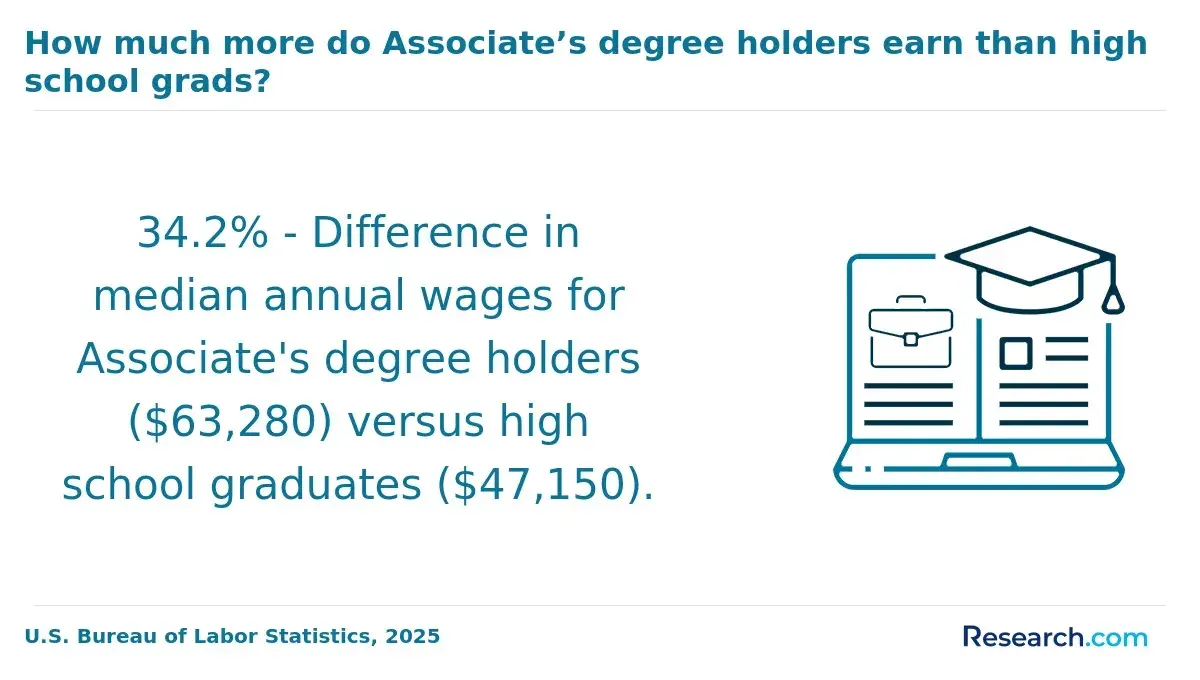
Tuition has a direct effect on HR degree payback because many HR roles have solid but not unlimited starting salaries. According to College Board's 2024-25 pricing data, average published tuition and fees were $11,610 for in-state students at public four-year institutions and $43,350 at private nonprofit four-year institutions. That gap matters because both paths may lead to the same entry-level HR job market.
Sticker price is not the same as net price. Scholarships, grants, transfer credits, employer tuition assistance, military education benefits, and part-time enrollment can change the actual cost dramatically. Before choosing a program, students should compare the cost drivers below because each one affects break-even time.
- Net tuition after grants and scholarships: Use the school's net price calculator rather than the advertised tuition rate.
- Transfer credit acceptance: Losing credits can add semesters of cost and delay full-time HR employment.
- Program length: Accelerated or completion programs can improve ROI if they do not overload the student or reduce learning quality.
- Work compatibility: Online, evening, or asynchronous courses can help students keep earning while enrolled.
- Required campus costs: Parking, housing, commuting, lab fees, technology fees, and residency requirements can change the real price.
- Internship access: A lower-cost program with weak career support may be less valuable than a slightly more expensive program with strong HR placements.
Online programs, such as online EMBA, often improve payback for working adults because they can reduce relocation and commuting costs. However, online is not automatically cheaper. The best online HR programs for ROI are accredited, transparent about fees, generous with transfer credit, and connected to employers or internship networks.
Students should also be careful with debt. If a program requires large loans but does not provide clear evidence of HR placement, internship support, or advancement outcomes, the payback risk increases. A lower monthly loan payment gives graduates more flexibility while building experience in the first few years of an HR career.
How Much Can Human Resources Graduates Expect to Earn?
Human resources graduates can earn very different salaries depending on role, region, industry, experience, and whether they move into management. The U.S. Bureau of Labor Statistics reported a 2024 median annual wage of $72,910 for human resources specialists. For students, that figure is best used as a labor-market benchmark, not as a promised starting salary.
The table below summarizes common HR-related roles and how they typically fit into a career path. Salary outcomes can vary widely, but the role descriptions help students connect a degree choice with realistic job targets.
| Role | Common responsibilities | Typical education fit | ROI implication |
| HR assistant or coordinator | Maintains records, supports hiring workflows, schedules interviews, helps with onboarding | Associate degree, bachelor's in progress, or entry-level bachelor's graduate | Good first step, but salary growth usually depends on moving into specialist work |
| Recruiter or talent acquisition specialist | Sources candidates, screens applicants, coordinates hiring managers, manages applicant tracking systems | Bachelor's in HR, business, psychology, or communication | Can provide faster early-career income growth in high-demand industries |
| Benefits or compensation specialist | Analyzes pay structures, benefits plans, compliance rules, and employee data | Bachelor's plus quantitative, compliance, or analytics coursework | Often stronger ROI for students with data and Excel skills |
| Training and development specialist | Designs learning programs, supports employee development, evaluates training effectiveness | Bachelor's or master's depending on employer and role scope | Good fit for students interested in teaching, communication, and performance improvement |
| HR manager | Leads HR teams, oversees policies, advises executives, manages compliance and workforce strategy | Bachelor's plus experience; master's or MBA may help for advancement | Higher upside, but usually requires several years of experience beyond the degree |
The strongest salary growth in HR usually comes from combining the degree with specialized skills. HR information systems, people analytics, compensation analysis, employee relations, labor law basics, project management, and change management can make a graduate more competitive than a generalist with only classroom knowledge.
Industry also matters. HR roles in professional services, technology, finance, healthcare systems, manufacturing, and large corporate employers may offer different compensation levels and advancement timelines. Students should compare local job postings before enrolling so they can see which degree levels and skills employers actually request.
How Long Does It Take to Break Even on a Human Resources Degree?
The break-even point for a human resources degree is the time it takes for added earnings to cover the net cost of the program. A quick payback estimate compares total net education cost with the salary increase you reasonably expect after graduation. For a career changer, that salary increase may be the difference between their current job and a new HR role. For a first-time student, it may be better to compare program costs against likely entry-level HR roles and long-term advancement potential.
One useful benchmark is the tuition-to-median-salary ratio. Using College Board 2024-25 tuition and fees, four years of average in-state public tuition totals $46,440 before aid, while four years at the average private nonprofit tuition rate totals $173,400 before aid. Compared with the BLS 2024 median wage of $72,910 for HR specialists, the lower-cost route requires a much smaller earnings hurdle.
The table below shows why net cost matters so much. These are simplified comparisons using published tuition figures only; they exclude living costs, grants, taxes, loan interest, books, and earnings while enrolled.
| Scenario | Published tuition basis | Four-year tuition total before aid | Interpretation for HR payback |
| Public in-state bachelor's route | $11,610 per year | $46,440 | More likely to produce manageable payback if the student enters HR specialist work and limits borrowing |
| Private nonprofit bachelor's route | $43,350 per year | $173,400 | Requires substantial aid, family support, employer outcomes, or higher long-term earnings to justify the cost |
| Bachelor's completion route with transfer credit | Depends on remaining credits | Varies by credits accepted | Can sharply improve ROI when prior credits reduce time to degree |
| Employer-assisted graduate route | Depends on benefit policy | Reduced by employer contribution | Can make a master's or MBA financially reasonable for promotion-focused HR professionals |
Students should avoid assuming that the full median salary becomes available for loan repayment. Taxes, housing, insurance, transportation, retirement savings, and family obligations all reduce take-home pay. A safer approach is to estimate monthly loan payments and compare them with conservative entry-level earnings in the city where you plan to work.
To estimate your own break-even point, follow this sequence before enrolling. It will give you a more realistic answer than relying on national averages alone.
- Find the school's net price after grants, scholarships, and transfer credits.
- Add required fees, books, technology costs, commuting, and any residency costs.
- Estimate the income you can keep earning while enrolled, especially for online or part-time programs.
- Review local HR job postings and note the salary ranges, degree requirements, and required software skills.
- Calculate the salary difference between your current path and the HR role you realistically expect after graduation.
- Divide your net program cost by that expected annual salary gain to estimate the number of years needed to recover the investment.
Which Factors Have the Biggest Impact on Human Resources Degree ROI?
The biggest drivers of HR degree ROI are net price, experience, degree level, career targeting, and employer demand. A program with moderate tuition and strong internships may produce better returns than a prestigious program with limited hands-on HR exposure. Employers often want proof that a candidate can handle recruiting systems, compliance details, employee data, and workplace communication, not just proof of coursework.
Several factors deserve special attention because they can change the financial value of the same degree. Students should evaluate these before applying, not after receiving an acceptance letter.
- Accreditation: Choose an institutionally accredited school so credits, financial aid eligibility, and employer recognition are less likely to become problems.
- Curriculum alignment: Look for coursework in employment law, compensation, benefits, staffing, training, employee relations, HR analytics, and organizational behavior.
- Internships and projects: Real HR work samples can help graduates compete for specialist roles faster.
- Career services: Strong programs help students build resumes, prepare for interviews, connect with employers, and find internships.
- Certification preparation: Programs aligned with SHRM or HRCI knowledge areas may help students prepare for later professional credentials.
- Transfer and prior learning policies: Generous credit policies can reduce both cost and time to completion.
- Technology exposure: Experience with HRIS platforms, applicant tracking systems, analytics tools, spreadsheets, and AI-supported recruiting workflows can improve job readiness.
Artificial intelligence is also changing HR work. AI tools are increasingly used for resume screening support, workforce analytics, employee surveys, scheduling, and HR service chatbots. This does not eliminate the need for HR professionals, but it raises the value of data literacy, ethical judgment, bias awareness, compliance knowledge, and communication skills.
Common mistakes can reduce ROI even when the degree itself is legitimate. The most damaging mistakes include choosing a program without checking accreditation, focusing only on sticker tuition, ignoring internship access, assuming all online programs are equal, borrowing for a graduate degree before gaining HR experience, and enrolling without reviewing job postings in the target region. A better approach is to match the program to a specific role and verify that the school can help you build the skills employers list repeatedly.
How Do Employer Demand and Job Growth Affect Human Resources Degree Value?
Employer demand supports the value of HR education because organizations still need professionals who can recruit, onboard, train, retain, and support employees while navigating compliance risks. The U.S. Bureau of Labor Statistics projects employment for human resources specialists to grow 6% from 2024 to 2034, which is a useful signal that HR remains a steady career field rather than a shrinking administrative function.
Demand is strongest for HR graduates who understand both people and systems. Employers increasingly expect HR staff to work with digital records, applicant tracking systems, payroll platforms, learning management systems, engagement surveys, compliance documentation, and workforce analytics. Students who build these skills during the degree may have a stronger return than students who complete only broad management coursework.
Job growth also affects which HR concentrations may be worth the investment. Recruiting can be cyclical because it depends on hiring volume, while benefits, compliance, employee relations, compensation, and HR operations remain important even when hiring slows. Students who want durable ROI should avoid becoming too narrow too early unless they are targeting a specific industry or employer.
Location matters as well. Large metro areas and corporate headquarters may offer more HR specialist openings, while smaller markets may have fewer roles but less competition. Remote HR roles exist, especially in recruiting and HR operations, but they can attract national applicant pools. For ROI planning, students should compare both local and remote postings before choosing a program format.
How Can Students Maximize the Financial Value of a Human Resources Degree?
Students can improve the financial value of an HR degree by treating enrollment like an investment decision. The goal is not simply to earn the credential; it is to graduate with lower debt, relevant experience, and a clear path into HR work.
The steps below are practical ways to increase ROI before and during the program. They focus on actions students can control rather than relying on school reputation alone.
- Choose an institutionally accredited school and verify that the HR, business, or management curriculum matches your target roles.
- Use the net price calculator and ask the financial aid office for a written estimate of tuition, fees, books, and required expenses.
- Maximize transfer credit through community college coursework, prior learning assessment, military credit, or previous college credits.
- Prioritize programs with internships, HR projects, employer partnerships, or practicum experiences.
- Build technical skills in spreadsheets, HRIS tools, applicant tracking systems, data dashboards, and basic people analytics.
- Join student or local HR associations to meet recruiters, HR managers, and potential mentors.
- Apply for HR-adjacent jobs while studying, such as recruiting assistant, payroll assistant, office coordinator, training assistant, or benefits support.
- Consider certification timing carefully; early-career credentials can help, but advanced certifications usually require experience.
- Avoid borrowing for graduate school until you know which HR specialty or leadership path you want.
- Compare salary outcomes by region and industry instead of relying only on national averages.
Working students should also ask employers about tuition assistance. Even partial reimbursement can improve payback, especially for bachelor's completion, graduate certificates, and master's programs. If an employer requires a service commitment after reimbursement, compare that obligation with your career plans before accepting the benefit.
Another ROI strategy is to choose a program that lets you graduate with evidence, not just credits. A strong HR portfolio might include a sample recruiting plan, compensation analysis, employee handbook review, training module, HR analytics dashboard, or employee engagement project. These artifacts can make interviews more concrete and help employers see what you can do.
How Does a Human Resources Degree Compare With Similar Fields for ROI?
A human resources degree usually offers a strong return for students who want to work directly with hiring, employee relations, compensation, benefits, training, or workforce strategy. However, it is not the only education path into people-centered careers. Business, psychology, communication, public administration, data analytics, and specialized professional programs can also lead to roles involving people, organizations, or workplace systems.
The table below compares HR with similar fields from an ROI perspective. The best choice depends on whether you want a specialized HR career or broader flexibility across business, communication, analytics, or regulated professional roles.
| Field | Best career fit | ROI strengths | When HR may be better |
| Human resources | Recruiting, benefits, compensation, employee relations, HR operations, HR management | Direct alignment with HR job postings and clear advancement ladder | Best when you are confident you want HR-specific work |
| Business administration | Management, operations, sales, project coordination, HR-adjacent roles | Broad flexibility across departments | HR degree may be stronger for specialized HR roles |
| Psychology | People-focused roles, research support, behavioral services, HR-adjacent work | Useful understanding of behavior and motivation | HR degree may provide more employment law, compensation, and staffing preparation |
| Communication | Internal communications, employee engagement, public relations, training support | Strong writing and messaging skills for organizational roles | HR degree may be better for compliance-heavy HR jobs |
| Data analytics | People analytics, workforce planning, compensation analysis, operations analytics | High-value technical skill set across industries | HR degree may be better if you want employee-facing work |
| Healthcare or education-related professional degrees | Licensed or specialized service roles | Clearer occupational pathways in some fields | HR may be better if you want corporate workforce roles without licensure |
Students comparing graduate business paths should decide whether they need HR specialization or executive-level business training. For experienced professionals, an online EMBA may make more sense than a master's in HR if the goal is senior leadership, budget ownership, or cross-functional strategy rather than HR specialization alone.
Some people-focused careers require a very different education and credentialing path. For example, students interested in clinical communication disorders should compare HR against licensed practice routes such as online SLP master's programs, because those programs are designed for a regulated healthcare and education profession rather than corporate HR work.
The main comparison point is opportunity cost. HR is often a practical choice for students who want a business-facing, people-centered career without the licensure requirements of clinical fields or the high quantitative barrier of some analytics programs. But students who want maximum flexibility may prefer business administration, while students targeting executive leadership may eventually pair HR experience with an MBA.
Is a Human Resources Degree Worth It for Your Career Goals?
A human resources degree is worth it when it helps you qualify for HR roles at a cost that fits your likely earnings, debt tolerance, and career timeline. It is especially worth considering if you want to work in recruiting, employee relations, benefits, compensation, training, workforce planning, or HR leadership and you are willing to build both people skills and technical skills.
The degree may be a strong fit if several of the following describe you. These indicators suggest that the credential is likely to support your career goals rather than becoming an expensive general credential.
- You want a business career focused on people, workplace systems, compliance, and organizational performance.
- You are comfortable handling sensitive employee information and making careful, policy-based decisions.
- You can choose a program with reasonable net cost, accreditation, transfer credit, and career support.
- You are willing to gain experience through internships, HR assistant roles, recruiting support, payroll, or administrative work.
- You plan to build skills in HR technology, analytics, employment law basics, communication, and conflict resolution.
You may want a different path if you dislike administrative detail, do not want to handle workplace conflict, expect a degree alone to produce a management job, or would need to borrow heavily for a program with weak career outcomes. Students who mainly want broad business management may be better served by a business degree or MBA pathway, while those seeking the most accessible graduate business options can compare the easiest MBA programs to get into before committing to an HR-specific graduate degree.
The best final decision is based on fit and numbers together. Choose HR if the work interests you, the program is affordable, and the curriculum connects clearly to real job postings. Choose another field if the cost is high, the career target is vague, or the roles you want consistently ask for a different credential.
Other Things You Should Know About Human Resources
A bachelor's degree is not legally required for every HR job, but many employers prefer it for HR specialist, recruiter, benefits, compensation, and employee relations roles. Entry-level assistant roles may be available with an associate degree or relevant experience.
Yes, an online HR degree can be respected if it comes from an institutionally accredited school and includes relevant coursework, projects, internships, or work experience. Employers generally care more about accreditation, skills, and experience than whether courses were online or on campus.
A master's in HR is usually better for deeper HR specialization, while an MBA is often better for broader management, finance, operations, and executive leadership goals. Working professionals should compare cost, employer tuition support, and target job requirements before choosing.
The fastest way is to reduce net cost while gaining experience before graduation. Transfer credits, scholarships, employer tuition assistance, internships, HR assistant roles, recruiting experience, and HR technology skills can all improve payback.
Top Trending Human Resources Rankings
See What Experts Have To Say About Studying Human Resources
Read our interview with Human Resources experts

Thomas Kochan
Human Resources Expert
Professor of Management
Massachusetts Institute of Technology

Rick Hackett
Human Resources Expert
Professor, Human Resources & Management
McMaster University

Chester S. Spell
Human Resources Expert
Professor of Management
Rutgers University

References
- Best Value Human Resource Master’s Programs https://www.humanresourcesedu.org/most-affordable-hr-masters-programs/
- Southwestern College - Professional Studies https://ps.sckans.edu/news/view/178/
- 7 Factors That Affect HR Compensation https://hrcertification.com/blog/factors-that-affect-hr-compensation-2026-2027-biid1000382
- Human Resources Colleges: Top HR Programs by Graduation Rate https://www.humanresourcesmba.net/best/bachelors-in-human-resources-ranked-graduation-rates/
- Labor Market | ELA https://ela.nauka.gov.pl/en/labor-market/who_earns_more_after_studies
- How does a college degree improve graduates’ employment and earnings potential? - APLU https://www.aplu.org/our-work/4-policy-and-advocacy/publicuvalues/employment-earnings/
- Advanced HR Careers | MS in Human Resource Management https://www.tuw.edu/business/hr-careers-ms-degree/
- Investment in a college degree pays off by age 34 - Utah System of Higher Education https://ushe.edu/investment-in-college-pays-off-by-34/
- Salary Guide for Future HR Managers https://www.allbusinessschools.com/human-resources/salary/