2027 Geography Degree Underemployment Report: Which Graduates Are Most Likely to Work Below Their Education Level

Co-Founder and Chief Data Scientist
Geography graduates often face a difficult choice: take a general job quickly or hold out for work that uses spatial analysis, GIS, planning, or environmental skills. The Federal Reserve Bank of New York's recent labor market data shows about 4 in 10 recent college graduates are underemployed, making educational mismatch a real risk.
This guide is for geography students, recent graduates, and career changers who want to avoid low-credential roles. You will learn where the risks are highest, which skills employers expect, and how to position a geography degree for degree-level work.
Key Things to Know About Underemployment in Geography Industry
- Geography underemployment risk is highest for graduates who leave school with broad human-geography coursework but little evidence of GIS, Python, SQL, remote sensing, statistics, or applied field experience.
- BLS May 2024 wage data shows a large practical divide between degree-aligned geography pathways, such as planning, GIS, environmental science, and cartography, and fallback roles in retail, clerical, customer service, or general operations work.
- The best protection against low-credential work is not the geography major alone; it is a targeted portfolio, an internship, employer-recognized software skills, and a job search aimed at specific industries that hire spatial talent.
- Key Things to Know About Underemployment in Geography Industry
- How likely is it for Geography graduates to become underemployed?
- Is the college curricula for Geography keeping up with employer expectations?
- How does underemployment for Geography graduates compare with other majors?
- Does taking on low-credential roles affect the career growth of Geography professionals?
- What is the salary gap between underemployed Geography graduates and those in degree-level jobs?
- What barriers force Geography graduates into low-credential roles?
- How can Geography graduates position their resumes for degree-level positions?
- Are there certifications that Geography graduates can secure to qualify for degree-level roles?
- What steps can Geography students take to improve their chances of securing degree-level roles?
- Top Trending Geography Rankings
How likely is it for Geography graduates to become underemployed?
Geography graduates have a moderate-to-high underemployment risk compared with graduates in tightly licensed or highly technical programs. The issue is not that geography lacks value; it is that the degree can point in many directions, and employers often hire for a specific applied skill rather than for the major name itself.
In practical terms, a geography graduate is most likely to become underemployed when they apply broadly for "analyst," "coordinator," or "assistant" jobs without showing a clear connection between coursework and employer needs. A graduate who can produce maps, manage spatial databases, analyze environmental or demographic patterns, and explain findings to nontechnical stakeholders has a much stronger case for degree-level work.
The most useful way to think about underemployment is by job function, not job title. A role is degree-level when it regularly uses college-level geography, GIS, spatial statistics, environmental analysis, planning, research, or data communication. A role is low-credential when a bachelor's degree is not normally required and the geography training is incidental.
The table below separates common geography outcomes into risk categories. It is meant to help readers evaluate whether a first job is likely to use the degree or become a detour:
| Job outcome after a geography degree | Typical degree fit | Underemployment risk | Why it matters |
| GIS analyst, GIS technician, cartographic technician | Strong if the role uses spatial data, mapping, databases, and analysis | Low to moderate | These jobs usually build directly toward higher-level GIS, planning, or spatial analytics roles. |
| Environmental field technician or conservation technician | Moderate to strong depending on analysis duties | Moderate | Field roles can be useful gateways, but graduates should seek data, permitting, reporting, or compliance responsibilities. |
| Planning assistant or community development analyst | Strong if the role involves land use, zoning, demographics, or public policy analysis | Low to moderate | These roles align well with human geography, urban studies, and GIS coursework. |
| Research assistant, data analyst, or geospatial intelligence support role | Strong when spatial or statistical analysis is central | Low | These jobs can convert geography training into a broader analytics career path. |
| Retail supervisor, customer service representative, administrative assistant | Weak unless paired with a defined transition plan | High | These jobs may provide income but often do not build geography-specific experience. |
The strongest early-career geography candidates usually treat the major as a platform. They do not simply say they studied places, regions, and environments; they show how they can solve location-based problems with data.
Is the college curricula for Geography keeping up with employer expectations?
Many geography curricula cover valuable concepts, but not all programs keep pace with what employers expect from entry-level hires. The biggest mismatch is often between conceptual knowledge and job-ready technical execution.
Employers hiring for GIS, planning, environmental consulting, logistics, utilities, public health, insurance, or climate-risk roles want graduates who can work with real datasets, software systems, messy files, and deadlines.
BLS Occupational Outlook information released with 2024 labor data shows that geography-related professional roles are often small and specialized.
That means graduates compete not only with geography majors but also with environmental science, urban planning, data science, civil engineering, computer science, and public policy graduates. A curriculum that does not require applied projects can leave students underprepared for that competition.
The table below summarizes the most common curriculum gaps and why they matter for degree-level hiring:
| Curriculum area | What many programs teach | What employers often expect | Underemployment risk if missing |
| GIS software | Introductory mapping and spatial concepts | ArcGIS Pro, ArcGIS Online, QGIS, data cleaning, geoprocessing, dashboards, and map production standards | High for GIS roles |
| Programming and databases | Optional or limited exposure | Python, SQL, APIs, spatial databases, automation, and reproducible workflows | High for analytics roles |
| Remote sensing | Survey-level exposure | Raster analysis, imagery classification, LiDAR familiarity, and environmental monitoring applications | Moderate to high for environmental and climate roles |
| Quantitative methods | Basic statistics or research methods | Regression, spatial statistics, data visualization, uncertainty, and clear interpretation | Moderate to high for research and policy roles |
| Professional experience | Capstone or classroom project | Internship, client-facing project, fieldwork, or portfolio evidence | High across entry-level hiring |
Students should audit their program before senior year. If the curriculum is heavily theoretical, they should add applied electives, lab work, internships, or certificate coursework. The same principle applies when comparing other career-specific education paths, such as a master's in speech pathology online: the program should map clearly to the job requirements, not just to a broad academic interest.
A strong geography curriculum does three things well. It teaches spatial thinking, gives students repeated technical practice, and requires evidence of real-world problem solving. Programs that combine those elements are more likely to help graduates avoid overqualification.
How does underemployment for Geography graduates compare with other majors?
Geography sits in a middle zone among college majors. It is more career-connected than many broad liberal arts fields when paired with GIS or environmental skills, but less direct than majors tied to licensure, regulated practice, or a clearly defined technical occupation. This is why two geography graduates from the same program can have very different outcomes.
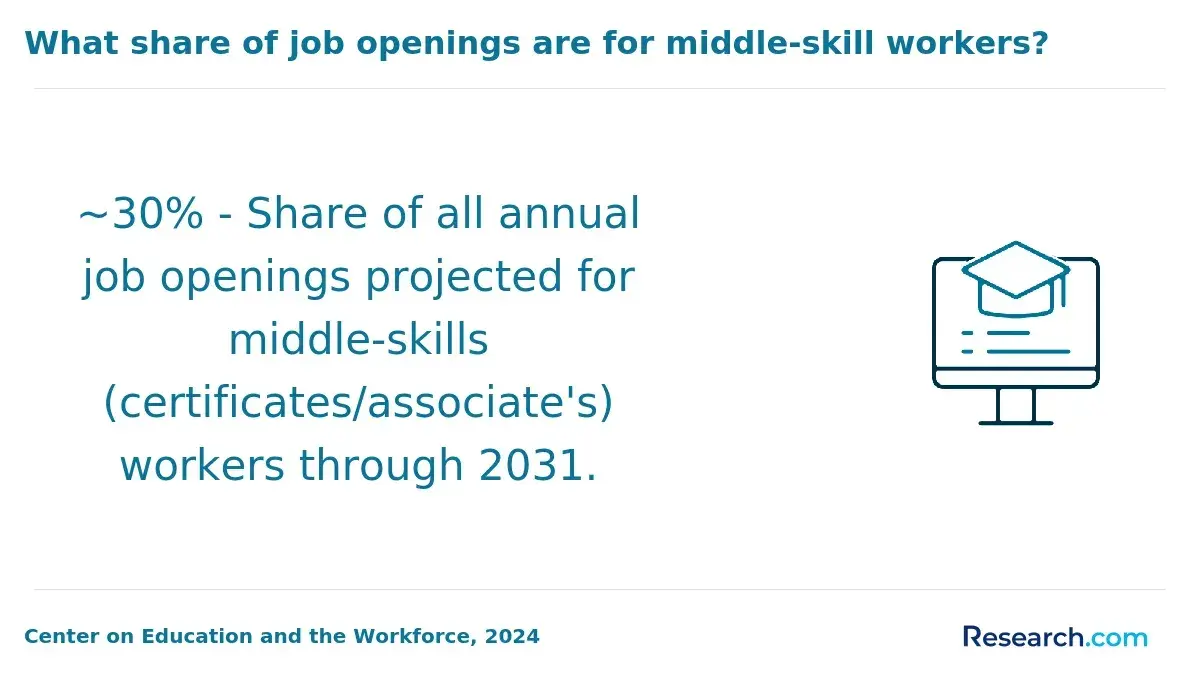
Recent college labor market reporting from the Federal Reserve Bank of New York continues to show that underemployment is common across majors, with recent graduates overall near the 40% range.
Geography students should use that benchmark carefully: it does not mean geography is a poor choice, but it does mean a bachelor's degree alone is not enough to assume a college-level first job.
The comparison below shows how geography typically differs from other majors in job-market structure. It focuses on decision value rather than implying that every graduate in a field has the same outcome:
| Major type | Typical employment structure | Relative underemployment risk | What protects graduates |
| Geography | Multiple pathways across GIS, planning, environment, policy, logistics, and analytics | Moderate | GIS, data, internship experience, and a focused job target |
| Engineering and computer science | Clearer entry-level technical job ladders | Lower when skills match the role | Projects, coding ability, internships, and technical interviews |
| Education and nursing | More direct occupational alignment, often with licensure | Lower for licensed roles | State credentials, clinical or practicum experience, and required exams |
| General social sciences and humanities | Broader job search with fewer occupation-specific gates | Higher without applied experience | Research, writing, data skills, internships, and networking |
| Business | Large hiring volume but intense competition | Varies widely by concentration | Internships, analytics, sales, finance, operations, or management focus |
Geography graduates who want a business-facing pivot should be careful not to assume that any graduate business credential will automatically solve underemployment. When comparing options such as online executive MBA programs, the better question is whether the credential connects to a specific role, such as location strategy, supply chain analytics, sustainability management, or real estate market analysis.
The strongest comparison point is not "geography versus another major." It is "general geography versus applied geography." Graduates with applied spatial and analytical evidence usually compete in a different labor-market tier than graduates who present only broad coursework.
Do Geography graduates typically stay long in low-credential roles?
Some geography graduates leave low-credential roles quickly, especially when the job is used as a short-term income bridge while they build GIS, data, or planning experience. Others stay longer because the role does not create the experience employers want for degree-level openings. The difference is whether the graduate has an exit strategy.
Research on college underemployment generally shows that the first job after graduation can shape later outcomes. For geography graduates, this is especially important because hiring managers often look for evidence of applied work. A first job that does not use mapping, analysis, field data, environmental reporting, or planning may make the next search harder unless the graduate builds that evidence outside the job.
Low-credential work is less damaging when it has a clear bridge to the target field. For example, a customer service job at a utility company can be more useful than unrelated retail work if the graduate networks with GIS, asset management, or operations teams and volunteers for data cleanup projects. A clerical role in a city planning office may become a pathway if it exposes the graduate to zoning files, permitting data, public meetings, and GIS staff.
Graduates should treat the first 6 to 12 months after graduation as a career-positioning window. If they take a fallback job, they should continue applying to degree-level roles, complete one or two portfolio projects, and contact alumni in relevant organizations. Waiting passively for the job to become more technical is risky.
Common signs that a low-credential role is becoming a trap include limited exposure to professional staff, no access to data or analysis tasks, no internal promotion path, and a schedule that prevents upskilling. In that case, the graduate should plan a deliberate transition rather than simply accumulating more unrelated experience.
Does taking on low-credential roles affect the career growth of Geography professionals?
Low-credential roles can slow career growth when they delay the accumulation of geography-relevant experience. Employers hiring for GIS analyst, planner, environmental analyst, or spatial data roles usually want proof that the candidate can apply technical and analytical skills. A job that requires a degree but does not use degree-level skills may not provide that proof.
The long-term effect depends on how the graduate uses the role. A fallback job with a strong employer, internal mobility, and access to spatial or environmental teams can become a bridge. A job with no skill development, no portfolio value, and no network in the target field can become a detour.
Graduates should evaluate any low-credential offer using the following sequence before accepting it. The goal is to protect income without letting the first job define the entire career path:
- Identify whether the employer has GIS, planning, environmental, logistics, real estate, utilities, transportation, public health, or analytics teams.
- Ask whether the role can include data cleanup, mapping support, reporting, field documentation, or internal project assistance.
- Set a deadline for transition, such as applying to degree-level roles after completing a portfolio project or certification.
- Track accomplishments in measurable terms, such as records cleaned, locations mapped, permits reviewed, datasets documented, or reports produced.
- Keep networking externally so the fallback role does not become the only professional identity on the resume.
AI and automation make this issue more urgent. Basic map production, simple geocoding, and routine dashboarding are increasingly automated. Employers are less impressed by candidates who can only make a map; they want graduates who can interpret spatial patterns, validate data quality, automate workflows, and communicate decisions. That shift raises the bar for moving from assistant-level work to professional roles.
For graduates considering a management pivot later, credentials should be chosen only after a clear career target is defined. Even an easiest MBA program search should include questions about employer recognition, specialization, cost, and whether the program supports a real transition into operations, analytics, sustainability, or public-sector management.
What is the salary gap between underemployed Geography graduates and those in degree-level jobs?
The salary gap between underemployed geography graduates and those in degree-aligned jobs can be substantial because the relevant occupations sit in very different wage markets. BLS May 2024 wage data places many professional geography-adjacent roles well above common fallback jobs that do not normally require a bachelor's degree.
The table below uses national BLS wage categories as a practical reference point. It does not predict an individual graduate's salary, but it shows why the first job target matters for loan repayment, savings, and long-term career growth:
| Role category | Degree alignment for geography graduates | Typical national wage signal from BLS May 2024 data | Career meaning |
| Geographers | Strong | Above many bachelor's-level averages, but employment is small | Good fit for specialized research, federal, consulting, and technical roles, though openings are limited. |
| Urban and regional planners | Strong, often stronger with planning coursework or a master's degree | Median pay is in the low-to-mid $80,000 range | Strong pathway for students interested in land use, housing, transportation, zoning, and community development. |
| Cartographers and photogrammetrists | Strong with GIS, remote sensing, and cartographic production skills | Median pay is generally in the upper $70,000 range | Good alignment for technical mapping, imagery, government, defense, utilities, and engineering support. |
| Environmental scientists and specialists | Moderate to strong with environmental coursework and field or lab experience | Median pay is around the $80,000 range | Good fit for graduates who combine geography with environmental regulation, sampling, climate, or sustainability work. |
| Surveying and mapping technicians | Moderate; can be a gateway if technical duties are present | Median pay is often near the $50,000 range | Useful entry point when it leads to GIS, surveying, or engineering support responsibilities. |
| Retail, clerical, food service, and general customer service roles | Weak | Often materially below degree-aligned professional roles | May solve short-term income needs but usually does not build geography-specific experience. |
The financial risk is not only the first-year wage difference. Underemployment can also affect student loan repayment because lower wages reduce flexibility. Graduates with federal loans may have income-driven repayment options, but those plans do not replace the career value of moving into roles that use the degree.
A useful rule is to compare each offer against both wage and experience value. A lower-paid GIS technician role may be better than a higher-paid unrelated job if it builds a portfolio, references, and a path toward analyst-level work. But a low-paid role with no technical growth should be treated cautiously.
What barriers force Geography graduates into low-credential roles?
Geography graduates are often pushed into low-credential roles by a combination of market structure, program design, and job-search strategy. The major is broad, so employers need signals that the graduate can perform a specific function. Without those signals, the degree may be interpreted as general education rather than occupational preparation.
The most common barriers are practical and fixable, but they require early action. Students should identify these risks before graduation rather than after months of unsuccessful applications:
- Weak technical evidence: A transcript listing GIS is less persuasive than a portfolio with maps, scripts, dashboards, metadata, and a short explanation of the decision problem solved.
- No internship or applied project: Employers often treat practical experience as proof that the candidate can handle messy real-world data, client requests, and deadlines.
- Unfocused job search: Applying to every analyst role without tailoring the resume can hide the candidate's geography strengths from both recruiters and applicant tracking systems.
- Local labor market mismatch: Some regions have limited GIS, planning, environmental consulting, or geospatial intelligence hiring, so graduates may need to target public agencies, utilities, engineering firms, logistics companies, or remote-friendly employers.
- Overreliance on the major name: Geography is respected in many settings, but hiring managers usually search for skills such as ArcGIS Pro, Python, SQL, remote sensing, land-use analysis, or environmental compliance.
- Late portfolio building: Waiting until after graduation to create work samples can leave the graduate competing against candidates who already have internships and public projects.
Another barrier is choosing a credential path without testing the labor-market fit. If a graduate realizes that their interests point away from spatial work, it may be smarter to evaluate structured alternatives, such as ABA paralegal programs, than to keep applying for geography jobs they do not actually want.
Red flags in job postings include vague "degree preferred" language, no mention of analysis tools, no defined advancement path, and duties that are mostly scheduling, phone support, filing, retail operations, or generic office work.
These roles are not always bad, but graduates should not mistake them for geography career starters unless they create access to relevant teams or projects.
How can Geography graduates position their resumes for degree-level positions?
A geography resume should make the degree feel occupationally specific. Instead of leading with broad coursework, graduates should show the employer what problems they can solve: where to site a facility, how land use is changing, which neighborhoods face environmental exposure, how to clean spatial data, or how to visualize service gaps.
The strongest resumes are tailored to a target role. A GIS analyst resume should not look the same as an environmental planning resume or a transportation analyst resume. Each version should emphasize the tools, projects, and field context that match the posting.
Use this process to reposition a geography resume for degree-level roles.
- Choose one target job family first, such as GIS analyst, planning assistant, environmental analyst, remote sensing technician, transportation analyst, or location intelligence analyst.
- Pull 10 recent job postings and highlight repeated tools, datasets, methods, and responsibilities.
- Create a skills section that mirrors real employer language, including software, programming, databases, spatial analysis, field methods, and reporting tools you can actually use.
- Replace class-title bullets with project outcomes, such as "analyzed flood exposure by census tract using parcel and elevation data" or "built a zoning change map for public meeting review."
- Add a portfolio link only if it is clean, relevant, and easy to navigate, with 3 to 5 strong projects rather than many unfinished samples.
- Quantify work where possible, but do not inflate claims; describe dataset size, study area, number of maps produced, or decision supported.
- Use a short profile statement that names the target role and the strongest technical evidence.
Common resume mistakes include listing "GIS" without naming tools, burying technical projects under unrelated work history, using academic language that does not match job postings, and applying with one generic resume. Graduates should also avoid overstating proficiency. If an interview includes a technical screen, exaggeration can quickly damage credibility.
For applicants with low-credential work experience, the resume should separate income work from geography evidence. A graduate can list the fallback job briefly while giving more space to GIS projects, volunteer mapping, capstone work, research assistantships, or certifications that better support the target role.
Are there certifications that Geography graduates can secure to qualify for degree-level roles?
Certifications can help geography graduates compete for degree-level roles, especially when the bachelor's program did not provide enough technical depth. They are not magic credentials, and they rarely replace a portfolio or internship, but they can make a resume easier for employers to evaluate.
The best certification depends on the target role. A GIS analyst, environmental analyst, planner, and remote sensing technician may need different evidence. The table below summarizes credentials and training signals that commonly matter in US geography-adjacent hiring:
| Credential or training signal | Best fit | Why it can reduce underemployment risk | Important limitation |
| Esri technical certification or documented ArcGIS Pro training | GIS analyst, GIS technician, planning support, utilities, public agencies | Signals familiarity with widely used GIS tools and workflows | Employers still expect project evidence, not just exam preparation |
| GIS certificate from an accredited college or university | Graduates whose geography program had limited GIS depth | Provides structured coursework in spatial analysis, cartography, and databases | Quality varies, so students should check software, project requirements, and employer connections |
| Python and SQL coursework or certificates | Spatial data analyst, location intelligence, environmental data, logistics analytics | Helps graduates move beyond manual mapping into automation and data workflows | Generic coding certificates are weaker unless applied to spatial or real datasets |
| Remote sensing or geospatial intelligence training | Imagery analysis, environmental monitoring, defense, emergency management | Builds evidence for specialized roles that require raster, imagery, or sensor-data skills | Some defense-related roles may require citizenship, clearance eligibility, or location constraints |
| AICP Candidate Pilot Program or planning-focused preparation | Urban and regional planning pathway | Shows commitment to planning practice and professional standards | Full planning credentials often require education and professional experience conditions |
| FAA Part 107 Remote Pilot Certificate | Drone mapping, surveying support, environmental fieldwork, utilities inspection | Can support roles involving aerial data collection | Useful only when paired with photogrammetry, GIS, safety, and data-processing skills |
For faster return on investment, many graduates should first pursue targeted software and portfolio-based training before committing to a master's degree. A master's can be worthwhile for planning, research, academia, federal roles, or specialized environmental work, but it is not always the fastest fix for underemployment.
A good certification strategy is narrow. Pick the credential that matches the postings you actually want, complete a project using the skill, and update the resume immediately. Collecting unrelated certificates can make the candidate look unfocused.
What steps can Geography students take to improve their chances of securing degree-level roles?
Geography students can reduce underemployment risk before graduation by turning the major into a clear employment story. The goal is to leave school with more than a transcript: students need a target role, applied work samples, professional contacts, and evidence that they can use spatial thinking in real organizational decisions.
The most effective plan starts early, but even seniors and recent graduates can use the same sequence. These steps are designed to convert a broad geography education into degree-level employability.
- Pick a primary pathway by junior year, such as GIS, planning, environmental analysis, transportation, public health geography, climate risk, logistics, or geospatial intelligence.
- Audit job postings every semester and compare them with your coursework, software skills, writing samples, and project experience.
- Complete at least one employer-facing experience, such as an internship, co-op, research assistantship, city agency project, conservation project, or nonprofit mapping assignment.
- Build a portfolio with 3 to 5 polished projects that show the problem, data source, method, map or analysis, and recommendation.
- Learn one technical stack deeply rather than five tools superficially; for many students, ArcGIS Pro plus SQL or Python is more valuable than scattered exposure.
- Ask faculty, alumni, and local professionals which employers hire entry-level spatial talent in your region.
- Apply before graduation, not after it, and track applications by job family so you can see which resume version gets responses.
- Evaluate first offers by both pay and experience value, especially whether the job builds skills relevant to the next role.
Internships usually carry more hiring weight than classroom projects because they show workplace readiness. However, a strong academic project can still help if it uses real data, answers a practical question, and is presented in a professional format. The best candidates have both.
Students who discover that they prefer management, entrepreneurship, or broader business roles should compare options carefully rather than drifting into unrelated work. For some, researching the easiest MBA program may be less useful than identifying a specific career target and choosing a program with relevant analytics, operations, sustainability, or public-sector management coursework.
The smartest strategy is to make geography legible to employers. A graduate who can say "I study geography" is less competitive than one who can say "I use GIS and spatial data to help cities, agencies, and companies make location-based decisions." That shift is what turns the degree into a labor-market advantage.
Other Things You Should Know About Geography
It can be worth it for students who build applied skills and target specific roles. Geography is strongest when paired with GIS, data analysis, planning, environmental work, remote sensing, or policy research. It is riskier when treated as a general degree with no technical or professional focus.
Not always. Graduate school can help for planning, research, federal roles, or specialized environmental careers, but it can also add debt without fixing weak experience. Many graduates should first test the market with internships, certificates, portfolio projects, or entry-level GIS and planning roles.
Common US employers include local and state government, federal agencies, engineering and environmental consulting firms, utilities, transportation agencies, logistics companies, real estate analytics firms, insurance companies, public health organizations, and geospatial technology vendors.
Yes, but recovery is easier with a deliberate plan. The graduate should build a targeted portfolio, gain a relevant certification or technical skill, network with geography-adjacent professionals, and apply to bridge roles such as GIS technician, planning assistant, environmental field technician, or data support analyst.
Top Trending Geography Rankings
References
- The Labor Market for Recent College Graduates https://www.newyorkfed.org/research/college-labor-market
- These 10 majors had the lowest unemployment rates for recent college graduates https://thehill.com/business/5738341-college-majors-lowest-unemployment-rate/
- Why geographers are employable https://www.rgs.org/choose-geography/choose-a-career-with-geography/why-geographers-are-employable
- How the Geography of Jobs Affects Unemployment https://www.richmondfed.org/publications/research/econ_focus/2014/q3/feature2
- Employment statistics for graduates: how country and major shape your career - GLOSS Education Agency https://gloss.education/en/blog/employment-statistics-for-graduates-how-country-and-major-shape-your-career
- The Geography of Work | National Affairs https://www.nationalaffairs.com/publications/detail/the-geography-of-work