2026 Geography Degree Clinical Placement Report: Hours, Site Access, and Completion Bottlenecks

Co-Founder and Chief Data Scientist
Geography students often discover too late that "clinical placement" in this field usually means supervised fieldwork, GIS practicum, internship, research placement, or community project, not a healthcare rotation. That distinction matters because site access can affect graduation timing, cost, and career readiness.
The U.S. Bureau of Labor Statistics' 2024 Occupational Outlook Handbook reports only about 100 geographer openings projected each year, making practical experience especially valuable. This guide helps prospective and current geography students compare placement hours, support models, costs, bottlenecks, and program features before committing time and tuition.
Key Things You Should Know
- Most geography degrees do not have a national clinical-hour standard; when placements are required, a 3-credit internship commonly translates to roughly 135 total work hours under institutional credit-hour policies, but each school sets its own rules.
- Site access is usually strongest in programs with formal partners in GIS offices, planning agencies, environmental firms, transportation departments, emergency management offices, or community research organizations.
- Placement delays usually come from late onboarding, limited local sites, transportation barriers, seasonal field schedules, and unclear responsibility for finding a site, not from geography coursework itself.
- Key Things You Should Know
- What Clinical Placement Requirements Do Geography Degree Programs Have?
- How Are Clinical Placement Sites Assigned in Geography Degree Programs?
- Which Factors Create Clinical Placement Bottlenecks in Geography Degree Programs?
- What Supervision and Evaluation Standards Apply During Geography Clinical Placements?
- Can Geography Students Complete Clinical Placements Part-Time, Online, or Near Home?
- What Costs Are Associated With Geography Clinical Placements?
- How Do Clinical Placements Affect Career Readiness for Geography Graduates?
- How Are Clinical Placement Opportunities Changing for Geography Students?
- How Should Students Compare Geography Degree Programs Based on Clinical Placement Quality?
- Top Trending Geography Rankings
What Clinical Placement Requirements Do Geography Degree Programs Have?
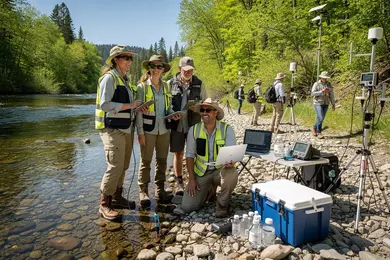
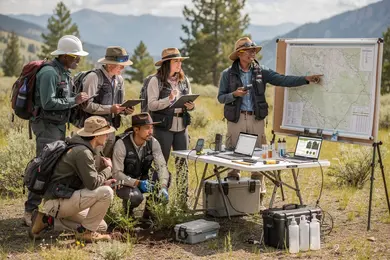
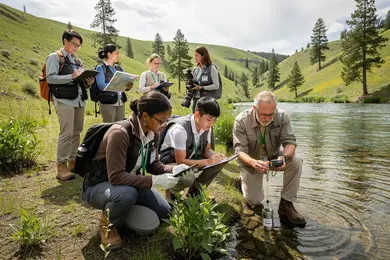
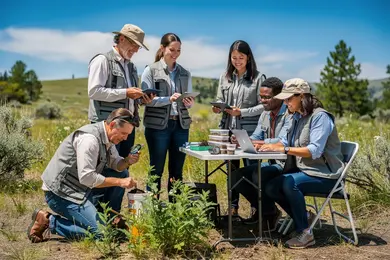
In geography education, "clinical placement" is not a standardized healthcare requirement. It is best understood as a supervised experiential learning component where students apply geographic methods in real settings, such as GIS mapping, spatial analysis, environmental fieldwork, planning research, hazard assessment, or community data projects.
Unlike programs such as a master's in speech pathology online, where supervised clinical hours are central to professional licensure, geography programs vary widely. Some require no placement, some require an internship or capstone, and some offer optional field study that improves employability but is not needed for graduation.
The table below shows how placement expectations typically differ by geography program type. Use it to estimate how much hands-on time you may need to plan around work, transportation, and graduation deadlines.
| Program type | Typical placement expectation | Common time commitment | What students usually produce |
| Associate degree or certificate in GIS | Often lab-based; internship may be optional | Usually tied to course credits rather than a national hour rule | GIS portfolio, maps, database work, or technician-level project |
| Bachelor's in geography | Internship, field course, capstone, or community project may be required | A 3-credit placement is often planned around about 135 total work hours, depending on school policy | Field report, spatial analysis project, internship evaluation, or presentation |
| Master's in geography, GIS, or geospatial science | Applied practicum, thesis research, assistantship, or professional project | Varies by thesis, practicum, or employer partner requirements | Thesis, technical report, GIS application, policy analysis, or professional portfolio |
| Environmental geography or planning-focused track | More likely to include field research, agency work, or community engagement | May be seasonal or scheduled around agency field windows | Environmental assessment, land-use analysis, planning memo, or field dataset |
The most important takeaway is that geography placement hours are program-defined, not profession-defined. Before enrolling, ask whether the placement is required for graduation, whether it carries credit, how hours are counted, and whether remote GIS work can satisfy part of the requirement.
How Are Clinical Placement Sites Assigned in Geography Degree Programs?
Geography placement sites are assigned in three main ways: school-arranged, student-arranged with school approval, or jointly arranged. The best model depends on your location, work schedule, career goal, and comfort with networking.
The comparison below helps you evaluate how much responsibility the school takes for site access. This matters because a program with excellent coursework can still create completion risk if students must find scarce placements on their own.
| Placement model | How it works | Best fit | Main risk |
| School-arranged placement | The department or internship office matches students with approved agencies, firms, labs, or community partners | Students who need predictable timelines, are new to the field, or live near campus partners | Options may be limited to existing partners or local sites |
| Student-arranged placement | The student finds a site, then the program approves the supervisor, duties, and learning plan | Working adults, online students, military students, and students targeting a specific employer | Delays can occur if the site lacks an approved supervisor or suitable tasks |
| Joint placement model | The school provides leads, templates, and approval rules while the student contacts sites | Students who want flexibility but still need institutional support | Success depends on early communication and fast documentation |
For geography students, strong placement sites often include city planning departments, county GIS offices, environmental consulting firms, nonprofit conservation groups, transportation agencies, emergency management offices, public health mapping teams, and university research labs. A good site should offer meaningful spatial work, not just clerical tasks with a geography label.
Which Factors Create Clinical Placement Bottlenecks in Geography Degree Programs?
Placement bottlenecks happen when students are academically ready but cannot begin, continue, or finish the supervised experience on schedule. In geography, the problem is usually less about legal clinical capacity and more about site availability, project timing, data access, software access, supervision, and transportation.
The following bottlenecks are the ones most likely to affect completion planning. Review them before choosing a program, especially if you need to graduate by a specific date.
| Bottleneck | Why it happens | Possible effect on completion |
| Limited local GIS or planning partners | Some regions have few agencies or firms that can supervise students | Students may need remote work, longer commutes, or delayed enrollment in internship credits |
| Seasonal fieldwork | Environmental sampling, land-use observation, and hazard mapping may depend on weather or field seasons | A missed window can push field requirements into the next term |
| Late paperwork | Affiliation agreements, learning contracts, background checks, or data-use approvals can take time | Students may be unable to start hours even after a site agrees |
| Supervisor mismatch | The site has work available but no qualified person to evaluate geography-related learning outcomes | The program may reject the placement or require a revised work plan |
| Software and data restrictions | GIS licenses, sensitive datasets, or agency systems may not be accessible off site | Remote students may need alternative tasks or campus-based lab access |
Common mistakes include assuming an online geography program eliminates in-person requirements, waiting until the final semester to search for a site, and accepting a placement before confirming that the school will approve it. To reduce risk, request the placement handbook before enrolling and ask for recent examples of approved sites in your region.
How Do Clinical Hour Requirements Affect Geography Degree Completion?
Clinical or field placement hours affect degree completion because they are often tied to specific semesters, faculty approval, and external site schedules. A student who finishes all coursework but misses the internship window may still need another term to graduate.
Hour requirements are usually calculated through academic credit rather than a profession-wide mandate. Under federal credit-hour expectations, institutions define equivalent work for labs, internships, practica, and field experiences, so students should verify the school's exact hour-to-credit formula instead of relying on assumptions.
Students can stay on track by treating placement preparation as a sequence, not a last-minute task. The steps below are especially useful for students balancing school with work or family responsibilities:
- Ask during admissions whether the placement is required, optional, or limited to certain concentrations.
- Confirm the number of credits, expected clock hours, minimum weekly schedule, and grading method.
- Request the deadline for site approval, learning contracts, background checks, and any onboarding documents.
- Identify at least two possible sites before the term in which you plan to enroll in internship or practicum credits.
- Keep a weekly hour log and ask the site supervisor to verify progress before the midpoint of the term.
Students who need a fixed graduation date should favor programs that publish placement timelines clearly. A lower tuition price may not save money if a delayed placement adds another term of fees, commuting, or lost work time.
What Supervision and Evaluation Standards Apply During Geography Clinical Placements?
Supervision standards in geography placements usually focus on whether the student is doing appropriate professional or research work, whether the site supervisor can evaluate performance, and whether the faculty coordinator can connect the experience to academic outcomes. Requirements vary by school, but quality placements generally have written learning goals and documented evaluation.
The table below summarizes common supervision and evaluation elements. These are not universal requirements, but they are good indicators that a program takes experiential learning seriously.
| Standard | What it usually means | Why it matters |
| Approved learning plan | The student, faculty member, and site supervisor agree on duties before the placement begins | Prevents students from spending required hours on unrelated administrative work |
| Qualified site supervisor | The supervisor has relevant experience in GIS, planning, environmental work, research, data analysis, or public-sector geography | Improves feedback quality and makes evaluation more credible |
| Faculty oversight | A faculty member reviews progress, assignments, reflections, or final deliverables | Connects the placement to degree outcomes instead of treating it as ordinary employment |
| Documented hours | The student records time and tasks, often with supervisor confirmation | Reduces disputes about whether the requirement was completed |
| Final evaluation | The site supervisor and faculty member assess performance, professionalism, and deliverables | Provides evidence for grading and future career materials |
Students should also ask how problems are handled. A strong program has a process for replacing a placement if a supervisor leaves, a project is canceled, or the site cannot provide the promised learning experience.
Can Geography Students Complete Clinical Placements Part-Time, Online, or Near Home?
Many geography students can complete placements part-time, online, or near home, but flexibility depends on the nature of the work. GIS database cleanup, remote sensing analysis, cartographic production, and spatial data visualization can often be done remotely, while environmental sampling, land-use observation, and community engagement may require in-person work.
Online students should not assume that "online degree" means "no field requirement." The same is true in other adult-friendly programs, including online executive MBA programs, where flexibility often depends on how the school structures residencies, projects, or employer-based learning. In geography, the safest approach is to confirm placement rules by ZIP code before enrolling.
The scheduling formats below are common. Use them to decide whether a program can realistically fit around your job, caregiving duties, or transportation limits.
| Format | When it works well | What to verify first |
| Part-time placement | Students working full time or completing hours across a full semester | Minimum weekly hours and whether the site can supervise consistently |
| Remote GIS placement | Students with strong software access and a project based on digital spatial data | Data security rules, software licensing, and communication expectations |
| Near-home placement | Online or commuter students with local government, nonprofit, or employer contacts | Whether the program approves out-of-area sites and supervisors |
| Intensive field course | Students who can dedicate several full days or weeks to fieldwork | Travel, lodging, equipment, and whether absences are allowed |
| Employer-based project | Working adults whose job includes mapping, planning, logistics, or environmental data | Whether regular job duties can count or must be expanded into a new academic project |
If you need maximum flexibility, prioritize programs that allow approved local sites, remote geospatial projects, and employer-based learning. If your career goal is environmental field science, emergency management, or planning, some in-person experience may be worth the scheduling burden because it builds context that remote map work alone may not provide.
What Costs Are Associated With Geography Clinical Placements?
Geography placements can add costs beyond tuition, even when the internship itself is unpaid. Students may pay for transportation, parking, field equipment, software, background checks, immunizations for certain public-sector or school-based sites, professional clothing, lodging for field courses, or lost work hours.
Cost planning matters because placement expenses are often due before the experience starts. For federal student loan planning, graduate and professional students may borrow up to $20,500 per academic year in Direct Unsubsidized Loans under current federal limits, but borrowing more to cover placement logistics increases total repayment cost.
The following list summarizes common placement-related costs to ask about before enrolling:
- Transportation, including fuel, transit passes, tolls, parking, or rideshare costs for field sites and agency offices.
- Field supplies such as boots, weather gear, notebooks, GPS accessories, safety equipment, or data collection tools.
- Technology costs, including GIS software access, cloud storage, laptop upgrades, or specialized data subscriptions if not provided by the school.
- Administrative costs such as background checks, fingerprinting, drug screening, health documentation, or site onboarding fees when required.
- Opportunity costs from unpaid hours, reduced work shifts, childcare needs, or travel time.
Students comparing education costs across fields may notice that placement expenses are not unique to geography. For example, career-focused programs such as ABA paralegal programs may also involve externship logistics, professional materials, or commuting costs, even when the academic format is online.
The best question is not simply "How much is tuition?" Ask, "What will it cost me to complete the required experience on time?" A program with stronger local partnerships may be worth more if it reduces travel, site-search time, and the risk of an extra term.
How Do Clinical Placements Affect Career Readiness for Geography Graduates?
Clinical-style placements can improve career readiness because geography is an applied discipline. Employers often want evidence that students can use spatial data, communicate findings, solve messy real-world problems, and work with nonacademic partners.
The U.S. Bureau of Labor Statistics reported May 2024 median annual wages above $90,000 for geographers, but that figure represents a small occupation and should not be read as a guaranteed outcome for every geography graduate.
Many graduates work in adjacent roles such as GIS technician, planner, environmental analyst, transportation analyst, emergency management specialist, market researcher, or data analyst, where pay and hiring requirements differ.
A strong placement helps students build proof of ability. The most valuable experiences usually include several of the following elements:
- A portfolio-ready deliverable, such as a map series, dashboard, spatial model, policy memo, field report, or geodatabase.
- Use of current tools such as GIS platforms, remote sensing data, spatial statistics, Python or R workflows, GPS data collection, or web mapping.
- Professional communication with planners, analysts, community partners, scientists, emergency managers, or public officials.
- Experience with imperfect data, project constraints, deadlines, privacy rules, and stakeholder feedback.
- A supervisor who can provide a detailed reference about the student's technical and professional performance.
Students should think beyond "completing hours." The placement should generate concrete evidence for interviews, graduate applications, and entry-level job searches. If a site cannot offer meaningful deliverables, it may satisfy the credit requirement but provide limited career value.
How Are Clinical Placement Opportunities Changing for Geography Students?
Geography placement opportunities are changing as employers adopt cloud GIS, artificial intelligence-assisted mapping, remote sensing, environmental monitoring, and location analytics. This creates more remote project options, but it also raises expectations for data ethics, technical fluency, and the ability to explain spatial findings to nontechnical audiences.
AI is especially important because it can speed up classification, image interpretation, routing, and data cleaning. However, students still need human judgment to validate spatial outputs, recognize bias in datasets, document methods, and understand local context. A placement that lets students audit or interpret AI-supported geographic work can be more valuable than one limited to routine map production.
Another trend is the growth of cross-disciplinary placements. Geography students may work with public health teams on accessibility analysis, business teams on site selection, emergency managers on risk mapping, or sustainability offices on climate resilience. These placements can be powerful, but students should confirm that a geography faculty member will approve the work as academically relevant.
Students should also expect more competition for high-quality sites in cities with strong GIS, planning, and environmental job markets. Programs with long-standing partnerships, alumni networks, and dedicated placement coordinators are better positioned to help students access these opportunities.
How Should Students Compare Geography Degree Programs Based on Clinical Placement Quality?
Placement quality should influence your choice of geography program, especially if you are choosing an online, hybrid, or out-of-state option. A program's website may highlight internships, but you need to know whether those opportunities are available to students like you, in your location, and on your timeline.
Use the questions below when speaking with admissions staff, department chairs, internship coordinators, or current students. They are designed to uncover practical risks before you commit.
- Is a placement, practicum, internship, field course, or capstone required for graduation in my concentration?
- How many clock hours are expected, and how are hours documented and approved?
- Does the school arrange sites, provide leads, or require students to find their own placements?
- Can online students use local, employer-based, or remote GIS placements?
- What happens if a site cancels, a supervisor leaves, or the project no longer meets academic requirements?
- Which sites have accepted students in the last two academic years, and are any located near me?
- Are background checks, software licenses, travel, field gear, or insurance required?
- Can the placement be completed part-time, during evenings, on weekends, or across more than one term?
- Who evaluates the work, and what deliverables will I have for my portfolio?
- What percentage of students who seek placements secure one in the intended term, if the school tracks that information?
Students comparing programs should apply the same support-focused mindset they might use when evaluating the easiest MBA program: ease should not mean weak academics; it should mean clear requirements, responsive advising, predictable scheduling, and fewer administrative surprises.
Choose a geography program with stronger placement support if you need a fixed graduation date, live far from campus, lack professional contacts, or want a portfolio-building experience. A more self-directed program may make sense if you already work in GIS, planning, environmental services, logistics, public administration, or data analysis and can convert your professional network into an approved academic project.
Other Things You Should Know About Geography Clinical Placement
Usually not in the healthcare sense. Geography programs may use internships, practica, field courses, capstones, or supervised research placements to provide hands-on experience.
There is no national standard. If the placement is credit-bearing, ask the school how many clock hours each credit requires; a 3-credit internship is often planned around about 135 total work hours, but policies vary.
Sometimes. Remote GIS, cartography, spatial data analysis, and web mapping projects may work online, while environmental fieldwork, planning observation, and community engagement may require in-person participation.
The biggest red flag is unclear responsibility. If the school cannot explain who finds the site, how approval works, what happens if a site falls through, and how hours are documented, completion risk is higher.
Top Trending Geography Rankings
References
- Managing clinical placements for online programs https://corehighered.com/en/blog/managing-clinical-rotations-for-online-programs
- Why Geography Matters More Than Ever in Logistics | Vestian https://www.vestian.com/news/why-geography-matters-more-than-ever-in-logistics
- Jobs & Careers - AAG https://www.aag.org/jobs-careers/
- Work experience directory | RGS https://www.rgs.org/choose-geography/choose-a-career-with-geography/work-experience-directory
- The MSW Macro Practicum Guide: Designing a Systems-Change Field Placement https://themacrolens.com/2026/02/09/msw-macro-practicum-guide/