2027 Geography Degree Time-to-Completion Report: How Long Students Actually Take to Finish

Co-Founder and Chief Data Scientist
Choosing a geography degree is partly an academic decision and partly a time-management decision. Although many bachelor's programs are advertised as four-year pathways, NCES graduation data published in 2024 shows that only about 64% of first-time, full-time bachelor's students completed within six years. That gap matters if you are comparing tuition, transfer options, online formats, work schedules, or career timing. This guide explains realistic geography degree timelines, why they vary, and how to choose the fastest practical path without sacrificing affordability, skills, or long-term career value.
Key Things You Should Know
- A traditional bachelor's in geography usually requires about 120 credits and is commonly designed for four years of full-time study, but many students need five to six years when they change majors, study part time, transfer credits late, or miss required course sequences.
- Transfer credits can be the biggest timeline shortcut: a student entering with an approved associate degree may reduce a bachelor's timeline to roughly two years, while 30 accepted credits can often save about one academic year if they apply directly to degree requirements.
- Completion time affects ROI because tuition keeps accumulating; College Board's 2024 data lists average published 2024-25 tuition and fees at $11,610 for in-state public four-year colleges and $43,350 for private nonprofit four-year colleges, so extra terms can meaningfully change total cost.
- Key Things You Should Know
- What Is the Actual Time to Complete a Geography Degree?
- Which Factors Have the Greatest Impact on Geography Degree Completion Time?
- How Do Enrollment Status and Learning Format Affect Geography Degree Completion?
- Do Accelerated Geography Degree Programs Significantly Shorten Graduation Timelines?
- How Do Work, Family, and Personal Responsibilities Affect Geography Degree Completion?
- How Does Completion Time Affect the Cost and ROI of a Geography Degree?
- How Does Graduation Timing Influence Career Outcomes for Geography Graduates?
- How Are Geography Degree Completion Timelines Changing Over Time?
- How Should Students Choose a Geography Degree Program Based on Time to Completion?
- Top Trending Geography Rankings
What Is the Actual Time to Complete a Geography Degree?
A geography degree studies places, environments, spatial data, human activity, maps, geographic information systems, climate patterns, urban development, and environmental change. At the undergraduate level, students usually complete general education, geography core courses, methods courses, GIS or statistics, electives, and sometimes a capstone, internship, field course, or research project.
The actual time to complete a geography degree depends on degree level, enrollment intensity, transfer credit, course sequencing, and whether the program is built around campus, online, hybrid, or accelerated delivery. The published program length is useful, but it is not the same as the real timeline for every student.
The table below summarizes realistic U.S. completion ranges for common geography pathways. Use it as a planning baseline, not as a guarantee, because individual schools may require different credit totals, field experiences, thesis work, or GIS sequences.
| Geography pathway | Common full-time design | Realistic completion range | Best fit |
| Associate degree with geography concentration | 2 years | 2 to 3 years | Students preparing to transfer or explore geography before committing to a bachelor's program |
| Bachelor's degree in geography | 4 years | 4 to 6 years | First-time college students pursuing GIS, planning, environmental, education, or public-sector pathways |
| Bachelor's completion program | 2 years after transfer | 18 months to 3 years | Students with substantial prior college credit or an associate degree |
| Master's degree in geography or GIS-focused geography | 1 to 2 years | 1.5 to 3 years | Students seeking advanced GIS, research, planning, environmental analysis, or doctoral preparation |
| Doctoral degree in geography | 4 to 6 years after a bachelor's or master's | 5 to 7 or more years | Students pursuing academic research, advanced policy research, or specialized scientific work |
For most readers asking how long a geography degree takes, the practical answer is this: a bachelor's degree is a four-year plan for a well-prepared full-time student, but a five-year timeline is common when students work significant hours, transfer, change concentrations, or take required courses out of sequence.
Which Factors Have the Greatest Impact on Geography Degree Completion Time?
The largest timeline drivers are not always the total number of credits. Geography programs often include sequenced courses, such as introductory physical geography before climatology, cartography before advanced GIS, or research methods before a senior capstone. Missing one prerequisite can push graduation back by a semester if the course is only offered once per year.
The table below shows the factors that most often change a geography student's completion timeline. It can help you identify whether a delay is likely before you enroll, not after you have already paid for extra terms.
| Factor | How it affects completion time | Typical warning sign |
| Course sequencing | Can delay advanced GIS, methods, fieldwork, or capstone courses | Required courses are offered only in fall or spring |
| Transfer credit fit | Can shorten the timeline if credits satisfy major and general education requirements | Credits transfer as electives but not as degree requirements |
| Enrollment status | Part-time study usually extends a bachelor's degree beyond four years | The student takes fewer than 12 credits per semester |
| Math, statistics, or GIS readiness | May require prerequisite or remedial coursework before advanced classes | The student has not completed college algebra, statistics, or computer-based coursework |
| Internship, field, or capstone requirement | Can add time if the requirement is not available every term | The program requires a site placement or faculty-approved project |
| Major or concentration change | Can add unused electives and new prerequisites | The student switches from environmental studies, geology, planning, or education late in the program |
Students should also look at how tightly a program controls progression. Highly structured programs in other fields, such as master's in speech pathology online, show why sequencing matters: when courses, placements, and prerequisites are locked into a set order, missing one requirement can affect the entire timeline. Geography programs are usually more flexible, but GIS labs, field courses, and capstones can create similar bottlenecks.
Common mistakes include assuming all transfer credits count toward the major, waiting until senior year to ask about the capstone, and taking interesting electives that do not satisfy degree requirements. The safest approach is to request a term-by-term degree plan before enrolling and update it every semester with an academic advisor.
How Do Enrollment Status and Learning Format Affect Geography Degree Completion?
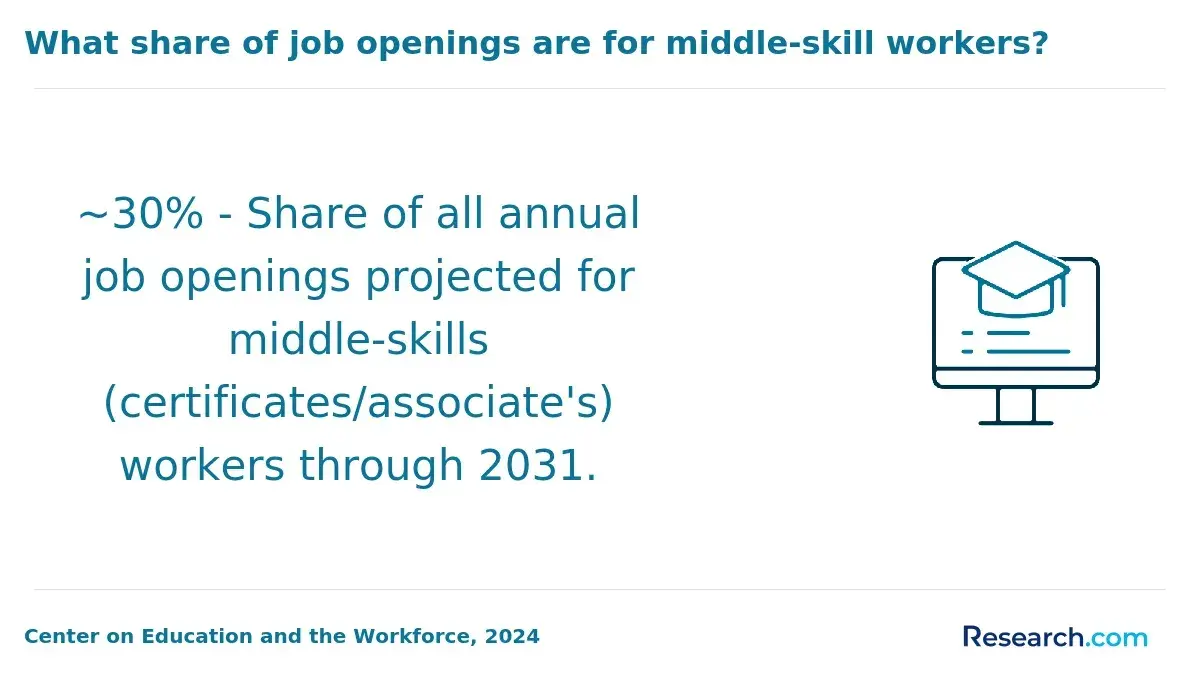
Enrollment status is one of the clearest predictors of completion time. A full-time undergraduate usually takes at least 12 credits per semester, while many students need closer to 15 credits per semester to finish a 120-credit bachelor's degree in four academic years without summer courses.
Learning format also matters, but not in the way many students assume. Online geography programs can reduce commuting time and improve scheduling flexibility, yet they do not automatically shorten a degree unless they offer frequent course starts, year-round terms, generous transfer policies, and required courses in an accessible sequence.
The table below compares common enrollment and format combinations. It is designed to help you match your available weekly study time with a realistic graduation target.
| Pathway | Typical pace | Realistic bachelor's timeline | When it makes sense |
| Campus, full time | 12 to 15 credits per fall and spring semester | 4 to 5 years | Students who can attend daytime classes and follow the standard course rotation |
| Online, full time | 12 to 15 credits with remote coursework | 4 to 5 years | Students who need location flexibility but can handle a full academic load |
| Hybrid, full time | Combination of online lectures and campus labs, fieldwork, or exams | 4 to 5 years | Students who want flexibility but can travel for required in-person components |
| Campus or online, part time | 6 to 9 credits per term | 5 to 8 years | Working adults, caregivers, military students, or students paying as they go |
| Year-round online or accelerated terms | Multiple start dates and summer or shorter sessions | 3 to 4.5 years | Students with strong time management and few schedule interruptions |
Online learning works best for students who can study independently, communicate early with instructors, and maintain steady progress. This is similar to how working professionals evaluate online executive MBA programs: convenience is valuable only if the structure supports consistent completion.
If you are choosing between full-time and part-time enrollment, estimate your weekly capacity before comparing graduation dates. A full-time geography load with GIS labs, writing-heavy courses, and statistics may require substantial study time outside class, and overloading can backfire if it leads to withdrawals or failed courses.
How Much Time Can Transfer Credits Save in a Geography Degree Program?
Transfer credits can save the most time when they satisfy exact degree requirements. Credits that count only as free electives may still help, but they do not shorten the program as much as credits that fulfill general education, statistics, GIS, environmental science, or geography major requirements.
The table below shows how accepted transfer credits may affect a 120-credit bachelor's degree timeline. The key issue is not only how many credits transfer, but whether they apply cleanly to the geography degree map.
| Accepted credits that apply to requirements | Approximate standing | Possible remaining timeline at full-time pace | Main caution |
| 0 to 15 credits | First-year student | 3.5 to 4 years | Limited time savings unless summer courses are used |
| 30 credits | Sophomore standing | About 3 years | Major prerequisites may still need to start from the beginning |
| 60 credits | Junior standing | About 2 years | Upper-division geography courses may be sequenced across multiple terms |
| 75 to 90 credits | Advanced transfer student | 1 to 2 years | Residency rules may require a minimum number of credits at the new institution |
To maximize the value of transfer credits, ask for an official or pre-enrollment transfer evaluation before committing. A fast admissions review is not enough; you need to know how each course applies to the geography major, not just whether the institution accepts it.
Use this sequence when comparing transfer-friendly geography programs:
- Request a written transfer credit evaluation that separates general education, major requirements, electives, and unused credits.
- Ask whether prior GIS, statistics, environmental science, geology, urban studies, or planning courses can satisfy geography requirements.
- Confirm the school's residency requirement, because some institutions require the final 30 credits or a set number of upper-division credits to be completed in-house.
- Check whether transferred courses satisfy prerequisites for advanced GIS, remote sensing, research methods, or capstone courses.
- Build a term-by-term graduation plan showing exactly when the remaining required courses are offered.
A red flag is a school that promises a shorter timeline before reviewing transcripts. Transfer savings should be based on a documented degree audit, not a general estimate.
Do Accelerated Geography Degree Programs Significantly Shorten Graduation Timelines?
Accelerated geography degree programs can shorten graduation timelines, but they work best for students who already have transfer credits, strong academic preparation, and enough weekly time to handle compressed coursework. A seven- or eight-week course may finish faster on the calendar, but the workload is not necessarily lighter.
The table below compares traditional and accelerated geography pathways. The better choice depends on whether speed, cost control, academic depth, or schedule stability is your top priority.
| Program type | How it may shorten time | Potential advantage | Potential drawback |
| Traditional semester program | Uses standard fall and spring terms | Predictable pacing and more time for labs, writing, and advising | May take longer if required courses are unavailable each term |
| Accelerated term program | Uses shorter sessions with multiple starts per year | Can help motivated students complete credits faster | Compressed deadlines can be difficult with work or family responsibilities |
| Year-round program | Adds summer or winter coursework | Can reduce downtime between terms | May limit time for internships, paid work, or recovery from heavy semesters |
| Combined bachelor's-to-master's pathway | Allows some graduate credits to count early | May shorten total time for students planning graduate study | Often requires strong grades and early planning |
Accelerated formats are valuable when the program still provides required GIS software access, instructor feedback, advising, and predictable course availability. Students comparing speed-focused options in other fields, such as an easiest MBA program, should apply the same caution here: "faster" should not mean weaker support, unclear requirements, or limited skill development.
Before choosing an accelerated geography degree, ask whether the program publishes course rotations, offers GIS and methods courses every term, allows summer completion of prerequisites, and provides academic advising before registration opens. If the answer is unclear, the advertised timeline may be difficult to achieve.
How Do Work, Family, and Personal Responsibilities Affect Geography Degree Completion?
Work, family, military service, caregiving, transportation, health, and finances can all affect geography degree completion. These factors do not mean a student is less capable; they mean the degree plan must be realistic enough to survive everyday life.
A geography degree may include reading-heavy social science courses, lab-based GIS assignments, fieldwork, data analysis, group projects, and writing-intensive research papers. Students who work long hours should be especially careful with GIS, statistics, and capstone terms because those courses often require more concentrated weekly time than general electives.
Students balancing school with major responsibilities can reduce delays by planning around predictable pressure points. The following steps are especially useful before each registration period:
- Identify your maximum sustainable credit load instead of registering for the fastest theoretical pace.
- Take prerequisite courses early, especially statistics, GIS fundamentals, cartography, and research methods.
- Use summer or winter terms selectively for general education or elective courses, not necessarily for the hardest major requirements.
- Schedule advising before registration opens so required courses do not fill before you enroll.
- Plan internships, field courses, or capstone projects at least two terms ahead, especially if they require site approval or faculty supervision.
Taking longer can be the smarter choice when it prevents withdrawals, protects GPA, preserves income, or allows time for a meaningful internship. For geography students, practical experience with GIS software, spatial analysis, environmental data, planning processes, or field methods can matter as much as speed.
How Does Completion Time Affect the Cost and ROI of a Geography Degree?
Completion time affects cost in three main ways: tuition and fees for additional terms, living expenses while enrolled, and delayed entry or advancement in the labor market. A shorter timeline can improve ROI if quality and fit are equal, but rushing can reduce value if it leads to failed courses, weak skills, or missed internships.
College Board's 2024 Trends in College Pricing data reported average published 2024-25 tuition and fees of $11,610 for in-state students at public four-year institutions and $43,350 at private nonprofit four-year institutions. That means an extra semester or year can carry very different financial consequences depending on the school type, aid package, and whether the student pays by credit or by term.
The table below shows how completion time can influence the financial picture. It does not estimate a student's final bill because grants, scholarships, residency, housing, and transfer credits vary widely.
| Timeline scenario | Cost implication | ROI consideration | When it may still be reasonable |
| Four-year full-time completion | Usually minimizes extra tuition terms | Earlier career entry or graduate school eligibility | Best when the student can maintain grades and complete requirements on schedule |
| Five-year completion | Adds tuition, fees, and opportunity costs | May still be worthwhile if it supports work, internships, or a stronger GPA | Reasonable for students changing majors, transferring, or balancing employment |
| Part-time completion over six or more years | May reduce annual out-of-pocket pressure but extend total time | Can preserve income and lower borrowing needs | Useful for working adults and caregivers with limited weekly study time |
| Accelerated completion | May reduce time enrolled but can require heavier course loads | Can improve ROI if the student completes successfully and gains job-ready skills | Best for students with transfer credits, strong preparation, and schedule flexibility |
Student borrowing also makes timeline planning more important. Federal Reserve Bank of New York household debt data released in 2024 continued to show student loan balances above $1.6 trillion nationally, underscoring why students should avoid unnecessary credits and extra terms when possible.
To estimate your own ROI, compare the total cost of each pathway after grants and transfer credits, not just the annual tuition. Then weigh the timeline against career preparation: a slower program with strong GIS training, internship access, and advising may outperform a faster program that leaves you underprepared.
How Does Graduation Timing Influence Career Outcomes for Geography Graduates?
Graduation timing can influence when geography students qualify for entry-level roles, graduate school, internships that require student status, and professional opportunities in GIS, planning, environmental analysis, public policy, education, transportation, emergency management, and location intelligence. However, finishing faster is not automatically better if the student has not built the technical and professional skills employers expect.
For salary context, the U.S. Bureau of Labor Statistics May 2024 wage data lists urban and regional planners at a median annual wage of $83,720. Many geography graduates do not become planners directly, and some planning roles prefer or require a master's degree, but the figure shows why degree level, specialization, and career direction matter when evaluating the return on a geography degree.
Students who want faster career entry should prioritize employable skills while keeping the timeline efficient. In geography, the most marketable combinations often include spatial analysis, GIS software, cartography, statistics, remote sensing, Python or data tools, environmental interpretation, and clear writing.
Graduating later may not hurt career outcomes if the additional time is used well. A student who takes five years but completes a GIS certificate, builds a portfolio, works in a planning office, or completes a strong internship may be more competitive than a student who finishes in four years with minimal applied experience.
The main mistake is treating the diploma date as the only outcome. A good timeline should answer two questions at once: when will you graduate, and what evidence of skill will you have when you apply for jobs or graduate programs?
How Are Geography Degree Completion Timelines Changing Over Time?
Geography degree timelines are changing because programs are becoming more flexible, more technology-based, and more connected to workforce skills. GIS, remote sensing, climate data, urban analytics, and environmental planning have made geography more applied, but they have also added technical course sequences that students must plan carefully.
Online and hybrid formats are now more common across higher education, and geography is well suited to remote delivery in some areas because mapping software, spatial data, and research tools can often be accessed digitally. However, some programs still require campus-based labs, field methods, local internships, or supervised capstone experiences.
Several trends are especially important for students comparing completion timelines:
- More programs are embedding GIS certificates or applied spatial analysis tracks into geography degrees, which can improve career value but may add required course sequences.
- Adult learners and transfer students are increasingly looking for online or hybrid completion pathways, making credit evaluation and flexible course scheduling more important.
- Employers are placing more emphasis on demonstrable skills, so portfolios, internships, mapping projects, and data analysis experience can influence the value of the degree timeline.
- Rising tuition pressure is making students more sensitive to extra semesters, unused electives, and delayed transfer evaluations.
AI and automation are also changing the field, but not by replacing geographic thinking. Tools can speed up data processing, mapping, and visualization, while employers still need people who can interpret spatial patterns, evaluate data quality, explain uncertainty, and connect geographic evidence to real decisions.
How Should Students Choose a Geography Degree Program Based on Time to Completion?
The best geography degree program is not simply the one with the shortest advertised timeline. It is the one that lets you complete the degree in the shortest realistic timeframe while also meeting your academic, financial, and career goals.
Before choosing a program, compare actual completion supports rather than relying only on catalog language. Strong programs make it easy to see which courses are required, when they are offered, how transfer credits apply, and how students complete internships, capstones, or field requirements.
Use these questions when speaking with admissions staff, faculty, or academic advisors:
- What is the standard term-by-term plan for a full-time geography major?
- How long do transfer students with 30, 60, or 90 accepted credits usually take to graduate?
- Are GIS, statistics, research methods, and capstone courses offered every term or only once per year?
- Can online students complete every requirement remotely, or are campus visits, fieldwork, or local placements required?
- How early can I receive an official transfer credit evaluation and degree audit?
- Does the program offer summer, winter, or accelerated terms for required courses?
- What advising checkpoints help students avoid unnecessary electives or missed prerequisites?
- What career supports are available for GIS portfolios, internships, planning experience, or graduate school applications?
Accreditation and program recognition should also be part of the decision. Geography does not have a single mandatory national programmatic accreditation for all career paths, but institutional accreditation matters for financial aid, credit transfer, and graduate school eligibility.
In fields with formal approval structures, such as ABA paralegal programs, students often learn to verify recognition before enrolling; geography students should apply the same habit by checking institutional accreditation, transfer policies, and employer-relevant credentials.
Choose a full-time campus pathway if you want a traditional experience, can attend scheduled classes, and can take 15 credits most terms. Choose an online or hybrid pathway if flexibility is essential and the school offers all required geography courses on a predictable schedule.
Choose an accelerated or year-round pathway only if you have the time, academic preparation, and support system to handle compressed coursework without harming performance. The strongest decision is usually a balanced one: minimize unnecessary delay, protect your GPA, build applied geography skills, and keep borrowing under control.
Other Things You Should Know About Geography
A bachelor's in geography is usually designed as a four-year, 120-credit degree for full-time students. In practice, many students take closer to four to six years depending on transfer credits, enrollment status, course availability, work schedules, and whether they change majors or concentrations.
Sometimes. Online programs can help if they offer year-round courses, multiple start dates, strong advising, and all major requirements remotely. Online study does not automatically shorten the degree if required GIS, field, or capstone courses are limited to certain terms.
If the associate degree transfers well and satisfies general education plus lower-division requirements, it may reduce a bachelor's timeline to about two additional years of full-time study. The exact savings depend on how credits apply to the geography major.
It can be worth it for students with strong preparation, transfer credits, and enough weekly study time. It may not be the best choice for students balancing heavy work or family responsibilities, especially if compressed courses make it harder to complete GIS labs, research projects, or internships successfully.
Top Trending Geography Rankings
References
- Community College Geography and Geographers: An Opportunity for Elevating the Discipline - AAG https://www.aag.org/community-college-geography-and-geographers-an-opportunity-for-elevating-the-discipline/
- 5 Common College Struggles and Hacks for Success https://www.berry.edu/articles/blog/2024/5-common-college-struggles
- Geography and College Attainment: A Place-Based Approach https://www.higheredtoday.org/2017/06/19/geography-college-attainment-place-based-approach/
- Deep disparities spoil uptick in on-time completion rates https://www.highereddive.com/news/on-time-completion-rises-disparities-college-complete-america/638587/
- Data on geography at university | RGS https://www.rgs.org/research/higher-education-resources/data-on-geography-at-university
- Community Colleges vs. Four-Year Colleges https://www.ivywise.com/blog/community-colleges-four-year-colleges/
- Geography Programs Abroad: Study Options & Benefits - AEC https://www.aecoverseas.com/geography/
- The Geography of Postsecondary Pursuit - Ithaka S+R https://sr.ithaka.org/blog/the-geography-of-postsecondary-pursuit/
- Part-Time Online Study: The Impact on FAFSA Dependency Status Explained https://www.straighterline.com/blog/part-time-online-study-the-impact-on-fafsa-dependency-status-explained
- Duration of Bachelors of Science http://www.u-eeni.edu.es/en/Degree-Duration-Countries.shtml