2027 Geography Degree Career Mobility Report: Which Paths Create the Best Promotion and Leadership Potential

Co-Founder and Chief Data Scientist
Geography graduates often face a practical choice: become a technical specialist, move into planning and policy, or build toward management. That decision matters because the U. S. Bureau of Labor Statistics reported a May 2024 median annual wage of $122,090 for management occupations, far above the $49,500 median for all occupations.
This report explains which geography-related paths create stronger promotion pipelines, where leadership roles are most accessible, and how students, recent graduates, and working professionals can choose roles that support long-term mobility rather than only a first job.
Key Things You Should Know
- GIS, spatial analytics, urban planning, environmental consulting, and geospatial product roles usually offer the strongest mobility because they connect geography skills to budgets, projects, clients, compliance, and cross-functional decision-making.
- Promotion data is not published by major, so compare paths using better proxies: ladder depth, employer size, project ownership, supervisory exposure, and labor-market demand such as BLS 2023-2033 projections showing much faster growth for data scientists than for traditional mapping roles.
- The clearest leadership route is usually analyst to senior analyst or planner to project manager, then program manager, department lead, or director; field-only technician roles can be valuable but often require added GIS, data, regulatory, or management skills to move upward.
- Key Things You Should Know
- What Does Career Mobility Look Like for Geography Degree Graduates?
- Which Entry-Level Geography Degree Jobs Create the Strongest Promotion Pipeline?
- Which Geography Career Paths Offer the Best Route to Management and Executive Leadership?
- What Skills Make Geography Degree Graduates More Competitive for Promotions?
- Do Advanced Degrees or Certifications Improve Leadership Potential for Geography Professionals?
- Which Geography Career Paths Deliver the Best Mix of Pay Growth and Promotion Potential?
- Is Internal Promotion or Changing Employers Better for Geography Career Mobility?
- What Barriers Can Limit Promotion and Leadership Opportunities for Geography Degree Holders?
- How Can Geography Degree Holders Build a Five-Year Promotion and Leadership Plan?
- Top Trending Geography Rankings
What Does Career Mobility Look Like for Geography Degree Graduates?
Career mobility means the ability to move into roles with more responsibility, higher pay, broader influence, or stronger job security. For geography degree graduates, mobility is not limited to becoming a "geographer." It often comes through GIS, location intelligence, urban and regional planning, environmental work, transportation, emergency management, real estate analytics, sustainability, public policy, and technology teams.
Promotion potential is the likelihood that a role can lead to higher-level titles, project ownership, supervisory duties, or strategic decision-making. A leadership pathway is the route from entry-level work to roles such as GIS manager, planning manager, environmental project manager, transportation program lead, director of analytics, chief sustainability officer, or public agency administrator.
The most important mobility pattern is that geography graduates advance faster when they translate spatial thinking into business, public-sector, or technical value. A graduate who can map flood risk is useful; a graduate who can explain budget impact, regulatory exposure, community trade-offs, and implementation steps is much more promotable.
The table below summarizes the most common mobility patterns for geography degree holders. Use it to see where early roles tend to lead and which paths are more likely to create management or leadership opportunities.
| Career path | Typical early role | Common next step | Leadership ceiling | Mobility signal |
| GIS and spatial analytics | GIS technician or analyst | Senior GIS analyst, spatial data scientist, GIS project lead | GIS manager, geospatial director, analytics leader | Strong when the role includes automation, dashboards, databases, and business decisions |
| Urban and regional planning | Assistant planner or planning technician | Planner, senior planner, project manager | Planning manager, community development director, public agency executive | Strong when the role includes public meetings, zoning, budgets, and interdepartmental coordination |
| Environmental consulting | Environmental technician or junior consultant | Environmental analyst, project coordinator, project manager | Practice lead, regional manager, sustainability director | Strong when the role includes client work, permitting, compliance, and proposal writing |
| Transportation and logistics | Transportation analyst or routing analyst | Operations analyst, network planner, project lead | Operations manager, transportation planning director | Strong when spatial analysis connects to cost, service levels, and operational performance |
| Field mapping and survey support | Mapping technician, field technician, survey assistant | GIS specialist, crew lead, survey technician | Limited unless paired with licensure, GIS, project management, or supervisory experience | Moderate; field expertise must be converted into technical or managerial scope |
A key trend is the shift from map production to spatial decision support. Employers increasingly expect geography graduates to work with cloud GIS, Python, SQL, remote sensing data, dashboards, and AI-assisted workflows. These tools do not remove the need for geographic judgment, but they raise the bar for promotion because routine mapping tasks are easier to automate.
Which Entry-Level Geography Degree Jobs Create the Strongest Promotion Pipeline?
The strongest entry-level geography jobs are not always the highest-paying first jobs. The better question is whether the role gives you technical depth, visibility, measurable outcomes, and a path to senior responsibility. A job with a modest starting salary but frequent project ownership may create more mobility than a narrow role with no promotion ladder.
Use the following comparison to judge entry-level roles by their promotion pipeline rather than title alone.
| Entry-level role | Why it can promote well | Where it can stall | Best fit |
| GIS analyst | Builds database, visualization, automation, and stakeholder-support skills | Can stall if the work is only map requests with no analysis or systems responsibility | Graduates who like technology, data, and problem-solving |
| Assistant planner | Creates exposure to zoning, public policy, community meetings, and long-term land-use decisions | Can move slowly in small departments with few senior openings | Graduates interested in public service, policy, development, and community outcomes |
| Environmental consultant | Develops client, compliance, field, reporting, and project-budget experience | Can be demanding if travel and billable-hour expectations are high | Graduates who want applied environmental work and project management potential |
| Transportation analyst | Connects spatial analysis to operations, capital planning, safety, and infrastructure decisions | Can be narrow if the role is only reporting without model-building or project work | Graduates interested in cities, networks, mobility, logistics, or public infrastructure |
| Remote sensing analyst | Builds technical specialization in imagery, sensors, land cover, climate, agriculture, or defense applications | Can require advanced technical skills before leadership opportunities appear | Graduates with strong quantitative, coding, or environmental interests |
BLS 2023-2033 projections published in 2024 show especially strong demand for data scientists, with projected employment growth of 36%. Geography graduates do not automatically qualify for data scientist roles, but those who add Python, statistics, machine learning basics, and spatial data engineering can move toward higher-growth analytics tracks.
If you are choosing your first role, evaluate the job description for evidence of upward mobility. The best early roles usually include several of these features:
- Ownership of recurring datasets, dashboards, models, permits, cases, or client deliverables
- Interaction with planners, engineers, analysts, executives, community stakeholders, or clients
- Access to senior staff who review your work and explain decisions
- Opportunities to present findings rather than only produce files
- Training in enterprise GIS, databases, scripting, statistics, compliance, or project management
- A visible next title, such as analyst II, senior analyst, planner I, planner II, project coordinator, or team lead
A common mistake is accepting a "GIS" or "environmental" title without checking what the job actually does. If the position is mostly digitizing, data cleanup, field sampling, or repetitive reporting, ask how employees move into analyst, planner, or project roles before treating it as a long-term launchpad.
Which Geography Career Paths Offer the Best Route to Management and Executive Leadership?
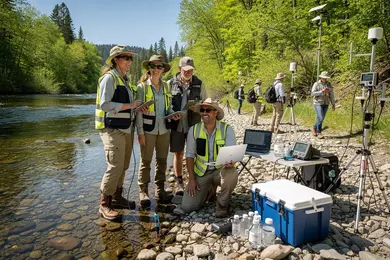
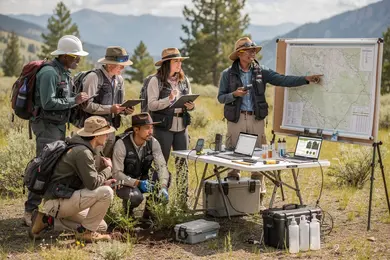
The best route to management usually comes from career paths where geography graduates learn to manage projects, budgets, staff, vendors, policy risks, or clients. Technical excellence matters, but leadership promotions often depend on whether you can coordinate people and decisions beyond your own work.
GIS and spatial analytics provide one of the strongest leadership routes when the work supports enterprise systems or business strategy. A GIS analyst may move into senior analyst, GIS administrator, geospatial project manager, GIS manager, and eventually director-level analytics or technology roles. The promotion signal is not just software use; it is responsibility for data governance, system reliability, workflow automation, and decision support.
Urban and regional planning can also lead to substantial leadership responsibility, particularly in city, county, regional, and state agencies. The pathway often runs from assistant planner to planner, senior planner, planning manager, community development director, or agency administrator. This route can be slower than private-sector analytics, but it provides direct exposure to public decision-making and policy leadership.
Environmental consulting is often the clearest private-sector management route for geography graduates who like applied work. Promotions tend to follow project responsibility: analyst, consultant, project coordinator, project manager, senior project manager, practice lead, or regional manager. The strongest candidates learn both technical and commercial skills, including scopes of work, budgets, proposals, client communication, and risk management.
Some geography graduates later decide they need broader business training to compete for senior management. Comparing online executive MBA programs can make sense for experienced professionals who already manage projects or teams and want stronger finance, strategy, and organizational leadership skills.
For readers deciding between specialist and manager tracks, the following trade-off is important: specialist tracks can offer strong pay and influence without supervising people, while management tracks provide broader authority but require comfort with hiring, conflict, budgets, performance reviews, and organizational politics.
Which Industries and Employers Offer the Best Advancement Potential for Geography Degree Holders?
Employer type strongly affects geography career mobility. A large employer may provide formal titles, training, and internal transfers, while a small organization may give faster responsibility but fewer promotion layers. Public agencies may offer stability and mission impact, while private employers may offer faster pay growth when your work connects to revenue, efficiency, or risk reduction.
The table below compares advancement potential by industry and employer type. It is useful because the same geography skill set can have very different leadership value depending on where it is applied.
| Industry or employer type | Advancement strengths | Advancement limits | Best geography fit |
| Local and regional government | Clear planning, GIS, transportation, emergency management, and community development ladders | Promotions may depend on retirements, civil-service rules, or budget cycles | Public-minded graduates who value policy impact and stable progression |
| State and federal agencies | Structured grades, mission-critical mapping, natural resources, defense, census, transportation, and environmental work | Hiring processes can be slow and specialized roles may require exact qualifications | Graduates seeking long-term stability, technical specialization, and public-sector leadership |
| Environmental and engineering consulting | Strong project manager pathway with client, budget, and proposal exposure | Travel, billable hours, and workload swings can be demanding | Graduates who want applied environmental, infrastructure, or compliance work |
| Technology and location intelligence firms | High-growth product, analytics, data engineering, and customer-solution roles | Competition is strong and technical expectations rise quickly | Graduates with coding, spatial analytics, cloud GIS, and product-thinking skills |
| Utilities, energy, and telecommunications | Enterprise GIS, asset management, routing, compliance, and infrastructure planning ladders | Work can become domain-specific, making portability dependent on transferable systems skills | Graduates who like infrastructure, operations, and long-cycle projects |
| Real estate, retail, and market analytics | Direct connection between spatial analysis and site selection, revenue, and portfolio strategy | Fewer roles may explicitly use "geography" in the title | Graduates who can combine demographics, markets, mobility, and business analysis |
BLS 2023-2033 projections published in 2024 estimate 4% growth for urban and regional planners, close to the average for all occupations. That means planning can be a stable mobility path, but graduates should not rely only on degree fit; they should build public communication, zoning, housing, transportation, climate resilience, and project-management skills to stand out for promotion.
When comparing employers, ask about internal mobility before accepting an offer. Strong employers can explain how analysts become senior analysts, how planners move into project management, and how technical staff gain supervisory experience. Weak employers give vague answers such as "work hard and opportunities will come."
What Skills Make Geography Degree Graduates More Competitive for Promotions?
Promotion in geography-related careers usually depends on a blend of technical ability, analytical judgment, and organizational influence. A degree may get you into the field, but promotions typically come when managers trust you with ambiguous problems, stakeholders, deadlines, and decisions.
The skills below matter because they help geography graduates move from task completion to decision support and leadership readiness.
- GIS and spatial data systems: Enterprise GIS, geodatabases, metadata, quality control, coordinate systems, web maps, and data governance show that you can manage information others depend on.
- Programming and automation: Python, SQL, R, APIs, and workflow automation help you reduce manual work and move into analyst, administrator, or data engineering roles.
- Quantitative analysis: Statistics, spatial modeling, forecasting, and uncertainty communication make your recommendations more credible.
- Remote sensing and imagery interpretation: Satellite, aerial, LiDAR, and drone data skills can support environmental, defense, agriculture, infrastructure, and climate-related advancement.
- Project management: Scheduling, scope control, budgeting, meeting facilitation, and risk tracking are essential for moving from analyst to project lead.
- Communication: Clear maps, brief memos, presentations, public-meeting skills, and executive summaries turn technical work into decisions.
- Domain knowledge: Planning law, environmental regulation, transportation systems, utilities, emergency management, housing, or market analytics gives spatial work real-world value.
AI is changing the skill mix. Automated mapping, image classification, and natural-language tools can speed up routine work, but they also make basic output less distinctive. The promotable employee is the one who can validate results, explain assumptions, detect spatial bias, protect data quality, and translate AI-assisted analysis into responsible action.
A practical promotion strategy is to keep a "mobility portfolio." Save examples of dashboards, models, public-facing maps, project plans, decision memos, and measurable improvements. Managers promote people whose impact is easy to see and defend.
Do Advanced Degrees or Certifications Improve Leadership Potential for Geography Professionals?
Advanced degrees and certifications can improve leadership potential, but their value depends on the path. Geography is not like fields where one license automatically unlocks a role. In many geography careers, credentials work best when they deepen a clear specialization or fill a leadership gap.
A master's degree can be valuable for planning, environmental policy, GIScience, remote sensing, public administration, data science, transportation, or sustainability roles. It is most useful when it connects directly to the next role you want, such as senior planner, GIS manager, environmental project manager, or analytics lead. It is less useful if you pursue it only because your current job feels stalled without confirming that employers reward the credential.
Certifications can also help, especially when they signal readiness for project, technical, or domain-specific responsibility. Common examples include GIS professional credentials, project management credentials, planning certification, remote sensing training, cloud platform credentials, and environmental or safety-related training. Requirements vary by employer and role, so review job postings for your target title before investing.
Geography advancement is less licensure-driven than some clinical fields, where degree format and credential rules are central to eligibility; for contrast, students researching regulated healthcare education often compare options such as a master's in speech pathology online. Geography professionals should use a different test: will this credential help me manage larger projects, lead people, handle higher-risk decisions, or qualify for a specific senior role?
Before paying for a graduate program or certification, use this decision sequence:
- Identify three target roles you want within five years.
- Review current job postings for those roles and list repeated degree, certification, software, and experience requirements.
- Ask two managers or senior professionals which credentials actually influence promotion decisions in your target industry.
- Compare the cost, time, and opportunity cost of the credential against cheaper alternatives such as employer training, a portfolio project, or a short technical certificate.
- Choose the credential only if it closes a documented gap that is blocking your next move.
The biggest mistake is using graduate school to postpone career decisions. A degree can be powerful, but promotion committees and hiring managers still look for evidence that you can solve real problems, work with stakeholders, and lead deliverables.
Which Geography Career Paths Deliver the Best Mix of Pay Growth and Promotion Potential?
The best mix of pay growth and promotion potential usually appears where geography skills affect revenue, costs, compliance, infrastructure, or executive decisions. In practical terms, GIS analysts who become spatial data leads, planners who become project or department managers, and environmental professionals who become client-facing project managers often have stronger upward mobility than employees who remain in narrow production roles.
BLS May 2024 wage data shows why leadership matters financially: management occupations had a median annual wage of $122,090, compared with $49,500 for all occupations. This does not mean geography graduates will reach management pay automatically, but it shows the size of the leadership premium that can make promotion strategy as important as starting salary.
The table below ranks common geography-related paths by their typical combination of pay-growth potential and promotion access. The ranking is directional, not a guarantee, because outcomes depend on employer, region, experience, and skill depth.
| Path | Pay-growth potential | Promotion potential | Why it ranks this way |
| Spatial analytics and geospatial technology | High | High | Combines geography with data, automation, software, and enterprise decision support |
| Environmental consulting project track | Moderate to high | High | Project budgets, clients, compliance, and proposal work create visible management ladders |
| Urban and regional planning | Moderate | Moderate to high | Leadership access is strong in public agencies, but openings and pay growth can be slower |
| Transportation, logistics, and infrastructure analytics | Moderate to high | Moderate to high | Spatial analysis connects directly to cost, safety, service, and capital planning decisions |
| Remote sensing specialist track | Moderate to high | Moderate | Technical depth can be valuable, but leadership may require project or product responsibility |
| Field mapping and technician track | Low to moderate | Low to moderate | Promotion often requires transition into GIS, survey licensure, supervision, or project coordination |
For many geography graduates, the smartest path is a T-shaped career: build one deep technical specialty, then add enough communication, business, policy, and project skills to lead across functions. This keeps you competitive for specialist roles while making management possible later.
Do not judge mobility only by the first salary offer. A slightly lower-paying analyst role with automation, databases, and presentation duties may outgrow a higher-paying technician role that offers little exposure to decision-makers.
Is Internal Promotion or Changing Employers Better for Geography Career Mobility?
Internal promotion and changing employers can both improve career mobility, but they solve different problems. Internal promotion works best when your employer has a visible ladder, growing teams, supportive managers, and clear criteria. Changing employers works better when your current organization has a flat structure, limited openings, low salary bands, or no pathway from technical work to leadership.
Internal promotion is often strongest in public agencies, utilities, universities, large consulting firms, and enterprise GIS teams where titles and pay grades are formal. The advantage is credibility: people already know your work. The disadvantage is timing: a senior role may not open when you are ready.
Changing employers can accelerate mobility when you have marketable evidence of impact. Geography professionals often make external moves from GIS technician to GIS analyst, analyst to senior analyst, planner to project manager, or consultant to client-side sustainability or infrastructure role. The risk is that a better title may come with weak support, unclear expectations, or a culture that burns out staff.
Use these questions to decide whether to stay or move:
- Has your manager named the next role you are being prepared for?
- Do people in your current role regularly move into senior, lead, project manager, or supervisory positions?
- Can you gain budget, client, public-facing, or cross-department experience within the next year?
- Are salary bands competitive with similar roles in your region and industry?
- Would an external move give you broader responsibilities, or only a more impressive title?
- Can you show measurable achievements that would make you credible for a higher-level role elsewhere?
A common red flag is being called "essential" while receiving no promotion plan. If your employer depends on your work but will not expand your scope, document your achievements, update your portfolio, and test the market before your skills become too specialized for one organization.
What Barriers Can Limit Promotion and Leadership Opportunities for Geography Degree Holders?
Several barriers can limit promotion for geography degree holders, even when they are capable and hardworking. Most barriers are not caused by the degree itself; they come from narrow role design, weak skill signaling, unclear career goals, or employers with limited ladders.
The most common barriers are predictable, which means you can often avoid them if you evaluate roles carefully.
- Staying too long in production-only work: Repetitive mapping, digitizing, or field tasks can build discipline, but they may not show readiness for senior analysis or leadership.
- Ignoring business or policy context: Technical accuracy matters, but leaders promote people who understand why the analysis matters to budgets, communities, regulations, or customers.
- Assuming a senior title equals leadership: Some senior roles are individual contributor positions with no budget, staff, or strategic authority.
- Not learning modern data tools: GIS alone may not be enough for competitive analytics roles if employers expect SQL, Python, dashboards, APIs, or cloud workflows.
- Choosing employers with no ladder: Small organizations can offer great experience, but if there is no next role, promotion may require an external move.
- Pursuing credentials without a target role: Degrees and certificates have the best return when they solve a specific advancement barrier.
- Undervaluing communication: Excellent analysis can be overlooked if you cannot present conclusions clearly to nontechnical audiences.
Credential expectations in geography are usually more employer-specific than rule-bound. That differs from fields where a formal approval structure is central, such as students comparing ABA paralegal programs. For geography careers, the better question is not "What credential sounds impressive?" but "What credential appears repeatedly in postings for the job I want?"
Another barrier is geographic concentration. Some planning, environmental, and public-sector roles depend heavily on local laws, regional growth, and agency budgets. If you want mobility across states or industries, prioritize transferable skills such as spatial databases, project management, environmental compliance frameworks, transportation modeling, and data visualization.
How Can Geography Degree Holders Build a Five-Year Promotion and Leadership Plan?
A five-year promotion plan should turn a geography degree into a sequence of increasingly responsible roles. The goal is not to predict every title, but to build evidence that you can handle larger problems, larger audiences, and larger consequences.
Use this plan as a practical framework. Adjust the timing based on your employer, region, industry, and whether you are pursuing a specialist or management track.
- Year 1: Build technical credibility. Master the core tools of your role, clean up your workflows, ask for feedback, and create a portfolio of maps, analyses, reports, or dashboards that show accuracy and judgment.
- Year 2: Add measurable impact. Volunteer for projects where your work affects time savings, compliance, public decisions, client deliverables, operational efficiency, or risk reduction.
- Year 3: Expand your scope. Ask to present findings, coordinate a small project, mentor an intern, lead a data standard, or manage a recurring workflow that other teams depend on.
- Year 4: Choose a track. Decide whether you want to become a senior specialist, project manager, people manager, policy leader, product-focused analyst, or consultant.
- Year 5: Compete for the next level. Use your portfolio, metrics, stakeholder examples, and credential plan to pursue a senior, lead, project manager, or supervisory role internally or externally.
If management is your target, build business literacy early. Professionals who want a flexible introduction to management education may compare an easiest MBA program, but convenience should not be the only criterion; the program should strengthen skills you will actually use, such as finance, operations, strategy, and organizational leadership.
Before each annual review, prepare a promotion case rather than simply asking whether you are doing well. Bring examples of completed work, problems solved, stakeholders supported, tools improved, and responsibilities you are ready to assume. Managers are more likely to advocate for you when your advancement case is specific.
The best long-term strategy is to keep optionality. Geography graduates with spatial reasoning, data fluency, policy awareness, and communication skills can move among planning, analytics, environment, infrastructure, and operations. The more your work connects geography to decisions, the stronger your promotion and leadership potential becomes.
Other Things You Should Know About Geography
GIS and spatial analytics often provide the strongest promotion potential because they connect geography to data systems, automation, dashboards, and enterprise decisions. Environmental consulting and urban planning can also promote well when the role includes project ownership, stakeholder communication, and budget responsibility.
Yes, but leadership usually comes through applied pathways rather than the degree title alone. Common routes include GIS manager, planning manager, environmental project manager, transportation program lead, sustainability director, analytics director, or public agency administrator. Outcomes vary by employer, experience, technical skill, and willingness to manage people or projects.
Technical specialization is a good fit if you prefer deep GIS, remote sensing, data, modeling, or systems work. People management is a better fit if you want to supervise staff, manage budgets, coordinate stakeholders, and influence strategy. Many geography professionals build technical depth first, then decide whether to move into management later.
First, ask for a clear next-role plan and the skills required to reach it. If the employer cannot provide one, document your achievements, build a portfolio, add marketable skills such as SQL, Python, project management, or planning experience, and compare external roles that offer broader responsibility rather than only a new title.
Top Trending Geography Rankings
References
- Jobs for a Geography Major | Key Skills to Succeed in Geography https://bootcampgis.com/geography-major-gis-jobs/
- Career Paths in Geography https://www.uni-marburg.de/en/studying/consultation-services/career-service/career-paths/career-paths-in-natural-sciences-and-mathematics/career-paths-in-geography
- Jobs & Careers - AAG https://www.aag.org/jobs-careers/
- Education and Geographical Mobility: The Role of the Job ... https://events.bse.eu/live/files/2907-michaelamior66613pdf
- Geography https://www.careerpilot.org.uk/job-sectors/subject/geography
- Master’s vs PhD: Which Degree Is Right for Your Career Goals? https://theredpen.in/blog/masters-vs-phd-everything-you-need-to-know/
- What jobs can I get with a geography degree? https://www.goconstruct.org/faqs/construction-careers/what-jobs-can-i-get-with-a-geography-degree
- Geographical and Social Mobility https://blog.bham.ac.uk/cityredi/geographical-and-social-mobility/
- Jobs you can pursue with a geography degree https://www.openstudycollege.com/blog/jobs-you-can-pursue-geography-degree