2027 Data Science Degree Bachelor's-Level ROI Report: Best Career Returns Without Graduate School

Co-Founder and Chief Data Scientist
A data science bachelor's degree can pay off quickly, but only if the career path matches the cost. The U. S. Bureau of Labor Statistics reports a May 2024 median salary of $112,590 for data scientists and projects 36% growth from 2023 to 2033, making this one of the strongest bachelor's-accessible tech fields. This guide is for students, career changers, and families comparing whether to work after graduation or pursue more school. You'll learn which roles, industries, skills, and credentials offer the best returns without assuming graduate school is necessary.
Key Things You Should Know
- The highest bachelor's-level ROI usually comes from roles that combine data science with production systems, cybersecurity, cloud platforms, or revenue decisions, not from generic reporting jobs alone.
- BLS data shows data scientists had a $112,590 median salary in May 2024 and 36% projected growth from 2023 to 2033, but outcomes vary widely by industry, location, portfolio quality, and technical depth.
- Graduate school is financially worthwhile only when it unlocks a specific target role, employer tier, research path, or leadership track that cannot be reached through experience, projects, certifications, and internal promotion.
- Which Data Science Bachelor's Degree Careers Deliver the Highest ROI Without Graduate School?
- Which Industries Reward Data Science Bachelor's Graduates the Most?
Which Data Science Bachelor's Degree Careers Deliver the Highest ROI Without Graduate School?
The best ROI careers for a data science bachelor's graduate are not always the roles with the highest title prestige. ROI depends on the relationship between education cost, time to employment, salary, advancement potential, and whether the job requires additional schooling. A bachelor's degree in data science, statistics, computer science, applied mathematics, information systems, or a closely related field can be enough for many strong-paying roles when paired with Python, SQL, statistics, machine learning, cloud tools, and a portfolio.
Use the table below as a practical comparison of bachelor's-accessible careers that commonly reward data skills. Salary figures are national occupational medians, so they should be used as benchmarks rather than promises for a first job.
| Career path | Typical bachelor's-level work | May 2024 median pay | Projected growth, 2023 to 2033 | ROI interpretation |
| Data scientist | Build predictive models, analyze large datasets, communicate insights, and support product or business decisions. | $112,590 | 36% | Strong ROI when the graduate can show modeling, programming, and business problem-solving ability. |
| Information security analyst with data focus | Use logs, anomaly detection, dashboards, and threat data to identify security risks. | $124,910 | 33% | High ROI for graduates who combine analytics with security fundamentals and compliance awareness. |
| Software developer or data-focused developer | Build applications, data pipelines, APIs, internal tools, and analytics products. | $133,080 | 17% | Excellent ROI when the student's degree includes strong programming and software engineering practice. |
| Computer systems analyst | Translate business needs into technology requirements, reporting systems, and workflow improvements. | $103,790 | 11% | Good ROI for graduates who prefer business-facing analytics and implementation work over heavy modeling. |
| Operations research analyst | Use optimization, forecasting, simulation, and quantitative methods to improve decisions. | $91,290 | 23% | Fast ROI in logistics, healthcare, finance, and operations-heavy employers, especially for strong quantitative graduates. |
The strongest bachelor's-level return usually comes from choosing a role where the degree is enough to start, the work is tied to measurable business value, and the job builds experience that compounds. A graduate who can automate reporting, build reliable data pipelines, explain uncertainty, and deploy useful models is typically in a better ROI position than one who only knows classroom theory.
A common mistake is treating "data scientist" as the only successful outcome. In practice, data engineering, security analytics, business intelligence engineering, product analytics, and operations analytics may produce better returns for some bachelor's graduates because they have clearer entry routes and faster promotion paths.
Which Industries Reward Data Science Bachelor's Graduates the Most?
Industry choice has a major effect on ROI because the same data science skill set can support very different revenue models. A model that improves fraud detection, ad targeting, credit risk, supply chains, or cloud infrastructure may be valued more directly than a dashboard used only for internal reporting.
The table below compares industries where bachelor's-level data science graduates often find stronger financial returns. It focuses on the economic reason each industry pays for data talent, which is usually more useful than comparing a single national average.
| Industry | Why it can reward data science graduates | Common bachelor's-level roles | Best fit for students who |
| Technology and cloud services | Data products, personalization, infrastructure optimization, and AI-enabled features can directly affect revenue and customer retention. | Data analyst, analytics engineer, data scientist, machine learning associate, data engineer. | Enjoy coding, experimentation, product metrics, and fast-changing tools. |
| Finance, banking, and insurance | Data work supports risk scoring, fraud detection, pricing, compliance, underwriting, and investment analytics. | Risk analyst, fraud analytics specialist, quantitative analyst assistant, data scientist. | Are comfortable with regulation, accuracy, documentation, and high-stakes decisions. |
| Healthcare and health technology | Analytics can improve patient flow, claims, quality reporting, clinical operations, and population health programs. | Healthcare data analyst, clinical analytics associate, informatics analyst. | Want stable demand and are willing to learn privacy, data quality, and domain rules. |
| Retail, e-commerce, and marketing technology | Data guides pricing, inventory, personalization, customer segmentation, and demand forecasting. | Product analyst, marketing analyst, customer analytics analyst, forecasting analyst. | Like business strategy, consumer behavior, experiments, and visualization. |
| Manufacturing, logistics, and supply chain | Analytics improves routing, inventory, predictive maintenance, staffing, and operational efficiency. | Operations analyst, supply chain analyst, industrial analytics associate. | Prefer practical optimization problems and measurable cost savings. |
The best industry for ROI is usually the one where a student can build domain knowledge early. For example, a finance analytics internship plus Python and SQL may be more valuable than a broad portfolio with no industry focus. Employers often pay more for graduates who understand the business context behind the data, not just the tool stack.
Public sector and nonprofit roles can still be worthwhile when they offer stability, benefits, loan repayment options, or mission fit. However, students should compare total compensation, promotion speed, and skills gained rather than assuming that lower starting pay always means poor ROI.
The fastest financial return usually comes from roles that require no graduate degree, hire bachelor's graduates directly, and build marketable experience in the first 12 to 24 months. For many students, speed matters because the opportunity cost of delaying full-time work can be larger than expected.
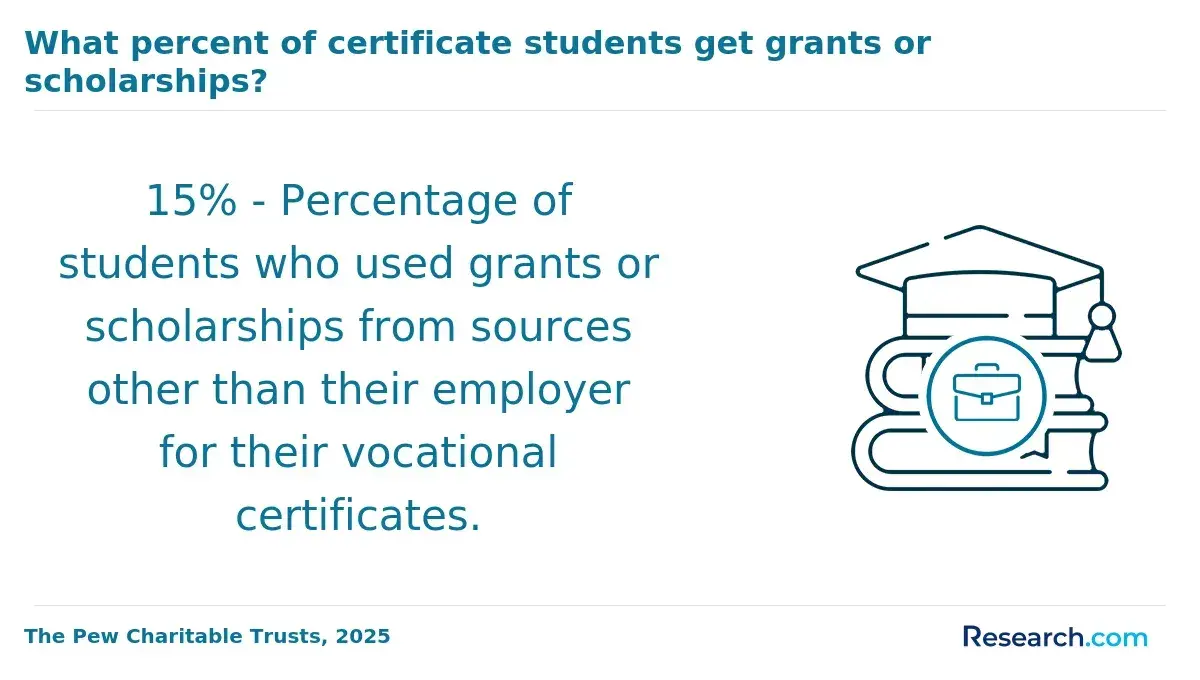
College cost also changes the calculation. The College Board reported average published in-state tuition and fees of $11,610 at public four-year colleges for 2024-2025, before room, board, grants, or scholarships. That means a lower-cost accredited program can materially shorten the payback period compared with a high-cost option that leads to the same entry-level job market.
The table below shows entry-level paths that can generate faster returns because they map well to bachelor's coursework and common internship experience.
| Entry-level path | Why return can be fast | What the work looks like | Main risk to avoid |
| Data analyst | Broad hiring demand and lower barrier to entry than advanced machine learning roles. | SQL queries, dashboards, data cleaning, metric definitions, stakeholder reporting. | Staying in basic reporting without learning automation, statistics, or business ownership. |
| Business intelligence analyst | Directly supports management decisions and often sits close to revenue or operations teams. | Build dashboards, define KPIs, validate data sources, and turn reports into decisions. | Over-focusing on visualization tools while neglecting SQL, data modeling, and communication. |
| Junior data engineer | Data infrastructure skills are valuable because analytics and AI systems depend on reliable pipelines. | Maintain databases, build ETL processes, manage data quality, support cloud data platforms. | Applying without enough programming, version control, and database fundamentals. |
| Product analyst | Often connected to user growth, conversion, retention, and experimentation. | Analyze product funnels, A/B tests, user behavior, and feature performance. | Ignoring statistics, causality, and the difference between correlation and product impact. |
| Operations analyst | Can show measurable cost savings quickly in logistics, staffing, scheduling, or inventory. | Forecast demand, optimize workflows, analyze bottlenecks, and recommend process changes. | Failing to learn the operational domain deeply enough to influence decisions. |
Students who want the fastest return should prioritize internships, cooperative education, paid research assistantships, and employer-sponsored capstone projects. These experiences reduce the "new graduate risk" employers see and help students avoid taking low-skill roles that do not build toward better-paying data careers.
Location affects ROI in two directions: pay and cost. A high salary in a high-rent metro area may leave less real financial gain than a slightly lower salary in a lower-cost region, especially if student loan payments, transportation, and taxes are high.
For data science graduates, the best location decision is not simply "move to the highest-paying city." It is "choose the market where your target role, industry access, cost of living, and promotion opportunities work together." The rise of hybrid work has widened options, but many entry-level candidates still benefit from being near internship sites, employers, alumni networks, and tech hubs.
The table below summarizes common location trade-offs that affect bachelor's-level ROI.
| Location pattern | ROI advantage | ROI risk | Best strategy |
| Major tech hub | More specialized roles, stronger peer networks, and access to high-growth employers. | Higher rent and stronger competition can reduce early-career savings. | Move with a strong offer, internship pipeline, or clear target industry rather than hoping location alone creates opportunity. |
| Finance or insurance metro | Strong demand for risk, fraud, compliance, and pricing analytics. | Some roles may require domain knowledge and careful documentation more than flashy modeling. | Build finance, risk, and regulatory literacy alongside technical skills. |
| Healthcare or university-centered region | Stable analytics demand in hospitals, research centers, and health technology firms. | Pay may vary by employer type, and data access can be constrained by privacy rules. | Learn healthcare data standards, privacy expectations, and quality improvement methods. |
| Lower-cost regional market | Lower living costs can improve real payback if the role builds transferable skills. | Fewer specialized machine learning or platform roles may slow advancement. | Use remote-friendly projects, certifications, and networking to keep options open. |
| Remote or hybrid role | Can improve ROI by combining competitive pay with lower living costs. | Entry-level remote roles can be competitive and may offer less mentoring. | Seek structured teams, clear onboarding, and measurable project ownership. |
Students should calculate ROI using take-home pay rather than salary alone. A practical estimate includes tuition paid, scholarships, debt, living costs, relocation costs, expected starting pay, likely raises, and whether the first role builds skills that transfer to higher-paying employers.
Skills increase ROI when they make a graduate useful sooner and promotable faster. Employers increasingly expect bachelor's graduates to move beyond classroom assignments and show they can work with messy data, ambiguous questions, and real business constraints.
The table below groups the skills that tend to raise bachelor's-level ROI because they connect technical ability to employer value.
| Skill area | Why it improves ROI | How to demonstrate it |
| SQL and data modeling | Most analytics work depends on extracting, joining, validating, and structuring data correctly. | Build projects with relational databases, documented schemas, and reproducible queries. |
| Python or R | Programming allows automation, statistical analysis, modeling, and repeatable workflows. | Publish clean notebooks or scripts with clear explanations and version control. |
| Statistics and experimental design | Good decisions require understanding uncertainty, sampling, bias, and causality. | Include A/B testing, forecasting, or causal analysis projects in a portfolio. |
| Machine learning fundamentals | Employers value graduates who know when models help and when simpler methods are better. | Show model evaluation, feature engineering, error analysis, and ethical limitations. |
| Cloud and data engineering basics | AI and analytics tools depend on scalable, reliable, and governed data systems. | Use cloud storage, pipelines, orchestration, APIs, and automated data checks in projects. |
| Communication and domain knowledge | Data work creates value only when decision-makers understand and use it. | Write executive summaries, explain trade-offs, and connect analysis to business outcomes. |
Students can raise ROI before graduation by building a portfolio around a target job rather than collecting unrelated projects. A strong portfolio should make it obvious what role the student is ready for.
- Choose one target path, such as product analytics, data engineering, risk analytics, or healthcare analytics.
- Build three to five projects that use realistic datasets, explain the business question, and include limitations.
- Use Git, documentation, and reproducible workflows so employers can evaluate the work quickly.
- Add one project that shows deployment, automation, dashboarding, or stakeholder-ready communication.
- Practice explaining each project in plain language, including what decision it supports and what you would improve next.
The biggest skill-related red flag is relying on tool names without proof of judgment. Knowing a visualization platform or machine learning library helps, but ROI improves when a graduate can define the problem, validate the data, choose the right method, and explain the result responsibly.
Certifications can increase earnings potential when they fill a specific gap between a bachelor's degree and the job a graduate wants. They are most useful for cloud platforms, security analytics, data engineering, and vendor-specific tools; they are least useful when collected randomly without projects or work experience.
The list below highlights certification categories that can support bachelor's-level ROI without replacing the degree or requiring graduate school.
- Cloud data certifications from major cloud providers can help graduates qualify for junior data engineering, analytics engineering, and cloud analytics roles.
- Security certifications can strengthen a path into threat analytics, security operations, fraud detection, and risk monitoring roles.
- Business intelligence platform certifications can help when paired with SQL, data modeling, and dashboard projects that support real decisions.
- Data engineering and database certifications can be useful for graduates targeting pipeline, warehousing, and platform roles.
- Project management or agile credentials may help analysts who coordinate cross-functional analytics work, but they should not replace technical depth early in a career.
Advanced degrees and doctoral shortcuts should not be confused with certifications. Programs marketed as 1 year PhD programs online no dissertation may interest some professionals later, but they are usually unrelated to the immediate ROI question for a bachelor's-level data science graduate seeking employment.
Before paying for any credential, ask whether the certification appears in job postings for your target role, whether it requires hands-on work, whether your employer might reimburse it, and whether you can pair it with a project. A certification that produces a portfolio artifact is usually more valuable than one that only adds a line to a resume.
Employer type and company size affect ROI because they shape compensation, training, promotion speed, workload, and skill development. A large employer may offer structured training and internal mobility, while a smaller company may give a graduate broader responsibility faster.
The table below compares common employer environments for bachelor's-level data science graduates.
| Employer type | ROI advantages | Possible trade-offs | Best fit |
| Large technology company | Strong compensation potential, mature data infrastructure, specialized teams, and promotion ladders. | Competitive hiring and narrower early responsibilities. | Graduates with strong coding, internships, and polished technical interview skills. |
| Mid-sized private company | Good balance of responsibility, visibility, and business impact. | Data systems may be less mature, requiring more independent problem-solving. | Graduates who can work across analytics, communication, and implementation. |
| Startup | Fast learning, broad ownership, and direct exposure to product or revenue decisions. | Less structure, more volatility, and uneven mentoring. | Self-directed graduates comfortable with ambiguity and rapid tool changes. |
| Government agency | Stability, mission-driven projects, benefits, and policy-relevant data work. | Slower hiring processes and sometimes lower salary growth than private employers. | Graduates interested in public policy, security, transportation, health, or economic data. |
| Consulting firm | Exposure to multiple industries and rapid development of communication skills. | Travel, deadlines, and client demands can be intense. | Graduates who enjoy presenting, problem framing, and varied projects. |
Company size should not be evaluated in isolation. A smaller employer with strong mentoring and modern data tools may produce better long-term ROI than a famous employer where the graduate performs repetitive reporting. Conversely, a large employer may be the better choice if it offers rotational programs, tuition support, certification funding, or access to advanced internal teams.
For graduates who later move from technical work into leadership, an executive MBA can make sense only after they have enough professional experience to benefit from management training and employer networks. It is rarely the first step needed to make a data science bachelor's degree pay off.
Emerging career paths can raise the future ROI of a data science bachelor's degree when they align with durable employer needs. The strongest opportunities are not just "AI jobs"; they are roles that make AI, analytics, and data systems reliable, explainable, secure, and useful.
The table below highlights emerging paths where bachelor's graduates can build toward higher-value work through projects, internships, certifications, and experience.
| Emerging path | What the role focuses on | Why it may improve future ROI | How to prepare at the bachelor's level |
| Analytics engineer | Transforms raw data into trusted, documented, reusable datasets for analysts and decision-makers. | Bridges data engineering and analytics, making it valuable in organizations modernizing their data stacks. | Learn SQL, data modeling, testing, documentation, version control, and warehouse tools. |
| Machine learning operations associate | Supports deployment, monitoring, versioning, and reliability of machine learning systems. | As more models enter production, employers need people who can keep them working responsibly. | Study Python, APIs, containers, cloud basics, model monitoring, and software engineering practices. |
| AI product analyst | Measures how AI-enabled features affect users, costs, quality, and business outcomes. | Companies need evidence that AI tools are useful, safe, and financially justified. | Build skills in experimentation, product metrics, user behavior analysis, and communication. |
| Data governance analyst | Works on data quality, privacy, access, lineage, definitions, and compliance. | AI and analytics depend on trusted data, and poor governance can create legal and operational risks. | Learn data catalogs, privacy principles, documentation, data quality checks, and stakeholder workflows. |
| Decision intelligence analyst | Combines analytics, business rules, forecasting, and human decision processes. | Employers need analysts who can turn models into better operational choices, not just predictions. | Study optimization, causal reasoning, visualization, process mapping, and domain-specific decision-making. |
Students should be cautious about chasing every new AI tool. The safer ROI strategy is to build fundamentals that remain valuable across tool cycles: statistics, programming, data quality, cloud literacy, ethical reasoning, and the ability to communicate trade-offs.
Students should evaluate ROI by comparing the total cost of the bachelor's degree with realistic career outcomes, not with best-case salary stories. The right question is not "Is data science worth it?" but "Is this specific program, at this cost, likely to help me reach this specific career path without unnecessary delay?"
A practical ROI review should include both financial and career-fit factors. The sequence below can help students make a grounded decision before choosing a school, borrowing, or committing to graduate study.
- Identify two or three target roles before choosing electives, such as data analyst, data engineer, product analyst, security analyst, or operations research analyst.
- Compare program cost after grants, scholarships, transfer credits, employer aid, and living expenses rather than using sticker price alone.
- Check whether the curriculum includes SQL, Python, statistics, machine learning, databases, cloud tools, ethics, and a substantial capstone or internship option.
- Review career services outcomes, employer partnerships, internship access, alumni roles, and whether students complete portfolio-ready work.
- Estimate first-year take-home pay, debt payments, relocation costs, and the opportunity cost of delaying employment for graduate school.
- Decide whether a master's degree is required for your target role now, optional later, or unnecessary if you build experience and certifications.
Nontraditional learners should also compare format and support. Older students or career changers exploring online degree programs for seniors may place more value on flexible scheduling, transfer credit, career coaching, and lower debt than on campus amenities.
Common red flags include choosing a program with weak technical depth, assuming a graduate degree will automatically raise pay, ignoring accreditation, borrowing heavily without a target career, and selecting electives based only on what sounds trendy. Accreditation matters because it can affect credit transfer, employer confidence, financial aid eligibility, and admission to future programs.
Graduate school makes financial sense when it is tied to a specific payoff: a role that commonly requires advanced study, a research career, a specialized machine learning position, a funded assistantship, or an employer-sponsored promotion path. A bachelor's degree is often enough when the student can enter a strong role, build experience, and keep improving through projects, certifications, and internal mobility.
Some careers do not produce the highest first paycheck but create better long-term growth. The best salary growth often comes from moving from analysis into ownership: owning data pipelines, models, experimentation systems, security decisions, product metrics, or teams.
The table below outlines bachelor's-level paths with strong advancement potential. It focuses on how a graduate can grow without immediately enrolling in graduate school.
| Starting point | Growth path without graduate school | Why earnings can grow | What to build early |
| Data analyst | Senior analyst, analytics engineer, product analyst, data science associate. | Pay rises when the analyst moves from descriptive reporting to decision ownership and experimentation. | Advanced SQL, Python, statistics, dashboard design, and stakeholder communication. |
| Junior data engineer | Data engineer, cloud data engineer, platform analytics engineer. | Reliable data infrastructure is essential for AI, reporting, compliance, and product analytics. | Python, SQL, data modeling, orchestration, cloud services, testing, and documentation. |
| Security data analyst | Threat detection engineer, security analytics lead, incident response analytics specialist. | Organizations pay for data skills that reduce breach risk and improve monitoring. | Networking basics, SIEM tools, scripting, log analysis, and security frameworks. |
| Operations research analyst | Optimization specialist, supply chain analytics lead, decision science manager. | Quantitative improvements can be tied directly to cost savings and capacity planning. | Optimization, simulation, forecasting, Python, and business process knowledge. |
| Data scientist | Senior data scientist, machine learning engineer, applied AI lead, analytics manager. | Growth comes from deploying models, influencing strategy, and mentoring others. | Machine learning, software engineering, causal inference, cloud deployment, and communication. |
Graduate business education may become useful later for graduates moving into analytics leadership, product strategy, or executive decision-making. Before choosing that route, compare work experience requirements, employer sponsorship, and program quality; some professionals look at best AACSB online MBA programs only after they have enough experience to convert the degree into a management opportunity.
A key mistake is focusing only on first-year salary. A lower-paying first job that teaches cloud data engineering, experimentation, or security analytics may outperform a higher-paying reporting role that does not build scarce skills.
Other Things You Should Know About Data Science
Yes, it can be enough for many entry-level and mid-level roles, especially data analyst, business intelligence analyst, junior data engineer, product analyst, operations analyst, and some data scientist positions. A portfolio, internships, SQL, Python, statistics, and domain knowledge often matter as much as the degree title.
For many bachelor's graduates, the best ROI comes from data engineering, security analytics, product analytics, and applied data science roles because they combine strong pay with clear business value. The best choice depends on the student's strengths: coding-heavy students may do better in data engineering, while business-focused students may do better in product or operations analytics.
Working first is often the smarter financial move if you can get a role that builds marketable data skills. Graduate school is more compelling when it is funded, required for a target role, or clearly linked to a promotion or specialization that experience alone is unlikely to provide.
The biggest mistake is comparing salary numbers without considering debt, location, job type, skill depth, and advancement path. A lower-cost accredited program with internships and strong technical training can produce better ROI than a more expensive program with weak career outcomes.
See What Experts Have To Say About Studying Data Science
Read our interview with Data Science experts

- Is College Worth it? | Return on Investment Analysis of College Degree https://educationdata.org/college-degree-roi
- ROI Of College Majors By Early And Mid-Career Salaries | Bankrate https://www.bankrate.com/loans/student-loans/roi-mid-career-by-major/
- High School Course - School and Money - Hands on Banking https://youth.handsonbanking.org/courses/high-school-school-and-money/
- Jobs in Data Science: A Guide for Future Graduates https://vinuni.edu.vn/jobs-in-data-science/
- Highest Paying Industries for Data Science | Careers & Salary https://www.discoverdatascience.org/a-salary-guide-to-careers-in-data-science/
- What Master's Degree Has the Best ROI? A Data-Based Framework for Choosing Your Specialization https://www.e-business-school.com/how-to-choose-a-master-s-specialization-a-data-driven-guide-to-aligning-passion-with-profit/
- Data Science Degree Career Outcomes: Jobs, Salaries & Growth https://hakia.com/degrees/data-science/career-outcomes/
- Data Science Salaries in 2025 by Country, Industry... – 365 Data Science https://365datascience.com/career-advice/data-science-salaries-around-the-world/
- Data Science Course vs. University – Which path is better in 2026? https://www.wbscodingschool.com/blog/data-science-course-vs-university/
- Does College Pay Off? A Comprehensive Return On Investment Analysis - FREOPP https://freopp.org/whitepapers/does-college-pay-off-a-comprehensive-return-on-investment-analysis/