2027 Data Science Degree Payback Report: Which Programs Deliver the Best Cost-to-Salary Return

Co-Founder and Chief Data Scientist
Choosing a data science degree is a financial decision as much as an academic one. The U. S. Bureau of Labor Statistics reports a $112,590 median annual wage for data scientists in May 2024, but tuition, time out of work, and program quality can sharply change the payoff.
This guide is for prospective bachelor's, master's, certificate, and career-changing students who want to compare costs against likely salary outcomes. You will learn which program types tend to deliver faster payback, where ROI can weaken, and how to choose a degree that fits your career target.
Key Things You Should Know
- Data science degree payback is strongest when total net cost stays low, because the same labor-market salary can produce very different ROI depending on tuition, fees, borrowing, and lost work time.
- The clearest salary benchmark is the BLS May 2024 median wage for data scientists: $112,590, which is useful for ROI modeling but not a guaranteed outcome for any graduate.
- Programs with the best cost-to-salary return are usually public in-state bachelor's degrees with strong internships, affordable online master's programs for working professionals, and employer-supported graduate study.
- What Is the Return on Investment of a Data Science Degree?
- Which Data Science Programs Deliver the Best Cost-to-Salary Return?
What Is the Return on Investment of a Data Science Degree?
The return on investment of a data science degree is the financial gain a student may receive from the credential compared with the total cost of earning it. In practical terms, ROI asks: will this degree help you access a better-paying role, faster promotion, or more durable career path than you could reach without it?
For data science, ROI is especially important because the field sits between computer science, statistics, business analytics, machine learning, and domain expertise. A high-cost program can still be worthwhile if it leads to a role requiring advanced modeling skills, but a lower-cost program may produce a better payback if it provides the same employer-relevant skills and career access.
Use this simple framework when comparing programs. It keeps the focus on the full investment, not just tuition:
- Estimate total net cost after scholarships, grants, transfer credits, employer tuition assistance, and realistic fees.
- Account for opportunity cost, especially if you must stop working or reduce hours to enroll full time.
- Compare the degree to the role you want, such as data analyst, data scientist, machine learning engineer, business intelligence analyst, or analytics manager.
- Use salary benchmarks as planning ranges, not promises, because pay varies by location, industry, experience, portfolio strength, and employer.
- Calculate payback time by dividing net program cost by expected annual salary gain after graduation.
A degree has a stronger ROI when it changes your career access. For example, a master's degree may be valuable for someone already working as an analyst who needs deeper machine learning, statistical modeling, or cloud data skills. The same master's degree may be a weaker investment for a beginner who lacks programming foundations and would be better served by a lower-cost bachelor's, certificate, or prerequisite pathway first.
Which Data Science Programs Deliver the Best Cost-to-Salary Return?
The best cost-to-salary return usually comes from programs that combine low net cost, applied technical training, employer recognition, and work-integrated experience. Data science is not a field where price alone predicts value; the strongest program is the one that gets you into the right role without unnecessary debt.
The table below compares common data science education paths by likely ROI profile. It is designed to help you identify which program type fits your starting point and career goal.
| Program type | Best fit | Typical ROI strength | Why the payback can be strong or weak |
| Public in-state bachelor's in data science, statistics, or computer science | First-time college students and transfer students | Strong when tuition is controlled | Lower tuition and broad career access can create a favorable cost-to-salary ratio, especially with internships and transfer credits. |
| Affordable online master's in data science | Working analysts, engineers, and career changers with quantitative preparation | Strong for employed students | Students can often keep earning while studying, reducing opportunity cost and accelerating payback. |
| High-cost private master's program | Students targeting selective employers or specialized research networks | Variable | ROI depends heavily on scholarships, placement strength, employer network, and whether the program leads to a clear salary step-up. |
| Graduate certificate in data science or analytics | Professionals adding technical skills without committing to a full degree | Strong when it fills a precise skill gap | Lower cost can produce fast payback, but it may not replace a degree for roles requiring formal graduate education. |
| PhD in data science, statistics, computer science, or related field | Research, faculty, advanced AI, or lab-based roles | Highly goal-dependent | Funded programs can be financially efficient, but long timelines make ROI less attractive for students seeking quick salary growth. |
The most reliable winners are not always the most famous schools. A moderately priced program with strong career services, internship pipelines, applied projects, and alumni in data roles can outperform a prestigious but expensive option if both lead to similar starting roles.
Before enrolling, ask each school for evidence of outcomes that match your target job. The most useful questions are specific and hard to answer with marketing language:
- What roles do recent graduates enter within six to twelve months, and how many are data science roles rather than general business jobs?
- Does the curriculum require Python, SQL, statistics, machine learning, data visualization, and portfolio-ready projects?
- Are internships, capstones, employer-sponsored projects, or research assistantships built into the program?
- Can students with prior credits, professional certifications, or employer training reduce time to completion?
- What is the total net cost for a student like me after grants, scholarships, assistantships, and fees?
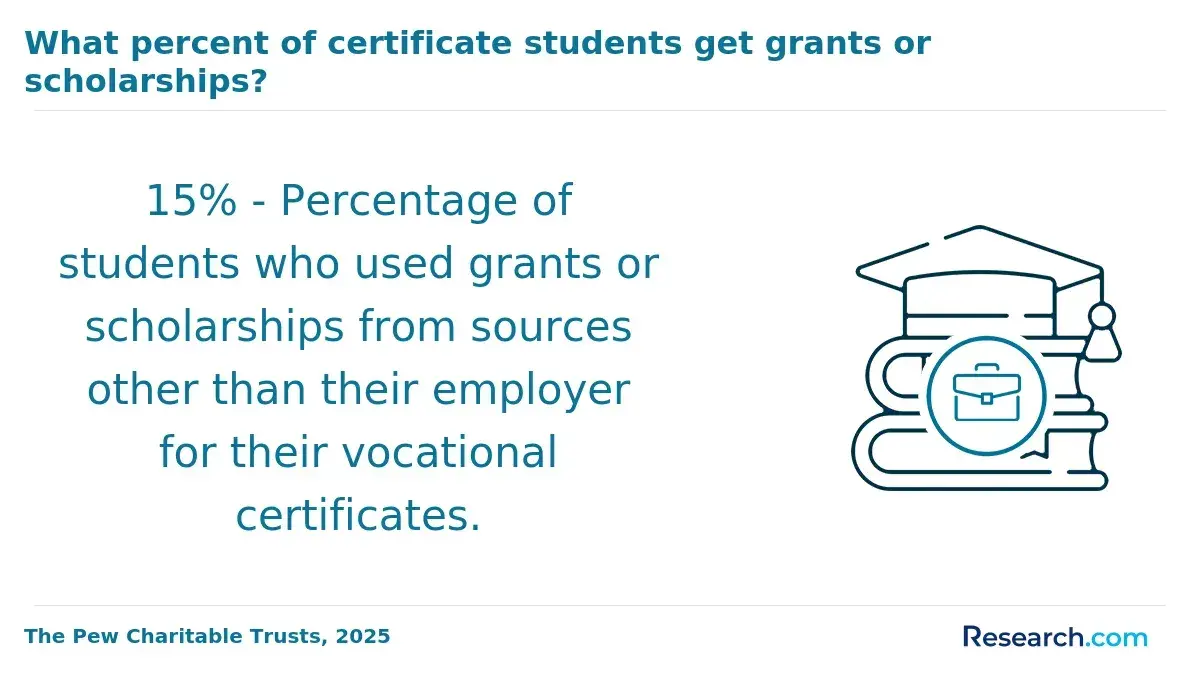
Tuition affects payback because every additional borrowed or out-of-pocket cost must be recovered through higher earnings. The College Board's 2024 pricing data places average published tuition and fees for in-state students at public four-year colleges at $11,610 for the academic year, compared with $43,350 at private nonprofit four-year colleges. That gap matters because data science employers often evaluate skills, projects, internships, and technical interviews alongside school name.
The table below shows the cost factors that can change ROI even when two programs advertise similar tuition. These are the items students often miss when comparing degrees.
| Cost factor | How it affects payback | What to verify before enrolling |
| Net tuition after aid | Scholarships, grants, and employer assistance can make an expensive program financially competitive. | Ask for a personalized aid estimate, not just published tuition. |
| Fees and technology costs | Online course fees, software fees, and graduation fees can raise the real price. | Request a full cost-of-attendance breakdown. |
| Opportunity cost | Leaving a job to study full time can delay payback even if tuition is moderate. | Compare full-time, part-time, and online schedules. |
| Transfer credits | Accepted credits can shorten a bachelor's degree and reduce borrowing. | Get a written transfer evaluation before committing. |
| Internship access | Paid internships can offset costs and improve job placement odds. | Ask how many students complete paid, role-relevant internships. |
| Course repetition or prerequisites | Bridge courses in programming or statistics can add time and cost. | Confirm prerequisite requirements based on your transcript. |
Public versus private is not a simple value ranking. Some private nonprofit programs offer generous aid, strong employer networks, or specialized AI research opportunities. Likewise, some public programs may have limited career support or overloaded course sections. The better comparison is total net cost plus career outcomes, not institution type alone.
Students should also avoid judging online programs as automatically cheaper. Online study can improve ROI when it lets you keep working, but fees, course load, and limited internship support can reduce the advantage. The best online programs are transparent about outcomes, synchronous requirements, project expectations, and access to faculty and career services.
Break-even time is the point when the financial benefit of a degree has recovered the net cost of earning it. A simple payback estimate divides total net cost by the annual salary increase you reasonably expect because of the degree.
The table below illustrates how payback changes under different cost and salary-gain scenarios. These are examples for decision planning, not outcome guarantees.
| Scenario | Net program cost | Annual salary gain after completion | Estimated break-even time | What it means |
| Low-cost graduate certificate that helps an analyst qualify for more technical work | $8,000 | $10,000 | About 1 year | Fast payback is possible when the credential directly upgrades an existing career path. |
| Affordable online master's completed while working | $25,000 | $15,000 | About 2 years | Keeping income during study can make a master's financially attractive. |
| Public bachelor's with transfer credits | $40,000 | $20,000 | About 2 years | Transfer credits and internships can improve value by reducing both cost and job-search friction. |
| High-cost graduate program requiring full-time study | $80,000 | $20,000 | About 4 years | ROI depends on whether the program leads to a role that would not otherwise be accessible. |
Payback estimates become more realistic when you include borrowing costs and the income you give up while studying. A full-time program may be worth it for someone moving into a much higher-paying technical role, but it can be financially risky if career outcomes are unclear or if the student already has access to similar jobs through a lower-cost route.
A practical break-even analysis should include the following steps:
- Calculate the full net price, including fees, software, books, travel, and required residencies.
- Estimate how much income you will lose, if any, while enrolled.
- Compare salary ranges for your target role in your region and industry.
- Use conservative salary-gain assumptions rather than best-case alumni stories.
- Test whether the degree still makes sense if job placement takes longer than expected.
If the payback estimate feels too long, do not assume you must abandon data science. You may be able to improve ROI by starting with prerequisites, transferring credits, choosing a part-time online format, applying for assistantships, or targeting an employer with tuition reimbursement.
The biggest ROI drivers are not always visible on a school's homepage. Data science degree value depends on a combination of cost control, technical depth, career access, and the student's starting point.
These factors usually have the greatest effect on whether the degree pays back:
- Starting skill level: Students who already know Excel, SQL, Python, statistics, or business analytics may convert a degree into a better role faster than beginners starting from zero.
- Curriculum depth: Strong programs include statistics, machine learning, databases, programming, data ethics, visualization, and model evaluation rather than only dashboard tools.
- Portfolio quality: Employers often want proof that a candidate can solve real data problems, explain trade-offs, and communicate results to nontechnical stakeholders.
- Career services and employer access: Internships, practicum projects, hiring events, and alumni networks can shorten the job search.
- Modality and schedule: Part-time and online programs can improve ROI for working adults when academic support and employer connections are strong.
- Accreditation and institutional credibility: Regional accreditation matters for transfer credit, graduate admission, employer reimbursement, and federal financial aid eligibility.
Advanced credentials require extra caution. A doctorate may be appropriate for research, faculty, or advanced AI roles, but it is not automatically the best financial path for industry data science. Students comparing accelerated doctoral options should carefully review completion requirements, dissertation expectations, and employer relevance; resources on 1 year PhD programs online no dissertation can help frame questions about speed, rigor, and fit.
Common mistakes can reduce ROI even when the school is legitimate. The most damaging mistakes include choosing a program without checking accreditation, assuming all online programs have equal employer value, focusing only on rankings, ignoring prerequisites, borrowing based on best-case salary claims, and enrolling without a portfolio plan.
A stronger approach is to reverse-engineer the degree from the job you want. If the target role requires model deployment, look for cloud computing, MLOps, APIs, and software engineering. If the goal is healthcare analytics, seek coursework in biostatistics, privacy, and applied health data. If the goal is business leadership, communication, experimentation, and decision science may be as important as coding.
Employer demand is one of the strongest reasons data science degrees can have favorable ROI, but demand is uneven. The BLS projects employment for data scientists to grow 36% from 2023 to 2033, much faster than the average for all occupations. For students, this means the labor market is expanding, but the best opportunities still tend to go to candidates who can demonstrate applied skills, not just credentials.
AI has changed the value equation rather than eliminating it. Generative AI tools can automate parts of coding, data cleaning, and reporting, which raises the bar for human workers. Employers increasingly need people who can frame problems, evaluate model outputs, manage data quality, explain risk, protect privacy, and connect analytics to business decisions.
Students should look for programs that prepare them for current employer expectations. A modern data science curriculum should help graduates show competence in several areas:
- Programming with Python or R, plus SQL for querying relational databases.
- Applied statistics, experimental design, and model interpretation.
- Machine learning workflows, including training, validation, bias detection, and performance evaluation.
- Data visualization and communication for business or scientific audiences.
- Cloud, data engineering, or deployment exposure when targeting more technical roles.
- Ethics, privacy, and responsible AI practices.
Employer demand also varies by industry. Technology companies may prioritize software engineering and scalable systems, while healthcare, finance, government, logistics, and manufacturing may value regulatory knowledge, domain expertise, and careful interpretation. A program that lets you build projects in your target industry can improve the degree's practical value.
Job growth should not be read as a guarantee of easy hiring. Entry-level data science roles are competitive because many applicants come from bootcamps, analytics jobs, graduate programs, and computer science backgrounds. The degree is most valuable when paired with internships, GitHub or portfolio projects, strong references, and clear evidence of problem-solving ability.
Students can improve the financial value of a data science degree by reducing cost and increasing employability at the same time. The goal is not simply to find the cheapest program; it is to find the least expensive credible path to the role you want.
Use the following steps before committing to a program:
- Define your target role first, then compare curriculum requirements against real job postings.
- Choose a regionally accredited institution and confirm whether the program qualifies for federal aid, employer reimbursement, or graduate admission.
- Ask for total net cost after scholarships, grants, assistantships, transfer credits, and required fees.
- Prioritize programs with internships, capstones, employer-sponsored projects, or research opportunities.
- Build a portfolio while enrolled, including projects that show data cleaning, modeling, interpretation, and communication.
- Take advantage of career services early rather than waiting until the final term.
- Use electives to specialize in a high-demand area such as healthcare analytics, financial analytics, machine learning operations, geospatial analytics, or responsible AI.
Working adults, retirees, and second-career students should pay special attention to flexibility and support. Data science can be learned later in life, but the ROI calculation may depend more on part-time study, prior learning credit, and realistic career goals. Learners exploring flexible education options can also compare online degree programs for seniors to understand how online formats, advising, and affordability differ for older students.
Students should also be careful with debt. A higher loan balance can reduce career flexibility after graduation, pushing graduates toward the first available job rather than the best long-term role. If two programs have similar curriculum and outcomes, the one with lower net cost usually offers the safer financial return.
Finally, treat admissions conversations as due diligence. Ask schools to explain placement data, not just advertise it. If a program cannot clarify graduate outcomes, employer partnerships, faculty access, or project expectations, that is a red flag for ROI-sensitive students.
Data science has strong ROI potential, but it is not always the best path for every student. Similar fields can offer better value depending on whether you want technical development, business leadership, research, operations, or management.
The table below compares data science with adjacent education paths. It can help you decide whether a data science degree is the best investment or whether a related program would align better with your goals.
| Field | Best for | ROI advantage | Potential limitation |
| Data science | Students who want modeling, analytics, and data-driven decision roles | Strong salary benchmark and rapid employment growth for qualified candidates | Entry-level competition is high, and weak portfolios reduce job-market value. |
| Computer science | Students who want software, AI engineering, systems, or technical product roles | Broad technical career access and strong pay in software roles | May include less statistics, experimentation, or business analytics unless electives are chosen carefully. |
| Statistics or applied mathematics | Students who want rigorous modeling, research, biostatistics, or quantitative analysis | Strong foundation for graduate study and specialized analytical roles | May require added programming, databases, or business communication training. |
| Business analytics | Students who want decision support, dashboards, operations, or management-facing analytics | Often practical and career-friendly for business professionals | May be less technical than data science for machine learning or AI engineering roles. |
| MBA with analytics concentration | Professionals targeting management, strategy, or analytics leadership | Can support leadership mobility when paired with work experience | May not provide enough coding or modeling depth for hands-on data science roles. |
An MBA route can make more sense for professionals who want to manage analytics teams, lead data strategy, or move into executive decision-making rather than build models every day. For example, an executive MBA may be a better fit for experienced managers who need business leadership, finance, and strategy training alongside analytics exposure.
Associate degrees and certificates can also offer good ROI for students seeking entry-level analyst or database roles, especially when credits transfer into a bachelor's program. However, they may not be enough for competitive data scientist jobs that require stronger math, programming, and machine learning preparation.
The best comparison is role-based. If you want to design predictive models, data science or statistics may fit. If you want to build production systems, computer science may be stronger. If you want to lead analytics strategy, business analytics or an MBA may produce better career leverage.
A data science degree is worth it when it gives you credible access to roles that require data, statistics, programming, and analytical communication skills, and when the total cost is reasonable compared with your expected salary gain. It is less attractive when the program is expensive, career support is weak, or the curriculum does not match your target job.
You are likely a strong fit for a data science degree if you enjoy quantitative problem-solving, can tolerate ambiguity, and are willing to keep learning new tools. The field changes quickly, so the best students are not just good at math or coding; they are curious, careful with evidence, and able to explain uncertainty.
You may want a different path if your main goal is general management, sales leadership, product leadership, or entrepreneurship. In those cases, business training may offer stronger practical value. Professionals comparing management-focused options can review the best AACSB online MBA programs when accreditation, affordability, and business credibility are central to the decision.
Before enrolling, make a final decision checklist. The strongest programs should satisfy most of these criteria:
- The institution is regionally accredited, and the degree is recognized by employers or graduate schools relevant to your goals.
- The curriculum includes programming, SQL, statistics, machine learning, visualization, ethics, and applied projects.
- The total net cost is clear and manageable under conservative salary assumptions.
- The program offers internships, capstones, employer projects, or research that can become portfolio evidence.
- Graduates enter roles similar to the ones you want, not just broadly defined "technology" or "business" jobs.
- The format lets you complete the degree without unnecessary income loss or burnout.
The bottom line: the best data science degree payback usually comes from a program that is affordable, applied, technically rigorous, and matched to a specific career outcome. A famous name can help, but it should not replace evidence of skills, outcomes, and cost discipline.
Data science graduates can enter several roles, and salary expectations should be tied to the actual job title rather than the degree name. The BLS May 2024 median wage for data scientists was $112,590, but entry-level pay can be lower and specialized roles in technology, finance, healthcare, consulting, or AI infrastructure may differ widely.
The table below uses U.S. labor-market salary benchmarks to show how data science compares with nearby roles. Use it to understand the earnings landscape, not to predict an individual offer.
| Role | Relevant degree preparation | May 2024 median annual wage | What the role typically involves |
| Data scientist | Bachelor's or master's in data science, statistics, computer science, or related field | $112,590 | Building models, analyzing large datasets, designing experiments, and communicating findings to decision-makers. |
| Statistician | Statistics, mathematics, biostatistics, or data science | $103,300 | Designing studies, modeling uncertainty, interpreting data, and supporting research or policy decisions. |
| Operations research analyst | Analytics, industrial engineering, mathematics, or data science | $91,290 | Using optimization, simulation, and quantitative methods to improve business or logistics decisions. |
| Software developer | Computer science, software engineering, or data science with strong programming | $133,080 | Designing, building, testing, and maintaining applications, platforms, or technical systems. |
| Computer and information research scientist | Often master's or PhD in computer science, AI, or a related research field | $145,080 | Developing new computing methods, algorithms, AI systems, or advanced technical research. |
These numbers show why degree alignment matters. A data science degree with light programming may prepare a graduate for reporting or analyst roles but not machine learning engineering. A more technical program with algorithms, databases, model deployment, and cloud tools may create access to higher-paying technical paths, but it may also require stronger math and coding preparation.
Students should also consider salary progression. The first job after graduation is not the whole ROI story; the larger payoff may come from moving from analyst to data scientist, from data scientist to machine learning engineer, or from individual contributor to analytics lead. Programs that build a portfolio and teach business communication can support that progression better than programs focused only on theory.
Other Things You Should Know About Data Science
For many students, the best ROI comes from a public in-state bachelor's degree, an affordable online master's completed while working, or a graduate certificate that upgrades existing analytics skills. The right choice depends on your current education, target role, and total net cost.
A master's in data science can be worth it for analysts, engineers, scientists, or career changers who need advanced modeling, machine learning, or technical credibility. It is less likely to pay off if the program is expensive and does not provide projects, career support, or skills tied to real job postings.
Payback can range from about one year for a low-cost credential that produces a clear salary increase to several years for a high-cost degree. The main variables are net cost, salary gain, borrowing, and whether you keep working while enrolled.
Many employers value both. A degree can signal formal preparation in statistics, programming, and analytics, while a portfolio proves you can apply those skills. The strongest candidates usually combine a credible credential with projects, internships, and clear communication skills.
See What Experts Have To Say About Studying Data Science
Read our interview with Data Science experts

- What is a Good Master’s in Data Science Salary? | Elmhurst University Blog https://www.elmhurst.edu/blog/masters-in-data-science-salary/
- Average Cost of College [2025]: Yearly Tuition + Expenses https://educationdata.org/average-cost-of-college
- College Graduate Salaries: 2025 Projections | Bankrate https://www.bankrate.com/loans/student-loans/average-college-graduate-salary/
- Best Data Science Programs in 2026 https://www.dataquest.io/blog/best-data-science-programs/
- 10 Best Countries To Study Data Science: Top Universities, Fees, & Starting Salaries https://www.instarem.com/blog/best-countries-to-study-data-science/
- Data Science Bootcamp Salary Guide 2026: Jobs & Pay Ranges https://skillifysolutions.com/blogs/data-science/data-science-bootcamp-salary/
- The cost of obtaining a master's degree in Data Science in Europe - UCU Applied Sciences Faculty https://apps.ucu.edu.ua/en/articles-and-research/cost-of-masters-degree-in-data-science-in-europe/
- Most Affordable Data Science Degree Programs 2026 https://hakia.com/degrees/data-science/most-affordable-programs/