2027 Best Data Science Degree Programs Ranking in Arizona

Co-Founder and Chief Data Scientist
Choosing the right data science degree program in Arizona can feel overwhelming. To help, this article presents the 2027 Best Data Science Degree Programs Ranking in Arizona, developed by the Research.com team of data scientists.
By exploring this ranking, you'll gain insights into the top programs that match your goals and interests. Earning a data science degree opens doors to exciting career paths and growth opportunities.
Reading on will empower you to make a confident, informed decision about your education and future success.
Key benefits of getting data science degree in Arizona
- Graduates with a data science degree in Arizona can earn competitive salaries, such as $66,670 annually for Data Analysts and up to $119,040 for Data Consultants, providing strong financial stability.
- Career paths include roles like Data Analyst, Marketing Analyst, and Database Administrator, with many Arizona graduates from ASU successfully entering these high-demand fields.
- Online data science degrees from Arizona State University offer flexibility and access to quality education, allowing students to balance work and study while still achieving excellent job prospects.
- 2027 Best Data Science Degree Programs Ranking in Arizona
- What can I expect from data science degree in Arizona?
- Where can I work with data science degree in Arizona?
What can I expect from data science degree in Arizona?
The average cost of pursuing a data science degree in Arizona varies, yet many graduates from universities like Arizona State University (ASU) or the University of Arizona find the investment to be a powerful catalyst for their careers. Students often face tuition fees ranging roughly between $10,000 and $15,000 per year at public institutions, which, when combined with fees and living expenses, add up-but their real value lies in the hands-on experience gained. For example, ASU students often highlight the access to real-world datasets and internships with Phoenix tech companies as key to transforming theory into applicable skills. This makes the expense an investment in immediate employability rather than just an educational credential.
Graduates frequently describe a rewarding sense of growth as they apply programming languages like Python or data visualization techniques learned through projects directly impacting local businesses. The cost can feel justified when internships lead to solid job offers, especially in a market where data scientist salaries start around $75,000. The real question is whether you see this cost as a barrier or as the gateway to meaningful work in Arizona's expanding tech ecosystem.
Where can I work with data science degree in Arizona?
Graduates holding a data science degree from institutions like Arizona State University often find themselves at the intersection of innovation and impact within Arizona's thriving industries. Imagine working alongside passionate teams at Phoenix-based tech hubs, where every data point helps shape cutting-edge products and smarter customer experiences.
Healthcare organizations such as Banner Health offer graduates the chance to engage in life-changing projects, developing predictive models that directly influence patient outcomes. This blends technical skills with genuine purpose, making each day feel meaningful.
Financial firms in Tempe and Phoenix also tap into data expertise to fight fraud or design personalized financial solutions, allowing data scientists to become key players in securing and improving community livelihoods.
Even those drawn to public service discover roles in government agencies or academic research at universities like the University of Arizona, applying data insights to solve urban challenges.
These experiences reflect the vibrant ecosystem waiting for data science graduates in Arizona-where varied career paths merge with opportunities to grow, create, and contribute in ways that resonate personally and professionally.
Graduates with a data science degree in Arizona often find themselves stepping into roles that offer impressive earnings from the start. For instance, entry-level positions such as data analysts can expect mean annual wages around $66,670. As these graduates build skills and experience, roles like marketing analysts and database administrators command salaries averaging $83,190 and $104,810, respectively. Those who advance to specialized roles such as data consultants see even higher annual wages, typically around $119,040.
Imagine a recent graduate from Arizona State University diving into a Phoenix startup, rapidly earning above $75,000 while tackling real-world challenges like predictive modeling and customer insights. Or consider someone from the University of Arizona advancing into a database administrator role with a base salary over $100,000, enriched by bonuses and stock options.
These figures reflect not just paychecks but opportunities for growth and fulfillment. The blend of competitive salaries and dynamic work environments in cities like Scottsdale or Tempe invites you to envision a promising career fueled by data-driven innovation.
- Arizona State University and the University of Arizona offer data science degrees and related programs from bachelor's to master's levels.
- In-state tuition for public universities ranges from $11,000 to $12,000 per year, while out-of-state students pay about double that amount.
- Graduate data science programs cost between $15,000 and $30,000 annually depending on the institution and degree level.
- Entry-level data scientists in Arizona earn between $65,000 and $75,000 per year, with experienced professionals making $90,000 to $120,000 or more.
- The Phoenix area shows strong demand for data science skills, with growth expected to continue due to technology and analytics investments.
- Many Arizona schools provide internships and cooperative education to help students gain experience and improve job prospects.
Completing a data science degree in Arizona often challenges the typical "four years and done" mindset. Many graduates from Arizona State University share how balancing full-time study with work shaped their timelines-some finished their Bachelor of Science in Data Science in the standard four years, while others stretched to part-time schedules, extending their journey without sacrificing quality.
For master's seekers, the path is equally varied. While a traditional master's takes around two years, many working professionals opt for part-time or accelerated tracks, especially at institutions like the University of Arizona. These options mean completion can range from two to over three years, allowing students to build real-world skills as they study.
The experience of Arizona learners suggests that completion time isn't just about clocking credit hours but crafting a personalized path combining coursework, work, and life. Flexible online and blended courses further blur the lines, proving that the "typical" timeline adapts to your ambition and circumstances.
Choosing between an online and on-campus data science degree in Arizona reveals more than just a mode of study-it's about shaping the entire educational and personal experience. Graduates from Arizona State University appreciate the flexibility of asynchronous online courses, which allow them to juggle demanding jobs or family life while diving deep into algorithms and data modeling at their own pace. Yet, many reflect on how this independence sometimes means missing the spontaneous debates and networking moments that naturally occur on campus.
On the other hand, those studying on-campus at the University of Arizona describe the electric atmosphere of collaborative labs and face-to-face mentorship, fostering relationships that extend beyond the classroom. The tactile experience of working side-by-side in computer labs or accessing research centers becomes a catalyst for inspiration and confidence. However, this immersive setting often commands a higher financial commitment and less schedule flexibility.
Ultimately, the choice hinges on whether you seek the freedom to learn on your timetable or the energizing presence of a bustling academic community-both pathways ultimately lead to mastering data science in Arizona's evolving job market.
The average cost of a data science degree in Arizona offers a unique reflection of both opportunity and investment. Graduates from flagship institutions like Arizona State University have found that in-state tuition typically totals around $12,223 for the entire duration, making it a practical financial commitment compared to the median total cost near $49,123 for out-of-state students. This discrepancy challenges many to weigh the value of residency versus the broader appeal some feel in attending schools beyond state lines. These figures underscore the diverse financial pathways students embark on, influenced heavily by residency status and institution choice.
Many Arizona data science degree tuition and fees illustrate a clear divide: public universities offer more affordable options, especially for in-state learners, while private colleges push tuition considerably higher. Yet, students often share stories of personalized attention and cutting-edge resources in private programs that justify the greater expense. These narratives invite prospective students to reflect beyond mere costs toward the holistic value of education in a rapidly evolving field like data science.
For those mindful of cost but eager to dive into data analytics, Arizona's community colleges provide an appealing alternative with degrees or certificates often under $5,000 annually. Such options create stepping stones into the career landscape, enabling many to later transfer or pursue advanced credentials confidently. Students exploring choices may also find accelerated programs for bachelor's degree beneficial, blending time efficiency with financial sensibility.
Financial aid for data science students in Arizona goes far beyond a simple tuition discount-it often becomes a lifeline. Graduates from Arizona State University recall how federal Pell Grants, with a maximum of $7,395 for 2023-2024, turned daunting costs into achievable goals. The process starts with FAFSA, a vital step that unlocks these funds based on need, not merit.
Many students at the University of Arizona also benefit from targeted scholarships explicitly designed for STEM fields, including data science. These scholarships reflect a recognition that data science is a critical growth area, helping ease financial pressure while encouraging academic focus.
Employer tuition assistance programs in the Phoenix tech scene illustrate how work and study blend, enabling students already in the workforce to advance without sacrificing income. Private national scholarships, often underappreciated, offer another channel; students often find passion-driven support aligning with their career ambitions, making scholarships less a handout and more a vote of confidence.
Additionally, federal work-study positions allow students a real-world experience, reinforcing skills while funding their education. Arizona's complex financial landscape demands a proactive approach-understanding these options can redefine what's possible for your data science journey.
To enroll in a data science degree program in Arizona, you must first confront the reality that this path demands a strong foundation in math and computing. Graduates from institutions like Arizona State University often recall early challenges mastering algebra and statistics before truly grasping complex data algorithms. It's not just about ticking boxes; it's about building the mental framework to decode vast data sets.
Undergraduate hopefuls typically need solid high school credentials in math-especially algebra, geometry, and calculus-and basic programming or IT knowledge. Imagine tackling your first Python project; without this groundwork, the frustration can be overwhelming. Those aiming for graduate programs should already hold a relevant bachelor's degree and come equipped with skills in Python, R, linear algebra, and databases. Many students find that their prior coursework or hands-on projects become valuable assets during admission.
Arizona students often face the option of submitting GRE scores, but recent graduates emphasize relevant work experience and portfolio projects can speak louder, highlighting real-world problem-solving over standardized tests. This reflects a deeper shift toward recognizing practical proficiency in the evolving landscape of data science education.

Data science students in Arizona quickly realize that their coursework is more than theory-it's a toolkit for solving real problems. At institutions like Arizona State University or the University of Arizona, foundational classes such as Introduction to Data Science and Programming Languages (Python, R) become daily companions, enabling graduates to manipulate and understand vast data sets with confidence.
These programs integrate Statistics and Probability, ensuring students grasp underlying data patterns, which later proves crucial when tackling real-world challenges, like predicting customer behaviors in local businesses.
Students often share how Machine Learning and Artificial Intelligence courses opened their eyes to automation's potential, whether developing models to improve healthcare outcomes or optimizing manufacturing processes right here in Arizona's economy.
Advanced electives in Big Data Analytics and Natural Language Processing reflect the evolving tech landscape. Graduates speak enthusiastically about ethical coursework, feeling empowered to make data-driven decisions responsibly in a world where privacy matters deeply.
Data science degree specializations Arizona offers are far from one-size-fits-all; instead, they invite students to dive deeply into distinct fields like Machine Learning and Artificial Intelligence or Big Data Analytics. Graduates from institutions such as Arizona State University often share how focusing on Business Analytics helped them translate complex data into impactful strategies for growing enterprises, a skill highly prized in Arizona's business community. These specialization options reflect not just industry needs but real career pathways, with students thriving in hands-on projects that mimic real-world challenges.
Exploring Arizona data science program concentration options, one finds that Data Engineering stands out as a critical skill, especially with the rise of startups in the Phoenix tech scene. Students describe the fulfillment of optimizing data pipelines that power innovative applications. Meanwhile, Health Informatics draws those passionate about improving patient outcomes in Arizona's sizable healthcare sector, proving the practical power of data science.
For those weighing the best fit for their ambitions, insights from graduates reveal that deciding among these options can feel transformational-far beyond just earning a degree. If uncertain about your path, checking out what is the easiest degree to get might surprisingly clarify your focus and open doors in data science.
Choosing the best data science degree in Arizona means looking beyond surface metrics like tuition or rankings. Graduates from Arizona State University often share how the program's hands-on focus with Python and real data projects shaped their confidence to enter the workforce. Meanwhile, students from the University of Arizona praise the strong industry connections that brought internship opportunities and practical skills. It's not just about finding a program with textbooks; consider whether the curriculum immerses you in machine learning, statistics, and database management in ways that feel relevant and engaging.
Affordability plays a crucial role too. Many seek affordable data science degrees Arizona offers through public universities, ideally balancing cost with quality. Don't overlook flexibility-programs that offer online or hybrid classes can transform your journey, especially if you need to work simultaneously. For some, the fastest way to get an associate's degree online has opened doors to later specialize in data science, showcasing alternative paths worth exploring.
Graduates with a data science degree in Arizona unlock diverse career paths that defy traditional expectations. Many find themselves as data analysts in dynamic businesses, transforming raw numbers into actionable insights that shape key decisions. Others quickly advance to become data scientists, leveraging skills honed at institutions like Arizona State University to innovate across healthcare or finance sectors in Phoenix and Tucson. This diversity underscores the tangible benefits of data science career opportunities in Arizona, where the vibrant tech environment fuels continuous learning and adaptation.
Business intelligence analyst roles also appeal to graduates who enjoy storytelling through data, using cutting-edge tools to influence strategies. Machine learning engineering positions at emerging startups offer a thrilling challenge for those eager to build tomorrow's technologies. Graduates often share how their education at a best non profit accredited online university helped them bridge theory with real-world problem solving, opening doors to positions typically considered out of reach.
Understanding jobs with data science degree Arizona means appreciating a field where data engineers maintain vital infrastructure, ensuring businesses can scale effortlessly. The evolving Arizona job market invites students to envision how their skills can directly impact industries from manufacturing to insurance underwriting.
The data science job outlook Arizona reveals a rapidly expanding market where graduates from institutions like Arizona State University and the University of Arizona find themselves in high demand. Many recent graduates share stories of landing roles with leading companies such as Honeywell Aerospace and Banner Health soon after completing their degrees. This growth is fueled by Arizona's booming technology sector and diverse industry needs, from healthcare to aerospace, providing rich opportunities to apply analytics in dynamic environments.
The affordability of data science programs in Arizona public universities, with tuition between $10,000 and $15,000 annually, affords students a practical pathway to enter this thriving field without overwhelming debt. Graduates often reflect on their experiences participating in internships through strong university-industry partnerships, which significantly elevate job readiness and exposure to real-world challenges.
For those eager to expand their expertise, exploring universities that offer double majors is a strategic choice, enhancing versatility in the competitive job market. Arizona data science career opportunities consistently reward those who embrace continuous learning and innovation.
2027 Best Data Science Degree Programs Ranking in Arizona
Investing in your education is a significant decision that can shape your future, and the Research.com team understands the importance of making informed choices. To assist prospective students in Arizona, we have meticulously crafted the "2027 Best Data Science Degree Programs Ranking in Arizona." Our commitment to quality, credibility, and accuracy is reflected in the extensive research and analysis conducted to compile this ranking.
We utilized the following reputable data sources to ensure a comprehensive evaluation of data science degree programs:
By exploring this ranking, readers will gain valuable insights into the best data science degree programs available in Arizona, helping them make informed decisions about their educational paths. For more details on our methodology, please visit our Research.com methodology page.


# 4 position
University of Phoenix-Arizona
Master of Science in Data Science

# 5 position
University of Phoenix-Arizona
Bachelor of Science in Data Science
Frequently Asked Questions About data science
Data science degree students in Arizona can maximize their learning experience by engaging with local industry opportunities. Arizona hosts a growing tech sector, particularly in Phoenix and Tempe, with over 200 tech companies employing data professionals, according to the Arizona Technology Council.
Participating in internships or cooperative education programs at these firms provides practical experience, which complements academic study. Additionally, many Arizona universities offer access to research projects focused on real-world data challenges, allowing students to apply theoretical knowledge.
Students should also leverage professional networking events in the state, such as the Arizona Data Science & Analytics Conference. These events expose students to industry trends and connect them with experts.
Finally, Arizona institutions increasingly support interdisciplinary learning, encouraging collaboration between data science students and other fields like business or healthcare, enhancing both skills and employability.
Emerging niches within the data science field reflect the growing demand for specialized skills. In Arizona, fields like healthcare data analytics are expanding rapidly due to the state's large healthcare sector. According to the Arizona Commerce Authority, data science roles in healthcare analytics are expected to grow by over 20% by 2027.
Another growing niche is environmental data science, driven by Arizona's focus on sustainable resource management and climate monitoring. Data professionals analyze large datasets to support water conservation and energy efficiency projects.
Additionally, financial data science and cybersecurity continue to gain prominence, reflecting national trends but with specific opportunities tied to Arizona's growing tech hubs.
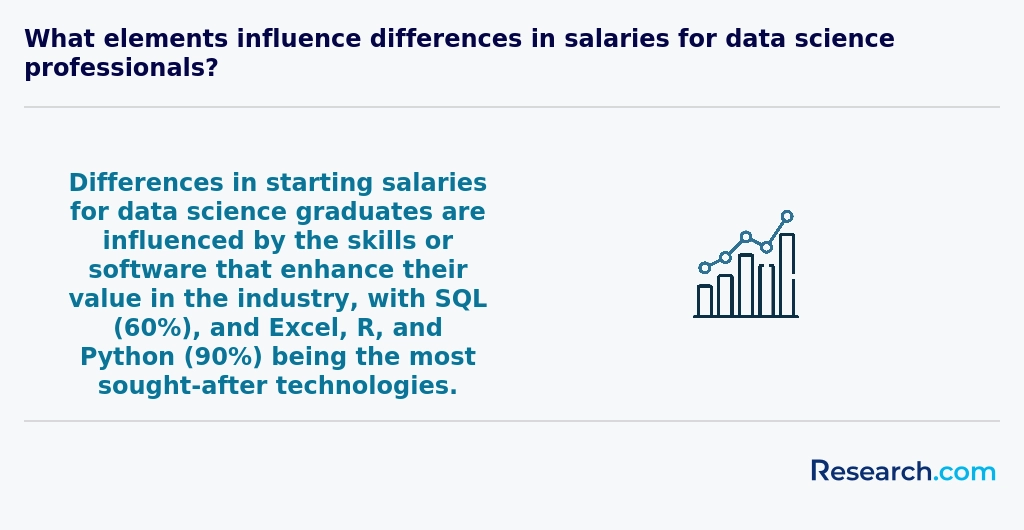
Graduates with a data science degree in Arizona face a competitive job market that demands both technical skills and practical experience. To prepare, students should focus on building strong proficiency in programming languages like Python, R, and SQL, which are widely used in the industry.
Gaining hands-on experience through internships or cooperative education programs offered by many Arizona universities enhances employability. These opportunities allow students to apply classroom knowledge to real-world problems and develop professional networks.
Additionally, considering industry certifications such as Certified Analytics Professional (CAP) can strengthen resumes. The Arizona Technology Council reports that data science roles in the state have grown by over 15% annually, emphasizing the value of practical skills and credentials.
Networking with local tech meetups and engaging in projects related to Arizona's key sectors-such as healthcare, finance, and aerospace-is beneficial for job placement after graduation.
Employers in Arizona prioritize several key skills when hiring data science graduates. According to the Arizona Technology Council, proficiency in programming languages such as Python and R ranks among the most sought-after abilities. Additionally, expertise in data visualization tools like Tableau and Power BI is critical to effectively communicate insights.
Analytical thinking and the ability to manage large datasets using SQL are also in high demand. The Arizona Department of Economic Security reports that over 60% of data science roles require experience with machine learning and statistical modeling techniques.
Strong problem-solving skills combined with domain knowledge in industries like healthcare and finance give candidates a competitive edge in Arizona's growing tech market.
Finding internships in Arizona relevant to a data science degree involves a combination of university career services, industry connections, and online platforms. Many Arizona universities, such as Arizona State University, offer resources specifically tailored for STEM students to access internship listings and networking events.
Arizona's growing tech sector includes companies like GoDaddy, Intel, and Honeywell, which often provide data science internships. According to the Arizona Technology Council, over 39,000 tech jobs existed in the state as of 2023, signaling strong internship opportunities.
Students should also explore internship databases like Handshake and local job boards. Building a professional LinkedIn profile and joining organizations like the Arizona Data Science Meetup can help with networking and finding openings.
In Arizona, a data science degree significantly enhances career mobility and advancement opportunities. Employers in tech hubs like Phoenix and Tucson increasingly seek professionals skilled in data analytics, machine learning, and statistical modeling. According to the U.S. Bureau of Labor Statistics, the demand for data scientists in Arizona is projected to grow by over 15% from 2022 to 2032, faster than the national average.
Graduates with a data science degree often move into roles such as data analysts, machine learning engineers, or business intelligence specialists, gaining access to higher salaries and leadership positions. Arizona's expanding industries-including healthcare, finance, and technology-offer many pathways to upskill and shift focus within the data science field.
Additionally, many Arizona universities and colleges offer career services and networking events that help graduates connect with local employers, fostering career growth and advancement within the region.
Studying for a data science degree in Arizona equips students with skills that cross multiple disciplines, reflecting the growing demand for professionals who can work in diverse fields. Arizona's universities integrate coursework in statistics, computer science, and domain-specific knowledge such as healthcare or business, fostering versatile expertise. According to the National Center for Education Statistics (NCES), Arizona has seen a 15% increase in data science-related bachelor's degrees awarded over the past five years, highlighting expanding program offerings.
Programs often emphasize collaboration, critical thinking, and real-world problem solving, preparing graduates for roles in sectors like healthcare, finance, and technology. Arizona's data-driven industries value this interdisciplinary approach, which aligns with workforce projections by the Arizona Department of Economic Security showing a 22% growth in data occupations through 2030.
When choosing between thesis and non-thesis data science degree programs in Arizona, consider your career goals and learning preferences. Thesis programs typically emphasize research skills, preparing students for doctoral studies or roles in research-driven industries. Non-thesis tracks focus more on practical skills and coursework, often appealing to professionals aiming for immediate employment or advancement in data analytics roles.
Arizona's universities, like Arizona State University and the University of Arizona, offer both options, reflecting diverse job market demands. According to the Bureau of Labor Statistics, data science jobs in Arizona are projected to grow by over 31% from 2021 to 2031, making relevant skill acquisition essential.
Thesis options require significant time on research projects, while non-thesis routes may include internships or capstone experiences, which can be valuable for building a professional network.
Students based in Arizona who want to study data science abroad have several pathways. Many universities in Arizona, such as Arizona State University, offer partnership programs with international institutions that allow students to complete part of their degree overseas. This provides valuable global experience while earning credits that transfer back.
Additionally, students can pursue exchange programs or dual-degree options through established study-abroad offices within Arizona institutions. According to the Institute of International Education, participation in STEM fields like data science is growing among U.S. students studying abroad, increasing opportunities.
Financial aid and scholarships specifically for STEM study abroad programs are often available, helping reduce costs. Students should consult their home institution's international office early to identify suitable programs that meet data science curricular requirements and accreditation standards.
Students pursuing a data science degree in Arizona can benefit from various part-time job opportunities that enhance their skills. Roles such as data analyst interns at local tech companies or healthcare organizations provide hands-on experience with real datasets. The Arizona Technology Council reports a growing demand for data professionals, with a 15% increase in tech jobs statewide from 2020 to 2023. Additionally, part-time positions in market research firms or financial services allow students to develop proficiency in data visualization and statistical software.
Many universities in Arizona also offer research assistant roles, helping students engage directly with academic projects. These opportunities support both learning and networking, crucial for early career development.
Data science students in Arizona benefit from a growing network of industry connections and academic collaborations. Universities such as Arizona State University and the University of Arizona host regular meetups, guest lectures, and workshops that connect students directly with professionals in tech and analytics. According to the Greater Phoenix Economic Council, Arizona's tech sector grew by 13.9% between 2018 and 2023, increasing local demand for data science talent.
Students can also engage with organizations like the Arizona Technology Council and participate in hackathons, career fairs, and internships, which offer hands-on experience and valuable professional contacts.
Local chapters of national groups like Women in Data Science (WiDS) provide additional networking and mentorship opportunities.
Alumni networks offer significant benefits to data science degree students in Arizona by providing valuable professional connections. Graduates often share job openings, mentoring opportunities, and career advice, which can be crucial in a competitive job market.
Arizona's growing tech sector, especially in cities like Phoenix and Tucson, means access to a strong local alumni base working in relevant industries. According to the Arizona Technology Council, data science roles have increased by over 20% in the past three years, highlighting network value for job placements.
Furthermore, alumni events and online groups facilitate knowledge sharing about latest trends and tools in data science. This ongoing engagement helps students stay updated and offers direct insight into employer expectations within Arizona's workforce.
Customizing a data science degree program in Arizona allows students to align their education with specific career goals. Many Arizona universities offer flexible curricula where students can select electives in areas like machine learning, big data analytics, or business intelligence. For example, Arizona State University provides options to focus on applied data science or computational methods, helping tailor skills to industries such as healthcare, finance, or tech.
Internships and research projects are vital customization tools. Arizona's growing tech sector offers partnerships that let students gain hands-on experience. According to the Arizona Technology Council, data science jobs in the state are expected to grow by over 15% through 2029, emphasizing the value of practical skills.
Additionally, some schools enable dual-degree options or minors related to data science, including statistics or computer science, providing interdisciplinary training. This approach helps graduates become versatile professionals prepared for Arizona's evolving job market.
Data science students in Arizona often face challenges related to the rapidly evolving nature of the field. Staying current with new technologies and programming languages can be demanding, as the industry expects proficiency in tools like Python, R, and machine learning frameworks. Additionally, access to real-world datasets for practical experience is limited, especially outside major metropolitan areas like Phoenix and Tucson. According to the National Center for Education Statistics, Arizona hosts numerous programs, but many students report a gap between academic theory and industry application. Balancing coursework with internships or employment is another common difficulty noted among students statewide.
Arizona's relatively competitive job market in tech sectors adds pressure on students to build diverse skill sets early. Resources such as university career centers and local meetup groups can mitigate some hurdles, yet the overall challenge remains significant for those seeking a smooth transition from education to employment.
With a data science degree in Arizona, graduates can pursue several respected professional certifications to enhance their careers. Popular certifications include the Certified Analytics Professional (CAP) and Microsoft Certified: Azure Data Scientist Associate. These certifications validate skills in data analysis, machine learning, and cloud platforms, all important in Arizona's growing tech sector.
The Global Knowledge 2023 IT Skills Report highlights that certified data professionals tend to earn higher salaries and have better job prospects. Arizona's expanding industries, such as healthcare and finance, actively seek candidates with these credentials. Institutions like the University of Arizona also offer preparatory courses for certification exams.
To write a winning application for a data science program in Arizona, start by showcasing your quantitative skills and relevant experience clearly. Arizona universities like Arizona State University emphasize strong foundations in mathematics, programming, and statistics. Including projects or internships demonstrating practical knowledge gives your application a competitive edge.
Highlight your motivation for choosing data science and how it aligns with Arizona's growing tech industry, which has seen an employment increase of over 25% in data-related roles since 2020, according to the Arizona Technology Council.
Make sure to prepare a compelling personal statement that communicates your career goals and problem-solving skills. Also, obtain strong recommendation letters from academic or professional contacts familiar with your analytical abilities.
Finally, update your resume to emphasize any coursework or certifications in Python, R, or machine learning, as these are often prerequisites in Arizona's top data science programs.
Data science careers enjoy strong global demand, with the U.S. being a key hub for innovation and job growth in this field. According to the U.S. Bureau of Labor Statistics, employment of data scientists is projected to grow 36% from 2021 to 2031, much faster than average for all occupations. Arizona reflects this trend locally, with cities like Phoenix and Tempe becoming centers for tech companies and data-driven businesses.
Internationally, data science skills are prized for solving complex problems in sectors like healthcare, finance, and manufacturing. The ability to analyze big data is a universally valuable asset, making these career paths resilient and versatile worldwide.
For Arizona students, understanding global perspectives highlights opportunities for remote work, global collaboration, and applying data science expertise across industries, which supports strong career growth in their home state.
Students pursuing data science degrees in Arizona can gain practical experience through internships and cooperative education programs offered by many universities. For example, Arizona State University has established partnerships with local tech firms and healthcare companies, providing students opportunities to work on real-world projects.
Additionally, organizations in Arizona's growing data science sector often seek interns, particularly in cities like Phoenix and Tucson, where the tech industry is expanding. According to the Greater Phoenix Economic Council, the tech workforce grew by 15% from 2019 to 2023, increasing chances for hands-on learning.
Many Arizona programs also encourage participation in data science competitions and research projects, which help develop applied skills and professional portfolios valued by employers.
Choosing the right concentration within a data science degree program in Arizona begins with understanding your career goals. Data science offers various specializations such as machine learning, big data analytics, and data engineering. Arizona State University and the University of Arizona, for example, provide options aligned with industry demands.
Consider Arizona's job market trends, where fields like healthcare analytics and cybersecurity show continuous growth. According to the Arizona Office of Economic Opportunity, data-related jobs in Phoenix are expected to grow by 15% through 2028.
Evaluating which concentration matches your interests and the state's workforce needs will help in selecting a program that enhances employment opportunities.
- 2027 Best Data Science Degree Programs Ranking in Texas
- 2027 Best Data Science Degree Programs Ranking in Missouri
- 2027 Best Data Science Degree Programs Ranking in Minnesota
- 2027 Best Data Science Degree Programs Ranking in Wisconsin
- 2027 Best Data Science Degree Programs Ranking in Michigan
- 2027 Best Data Science Degree Programs Ranking in Florida
- 2027 Best Data Science Degree Programs Ranking in Ohio
- 2027 Best Data Science Degree Programs Ranking in Pennsylvania
- 2027 Best Data Science Degree Programs Ranking in New York
- 2027 Best Data Science Degree Programs Ranking in Massachusetts
See What Experts Have To Say About Studying Data Science
Read our interview with Data Science experts

- Data Science Degree Specializations & Concentrations https://hakia.com/degrees/data-science/specializations/
- Data science components | The interdisciplinary field of data science https://domino.ai/blog/3-key-components-of-the-interdisciplinary-field-of-data-science
- How to Overcome 7 Challenges to Data Science Success https://www.rgare.com/knowledge-center/article/how-to-overcome-7-challenges-to-data-science-success
- How Can an Aspiring Data Scientist Find and Work on Real-World Projects? https://www.datagrads.com/how-can-an-aspiring-data-scientist-find-and-work-on-real-world-projects/
- Careers in Data Science | ComputerScience.org https://www.computerscience.org/careers/data-science/how-to-become/
- Best Data Scientist Cover Letter with Tips and Examples | Cake https://www.cake.me/resources/cover-letter/data-scientist-cover-letter
- B.S. in Data Science https://ua-math-dept.helpspot.com/mathcenter/index.php
- 7 Common Data Science Challenges and Effective Solutions - GeeksforGeeks https://www.geeksforgeeks.org/data-science/7-common-data-science-challenges-and-effective-solutions/
- Student Perspectives: The Importance of Networking and Industry Collaboration in Data Science Education https://dscnextconference.com/importance-of-networking-data-science-education/
- Data Science in education: how data is transforming schools https://liora.io/en/data-science-in-education-how-data-is-transforming-schools