2027 Most Valuable Data Science Degree Programs Ranking in Wisconsin

Co-Founder and Chief Data Scientist
Choosing the right data science degree can shape your future career and open exciting opportunities. For students in Wisconsin, understanding which programs offer the best value is essential.
This article features the 2027 Most Valuable Data Science Degree Programs Ranking in Wisconsin, developed by the Research.com team of data scientists. It's designed to help you make an informed choice about which programs truly stand out.
Reading this guide will empower you with insights, making your path toward a rewarding data science career clearer and more confident.
Key benefits of getting data science degree in Wisconsin
- Graduates with a data science degree in Wisconsin can earn competitive salaries, such as $66,670 annually for Data Analysts and up to $119,040 for Data Consultants, reflecting strong financial rewards in the field.
- Career paths include roles like Database Administrator or Marketing Analyst, exemplified by graduates from the University of Wisconsin who leverage their degree to enter varied and exciting industries.
- Online data science degrees from institutions like UW extended campus offer flexibility and affordability, allowing students to balance learning with work or family while gaining valuable skills.
- 2027 Most Valuable Data Science Degree Programs Ranking in Wisconsin
- What can I expect from data science degree in Wisconsin?
- Where can I work with data science degree in Wisconsin?
What can I expect from data science degree in Wisconsin?
The average cost of a data science degree in Wisconsin varies depending on whether you attend a public or private institution. For example, graduates from the University of Wisconsin-Madison, a top choice for data science, typically report tuition costs around $10,000 to $15,000 per year for in-state students. These costs can be significantly higher at private colleges, sometimes exceeding $30,000 annually.
Many students find that balancing tuition with practical experiences-such as internships or research projects offered through Wisconsin universities-adds substantial value to their investment. Graduates often share how hands-on work in local industries like healthcare or manufacturing helped them secure jobs quickly, making the upfront costs feel worthwhile.
To manage expenses, students recommend exploring scholarships specific to data science or STEM fields in Wisconsin, as well as taking advantage of assistantships or paid internships. This approach can reduce out-of-pocket costs while enhancing learning through real-world application.
Ultimately, assessing program fees alongside opportunities for funded experiences and local job connections can make the cost of a Wisconsin data science degree feel like a smart, achievable investment.
Where can I work with data science degree in Wisconsin?
Graduates from programs like the University of Wisconsin-Madison often find roles in Wisconsin's healthcare sector, joining organizations such as Aurora Health Care to use data science for improving patient care or forecasting health trends. It's a rewarding path that many alumni describe as meaningful, knowing their work directly impacts lives.
For those attracted to manufacturing, brands like Harley-Davidson offer opportunities where data scientists help optimize supply chains and ensure product quality. Graduates from Milwaukee School of Engineering report real-world projects during their studies that prepare them well for these roles.
Financial institutions in Milwaukee, including Northwestern Mutual, employ data science pros to build risk models and fight fraud. Graduates who pursue internships locally appreciate how their data skills quickly translate to solving practical problems in these firms.
Tech hubs in Madison and Milwaukee provide entry points into startups or established companies focused on AI and machine learning. Students from Marquette University value networking events that connect them with emerging tech employers eager for analytic talent.
Overall, data science grads in Wisconsin enjoy expanding career options across sectors where practical data skills meet real business needs.
Graduates with a data science degree from well-known Wisconsin schools like the University of Wisconsin-Madison or Marquette University typically start their careers earning between $65,000 and $75,000 annually, especially when joining smaller firms or local healthcare and financial companies. These entry-level salaries align with common roles such as data analysts, who earn a mean annual wage of about $66,670 in the state.
As you gain experience, expect your earnings to rise significantly. Mid-career professionals often reach salaries near $83,190, comparable to marketing analysts who apply data skills in business contexts. Those specializing in database administration or data consulting roles see even higher pay, with mean salaries of $104,810 and $119,040, respectively.
Data visualization specialists represent an accessible path with mean annual wages of $64,700, ideal for graduates interested in storytelling with data. Alumni report that companies like Johnson Controls and Epic Systems value these versatile skills and frequently offer bonuses and profit-sharing, further enhancing compensation.
- In-state tuition for data science degrees at Wisconsin public universities ranges from $10,000 to $15,000 per year, while out-of-state tuition can exceed $25,000 annually.
- Entry-level data scientists in Wisconsin earn an average starting salary of about $70,000 per year, with mid-career salaries around $100,000 or more.
- The data science job market in Wisconsin, especially in Milwaukee, Madison, and Green Bay, is expected to grow by approximately 15% over the next decade.
- Wisconsin data science programs focus on practical skills like statistics, programming, and machine learning, supported by local internship opportunities.
- Universities in Wisconsin offer undergraduate and graduate data science degrees, as well as certificates and specialized tracks to fit different career paths.
Completing a data science degree in Wisconsin generally takes about four years if you enroll full-time in a bachelor's program. Many students at the University of Wisconsin-Madison, for example, follow this timeline, balancing coursework with internships that add practical value and sometimes extend their study by a semester. Those pursuing a master's degree, such as the online Master of Science in Business Analytics offered there, usually finish in two years, though some accelerated paths allow completion in as little as 12 to 18 months.
Part-time or working students often take longer, which is common at institutions like the University of Wisconsin-Milwaukee, where flexible scheduling helps manage job and family commitments.
Graduates frequently mention that leveraging transfer credits or choosing dual degree programs can shorten the timeline, making the entire process feel more manageable and rewarding. Being realistic about your enrollment status and personal goals will help you map out a timeline that fits your life perfectly.
Online and on-campus data science degrees in Wisconsin differ mainly in structure and daily experience. Graduates from the University of Wisconsin online program often mention how the flexibility to study asynchronously fit smoothly around their jobs and family life. They accessed lectures whenever convenient, which made juggling responsibilities manageable without sacrificing progress.
In contrast, students attending on-campus programs at institutions like Marquette University highlight the benefit of direct engagement with professors during office hours and hands-on access to lab equipment. This in-person collaboration helped them grasp complex topics quickly and build networking connections critical for job placement.
Tuition-wise, online options at public universities in Wisconsin tend to be lower or comparable to in-state on-campus rates, making online learning an attractive choice for budget-conscious students. However, on-campus students appreciate the structured schedules and immersive environment, which foster motivation and social interaction.
Deciding between the two formats depends on your personal learning style and life commitments. Those valuing flexibility and self-paced study may thrive online, while others benefit from the routine and face-to-face support of on-campus programs.
The average cost of a data science degree in Wisconsin varies depending on residency and the type of institution, but the median total cost is around $28,078. In-state students typically pay much less, with a median cost of about $9,856, which reflects affordable tuition rates at public universities like the University of Wisconsin-Madison. Many graduates recall feeling relieved after realizing that attending a public school in-state made their data science degree tuition and fees Wisconsin much more manageable compared to private institutions.
Out-of-state students should prepare for higher expenses, often closer to the $28,000 range, reflecting non-resident tuition rates at Wisconsin's top colleges. Private institutions offering data science programs, popular for their strong industry connections, come with steeper tuition fees, so it's wise to budget accordingly and explore financial aid opportunities early on.
Beyond tuition, students often encounter additional costs such as textbooks, technology fees, and living expenses that can add $5,000 to $12,000 yearly. Graduates commonly emphasize how budgeting for these extras heightened their appreciation for scholarships or part-time work options during their studies.
For those looking to accelerate their education path, considering an accelerated college degree might offer a more cost-effective route by reducing time spent paying tuition and living expenses. Planning carefully with these factors in mind can make earning a data science degree in Wisconsin both attainable and rewarding.
Students pursuing data science degrees in Wisconsin can tap into a variety of financial aid options to manage tuition costs effectively. Applying early for the FAFSA is crucial, as this unlocks access to federal Pell Grants up to $7,395 annually and low-interest Direct Loans, which many undergraduates at the University of Wisconsin-Madison rely on to reduce their debt loads.
State aid programs like the Wisconsin Higher Education Grant (WHEG) also provide need-based support for residents attending public universities offering data science. For instance, graduates from Milwaukee School of Engineering have shared how WHEG awards made their master's studies more affordable.
Merit scholarships targeted at strong STEM candidates are frequently available through university departments, helping talented students boost their budgets. Some students balance their studies with graduate assistantships or research roles, gaining stipends and tuition remission while building valuable experience in data science.
Finally, working professionals often supplement funding with employer tuition reimbursement programs, easing the financial load without compromising career growth. Navigating these resources thoughtfully can make earning a data science degree in Wisconsin feel both achievable and rewarding.
To enroll in a data science degree program in Wisconsin, start by securing a high school diploma with strong STEM grades, especially in algebra, calculus, and statistics. These subjects form the backbone of what you'll face in college-level data science courses, as graduates from UW-Madison often point to solid math skills as key to their success. Having a good grasp of programming basics in languages like Python or R will also boost your confidence and readiness, since many programs, including those at Marquette University, require some coding experience before starting.
Some schools may ask for SAT or ACT scores, but many have become test-optional recently, so check your chosen university's policy. If you're aiming for a graduate program, expect to need a bachelor's degree in a related field such as computer science or engineering. Former students frequently share that meeting these prerequisites helped them navigate the challenging coursework with less stress and more enthusiasm.
By following these steps, you position yourself well for admission into Wisconsin's competitive data science programs and gain a practical foundation for a promising career.

Data science degree programs in Wisconsin focus on core programming courses in Python, R, and SQL, essential for manipulating and analyzing real data sets. Graduates from universities like the University of Wisconsin-Madison often highlight how early courses in statistics and probability laid the groundwork for making data-driven decisions confidently in internships or projects.
Students regularly tackle practical topics such as data mining and machine learning, learning to pull valuable insights from large datasets. Courses on database systems teach managing data efficiently, a skill many graduates found crucial when contributing to local businesses in cities like Milwaukee.
Data visualization classes enable students to turn complex numbers into clear, actionable graphs-something alumni say impresses employers. Exposure to big data tools like Hadoop and Spark prepares learners to handle massive data linked to sectors prevalent in Wisconsin, such as manufacturing and healthcare.
Many programs encourage applied work and internships, where students apply classroom skills to real-world problems, boosting their confidence and job readiness in Wisconsin's competitive data science market.
Data science specializations in Wisconsin universities typically include practical areas like Machine Learning and Artificial Intelligence, where students work on algorithms that allow computers to predict outcomes-skills highly valued in tech roles. Graduates from institutions such as the University of Wisconsin-Madison often share how this focus helped them secure jobs in predictive modeling and AI development. Big Data Analytics is another popular track, equipping students with experience in handling massive datasets using tools like Hadoop and Spark, a specialization praised by many for its direct application in industries like healthcare and manufacturing.
Business Analytics combines data science with strategic decision-making, ideal for students aiming to influence enterprise operations. Wisconsin data science degree focus areas also include Statistical Modeling and Data Engineering, which prepare students to create statistical insights and build data infrastructure. Those interested in exploring flexible learning routes often consider best online colleges offering these specializations to balance work and studies effectively.
Focus first on the curriculum when choosing from the best data science programs in Wisconsin. Look for a balance between statistics, machine learning, and programming-especially Python and R-paired with hands-on projects or internships. Graduates from popular universities in Milwaukee and Madison say this practical approach helped them confidently tackle real-world challenges at local tech firms and healthcare analytics companies.
Cost also plays a big role. Affordable data science degrees Wisconsin offer can vary widely, from around $10,000 annually at public universities for in-state students to $50,000 at private colleges. Many students highlight how scholarships and assistantships made a big difference in managing expenses without sacrificing quality education.
Check accreditation and faculty research expertise to ensure your program is well-regarded and connected to Wisconsin's data-driven industries. Flexibility with part-time or online options is a plus if you're balancing work. Many alumni appreciate how these formats allowed them to gain relevant work experience while studying, boosting their job prospects. For more career insights related to practical education options, see the list of trade school careers.

Graduates with a data science degree in Wisconsin can pursue several practical career paths, each offering strong job prospects. Many find roles as data scientists in Milwaukee and Madison, where companies rely on their ability to develop models that convert complex datasets into actionable insights. Data analysts are also in demand, especially in finance and marketing sectors, where analyzing trends can directly impact business strategies. For those interested in manufacturing or retail, becoming a business intelligence analyst allows you to craft dashboards and tools that improve operations.
Others choose to specialize as machine learning engineers, a role rapidly growing as Wisconsin companies integrate AI technologies. Statistical analysts apply their skills in healthcare, tackling important public health challenges within the state's robust medical systems. Universities like the University of Wisconsin-Madison equip graduates to enter these fields quickly, reflecting strong job opportunities with Wisconsin data science degree holders. For practical guidance on advancing your education, consider resources such as anchors part-time Ph.D. in economics.
The job market for data science degree holders in Wisconsin is strong and expanding, with graduates finding opportunities in healthcare, manufacturing, and finance across the state. Many data science graduates from well-known institutions like the University of Wisconsin-Madison report smooth transitions into roles that offer starting salaries between $65,000 and $85,000. This positive salary outlook is a key factor driving interest in the Wisconsin data science career opportunities sector.
Graduates often leverage hands-on projects and internships facilitated by their universities to connect with employers like Epic Systems in Verona or manufacturing firms in Milwaukee, which actively seek data analytics talent. These practical experiences help graduates directly apply their skills to real business problems, boosting confidence and employability.
Given Wisconsin's affordable tuition rates and growing startup ecosystem, students increasingly see data science degrees here as a cost-effective investment. For those balancing work and study, programs such as the anchors part-time Ph.D. in economics demonstrate the state's commitment to flexible advanced education options in related fields.
With demand for data analytics roles climbing thanks to the state's economic diversity, job seekers report that Wisconsin offers a realistic path to a stable and rewarding data science career.
2027 Most Valuable Data Science Degree Programs Ranking in Wisconsin
Investing in your education is a significant decision that can profoundly impact your future, and the Research.com team is keenly aware of the importance of making well-informed choices. To aid prospective students in Wisconsin, we have carefully developed the "2027 Most Valuable Data Science Degree Programs Ranking in Wisconsin." Our dedication to quality, credibility, and accuracy is demonstrated through rigorous research and thorough analysis in creating this ranking. We leveraged the following trusted data sources to provide a comprehensive assessment of data science degree programs:
By reviewing this ranking, readers will gain valuable insights into the most valuable data science degree programs in Wisconsin, empowering them to make confident and strategic decisions about their education. For further information about how this ranking was compiled, please visit our Research.com methodology page.


Frequently Asked Questions About data science
Data science degree students in Wisconsin can maximize their learning by engaging actively with both academic and practical opportunities. Wisconsin's universities, such as the University of Wisconsin-Madison, offer strong programs that emphasize hands-on experience through research projects and internships. Participating in internships with local companies or healthcare institutions can provide valuable real-world data challenges, enhancing both skills and employment prospects.
Students should also join data science clubs or meetups to connect with peers and professionals, fostering collaboration and networking. Utilizing resources like the Wisconsin Department of Workforce Development, which projects a 15% growth in data-related jobs statewide, underscores the importance of understanding local industry needs.
Staying current with programming languages like Python and R, and tools for big data analysis, is essential. Wisconsin students benefit from access to state-funded research centers that focus on data analytics, offering opportunities to work on innovative projects. Combining classroom learning with these experiences equips students to excel in Wisconsin's expanding data science job market.
Emerging niches within the data science field are rapidly evolving, especially in Wisconsin, where industries like healthcare, manufacturing, and agriculture heavily invest in data-driven solutions. One notable area is health informatics, which combines data science with patient care to improve medical outcomes. According to the Bureau of Labor Statistics, health data scientists are expected to grow by 31% nationally through 2031, with Wisconsin seeing strong local demand due to its established healthcare sector.
Another growing niche is predictive analytics applied in manufacturing, where Wisconsin's manufacturing industry employs data experts to optimize production and reduce waste. Additionally, agricultural data science is gaining traction in the state, helping farmers enhance crop yields using sensor and climate data. These niches reflect the practical applications of data science specific to Wisconsin's economy.
Preparing for the job market after completing a data science degree in Wisconsin involves building both technical skills and professional experience. Wisconsin's data science graduates benefit from the state's growing tech and healthcare sectors, which frequently seek expertise in machine learning, big data, and analytics.
Students are encouraged to gain hands-on experience through internships or cooperative education programs offered by many Wisconsin universities. These opportunities provide valuable industry connections and practical knowledge.
According to the U.S. Bureau of Labor Statistics, the data science field in the Midwest is expected to grow by over 15% through 2030, signaling strong demand locally. Networking with local chapters of professional associations like the Wisconsin Data Science Meetup can also improve job prospects.
Additionally, developing strong programming skills in Python, R, and SQL, along with communication abilities, is vital to effectively translate data insights into business strategies.
Employers in Wisconsin value a combination of technical and soft skills in data science graduates. Proficiency in programming languages such as Python, R, and SQL is often cited as essential. According to a 2023 report by the Wisconsin Department of Workforce Development, over 70% of local data science job postings required strong coding abilities.
Employers also prioritize expertise in data visualization tools like Tableau and Power BI, as well as experience with machine learning algorithms. Communication skills are critical; graduates must clearly explain data insights to non-technical teams. Analytical thinking and problem-solving remain top priorities in job listings across the state.
Finally, familiarity with cloud computing platforms, especially AWS and Microsoft Azure, is increasingly demanded by Wisconsin employers, aligning with broader national trends in tech roles.
Finding internships in Wisconsin relevant to a data science degree requires a strategic approach. Begin by exploring opportunities through university career centers, which often have partnerships with local businesses in sectors like healthcare, manufacturing, and finance, all key employers of data science talent in Wisconsin. According to the Wisconsin Department of Workforce Development, demand for data analytics roles has grown by over 20% in recent years statewide.
Networking is essential; attend local tech meetups and conferences such as the annual Wisconsin Data Science Summit. Online platforms like Handshake and LinkedIn also list numerous data science internships in Wisconsin-based companies.
Many firms in Milwaukee and Madison offer paid internships that provide hands-on experience with big data tools and machine learning techniques, preparing students for post-graduate employment.
A data science degree significantly enhances career mobility and advancement opportunities in Wisconsin's growing tech and business sectors. According to the Wisconsin Department of Workforce Development, demand for data science professionals is expected to increase by over 15% through 2030. Employers across industries such as healthcare, manufacturing, and finance value these skills, often linking data expertise to higher salaries and leadership roles.
Graduates with data science degrees in Wisconsin frequently find entry into roles like data analysts and data engineers, with pathways toward management and specialized positions. Many local companies prioritize candidates with formal education due to the technical complexity and evolving nature of data-driven decision-making.
The University of Wisconsin System, offering recognized data science programs, benefits students by connecting them to internships and regional networks that facilitate career growth. This practical exposure combined with academic credentials plays a critical role in advancing within Wisconsin's competitive job market.
Data science degree programs in Wisconsin emphasize interdisciplinary training, equipping students to collaborate across fields like health, business, and engineering. Universities often integrate coursework in statistics, computer science, and domain-specific knowledge, reflecting the wide applications of data science. According to the Wisconsin Department of Workforce Development, demand for professionals who can analyze and interpret complex data within diverse industries is growing rapidly statewide.
Programs also leverage partnerships with local industries, providing hands-on experiences that foster problem-solving skills in real-world interdisciplinary contexts. Students graduate prepared to work not only as data scientists but as crucial liaisons between technical teams and sector experts, enhancing decision-making processes in healthcare, manufacturing, and finance sectors prominent in Wisconsin's economy.
Choosing between a thesis and a non-thesis data science degree in Wisconsin depends largely on your career goals and learning preferences. Thesis programs typically involve conducting original research and writing a detailed dissertation, which is ideal for students aiming to pursue doctoral studies or research positions. Non-thesis options often emphasize practical skills and may include a capstone project or additional coursework instead of a formal thesis.
In Wisconsin, universities such as the University of Wisconsin-Madison offer both options, with thesis students spending about 6-12 months on research. According to the National Science Foundation, thesis graduates tend to engage more with academic and research roles, while non-thesis graduates often enter industry roles faster.
Your choice should reflect whether you value hands-on experience or deep research, considering local job market demands in data science fields across Wisconsin's growing tech sector.
Students in Wisconsin seeking to study data science abroad have several pathways to consider. Many US universities, including those in Wisconsin, offer exchange programs with institutions in Europe, Asia, and Australia. These programs allow students to gain international experience while earning credits toward their degree. The University of Wisconsin system supports partnerships with universities in countries such as Germany and South Korea, providing valuable opportunities for data science students.
Additionally, some Wisconsin students opt to enroll directly in foreign universities that offer strong data science curricula. Countries like Canada and the UK are popular choices due to their proximity and recognized programs. According to NAFSA, about 10% of Wisconsin's study abroad participants engage in STEM fields, which include data science, highlighting growing interest.
Part-time job opportunities in Wisconsin that complement a data science degree are increasingly diverse, reflecting the state's growing tech and healthcare sectors. Students often find roles as data analysts, research assistants, or business intelligence interns at companies in Milwaukee and Madison, where demand for data skills is expanding. According to the Wisconsin Department of Workforce Development, industries like manufacturing and finance also recruit part-time workers with data expertise to optimize processes and analyze market trends.
Positions involving database management, statistical modeling, and coding in Python or R can provide practical experience alongside academic learning. Local startups and university labs frequently offer flexible roles, allowing students to balance work and study. Gaining such experience strengthens resumes and builds essential skills for full-time career paths in data science.
Data science students in Wisconsin benefit from various networking opportunities through universities and local industry events. Many universities, including the University of Wisconsin system, host regular career fairs and data-focused meetups that connect students with regional employers.
The Wisconsin Technology Council reports a growing tech sector in the state, suggesting increasing job prospects in data science. Students can join professional groups like the Wisconsin Data Science Meetup, which offers monthly events featuring industry speakers and workshops.
Additionally, collaboration with Milwaukee's thriving tech startups and Madison's research institutions provides hands-on networking. Internships facilitated by university programs also help students build valuable professional connections and gain practical experience in Wisconsin's expanding data science field.
Alumni networks play a crucial role in supporting data science degree students in Wisconsin. These networks connect current students with graduates who work in various industries, offering mentorship and career guidance. According to the University of Wisconsin System, strong alumni engagement can increase internship and job placement opportunities by up to 30%.
Many Wisconsin universities, such as the University of Wisconsin-Madison, maintain active alumni groups that host networking events and workshops tailored to data science roles. These connections help students stay informed about local market trends and emerging technologies.
Furthermore, alumni often share insights into employer expectations and help students prepare for technical interviews. This support significantly improves students' chances of securing competitive positions within Wisconsin's growing data science sector, which the Bureau of Labor Statistics forecasts to grow 15% by 2030.
Customizing a data science degree program in Wisconsin allows students to align their education with specific career goals. Many universities offer flexible curricula where students can choose electives in areas like machine learning, business analytics, or bioinformatics. For example, the University of Wisconsin system provides various specialization options tailored to industry demands.
Internships and research projects are common features enabling practical experience. Wisconsin's growing tech and healthcare sectors create ample opportunities for applied learning, which is crucial for career readiness.
Students can also opt for certificate programs or double majors to deepen expertise. According to the Wisconsin Department of Workforce Development, data science jobs in the state are projected to grow by over 15% by 2030, emphasizing the value of targeted skills in this field.
Data science students in Wisconsin frequently encounter challenges related to the rapid evolution of technology and tools in the field. Staying current with programming languages like Python and R, as well as machine learning frameworks, requires continuous effort beyond classroom study. Additionally, access to up-to-date datasets for practical experience can be limited compared to larger tech hubs, which affects skill development.
Financial constraints also pose a concern, as out-of-state tuition rates can be high at major universities such as the University of Wisconsin-Madison. According to the National Center for Education Statistics, approximately 30% of data science undergraduates in Wisconsin rely on financial aid to support their education. Balancing work, internships, and academic demands further complicates students' progression.
Finally, some students report challenges in securing relevant internships within Wisconsin due to the smaller number of large tech firms in the region. However, growth in healthcare and manufacturing sectors is gradually expanding opportunities for applied data science roles locally.
Graduates with a data science degree in Wisconsin have several professional certification options to enhance their credentials and career prospects. Popular certifications include the Certified Analytics Professional (CAP), which validates an individual's ability to transform data into valuable insights. Another widely recognized credential is the Microsoft Certified: Azure Data Scientist Associate, emphasizing cloud-based data science solutions.
Additionally, the SAS Certified Data Scientist certification is highly regarded, especially in industries common to Wisconsin like manufacturing and healthcare. According to the Bureau of Labor Statistics, data science roles in Wisconsin are expected to grow by 15% through 2030, increasing demand for certified professionals.
These certifications can often boost salaries and improve job prospects across multiple sectors in the state.
To write a winning application for a data science program in Wisconsin, start by emphasizing your quantitative skills and relevant experience. Data science programs typically look for strong backgrounds in mathematics, statistics, and computer programming. Highlight any coursework or projects related to these areas.
Wisconsin hosts several reputable universities offering data science, such as the University of Wisconsin-Madison, which reported over 200 graduates in data-intensive fields in 2022 (National Center for Education Statistics). Including research or internships with local tech companies can strengthen your application.
Demonstrate clear motivation by explaining why you want to study data science in Wisconsin, referencing regional industry growth or Wisconsin's expanding tech sector.
Finally, ensure your personal statement is concise and proofread, and provide strong letters of recommendation from academic or professional mentors who can attest to your skills and determination.
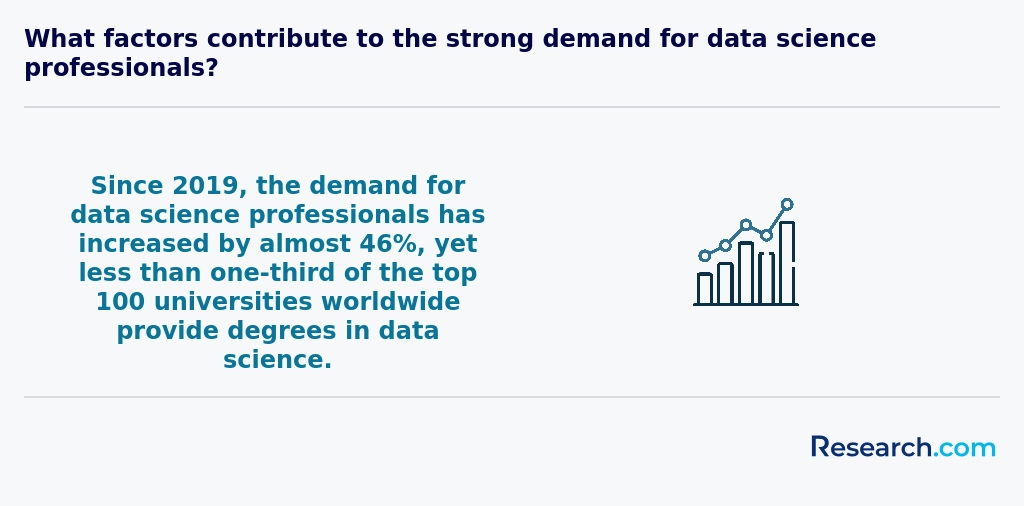
The global demand for data science professionals continues to rise, reflecting the importance of data-driven decisions in multiple industries. In the United States, and particularly in Wisconsin, the field is expected to grow by over 31% from 2020 to 2030, according to the U.S. Bureau of Labor Statistics.
Data science careers offer opportunities to work internationally, as companies seek experts who can analyze and interpret large datasets. Wisconsin universities often emphasize both technical skills and practical applications, preparing graduates for global challenges.
Understanding worldwide data trends and culturally diverse datasets is increasingly crucial for data scientists, making such degrees valuable beyond local markets.
Students pursuing data science degrees in Wisconsin can gain practical experience through internships offered by local companies in sectors like healthcare, manufacturing, and finance. According to the Wisconsin Economic Development Corporation, the state has seen a 12% growth in data-focused job openings from 2021 to 2023, which creates many internship opportunities.
Many universities in Wisconsin also provide project-based courses where students collaborate with real businesses to solve data problems. Participating in data science competitions and joining on-campus clubs gives hands-on experience in coding and analytics.
Furthermore, networking events hosted by organizations such as the Wisconsin Data Science Group connect students with industry professionals, fostering mentorship and job leads.
Choosing the right concentration within a data science degree program in Wisconsin involves assessing your career goals and interests. Common concentrations include machine learning, big data analytics, and business intelligence. Wisconsin's universities often tailor concentrations to meet local industry demands, such as manufacturing, healthcare, and finance.
Research from the Wisconsin Department of Workforce Development shows a 15% growth in data-related jobs by 2028, particularly in analytics roles. This trend suggests a demand for skills in predictive modeling and data management.
Prospective students should also consider faculty expertise, internship opportunities, and partnerships with Wisconsin companies. Programs with robust industry ties can improve job placement prospects after graduation.
- 2027 Most Valuable Data Science Degree Programs Ranking in Minnesota
- 2027 Most Valuable Data Science Degree Programs Ranking in Michigan
- 2027 Most Valuable Data Science Degree Programs Ranking in Missouri
- 2027 Most Valuable Data Science Degree Programs Ranking in Ohio
- 2027 Most Valuable Data Science Degree Programs Ranking in Pennsylvania
- 2027 Most Valuable Data Science Degree Programs Ranking in Florida
- 2027 Most Valuable Data Science Degree Programs Ranking in New York
- 2027 Most Valuable Data Science Degree Programs Ranking in Massachusetts
- 2027 Most Valuable Data Science Degree Programs Ranking in Texas
- 2027 Most Valuable Data Science Degree Programs Ranking in Arizona
See What Experts Have To Say About Studying Data Science
Read our interview with Data Science experts

- Data Science Insights | Data Science Trends | USDSI® https://www.usdsi.org/data-science-insights
- Data Science Cover Letter Dos and Don’ts (2025) – 365 Data Science https://365datascience.com/career-advice/job-interview-tips/data-science-cover-letter-dos/
- How to Overcome 7 Challenges to Data Science Success https://www.rgare.com/knowledge-center/article/how-to-overcome-7-challenges-to-data-science-success
- Data Science vs Traditional Degrees: Which Career Path is Better in 2026? https://www.shalyam.com/blog/@Neha%20N./data-science-vs-traditional-degrees/
- Data Science Master's Degree (Non-Thesis) https://www.istinye.edu.tr/en/postgraduate/programs/data-science-masters-degree-non-thesis
- Data Science Challenges: The Guide to Overcoming from DATAFOREST https://dataforest.ai/blog/overcoming-data-science-challenges
- Best Data Scientist Cover Letter with Tips and Examples | Cake https://www.cake.me/resources/cover-letter/data-scientist-cover-letter
- Choose the Right Data Science Program for Career | Learnbay https://www.learnbay.co/blogs/how-to-choose-the-right-data-science-program-for-your-career-goals
- Best 7 Countries to Study Data Science & Analytics Abroad in 2026 https://www.studies-overseas.com/blogs/best-countries-to-study-data-science-and-analytics-abroad
- Data Scientist Jobs in Poland | Hays Technology https://www.hays.pl/en/web/hays-pl-technology/data-science-jobs