2027 Most Valuable Counseling Degree Programs Ranking in Washington

Co-Founder and Chief Data Scientist
Choosing the right counseling degree program in Washington can feel overwhelming. This article introduces the 2027 Most Valuable Counseling Degree Programs Ranking in Washington, created by the Research.com team of data scientists to help you navigate your options with confidence.
By exploring this ranking, you'll gain valuable insights into the programs that offer strong career prospects and meaningful learning experiences. Whether you're starting your journey or looking to advance your career, a counseling degree opens doors to making a real difference in people's lives.
Read on to find the best fit for your goals and passions.
Key benefits of getting counseling degree in Washington
- Counseling graduates in Washington can earn competitive salaries, such as $76,000 annually for Intervention Specialists and $60,080 for Addiction Counselors, reflecting strong financial benefits.
- Graduates from universities like the University of Washington often explore diverse careers including community outreach, family support, and rehabilitation, offering flexible and meaningful paths.
- Completing a counseling degree online, as demonstrated by graduates from online programs at Central Washington University, allows for scheduling flexibility and balancing work-life commitments, making education more accessible and enjoyable.
- Key benefits of getting counseling degree in Washington
- What can I expect from counseling degree in Washington?
- Where can I work with counseling degree in Washington?
- How much can I make with counseling degree in Washington?
- 2027 Most Valuable Counseling Degree Programs Ranking in Washington
- Key Findings
- How long does it take to complete counseling degree in Washington?
- Licensing and Certification Requirements in Washington
- What's the difference between online and on-campus counseling degree?
- Exploring Valuable Counseling Schools in Washington, DC
- What is the average cost of counseling degree in Washington?
- Licensing and Certification Requirements in Washington, DC
- What financial aid is available to counseling degree students in Washington?
- What are the prerequisites for enrolling in counseling degree program in Washington?
- Licensure Requirements in Washington
- What courses are typically in counseling degree programs in Washington?
- What types of specializations are available in counseling degree programs in Washington?
- How do you choose the best counseling degree in Washington?
- What career paths are available for counseling degree students in Washington?
- What is the job market for counseling degree in Washington?
- Top Trending Counseling Rankings
- See What Experts Have To Say About Studying Counseling
What can I expect from counseling degree in Washington?
The average cost of obtaining a counseling degree in Washington varies depending on the university and degree level, but students typically spend between $25,000 and $40,000 for a master's program. Graduates from programs like those at Seattle University or Western Washington University often mention that budgeting wisely for tuition, fees, and living expenses is crucial. Many find that investing in an accredited program, especially those recognized by CACREP, pays off through better licensure opportunities and job prospects.
For example, a counseling graduate from Western Washington University shared how they balanced part-time work with practicum hours, which eased financial pressure while gaining hands-on experience in local clinics. Another graduate from Seattle University expressed relief in securing loans specifically designed for graduate students in mental health fields, making the costs manageable without sacrificing focus on studies.
Washington students should also factor in costs for supervision hours and licensing exams, which are mandatory post-degree expenses. Planning these steps early can make the entire licensure path feel much more achievable and less stressful.
Where can I work with counseling degree in Washington?
Graduates from counseling programs at institutions like the University of Washington often find rewarding roles in community mental health centers. These positions involve supporting people struggling with mental health or addiction, especially in growing areas like King or Pierce counties, where demand is high. Many former students appreciate seeing the direct impact of their work through one-on-one counseling and group therapy sessions.
School counseling is another frequent path. Graduates from Seattle Pacific University, for example, often become licensed school counselors, helping K-12 students navigate academic pressures and personal challenges. This role requires meeting specific Oregon Superintendent of Public Instruction requirements and offers steady employment thanks to increased focus on student well-being.
Hospitals and healthcare facilities also hire counseling degree holders as behavioral or rehabilitation counselors. Alumni from Eastern Washington University mention how fulfilling it is to assist patients recovering from trauma or managing crises. Others choose private practice after earning the Licensed Mental Health Counselor credential, enjoying autonomy and the gratification of guiding clients through therapy.
Nonprofits, government agencies, and correctional facilities round out the opportunities, offering diverse environments to use counseling skills for meaningful community support.
How much can I make with counseling degree in Washington?
Graduates with counseling degrees from institutions like the University of Washington often find the financial outlook encouraging when starting their careers in Washington. For instance, positions such as Addiction Counselors offer a mean annual wage around $60,080, reflecting strong demand in healthcare and support services. Those moving into roles like Community Outreach Coordinators or Family Support Workers can expect salaries near $54,020, providing stable entry points to apply counseling skills in diverse settings.
Rehabilitation Specialists earn approximately $48,430 annually, making this a practical step for graduates interested in working closely with clients on recovery goals. Meanwhile, Intervention Specialists have higher average wages around $76,000, rewarding additional experience or specialization.
Graduates report that securing roles in metropolitan areas around Seattle often leads to higher pay due to expanded job markets and living costs. Practical steps to boost earnings include pursuing licensure as Licensed Professional Counselors (LPC) or additional certifications, which Washington graduates have found helpful to increase salaries beyond standard figures.
2027 Most Valuable Counseling Degree Programs Ranking in Washington
How do we rank schools?
Investing in your education is a significant decision that can shape your future, and the Research.com team understands the importance of making informed choices. To assist prospective students in Washington, we have meticulously crafted the "2027 Most Valuable Counseling Degree Programs Ranking." Our commitment to quality, credibility, and accuracy is reflected in the extensive research and analysis conducted to compile this ranking.
We utilized the following reputable data sources to ensure a comprehensive evaluation of counseling programs:
By exploring this ranking, readers will gain valuable insights into the best counseling degree programs available in Washington, helping them make informed decisions about their educational and professional futures. For more details on our methodology, please visit our Research.com methodology page.

# 2 position
The Chicago School at Washington DC
Master of Science in Counseling


Key Findings
- Annual tuition for a master's counseling degree in Washington ranges from $12,000 to $30,000 at public universities, with higher costs at private schools.
- Graduates can expect entry-level salaries between $45,000 and $50,000 per year, with experienced counselors earning over $70,000 annually.
- The counseling job market in Washington is growing faster than average due to increased demand for mental health services.
- To become a Licensed Mental Health Counselor (LMHC), candidates need a master's degree, 3,000 hours of supervised clinical experience, and must pass the NCMHCE exam.
- Employment opportunities primarily exist in healthcare facilities, schools, and community service organizations.
How long does it take to complete counseling degree in Washington?
Completing a counseling degree in Washington usually means planning for distinct phases. A bachelor's degree often takes four to five years when attending full-time at well-known institutions like the University of Washington or Seattle Pacific University. Graduates recall balancing foundational courses in psychology and development, which set a solid groundwork for their future careers.
Moving on to a master's degree, popular programs at Seattle University or Western Washington University typically require two to three years of full-time study. Students appreciate the hands-on clinical practicums and internships-often between 700 and 1,000 hours-that prepare them thoroughly for licensure. This real-world experience can feel challenging but rewarding, boosting confidence in applying counseling skills.
After graduation, becoming a Licensed Mental Health Counselor (LMHC) in Washington demands around 3,000 hours of supervised professional experience, usually spanning two to three years. Many graduates find this stage enriching, as it allows them to build meaningful client relationships while gaining full independence in their careers.
Licensing and Certification Requirements in Washington
To practice as a professional counselor in Washington, follow these key steps:
- Earn a CACREP-accredited master’s degree in counseling.
- Complete at least 3,000 hours of supervised clinical experience (practicum + internship).
- Pass the National Counselor Examination (NCE) and the Washington Jurisprudence Exam.
- Apply for LMHC or LMFT licensure through the Washington Department of Health.
- Maintain licensure with required continuing education credits every renewal cycle.
Many candidates fulfill coursework and practicum requirements through online counseling degrees, balancing study with work and personal commitments.
What's the difference between online and on-campus counseling degree?
Choosing between online and on-campus counseling degrees in Washington largely hinges on your learning style and daily commitments. Online programs offer flexibility, allowing you to attend lectures from home while managing work or family-something many graduates from Western Washington University found essential when juggling busy schedules. Using digital platforms, you can engage in discussions and submit assignments 24/7, making it easier to fit study time around personal obligations.
On-campus programs at schools like Seattle University provide a hands-on environment with direct access to professors and classmates. Graduates often mention the benefit of immediate feedback during in-person activities and the strong professional networks built through face-to-face interactions.
Both formats require identical clinical practicum hours set by Washington's licensing boards, so you'll arrange local internships no matter what. Tuition costs are comparable, though some online students at Central Washington University appreciated slightly lower fees, despite occasional on-site intensives.
Exploring Valuable Counseling Schools in Washington, DC
For students looking to pursue a counseling degree in Washington, DC, it's essential to consider the variety of programs available, each with its unique strengths and specializations. When researching these programs, prospective students can visit valuable counseling schools in District of Columbia to find comprehensive rankings and reviews that can guide their decision-making process. These rankings often take into account factors such as accreditation, curriculum, faculty expertise, and graduate outcomes, providing a holistic view of what each program offers. By exploring these resources, students can make informed decisions about which counseling program best aligns with their career goals and personal aspirations, ultimately setting them on a path to a fulfilling career in counseling.
What is the average cost of counseling degree in Washington?
The average cost of earning a counseling degree in Washington typically totals around $67,710 for in-state students, while out-of-state students can expect to pay closer to $86,080. These figures include tuition, fees, and additional expenses such as books and clinical practicums. Graduates from universities like Western Washington University often highlight the manageable in-state tuition, which ranges between $8,000 and $13,000 annually, making it a practical choice for local students pursuing a counseling master's degree.
Private counseling programs in Washington usually come with higher price tags, sometimes reaching $20,000 to $35,000 per year. However, these programs often offer greater flexibility and specialized tracks that can appeal to students balancing work and study. Many students appreciate how these investments pay off as they gain hands-on clinical experience essential for licensure and successful careers.
Those researching the Washington counseling degree tuition and fees should also factor in costs related to internships and supplies, which can add thousands more. Planning a budget that includes these elements helps avoid surprises during the program. Additionally, prospective students can explore financial aid options and scholarships, which are frequently highlighted by state resources. For those curious about how specific programs compare nationally, it's worth checking rankings such as the valuable counseling schools in District of Columbia for broader context and inspiration.

Licensing and Certification Requirements in Washington, DC
To practice as a Licensed Professional Counselor (LPC) in Washington, DC, graduates must meet the following requirements: 1. Education: Completion of a CACREP-accredited master’s degree in counseling or equivalent, including at least 60 semester hours of graduate coursework. 2. Supervised Practice: Accrual of 3,000 hours of supervised clinical experience over a minimum of two years, with a DC-approved supervisor. 3. Examinations: Passing scores on the National Counselor Examination (NCE) or the National Clinical Mental Health Counseling Examination (NCMHCE), administered by the National Board for Certified Counselors (NBCC). 4. Application and Fees: Submission of the LPC application to the DC Board of Professional Counseling, including official transcripts, verification of supervised hours, examination results, and payment of current licensure fees. 5. Background Check: Completion of a DC fingerprint background check and clearance. 6. Renewal and Continuing Education: Biennial license renewal requiring 40 hours of approved continuing education (CE), with at least 3 hours in ethics and 3 hours in diagnosis/treatment planning. For students balancing cost and licensure preparation, it can be helpful to explore flexible online coursework options; see our 2025 Most Inexpensive Online Counseling Degree Programs Ranking in Gainesville, GA for models that may satisfy DC’s educational and supervised experience requirements.
What financial aid is available to counseling degree students in Washington?
When pursuing a counseling degree in Washington, start by completing the FAFSA to access federal aid like Direct Unsubsidized Loans and Graduate PLUS Loans. Many students who attended the University of Washington recall how these loans filled gaps after grants, easing financial pressure. Next, explore Washington State's unique offerings: although the Need Grant targets undergraduates, graduate students often receive scholarships and tuition waivers through their universities. For instance, Seattle University counseling graduates benefited from scholarships aimed at social work and counseling, which lightened their debt load considerably.
Don't overlook scholarships from professional groups like the American Counseling Association and the Washington Counseling Association. Graduates highlight how these awards, tied to academic achievement and dedication, boosted both morale and finances.
Assistantships are another powerful option. Many graduate students at Washington universities earn tuition remission and stipends by supporting research or teaching, making this a smart choice for hands-on experience and funding.
Finally, if you're employed in mental health or social services, check if your employer offers tuition reimbursement-many counseling grads have used this benefit to pursue their degrees while working full-time.
What are the prerequisites for enrolling in counseling degree program in Washington?
To enroll in a counseling degree program in Washington, you'll need a bachelor's degree from an accredited institution, ideally in psychology, sociology, or education, though some programs at universities like Seattle University welcome diverse academic backgrounds. Graduates often recall how having relevant coursework or volunteering experience in local mental health centers strengthened their applications and confidence.
A minimum GPA around 2.5 to 3.0 is commonly expected, ensuring you have a solid academic foundation before tackling graduate-level challenges. Many programs, including those at Western Washington University, once required GRE scores, but more schools are now making this optional, which eases the pressure and helps applicants focus on their personal statements.
Letters of recommendation-usually two or three-are essential. These come from professors or supervisors who can vouch for your dedication and skills. One graduate found that sharing real experiences in social services made their recommenders' endorsements more impactful and authentic.
Lastly, relevant work or volunteer experience in counseling or social services is highly valued. This hands-on involvement builds empathy and ethics, vital traits for success in Washington's counseling programs and eventual licensure as an LMHC.

Licensure Requirements in Washington
Becoming a licensed counselor in Washington requires meeting state standards and maintaining professional development:
- Earn a CACREP-accredited master’s degree in counseling. Consider accredited online counseling degrees for flexibility.
- Complete at least 3,000 supervised clinical hours under a qualified supervisor.
- Pass the National Counselor Examination (NCE) and Washington’s jurisprudence exam.
- Submit a license application, pay fees, and pass a background check with the Washington State Department of Health.
- Complete 36 hours of continuing education every two years to renew your license.
What courses are typically in counseling degree programs in Washington?
Students pursuing counseling degrees in Washington typically engage in a variety of courses designed to balance theory and practical skills. Graduates from universities like Seattle University often highlight how foundational classes such as Introduction to Counseling Theories and Human Growth and Development gave them essential frameworks they apply daily in their internships.
Washington programs emphasize multicultural counseling, a course many find valuable when working with the state's diverse populations. For instance, students from the University of Washington recall how Multicultural Counseling prepared them to approach clients with empathy and cultural awareness, boosting their confidence in real-world settings.
Hands-on classes like Counseling Techniques and Practices, Group Counseling, and Practicum and Internship Experience are core to gaining clinical expertise. These courses provide opportunities to practice crisis intervention and group therapy, often under supervision, which graduates say made their transition into licensed counselors smoother and more rewarding.
Other typical classes include Psychopathology and Ethics and Professional Issues, both crucial for understanding client conditions and maintaining professional standards in Washington's counseling landscape.
What types of specializations are available in counseling degree programs in Washington?
Washington's counseling degree specializations typically include clinical mental health counseling, school counseling, and marriage and family therapy. Graduates from popular programs such as those at University of Washington have expressed how clinical mental health counseling prepared them to confidently diagnose and treat emotional disorders, a skill highly valued as the state projects an 18% job growth for mental health counselors by 2030.
School counseling is especially practical in Washington given the state's focus on supporting K-12 students. Licensed school counselors trained at colleges like Seattle University often share how they apply state-aligned certification standards directly in classrooms to guide students through academic and social hurdles. For those drawn to family dynamics, marriage and family therapy offers a rewarding path, with additional licensure requirements overseen tightly to ensure professional quality.
Less common specializations such as substance abuse counseling and gerontological counseling meet unique community needs and public health priorities. Prospective students seeking the best counseling programs Washington state offers can also explore options through a ranking of affordable cacrep accredited counseling online programs, making these pathways accessible and budget-friendly.
How do you choose the best counseling degree in Washington?
Start by clarifying your career path-whether you aim to become a licensed mental health counselor, school counselor, or marriage and family therapist in Washington. Graduates from popular universities like the University of Washington have found that programs with CACREP accreditation truly ease the licensing process due to their alignment with state standards.
Consider program flexibility carefully. Many students balancing work and life commitments appreciate options from schools in Seattle or Spokane that offer hybrid or online classes, enabling them to gain real-world experience while completing coursework. Such flexibility often enhances motivation and confidence during study.
Cost is another key factor. Public institutions in Washington offer more affordable counseling degrees Washington state residents can benefit from, especially when factoring in possible financial aid or assistantships. Exploring funding can make a big difference to your monthly budget.
Faculty expertise and active career support stand out in the experiences of graduates from campuses known for counseling research and community networking. These resources help students prepare for state licensure exams and find internships that meet Washington's supervised clinical hour requirements.
Finally, you can compare tuition options and more flexible online alternatives through rankings like the 2025 Most Inexpensive Online Counseling Degree Programs Ranking in Gainesville, GA, which some Washington students have found useful to broaden their search without sacrificing quality.
What career paths are available for counseling degree students in Washington?
Counseling degree graduates in Washington have several career paths to choose from, each with clear requirements and promising job prospects. For example, becoming a Licensed Mental Health Counselor (LMHC) involves earning a master's degree, completing 3,000 hours of supervised clinical work, and passing the National Clinical Mental Health Counseling Examination. Graduates from well-known programs at universities like Seattle University or the University of Washington often find this path rewarding, working in private clinics or community health centers.
Another popular job with counseling degree in Washington is school counseling. Graduates often take roles in public schools, supporting students' academic and emotional well-being. This option offers steady demand and an average salary near $64,000, making it appealing for those wanting stable school district employment.
Another practical route includes substance abuse counseling, where gaining certification as a Chemical Dependency Professional adds value. Washington's focus on opioid and addiction recovery increases openings in treatment centers and nonprofits. Some graduates also explore roles in career counseling or marriage and family therapy, often requiring additional certifications.
For those looking to boost earnings quickly, pairing a counseling degree with 6 month online courses that pay well can be a strategic move. These career options demonstrate that with the right planning, counseling graduates from Washington schools have many paths to make a positive impact and build a sustainable career.
What is the job market for counseling degree in Washington?
The counseling job opportunities in Washington are expanding rapidly, driven by state initiatives to improve mental health services. Graduates from popular institutions like the University of Washington or Seattle University often share how their hands-on practicum experiences prepared them well for immediate employment in hospitals, schools, or community clinics. Licensing as a Licensed Mental Health Counselor (LMHC) is a crucial step, and many programs integrate this into their curriculum, helping students transition smoothly into the workforce.
Employment outlook for counseling graduates Washington highlights an 18% growth rate projected over the next decade, signaling strong demand, especially in urban centers like Seattle and Spokane. Entry-level mental health counselors typically earn between $60,000 and $65,000 annually, while school counselors tend to earn closer to $70,000. Graduates frequently mention the rewarding nature of their careers, especially when working with diverse populations through public and nonprofit agencies.
Prospective students should weigh both tuition costs and career prospects when choosing programs. Washington's public universities offer more affordable tuition for residents, while private schools might exceed national rates. For those exploring affordable degree options, navigating the easiest way to get associate's degree can also be a tactical step toward advancing in this field.
Frequently Asked Questions About counseling
Counseling degree students in Washington can maximize their learning experience by actively engaging in both academic and practical opportunities. Washington requires prospective Licensed Mental Health Counselors (LMHCs) to complete a master's degree that meets CACREP accreditation standards, enhancing program quality.
Students should seek internships and supervised clinical experiences early, as Washington mandates 3,000 post-master's supervised hours for licensure under the Department of Health. Gaining experience in diverse settings such as community clinics or schools helps build essential skills.
Networking with local professionals and joining organizations like the Washington Counseling Association provides access to workshops and job resources. Utilizing state resources and staying informed about evolving licensure requirements is also critical.
The counseling field in Washington is evolving with several emerging niches attracting attention. One such niche is trauma-informed counseling, which addresses the growing need to assist individuals recovering from adverse experiences. This area has gained traction due to increased awareness of mental health challenges triggered by events like the COVID-19 pandemic.
Another expanding specialty is substance abuse counseling, reflecting Washington's ongoing efforts to combat opioid and other drug-related issues. The state's Department of Health reports steady growth in demand for counselors skilled in addiction treatment and recovery support.
Additionally, geriatric counseling is becoming increasingly important as Washington's senior population grows. Counselors trained to work with older adults help address issues such as depression, grief, and chronic illness management. According to the U.S. Census Bureau, Washington's population aged 65 and older is expected to rise significantly by 2030.
After completing a counseling degree in Washington, preparing for the job market involves several strategic steps. First, obtaining licensure is essential; the Licensed Mental Health Counselor (LMHC) credential is required to practice independently. Candidates must complete 3,000 hours of supervised experience and pass the National Clinical Mental Health Counseling Examination (NCMHCE), according to the Washington Department of Health.
Networking within local professional associations, such as the Washington Association for Counseling and Development, can provide valuable job leads and mentorship. Additionally, gaining internships or practicum placements during study greatly improves employment prospects.
Washington's counseling job market is growing steadily, with the U.S. Bureau of Labor Statistics projecting a 15% increase in mental health counselor positions statewide by 2030.
Employers in Washington seeking counseling degree graduates value a mix of interpersonal and professional skills. Strong communication abilities are essential, as counselors must effectively engage with clients from diverse backgrounds. According to the Washington State Department of Health, cultural competence and empathy rank highly among desirable traits.
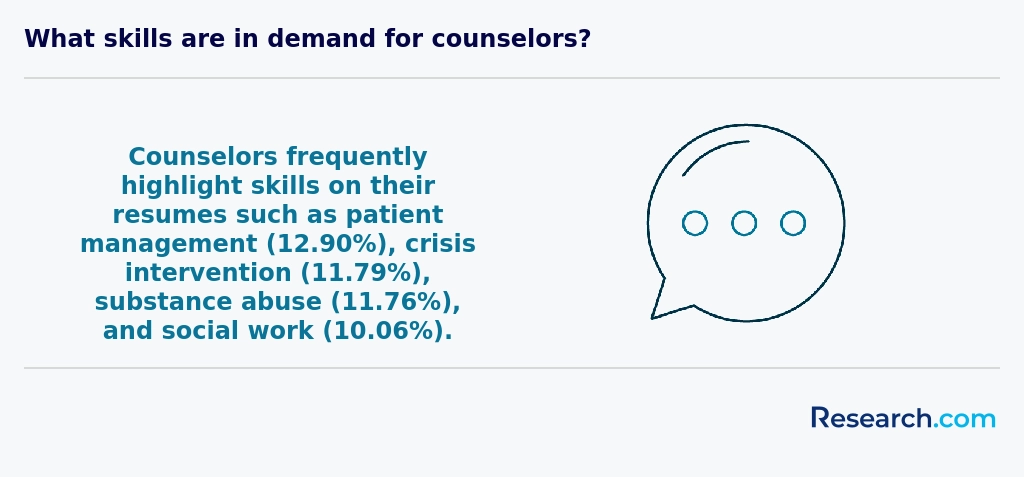
Analytical skills and the capacity to develop personalized treatment plans are also critical. Graduates should demonstrate proficiency in ethical decision-making, following state licensure guidelines overseen by the Washington State Board of Licensed Counselors. Familiarity with evidence-based techniques and crisis intervention can improve job prospects.
Lastly, collaboration skills are important since many counselors work within multidisciplinary teams in settings such as schools, hospitals, and social services. These skills reflect employer priorities reported in recent workforce surveys specific to Washington.
Finding internships in Washington for counseling degree students involves a strategic approach, combining academic resources with community connections. Many accredited counseling programs require supervised internships, offering partnerships with local mental health clinics, schools, and social service agencies.
Students should start by consulting their university's career center or counseling department, which often maintain updated lists of approved internship sites. Washington State agencies such as the Department of Social and Health Services (DSHS) provide additional opportunities for counseling internships, especially in public mental health.
Professional organizations like the Washington Counseling Association (WCA) also list internships and networking events that can connect students with potential supervisors.
Finally, online databases such as the National Board for Certified Counselors (NBCC) locator can help identify approved internship locations in Washington, ensuring compliance with licensing requirements for future credentialing.
In Washington, holding a counseling degree significantly enhances career mobility and advancement opportunities within the mental health field. The Washington State Department of Health requires specific degrees and licensure for roles like Licensed Mental Health Counselor (LMHC) or Licensed Marriage and Family Therapist (LMFT), making education a crucial step.
Completion of a counseling degree often allows graduates to pursue advanced licensure, which is linked to higher earning potential. According to the Bureau of Labor Statistics, counselors in Washington earn a median annual wage of approximately $60,000, with licensed professionals generally earning more. Employers tend to prioritize candidates with advanced degrees and state licensure, improving job security and promotion prospects.
Additionally, a counseling degree equips students with specialized skills that support career shifts into areas such as school counseling, substance abuse treatment, or clinical supervision, enhancing professional flexibility and growth potential in Washington's diverse mental health sector.
Studying for a counseling degree in Washington equips students with skills essential for interdisciplinary roles, which are increasingly common in healthcare, education, and social services. Washington's counseling programs often include coursework that integrates psychology, social work, and healthcare principles, helping students understand diverse client needs.
Many programs emphasize collaboration, teaching future counselors to work alongside professionals like doctors, educators, and social workers. According to the Washington State Department of Health, a growing number of counseling jobs require knowledge beyond traditional counseling approaches, demanding interdisciplinary communication skills.
This preparation ensures graduates can contribute effectively in multidisciplinary teams, improving client outcomes across various settings.
When choosing between a thesis and a non-thesis counseling degree program in Washington, consider your career goals and learning preferences. Thesis programs emphasize research, requiring original study and a formal defense, which suits those interested in clinical research or doctoral studies. Non-thesis options typically focus more on practical skills and applied knowledge, appealing to students seeking licensure and direct counseling roles.
Washington state reports over 4,000 licensed counselors as of 2023 (Washington State Department of Health). Many graduate programs align with licensing requirements set by the Washington State Board of Licensed Counselors, regardless of thesis choice.
Thesis programs often take longer and demand strong research skills, while non-thesis routes may offer faster completion and a practicum or internship instead.
Students based in Washington seeking to study counseling abroad have several pathways to consider. While Washington institutions offer numerous accredited counseling programs, some students look internationally to gain a broader cultural perspective. Many U.S. universities have partnerships or exchange programs with foreign institutions, enabling Washington students to complete part of their counseling degree overseas. It is essential to choose programs accredited by the Council for Accreditation of Counseling and Related Educational Programs (CACREP), as this ensures the degree meets U.S. licensure requirements upon return.
According to the Washington Student Achievement Council, about 12% of Washington college students participate in study abroad programs annually, with counseling students increasingly interested due to the field's emphasis on cultural competence.
Popular destinations for counseling studies abroad include Canada and the United Kingdom, where programs align closely with U.S. standards. Prospective students should verify credit transferability and licensure reciprocity before enrolling.
Washington offers several part-time job opportunities that complement counseling degree education. Working as a mental health technician or behavioral health aide is common, providing practical experience in clinical settings. According to the Washington State Department of Labor, these roles often require less than a bachelor's degree but allow valuable hands-on learning alongside licensed counselors.
Additionally, positions such as peer support specialist or case manager can enrich counseling students' skills in communication and client advocacy. These roles are frequently available in community health centers and non-profits.
Employment in crisis hotline services or school counseling assistants also aligns well with counseling education, enhancing practical understanding of client interaction and crisis intervention.
Counseling students in Washington have several strong networking opportunities that can enhance their educational experience and career prospects. Many universities, such as the University of Washington, host events and workshops that connect students with licensed counselors and mental health professionals. These gatherings provide valuable chances to meet mentors and gain insights into the local counseling field.
Professional organizations like the Washington State Psychological Association and the Washington Counselors Association offer student memberships, conferences, and seminars, facilitating connections across the state. Additionally, internships and practicum placements, often coordinated by counseling programs, enable students to build practical networks in diverse clinical settings.
According to the Washington State Employment Security Department, counseling is a growing field with rising demand, making early networking crucial for job placement after graduation.
Alumni networks provide significant benefits for counseling degree students in Washington. These networks offer valuable connections to experienced professionals and recent graduates who can share insights about the state's counseling job market. Washington's Department of Health reports a steady demand for licensed counselors, making networking crucial for job placement and career advancement.
Through alumni events and online platforms, students access mentorship and internship opportunities. Mentors often guide on licensure procedures, including fulfilling Washington's supervised experience hours and exam requirements. Additionally, alumni can recommend programs that align with state mental health priorities, enhancing a student's education relevance.
Research from the Washington Higher Education Coordinating Board highlights that students engaged with alumni networks have higher employment rates within six months post-graduation, compared to those who do not leverage these connections. Thus, maintaining active relationships with alumni is a strategic advantage for counseling students.
Customizing a counseling degree program in Washington involves selecting specializations, course electives, and practical experiences that align with your career goals. Many Washington universities offer tracks such as mental health counseling, school counseling, or marriage and family therapy. According to the Washington Student Achievement Council, tailoring internships and practicum placements in local agencies enhances applied learning and networking.
Students can choose programs accredited by CACREP to ensure quality education and meet licensing requirements. Additionally, incorporating courses on state-specific counseling laws and ethics prepares candidates for Washington's licensing exams. Research from the National Board for Certified Counselors highlights that focused education improves job placement rates in the region.
Counseling students in Washington often face several challenges during their studies. One common difficulty is meeting the extensive supervised clinical hours required for licensure. Washington mandates at least 3,000 supervised hours for Licensed Mental Health Counselors, which can be time-consuming and stressful to coordinate alongside coursework.
Financial concerns also affect many students, as tuition rates for graduate counseling programs in Washington can range from $15,000 to over $40,000 annually, depending on the institution (Washington Student Achievement Council, 2023).
Additionally, balancing rigorous academic demands with personal and professional obligations is a frequent struggle. Students may also encounter challenges related to the state's evolving mental health regulations, requiring them to stay updated on licensing criteria and continuing education requirements.
With a counseling degree in Washington, graduates can pursue several professional certifications to advance their careers. The most common credentials include the Licensed Mental Health Counselor (LMHC), the Licensed Marriage and Family Therapist (LMFT), and the Licensed Substance Use Disorder Professional (LSUDP). Each requires completion of specific supervised hours and passing state-recognized exams, aligned with Washington State Department of Health regulations.
National certifications, such as the National Certified Counselor (NCC) through the National Board for Certified Counselors, also enhance professional credibility. According to the Washington State Department of Health, LMHC applications have increased by over 10% in recent years, reflecting growing demand.
These certifications enable counselors to practice independently and are essential for employment in many clinical and community settings in Washington.
To write a winning application for a counseling program in Washington, start by carefully researching each school's admission requirements. Most programs seek applicants with a bachelor's degree, relevant volunteer or work experience, and a strong academic record. Emphasize your commitment to counseling through a well-crafted personal statement that explains your motivation and career goals.
Washington requires counseling applicants to demonstrate knowledge of state-specific licensure rules. Programs often look for familiarity with Washington's Department of Health guidelines and counseling ethics. Including relevant internships or community service can strengthen your application.
Letters of recommendation from professional or academic sources are crucial. Make sure they highlight your interpersonal skills and dedication to the mental health field. Lastly, prepare thoroughly for any required interviews to communicate your passion and readiness effectively.
Counseling is recognized worldwide as a vital profession that supports mental health and well-being. In the United States, including Washington state, counseling careers are growing rapidly, with the Bureau of Labor Statistics projecting a 22% increase in employment for mental health counselors from 2022 to 2032. This growth aligns with global trends emphasizing mental health awareness and the need for skilled professionals.
Globally, counseling approaches and qualifications vary, but the emphasis on evidence-based methods and licensure is common. In Washington, students benefit from programs accredited by the Council for Accreditation of Counseling and Related Educational Programs (CACREP), ensuring high standards recognized internationally.
Furthermore, Washington's diverse population offers counselors valuable experience working with various cultural backgrounds. This international perspective prepares graduates to engage with global mental health issues.
Gaining practical experience while studying for a counseling degree in Washington is essential for meeting state licensing requirements and building professional skills. Many universities incorporate practicum and internship placements within their programs to provide hands-on training. These placements often occur in community mental health centers, schools, or healthcare agencies, allowing students to work directly with clients under supervision.
The Washington State Department of Health requires students pursuing counseling licensure to complete a minimum of 3,000 supervised practice hours, which typically start during graduate training. In addition to university placements, students can seek volunteer or part-time roles in local nonprofits or counseling clinics to expand experience.
Networking through conferences hosted by organizations like the Washington Counseling Association also helps students connect with professionals and potential internship sites.
Choosing the right concentration within a counseling degree program in Washington depends on your career goals and the state's workforce demands. Common concentrations include mental health counseling, school counseling, and marriage and family therapy. Mental health counselors are in high demand in Washington, with a projected 15% job growth from 2022 to 2032 according to the U.S. Bureau of Labor Statistics.
Consider your preferred work setting; school counselors typically work in educational institutions, while mental health counselors often serve clients in private practices or clinics. Additionally, check whether the concentration meets Washington's licensing requirements, which are governed by the Department of Health's Counseling and Social Work Board.
Research the curriculum offered by each program, ensuring it covers clinical hours and prepares you for the required exams. Evaluating program accreditation by CACREP or other recognized bodies is also essential for licensure and employment prospects in Washington.
Related Counseling Rankings for Nearby Cities
- 2027 Most Valuable Counseling Degree Programs Ranking in Baltimore
- 2027 Most Valuable Counseling Degree Programs Ranking in Harrisonburg
- 2027 Most Valuable Counseling Degree Programs Ranking in Philadelphia
- 2027 Most Valuable Counseling Degree Programs Ranking in Norfolk
- 2027 Most Valuable Counseling Degree Programs Ranking in Virginia Beach
- 2027 Most Valuable Counseling Degree Programs Ranking in Lynchburg
- 2027 Most Valuable Counseling Degree Programs Ranking in Scranton
- 2027 Most Valuable Counseling Degree Programs Ranking in Pittsburgh
- 2027 Most Valuable Counseling Degree Programs Ranking in New York
- 2027 Most Valuable Counseling Degree Programs Ranking in Bronx
Top Trending Counseling Rankings
See What Experts Have To Say About Studying Counseling
Read our interview with Counseling experts

Meredith A. Rausch
Counseling Expert
Associate Professor
University of Alabama

References
- Utilize Your Alumni Networks https://www.keg.com/news/ways-to-use-your-alumni-networks-for-the-better
- Job Bank https://www.thewashingtoncouncil.org/job-bank/
- Internship Opportunities | PCS https://pacounseling.com/internships/
- Mental Health, Counseling & Therapy Internships https://www.counselingschools.com/blog/preparing-for-a-mental-health-internship
- The Challenges of Guidance Counselors in Supporting Students’ Mental Health https://theaspd.com/index.php/ijes/article/view/2406
- 6 Therapy Niches to Consider for Your Practice - Talkspace https://www.talkspace.com/blog/therapy-niches/
- How to Write a School Counselor Cover Letter | VocoVision https://www.vocovision.com/resources/uncategorized/how-to-write-a-strong-school-counselor-cover-letter/
- Alternative Careers for Counselors Who Are Burnt Out [2025 Update] - The Bad Therapist https://www.thebadtherapist.coach/blog/alternative-careers-for-counselors
- Networking for Therapists: Building Connections for Career Success & Client Care https://www.mentalyc.com/blog/networking-for-therapists
- Financial aid for behavioral health training https://startyourpath.org/get-started/financial-aid/