2027 Most Valuable Counseling Degree Programs Ranking in Tennessee

Co-Founder and Chief Data Scientist
Choosing the right counseling degree program is a big step toward a rewarding career in Tennessee. To help you navigate the options, this article features the 2027 Most Valuable Counseling Degree Programs Ranking in Tennessee, developed by the Research.com team of data scientists. This ranking highlights programs that offer the best value based on solid data, making it easier for you to make an informed decision.
By exploring this ranking, you'll discover programs that align with your goals and set you up for success. A counseling degree opens doors to meaningful work, and this guide supports your journey in finding the perfect path.
Key benefits of getting counseling degree in Tennessee
- Counseling degree graduates in Tennessee can expect rewarding salaries, such as $76,000 annually for Intervention Specialists and $60,080 for Addiction Counselors, reflecting strong earning potential in this field.
- Career paths are diverse, including roles like Community Outreach Coordinator or Family Support Worker; for example, a graduate from the University of Tennessee can find meaningful work helping others in these respected positions.
- Online counseling degrees offer flexibility and convenience, as shown by graduates from programs like Middle Tennessee State University, enabling students to balance studies with personal responsibilities while still gaining valuable skills.
- Key benefits of getting counseling degree in Tennessee
- What can I expect from counseling degree in Tennessee?
- Where can I work with counseling degree in Tennessee?
- How much can I make with counseling degree in Tennessee?
- 2027 Most Valuable Counseling Degree Programs Ranking in Tennessee
- Key Findings
- How long does it take to complete counseling degree in Tennessee?
- What's the difference between online and on-campus counseling degree?
- What is the average cost of counseling degree in Tennessee?
- Licensure Requirements in Tennessee
- What financial aid is available to counseling degree students in Tennessee?
- What are the prerequisites for enrolling in counseling degree program in Tennessee?
- Licensure Requirements in Tennessee
- What courses are typically in counseling degree programs in Tennessee?
- What types of specializations are available in counseling degree programs in Tennessee?
- How do you choose the best counseling degree in Tennessee?
- What career paths are available for counseling degree students in Tennessee?
- What is the job market for counseling degree in Tennessee?
- Related Counseling Rankings for Nearby States
- Top Trending Counseling Rankings
- See What Experts Have To Say About Studying Counseling
What can I expect from counseling degree in Tennessee?
The average cost of earning a counseling degree in Tennessee varies widely, but graduates from institutions like the University of Tennessee, Belmont University, and Tennessee State University often report tuition expenses ranging from $15,000 to $35,000 for a Master's program. These figures reflect a blend of in-state tuition rates and fees, highlighting a more accessible path for Tennessee residents pursuing licensure as professional counselors.
Graduates frequently recall juggling the financial investment alongside rigorous coursework and 1,500 hours of supervised clinical experience-a demanding but deeply rewarding commitment. The hands-on training, often completed through practicums embedded in the program, bridges theory and practice, making each dollar spent feel like an investment in real-world skills rather than just credits earned.
Many students find that the quality of programs accredited by CACREP, offered at these Tennessee universities, adds value beyond the price tag by easing licensing and boosting job prospects. This perspective reshapes how one perceives the cost-not just as tuition but as a gateway to meaningful professional fulfillment in counseling.
Where can I work with counseling degree in Tennessee?
Graduates from counseling programs at universities like Middle Tennessee State University or the University of Tennessee often find themselves stepping into roles far beyond traditional therapy offices. Imagine working in a bustling mental health clinic in Nashville, where you provide support to individuals facing complex challenges, or being a school counselor in Memphis, guiding young minds through academic and emotional hurdles.
Many graduates share how joining a government agency, such as the Tennessee Department of Human Services, allows them to make real changes in veterans' lives or help families navigate substance abuse recovery. These roles demand empathy and resilience but offer profound personal fulfillment.
Others launch private practices, cultivating deep community connections by focusing on marriage counseling or trauma recovery, driven by Tennessee's strict licensing standards that ensure professionalism.
Across all paths, counseling graduates experience rewarding careers that meet Tennessee's growing demand, reflecting a blend of purpose, challenge, and hope in varied settings-from healthcare teams to nonprofit outreach.
How much can I make with counseling degree in Tennessee?
Graduates holding counseling degrees in Tennessee often step into roles with promising salary opportunities that challenge the idea of limited earnings in this field. For example, an Addiction Counselor typically earns around $60,080 annually, reflecting a rewarding financial pathway for those specializing in this critical area. Meanwhile, Family Support Workers and Community Outreach Coordinators commonly report salaries near $54,020, combining meaningful work with solid compensation.
Many graduates from institutions like the University of Tennessee find that their specialized skills open doors to roles such as Rehabilitation Specialists, where the mean pay is approximately $48,430 per year. This figure surpasses what some might expect in counseling careers and represents steady financial growth, especially for those committed to advancing their credentials.
Consider a scenario of a recent graduate from Vanderbilt University starting as a Community Outreach Coordinator in Nashville. Their salary of about $54,020 not only supports a comfortable lifestyle but also fuels motivation to pursue further certifications. Compared to the national average of $51,000 for mental health counselors, Tennessee's salaries show competitive appeal, particularly when combined with the area's quality of life and diverse professional environments.
2027 Most Valuable Counseling Degree Programs Ranking in Tennessee
How do we rank schools?
Investing in your education is a significant decision that can shape your future, and the Research.com team understands the importance of making informed choices. To assist prospective students in Tennessee, we have meticulously crafted the "2027 Most Valuable Counseling Degree Programs Ranking in Tennessee." Our commitment to quality, credibility, and accuracy is reflected in the extensive research and analysis conducted to compile this ranking.
We utilized the following reputable data sources to ensure a comprehensive evaluation of counseling programs:
By exploring this ranking, readers will gain valuable insights into the best counseling degree programs available in Tennessee, helping them make informed decisions about their educational paths. For more details on our methodology, please visit our Research.com methodology page.


# 3 position
Richmont Graduate University
Master of Arts in Clinical Mental Health Counseling





# 17 position
Pentecostal Theological Seminary
Master of Arts in Clinical Mental Health Counseling


# 19 position
Johnson University
M.A. in Counseling

Key Findings
- Counseling degrees in Tennessee are typically offered at the master's level and are required for state licensure.
- Annual tuition ranges from about $9,000 to $20,000, with public universities being more affordable for in-state students.
- Entry-level salaries for counselors average between $45,000 and $50,000 per year, increasing to $60,000 to $70,000 with experience and licensure.
- Licensure requires completing an accredited graduate program, around 3,000 hours of supervised clinical experience, and passing a national counseling exam.
- The job market for counselors in Tennessee is expected to grow by about 12% through 2030 due to rising demand for behavioral health services.
How long does it take to complete counseling degree in Tennessee?
Completing a counseling degree in Tennessee typically spans several years, but this timeline is more flexible and personalized than many expect. Graduates from places like the University of Tennessee or Lipscomb University often reflect on the four-year journey to earn their bachelor's degree in psychology or human services, which lays the crucial groundwork for advanced study.
Advancing to a master's degree-essential for becoming a Licensed Professional Counselor-usually requires two to three years full-time. But graduates who balance jobs and family commitments praise the part-time routes offered at Middle Tennessee State University, which extend the process to three to five years but allow steady progress without overwhelming personal sacrifices.
For those pursuing specialized roles or academia, doctoral programs demand upward of four to six years post-master's. Reflecting on these extended commitments reveals a shared sentiment among graduates: the intense but rewarding rigor of Tennessee's counseling programs truly prepares them for meaningful, impactful careers.
What's the difference between online and on-campus counseling degree?
Graduates from the University of Tennessee Knoxville often recall the vibrant energy of on-campus counseling classes, where face-to-face discussions and immediate feedback created a supportive learning atmosphere. This direct interaction with professors and peers, alongside access to resources like counseling labs, builds confidence and sharpens practical skills in ways that online formats struggle to replicate.
Conversely, alumni from Middle Tennessee State University's online counseling program highlight the freedom to balance studies with full-time work and family life. Their asynchronous courses offered flexibility, but they emphasize the importance of securing practicum experiences within Tennessee to gain crucial hands-on practice, which online learning alone can't provide.
Cost and networking also paint distinct realities. On-campus students appreciate organic connections through events and campus life, while online students must consciously engage with virtual professional groups to form similar bonds. Yet, online learners celebrate saved commuting costs and the ability to attend top Tennessee programs without relocating.
What is the average cost of counseling degree in Tennessee?
The average cost of obtaining a counseling degree in Tennessee typically centers around $23,790 for in-state students, reflecting a commitment that graduates often describe as both financially demanding and deeply rewarding. Students at universities like Middle Tennessee State University or the University of Tennessee find themselves investing a median total cost that balances accessibility with quality education. This amount is challenging but manageable for those who view their degree as a gateway to meaningful professional growth in counseling.
Graduates recall navigating tuition, which often falls between public and private institution ranges, alongside extra expenses such as fees and clinical placements. The total cost of counseling programs Tennessee students face can feel daunting, yet many highlight the emotional satisfaction derived from their hands-on training and intimate class settings. These experiences foster a genuine passion for helping others that outweighs the financial burden.
While private universities may push costs higher, sometimes surpassing $30,000 annually, the opportunity to engage in specialized training and smaller classes adds perceived value. Those mindful of expenses often explore financial aid options and creative solutions like employer tuition assistance. Reflection on these costs invites consideration of the long-term benefits versus upfront investment.
Additionally, students interested in an accelerated start could explore a fast-track associate degree online before committing to graduate counseling courses. Such pathways can ease financial pressures and accelerate entry into the counseling field, illustrating that with planning, the financial asks around counseling degrees in Tennessee can be strategically managed.

Licensure Requirements in Tennessee
Before practicing independently, counseling graduates must meet state licensing standards:
- Graduate from a CACREP-accredited master’s program (minimum 60 semester hours) with required coursework in ethics, assessment, and counseling theories
- Complete in-program practicum (at least 100 hours of direct client contact) and internship (600 supervised hours)
- Accumulate 3,000 hours of post-master’s supervised clinical experience under a board-approved supervisor
- Pass the National Counselor Examination (NCE) or the National Clinical Mental Health Counseling Examination (NCMHCE)
- Submit an application and fee to the Tennessee Board of Licensed Professional Counselors and clear a background check
For those interested in a family therapy credential, learn more about how to become a licensed marriage and family therapist.
What financial aid is available to counseling degree students in Tennessee?
Many counseling students in Tennessee find financial aid options more accessible than they initially imagined. Federal aid, such as Pell Grants and Federal Direct Loans, often serves as a starting point-even for graduate students at places like the University of Tennessee. One graduate recalls relying on unsubsidized federal loans that offered competitive interest rates, easing the stress of tuition fees.
State programs, like those from the Tennessee Student Assistance Corporation, can sometimes bridge the gap, though their focus often leans toward undergraduates. Still, counseling students at Tennessee State University have benefited from grants aimed at health-related fields, using them to defray costs beyond what traditional scholarships cover.
Institutional support also plays a critical role. Graduate assistantships at these universities, which provide tuition remission and stipends, create a lifeline for students juggling work and study. One graduate shared how an assistantship not only eliminated tuition worries but also connected them to meaningful research, fueling passion alongside financial relief.
Beyond institutional and federal help, targeted grants from agencies like the Health Resources and Services Administration reward those willing to serve underserved areas, reflecting a tangible commitment between financial aid and community impact. Private scholarships from organizations such as the Tennessee Counseling Association further encourage leadership, transforming financial aid into a catalyst for professional growth in Tennessee's counseling community.
What are the prerequisites for enrolling in counseling degree program in Tennessee?
Enrolling in a counseling degree program in Tennessee requires more than just paperwork; it demands a commitment reflected in specific academic and personal achievements. Many prospective students know that holding a high school diploma or bachelor's degree is essential, but what really sets candidates apart is how they demonstrate readiness. For instance, graduates from institutions like the University of Tennessee often emphasize that maintaining a competitive GPA-usually around 3.0-is just the starting point. Their submission of official transcripts and compelling personal statements reveals motivations deeply rooted in real-life experiences, such as volunteering with mental health organizations or interning in community support roles.
Beyond academics, these students share how recommendation letters from mentors who witnessed their dedication add profound credibility. Being transparent about challenges and growth in essays allows admissions committees at places like Belmont University to see genuine passion. Although some programs still request GRE scores, many Tennessee schools are shifting focus toward holistic profiles, valuing authentic stories of resilience and service over standardized tests. This nuanced approach makes the journey toward licensure as a Licensed Professional Counselor a meaningful pursuit rather than a mere checklist.
Licensure Requirements in Tennessee
After finishing your counseling degree, pursue licensure to practice professionally in Tennessee:
- Complete a CACREP-accredited master’s program with at least 60 graduate credit hours.
- Accumulate a minimum of 3,000 post-master’s supervised clinical hours over at least two years.
- Pass the National Clinical Mental Health Counseling Examination (NCMHCE).
- Submit an application to the Tennessee Board of Licensed Professional Counselors, including transcripts, supervision logs, and exam results.
- Obtain and maintain active LPC licensure by fulfilling continuing education requirements.
For counselors interested in specialized therapy models, explore mft online programs for flexible marriage and family therapy options.
What courses are typically in counseling degree programs in Tennessee?
Tennessee counseling degrees go beyond textbooks, immersing students in courses that shape both the heart and mind of a counselor. Graduates from Middle Tennessee State University often describe how mastering foundational counseling theories-like cognitive-behavioral and humanistic approaches-felt like unlocking new ways to truly understand clients' struggles. These courses aren't abstract; they connect to real emotions and behaviors witnessed during internships.
Imagine grappling with human growth and development, not just as a concept but by seeing its impact across a client's lifespan during practicum. Multicultural counseling courses challenge students at Tennessee universities to confront their assumptions and develop genuine cultural empathy, a skill necessary in the state's diverse communities.
Group counseling classes teach students how to manage complex group dynamics, turning theory into the rewarding challenge of facilitating peer support. Career development and assessment courses prepare students to guide clients toward meaningful life changes, often drawing on real stories from supervised internships that build confidence and professional ethics essential under Tennessee's licensing board requirements.
What types of specializations are available in counseling degree programs in Tennessee?
What types of specializations are available in a counseling degree in Tennessee? Among counseling degree specializations in Tennessee, Clinical Mental Health Counseling stands out as a path many graduates choose, preparing them to face real-world mental health challenges with empathy and expertise. Graduates from institutions like the University of Memphis reflect on their rewarding experiences working in diverse settings-from private practices to community health centers-where their training made a tangible difference in people's lives.
School Counseling, another popular focus, addresses the increasing demand for mental health support within Tennessee's schools. Graduates from Middle Tennessee State University describe the meaningful role they play guiding students through academic and emotional hurdles, often becoming vital anchors in their communities. This specialization meets state certification standards and aligns with national benchmarks, ensuring practical readiness.
Marriage and Family Therapy also attracts many, offering rich insights into complex relational dynamics. Counselors trained at Tennessee Tech University share how this specialization empowers them to foster healing in families facing systemic challenges. Other types of counseling programs Tennessee offer include Addiction, Rehabilitation, and Career Counseling, each shaping professionals equipped for distinct client needs.
For those exploring graduate options, considering easy online programs could be a practical step toward transformative careers that serve Tennessee's diverse populations.
How do you choose the best counseling degree in Tennessee?
Choosing the best counseling degree in Tennessee means looking beyond rankings and names; you must weigh program accreditation, like those approved by CACREP, which many successful graduates from universities in Nashville and Knoxville emphasize as a career game-changer. These alumni often reflect on how accredited programs gave them confidence stepping into licensure exams and clinical environments. Affordability plays a crucial role too-graduates recall balancing tuition costs that typically range between $8,000 and $15,000 annually against living expenses, internships, and exam fees. This practical balancing act is vital when searching for affordable counseling degrees in Tennessee that don't sacrifice quality. Delivery format also shapes experiences: students juggling jobs praise hybrid programs blending online flexibility with essential face-to-face practicum at schools like Middle Tennessee State University. Finally, considering Tennessee's booming mental health sector, graduates encourage picking programs with strong clinical networks to tap into the 14% job growth projection. For those aiming higher, exploring low cost phd programs can unlock further opportunities.
What career paths are available for counseling degree students in Tennessee?
Counseling graduates in Tennessee find diverse career opportunities that challenge the usual perceptions of mental health roles. Graduates from well-known local universities often share how becoming a Licensed Professional Counselor (LPC) or a School Counselor gave them direct, fulfilling ways to impact lives-whether by guiding youths through academic struggles or helping adults overcome trauma. These roles tap into a profound sense of purpose, rooted in the state's growing mental health awareness.
For those exploring counseling degree job prospects Tennessee offers unique pathways beyond traditional therapy. Some graduates embrace positions as Marriage and Family Therapists (MFTs) or Clinical Social Workers, where collaboration with healthcare providers creates a dynamic professional environment. Others find meaningful work in addiction counseling, especially with certification as an Alcohol and Drug Counselor (CADC), responding to Tennessee's urgent public health challenges.
The financial journey of counseling students shapes their choices as well. Many navigate costs at popular institutions by seeking scholarships or choosing accredited universities online with no cost to apply, balancing affordability with quality education while preparing for careers rich in real-world impact.
What is the job market for counseling degree in Tennessee?
The counseling job outlook in Tennessee reveals a landscape rich with opportunity driven by increasing mental health awareness. Graduates from institutions like the University of Tennessee and Belmont University often find themselves quickly employed in diverse settings-from public schools supporting student growth to private clinics focusing on therapeutic care. Many feel energized by the real-world impact they make, particularly in communities where access to mental health resources is expanding.
Employment opportunities in Tennessee reflect this demand, yet the state's approachable tuition rates at public universities help ease the path to earning a degree. Graduates consistently highlight how their programs prepared them not just with theory but practical skills that translate directly into roles at hospitals, rehabilitation centers, and government agencies. Exploring what schools offer dual degree programs can further enhance a candidate's versatility in this evolving market.
Median salaries around $48,000 may seem modest compared to other regions, but many Tennessee counselors quickly see growth potential, especially those achieving Licensed Professional Counselor status. This steady demand in Tennessee counseling degree employment opportunities challenges students to think beyond conventional salary expectations and embrace the meaningful work at the heart of the profession.
Frequently Asked Questions About counseling
Counseling degree students in Tennessee can enhance their learning by engaging in both academic and practical experiences offered by accredited institutions. Tennessee has several CACREP-accredited programs, which ensure a high standard of education aligned with national counseling standards. Students should seek internships and practicum opportunities, as the state requires over 3,000 hours of supervised experience for licensure as a Licensed Professional Counselor (LPC).
Participating in local counseling associations like the Tennessee Mental Health Counselors Association provides networking and professional development. Utilizing university resources such as workshops and research projects also deepens understanding. Staying informed about Tennessee licensure requirements and counselor board updates ensures readiness for certification exams. According to the Tennessee Department of Health, combining coursework with hands-on experience maximizes readiness for a successful counseling career.
The counseling field in Tennessee is expanding to include several emerging niches that address specific community needs. One growing area is telehealth counseling, which gained prominence during the COVID-19 pandemic and continues to expand due to increased access and convenience. According to the Tennessee Department of Mental Health, telehealth services have grown by over 30% since 2020.
Another emerging niche is trauma-informed counseling, focusing on individuals affected by adverse experiences, including the opioid crisis that heavily impacts Tennessee. Additionally, career and rehabilitation counseling are gaining importance as the state works to support workforce development and individuals with disabilities.
These specialized areas offer diverse opportunities for counseling graduates and align with Tennessee's evolving health and social challenges.
After earning a counseling degree in Tennessee, it is essential to obtain licensure to enter the job market. The Tennessee Board of Licensed Professional Counselors requires candidates to complete 3,000 hours of supervised clinical experience and pass the National Counselor Examination (NCE).
Networking plays a vital role in finding employment. Joining professional organizations like the Tennessee Counseling Association offers access to job postings and career resources.
Additionally, gaining experience through internships or volunteer work can improve practical skills and enhance a resume. According to the U.S. Bureau of Labor Statistics, Tennessee's employment of mental health counselors is expected to grow by 23% between 2020 and 2030.
Staying informed about local job markets and continuous professional development will help graduates adapt to evolving opportunities.
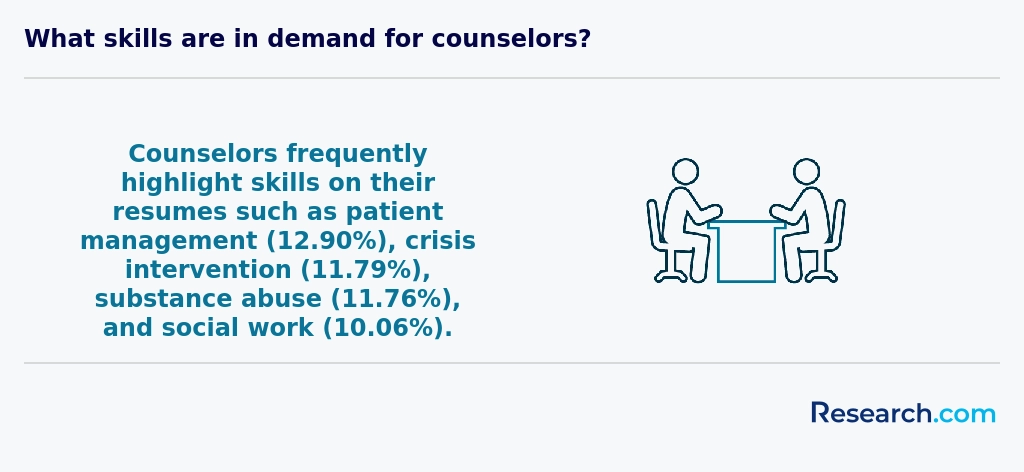
Employers seeking counseling degree graduates in Tennessee prioritize strong communication skills, essential for effective client interaction and understanding diverse populations. According to the Tennessee Department of Labor, interpersonal skills rank among the top competencies valued in counseling roles statewide.
Critical thinking and problem-solving abilities are also highly sought after, enabling counselors to develop tailored treatment plans. Additionally, knowledge of mental health practices and ethical standards, aligned with state licensing requirements, is crucial for professional success.
Adaptability and cultural competence are increasingly important in Tennessee's growing multicultural communities. Graduates who demonstrate empathy and confidentiality skills tend to perform well in counseling settings, making these qualities vital for employment.
Finding internships in Tennessee related to counseling degrees involves several key steps. First, connect with your university's career services or counseling department, as many schools have partnerships with local clinics and mental health organizations. According to the Tennessee Department of Mental Health and Substance Abuse Services, the state supports various internship programs to ensure practical experience for counseling students.
Exploring community mental health centers, hospitals, and nonprofit organizations in cities like Nashville, Memphis, and Knoxville can offer valuable internship placements. Additionally, professional associations such as the Tennessee Counseling Association often list internship opportunities and can provide networking events.
Students should also consider checking online platforms specific to Tennessee internships or use statewide resources like the Tennessee Higher Education Commission's internship database. Early application and clear communication of your educational goals are important to secure competitive positions.
Obtaining a counseling degree in Tennessee can significantly enhance career mobility and advancement opportunities. The state requires a minimum of a master's degree in counseling or a closely related field for licensure as a Licensed Professional Counselor (LPC), which is essential for many clinical and community mental health jobs. According to the Tennessee Department of Health, LPC licensure opens doors to higher-paying positions and leadership roles within healthcare, education, and social service sectors.
The Tennessee labor market for counselors is projected to grow faster than the national average, with the Tennessee Department of Labor estimating a 15% increase in related jobs by 2030. This growth reflects rising demand for mental health professionals statewide. Additionally, advanced certifications and degrees, such as a doctorate, often lead to roles in supervision, policy development, or academia, further expanding career paths.
Studying for a counseling degree in Tennessee equips students with skills essential for interdisciplinary collaboration. Tennessee's counseling programs emphasize training that integrates psychology, social work, and healthcare principles. This approach prepares graduates to work alongside professionals in education, medical settings, and community services.
Many accredited programs include fieldwork and internships that expose students to diverse environments, fostering the ability to communicate across disciplines. According to the Tennessee Higher Education Commission, over 70% of counseling graduates find roles that require teamwork with varied specialists. This emphasis reflects the growing demand for counselors who can navigate complex systems to support clients effectively.
Additionally, Tennessee's licensing requirements encourage knowledge in ethics, cultural competence, and evidence-based practices, further enhancing interdisciplinary readiness.
When choosing between a thesis and a non-thesis counseling degree program in Tennessee, it is important to consider your career goals. A thesis program typically involves conducting original research and writing a substantial paper. This path is well-suited for students interested in academic or research careers, or those planning to pursue a PhD later.
Non-thesis programs focus on practical skills and coursework, often including internships or field experience. These programs may be preferred by individuals aiming for immediate clinical practice or licensure.
According to the Council for Accreditation of Counseling & Related Educational Programs (CACREP), many Tennessee programs offer both options to accommodate diverse student needs.
Factors such as time commitment, faculty support, and professional goals should guide your choice.
Students based in Tennessee interested in studying counseling abroad have several pathways to consider. While Tennessee itself is home to strong counseling programs, those seeking international experience can explore exchange programs or dual degrees offered through partnerships with foreign universities. Many US institutions with accreditation recognized by the Council for Accreditation of Counseling and Related Educational Programs (CACREP) collaborate globally, enabling students to spend semesters overseas.
However, students should ensure foreign programs align with Tennessee's licensure requirements, as the state requires a master's degree plus supervised experience for counseling licensure, according to the Tennessee Board of Licensed Professional Counselors.
Programs abroad can enrich cultural competence, a key skill for effective counseling in diverse communities.
Students pursuing counseling degrees in Tennessee have several part-time job options that complement their education. Positions such as mental health technician, behavioral health aide, or crisis intervention worker provide valuable hands-on experience. According to the Tennessee Department of Labor, healthcare support roles in mental health settings are growing steadily, with expected job growth of 12% over the next decade.
Additionally, working as a peer support specialist in community organizations or nonprofit agencies can enhance skills in client interaction and case management. These roles often offer flexible hours, fitting well with academic schedules.
Campus counseling centers may also hire students as assistants, allowing exposure to counseling frameworks and administrative duties related to mental health services.
Counseling students in Tennessee benefit from numerous networking opportunities that help them connect with professionals and peers. Many universities in the state host events such as career fairs, guest lectures, and workshops designed specifically for counseling students. These events often feature licensed counselors and industry experts who provide insights and mentorship.
Additionally, Tennessee is home to active chapters of the American Counseling Association (ACA) and the Tennessee Counseling Association (TCA). These organizations offer conferences, regional meetings, and online forums where students can engage with experienced counselors. Participation in these groups helps students build professional relationships critical for internships and employment.
The Tennessee Higher Education Commission also supports collaboration among counseling programs by promoting partnerships with healthcare providers and community organizations, increasing local practical training and networking possibilities.
Alumni networks provide valuable support to counseling degree students in Tennessee by offering connections within the local professional community. These networks often facilitate mentorship opportunities, helping students navigate licensure requirements unique to Tennessee, such as those set by the Tennessee Board of Licensed Professional Counselors.
Through alumni events and online platforms, students gain access to job leads and internships, crucial in a state where counseling roles are growing in healthcare and educational settings. According to the Tennessee Department of Labor, counseling employment is projected to grow by 12% through 2030.
Moreover, alumni can share practical advice on graduate school experiences and career development, enhancing student success beyond the classroom.
Customizing a counseling degree program in Tennessee largely depends on selecting specialized tracks aligned with your career goals. Many Tennessee universities offer concentrations such as school counseling, mental health counseling, or marriage and family therapy. For example, Tennessee Board of Licensed Professional Counselors recognizes programs that prepare graduates to meet licensure requirements in these areas.
Students can often tailor their courses by choosing electives focused on substance abuse, trauma, or child and adolescent counseling. Practical experience is crucial, so seeking programs with strong internship placements in Tennessee's clinics or schools enhances relevant skills.
Additionally, some programs provide flexible formats including online and part-time options, allowing you to balance education with professional commitments.
According to the Tennessee Higher Education Commission, over 65% of counseling graduates find employment in their specialized area within six months, highlighting the importance of targeted training.
Counseling students in Tennessee often face several challenges during their studies. One significant issue is balancing rigorous coursework with required clinical hours. Tennessee mandates at least 1,500 supervised hours for licensure, which can be difficult to complete alongside academic responsibilities.
Another challenge is the limited availability of affordable graduate programs. Tuition rates in Tennessee average around $8,000 to $13,000 per year for in-state students, according to the National Center for Education Statistics. This cost can be a barrier for many aspiring counselors.
Additionally, some students encounter difficulties finding diverse practicum placements, especially in rural areas. According to the Tennessee Department of Mental Health, rural regions have fewer counseling resources, which limits hands-on training opportunities.
Lastly, adapting to evolving licensure requirements and state board regulations demands continuous attention, making it essential for students to stay informed throughout their education.
With a counseling degree in Tennessee, graduates can pursue several professional certifications to advance their careers. The most recognized credential is the Licensed Professional Counselor (LPC), which requires completing a master's degree, supervised experience, and passing the National Counselor Examination.
Tennessee also offers the Licensed Master Social Worker (LMSW) and Licensed Clinical Social Worker (LCSW) credentials for those focusing on social work with counseling components. Additionally, counselors can seek certification as Certified Rehabilitation Counselors (CRC) or Licensed Marriage and Family Therapists (LMFT), depending on their specialization.
According to the Tennessee Department of Health, LPC professionals earned a median annual salary of about $51,000 in 2023, reflecting growing demand in healthcare and mental health services across the state.
To write a winning application for a counseling program in Tennessee, start by researching the specific admission requirements of your target schools. Many programs require a bachelor's degree with a competitive GPA, generally above 3.0, and relevant volunteer or work experience in counseling or human services.
Your personal statement should clearly express your passion for counseling and your long-term career goals. Tennessee's Board of Licensed Professional Counselors emphasizes the importance of demonstrating ethical awareness and cultural competence in applications.
Consider including strong letters of recommendation from professors or supervisors familiar with your interpersonal skills and dedication. Also, highlight any experience with Tennessee populations, as local knowledge can bolster your application.
Counseling careers are increasingly recognized worldwide for their essential role in mental health and well-being. In the United States, including Tennessee, demand for professional counselors continues to grow, reflecting a global trend. According to the U.S. Bureau of Labor Statistics, employment in counseling-related fields is expected to grow 23 percent from 2021 to 2031, much faster than average.
Globally, mental health awareness drives the need for culturally competent counselors who understand diverse populations. In Tennessee, programs often align with national standards set by the Council for Accreditation of Counseling and Related Educational Programs (CACREP), ensuring graduates are prepared for both state licensure and broader professional roles.
This alignment supports mobility and practice opportunities across different regions, reflecting an interconnected global perspective on counseling careers.
Gaining practical experience while studying counseling in Tennessee is essential for licensure and career readiness. Most Tennessee counseling programs require supervised clinical hours, which students typically complete through internships or practicum placements. These opportunities are often organized in collaboration with local mental health agencies, hospitals, and schools.
Students should seek programs accredited by the Council for Accreditation of Counseling and Related Educational Programs (CACREP) to ensure quality fieldwork experiences. According to the Tennessee Board of Licensed Professional Counselors, applicants must complete at least 1,500 hours of supervised experience before licensure.
Additionally, joining professional organizations or volunteering can broaden exposure to diverse client populations.
When choosing a concentration within a counseling degree program in Tennessee, consider your career goals and local licensure requirements. Tennessee offers various counseling specialties, including clinical mental health, school counseling, and marriage and family therapy. Each focus prepares students for different roles and certifications recognized by the Tennessee Department of Mental Health and Substance Abuse Services.
Research job market trends in Tennessee, where mental health counseling demand is projected to grow by 13% through 2030 according to the U.S. Bureau of Labor Statistics. Selecting a concentration aligned with state workforce needs can improve job prospects. Additionally, check if the program is accredited by the Council for Accreditation of Counseling and Related Educational Programs (CACREP), which many Tennessee employers prefer.
Related Counseling Rankings for Nearby States
- 2027 Most Valuable Counseling Degree Programs Ranking in Alabama
- 2027 Most Valuable Counseling Degree Programs Ranking in Georgia
- 2027 Most Valuable Counseling Degree Programs Ranking in Missouri
- 2027 Most Valuable Counseling Degree Programs Ranking in Virginia
- 2027 Most Valuable Counseling Degree Programs Ranking in Indiana
- 2027 Most Valuable Counseling Degree Programs Ranking in Illinois
- 2027 Most Valuable Counseling Degree Programs Ranking in Ohio
- 2027 Most Valuable Counseling Degree Programs Ranking in Florida
- 2027 Most Valuable Counseling Degree Programs Ranking in Maryland
- 2027 Most Valuable Counseling Degree Programs Ranking in Pennsylvania
Top Trending Counseling Rankings
See What Experts Have To Say About Studying Counseling
Read our interview with Counseling experts

Meredith A. Rausch
Counseling Expert
Associate Professor
University of Alabama

References
- Online Degrees https://onlinecounselingprograms.com/online-counseling-degrees/
- Utilize Your Alumni Networks https://www.keg.com/news/ways-to-use-your-alumni-networks-for-the-better
- 11 Challenges That Counselors & Therapists Face - Talkspace https://www.talkspace.com/blog/counselor-challenges/
- Becoming An International School Counselor https://iscainfo.com/becoming-an-international-school-counselor/
- Study Counseling Abroad - Top Universities for Masters, MBA, PhD Degree Programs https://studee.com/degree/abroad/counseling
- Creating Your Niche In Counseling Private Practice https://practiceoftherapy.com/creating-niche-counseling-private-practice/
- How To Become A Licensed Counselor: A Step-by-Step Guide | Psychology.org https://www.psychology.org/careers/counseling/
- What Degree Do I Need to Be a Counselor? | University of Bridgeport https://www.bridgeport.edu/news/degree-needed-to-be-a-counselor/
- Alternative Careers for Counselors Who Are Burnt Out [2025 Update] - The Bad Therapist https://www.thebadtherapist.coach/blog/alternative-careers-for-counselors
- Interdisciplinary Training: Preparing Counselors for Collaborative Practice https://nexusipe.org/informing/resource-center/interdisciplinary-training-preparing-counselors-collaborative-practice