2027 Most Popular Counseling Degree Programs Ranking in Virginia
Choosing the right counseling degree program in Virginia can be overwhelming. To help you navigate this important decision, the 2027 Most Popular Counseling Degree Programs Ranking in Virginia offers a clear, data-driven perspective crafted by the Research.com team of data scientists.
This comprehensive ranking highlights programs worth considering, making it easier for you to find the best fit for your goals.
Pursuing a counseling degree opens doors to meaningful careers that make a real impact. Exploring this article will empower you with valuable insights for your educational journey.
Key benefits of getting counseling degree in Virginia
- Counseling degree graduates in Virginia can expect competitive salaries, such as Intervention Specialists earning around $76,000 annually and Addiction Counselors making about $60,080 per year, offering financial stability and rewarding work.
- Graduates often explore diverse career paths, including roles like Community Outreach Coordinators or Family Support Workers, showcasing the degree's versatility and ability to open many doors in helping professions.
- Completing a counseling degree online from a reputable Virginia university provides flexibility and convenience, allowing students to balance work and family while advancing their education at their own pace.
What can I expect from counseling degree in Virginia?
The average cost of pursuing a counseling degree in Virginia largely depends on whether you attend a public or private institution. Graduates from public universities like Radford University often describe their expenses as manageable, with in-state tuition typically ranging from $8,000 to $15,000 per year. This affordability allows many students to focus on the demanding coursework and supervised practicums without overwhelming financial stress. Conversely, private institutions may present higher costs, which some graduates find offset by more flexible scheduling or smaller class sizes.
Many students appreciate that schools such as George Mason University and Virginia Commonwealth University offer evening or online classes, providing the opportunity to work while studying. This flexibility is crucial, as balancing clinical hours-sometimes as many as 1,000 supervised practicum hours-and academic requirements can be intense.
Though tuition varies, the investment often feels worthwhile to those who envision helping others in schools, clinics, or private practice, reflecting a shared sense of purpose among Virginia's counseling graduates.
Where can I work with counseling degree in Virginia?
Graduates with counseling degrees from institutions like Virginia Commonwealth University or James Madison University often find themselves employed in diverse environments across the state. For example, many alumni appreciate how school counseling roles in public and private K-12 schools enable them to directly support students' emotional and academic growth, matching their passion for education and youth development.
Others, drawn to healthcare, report rewarding experiences working in hospitals or outpatient clinics specializing in trauma or substance abuse. They often collaborate closely with medical professionals, adding critical value to patient care. A graduate from Radford University described the satisfaction of helping clients through behavioral health challenges as both challenging and deeply fulfilling.
Community agencies and nonprofits also provide practical outlets, especially for those interested in social justice and advocacy. Counselors in these settings navigate complex real-life issues like addiction or domestic violence, offering meaningful support that resonates with their desire for impactful work.
Lastly, some graduates choose private practice, valuing the autonomy it offers while benefiting from Virginia's clearly defined licensure pathways and supervised clinical hour requirements. This path appeals to those valuing independence balanced with professional credibility.
How much can I make with counseling degree in Virginia?
Graduates with counseling degrees from universities like James Madison University or Virginia Commonwealth University in Virginia can expect varied earnings depending on their chosen counseling field. For example, Addiction Counselors earn an average annual wage of about $60,080, reflecting both demand and specialized training in this area.
Those working as Rehabilitation Specialists typically make around $48,430 per year. This role often appeals to graduates interested in hands-on support for individuals recovering from injuries or illnesses. Meanwhile, Community Outreach Coordinators and Family Support Workers, often roles pursued by counseling graduates, tend to earn about $54,020 annually, providing vital services that connect communities to resources.
It's important to note that licensure and experience influence these figures significantly. Many graduates initially face salaries closer to $40,000 to $45,000, but with growth and certification, they can surpass these averages. Graduates report fulfilling experiences helping diverse populations, and those from metropolitan areas like Northern Virginia often note higher earning potential aligned with the local cost of living.
- Key benefits of getting counseling degree in Virginia
- What can I expect from counseling degree in Virginia?
- Where can I work with counseling degree in Virginia?
- How much can I make with counseling degree in Virginia?
- How do we rank schools?
- 2027 Most Popular Counseling Degree Programs Ranking in Virginia
- What counseling degree graduates have to say
- Key Findings
- How long does it take to complete counseling degree in Virginia?
- Most Affordable Counseling Schools in Virginia
- What's the difference between online and on-campus counseling degree?
- Licensure Requirements
- What is the average cost of counseling degree in Virginia?
- Licensure and Certification Requirements
- What financial aid is available to counseling degree students in Virginia?
- Licensure and Certification Requirements in Virginia
- What are the prerequisites for enrolling in counseling degree program in Virginia?
- Licensure Requirements and Steps to Practice in Virginia
- What courses are typically in counseling degree programs in Virginia?
- What types of specializations are available in counseling degree programs in Virginia?
- How do you choose the best counseling degree in Virginia?
- What career paths are available for counseling degree students in Virginia?
- What is the job market for counseling degree in Virginia?
- Frequently Asked Questions About counseling
- Related Counseling Rankings for Nearby States
- Top Trending Counseling Rankings
- See What Experts Have To Say About Studying Counseling
How do we rank schools?
Investing in your education is a significant decision that can shape your future, and the Research.com team understands the importance of making informed choices. To assist prospective students in Virginia, we have meticulously crafted the "2027 Most Popular Counseling Degree Programs Ranking in Virginia." Our commitment to quality, credibility, and accuracy is reflected in the extensive research and analysis conducted to compile this ranking.
We utilized the following reputable data sources to ensure a comprehensive evaluation of counseling programs:
By exploring this ranking, readers will gain valuable insights into the most popular and high-quality counseling degree programs in Virginia, helping them make informed decisions about their educational paths. For more details on our methodology, please visit our Research.com methodology page.
2027 Most Popular Counseling Degree Programs Ranking in Virginia
# 1 position
University of Virginia
Master
The University of Virginia offers a Master's program focused on counseling with a total cost of $75,792. The program is selective, admitting 17% of the 58,951 applicants. About 57% of students receive financial aid, indicating mid-level support. This program attracts a large number of applicants, reflecting its competitive nature and prominence in the counseling field.
# 2 position

The Master's program in counseling at Virginia Polytechnic Institute and State University has a total cost of $53,020. The program is less selective with an acceptance rate of 55%, admitting candidates from a large pool of 52,498 applicants. Moderate financial aid is available, with 67% of students receiving assistance, making it a viable option for those seeking support during their studies.
# 3 position
James Madison University
Bachelor
James Madison University offers a Bachelor program focused on counseling with a total cost of $45,958. The university has a less selective acceptance rate of 72%, admitting most applicants out of 38,428 candidates. Around 58% of students receive financial aid, reflecting a mid-level aid availability. This program is suitable for candidates seeking an accessible counseling degree with moderate financial support options.
# 4 position
James Madison University
Master
James Madison University offers a Master's program focused on counseling with a total cost of $45,958. The program has a less selective acceptance rate of 72%, admitting most applicants out of 38,428 candidates. About 58% of students receive mid-level financial aid, helping to offset educational expenses for a significant portion of enrollees.
# 5 position
James Madison University
Doctor
James Madison University offers a Doctoral program focused on counseling with a total cost of $45,958. The program has a less selective acceptance rate of 72%, admitting most applicants from the 38,428 who applied. Approximately 58% of students receive mid-level financial aid, making the program accessible for many seeking advanced studies in this field.
# 6 position
George Mason University
Master
George Mason University offers a Master's program focused on counseling with a total cost of $55,701. The program has an open admission policy, accepting 87% of its 25,234 applicants. About 79% of students receive moderate financial aid, making support fairly accessible for most enrollees. This combination of factors reflects a broadly accessible program with substantial financial assistance opportunities.
# 7 position
Liberty University
Master
Liberty University offers a Master's degree program focused on counseling. The program has an open admission policy, accepting 99% of applicants out of 24,942 candidates. Students benefit from a high level of financial aid, with 97% receiving support. The total cost of completing the program amounts to $35,931, making it accessible to many prospective graduate students interested in counseling.
# 8 position
Liberty University
Doctor
Liberty University offers a Doctoral program focused on counseling, with an open admission policy accepting 99% of applicants. The total cost of the program is $35,931. The program sees a high level of financial aid, with 97% of students receiving support. It attracts a large applicant pool, receiving 24,942 applications, making it accessible to many prospective students.
# 9 position
Liberty University
Bachelor
Liberty University offers a Bachelor program focused on counseling with a total cost of $35,931. The school has an open admission policy, accepting 99% of its 24,942 applicants. A high level of financial aid is available, with 97% of students receiving support. This makes the program accessible to a broad range of students seeking to advance their education in counseling.
# 10 position

Virginia Commonwealth University offers a Master's program focused on counseling with an open admission acceptance rate of 93%, welcoming a large applicant pool of 20,954 students. The total cost for the program is $59,613. A notable 92% of enrolled students receive financial aid, indicating a high level of support for financing this advanced degree.
# 11 position
Hampton University
Doctor
Hampton University offers a Doctoral program focused on counseling with a total cost of $46,000. The program has a less selective acceptance rate of 62%, admitting a significant number of applicants, with 17,885 applying. A high level of financial aid is available, as 82% of students receive assistance, which can help manage the overall expenses of this advanced degree.
# 12 position
Hampton University
Master
Hampton University offers a Master's program focused on counseling with a total cost of $46,000. The program has an acceptance rate of 62%, indicating it is less selective. There are 17,885 applicants competing for admission. A high level of financial aid is available, with 82% of students receiving some form of support, helping to offset educational expenses.
# 13 position
William & Mary
Master
The William & Mary Master's program in counseling has a total cost of $68,270. It is moderately selective with a 34% acceptance rate and attracts 17,798 applicants. Approximately 55% of students receive mid-level financial aid, which helps offset costs. This program is designed for students seeking advanced counseling education with a competitive yet accessible admissions process within a well-regarded institution.
# 14 position
Old Dominion University
Bachelor
Old Dominion University offers a bachelor's degree focused on counseling with a total program cost of $51,948. The program has an open admission policy, accepting 90% of its 15,100 applicants. A high level of financial aid is available, with 94% of students receiving assistance, making it financially accessible for many. This program is well-suited for students seeking affordable education in counseling at the undergraduate level.
# 15 position
Old Dominion University
Master
Old Dominion University offers a Master's degree program focused on counseling. The program has an open admission policy with a 90% acceptance rate, making it accessible to most applicants. Approximately 15,100 students apply, reflecting strong interest. The total cost of the program is $51,948. Financial aid is highly available, with 94% of students receiving some form of assistance to help manage expenses.
# 16 position

The Master program in counseling at Virginia State University has an open admission policy with an 89% acceptance rate, welcoming a large applicant pool of 11,775 candidates. The total cost of the program is $39,183. Students benefit from high financial aid availability, with 92% receiving some form of support, making it an accessible option for many seeking advanced counseling education.
# 17 position
Norfolk State University
Master
The Master's program in counseling at Norfolk State University offers an open admission policy with an acceptance rate of 88%, welcoming a large number of applicants at 11,247. The total cost amounts to $34,273. A significant 94% of enrolled students benefit from high levels of financial aid, making the program accessible for many seeking advanced education in counseling.
# 18 position
Radford University
Master
Radford University offers a Master's program focused on counseling with a total cost of $39,626. The program has an open admission policy, accepting 90% of applicants. Approximately 10,960 students applied, reflecting significant interest. Financial aid is highly accessible, with 96% of students receiving support, which can greatly assist with affordability for prospective students.
# 19 position
Regent University
Master
Regent University offers a master's program focused on counseling with a total cost of $35,258. The program has a moderately selective acceptance rate of 38%, admitting a substantial number of its 8,414 applicants. A high percentage of students, 97%, receive financial aid, making funding opportunities widely accessible for enrolled students.
# 20 position
Regent University
Doctor
Regent University offers a Doctoral degree program focused on counseling with a total cost of $35,258. The program is moderately selective, admitting 38% of the 8,414 applicants. A high percentage of students, 97%, receive financial aid, making it accessible for many. This combination of rigorous admission standards and significant financial support highlights the program's balanced approach to quality and affordability for prospective students.
What counseling degree graduates have to say
- Studying counseling at Virginia Commonwealth University equipped me with both theoretical knowledge and hands-on experience through their excellent internship programs. The supportive faculty truly cares, making the learning journey rewarding and inspiring. I feel confident and prepared to help others thanks to VCU's nurturing environment. - Emily
- The University of Virginia's counseling program combines rigorous academics with a strong community focus. The diverse practicum opportunities helped me develop essential skills, while the campus culture encouraged personal growth. It was transformative both professionally and personally. I'm proud to be a graduate of such a reputable institution. - Marcus
- At Liberty University, I appreciated the flexibility and faith-based approach in their counseling degree program. The small class sizes allowed for meaningful connections and personalized mentorship. Studying here deepened my passion for counseling and reinforced my commitment to serve others with empathy and integrity. - Rachel
Key Findings
- Counseling degrees in Virginia include Master of Education (M.Ed.) and Master of Science (M.S.) with specialties like clinical mental health, school counseling, and marriage and family therapy.
- Public universities charge between $10,000 and $15,000 per year for in-state graduate tuition, while private schools range from $20,000 to $30,000 annually.
- Total costs for a master's counseling program usually fall between $30,000 and $60,000 depending on the school and program length.
- The average starting salary for counselors in Virginia is around $56,000, rising to $70,000-$75,000 with experience and licensure.
- Licensure in Virginia requires an accredited degree, 2,000 to 3,000 supervised clinical hours, and passing a national exam, with credentials like Licensed Professional Counselor (LPC) and Licensed Marriage and Family Therapist (LMFT).
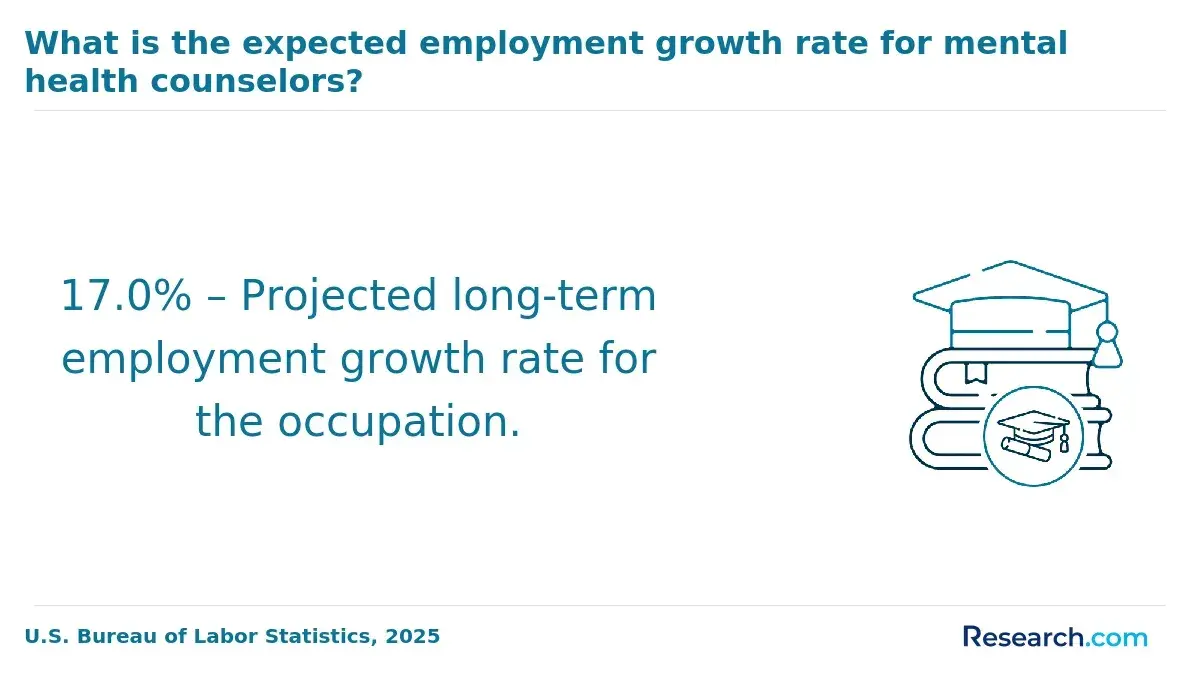
- Counseling jobs are concentrated in urban areas such as Richmond, Virginia Beach, and Fairfax, with an employment growth rate faster than the national average.
How long does it take to complete counseling degree in Virginia?
Completing a counseling degree in Virginia varies significantly by educational level and individual circumstances. For example, graduates from popular institutions like George Mason University or James Madison University often start with a four-year bachelor's program, which provides essential foundations in psychology and counseling theory. Those aiming for licensure typically pursue a master's degree, which can take two to three years full-time. However, many working professionals opt for part-time study, sometimes doubling this duration to four years or more, balancing family and work commitments with academic goals.
Master's programs demand about 60 credit hours combined with supervised practicum experiences, ensuring students gain practical skills alongside theory. Graduates often share how these real-world experiences at places like Virginia Commonwealth University helped them feel confident and prepared for licensure requirements.
Doctoral candidates at institutions such as the University of Virginia may spend anywhere from four to six years completing extensive research and clinical training, a commitment reflecting their pursuit of advanced roles or academic careers.
Most Affordable Counseling Schools in Virginia
When considering a counseling degree in Virginia, affordability is a crucial factor. Many students are looking for options that balance quality education with manageable costs. If you're one of them, you might want to explore the cheapest counseling school in Virginia, which can provide a great starting point for your educational journey. By researching these affordable options, you can find a program that fits your budget without compromising on the quality of education, ensuring you're well-prepared for a successful career in counseling.
What's the difference between online and on-campus counseling degree?
Choosing between online and on-campus counseling degrees in Virginia often hinges on personal circumstances and learning preferences. Graduates from Virginia Commonwealth University (VCU) who opted for online programs often praise the flexibility online learning offers, allowing them to balance work or family while accessing lectures on their own schedule. However, many also note the challenge of staying disciplined without the immediate presence of instructors or peers.
Conversely, students attending on-campus programs at institutions like James Madison University frequently value the direct interaction with faculty and the hands-on opportunities, such as clinical labs and workshops. These experiences foster a strong sense of community and provide immediate feedback, which some find invaluable for their professional growth.
Cost and licensing requirements remain comparable across delivery modes. Online students appreciate lower incidental expenses, while those on-campus benefit from campus resources like mental health centers. Ultimately, whether one thrives with structured, in-person engagement or prefers the autonomy of online study depends on individual needs and learning styles within Virginia's accreditation standards.
Licensure Requirements
To become a Licensed Professional Counselor (LPC) in Virginia, you must meet education, supervision, exam and application standards:
- Education: Earn a master’s degree (48–60 credits) in counseling from a CACREP-accredited program. cacrep online counseling programs
- Supervised Experience: Complete 3,000 hours of supervised clinical practice (minimum 2,400 client contact hours)
- Examination: Pass the National Counselor Examination (NCE) or the National Clinical Mental Health Counseling Examination (NCMHCE)
- Application: Submit official transcripts, supervision verification, fingerprint/background check, and application fee to the Virginia Board of Counseling
- Renewal: Complete 40 hours of approved continuing education every two years to maintain your LPC license
What is the average cost of counseling degree in Virginia?
The average cost of obtaining a counseling degree in Virginia is around $19,897 for in-state students, marking a considerable financial investment but one that many graduates describe as worthwhile. This figure reflects the median total cost for the full counseling degree pathway, including tuition, fees, and necessary materials. For students attending well-known institutions like Virginia Commonwealth University or George Mason University, tuition alone for graduate counseling programs generally falls within a range consistent with this data, usually between $10,000 and $15,000 per year for residents.
Many students pursuing a Virginia counseling degree tuition and fees find ways to manage expenses through scholarships, assistantships, or part-time study, sharing stories of the relief they felt when financial aid helped lessen their burden. However, out-of-state students may face nearly double these costs, a challenge often offset by the rich academic experiences and networking opportunities available in Virginia's vibrant counseling education community.
In-person programs offer immersive experiences, yet some graduates have appreciated the flexibility of online options that Virginia schools provide, despite similar tuition rates. When considering affordability and quality, prospective students often explore resources like the cheapest counseling school in Virginia to make informed decisions aligned with their financial situations and career goals.
Licensure and Certification Requirements
After earning your counseling degree, you must complete state licensure to practice in Virginia:
- Graduate from a CACREP-accredited program, including many cacrep online counseling programs
- Complete 48–60 credit hours of graduate coursework with an approved practicum
- Accumulate at least 3,600 hours of supervised post-master’s clinical experience
- Pass the National Clinical Mental Health Counseling Examination (NCMHCE)
- Submit your application and fees to the Virginia Board of Counseling
- Maintain your LPC license by completing 20 continuing education credits every two years
What financial aid is available to counseling degree students in Virginia?
Students pursuing counseling degrees in Virginia often navigate a variety of financial aid sources tailored to their unique situations. Graduates from programs at institutions like Virginia Commonwealth University or Liberty University frequently mention the relief provided by federal student loans accessed via FAFSA, which offer lower interest rates-a critical factor when managing costs between $15,000 and $30,000 annually. Although Pell Grants and FSEOG are less common for graduate students, some still find them beneficial early on.
State programs such as the Virginia Tuition Assistance Grant (VTAG) can be a game changer for those attending private nonprofit universities, offsetting tuition considerably. Those connected to military families have found the Virginia Military Survivors and Dependents Education Program invaluable for reducing expenses.
Many counseling students recount how assistantships at institutions like James Madison University not only cover tuition portions but also provide stipends, easing financial stress while gaining practical experience. Others highlight scholarships from organizations like the Virginia Counselors Association as vital encouragement toward their goals.
Moreover, working professionals in the region often benefit from employer tuition reimbursement programs through local agencies, making it feasible to advance education without sacrificing income. Such diverse options help students feel supported throughout their academic journey in counseling.
Licensure and Certification Requirements in Virginia
To practice legally as a professional counselor in Virginia, graduates must obtain licensure through the Virginia Board of Counseling. Key steps include: 1. Education: Earn a master’s degree in counseling from a CACREP-accredited program or an equivalent curriculum totaling at least 60 semester hours. 2. Supervised Experience: Complete a minimum of 3,000 post-master’s supervised clinical hours, including at least 1,500 direct client contact hours under a board-approved supervisor. 3. Examinations: Pass the National Counselor Examination (NCE) administered by the National Board for Certified Counselors (NBCC) and the Virginia Board’s jurisprudence exam on state laws and ethical standards. 4. Application: Submit official transcripts, supervisor verification forms, letters of recommendation, and application fees to the Virginia Board of Counseling. A criminal background check is also required. 5. Provisional License: Once approved, you receive a Provisional Licensed Professional Counselor (PLPC) permit, allowing you to practice under supervision until full licensure. 6. Full Licensure: After meeting all experience and exam requirements, apply for independent Licensed Professional Counselor (LPC) status. 7. Continuing Education: Maintain your LPC by completing at least 35 continuing education hours every two years, including ethics and child abuse recognition courses. For candidates seeking cost-effective graduate programs that meet Virginia’s licensure prerequisites, compare tuition and curriculum features with the Cheapest Online Master's in Counseling Degree Programs Ranking in New York.
What are the prerequisites for enrolling in counseling degree program in Virginia?
Enrolling in a counseling degree program in Virginia typically requires meeting several academic and professional prerequisites that ensure readiness for this demanding field. For undergraduate programs, a high school diploma or GED is essential, while graduate programs often mandate a completed bachelor's degree, preferably in psychology or related fields, though some Virginia universities may accept diverse backgrounds when accompanied by strong supporting materials.
Standardized test requirements vary. For example, some graduates from universities like James Madison or George Mason recall the GRE being a hurdle, while others at institutions with test-optional policies appreciated the flexibility this offered. These differences emphasize the importance of carefully reviewing each program's expectations.
Many students reflect positively on their experiences compiling personal statements and recommendation letters, which allowed them to showcase their passion and relevant social service experience. At places such as Virginia Commonwealth University, students also navigate background checks and health clearances when preparing for clinical practicums, which fosters a feeling of professional responsibility and ethical readiness.
Licensure Requirements and Steps to Practice in Virginia
Before you can start counseling professionally, you must meet Virginia’s licensure requirements, which ensure you have the knowledge and supervised experience to support clients safely. Start by earning a master’s degree in counseling or a related field from a regionally accredited institution. Next, you’ll need to complete a minimum of 60 graduate semester hours, including specific coursework in areas such as human growth and development, ethics, and group counseling. Once your academic requirements are satisfied, you’ll enter the supervised clinical experience phase, which involves:
- Accumulating at least 3,400 hours of supervised practice under a board-approved supervisor.
- Ensuring 1,700 of those hours are direct client contact, working one-on-one or in group settings.
- Logging your experience in the Virginia Board of Counseling’s online portal to track progress and verify supervision. After completing supervised hours, you must pass the National Counselor Examination (NCE) or the National Clinical Mental Health Counseling Examination (NCMHCE) administered by the National Board for Certified Counselors (NBCC). Finally, submit your application to the Virginia Board of Counseling, including official transcripts, proof of supervised experience, and exam scores. For a deeper dive into the licensure pathway, see our guide on how to be a licensed therapist, which breaks down each step and offers tips for a smooth credentialing process.
What courses are typically in counseling degree programs in Virginia?
Counseling degree programs in Virginia consistently include foundational courses such as human growth and development, counseling theories and techniques, and ethical and legal issues in counseling. For example, graduates from well-known institutions like James Madison University or George Mason University have noted how these courses built their confidence in understanding client needs and navigating confidentiality challenges.
In addition to theory, practical subjects like group counseling and career counseling are integral, reflecting the diverse client scenarios future counselors face daily. One graduate described how group counseling classes vividly prepared them for handling dynamic group sessions during internships.
Virginia programs also emphasize multicultural counseling, which students found enriching for working with the state's diverse populations. At institutions like Radford University, this course often involves discussions about real community cases, helping students grasp cultural sensitivities first-hand.
Research and program evaluation courses round out the curriculum, fostering critical thinking about counseling effectiveness. While course offerings can vary slightly by university, the emphasis on both theory and practical skills is a common thread, preparing students well for the licensure requirements in Virginia.
What types of specializations are available in counseling degree programs in Virginia?
Students pursuing counseling degrees in Virginia typically encounter a range of specialized tracks designed to meet both personal interests and state licensure requirements. Popular options include Clinical Mental Health Counseling, which equips graduates to work in diverse settings such as community health centers and private practices. Many students from colleges like James Madison University appreciate how this specialization provides a strong foundation for becoming Licensed Professional Counselors (LPC) in Virginia.
Other Virginia counseling program concentration options include School Counseling, ideal for those aiming to support K-12 students' emotional and academic development within public school systems. Graduates often find fulfillment knowing their work meets Virginia's strict certification demands. Additionally, specializations in Marriage and Family Therapy (MFT) or Substance Abuse Counseling respond directly to regional needs, such as addressing family dynamics or the opioid epidemic, respectively.
Some graduates from well-regarded programs at Radford University emphasize the rewarding nature of Career Counseling, which involves guiding clients through job transitions-a practical choice for counselors interested in educational or corporate environments. Considering these counseling degree specializations in Virginia, prospective students often weigh their vocational goals carefully to align with licensing expectations and community impact. For insight into how to be a licensed therapist in Virginia, exploring program specializations is a crucial first step.
How do you choose the best counseling degree in Virginia?
Choosing the best counseling degree in Virginia requires careful consideration of accreditation, program formats, and licensing pathways. Graduates from CACREP-accredited programs at well-known Virginia universities often highlight how this accreditation eased their journey toward earning the Licensed Professional Counselor (LPC) credential, which is essential in the state. However, accreditation alone isn't the whole story; some students prefer programs offering flexible schedules like evening or hybrid classes to balance work and study, especially when attending universities near urban centers such as Richmond or Fairfax.
Cost is another vital factor. Public institutions usually offer more affordable counseling degrees Virginia residents find manageable, while private colleges may demand higher tuition but sometimes provide more specialized training or better internship placements. Students frequently share that strong ties with local clinics helped them gain valuable hands-on experience-a key aspect for meeting Virginia's supervised clinical experience requirement.
Financial aid options can influence choices significantly, and prospective students might benefit from exploring options like scholarships or loan repayment programs. For those interested in cost-effective programs nationally, consulting resources like the Cheapest Online Master's in Counseling Degree Programs Ranking in New York can provide useful benchmarks.
What career paths are available for counseling degree students in Virginia?
Graduates of counseling programs in Virginia find diverse career opportunities, reflecting the state's broad mental health needs. Many pursue licensure as professional counselors (LPCs), working in settings such as private practices, schools, and hospitals. These roles often involve addressing complex issues like trauma and substance abuse, and graduates from institutions like Radford University have shared how clinical internships provided deep, rewarding exposure to real challenges faced by clients. Exploring career opportunities with counseling degree in Virginia reveals that school counseling is another major path; graduates from popular colleges frequently describe the satisfaction of helping students navigate academic and emotional challenges, contributing directly to safer learning environments.
Specialized routes such as marriage and family therapy or substance abuse counseling also attract graduates, especially with the state's focus on opioid misuse. Others find fulfillment in non-clinical roles in rehabilitation or community outreach, where interpersonal skills are key. Prospective students weighing options sometimes consider programs with shorter durations, such as the best 6 month associate degree for foundational knowledge. These varied pathways underscore the dynamic and rewarding nature of top counseling careers in Virginia 2027.
What is the job market for counseling degree in Virginia?
The job market for counseling graduates in Virginia reflects a dynamic blend of opportunity and challenge, shaped by steady demand and statewide support for mental health initiatives. Those completing counseling degrees at popular universities in Virginia often find work in diverse settings such as community health centers, schools, and government agencies, which underscores the variety of employment opportunities for counselors in Virginia. Graduates recall supportive internship experiences within nonprofit organizations that strengthened their readiness for varied roles in mental health and substance abuse counseling.
While salaries for mental health counselors in Virginia typically range from $50,000 to $60,000 annually, licensure-such as becoming a Licensed Professional Counselor-often marks a turning point towards greater job stability and income growth. The growing awareness around mental wellness in both urban and rural settings amplifies demand, which aligns well with population trends in the state and offers optimism for job seekers pursuing a counseling degree job outlook Virginia.
However, costs remain a consideration. With master's counseling programs averaging $10,000 to $25,000 per year, students often weigh educational expenses against future earnings. Many find reassurance in loan forgiveness programs targeting those serving underserved communities. Prospective students curious about navigating graduate education may consider the insights from those debating which is the easiest phd course to understand educational paths suited to their needs.
Frequently Asked Questions About counseling
Counseling degree students in Virginia can maximize their learning experience by engaging in both academic and practical opportunities. Virginia requires a minimum of 60 credit hours for a Licensed Professional Counselor (LPC) degree, so students should carefully plan coursework to meet state licensing board standards.
Internships and supervised clinical experiences are essential. Many Virginia programs, such as those at the University of Virginia and Hampton University, offer partnerships with local clinics, providing hands-on training critical for skill development. The Virginia Board of Counseling recommends students complete at least 3,000 hours of supervised experience post-degree.
Joining professional organizations like the Virginia Counselors Association connects students with mentorship and networking opportunities, enhancing professional growth.
Additionally, staying updated with the Council for Accreditation of Counseling and Related Educational Programs (CACREP) alongside Virginia's licensing rules ensures the curriculum aligns with current standards.
The counseling field in Virginia is evolving, with several emerging niches gaining prominence. One such area is gerontological counseling, addressing the mental health needs of the aging population, which is growing rapidly in the state. According to the Virginia Department of Aging and Rehabilitative Services, adults over 65 are expected to comprise over 20% of the population by 2030, increasing demand for specialized support.
Another expanding niche is substance abuse counseling, fueled by ongoing efforts to combat opioid and other drug-related crises in Virginia communities. Additionally, school and career counseling focused on diverse student populations remains a vital sector, integrating new approaches to trauma and behavioral health.
Telehealth counseling also offers new career paths, especially after its rapid adoption during the COVID-19 pandemic. This technology-based niche supports rural and underserved areas, consistent with Virginia's push for broader healthcare access.
After earning a counseling degree in Virginia, it is crucial to focus on licensure requirements to enter the job market. Virginia requires aspiring Licensed Professional Counselors (LPCs) to complete 60 credit hours in a CACREP-accredited program or equivalent, followed by a minimum of 3,000 hours of supervised post-master's clinical experience, according to the Virginia Board of Counseling.
Networking with local mental health agencies and attending Virginia-specific counseling conferences can increase job opportunities. Familiarity with state regulations and ethical codes is essential. Additionally, pursuing certifications in specialized areas like substance abuse or school counseling can enhance employability, as reported by the U.S. Bureau of Labor Statistics.
Utilizing Virginia's CareerWorks system or university career centers can also aid in job placement.
Employers in Virginia prioritize several key skills when hiring counseling degree graduates. Strong communication skills rank highest, essential for effective client interaction and interdisciplinary collaboration. According to the Virginia Board of Counseling, graduates must demonstrate cultural competence to serve the state's diverse populations sensitively and ethically.
Critical thinking and problem-solving abilities are also crucial, enabling counselors to develop personalized treatment plans. Knowledge of evidence-based therapeutic techniques and state-specific regulations is highly valued. Additionally, Virginia employers emphasize strong organizational skills for managing caseloads efficiently. Familiarity with digital record-keeping systems is increasingly important as counseling services integrate more technology.
Finding internships relevant to a counseling degree in Virginia involves several key steps. Start by exploring university career centers, as many Virginia colleges have partnerships with local clinics and organizations. Internships are often required for licensure, so aligning placements with Virginia Board of Counseling guidelines is critical.
Virginia's Department of Behavioral Health and Developmental Services offers resources to help students locate approved internship sites. Additionally, professional associations such as the Virginia Counselors Association provide networking events and internship listings.
Online job platforms can also feature counseling internships in Virginia, but verifying their relevance and licensure credit is essential. Early applications and communication with potential supervisors improve success rates.
Obtaining a counseling degree in Virginia significantly enhances career mobility and advancement opportunities. The state mandates a master's degree in counseling or a closely related field as the minimum credential for licensure as a Licensed Professional Counselor (LPC), a critical step to practice and progress professionally in Virginia. According to the Virginia Board of Counseling, individuals with this degree qualify for licensure and can access higher-paying roles in clinical, school, and mental health counseling settings.
Additionally, graduates with counseling degrees often find employment growth above the national average, with the U.S. Bureau of Labor Statistics projecting a 23% increase for counselors nationwide from 2021 to 2031. In Virginia, licensed counselors may advance into supervisory, administrative, or specialized clinical roles, boosting salary potential and job security. The structured career ladder linked to counseling degrees supports long-term professional development within Virginia's healthcare and educational systems.
Studying for a counseling degree in Virginia equips students with skills that extend beyond traditional counseling settings, preparing them for interdisciplinary roles. Virginia's counseling programs often include coursework in psychology, social work, and education, fostering collaboration across multiple fields. This approach reflects the integrated service model commonly used in Virginia's healthcare and community organizations.
Students learn to work effectively with professionals such as social workers, educators, and healthcare providers, addressing complex client needs. According to the Virginia Board of Counseling, interdisciplinary collaboration is emphasized to meet diverse population demands.
Additionally, practical experience through internships in various settings enhances students' adaptability and teamwork skills in real-world environments.
When choosing between a thesis and a non-thesis counseling degree program in Virginia, consider your career goals and interests. Thesis programs emphasize research, preparing students for roles in academia or clinical research. Non-thesis options focus more on practical experience and coursework, ideal for those pursuing direct counseling licensure.
Virginia's counseling job market-projected to grow 16% through 2031 according to the U.S. Bureau of Labor Statistics-values both research skills and applied practice. Accredited programs often offer both formats, with thesis tracks typically requiring additional time and effort due to extensive research projects.
Consulting academic advisors and reviewing licensure requirements through the Virginia Board of Counseling can help clarify which path aligns best with your professional plans.
Students based in Virginia who wish to study counseling abroad have several options through exchange programs and partnerships facilitated by their Virginia institutions. Many Virginia universities with counseling programs, such as Virginia Commonwealth University, offer study abroad opportunities in countries like the United Kingdom, Australia, and Canada. These programs often include coursework aligned with the Council for Accreditation of Counseling and Related Educational Programs (CACREP) standards, ensuring credits transfer effectively.
Additionally, graduate students can consider international online counseling degree options accredited by CACREP, which respects U.S. licensure requirements. The Virginia Board of Counseling highlights the necessity for out-of-state or international coursework to meet specific clinical practicum hours for licensure. According to the Virginia Department of Education, over 1,000 counseling degrees are awarded annually in the state, reflecting strong demand for accessible global experiences.
Students pursuing counseling degrees in Virginia often seek part-time jobs that enhance their educational experience and professional skills. Positions such as mental health technician, peer support specialist, or rehabilitation aide provide practical exposure to counseling environments. According to the Virginia Department of Behavioral Health and Developmental Services, these roles help build essential communication and crisis intervention skills.
Additionally, working as a case manager or behavioral health assistant in local clinics can complement coursework by offering real-world experience with client interactions and treatment planning. The Virginia Employment Commission highlights the healthcare and social assistance sectors as growing fields with rising demand for such supportive roles, offering flexible schedules suitable for students.
Virginia offers multiple networking opportunities for counseling students eager to build professional connections. Many universities, such as the College of William & Mary and Virginia Commonwealth University, host regular events and workshops connecting students with licensed counselors and mental health professionals. Students can join state chapters of national organizations like the American Counseling Association (ACA), which has over 200 local members in Virginia, facilitating mentorship and job placement assistance.
Internship placements through Virginia's universities often provide direct collaboration with community agencies and clinics. Additionally, counseling conferences held statewide present valuable chances to meet experts and learn about emerging trends in the field. These networks help students gain practical insights and foster career growth.
Alumni networks play a significant role in supporting counseling degree students in Virginia by offering valuable professional connections. Graduates from Virginia counseling programs often engage with established networks that provide mentorship, job leads, and advice on licensure requirements. According to the Virginia Board of Counseling, connections facilitated through alumni can improve career outcomes by helping students navigate the state's specific licensing exam processes.
These networks also help students access continuing education opportunities, which are essential for maintaining licensure. Many Virginia universities encourage alumni to participate in workshops and seminars, fostering lifelong learning.
Furthermore, alumni groups frequently organize events that promote internships and practicum placements, critical for gaining hands-on counseling experience.
Customizing a counseling degree program in Virginia involves selecting electives and specializations aligned with your career goals. Many Virginia universities offer concentrations in areas like mental health counseling, school counseling, or marriage and family therapy. According to the Virginia Department of Behavioral Health and Developmental Services, focusing on licensed professional counselor (LPC) pathways can enhance job prospects in the state.
Students can also tailor practicum and internship experiences to gain real-world skills in settings such as hospitals, schools, or private practices. Online and part-time options offer flexibility for working professionals. Checking accreditation by CACREP ensures a program meets licensure requirements in Virginia.
Counseling students in Virginia often face several challenges during their education. One major difficulty is meeting the state's clinical hour requirements for licensure. Virginia requires 3,400 post-master's supervised hours for licensed professional counselors (LPC), which can be daunting to accumulate while balancing coursework and personal commitments.
Financial stress is another common issue. According to the National Center for Education Statistics, many students rely on loans, making affordability an ongoing concern. Additionally, students must navigate rigorous academic content, including courses on ethics, multicultural counseling, and mental health disorders, which demand strong time management skills.
Access to quality supervision is also a challenge. Finding licensed supervisors with available slots can delay graduation and licensure.
With a counseling degree in Virginia, graduates can pursue several professional certifications that enhance their qualifications and career prospects. The most sought-after certification is the Licensed Professional Counselor (LPC), which requires completing a master's degree, supervised clinical experience, and passing a state-recognized exam.
Other options include certification as a Licensed Marriage and Family Therapist (LMFT) or a Licensed Clinical Social Worker (LCSW), depending on the coursework and focus during training. Both require specific post-graduate supervision hours and passing licensing exams regulated by the Virginia Board of Counseling.
Additionally, certifications in areas like school counseling or substance abuse counseling are available with relevant credentials and experience. According to the Virginia Department of Health Professions, LPCs in Virginia earned an average annual wage of around $57,000 as of 2023, reflecting demand for certified counselors in the state.
Writing a winning application for a counseling program in Virginia requires careful attention to several key elements. First, demonstrate your understanding of Virginia's counseling licensure requirements, which often require a Master's degree from a CACREP-accredited program for licensure as a Licensed Professional Counselor (LPC).
Highlight relevant experience, such as volunteer work or internships, especially within Virginia communities. According to the Virginia Board of Counseling, applicants with practical experience in diverse settings tend to stand out.
Ensure your personal statement clearly reflects your motivation, career goals, and commitment to ethical counseling practices. Use concrete examples to illustrate your interpersonal skills and empathy.
Strong letters of recommendation from academic or professional supervisors familiar with your counseling potential are essential. Lastly, maintain a competitive GPA; many Virginia programs prefer applicants with at least a 3.0 GPA in prior graduate or undergraduate coursework.
The counseling profession in Virginia reflects broader global trends emphasizing mental health's importance in society. Around the world, counseling careers focus on addressing psychological well-being, but certification, training, and licensure standards vary. In the United States, including Virginia, counselors typically need a master's degree and state licensure to practice professionally, as outlined by the Virginia Board of Counseling.
Globally, mental health awareness is increasing, driving demand for trained counselors. The U.S. Bureau of Labor Statistics projects a 22% job growth for mental health counselors through 2031, signaling strong opportunities. Virginia aligns with this trend, given its expansion of community health services and schools offering counseling programs accredited by CACREP, a significant credential quality marker.
This focus on formal education and certification highlights the importance of pursuing accredited counseling degrees in Virginia for those seeking global competitiveness in the career. Understanding these standards helps students position themselves well in a rapidly evolving international mental health landscape.
Gaining practical experience is essential for counseling students in Virginia. Most accredited programs require supervised internships or practicums, often totaling 600-700 hours, as part of graduation criteria. These hands-on experiences typically take place in clinics, schools, or community agencies.
The Virginia Board of Counseling mandates specific supervised experience hours for licensure, which students can begin accumulating during their degree program. Many universities collaborate with local mental health centers or hospitals to facilitate placements.
Additionally, joining professional organizations like the Virginia Counseling Association can provide networking opportunities and access to volunteer roles, enhancing practical skills while studying.
Choosing the right concentration within a counseling degree program in Virginia involves considering your career goals, interests, and the demand for specific counseling fields. Virginia offers various concentrations like mental health counseling, school counseling, and marriage and family therapy, all requiring different licensure paths overseen by the Virginia Board of Counseling.
Research from the Virginia Employment Commission shows mental health counselors are among the fastest-growing professions in the state, with projected growth of over 20% through 2030. If you prefer working in educational settings, school counseling is highly regulated and requires specific credentials to practice in Virginia's public schools.
Prospective students should also consider available practicum placements and faculty expertise within programs to ensure practical experience aligns with their specialization choice.
Related Counseling Rankings for Nearby States
- 2027 Most Popular Counseling Degree Programs Ranking in West Virginia
- 2027 Most Popular Counseling Degree Programs Ranking in Maryland
- 2027 Most Popular Counseling Degree Programs Ranking in Tennessee
- 2027 Most Popular Counseling Degree Programs Ranking in Pennsylvania
- 2027 Most Popular Counseling Degree Programs Ranking in Ohio
- 2027 Most Popular Counseling Degree Programs Ranking in New Jersey
- 2027 Most Popular Counseling Degree Programs Ranking in Georgia
- 2027 Most Popular Counseling Degree Programs Ranking in Indiana
- 2027 Most Popular Counseling Degree Programs Ranking in New York
- 2027 Most Popular Counseling Degree Programs Ranking in Florida
Top Trending Counseling Rankings
See What Experts Have To Say About Studying Counseling
Read our interview with Counseling experts
Charles Figley
Counseling Expert
Kurzweg Distinguished Chair in Disaster Mental Health
Tulane University
References
- Networking for Therapists: Building Connections for Career Success & Client Care https://www.mentalyc.com/blog/networking-for-therapists
- How to Write a School Counselor Cover Letter | VocoVision https://www.vocovision.com/resources/uncategorized/how-to-write-a-strong-school-counselor-cover-letter/
- What Degree Do I Need to Become a Counselor or Therapist? https://paloaltou.edu/resources/blog/what-degree-do-i-need-become-counselor-or-therapist
- Online Degrees https://onlinecounselingprograms.com/online-counseling-degrees/
- Creating Your Niche In Counseling Private Practice https://practiceoftherapy.com/creating-niche-counseling-private-practice/
- What Degree Do I Need to Be a Counselor? | University of Bridgeport https://www.bridgeport.edu/news/degree-needed-to-be-a-counselor/
- 11 Challenges That Counselors & Therapists Face — Talkspace https://www.talkspace.com/blog/counselor-challenges/
- Interdisciplinary Training: Preparing Counselors for Collaborative Practice - The Professional Counselor https://tpcjournal.nbcc.org/interdisciplinary-training-preparing-counselors-for-collaborative-practice/
- Study Counseling Abroad - Top Universities for Masters, MBA, PhD Degree Programs https://studee.com/degree/abroad/counseling
- Networking: Are You Connected? https://www.apaservices.org/practice/business/marketing/building/networking