Choosing a counseling degree in the Northeast means weighing more than school reputation. You need a program that fits your budget, prepares you for state licensure, offers the right specialization, and gives you enough supervised clinical experience to enter the field with confidence. The 2026 Best counseling Degree Programs Ranking in the Northeast is designed to help prospective students compare programs in a region with major healthcare systems, large urban school districts, community agencies, and strong demand for mental health services.
This guide explains what counseling students can expect from Northeast programs, including common degree formats, costs, timelines, licensure requirements, career paths, salaries, financial aid, and job-market conditions. It is especially useful for students considering clinical mental health counseling, school counseling, addiction counseling, rehabilitation counseling, marriage and family therapy, or related pathways. Use it as a starting point for building a shortlist, then verify each program’s accreditation status, practicum structure, state licensure alignment, and total cost before applying.
Key benefits of getting a counseling degree in the Northeast
Access to meaningful counseling roles: Graduates can pursue positions such as Addiction Counselor, Rehabilitation Specialist, Family Support Worker, Community Outreach Coordinator, school counselor, or clinical mental health counselor, depending on their degree level, specialization, and license eligibility.
Regional earning potential: Salary outcomes vary by setting and specialization. Addiction Counselors earn around $60,080 annually, while Rehabilitation Specialists make approximately $48,430 per year. These figures show that counseling can provide a stable professional pathway, especially as graduates gain licensure and experience.
Strong training environments: The Northeast offers access to hospitals, clinics, schools, universities, community agencies, and private practices. Students can often train with diverse client populations, which can strengthen clinical judgment and cultural competence.
Flexible study options: Online and hybrid counseling degrees from reputable Northeast schools can help students balance work, caregiving, and relocation constraints. Students should still confirm how the program handles practicum, internship, and state-specific supervision requirements.
Clear specialization pathways: Programs commonly allow students to focus on clinical mental health, school counseling, addiction counseling, marriage and family therapy, or rehabilitation counseling, making it easier to align coursework with long-term career goals.
What can I expect from counseling degree in the Northeast?
A counseling degree in the Northeast usually combines theory, supervised skill development, field experience, and preparation for state licensure. At the graduate level, students should expect coursework in counseling theories, assessment, ethics, multicultural counseling, human development, diagnosis, group work, and research. Most programs also require practicum and internship experiences in approved settings.
Costs vary significantly by institution type. Public universities are usually more affordable for state residents, with in-state tuition for a two- to three-year Master's program averaging between $15,000 and $30,000 total. Private colleges may cost considerably more, but scholarships, assistantships, and institutional aid can reduce the net price. Students should compare total program cost, not just tuition, because fees, books, transportation, technology, and clinical placement expenses can add up.
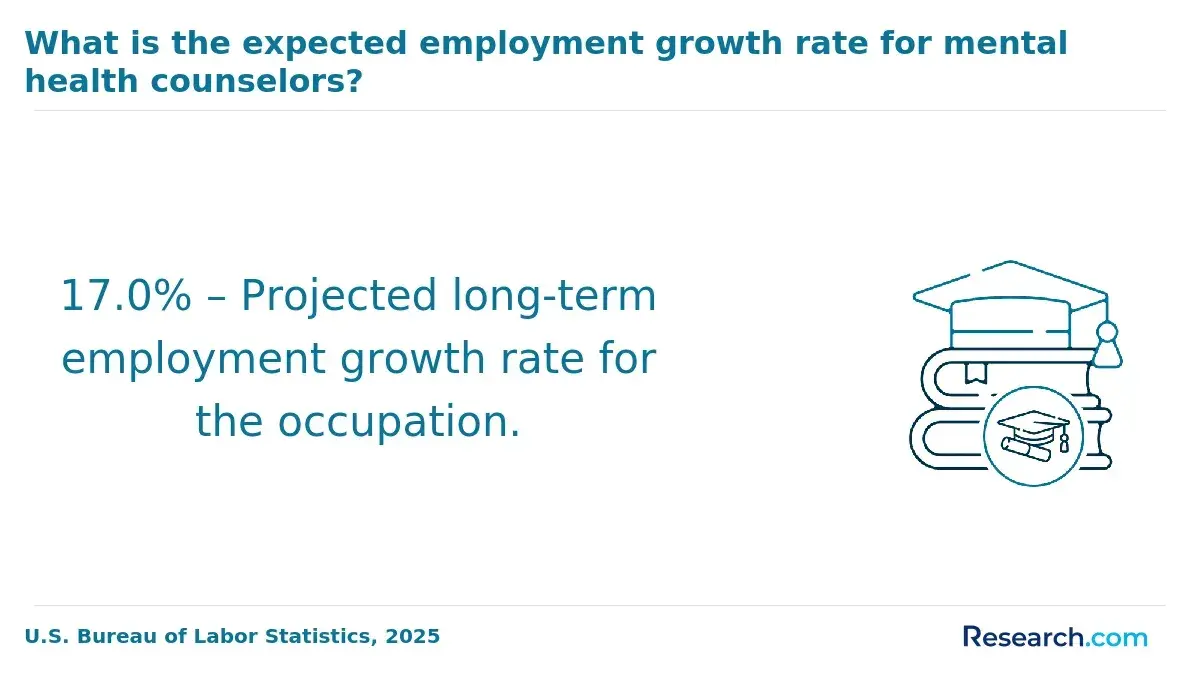
Licensure preparation is a major part of the experience. In many programs in New York, Massachusetts, and nearby states, students complete supervised practice through clinics, hospitals, community agencies, schools, or counseling centers. Some programs describe requirements from 600 to 700 supervised hours during the degree, while later licensure may require additional post-degree supervision depending on the state. Demand is supported by a 17% employment increase through 2032.
Students should expect counseling programs to be emotionally demanding as well as academically rigorous. Role plays, taped sessions, supervision feedback, ethics discussions, and client-facing work require self-reflection and professionalism. The best programs provide clear advising, strong field-placement support, and transparent guidance on becoming a Licensed Professional Counselor or Licensed Mental Health Counselor in the Northeast.
Where can I work with counseling degree in the Northeast?
Counseling graduates in the Northeast can work in many settings, but the right workplace depends on degree level, specialization, license status, and supervised experience. Community mental health centers are a common destination for graduates who want to support clients dealing with anxiety, depression, substance use, trauma, housing stress, or family challenges. Graduates from Boston University and similar institutions often pursue roles in high-demand states such as New York and Pennsylvania, where BLS data points to strong need for mental health counselors.
Schools are another major employer. Graduates from New York University and other regional programs may work in urban public schools in New Jersey or Connecticut, helping students with academic planning, social-emotional concerns, crisis intervention, college readiness, and family communication. These roles may require specific school counseling credentials or state licensure, such as the Licensed Mental Health Counselor (LMHC) credential for clinical roles.
Healthcare settings also employ counseling professionals. Hospitals, outpatient clinics, integrated care teams, rehabilitation facilities, and addiction treatment programs need counselors who can coordinate with physicians, social workers, nurses, and case managers. Graduates from the University of Pennsylvania, for example, may enter clinical roles in family therapy, addiction therapy, or related services within Massachusetts' healthcare networks.
Private practice is often a long-term goal, particularly for advanced-degree holders and licensed clinicians. Graduates from institutions like Columbia University may eventually establish therapy practices in metropolitan areas such as Philadelphia or New York City. Private practice can offer autonomy, but it also requires licensure, business planning, liability coverage, referral networks, documentation systems, and continuing education.
How much can I make with counseling degree in the Northeast?
Earnings for counseling graduates in the Northeast depend on license level, specialization, employer, location, and years of experience. Entry-level roles generally pay less than independently licensed clinical positions, while specialized or higher-responsibility roles may offer stronger compensation.
Role
Reported annual wage
What the role often involves
Intervention Specialist
Approximately $76,000
Supporting clients or students through targeted behavioral, academic, or clinical interventions.
Addiction Counselor
$60,080
Providing substance use treatment, relapse-prevention support, recovery planning, and group or individual counseling.
Community Outreach Coordinator
$54,020
Connecting communities with mental health resources, prevention programs, education, and support services.
Family Support Worker
$54,020
Helping families access resources, navigate systems, and address social or emotional challenges.
Rehabilitation Specialist
$48,430
Assisting individuals recovering from injury, illness, disability, or life disruption with treatment and support plans.
Graduates from institutions such as Boston College or the University of Pennsylvania may find that early career outcomes align with these ranges, particularly in large metropolitan areas where demand for mental health and support services is high. However, salary should be evaluated alongside cost of living, loan debt, supervision requirements, benefits, caseload expectations, and advancement opportunities.
In general, licensure, clinical specialization, supervisory responsibilities, and experience can improve earning potential. Urban centers may offer more job openings and higher pay, but they may also come with higher housing costs and more competitive hiring markets.
Research.com created the 2026 Best Counseling Degree Programs Ranking in the Northeast to help prospective students compare programs using credible education data and a structured evaluation process. The ranking is intended to support decision-making, not replace individual program research. Students should still verify accreditation, licensure alignment, costs, admissions requirements, and clinical placement policies directly with each institution.
To evaluate counseling programs, the Research.com team used reputable data sources that provide information on institutions, program characteristics, student outcomes, and affordability. These sources include:
The goal is to present a practical, research-informed view of counseling degree options in the Northeast so students can build a realistic shortlist. For a fuller explanation of how Research.com evaluates schools and programs, visit the Research.com methodology page.
2026 Best Counseling Degree Programs Ranking in the Northeast
The University of Pennsylvania offers a highly competitive Bachelor program focused on counseling, admitting only 6% of its 59, 465 applicants. The total cost of the program is $85, 822. Financial aid is moderately accessible, with 62% of students receiving support. Prospective students should consider the program's selectivity and the financial commitment required when planning their education path.
The University of Rochester offers a Master's program focused on counseling. This program is moderately selective, with an acceptance rate of 36% from a pool of 21, 680 applicants. Approximately 75% of students enrolled receive moderate financial aid, which can help support their studies. The total cost of the program is not available, but the program's selectivity and aid availability are notable factors for prospective students.
Sarah Lawrence College offers a Master's program focused on counseling, with a total cost of $81, 824. The program admits 59% of applicants, indicating a less selective acceptance rate. There are 4, 819 applicants applying to this program. A high level of financial aid is available, as 84% of students receive some form of assistance.
Boston College offers a selective Master's program focused on counseling, with an acceptance rate of 16%. The program attracts a large pool of applicants, numbering 36, 069. Total cost for the degree is $83, 571. Mid-level financial aid is available to 55% of enrolled students, helping to offset expenses associated with this competitive program.
New York University offers a Master's program focused on counseling with a total cost of $84, 718. The acceptance rate is highly competitive at 9%, reflecting strong demand among its 113, 578 applicants. Approximately 49% of students receive mid-level financial aid, which can help offset the program's cost. This degree is designed for candidates seeking advanced expertise in counseling within a competitive academic environment.
Syracuse University offers a Master's program focused on counseling, with a total cost of $83, 195. The program is moderately selective, admitting 42% of its 42, 089 applicants. A high level of financial aid is available, with 84% of students receiving support. This makes the program accessible despite the significant tuition cost.
Fordham University offers a Master's program focused on counseling with a total cost of $77, 950. The program has a less selective acceptance rate of 56%, admitting a significant number of applicants from the 43, 663 who applied. A high level of financial aid is available, as 94% of students receive some form of assistance, making it accessible despite the overall cost.
Rutgers University-New Brunswick offers a Master's program focused on counseling with a total cost of $55, 806. The program is less selective, admitting 65% of its 43, 347 applicants. Around 71% of students receive moderate financial aid to help manage costs. This program could be a practical choice for those seeking advanced expertise in counseling within a broadly accessible admission framework.
The University of Pennsylvania offers a highly competitive Master's program in counseling, accepting only 6% of its 59, 465 applicants. The total cost of the program is $85, 822. A moderate 62% of students receive financial aid, helping to manage expenses. This program attracts many applicants due to its rigorous selection process and financial support, providing valuable opportunities for prospective students seeking advanced counseling education.
# 10 position
Touro University
Master
Touro University offers a Master's program focused on counseling, with a total cost of $46, 334. The program has a less selective acceptance rate of 63%, admitting a majority of its 1, 657 applicants. Students benefit from high levels of financial aid, with 89% receiving assistance. This combination of accessibility and financial support may appeal to prospective students seeking counseling education.
Fairfield University offers a Master's program focused on counseling, with a total cost of $75, 035. The acceptance rate is moderately selective at 45%, admitting just under half of the 15, 463 applicants. The program provides a high level of financial aid, with 98% of students receiving support. These factors highlight the program's accessibility and commitment to assisting its students financially.
The University of Massachusetts-Boston offers a Master's program focused on counseling. The program charges a total cost of $52, 466. Admission is considered open with an acceptance rate of 83%, while the program received 20, 918 applications. A significant 92% of students benefit from high levels of financial aid, making the program accessible to a majority of enrollees.
The University of Pittsburgh-Pittsburgh Campus offers a Master's program focused on counseling. It has a moderately selective acceptance rate of 50% and receives a high volume of applicants, totaling 58, 416. The total cost for completing the program is $54, 452. A significant majority of students, 87%, receive financial aid, indicating high levels of support for enrolled students.
Marist College offers a Master's program focused on counseling with a total cost of $67, 975. The program has a less selective acceptance rate of 65%, admitting a sizable pool from 10, 224 applicants. A high percentage of students, 98%, receive financial aid, ensuring considerable support for enrolled individuals. This program is designed for those seeking advanced education in counseling at the graduate level.
Southern New Hampshire University offers a Master's program focused on counseling with a total cost of $31, 276. The university has an open admission policy with a 96% acceptance rate, making it accessible for many applicants. This program is popular, receiving 45, 127 applications. Students benefit from a high level of financial aid, as 81% of them receive financial assistance to help cover the costs.
Boston University offers a Master's program focused on counseling with a total cost of $84, 278. The program is highly competitive, accepting only 11% of the 80, 495 applicants. About 55% of students receive mid-level financial aid, providing crucial support for many attendees. This combination of selectivity and aid availability makes the program demanding but accessible to well-qualified candidates seeking advanced education in counseling.
Drexel University offers a Bachelor's degree focused on counseling, with a total program cost of $80, 237. The acceptance rate is 78%, indicating open admission, and the university receives 40, 204 applicants. An impressive 99% of students benefit from high levels of financial aid, making this program accessible for many prospective students interested in counseling.
Hofstra University offers a Master's program focused on counseling, with a total cost of $81, 753. The program has a less selective acceptance rate of 71%, admitting a large pool of 22, 890 applicants. Financial aid is highly accessible, with 99% of students receiving some form of assistance, making it a financially supportive environment for prospective candidates.
Northeastern University offers a highly competitive Master's program focused on counseling, with an acceptance rate of just 6%. The program attracts a large pool of applicants, totaling 96, 631. The total cost to complete the degree is $82, 931. A significant majority of students, 80%, receive financial aid, indicating high levels of support available for enrolled students.
The University of Connecticut offers a Master's program focused on counseling with a total cost of $58, 788. The acceptance rate is 54%, indicating the program is less selective. Approximately 46, 645 applicants apply each cycle. Students benefit from high levels of financial aid, with 83% receiving support. This program provides accessible graduate education for those pursuing advanced studies in counseling.
What counseling degree graduates have to say
“Studying counseling at Boston University gave me hands-on experience with diverse populations and helped me understand how classroom theory applies in real clinical settings. The faculty support and the city’s range of training sites made the experience especially valuable.” — Emily
“The University of Pennsylvania's counseling program offered a strong mix of research and practical training. Smaller classes helped me build close professional relationships, and the campus community supported my development as a more reflective and compassionate counselor.” — Michael
“At New York University, the counseling degree felt immersive and challenging in the best way. Mentorship, clinical skill-building, and exposure to diverse East Coast communities helped me leave the program with more confidence and cultural awareness.” — Sarah
Key Findings
The Northeast offers accredited counseling programs at master's and doctoral levels, with common concentrations in clinical mental health, school counseling, and marriage and family therapy.
Many programs follow CACREP accreditation standards, which can be important for licensure eligibility in many Northeastern states.
Tuition costs range from $15,000 to $30,000 at public universities for in-state students, while private colleges can charge more than $40,000.
Entry-level counseling salaries typically range from $40,000 to $50,000, increasing to $60,000 to $75,000 within five to ten years of experience and licensure.
The job market is expected to grow by about 20% nationally for mental health-related counselors over 2021-2031, with strong demand in major cities like Boston, New York City, and Philadelphia.
Licensure planning should begin before enrollment because supervised-hour rules, exams, and approved degree requirements differ by state.
Online and hybrid programs can improve access, but students must verify how clinical placements and state board requirements are handled.
The chart above shows the gender balance (men vs woman) for Stationary Counseling graduates in 2024 in the Northeast. The plot shows the statistics of graduates summed over all institutions that were included in our ranking and that send the applicants information to IPEDS database.
How long does it take to complete counseling degree in the Northeast?
The time required to complete a counseling degree depends on the credential level and whether you study full time, part time, online, hybrid, or on campus. Students should also account for supervised experience after graduation, because licensure can take longer than the degree itself.
A bachelor's degree in counseling or a related field at universities such as Boston University or the University of Connecticut generally takes about four years of full-time study and requires 120 to 130 credit hours. This level can prepare students for entry-level human services roles or for admission to graduate counseling programs, but it usually does not qualify graduates for independent clinical practice.
A master's degree at institutions such as Rutgers University or Northeastern University typically takes two or three years. These programs often require 48 to 60 credit hours and 700 to 1,000 hours of supervised practicum and internship experience. This stage is critical because most professional counseling licenses require graduate-level training.
Doctoral degrees in counseling or clinical psychology from schools such as Fordham or the University of Pennsylvania usually take four to seven years. Doctoral study may include advanced research, clinical training, teaching preparation, leadership development, and a dissertation. This path is best suited to students interested in advanced clinical practice, supervision, academia, research, or leadership roles.
Part-time enrollment and some online formats can extend these timelines, sometimes doubling the duration. Students should ask each program for its average completion time, internship schedule, and how long graduates typically take to move from degree completion to licensure.
The chart above shows the ethnicity balance for Stationary Counseling graduates in 2024 in the Northeast. The plot shows the statistics of graduates summed over all institutions that were included in our ranking and that send the applicants information to IPEDS database.
Licensure and Certification: Navigating State Requirements in the Northeast
Licensure is one of the most important factors when choosing a counseling program in the Northeast. A degree alone does not authorize independent clinical practice. Each state sets its own rules for education, supervised experience, examinations, documentation, application fees, and continuing education. Students who plan early can avoid delays after graduation.
Most states require a relevant graduate degree, and many students prioritize CACREP-accredited programs because CACREP alignment can simplify the licensure review process in many jurisdictions. Supervised clinical experience is also central. Requirements commonly fall between 1,500 and 3,000 supervised clinical hours, often combining practicum, internship, and post-degree supervised work. In New York, aspiring Licensed Mental Health Counselors must complete 3,000 hours under an approved supervisor. Massachusetts requirements include 960 direct client hours and 360 non-clinical supervision hours.
Exam requirements usually include the National Counselor Examination (NCE) or the National Clinical Mental Health Counseling Examination (NCMHCE). Candidates typically register through the National Board for Certified Counselors, receive official score reports, and submit results to the appropriate state licensing board. Application fees commonly range from $150 to $300, depending on the license type, such as Professional Counselor (LPC), Licensed Clinical Social Worker (LCSW), or Marriage and Family Therapist (LMFT).
Continuing education begins after licensure. Many Northeast states require 20–30 CE credits every two years, often including ethics, multicultural competence, documentation, diagnosis, and evidence-based practice. Online coursework can help working students manage the academic portion of preparation, and some learners explore how to become a therapist online while still meeting in-person or approved supervised-hour requirements.
Before applying to any program, check the state board for the state where you plan to practice. Confirm whether the degree title, accreditation, credit hours, practicum, internship, supervisor qualifications, and exam pathway match that board’s current rules. This step is especially important for students who live near state borders or may move after graduation.
What's the difference between online and on-campus counseling degree?
The main difference between online and on-campus counseling degrees is how students complete coursework, build relationships, and access clinical training. Both formats can lead to licensure if the program is properly accredited and meets state requirements, but the student experience can be very different.
Factor
Online counseling degree
On-campus counseling degree
Schedule
Often more flexible, with asynchronous or evening coursework.
Usually follows a more structured weekly class schedule.
Cost considerations
May reduce relocation and commuting expenses; tuition typically ranges from $15,000 to $30,000.
May include additional housing, transportation, and campus-related costs.
Clinical placements
Students may need to take a more active role in arranging approved local placements.
Programs often use established regional placement networks.
Networking
Built through virtual cohorts, online supervision, and local field sites.
Often stronger through in-person faculty, peer, and agency connections.
Best fit
Working adults, caregivers, and students who cannot relocate.
Students who want frequent face-to-face interaction and local professional immersion.
Online counseling degrees in the Northeast can be especially useful for busy professionals balancing work and family. Graduates from schools like Northeastern University may value the ability to complete a master's fully online while avoiding relocation and commuting costs.
On-campus programs, such as those at Boston College, can offer a more immersive learning environment. In-person programs may provide easier access to faculty, peer practice groups, campus counseling labs, and nearby healthcare or school-based practicum placements.
Regardless of format, students must confirm that the program meets licensure criteria in states such as New York, Massachusetts, or Pennsylvania. Accreditation, supervised-hour structure, practicum approval, and faculty advising are more important than delivery format alone.
Licensure and Certification Requirements
Licensure and certification are step-by-step processes that continue beyond graduation. In the Northeast, students should treat licensure planning as part of program selection, not something to handle after completing the degree. New York, Massachusetts, and Pennsylvania share many common expectations, but each board maintains its own rules and documentation standards.
Graduate from an appropriately accredited counseling program. Many students consider cacrep accredited online counseling programs because CACREP standards are recognized by many state boards.
Complete supervised clinical hours. Programs may require practicum and internship hours during the degree, and states may require additional post-degree supervision. Requirements usually range from 600–1,000 post-degree hours under a licensed supervisor, depending on state.
Pass the required exam. This may include the National Clinical Mental Health Counseling Examination (NCMHCE), the National Counselor Examination (NCE), or another state-specific exam required by the licensing board.
Submit the licensure application. Typical documentation includes official transcripts, supervisor evaluations, exam scores, background check results, identity verification, and application fees.
Fulfill continuing education requirements. Most states require 20–40 hours every 2 years to renew licensure and maintain current professional knowledge.
Because requirements can change, applicants should rely on the current state board website for final guidance. Keep copies of syllabi, clinical-hour logs, supervisor forms, exam reports, and official correspondence. Good documentation can prevent delays when applying for licensure, changing jobs, or moving between states.
What is the average cost of counseling degree in the Northeast?
The average cost of a counseling degree in the Northeast is substantial. The median total cost is $58,817. In-state students generally pay less, with a median total near $45,380, while out-of-state students pay closer to the full median amount. Residency can therefore make a major difference for students considering public universities in New York, Massachusetts, Pennsylvania, and nearby states.
Cost also varies by institution type. Public universities may offer lower tuition for residents, while private colleges often charge higher rates but may provide scholarships, assistantships, or institutional grants. Students should compare net price, not only published tuition, because the least expensive sticker price is not always the lowest out-of-pocket option after aid.
Additional yearly costs include books and materials, typically ranging from $1,000 to $2,000, along with technology fees, transportation, background checks, liability insurance, and clinical internship-related expenses. Students in practicum or internship may also need to reduce work hours, which can affect the true cost of attendance.
The investment can be worthwhile when a program provides strong accreditation, careful licensure advising, reliable clinical placements, and good graduate outcomes. Students who are still completing undergraduate requirements or comparing faster pathways may also review the fastest way to get bachelor's degree online as part of a broader cost and timeline strategy.
Why Pursue a Counseling Degree in the Northeast
A counseling degree in the Northeast can be a strong option for students who want access to dense professional networks, diverse client populations, and a wide range of clinical training sites. The region includes large metropolitan areas such as New York City and Boston, along with suburban, rural, school-based, hospital-based, and community mental health settings. That variety matters because counseling students often need supervised experience with different populations before they can qualify for licensure or compete for specialized roles.
The labor-market outlook also supports this path. Employment for mental health and substance abuse counselors is projected to increase by 18% from 2022 to 2032, reflecting continued need for treatment, prevention, crisis support, and recovery services. For students who want a career with direct social impact, counseling offers a practical route into work that supports individuals, families, schools, and communities.
Students in the Northeast can pursue several counseling tracks, including clinical mental health counseling, school counseling, substance abuse counseling, rehabilitation counseling, and family-focused practice. Each track leads to different settings, licensure steps, and client populations, so the best program is not always the most famous one. It is the one that matches your state goals, preferred work environment, and required supervised training.
The Northeast is also home to many established colleges and universities with counseling-related programs. Strong programs typically combine academic coursework, faculty supervision, practicum and internship placements, and preparation for exams and state board applications. Before enrolling, students should look closely at accreditation, field placement support, faculty expertise, graduate outcomes, and whether the curriculum aligns with the license they intend to pursue.
What financial aid is available to counseling degree students in the Northeast?
Counseling students in the Northeast can use several types of financial aid to manage tuition and living costs. Because graduate counseling programs can be expensive, students should build a funding plan before enrolling rather than after receiving the first bill. Tuition commonly ranges from $15,000 to $30,000 annually, so small differences in aid packages can affect total debt.
Federal loans are a common funding source. Graduate students may use the Direct Unsubsidized Loan and, if eligible, the Grad PLUS Loan after completing the FAFSA. These loans can help cover tuition and approved educational expenses, but students should compare interest, repayment timelines, and expected post-graduation income before borrowing the maximum amount.
Institutional scholarships can also reduce costs. Graduates from Boston University or New York University often point to merit-based scholarships as important sources of support, especially for students with strong academic records, relevant work experience, or a clear commitment to service.
State grants and scholarships may be available based on residency, field of study, or workforce need, although availability varies by state. Employer tuition assistance is another important option for students already working in healthcare, education, or human services. Data shows nearly 40% of counseling students in the Northeast receive this support.
Graduate assistantships can be especially valuable because they may combine stipends, tuition waivers, and professional experience. Institutions such as the University of Pennsylvania and Rutgers may offer assistantships tied to research, teaching, advising, or program support. These opportunities are often competitive, so students should ask about deadlines early in the admissions process.
Emerging Trends in Counseling Education and Practice
Counseling education in the Northeast is adapting to changes in care delivery, technology, and community need. Telehealth training is now a practical skill rather than a novelty. Many programs expose students to remote counseling ethics, virtual client engagement, digital documentation, privacy standards, and telehealth boundaries. These skills can be valuable in urban areas with high demand and in rural communities where access to providers may be limited.
Programs are also placing more emphasis on trauma-informed care, cultural humility, crisis response, community outreach, and interdisciplinary collaboration. Counseling students may work alongside students or professionals in social work, nursing, education, public health, or educational technology. This reflects the reality of modern mental health care: clients often need coordinated support across schools, clinics, hospitals, families, and community agencies.
Technology is another area to watch. Coursework may discuss mobile mental health tools, artificial intelligence–powered assessment tools, digital screening, and data-informed treatment planning. Students should evaluate whether a program teaches these tools critically, including their ethical limits, privacy risks, and appropriate clinical use.
Affordability remains a major concern as programs add new training components. Students comparing cost and innovation may find resources such as the Affordable Counseling Degree Programs Ranking in Chester, PA useful when looking for lower-cost options that still offer relevant preparation.
Experiential learning is also expanding. Some programs incorporate virtual exchanges, service-learning, community partnerships, or global perspectives. These experiences can strengthen cross-cultural competence, but they should not replace the supervised clinical hours required by state boards. When reviewing a program, ask how innovative learning experiences connect to licensure, field placement, and measurable counseling competencies.
What are the prerequisites for enrolling in counseling degree program in the Northeast?
Most counseling degree programs in the Northeast require a bachelor's degree from an accredited institution. The undergraduate major does not always have to be psychology, but coursework in psychology, sociology, human development, statistics, or social services can make the transition easier. Graduates from universities such as Boston University or the University of Pennsylvania often note that foundational behavioral science coursework helped them handle graduate-level counseling material more confidently.
Admissions requirements commonly include transcripts, letters of recommendation, a personal statement, and a resume or CV. Many programs look for evidence that applicants understand the counseling profession, such as volunteer work, crisis-line experience, case management, peer mentoring, school support, behavioral health work, or other human services experience.
Standardized testing requirements vary. GRE scores remain a common criterion at many Northeast institutions, although some competitive programs waive the test for applicants with strong academic records or relevant professional experience. Applicants should verify current testing policies because requirements can change by program and admissions cycle.
Some programs also require interviews, writing samples, prerequisite courses, background checks, and immunization records. These requirements are especially common when students will be placed in schools, hospitals, clinics, or agencies that serve vulnerable populations. Applicants should prepare to discuss ethical judgment, cultural awareness, communication skills, and readiness for supervised client work.
Licensing Requirements by State
Licensing rules differ across Northeastern states, so students should confirm requirements before choosing a program or accepting a clinical placement. The following examples show how supervised hours, exams, and continuing education can vary by state:
New York (LMHC): 3,000 supervised hours, NCMHCE exam, 36 CE hours every three years
Massachusetts (LMHC): 700 post-master’s supervised hours, NCE exam, 15 CE units biennially
Pennsylvania (PC): 3,000 supervised hours, NCMHCE exam, 30 CE credits every two years
New Jersey (LCPC): 3,600 supervised practice hours, NCE exam, 24 CE credits biennially
Connecticut (LMHC): 1,000 supervised hours, NCE exam, 30 CE credits every two years
These requirements affect which program is the best fit. A student planning to work in New York may need a different advising plan than a student planning to practice in Connecticut or Massachusetts. If you may relocate, ask admissions staff and licensing boards about portability, reciprocity, and whether additional coursework or supervision may be required.
Many students choose cacrep accredited online counseling programs because CACREP alignment may help demonstrate that the curriculum meets widely recognized counseling education standards. Even then, state board approval is the final authority.
What courses are typically in counseling degree programs in the Northeast?
Counseling degree programs in the Northeast typically include courses that build clinical knowledge, ethical judgment, cultural competence, and practical counseling skills. While course titles vary by institution, most accredited programs cover similar core areas because they must prepare students for supervised practice and licensure requirements.
Foundations of Counseling: Introduces major counseling theories, professional roles, helping relationships, and the structure of the field.
Human Development: Examines client needs across the lifespan, including childhood, adolescence, adulthood, aging, family systems, and developmental transitions.
Abnormal Psychology: Covers mental health conditions, diagnostic frameworks, symptoms, assessment considerations, and treatment planning.
Counseling Techniques: Helps students practice core skills such as listening, reflection, case conceptualization, goal setting, crisis response, and intervention planning.
Multicultural Counseling: Prepares students to work with diverse clients and address culture, identity, power, oppression, language, religion, disability, gender, and socioeconomic context.
Group Counseling: Teaches group dynamics, leadership, screening, ethical considerations, and interventions for therapeutic or psychoeducational groups.
Ethical and Legal Issues: Covers confidentiality, informed consent, mandated reporting, documentation, boundaries, supervision, scope of practice, and state regulations.
Research Methods and Statistics: Builds the ability to evaluate evidence, measure outcomes, understand research literature, and use data responsibly in counseling settings.
Many Northeast programs also include practicum and internship seminars that connect classroom learning to supervised fieldwork. These experiences help students apply counseling techniques with real clients while receiving feedback from faculty and site supervisors.
What types of specializations are available in counseling degree programs in the Northeast?
Counseling degree specializations in the Northeast commonly include Clinical Mental Health Counseling, School Counseling, Marriage and Family Therapy (MFT), Addiction Counseling, and Rehabilitation Counseling. The best specialization depends on the population you want to serve, the license you plan to pursue, and the setting where you want to work.
Clinical Mental Health Counseling is a broad path for students who want to work with individuals facing depression, anxiety, trauma, substance use, grief, and other mental health concerns. In urban areas such as New York and Boston, median salaries for this pathway can range from $50,000 to $60,000. Graduates from institutions such as Boston University and Columbia University often report that this specialization provides flexible preparation for clinics, hospitals, agencies, and private practice after licensure.
School Counseling focuses on K-12 academic, social, emotional, and college or career development. These programs usually align closely with state education requirements, so students should verify credential rules in the state where they plan to work.
Marriage and Family Therapy prepares students to work with couples, families, and relational systems. Addiction Counseling focuses on prevention, treatment, relapse prevention, and recovery support, with specialized relevance in areas affected by the opioid crisis. Rehabilitation Counseling prepares graduates to support people with disabilities, injuries, chronic illness, or employment barriers, often in nonprofits, healthcare settings, and government agencies.
Students comparing flexible study formats may also explore the best online degree programs for seniors, especially when balancing education with work, caregiving, or career transition goals.
How do you choose the best counseling degree in the Northeast?
To choose the best counseling degree in the Northeast, start with licensure alignment. A strong program should clearly state which license or credential it prepares students for, which state requirements it supports, and how practicum and internship hours are documented. CACREP accreditation is a major consideration because graduates from these programs often report greater confidence when preparing for licensure exams and job applications.
Next, compare degree type and specialization. MA, MS, and MEd programs can all be valid options, but they may emphasize different outcomes. Clinical mental health counseling, school counseling, rehabilitation counseling, and marriage and family therapy each require different training and may lead to different state credentials.
Field placement support should be a deciding factor. Graduates from programs around Boston and New York often highlight the value of practicum placements in diverse urban and rural settings. Ask whether the school secures placements, approves student-found sites, offers supervision support, and has relationships with hospitals, schools, community agencies, or private practices.
Cost is also critical. Public universities generally charge between $10,000 and $20,000 annually for in-state students, while private colleges exceed $30,000, though assistantships and financial aid can reduce the net cost. Compare tuition, fees, living expenses, internship-related costs, and expected borrowing.
Format matters, but it should not override quality. Hybrid and online options can help students manage work and family responsibilities, but students must confirm that remote coursework, local placements, and supervision meet state board requirements. Students considering advanced study may also review doctoral programs without dissertation when comparing long-term academic and professional pathways.
Finally, examine outcome data, including graduation rates, employment rates, licensure exam preparation, alumni roles, faculty credentials, student support services, and advising quality. A program that is affordable, accredited, clinically connected, and transparent about outcomes is usually a stronger choice than one relying mainly on name recognition.
What career paths are available for counseling degree students in the Northeast?
Counseling degree students in the Northeast can pursue several career paths, especially after completing the graduate education and supervision needed for licensure. Common roles include Mental Health Counselor, School Counselor, Substance Abuse Counselor, Career Counselor, Marriage and Family Therapist, Rehabilitation Counselor, Family Support Worker, and Community Outreach Coordinator.
Mental Health Counselors provide assessment, treatment planning, individual counseling, group counseling, and crisis support in settings such as clinics, hospitals, outpatient centers, private practices, and community agencies. School Counselors support K-12 or college students with academic planning, social-emotional development, college readiness, career decisions, and crisis response. Substance Abuse Counselors work in treatment programs, recovery centers, hospitals, and community organizations.
Career Counselors help clients assess interests, build job-search strategies, navigate transitions, and make education or employment decisions. Marriage and Family Therapists focus on couples, families, parenting, conflict, communication, and relational patterns. Graduates from well-known programs at universities such as Boston University or New York University often work across community health centers, schools, hospitals, and private practices.
Licensure typically requires a Master's degree plus 2,000-4,000 supervised clinical hours. New York requires 3,000 hours for Licensed Mental Health Counselors (LMHC). Students should treat these numbers as planning requirements, not afterthoughts, because supervision can affect job choice, income, and timeline after graduation.
Program costs often range from $15,000 to $30,000 annually, so students should compare aid and lower-cost pathways carefully. Those seeking affordable education options may review cheap online colleges while considering how each program aligns with counseling licensure and career goals.
What is the job market for counseling degree in the Northeast?
The job market for counseling degree graduates in the Northeast is strong, supported by rising mental health awareness, expanded demand for school and community services, and continued need for addiction treatment and behavioral health support. Employment projections indicate approximately 16% growth from 2021 to 2031, which outpaces many other fields.
Opportunities are common in hospitals, outpatient centers, schools, community mental health agencies, residential programs, government agencies, higher education, and private practices. States such as New York and Massachusetts offer large healthcare and education systems, which can create many openings for graduates from regional counseling programs.
Graduates often begin in supervised roles while working toward full licensure. These early positions can include school-based support, community mental health counseling, case coordination, group facilitation, crisis support, or addiction recovery services. Median wages around $50,000 in New York suggest that counseling can provide a viable income path, though earnings vary by setting, credential, experience, and cost of living.
Tuition remains a significant consideration. Public universities typically cost between $10,000 and $20,000 annually for in-state students, while private colleges may charge $25,000 to $45,000. Students should weigh debt against expected salary, licensure timeline, supervision opportunities, and the strength of the local job market.
Students comparing counseling with other employment-focused paths may also find it useful to understand what is the best career in trades, especially when evaluating cost, training time, job stability, and long-term earning potential across different career options.
Frequently Asked Questions About counseling
Which counseling degree programs in the Northeast are ranked highest in 2026?
In 2026, the highest-ranked counseling degree programs in the Northeast include Harvard University, Columbia University, and New York University. These institutions are recognized for their cutting-edge curriculum, expert faculty, and strong emphasis on practical training, ensuring graduates are well-prepared for career excellence in counseling.
How to find internships in the Northeast relevant to a counseling degree?
Finding internships in the Northeast relevant to counseling degrees involves several strategic steps. Start by exploring the career services offices of universities, which often maintain partnerships with local mental health clinics and community organizations. According to the Council for Accreditation of Counseling and Related Educational Programs (CACREP), many accredited Northeast programs require internships as a degree component, ensuring students have access to approved sites.
Additionally, state licensing boards such as the New York State Office of Mental Health provide lists of approved internship providers. Networking through professional associations like the New England Counseling Association can also uncover regional opportunities.
Online platforms such as Handshake and Indeed frequently list counseling internships in major cities like Boston, Philadelphia, and New York, which host numerous hospitals and counseling centers.
How does a counseling degree influence career mobility and advancement in the Northeast?
A counseling degree significantly enhances career mobility and advancement prospects in the Northeast. According to the U.S. Bureau of Labor Statistics, employment of counselors in this region is expected to grow faster than the national average, driven by increasing demand in healthcare, education, and social services sectors. Graduates with counseling degrees often qualify for licensure as Licensed Professional Counselors (LPC), which is required for many higher-level positions.
Licensed professionals in states like New York, Massachusetts, and Pennsylvania generally see higher salaries and more job opportunities. Additionally, many employers prioritize candidates with advanced degrees and certifications, recognizing their specialized training. This creates a clear pathway for career growth in clinical, school, and mental health counseling roles.
How does studying for a counseling degree in the Northeast prepare for interdisciplinary roles?
Studying for a counseling degree in the Northeast equips students with skills essential for interdisciplinary roles across healthcare, education, and social services. Many programs emphasize collaboration with professionals such as social workers, educators, and medical staff, reflecting the region's integrated approach to mental health care. For example, the Council for Accreditation of Counseling & Related Educational Programs (CACREP) reports that about 70% of accredited counseling programs in the Northeast include interdisciplinary training components.
This preparation helps graduates navigate complex client needs and work effectively within diverse teams, a key requirement in regional health systems and community agencies. Coursework often covers areas like psychology, public health, and social policy, enhancing adaptability in varied settings.
How to choose between a thesis and a non-thesis counseling degree program in the Northeast?
When choosing between a thesis and a non-thesis counseling degree program in the Northeast, consider your career goals carefully. Thesis programs often emphasize research skills, allowing students to contribute original knowledge and prepare for doctoral studies. Non-thesis options usually focus more on practical counseling techniques and clinical experience.
According to the Council for Accreditation of Counseling and Related Educational Programs (CACREP), many Northeast schools offer both formats, with about 40% of counseling graduates opting for thesis tracks, particularly those aiming for academia or research roles.
Cost, time commitment, and faculty expertise are other factors; thesis programs can require more time but may enhance job prospects in specialized fields.
What options do students based in the Northeast have for studying counseling abroad?
Students in the Northeast interested in studying counseling abroad have a variety of options through U.S. universities offering study abroad programs. Many accredited institutions in states like New York, Massachusetts, and Pennsylvania provide partnerships with universities in countries such as the United Kingdom, Ireland, and Australia. These programs allow students to earn credits toward their counseling degrees while gaining international experience.
According to the Institute of International Education, over 20% of U.S. study abroad students choose Europe, with the U.K. as a leading destination for counseling studies. Some programs emphasize cultural competence and global mental health perspectives, complementing Northeast-based curricula.
Additionally, several graduate programs incorporate short-term internships or practicum opportunities abroad, providing hands-on counseling experience in diverse settings. Students should verify that credits transfer and seek programs accredited by the Council for Accreditation of Counseling and Related Educational Programs (CACREP) to ensure licensure eligibility.
What are the networking opportunities for counseling students in the Northeast?
Counseling students in the Northeast have access to a variety of networking opportunities that support their professional growth. Many universities in this region partner with local hospitals, mental health clinics, and community organizations to offer internships and practicum placements, enabling students to build connections in real-world settings.
Regional conferences, such as those hosted by the New England Mental Health Counselors Association, provide forums for students to meet experienced practitioners and potential employers. According to the American Counseling Association, the Northeast has one of the highest concentrations of licensed counselors, increasing mentorship possibilities.
Additionally, schools often facilitate career fairs and alumni events, which allow counseling students to engage with a broad professional network before graduation.
How do alumni networks benefit counseling degree students in the Northeast?
Alumni networks provide significant advantages for counseling degree students in the Northeast. These networks often offer mentorship opportunities, connecting current students with graduates who have navigated licensure and job placement within the region. According to the National Board for Certified Counselors, strong professional connections increase employment rates in counseling fields by approximately 25% in Northeastern states.
Furthermore, alumni frequently share insights about local licensure requirements and continuing education resources, which vary by state. Networking events and online groups help students access internships and job openings at counseling centers, hospitals, and schools across the Northeast. This support system proves invaluable for career development in a competitive market.
How can I customize my counseling degree program in the Northeast to fit my career goals?
Customizing a counseling degree program in the Northeast allows students to target their specific career goals effectively. Many universities offer concentrations such as mental health counseling, school counseling, or marriage and family therapy. Selecting the right specialization helps align academic learning with future job opportunities.
Students can also tailor practical experience by choosing internships or practicum placements in settings like hospitals, schools, or community agencies. According to the American Counseling Association, gaining diverse hands-on experience is crucial for licensure and employment.
Furthermore, some programs provide flexible formats-including part-time, online, or hybrid classes-to accommodate working professionals. Exploring accreditation by CACREP ensures a standard of quality recognized across states in the Northeast and nationally.
What professional certifications can I pursue with a counseling degree?
With a counseling degree, graduates in the Northeast can pursue several key professional certifications that enhance their career opportunities. Common certifications include the Licensed Professional Counselor (LPC) or Licensed Mental Health Counselor (LMHC), which require state-specific exams and supervised clinical hours. In states like New York and Massachusetts, over 80% of counseling graduates obtain these licenses to practice independently.
Other certifications offered to counseling graduates include Certified School Counselor and Certified Addiction Counselor credentials, often requiring additional specialized training. According to the American Counseling Association, such certifications improve job prospects and earning potential across the region.
How to write a winning application for a counseling program in the Northeast?
Applying to counseling programs in the Northeast requires a clear, focused approach that highlights your dedication to the field. Admissions committees often look for applicants with strong academic records, relevant volunteer or work experiences, and a well-crafted personal statement.
Emphasize your understanding of counseling theories and your motivation for helping diverse populations. According to the Council for Accreditation of Counseling and Related Educational Programs (CACREP), many accredited programs in the Northeast require at least a 3. 0 GPA and letters of recommendation demonstrating interpersonal skills.
Be concise but reflective in your essays, showing awareness of regional mental health challenges. Including any experience with local community services or internships can strengthen your application greatly.
How can I gain practical experience while studying for a counseling degree in the Northeast?
Gaining practical experience while studying for a counseling degree in the Northeast is essential for career readiness. Many universities and colleges in this region require internships or practicum placements as part of their curriculum. These opportunities typically take place in community mental health centers, schools, or hospitals, allowing students to work directly with clients under supervision.
Colleges often partner with local organizations, making placements more accessible. According to the Council for Accreditation of Counseling & Related Educational Programs (CACREP), over 90% of accredited counseling programs in the Northeast include hands-on clinical hours. This real-world experience not only enhances skills but also fulfills state licensure requirements required for professional counselors in states like New York, Massachusetts, and Pennsylvania.
Additionally, students may participate in research projects or assist faculty in counseling-related studies. Some institutions offer simulation labs and workshops that build counseling techniques before entering clinical settings. Networking through these experiences also helps build professional relationships crucial for post-graduation employment.
How do I choose the right concentration within a counseling degree program in the Northeast?
Choosing the right concentration within a counseling degree program in the Northeast involves assessing your career goals and regional demand. Popular options include mental health counseling, school counseling, and marriage and family therapy. According to the Bureau of Labor Statistics, the Northeast shows a steady yearly job growth of about 10% for counselors through 2031, with a notable demand for mental health professionals.
Consider licensure requirements in your state, as they vary and impact which concentration aligns with your long-term plans. For example, New York emphasizes Licensed Mental Health Counselors, while Massachusetts often requires specific training for school counselors.
Research local university offerings and internships to gain practical experience tailored to your concentration. The Council for Accreditation of Counseling and Related Educational Programs (CACREP) notes that Northeast programs typically emphasize clinical skills and multicultural competence, which are essential in this diverse region.
How can I find the Best Counseling degree program near me in the Northeast?
To find the best Counseling degree program near me in the Northeast, you can start by researching local universities and colleges that offer accredited Counseling programs, which may include graduate and undergraduate degrees. Many institutions near the Northeast region have strong reputations in the field and provide diverse options for specialization in Counseling. Research.com can be a helpful resource to evaluate program rankings and connect you with additional information on the strengths of various programs in your area.