2027 Most Valuable Computer Science Degree Programs Ranking in Massachusetts

Co-Founder and Chief Data Scientist
Choosing the right computer science degree program in Massachusetts can shape your future success. The 2027 Most Valuable Computer Science Degree Programs Ranking in Massachusetts offers clear guidance, created by the Research.com team of data scientists to help students like you make informed decisions.
This article highlights programs that provide excellent value and career opportunities. Exploring these rankings can give you confidence in your educational path and inspire you to pursue a degree that opens doors in a growing tech industry.
Investing in computer science is an exciting step toward a rewarding career full of possibilities.
Key benefits of getting computer science degree in Massachusetts
- Salary for computer science graduates: Graduates often enjoy competitive salaries, with software engineers and developers earning a mean annual wage of $138,110, while web developers make around $95,570, highlighting strong financial benefits.
- Career paths: A computer science degree from a Massachusetts university opens doors to diverse roles, from IT support specialists earning $63,640 yearly to data analysts with an average salary of $119,040, offering exciting opportunities to grow.
- Online degree benefits: Completing a computer science degree online in Massachusetts provides flexible scheduling and access to quality programs, allowing students to balance work and study effectively while gaining valuable skills.
- Key benefits of getting computer science degree in Massachusetts
- What can I expect from computer science degree in Massachusetts?
- Where can I work with computer science degree in Massachusetts?
- How much can I make with computer science degree in Massachusetts?
- 2027 Most Valuable Computer Science Degree Programs Ranking in Massachusetts
- Key Findings
- How long does it take to complete computer science degree in Massachusetts?
- Emerging Trends and Future Opportunities in Massachusetts Computer Science Education
- What's the difference between online and on-campus computer science degree?
- What is the average cost of computer science degree in Massachusetts?
- Video Game Design and Development
- What financial aid is available to computer science degree students in Massachusetts?
- Faculty Expertise and Research Opportunities
- What are the prerequisites for enrolling in computer science degree program in Massachusetts?
- How to Apply and Key Application Deadlines
- What courses are typically in computer science degree programs in Massachusetts?
- What types of specializations are available in computer science degree programs in Massachusetts?
- How do you choose the best computer science degree in Massachusetts?
- What career paths are available for computer science degree students in Massachusetts?
- What is the job market for computer science degree in Massachusetts?
- Related Computer Science Rankings for Nearby States
- Top Trending Computer Science Rankings
- See What Experts Have To Say About Studying Computer Science
What can I expect from computer science degree in Massachusetts?
When considering the average cost of a computer science degree in Massachusetts, many students are surprised to find that tuition often ranges between $50,000 and $75,000 per year at top schools like MIT and Harvard. Graduates frequently recall moments of stress yet pride as they navigated hefty tuition bills alongside intense coursework. Those attending institutions such as Northeastern University or Boston University highlight the value of cooperative education programs that blend classroom theory with paid professional experience-helping offset costs while building résumés.
But beyond the numbers, what truly defines the investment is the immersive environment these programs offer. Picture working late nights in cutting-edge labs, collaborating on AI projects that feel alive and urgent, all while knowing that Massachusetts' vibrant tech ecosystem may soon welcome you as a sought-after talent. Understanding cost in this light helps reshape it from a barrier to a doorway: tuition is not just an expense but a gateway to opportunity, innovation, and lifelong connections within one of the nation's most dynamic tech hubs.
Where can I work with computer science degree in Massachusetts?
Graduates from computer science programs at institutions like MIT or Harvard often find themselves amid a thriving tech scene in Boston, where opportunities stretch far beyond the expected software engineering roles. Imagine landing a job at a startup bustling with energy or joining a giant like Amazon, where your coding shapes cutting-edge products. These professionals don't just write code; they tackle data science, cybersecurity, and IT infrastructure-skills fiercely sought in Massachusetts's 9,000-plus tech companies.
But the journey doesn't end in tech. Graduates frequently pivot toward finance hubs like Fidelity Investments, building algorithms that power Wall Street's trading floors. Others dive into healthcare innovation, developing AI models at Massachusetts General Hospital or medical software that impacts patient care statewide. Even state agencies and universities offer paths, blending tech with public service or academia.
This kaleidoscope of roles reflects a unique Massachusetts landscape where a computer science degree truly unlocks diverse, high-impact careers that match your passion and skills.
How much can I make with computer science degree in Massachusetts?
Graduates from renowned institutions in Massachusetts like MIT and Harvard often find themselves earning well above the national norm soon after stepping into the workforce. For example, software engineers and developers typically command mean annual wages around $138,110, reflecting the state's robust demand for top technical talent. Imagine starting your career contributing to cutting-edge projects in Boston's innovation hubs and quickly moving beyond the $70,000-$85,000 entry-level range many experience.
Even roles like data analysts, with an average annual salary of $119,040, illustrate that specializing in data-driven fields pays off. Web developers in Massachusetts earn approximately $95,570 yearly, highlighting strong opportunities even outside traditional coding-heavy roles. Meanwhile, IT support specialists' mean wages around $63,640 reveal favorable compensation for those focusing on essential infrastructure roles.
Graduates often share stories of rapid growth, boosted by bonuses and stock options from thriving tech startups. Pursuing a computer science degree here means gaining access to a tech ecosystem where skills in AI, cybersecurity, or cloud computing can turn your educational investment into a lucrative, dynamic career path.
2027 Most Valuable Computer Science Degree Programs Ranking in Massachusetts
How do we rank schools?
Investing in your education is a significant decision that can profoundly impact your career, and the Research.com team recognizes the importance of making well-informed choices. To support prospective students in Massachusetts, we have carefully developed the "2027 Most Valuable Computer Science Degree Programs Ranking in Massachusetts." This ranking reflects our dedication to quality, credibility, and accuracy through extensive research and thorough analysis.
We utilized the following reputable data sources to ensure a comprehensive evaluation of computer science programs:
By exploring this ranking, readers will gain valuable insights into the most valuable computer science degree programs in Massachusetts, empowering them to make informed educational and career decisions. For more details on how this ranking was created, please visit our Research.com methodology page.


.webp)
# 19 position
Massachusetts Institute of Technology
Bachelor of Science in Computer Science and Engineering

# 20 position
Massachusetts Institute of Technology
Master of Engineering in Electrical Engineering and Computer Science
Key Findings
- Annual tuition averages about $14,000 for in-state students at public universities and can exceed $50,000 at private institutions.
- A bachelor's degree in computer science typically requires four years of full-time study, plus additional costs for fees, textbooks, and living expenses.
- Entry-level computer science jobs in Massachusetts offer starting salaries between $70,000 and $90,000 annually.
- Experienced professionals in the state can earn median salaries above $120,000.
- The job market is strong due to a vibrant tech sector around Boston and many internship and co-op opportunities.
How long does it take to complete computer science degree in Massachusetts?
Completing a computer science degree in Massachusetts typically takes about four years for a bachelor's, following the traditional full-time path at universities like Boston University or the University of Massachusetts. However, many students find this timeline fluid, shaped by choices like part-time study or transferring credits from community colleges such as Bunker Hill. One graduate described balancing work and studies, extending their program yet feeling proud of the steady progress and deepened learning.
Associate degrees at community colleges often wrap up in two years, providing a solid foundation or a strategic stepping-stone to a bachelor's degree. Meanwhile, pursuing a master's at institutions like MIT or Northeastern might add one to two years, with some graduates embracing accelerated programs that shave months off the total time.
The real journey often defies expectations, showing how personal circumstances and academic goals influence not just duration but a rewarding experience. This adaptability lets students in Massachusetts craft a path that fits their life, fueling enthusiasm for their field beyond rigid timelines.
Emerging Trends and Future Opportunities in Massachusetts Computer Science Education
Massachusetts continues to lead in integrating innovative technologies and teaching methodologies into computer science curricula, ensuring that students are not only learning current industry practices but are also prepared for the challenges of tomorrow. Recent trends include a growing emphasis on artificial intelligence, quantum computing, cybersecurity, and blockchain technology, which are reshaping course structures and research initiatives. Institutions are increasingly partnering with local startups and tech giants to offer experiential learning opportunities, bridging the gap between academic theories and real-world applications. Students can now expect greater exposure to interdisciplinary projects that incorporate data science and machine learning, providing a well-rounded education that aligns with emerging market demands. In addition, the rise of hybrid learning environments is enabling a more flexible approach to obtaining a degree, ensuring accessibility without compromising on the quality of education. For instance, if affordability is a priority, prospective students might explore options such as the cheapest computer science schools in massachusetts, which combine cost-effectiveness with robust curricular offerings. Looking ahead, the integration of advanced technologies within the curriculum and increased collaboration with industry leaders are poised to enhance career prospects even further. This dynamic environment not only fosters innovation but also creates a supportive network for students as they transition from academic life to thriving tech careers.
What's the difference between online and on-campus computer science degree?
Choosing between online and on-campus computer science degrees in Massachusetts often hinges on more than just location-it's about the learning environment and daily experience. On-campus students at places like MIT or Harvard describe the electric buzz of collaborating in labs and spontaneous hallway chats with peers as vital to their growth. The face-to-face interaction unlocks mentorships and networking that feel tangible, almost irreplaceable. Meanwhile, graduates from UMass Amherst's online program share pride in mastering self-discipline, managing coursework alongside jobs or family commitments, and thriving in virtual classrooms that mimic real labs through interactive tools.
The cost difference adds another layer: public universities offer in-state tuition around $16,000 annually versus up to $50,000 at some private, on-campus institutions. Yet, some elite programs price their online degrees comparably, challenging assumptions about affordability. In Massachusetts' tech hubs like Boston and Cambridge, employer respect is tied more to institutional reputation and skill portfolios than delivery mode, proving that success can come from diverse educational paths.
What is the average cost of computer science degree in Massachusetts?
The average total cost of earning a computer science degree in Massachusetts typically hovers around $74,477, bridging a wide gap between in-state and out-of-state students. For those attending public institutions like the University of Massachusetts Amherst, the experience often feels like an investment that balances affordability with quality. Graduates frequently recount how the in-state tuition made the rigorous curriculum and abundant research opportunities accessible without overwhelming debt, highlighting how average cost computer science degree Massachusetts figures factor into their decisions.
Meanwhile, private universities such as Boston University and Northeastern University tend to come with sticker prices exceeding $60,000 annually, pushing the total beyond $240,000 for a four-year degree. Yet many students emphasize the value in close industry connections and smaller class sizes, reminding prospective enrollees that cost doesn't always capture the full educational experience. Exploring scholarships and financial aid can soften this impact, turning what seems like a steep expense into a rewarding journey.
Living expenses, textbooks, and other fees often add $15,000 to $20,000 yearly, complicating the equation further. Prospective students should also consider how funding sources can affect their net cost. Those looking for more affordable pathways might explore options via the cheapest computer science schools in Massachusetts, where tuition fees and living costs blend more manageably.
Reflecting on Massachusetts computer science degree tuition fees often reveals how financial planning intertwines with academic ambition. Graduates frequently share stories of carefully navigating these costs, balancing the promise of a thriving tech career with ensuring manageable debt. These personal accounts teach us that understanding the total cost-beyond the sticker price-can transform a lofty financial challenge into an achievable goal.
Video Game Design and Development
Developing video games blends software engineering with creative storytelling, offering a dynamic pathway within computer science.
- Core courses in game engine architecture, graphics programming, and interactive storytelling.
- Hands-on capstone projects in collaboration with local studios and research labs.
- Internship opportunities at Massachusetts gaming and multimedia companies.
- Flexible online specialization: explore a gaming degree online for focused game design training.
What financial aid is available to computer science degree students in Massachusetts?
Many computer science students in Massachusetts quickly realize that federal financial aid is a crucial lifeline. Through FAFSA, they tap into Pell Grants of up to $7,395, easing tuition pressures at schools like UMass Amherst and Northeastern. Yet, this aid is more than just numbers-it's the difference between working late shifts and focusing fully on coding projects.
State programs like MassGrant further brighten the picture, offering up to $4,200 annually specifically for Massachusetts residents. Graduates often describe this support as a tangible vote of confidence in their chosen path, fueling motivation during tough semesters.
Scholarships targeted at STEM students, whether through state collaborations or university awards, provide a morale boost and financial cushion. Tech companies in the region also contribute, turning tuition fees into potential networking gateways via employer assistance.
Behind these funds are advisors who transform confusing applications into clear strategies-turning financial hurdles into opportunities. This blend of aid doesn't just fund education; it shapes confident, focused future tech leaders right here in Massachusetts.
Faculty Expertise and Research Opportunities
Massachusetts’ top computer science degree programs distinguish themselves through world-renowned faculty and cutting-edge research initiatives. Students benefit from direct mentorship by professors who lead pioneering work in areas such as artificial intelligence, cybersecurity, and quantum computing. For example, undergraduates at MIT can collaborate in the Computer Science and Artificial Intelligence Laboratory (CSAIL), contributing to real-world projects on machine learning applications. At Northeastern University, faculty-driven research in network security enables students to develop novel strategies for protecting critical infrastructure. These interactions not only deepen technical knowledge but also cultivate the analytical and problem-solving skills highly valued by employers. Many programs offer structured avenues for undergraduate participation in grant-funded research. Students enroll in honors theses or capstone projects under the guidance of faculty advisors, resulting in co-authorship on peer-reviewed publications and presentations at national conferences. This immersive research experience accelerates professional growth and enhances graduate school applications. Prospective students should examine departmental websites for faculty profiles, current publications, and laboratory overviews to identify mentors aligned with their interests. To support both academic and practical exploration, universities in Massachusetts maintain state-of-the-art facilities. From high-performance computing clusters to dedicated cybersecurity labs equipped with industry-standard tools, these resources empower students to prototype innovative solutions and test theories at scale. Collaborative spaces, like the Harvard John A. Paulson School of Engineering and Applied Sciences’ makerspace, foster interdisciplinary experimentation, linking computer science with fields such as bioinformatics and robotics. While Massachusetts remains a hub for high-impact research, cost-conscious students may also consider alternative affordable programs that balance research opportunities and tuition savings. For those exploring value-driven options outside the state, refer to the Cheapest Computer Science Degree Programs Ranking in Colorado to identify institutions offering strong research environments at lower price points.
What are the prerequisites for enrolling in computer science degree program in Massachusetts?
Enrolling in a computer science program at a renowned Massachusetts institution means more than just submitting an application; it demands a solid foundation in math and science. Graduates from schools like MIT or Boston University often recall how mastery of Algebra I and II, Geometry, and Trigonometry or Pre-Calculus paved their way to tackling advanced algorithms and programming challenges with confidence.
Beyond the numbers, these students emphasize how early exposure to basic programming or computer literacy courses transformed abstract theories into tangible skills, making coursework less intimidating and more engaging. Imagine walking into a classroom at a top Massachusetts university and already feeling at ease with code fundamentals, while many peers are just starting to grasp them.
Science courses such as Physics or Chemistry also build critical analytical skills. Graduates highlight that excelling in these subjects not only boosted their problem-solving abilities but also helped them stand out during admissions. With universities increasingly valuing AP scores and standardized test results, particularly strong math scores on the SAT or ACT, it's clear that these prerequisites aren't arbitrary hurdles but essential steps to thrive in Massachusetts's competitive computer science programs.
How to Apply and Key Application Deadlines
When pursuing a Computer Science degree program in Massachusetts, a clear understanding of the application process and deadlines is essential. Most institutions follow these general timelines: Early Action applications are due by November 1, Regular Decision by January 15, and rolling admissions throughout the spring for community colleges and state schools. To maximize your chances, begin gathering transcripts, standardized test scores (SAT/ACT, GRE if required), letters of recommendation, and a personal statement at least six months before your target deadline. Highlight any coding projects or research you’ve completed, as admissions committees look for evidence of initiative and problem-solving skills. Many top programs require a concise statement of purpose that articulates your academic interests-whether in artificial intelligence, cybersecurity, or data science-and how Massachusetts’ tech ecosystem aligns with your goals. Reach out to faculty members whose research matches your interests; a brief, personalized email expressing genuine enthusiasm can set you apart. Additionally, consider submitting a portfolio or GitHub link showcasing completed coursework or open-source contributions. Completing your application well positions you for both academic acceptance and future placements in jobs that require coding skills. After submission, most universities update application status through an online portal. Aim to request any missing documents promptly and monitor deadlines for financial aid forms like the FAFSA (due by February 1) and institutional scholarships (often due by December 15). By adhering to these steps-planning early, tailoring your narrative, and meeting all deadlines-you’ll present a competitive application for Massachusetts’ most valuable computer science degree programs.
What courses are typically in computer science degree programs in Massachusetts?
Graduates from prominent Massachusetts institutions often recall how their journey began with foundational courses like programming languages-Python and Java being staples-and discrete mathematics, which felt abstract until applied in coding projects. These early classes are designed not just to teach syntax but to challenge students to think computationally, turning theory into real-world problem solving.
Data structures and algorithms classes push students further, creating mental frameworks for efficient data handling and complex problem-solving-skills that become second nature during hackathons or internships in Boston's vibrant tech scene. Systems programming and operating systems courses reveal the hidden dialogue between software and hardware, often sparking awe as students build and optimize their own programs.
Advanced topics such as machine learning or cybersecurity resonate deeply with those eager to innovate within Massachusetts' cutting-edge research hubs. Electives in data science or human-computer interaction allow students to tailor their studies, igniting passion through projects that feel impactful beyond the classroom, preparing them for a tech career rooted in both creativity and precision.
What types of specializations are available in computer science degree programs in Massachusetts?
The array of computer science degree specializations Massachusetts offers defies the notion that a CS degree is one-size-fits-all. Graduates from institutions like MIT find themselves immersed in Artificial Intelligence and Machine Learning, working with robotics labs to bring theoretical concepts alive. Others at Boston University thrive in cybersecurity, navigating complex cryptography challenges that feel like digital battles. These specializations don't just teach skills; they offer opportunities to solve real-world problems, whether it's analyzing vast datasets through Data Science or designing intuitive interfaces in Human-Computer Interaction.
Choosing a specialization here means stepping into a future that resonates with personal passions and industry needs. For many students, the best computer science majors in Massachusetts represent gateways to impactful careers, especially when aligned with practical experience and focused study. It's worth considering how these paths enhance your profile for jobs that require coding skills, revealing the layered possibilities hidden within a traditional degree.
How do you choose the best computer science degree in Massachusetts?
To choose the best computer science degree programs Massachusetts offers, it's not enough to focus solely on rankings or prestige. Graduates from well-known institutions often highlight how the specific curriculum matched their evolving interests-whether diving deeper into artificial intelligence or practical software engineering. Consider programs that foster real-world connections, like those around Boston and Cambridge, where internships and co-op opportunities with local tech leaders shape your career before graduation. Reflect on faculty engagement and research labs that make learning feel deeply relevant and immersive, pushing you beyond textbooks into innovation.
Cost-conscious students often find themselves conflicted. But it's worth remembering how affordable computer science colleges in Massachusetts balance tuition with potential earnings. Many recent grads report that programs with strong alumni networks and job placement services gave them a clear edge in the competitive job market, supported by the state's high median wages. For a broader perspective on budget-friendly options, explore the Cheapest Computer Science Degree Programs Ranking in Colorado as a comparative reference.
What career paths are available for computer science degree students in Massachusetts?
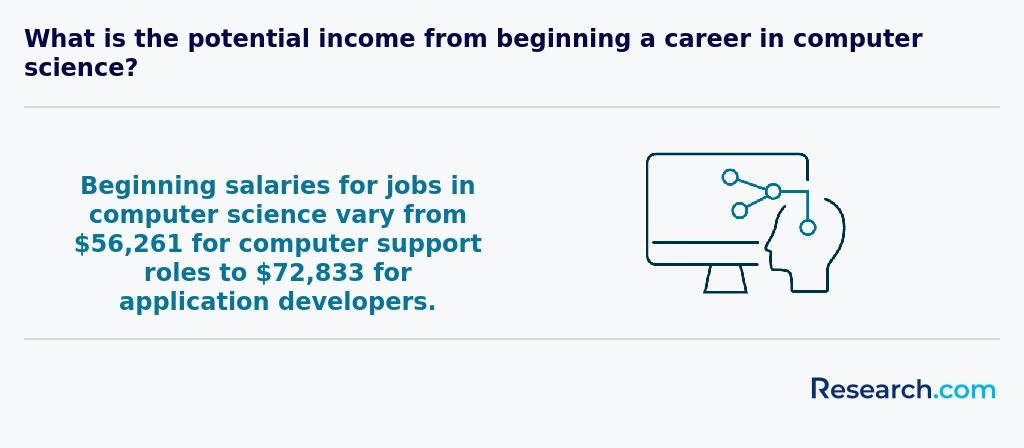
Graduates pursuing computer science career opportunities Massachusetts find themselves at a crossroads rich with possibility. For example, those completing degrees at institutions like MIT or UMass Amherst often transition into software development roles such as application developers or software engineers, where the fast-paced environment creates both challenges and excitement. These careers, highly rewarding with median salaries exceeding $120,000, frequently spark passion as graduates build innovative solutions that impact daily life.
Jobs with computer science degree Massachusetts extend beyond coding; data science and cybersecurity are increasingly vital, fueled by local healthcare and finance sectors. Graduates from schools like Harvard often thrive as cybersecurity analysts or machine learning engineers, embracing roles that blend technical mastery with impactful problem-solving. The growing demand in these fields invites deeper reflection on how these specialized skills will shape future industries.
Other career paths lead to artificial intelligence, robotics, and technical consulting, where leadership and creativity merge. Many find that their programs emphasize this balance, preparing them for roles that require both sharp analytical skills and visionary management. For students mindful of financial burdens, options such as public university tuition and scholarships help keep ambitions affordable, while exploring medical certifications that pay well may offer complementary career enhancements.
What is the job market for computer science degree in Massachusetts?
The computer science job opportunities in Massachusetts reveal a landscape where innovation meets opportunity head-on. Graduates from renowned institutions like MIT and Boston University often share stories of landing roles at cutting-edge startups or leading tech firms, reflecting the state's unique ecosystem. The Greater Boston area buzzes with energy that nurtures both fledgling ideas and established technologies, turning abstract skills learned in classrooms into real-world impact.
For students immersed in this environment, the Massachusetts computer science degree career outlook feels less like a distant hope and more like an accelerating engine. With employers in biotech, healthcare, and finance actively seeking talent, the tangible potential for a rewarding career is unmistakable. One might think salary expectations are standard, but actual figures frequently surpass national averages, rewarding those who take the plunge into this competitive market.
Yet, success often hinges on strategic choices during education; exploring programs in the state carefully is key, and for those weighing options, considering easiest associates degrees can be a practical start toward entering the thriving workforce more rapidly.
Frequently Asked Questions About computer science
Students pursuing computer science degrees in Massachusetts can enhance their learning by actively engaging in internships and cooperative education programs. The state's strong technology sector, including companies like Google and IBM, offers valuable practical experience that complements academic studies. According to the Massachusetts Department of Higher Education, over 70% of computer science undergraduates participate in internships before graduation, boosting employability.
Joining research projects is another key tactic. Massachusetts is home to top-tier institutions such as MIT and Harvard, which provide access to cutting-edge research opportunities. Collaborating with faculty on innovation-driven projects deepens understanding and develops critical thinking skills.
Additionally, students should leverage networking events and tech meetups common in Boston's vibrant tech ecosystem to build professional connections that support career growth.
Massachusetts is a hub for innovation in computer science, with several emerging niches gaining traction among students and employers. Areas like artificial intelligence (AI) and machine learning are rapidly growing, driven by local firms and research institutions such as MIT and Harvard. Cybersecurity is another critical field due to increasing digital threats, with demand for skilled professionals rising statewide.
Data science and big data analytics also stand out, supported by the state's strong biotech and finance sectors. Robotics, including autonomous systems, benefits from Massachusetts' advanced manufacturing ecosystem. According to the Massachusetts Technology Collaborative, jobs in these niches are expected to grow by over 15% through 2028.
Graduates with computer science degrees in Massachusetts should focus on practical experience to enhance their job prospects. Internships and cooperative education programs offered by universities like MIT and Harvard provide vital industry exposure. According to the Massachusetts Technology Collaborative, nearly 75% of tech employers value hands-on experience when hiring.
Building a strong portfolio of projects and contributing to open-source platforms can demonstrate technical skills to employers. Networking opportunities through local tech meetups, such as those in Boston's Innovation District, help in making valuable professional connections.
Additionally, mastering current tools in demand, like Python, Java, and cloud computing, aligns with employment trends reported by the Massachusetts Executive Office of Labor and Workforce Development.
Employers in Massachusetts value a mix of technical and interpersonal skills in computer science graduates. Strong programming abilities, especially in languages like Python, Java, and C++, are essential since 73% of local tech jobs require these, according to the Massachusetts Tech Collaborative.
Problem-solving and algorithmic thinking are critical as well, reflecting the analytical nature of the field. Knowledge of data structures and software development lifecycle is also highly sought after.
Additionally, skills in cloud computing and cybersecurity are increasingly important due to the region's focus on biotech and finance sectors. Communication and teamwork are crucial since many projects require collaboration across teams.
Finding internships in Massachusetts relevant to a computer science degree involves utilizing both university resources and the state's thriving tech industry. Many universities, including MIT and Harvard, offer dedicated career centers that connect students to internship opportunities through job fairs and employer partnerships.
Massachusetts is home to a robust technology sector, with companies like IBM, Akamai, and numerous startups in the Boston area offering internships. The Massachusetts Technology Collaborative reports that over 20,000 tech jobs are open annually, creating steady internship demand.
Online platforms such as Handshake and LinkedIn are widely used by students for discovering internships. Additionally, networking events and local meetups hosted by organizations such as Mass Technology Leadership Council (MassTLC) provide valuable connections.
A computer science degree significantly enhances career mobility and advancement opportunities in Massachusetts. The state's robust tech sector, including firms in Boston, Cambridge, and surrounding areas, highly values graduates with such degrees. According to the Massachusetts Executive Office of Labor and Workforce Development, jobs in computer and information technology are projected to grow faster than the average for all occupations through 2030. This growth encourages employers to prefer candidates with formal education in computer science for roles in software development, data analysis, and cybersecurity.
Graduates often benefit from higher starting salaries and access to leadership roles. The degree also supports career shifts within tech fields, enabling professionals to specialize further or move into management. Networking opportunities via Massachusetts universities further aid career growth, linking students with local startups and established companies.
Studying for a computer science degree in Massachusetts offers a strong foundation for interdisciplinary roles by combining technical skills with diverse fields. Many universities in Massachusetts incorporate courses that link computer science with biology, economics, engineering, and social sciences, reflecting real-world applications. For example, MIT and Harvard emphasize collaboration across departments, helping students develop problem-solving skills relevant to multiple sectors.
The state's robust tech ecosystem includes healthcare, finance, and biotechnology, industries that increasingly rely on computer science expertise. According to the Massachusetts Technology Collaborative, tech jobs grew by 7.2% from 2018 to 2023, signifying demand for versatile professionals. Such environments encourage students to engage in projects and internships that blend computing with other disciplines, preparing them for interdisciplinary careers.
Choosing between a thesis and a non-thesis computer science degree program in Massachusetts depends on your career goals and interests. Thesis programs emphasize original research, preparing students for doctoral studies or research roles in tech companies. They typically require 6-12 months to complete a research project under faculty supervision. Non-thesis programs focus on coursework and practical skills, ideal for those entering the workforce directly, emphasizing applied knowledge over research.
According to the National Center for Education Statistics, Massachusetts hosts several top-ranked computer science graduate programs, with over 1,500 master's degrees awarded annually. Research-oriented programs may be more available at research universities in Boston and Cambridge, where tech industry connections abound.
Students based in Massachusetts who wish to study computer science abroad have several options through well-established exchange programs and partnerships. Many universities in Massachusetts, including MIT and Harvard, offer study abroad opportunities in Europe, Asia, and other regions, focusing on cutting-edge technology and innovation. For example, the Massachusetts Department of Higher Education supports programs that allow students to gain international experience while earning credits toward their degree.
According to the Institute of International Education, approximately 2,400 U.S. computer science students studied abroad in 2022, with a growing number coming from Massachusetts institutions. Popular destinations include Germany, the UK, and Singapore, notable for their advanced tech industries. These programs often include internships or research projects, enriching students' practical skills and global perspective.
Students pursuing computer science degrees in Massachusetts have access to numerous part-time job opportunities that complement their academic experience. The state's robust tech industry, including hubs in Boston and Cambridge, offers roles such as software development interns, IT support specialists, and data analysts. According to the Massachusetts Executive Office of Labor and Workforce Development, technology-related jobs are projected to grow by 11% through 2030, emphasizing strong local demand.
Many universities also collaborate with nearby startups, enabling students to gain hands-on experience while studying. Additionally, positions in campus technology services or research labs provide practical skills valuable to future employers.
Massachusetts offers robust networking opportunities for computer science students through its dense concentration of tech companies, startups, and prestigious universities. Greater Boston alone hosts over 1,300 tech firms, providing ample internship and job shadowing options. Organizations like MIT's Alumni Association and Harvard's i-lab frequently hold events, workshops, and mentorship programs designed to connect students with industry professionals.
The state hosts numerous tech conferences and meetups annually, such as the Boston TechJam, attracting thousands of experts and recruiters. Additionally, universities often collaborate with local businesses to offer career fairs and networking nights, increasing student access to potential employers and collaborators.
Alumni networks provide significant benefits to computer science degree students in Massachusetts by facilitating mentorship and career opportunities. Graduates often engage with students through events and online platforms, offering guidance on internships and job placements. Massachusetts hosts many technology companies, including those in Boston and Cambridge, where alumni connections can open doors to competitive roles.
According to the Massachusetts Technology Collaborative, over 300,000 tech professionals work in the state, making networking crucial for job seekers. Alumni networks also support collaboration on projects and research, enhancing practical experience for current students. Access to this community can accelerate career growth and professional development in computer science fields.
In Massachusetts, many universities allow computer science students to tailor their degree programs through electives and specializations. Common areas include artificial intelligence, cybersecurity, data science, and software engineering. Selecting relevant electives aligns learning with specific career goals.
Students can also engage in research projects or internships, often facilitated by Massachusetts' strong tech industry, including companies like Massachusetts Institute of Technology (MIT) and leading startups. These opportunities enhance practical skills and professional networks.
Graduate certificates and dual-degree options provide further customization. According to the Massachusetts Department of Higher Education, about 35% of STEM graduates pursue internships, which helps tailor their expertise to industry needs.
Computer science students in Massachusetts often face a demanding curriculum that requires strong problem-solving skills and time management. Many courses in programming, algorithms, and data structures are challenging, with high expectations for project complexity and coding proficiency.
Another common challenge is balancing academic work with internships and job searches. Massachusetts hosts numerous tech companies, especially in Boston and Cambridge, and competition for internships can be intense. According to the Massachusetts Technology Leadership Council, nearly 70% of CS students seek industry experience alongside studies.
Additionally, some students report difficulty adapting to rapid technological changes. Keeping up with new programming languages and software tools requires continuous learning beyond classroom hours, contributing to student stress.
With a computer science degree in Massachusetts, graduates can pursue various professional certifications that enhance their career prospects. Popular certifications include the Certified Information Systems Security Professional (CISSP), valued for cybersecurity roles, and the Certified Software Development Professional (CSDP), which focuses on software engineering expertise.
Other notable certifications are the Amazon Web Services (AWS) Certified Solutions Architect and the Google Professional Data Engineer, reflecting demand in cloud computing and data management sectors. According to the Massachusetts Technology Collaborative, cloud and cybersecurity jobs have grown by over 15% annually in the state, boosting the value of these certifications.
Additionally, certifications like Project Management Professional (PMP) are useful for graduates moving into team leadership or software project management within Massachusetts' strong tech industry. Earning these credentials often requires passing exams and relevant professional experience.
Applying to a computer science program in Massachusetts requires clear preparation and attention to detail. Successful applicants typically demonstrate strong academic performance in math and science courses, supported by transcripts that reflect a GPA above 3.5, a common benchmark in selective state schools.
Massachusetts hosts several top-ranked institutions, so tailor your personal statement to highlight your passion for innovation and problem solving, which resonates with regional tech industries like those in Boston and Cambridge. Strong letters of recommendation from teachers familiar with your technical skills enhance your profile.
Standardized tests such as the SAT or ACT may still be required by some schools, although many have adopted test-optional policies recently.
The Massachusetts Department of Higher Education notes that computer science job growth in the state is projected at 15% through 2030, signaling strong demand and making a compelling case for a well-crafted application.
The global demand for computer science professionals continues to grow rapidly, driven by advancements in technology and digital transformation. In the United States, and specifically Massachusetts, the tech industry offers numerous opportunities with competitive salaries. According to the Massachusetts Technology Collaborative, the state hosts over 80,000 tech workers, many specializing in software development, data analysis, and cybersecurity.
Worldwide, computer science careers are valued for their versatility and high earning potential. Graduates with a degree from Massachusetts benefit from the state's concentration of top universities and research centers, which helps maintain a competitive edge in the global job market. The U.S. Bureau of Labor Statistics projects a 15% growth in computer and information technology occupations from 2021 to 2031, faster than the average for all occupations.
This growth reflects the increasing reliance on technology across all sectors, from healthcare to finance. Students in Massachusetts entering computer science programs are thus well-positioned to join a global workforce where innovation and technical skills are highly prized.
Gaining practical experience while studying computer science in Massachusetts is essential for career readiness. Many universities, including MIT and Boston University, offer robust co-op and internship programs that connect students with local tech companies. According to the Massachusetts Technology Collaborative, the state hosts over 10,000 tech firms, providing abundant opportunities to apply classroom knowledge. Participating in research projects led by faculty further enhances hands-on skills. Developer meetups and hackathons, frequently held in cities like Cambridge and Boston, allow students to collaborate on real-world problems. Additionally, many schools have coding clubs and partnerships with startups to foster experiential learning.
Choosing the right concentration within a computer science degree in Massachusetts depends on your career interests and the region's job market. Popular focuses include software engineering, data science, cybersecurity, and artificial intelligence, areas with strong local demand. For instance, the Boston metropolitan area is a hub for tech startups and established firms, offering abundant roles in AI and data analytics, according to the Massachusetts Technology Leadership Council.
When selecting a concentration, consider which skills align with industry trends and job growth. Massachusetts reported nearly 45,000 computer and IT roles in 2023, with cybersecurity and software development showing faster growth compared to others.
Research specific programs and ask about faculty expertise, internship opportunities, and partnerships with local companies to ensure practical experience. Certifications and hands-on projects can also enhance your employability in the state's competitive tech landscape.
Related Computer Science Rankings for Nearby States
- 2027 Most Valuable Computer Science Degree Programs Ranking in Rhode Island
- 2027 Most Valuable Computer Science Degree Programs Ranking in Connecticut
- 2027 Most Valuable Computer Science Degree Programs Ranking in New York
- 2027 Most Valuable Computer Science Degree Programs Ranking in Maine
- 2027 Most Valuable Computer Science Degree Programs Ranking in Pennsylvania
- 2027 Most Valuable Computer Science Degree Programs Ranking in Maryland
- 2027 Most Valuable Computer Science Degree Programs Ranking in Ohio
- 2027 Most Valuable Computer Science Degree Programs Ranking in Kentucky
- 2027 Most Valuable Computer Science Degree Programs Ranking in North Carolina
- 2027 Most Valuable Computer Science Degree Programs Ranking in Tennessee
Top Trending Computer Science Rankings
See What Experts Have To Say About Studying Computer Science
Read our interview with Computer Science experts

Derek Riley
Computer Science Expert
Professor, Program Director
Milwaukee School of Engineering

Elan Barenholtz
Computer Science Expert
Associate Professor
Florida Atlantic University

Imed Bouchrika, Phd
Computer Science Expert
Professor of Computer Science
National Higher School of Artificial Intelligence

Martin Kang
Computer Science Expert
Assistant Professor
Loyola Marymount University

References
- How to Find Computer Science Work Experience in Year 12 https://www.savemyexams.com/learning-hub/careers/how-to-find-computer-science-work-experience-year-12/
- Letter of Motivation for applying Computer Science related fields https://essayforum.com/letters/motivation-applying-computer-science-related-11858/
- 5 Challenges Faced by Computer Science Students and How to Overcome Them https://informatika.almaata.ac.id/5-challenges-faced-by-computer-science-students/
- Computer Science Cover Letter: How to Show You're a Top Tech Candidate https://arc.dev/talent-blog/computer-science-cover-letter/
- Computer Science students create live network in simulated scenario https://www.stmartin.edu/news-and-stories/stories/computer-science-students-create-live-network-simulated-scenario
- Top 12 Global Careers For Computer Science Degree Graduates https://womeninstemnetwork.com/careers-for-computer-science-degree/
- Getting the Most Out of a Computer Science Degree https://robkokochak.com/blog/getting-the-most-out-of-a-cs-degree/
- A Holistic Approach to Studying Interdisciplinary Collaboration: Computer Science https://sciety.org/articles/activity/10.21203/rs.3.rs-8694985/v1
- Essential Skills Every Computer Science Graduate Needs | LSBF https://lsbf.edu.my/blog/11-essential-skills-every-computer-science-graduate-needs/
- Challenges That Frustrate Computer Science Teachers https://codeeasy.io/blog/challenges-that-frustrate-computer-science-teachers