2027 Easiest Online Communication Degree Programs Ranking in the USA

Co-Founder and Chief Data Scientist
Choosing the right communication degree program can feel overwhelming, especially with so many online options available. To help you navigate this, the Research.com team of data scientists has created the 2027 Easiest Online Communication Degree Programs Ranking in the USA. This carefully researched ranking highlights programs that balance quality and accessibility, making your educational journey smoother.
Reading this article will guide you in finding a program that fits your goals and lifestyle. A communication degree opens many doors, empowering you with skills for a rewarding career. Let's explore which programs make your path easier and more enjoyable.
Key benefits of getting online communication degree in America
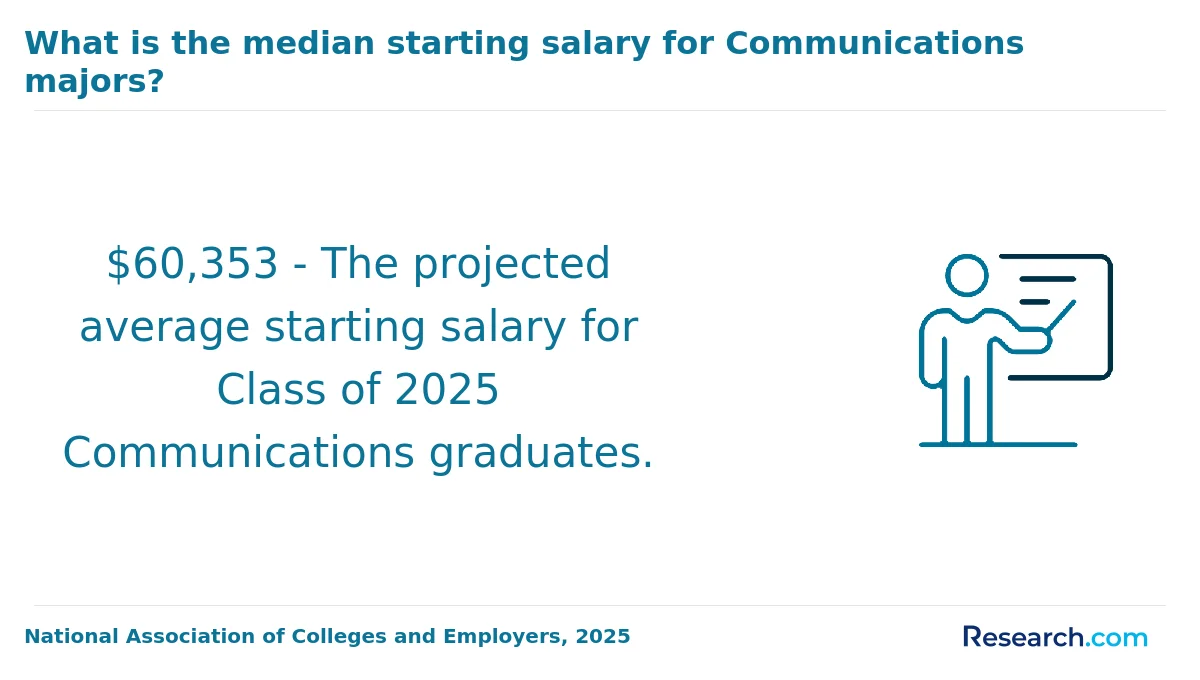
- Communication degree graduates in the US can expect entry-level salaries around $45,000 to $60,000 annually, with growth potential as experience increases, offering a strong financial starting point for your career.
- Graduates from well-known schools like the University of Southern California often pursue careers in public relations, marketing, media, or corporate communication, providing diverse and rewarding job opportunities.
- Online communication degree programs from universities like Arizona State University offer flexible schedules and access to quality education, making it easier to balance work, life, and study while gaining the same recognized degree.
- Key benefits of getting online communication degree in America
- What can I expect from online communication degree in America?
- Where can I work with online communication degree in America?
- How much can I make with online communication degree in America?
- 2027 Easiest Online Communication Degree Programs Ranking in the USA
- Key Findings
- How long does it take to complete online communication degree in America?
- What's the difference between online and on-campus communication degree?
- What is the average cost of online communication degree in America?
- What financial aid is available to online communication degree students in America?
- What are the prerequisites for enrolling in online communication degree program in America?
- What courses are typically in online communication degree programs in America?
- What types of specializations are available in online communication degree programs in America?
- How do you choose the best online communication degree in America?
- What career paths are available for online communication degree students in America?
- What is the job market for online communication degree in America?
- Top Trending Communication Rankings
What can I expect from online communication degree in America?
The average cost of an online communication degree in America varies widely, typically ranging from $15,000 to $40,000 for a bachelor's program, depending on the institution's prestige and format. Graduates from well-known public universities offering online communication degrees often highlight the value of balancing affordable tuition with access to industry-standard tools and faculty expertise. For instance, students at state universities commonly report feeling empowered by practical coursework combined with affordable pricing that fits within their budgets.
Many private colleges charge higher tuition, sometimes exceeding $30,000, but often provide enhanced networking opportunities and direct access to internships, which graduates view as crucial stepping stones in their careers. Community colleges offering associate degrees in communication provide cost-effective entry points, sometimes under $10,000, appealing to those prioritizing financial flexibility.
Students appreciate that online program costs include digital resources like video lectures and interactive platforms, simulating campus-based learning. This realistic setup supports busy professionals studying alongside jobs or family commitments, fostering satisfaction and confidence in earning a recognized communication credential.
Where can I work with online communication degree in America?
Graduates with an online communication degree from well-regarded American institutions often find diverse job opportunities across public relations, advertising, journalism, and corporate communications. For instance, alumni from large state universities report beginning careers as public relations specialists managing company reputations, where the median annual wage reached $62,800 in 2023, according to the U.S. Bureau of Labor Statistics (BLS). This role involves crafting press releases and coordinating media outreach, skills emphasized in programs at universities known for their communications faculties.
Advertising and marketing agencies represent another key employment sector. Graduates frequently apply digital communication skills gained in online programs from colleges like the University of Southern California to develop branding campaigns and perform digital analytics, embracing the expanding role of social media platforms in marketing.
Journalism graduates often transition into broadcast and digital media roles, producing news for TV, radio, or websites. Schools recognized for media studies report students excited by the growing demand for digital news content, reflecting trends noted by the Pew Research Center.
Large corporations employ communication graduates in internal roles such as crisis management and employee engagement, positions that offer median salaries around $120,000 annually. Graduates from top public and private universities appreciate how these careers contribute to maintaining positive company culture.
Additional opportunities lie in nonprofit organizations, government agencies, healthcare communication, and event planning-fields where clear, strategic messaging is essential. Communication grads feel confident transitioning across these industries, inspired by flexible skills gained during their studies at American universities.
How much can I make with online communication degree in America?
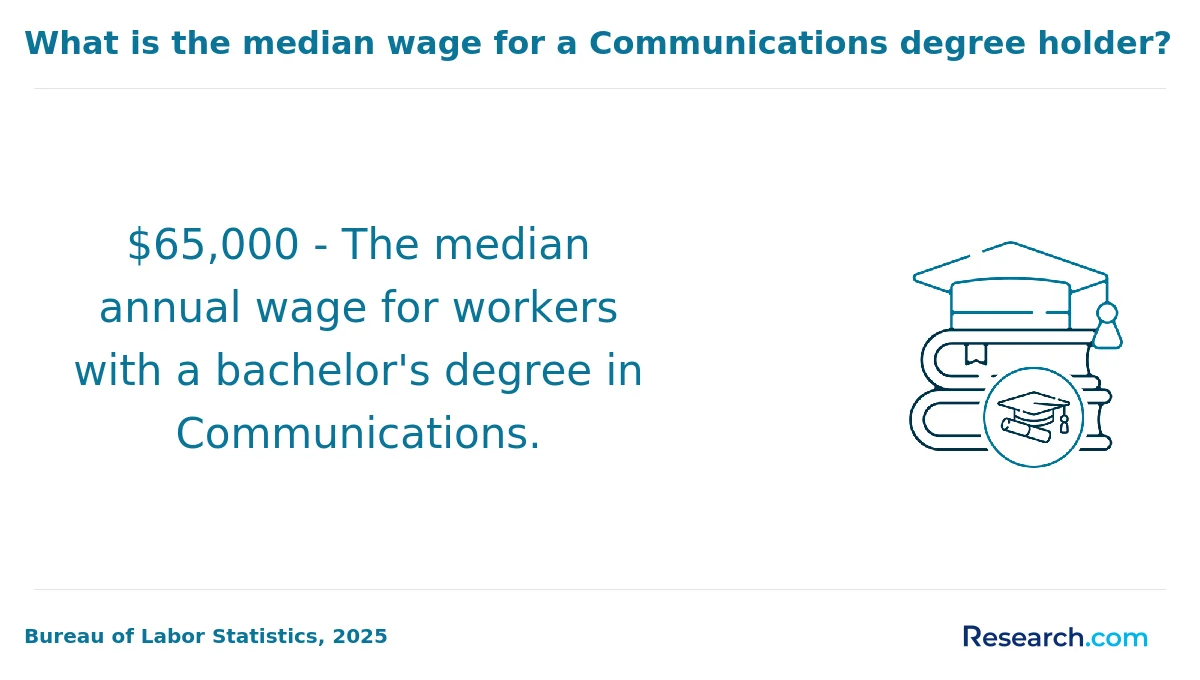
Graduates with an online communication degree in America can expect median annual salaries around $62,000, according to data from the U.S. Bureau of Labor Statistics in 2023. Entry-level roles, often taken by recent graduates from universities like the University of Southern California or the University of North Carolina, typically start between $40,000 and $50,000. These positions include roles such as public relations specialists and media coordinators, offering a solid foundation for career growth.
More experienced graduates working as public relations managers or marketing communication directors report median wages near $125,000 per year. These figures reflect the strategic responsibilities handled by such professionals in major companies. For example, graduates from American University, renowned for its communication programs, have found higher-paying roles in Washington D.C., where salaries often exceed the national median due to the city's competitive market.
Adding skills in digital marketing and analytics helps graduates boost their earnings. Urban centers like New York City and Los Angeles, with robust media industries, offer approximately 20% to 30% higher wages, motivating graduates to build location-specific expertise for financial success and career satisfaction.
2027 Easiest Online Communication Degree Programs Ranking in the USA
How do we rank schools?
Investing in your education is a significant decision that can shape your future, and the Research.com team understands the importance of making informed choices. To assist prospective students, we have meticulously crafted the "2027 Easiest Online Communication Degree Programs Ranking in the USA." Our commitment to quality, credibility, and accuracy is reflected in the extensive research and analysis conducted to compile this ranking.
We utilized the following reputable data sources to ensure a comprehensive evaluation of online communication programs:
By exploring this ranking, readers will gain valuable insights into the easiest online communication degree programs available in the USA, helping them make informed decisions about their educational paths. For more details on our methodology, please visit our Research.com methodology page.
# 1 position
University of Maryland Global Campus
Master of Strategic Communication

# 2 position
Full Sail University
Bachelor of Media Communications


Key Findings
- Online communication degrees cover topics like media studies, public relations, interpersonal communication, and digital media strategies.
- Bachelor's programs typically cost between $15,000 and $40,000 at public universities, while private schools may charge over $50,000.
- Entry-level salaries for graduates range from $40,000 to $55,000, with median wages around $62,000 for roles like public relations specialists.
- Job growth in communication fields is projected at 7% over the next decade, faster than the average for all occupations.
- Many programs are accredited by ACEJMC and offer internships and networking opportunities to boost career readiness.
How long does it take to complete online communication degree in America?
The typical time to complete an online communication degree in America varies by degree type and enrollment status. Bachelor's degrees usually require 120 to 130 credit hours, typically completed in about four years by full-time students. For example, graduates from popular schools like the University of Southern California or Arizona State University often finish within this range, balancing coursework across semesters.
Online formats offer flexibility; some students accelerate their pace through year-round sessions, finishing sooner, while others studying part-time-often working professionals-may extend completion to five or six years. This balance allows students to manage work, family, and study successfully.
Master's programs generally require one to two years full-time, but part-time options at institutions like Boston University extend that to three years or more. Certificate and associate degrees commonly take one to two years, appealing to those seeking foundational skills or quicker entry into communication fields.
This timeframe aligns well with many students' lives, offering adaptable pathways without sacrificing quality or support, as reported by graduates nationwide.
What's the difference between online and on-campus communication degree?
The main difference between online and on-campus communication degrees in America is how students engage with their studies. Online programs, like those offered by well-known public universities, allow students to complete coursework asynchronously, fitting classes around jobs or family life. Graduates often describe the freedom to review lectures anytime and collaborate via virtual platforms as empowering, especially for those balancing multiple responsibilities.
In contrast, students attending traditional on-campus programs at colleges such as the University of North Carolina or the University of California enjoy face-to-face interactions that strengthen interpersonal skills. These environments provide in-person networking events, access to media labs, and real-time feedback from professors, which many graduates find invaluable for career-ready communication skills.
Cost also varies significantly. Public four-year institutions report average in-state tuition around $10,500 annually, while online options may reduce costs by eliminating commuting and housing fees. However, some online learners note challenges with lower social support, though improvements in digital tools are enhancing engagement.
What is the average cost of online communication degree in America?
The average cost of an online communication degree in America varies significantly based on residency status and institution type, with median total costs providing a clear benchmark. For in-state students attending public universities, the median total expense typically hovers around $29,888. Out-of-state students face higher costs, with the median total reaching approximately $45,888. Overall, the median total cost across various colleges sits near $43,800. Graduates from popular institutions often recall balancing tuition and fees while appreciating the flexibility and accessibility of online programs that align with their personal and professional lives.
Many students pursuing affordable online communication degree programs in the USA find community colleges and state universities appealing due to their more manageable fees. These students often share positive experiences about how such programs allowed them to work while studying, making the investment feel worthwhile despite the financial commitment. For example, individuals attending well-known public universities have successfully completed their coursework with a combination of scholarships and financial aid, which helped reduce their total expenditures.
It is important to consider technology fees and other mandatory expenses, which can add several hundred to thousands of dollars annually. Master's level online communication degrees, while not covered in this median cost data, generally carry higher price tags. Those searching for an easy online communications degree sometimes discover programs offering competitive prices and flexible payment plans. Many prospective students benefit from exploring these options and researching specific tuition details to craft a budget that fits their circumstances.
Prospective students interested in budgeting for their education can explore more details about easy online communications degree programs at easy online communications degree.
What financial aid is available to online communication degree students in America?
Students pursuing an online communication degree in America often rely on multiple financial aid sources to manage tuition costs, which can average around $10,000 annually at public universities and exceed $30,000 at private institutions. Federal aid, particularly through the Free Application for Federal Student Aid (FAFSA), remains the cornerstone. For example, Pell Grants offer up to $7,395 yearly to eligible undergraduates, including those enrolled in communication programs at universities like the University of Florida or Arizona State University.
Loans, such as Federal Direct Loans, provide manageable repayment terms and typically feature lower interest rates than private loans. Graduates from communication programs often cite these loans as critical in balancing their budgets without overwhelming debt.
- Merit-based scholarships from institutions and organizations like the National Communication Association also help ease financial burdens for communication majors.
- Many public universities extend institutional aid or discounted tuition rates to online students, effectively making education more affordable.
- Working professionals benefit from employer tuition reimbursement programs, which support part-time study while maintaining employment.
Veterans take advantage of the GI Bill benefits, which cover substantial tuition portions, exemplifying the diverse aid landscape available to communication students nationwide.
What are the prerequisites for enrolling in online communication degree program in America?
To enroll in an online communication degree in America, students typically need a high school diploma or equivalent, such as a GED. Graduates from well-known programs at universities such as Arizona State University often recall how their strong backgrounds in English and social studies helped them excel in coursework focused on writing and media analysis.
Transfer students usually must present completed college credits, especially in general education subjects related to writing or humanities. This foundation supports the heavy emphasis on critical thinking and communication skills required by these programs. For example, many students at the University of Florida highlight how their prior coursework prepared them for advanced media projects and collaborative online discussions.
While SAT or ACT scores have become optional at many public institutions, applicants must still submit application materials like transcripts, letters of recommendation, and personal essays. These documents showcase motivation and communication aptitude, essential for thriving in virtual learning environments.
Reliable internet access and basic digital literacy also play critical roles, enabling students to engage effectively with course content and peers.
What courses are typically in online communication degree programs in America?
Online communication degrees in America typically include foundational courses such as Introduction to Communication Theory, where students explore how communication operates in personal and mass contexts. Graduates from well-known institutions like the University of Florida often describe this course as eye-opening, helping them grasp everyday interactions and group dynamics with new clarity.
Interpersonal Communication is another core class, focusing on one-on-one and small group skills essential in professional settings. For example, students at Arizona State University report gaining confidence in managing workplace conversations and team meetings through this coursework.
Public Speaking and Presentation classes train students to deliver messages effectively to diverse audiences, a vital skill highlighted by communication majors at Penn State University who have successfully transitioned into client-facing roles.
As students advance, specialized courses include Media Writing and Reporting, Social Media Strategy, and Digital Communication Technologies. These classes equip learners to create compelling digital content and leverage platforms like Facebook and Instagram for marketing, reflecting practical skills demanded in today's job market.
What types of specializations are available in online communication degree programs in America?
Online communication degree specializations in America typically include Public Relations (PR), Digital & Social Media Communication, Corporate Communication, Media Production and Journalism, and Health Communication. For example, graduates from popular communication programs at universities such as the University of Southern California or the University of Florida often highlight how the PR specialization prepared them for crisis management and brand strategy roles, directly reflecting the projected 11% job growth in this field by 2032.
Digital & Social Media Communication equips students with skills in content creation and analytics, essential for navigating platforms used daily by over 70% of Americans. Graduates from institutions like Penn State report feeling confident applying these skills in real-world marketing scenarios, demonstrating the practicality of this specialization. Such focused training aligns well with the best communication majors in America, helping students target high-demand niches.
The health communication track responds to recent public health challenges, teaching effective patient education and provider messaging strategies. Graduates often find rewarding positions in healthcare organizations, reflecting the growing importance of this specialization.
Students also benefit from corporate communication programs that enhance internal messaging and leadership engagement, improving workplace culture. Those pursuing journalism and media production learn multimedia storytelling tailored to evolving digital landscapes, evidenced by steady entry-level earnings around $49,300 annually.
For those seeking specific career paths, exploring jobs for communication majors offers insight into how these specializations translate into the workforce.
How do you choose the best online communication degree in America?
Choosing the best online communication degree in America starts with verifying regional accreditation, such as from the Southern Association of Colleges and Schools Commission on Colleges (SACSCOC). Graduates from institutions like the University of Florida or Arizona State University highlight how accredited programs provide credible, industry-relevant education that employers respect. Curriculum diversity is key; programs that incorporate specializations ranging from media studies to digital communication help students align their studies with specific career goals.
Affordability is crucial for many students exploring affordable online communication programs America offers. Tuition ranges widely-from $10,000 to over $30,000 annually-so comparing costs alongside available financial aid is necessary. Graduates report feeling more confident when their programs include practical components such as internships or project-based courses, which mirror real workplace demands and improve job prospects.
Faculty expertise and strong student support are also critical. Institutions popular among students often provide access to seasoned professionals and resources like career counseling. Researching graduate employment outcomes, especially in fields tied to communication, media, or advertising, further helps. For those curious about career paths, reviewing types of public relations jobs can clarify options after graduation.
What career paths are available for online communication degree students in America?
Graduates with an online communication degree in America access diverse career paths spanning public relations, marketing, journalism, and corporate communications. Many graduates from universities like the University of Florida or Arizona State University find roles as public relations specialists, earning a median annual wage around $62,800 according to the BLS. Job opportunities with communication degree in America often include social media manager, marketing coordinator, and content creator positions, reflecting digital media's growing importance in business.
Alumni frequently highlight rewarding experiences managing online campaigns and engaging audiences, skills emphasized in programs popular for communication studies. Corporate communication managers, especially in larger firms, earn an average of $110,000 annually, demonstrating the value of internal communications expertise. Graduates teaching communication at colleges often pursue further graduate study, acknowledging certification needs vary across states for K-12 roles.
Entry-level communication specialists typically start with salaries from $40,000 to $50,000, a promising range given average tuition costs. Those seeking insight into advancement and pay can explore the salary with a master's in public relations for detailed data supporting career growth following advanced study. These data-driven perspectives underscore the potential in online communication degree career options USA.
What is the job market for online communication degree in America?
The job outlook for online communication degrees in the USA is notably positive, driven by a projected 9% growth in communication-related roles from 2021 to 2031, according to the U.S. Bureau of Labor Statistics. Graduates from prominent institutions such as the University of Southern California or Syracuse University often report opportunities in engaging roles like public relations specialists and social media managers. These positions allow them to creatively manage brand narratives and digital presence in real-world scenarios, from coordinating campaigns to handling crisis communication, emphasizing the practical value of their degrees.
Career opportunities with online communication degree in America typically offer competitive wages, with public relations specialists earning a median annual salary of $62,800 as of May 2022. Many graduates from top colleges appreciate how their skills in strategic messaging and media relations prepare them for this robust market. Students considering further specialization often explore a public relations master's degree to enhance career prospects, combining strong job growth with rewarding salaries.
Frequently Asked Questions About communication
Students pursuing online communication degrees in America can enhance their learning by actively engaging in virtual discussions and group projects. Research from the National Center for Education Statistics shows that interaction improves retention and understanding.
Utilizing university resources like virtual libraries and academic advising is crucial. According to the American Association of State Colleges and Universities, over 70% of online students report better success when supported by faculty guidance.
Additionally, staying updated with industry trends via professional organizations such as the National Communication Association helps bridge theory and practice. Time management and self-discipline also play vital roles, as highlighted in recent studies by the Online Learning Consortium.
The communication field in the U.S. is expanding with several emerging niches driven by evolving technology and media landscapes. Digital communication, including social media management and content strategy, is rapidly growing due to increased online engagement. According to the Bureau of Labor Statistics, employment for communication specialists is projected to grow 11% from 2021 to 2031, faster than average for all occupations. Another growing area is health communication, which focuses on improving public health outcomes through messaging and campaigns. Additionally, crisis communication and corporate social responsibility are gaining importance as companies emphasize transparency and reputation management.
Graduates with an online communication degree in America should focus on building practical skills to succeed in the job market. Gaining hands-on experience through internships or volunteer work is essential. According to the National Association of Colleges and Employers (NACE), communication skills rank among the top qualities employers seek.
Networking is also crucial. Joining professional groups like the Public Relations Society of America (PRSA) can open doors to job opportunities and mentorship. Additionally, staying current with digital tools such as social media analytics and content management systems improves employability.
Many graduates find success by tailoring resumes and portfolios to highlight relevant projects and measurable outcomes, increasing the chances of landing positions in fields like marketing, public relations, or corporate communication.
Employers in America highly value communication degree graduates who demonstrate strong written and verbal communication skills. According to the National Association of Colleges and Employers (NACE), 83% of employers rank communication as a top attribute they seek in new hires. Graduates must also show proficiency in digital communication tools, as online platforms are critical in today's workplace.
Critical thinking and problem-solving abilities continue to be essential, helping graduates adapt to fast-changing environments. Additionally, teamwork and interpersonal skills are vital, particularly in collaborative projects and client interactions.
Data literacy and social media management knowledge are increasingly important as businesses rely on data-driven strategies and digital outreach.
Finding internships in America relevant to a communication degree involves strategic research and networking. Start by exploring university career centers, as many colleges partner with companies to offer internships tailored to communication students. According to the National Association of Colleges and Employers (NACE), 60% of internships lead to full-time jobs, emphasizing their importance.
Use online platforms like Handshake and the U.S. Bureau of Labor Statistics' Career Outlook to locate communication-specific internships in media, public relations, or marketing.
Additionally, joining professional associations such as the Public Relations Society of America (PRSA) can provide internship listings and networking opportunities.
An online communication degree in America significantly enhances career mobility and advancement opportunities. According to the U.S. Bureau of Labor Statistics, communication-related roles are growing by 8% annually, faster than the national average. This degree equips graduates with essential skills in digital media, public relations, and corporate communication, highly valued by employers across various industries.
Online programs often offer flexible schedules, enabling working professionals to upgrade their credentials without interrupting their careers. Additionally, many accredited online communication degrees provide networking opportunities and career services that support job placement and promotions.
Data from the National Association of Colleges and Employers highlights that communication majors report some of the highest employment rates within six months of graduation, indicating strong market demand.
Studying for a communication degree in America equips students with skills applicable across various fields, including business, healthcare, and technology. The interdisciplinary nature of communication programs offers coursework in media studies, public relations, digital communication, and organizational behavior. This broad approach prepares graduates to collaborate effectively with diverse teams and adapt to multiple professional environments.
According to the National Communication Association, over 60% of communication graduates pursue roles in interdisciplinary settings, benefiting from strong analytical and interpersonal skills.
American universities emphasize practical experiences like internships and project-based learning, which further enhance students' ability to bridge communication with other disciplines.
This blend of theory and practice ensures graduates are versatile in tackling complex workplace challenges across sectors.
Choosing between a thesis and a non-thesis online communication degree program in America depends largely on your career goals and learning preferences. Thesis programs typically involve conducting original research and writing a formal thesis, which can be ideal for students wanting to pursue doctoral studies or careers in academia.
Non-thesis options usually focus more on practical skills through coursework and projects, appealing to professionals aiming to advance in fields like public relations, media, or corporate communication.
According to the National Center for Education Statistics, about 60% of communication graduate students in the US opt for non-thesis tracks, reflecting the field's applied nature.
Consider your interest in research versus practical application before deciding which path suits you best.
Students based in America seeking to study communication abroad have several options through U.S. universities that offer online or hybrid programs with international components. Many institutions establish partnerships with foreign schools, enabling students to complete parts of their degree overseas while enrolled in American institutions. According to the Institute of International Education, over 300,000 American students study abroad annually, with communication and media studies among popular fields.
Additionally, some universities provide fully online communication degrees designed with global perspectives, allowing students to engage with diverse cultures virtually. The flexibility of online learning suits working professionals or graduates wanting international exposure without relocating permanently. These programs often include internship opportunities with global media companies or international projects to enhance practical experience.
Part-time job opportunities that complement communication degree education in America often involve roles focused on writing, media, and public relations. Positions such as social media assistant, content writer, or communications intern provide practical experience that aligns well with coursework. According to the U.S. Bureau of Labor Statistics, communication-related jobs are projected to grow 9% from 2021 to 2031, faster than the average for all occupations.
Working in these roles allows students to build portfolios showcasing skills in media management and digital communication. Additionally, campus media outlets or nonprofit organizations often seek part-time support, offering real-world communication challenges. Such jobs enhance both theoretical knowledge and professional readiness.
Online communication students in America have several networking opportunities despite the virtual format. Many accredited universities offer virtual career fairs and online networking events that connect students with industry professionals and alumni. According to the National Communication Association, participation in professional groups and campus clubs, even online, significantly boosts career prospects.
Students can join national organizations like the Public Relations Society of America (PRSA) or the American Marketing Association (AMA), which provide access to webinars, mentorship programs, and job boards. Additionally, platforms like LinkedIn offer specialized groups for communication majors to share resources and job openings.
Internships remain a critical networking tool, with many programs partnering with companies to offer remote internships. These practical experiences help students develop industry contacts before graduation.
Alumni networks play a crucial role for students pursuing online communication degrees in America. These networks connect graduates with peers and industry professionals, offering valuable opportunities for mentorship and career development. According to the National Communication Association, nearly 80% of communication graduates report that networking is essential to finding jobs in the field.
Through alumni events and online platforms, students gain access to insider knowledge about job openings and internships. Additionally, these networks often provide guidance on navigating the diverse communication landscape, from media relations to digital marketing.
Engagement with alumni can also enhance students' credibility and expand their professional circle, which is vital in the competitive U.S. communications job market. This ongoing support improves employment outcomes and career growth.
Customizing an online communication degree program in America allows students to tailor their education to specific career goals. Many universities offer concentrations such as public relations, digital media, organizational communication, or journalism. According to the National Center for Education Statistics, around 60% of US communication programs provide electives to focus on these areas.
Students can also select internships or capstone projects aligned with their desired industries, which enhances practical experience. Choosing courses in emerging fields like social media strategy or data analytics can improve job prospects, as the Bureau of Labor Statistics projects a 10% growth in communication-related jobs through 2032.
Flexibility in program structure helps students balance education with work, making it easier to gain relevant skills while advancing professionally.
Online communication students in America commonly face challenges related to engagement and interaction. Unlike traditional classrooms, virtual settings can limit real-time discussions and networking opportunities, which are essential for communication studies. According to a 2022 survey by the National Center for Education Statistics, about 45% of online learners reported feelings of isolation during their studies.
Technical issues also present ongoing hurdles. Reliable internet access and familiarity with digital platforms are crucial for success. The Pew Research Center highlights that approximately 23% of low-income students struggle with consistent internet connectivity, affecting their coursework.
Moreover, balancing school with work and family commitments is a significant stressor for many online learners in communication programs, often impacting their academic performance and retention rates.
Graduates with an online communication degree in the United States can pursue several professional certifications to enhance their career prospects. Common certifications include the Accredited Business Communicator (ABC) awarded by the Association for Business Communication, which validates skills in corporate communications. The Public Relations Society of America (PRSA) offers the Accreditation in Public Relations (APR), a respected credential in PR and media relations fields. Additionally, the International Association of Business Communicators provides the Communication Management Professional (CMP) certification. These certifications often require a combination of work experience, education, and passing an exam, reflecting the growing demand for qualified communication professionals in diverse industries.
Writing a winning application for an online communication program in America requires clear demonstration of your motivation and skills. Begin by researching accredited programs through the Council for Higher Education Accreditation (CHEA) to ensure quality education.
Highlight your relevant experience, such as internships or digital media projects, to prove practical knowledge. The National Communication Association notes that strong communication skills are critical, so emphasize your ability to write and present effectively.
Include a well-crafted personal statement that explains why you want to study communication online and how it aligns with your career goals. Mention any challenges you've overcome and how they shaped your interest.
Finally, prepare a professional resume and gather letters of recommendation from academics or employers familiar with your communication abilities.
Communication careers in America are increasingly valued for their global relevance. According to the U.S. Bureau of Labor Statistics, communication-related jobs are expected to grow by 6% from 2021 to 2031, reflecting expanded demand worldwide. American online communication degrees often emphasize cross-cultural skills, preparing graduates for international collaboration and digital media roles.
Universities integrate global communication theories to help students understand diverse audiences and international media systems. The emphasis on digital communication tools matches global business trends, enhancing employability across borders. As businesses become more interconnected, skills taught in American programs align with worldwide communication needs.
Gaining practical experience while studying for an online communication degree in America is essential to build job-ready skills. Many programs offer virtual internships, allowing students to work remotely with businesses, nonprofits, or media organizations. According to the National Association of Colleges and Employers (NACE), 57% of employers prefer candidates with relevant internship experience.
Additionally, students can engage in online student media, such as podcasts or digital newsletters, often hosted by their institutions. Participating in real-world projects and digital collaboration tools like Slack or Trello helps develop teamwork and communication skills valued by employers. Networking through online workshops and professional groups also enhances practical knowledge.
Choosing the right concentration within an online communication degree program in America begins with assessing your career goals. Common concentrations include public relations, digital media, health communication, and organizational communication. Each offers distinct skills aligned with growing industries.
For example, public relations roles are expected to grow 13% through 2031, according to the U.S. Bureau of Labor Statistics. Digital media focuses on content creation and social media, which remains vital in today's job market. Health communication prepares students for roles in hospitals and nonprofits, a sector expanding due to public health needs.
Research programs' curriculum, faculty expertise, and internship opportunities. Accreditation from bodies like the Accrediting Council on Education in Journalism and Mass Communications (ACEJMC) ensures quality education. Also, consider flexibility and support services that fit your schedule and learning preferences.
Top Trending Communication Rankings
References
- Online Graduate Certificate Programs in Communication: Strategic, Business https://www.mastersincommunications.com/faqs/graduate-certificate-programs-in-communication
- What studies are needed to work in communications? - Sup de Pub https://www.supdepub.com/en/guide/what-studies-are-needed-to-work-in-communications/
- Unlocking Career Growth: The Power of Communication Skills https://www.pmmi.org/blog/unlocking-career-growth-the-power-of-communication-skills
- Targeted communication strategy for alumni community https://www.alumnforce.com/en/targeted-communication-strategy-for-alumni-networks-how-to-create-lasting-commitment/
- Top Communication Skills Employers Seek From College Grads https://www.manpower.com.sg/en/insights/blogs/2021/03/top-communication-skills-employers-seek-from-college-grads
- CAREERS AND COMMUNICATION ALUMNI https://www.villanova.edu/university/liberal-arts-sciences/programs/communication/careers.html
- What Can You Do with a Communications Degree | Job Options https://www.hanuniversity.com/en/programs/bachelor/communication/fulltime/careers/
- Communications Specialist Certifications: Best Credentials to Advance Your Career | Teal https://www.tealhq.com/career-paths/communications-specialist-certifications
- Communications Degree Salary Guide https://online.maryville.edu/online-bachelors-degrees/communications/careers/communications-degree-salary-guide/
- Master of Arts (M.A.) Major in Communication Studies (Non-thesis Option) https://mycatalog.txstate.edu/graduate/fine-arts-communication/commstudies-nonthesis-nominor-ma/