2027 Most Affordable Accounting Degree Programs Ranking in Wisconsin

Co-Founder and Chief Data Scientist
Choosing the right accounting degree program in Wisconsin can feel overwhelming. To make this easier, the article presents the 2027 Most Affordable Accounting Degree Programs Ranking in Wisconsin, created by the Research.com team of data scientists. This ranking helps students find quality programs without breaking the bank.
Reading this guide will empower you to make a confident decision about your education. Earning an accounting degree opens doors to rewarding career opportunities and financial stability. Explore your options and take the first step toward a bright future.
Key benefits of getting accounting degree in Wisconsin
- Accounting degree graduates in Wisconsin can earn competitive salaries, with staff accountants earning a mean annual wage of $90,780 and bookkeepers or tax preparers typically earning around $49,580.
- Graduates from popular Wisconsin colleges have diverse career paths available, such as becoming auditors, accounts payable clerks, or tax preparers, ensuring flexibility and growth opportunities.
- Completing an accounting degree online from a well-known Wisconsin university offers convenience and allows students to balance work and study, often accelerating their career progress.
- 2027 Most Affordable Accounting Degree Programs Ranking in Wisconsin
- What can I expect from accounting degree in Wisconsin?
- Where can I work with accounting degree in Wisconsin?
What can I expect from accounting degree in Wisconsin?
The average cost of obtaining an accounting degree in Wisconsin varies depending on the type of institution and program length. For example, students attending the University of Wisconsin-Madison typically pay around $10,700 per year for in-state tuition, while tuition at UW-Milwaukee is slightly lower. Graduates recall that budgeting for textbooks, software, and additional fees can add several hundred dollars to annual expenses, though many found financial aid and scholarships helpful in offsetting these costs.
Community colleges offering associate degrees in accounting charge significantly less, often under $5,000 annually, which some students choose as a strategic stepping stone before transferring to a four-year university. Those pursuing combined bachelor's and master's programs report that while the overall cost is higher, completing both degrees faster reduces the total time and money spent compared to sequential enrollment.
Accountants from well-known Wisconsin programs emphasize that the robust internship opportunities at local firms add practical experience without extra financial burden, making the investment in education feel worthwhile and directly tied to career advancement.
Where can I work with accounting degree in Wisconsin?
Graduates with an accounting degree from well-known Wisconsin schools such as the University of Wisconsin-Madison or Marquette University often find rewarding career opportunities across diverse sectors. Many start at public accounting firms in Milwaukee or Madison, taking roles like staff accountant or tax preparer. These positions provide hands-on experience with tax filings and audits while laying groundwork for CPA certification-a crucial step toward advanced career growth.
Others secure positions in corporate finance within Wisconsin's robust manufacturing and healthcare industries. For example, a graduate from UW-Milwaukee might join a regional company as a financial analyst or internal auditor, enjoying a dynamic work environment connected to local business success.
Wisconsin's government agencies also attract accounting degree holders seeking stable roles managing public funds. Graduates often express pride working for state departments where they can see their impact firsthand, contributing to transparent governance.
Nonprofit organizations offer another fulfilling path, allowing graduates to align their accounting skills with meaningful community service. Across these options, Wisconsin's accounting graduates report a positive blend of professional challenge and personal satisfaction.
Graduates with an accounting degree from schools like the University of Wisconsin-Madison or Marquette University typically start their careers earning around $49,580 annually in positions such as bookkeeper, tax preparer, or accounts payable clerk. These roles offer a solid foundation and valuable experience in Wisconsin's competitive job market.
Many find becoming a staff accountant is a natural next step, with the mean annual wage rising to about $90,780 and an hourly rate close to $43.65. This jump reflects both increased responsibility and the practical skills gained through internships or campus recruiting programs common at Wisconsin's top universities.
For example, graduates in Milwaukee often note that entry-level positions pay between $50,000 and $60,000, with room to grow as they gain certifications such as the CPA. Obtaining a CPA license can boost earnings by 15-20%, translating to salaries well over $100,000 in senior or specialized roles within Madison's robust finance sector.
Success stories from Wisconsin alumni highlight the value of combining local networking with strong academic credentials to access higher-paying roles quickly while building fulfilling careers in accounting.
- Annual tuition for a bachelor's degree in accounting at Wisconsin public universities ranges from $10,000 to $15,000 for in-state students, while private colleges often charge more than $30,000.
- Wisconsin expects a 7% growth in accounting and auditing jobs through the late 2020s, consistent with national trends.
- Starting salaries for entry-level accountants in Wisconsin average around $52,000 per year, increasing to about $70,000 or more with five to ten years of experience.
- Major cities like Milwaukee and Madison tend to offer higher salary opportunities due to demand and cost of living.
- Accounting graduates find jobs in diverse sectors such as public accounting firms, corporate finance, government, nonprofit organizations, and industries like manufacturing and services.
- Completing 150 credit hours and gaining relevant work experience are key requirements for meeting Wisconsin's CPA exam eligibility.
Completing an accounting degree in Wisconsin typically takes about four years for full-time students, especially at well-known schools like UW-Madison or UW-Milwaukee. Graduates often share how staying on a structured schedule with around 120 to 128 credit hours made balancing classes and part-time jobs manageable and rewarding. For those enrolled part-time, the timeline can extend but offers flexibility to handle personal commitments or work. Many students find value in incorporating internships or co-op programs offered by Wisconsin colleges, which might slightly lengthen graduation time but provide real-world experience employers appreciate.
Master's degrees in accounting add roughly 1 to 2 years beyond the bachelor's, with some schools offering accelerated pathways combining both degrees in about five years. Graduates who aimed for CPA licensure quickly learned that meeting the required 150 credit hours often meant planning extra coursework or graduate study early on to avoid delays after finishing their bachelor's. This approach keeps motivation high and helps students progress steadily toward exciting career opportunities in Wisconsin's vibrant accounting field.
Staying ahead in the accounting field means keeping a pulse on evolving industry trends that shape career opportunities in Wisconsin and beyond. Technological advancements, such as cloud accounting, artificial intelligence, and data analytics, are not only streamlining traditional bookkeeping tasks but also opening up new, specialized roles that require a blend of technical and financial expertise. As accounting firms and corporate finance departments increasingly adopt these innovations, graduates with strong digital skills are in high demand, making it essential to continuously upskill through online courses and professional certifications. In addition to embracing technology, understanding market shifts-like remote work trends and regulatory updates-can bolster your career prospects. Many professionals are now leveraging digital tools to analyze large datasets, which helps them identify strategic opportunities and mitigate risks. For those looking to maximize their earning potential, exploring available resources and staying informed about industry salary benchmarks is key. For example, job seekers can broaden their career options by checking out this list of highest paying accounting jobs that highlights positions at the forefront of the industry. By keeping an eye on these trends and adapting to new challenges, you not only enhance your marketability but also future-proof your career in an increasingly competitive environment. Whether you are just starting out or looking to climb the career ladder, aligning your skills with emerging trends can significantly impact your long-term success in the evolving world of accounting.
Choosing between online and on-campus accounting degrees in Wisconsin hinges on your lifestyle and career goals. Online students at institutions like the University of Wisconsin-Madison enjoy the flexibility to study from home, balancing work or family while accessing coursework anytime. This format often reduces extra costs like commuting or housing, making it appealing for busy professionals.
On the other hand, graduates from Milwaukee School of Engineering praise the face-to-face interaction on campus, where direct guidance from professors and hands-on experiences in accounting labs boost understanding. They also benefit from vibrant student groups and university networking events that connect them with local businesses.
Both options demand passing the Uniform CPA Exam, but on-campus programs tend to offer more in-person internships, which can deepen local job market ties. Online learners often appreciate accelerated schedules, finishing sooner while maintaining work-life balance. Reflect on your priorities: if you value networking and campus resources, on-campus suits you; if flexibility and cost savings matter more, online is a strong choice.
When selecting an accounting program in Wisconsin, it's essential to consider several factors, including accreditation, curriculum, and cost. To find the best accounting program in Wisconsin, you should research the program's reputation, graduation rates, and job placement statistics. Additionally, look for programs that offer specializations, such as tax accounting or forensic accounting, to help you stand out in the job market. By carefully evaluating these factors, you can make an informed decision and choose a program that aligns with your career goals and provides a strong foundation for success in the accounting field.
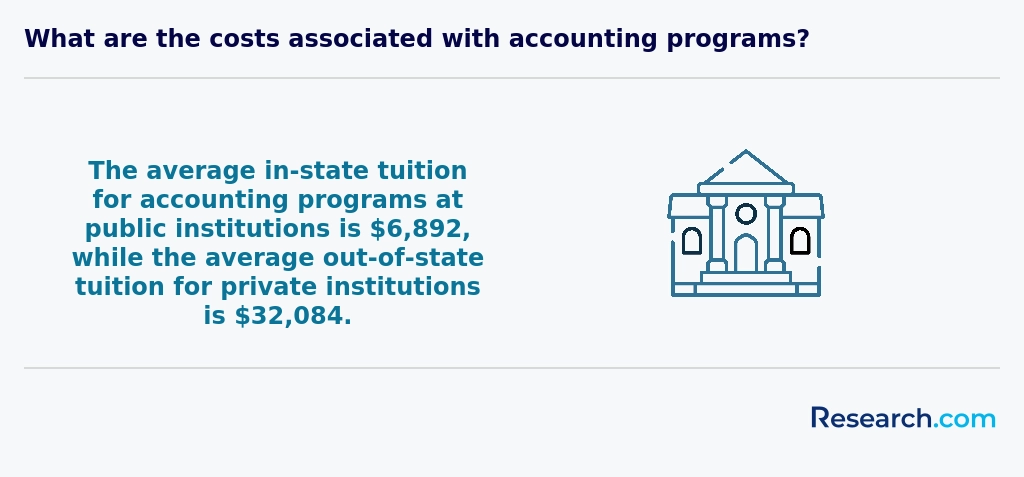
The average cost of an accounting degree in Wisconsin varies depending on residency status and institution type, but in-state students generally spend about $22,499 for their entire degree. This makes Wisconsin an appealing location for those looking for affordable accounting degree programs Wisconsin. Public universities such as the University of Wisconsin-Madison offer competitive tuition rates around $10,700 per year for residents, which many graduates reflect on as a worthwhile investment for their career in accounting.
Private colleges in Wisconsin, while pricier with annual tuition ranging between $30,000 and $40,000, often offer scholarships and financial aid that can ease the burden. Graduates from these institutions appreciate the personalized support and resources they received that helped them manage costs effectively.
Graduate accounting degrees, like a Master of Science in Accounting or an MBA with an accounting emphasis, tend to be more expensive but still manageable within the state. Typical total costs can reach up to $45,556 for out-of-state students, but many receive assistance through grants or scholarships, including those offered by the Wisconsin Higher Educational Aids Board.
Students keen on minimizing expenses often share that detailed planning and early applications for aid make a real difference. Choosing programs with strong reputations and value, such as those in the best accounting program in Wisconsin, leads to both financial prudence and career success.
Students pursuing accounting degrees in Wisconsin can access several financial aid options that ease tuition costs. Graduates from University of Wisconsin campuses often share how Pell Grants and federal Direct Subsidized Loans significantly reduced their financial burden, allowing them to concentrate on studies instead of expenses.
Residents benefit from the Wisconsin Higher Education Grant (WHEG), which targets in-state students, covering substantial tuition portions at public institutions like UW-Madison or UW-Milwaukee. Many accounting students find this state aid key to maintaining affordable education without excessive debt.
Merit scholarships offered by these universities also reward strong academic performance and leadership, with some designed specifically for accounting students owing to the industry's demand in Wisconsin's business community. For example, recipients have highlighted support from the Wisconsin Institute of Certified Public Accountants Foundation scholarships as a game changer.
Additionally, work-study programs and employer tuition reimbursement improve financial stability while gaining relevant experience. Combining federal, state, merit, and institutional aid creates a practical path for Wisconsin accounting students, helping turn ambitions into rewarding careers.
To practice as a Certified Public Accountant in Wisconsin, graduates must meet specific educational, examination, and experience requirements set by the Wisconsin Board of Accountancy. First, candidates need a minimum of 150 semester hours of college credit with at least 30 credits in upper-division accounting courses, covering subjects such as auditing, taxation, and financial reporting. Many students fulfill this through a combined bachelor’s and master’s pathway or by taking additional elective courses in their senior year. Next, aspiring CPAs must pass all four sections of the Uniform CPA Examination: Auditing and Attestation (AUD), Business Environment and Concepts (BEC), Financial Accounting and Reporting (FAR), and Regulation (REG). Wisconsin candidates have 18 months to complete all sections once they pass the first exam part. Preparing through rigorous coursework and review programs is essential, and some Wisconsin institutions even align their curricula to exam content. For comparative insights on affordable programs, you might explore our sister ranking of Low Cost Accounting Degree Programs Ranking in Greensboro, NC. Beyond academics and exams, the Board requires one year (2,080 hours) of supervised experience in accounting, auditing, tax, or consulting, under a licensed CPA. Finally, candidates must pass the AICPA’s Professional Ethics exam. Once licensed, Wisconsin CPAs must complete 40 hours of continuing professional education (CPE) every two years to maintain their credential. Understanding this pathway allows you to choose a program that not only fits your budget but also accelerates your journey to licensure and a successful accounting career.
To enroll in an accounting degree program in Wisconsin, students must have a high school diploma or GED, establishing the basic academic foundation needed for college success. Graduates from popular schools like the University of Wisconsin often recall how strong math skills in algebra and geometry gave them an advantage during their early coursework.
Many programs expect a minimum GPA around 2.5 to 3.0, proving readiness for the challenges of accounting principles. For example, students applying to programs within the University of Wisconsin system note that maintaining solid grades, especially in math and business-related classes, helped secure their admissions.
Applicants should also complete introductory courses in economics, business, or computer applications before or early in their studies. These classes build practical skills important for accounting tasks, such as financial analysis and data management. Graduates often highlight how this background eased their transition into college-level accounting topics.
International students need to demonstrate English proficiency through tests like TOEFL. Additionally, checking each college's specific requirements is crucial since some schools may be test-optional or have slightly different standards.
Becoming a Certified Public Accountant (CPA) in Wisconsin involves a series of educational, examination, and experience requirements designed to ensure you meet professional standards. To sit for the CPA exam, candidates must first complete at least 150 semester credit hours of college coursework, including a bachelor’s degree in accounting or a related field. For students comparing program costs, our list of the cheapest bachelor's degree accounting online can help you fulfill the 150-credit rule without breaking the bank. Key steps to CPA licensure in Wisconsin: 1. Educational Requirements - Earn a bachelor’s degree with a minimum of 24 credits in accounting subjects (financial accounting, auditing, taxation, managerial accounting). - Accumulate 30 credits in business-related courses (economics, finance, business law). - Complete the 150-hour requirement through additional undergraduate credits or a master’s program. 2. Uniform CPA Examination - Pass all four exam sections (Auditing and Attestation, Financial Accounting and Reporting, Regulation, Business Environment and Concepts) within an 18-month rolling window. - Register and schedule exams via the Wisconsin Department of Safety and Professional Services (DSPS) portal. 3. Experience Requirement - Obtain at least one year (2,000 hours) of supervised accounting experience under a licensed CPA. - Experience may be gained in public accounting, industry, government, or academia, but must include attest, tax, or consulting services. 4. Ethics Exam and Application - Pass the AICPA Professional Ethics Exam. - Submit the licensure application and official transcripts to the DSPS, along with verification of work experience. 5. Continuing Professional Education (CPE) - Complete 20 hours of CPE annually, including at least 2 hours in ethics, to maintain an active Wisconsin CPA license. By understanding these requirements early, you can strategically select courses and experiences that align with Wisconsin’s licensure criteria, paving the way to a successful and compliant CPA career.
Accounting degree programs in Wisconsin typically include core courses designed to build practical skills that graduates find invaluable in their careers. For example, classes such as Financial Accounting teach students how to record and report financial transactions, a fundamental skill graduates often apply immediately when starting in entry-level accounting jobs.
Managerial Accounting is another essential course, where students learn budgeting and cost analysis techniques that help them support management decisions. Many students from popular schools like the University of Wisconsin-Madison report feeling confident handling real business scenarios after completing this course.
Auditing and Taxation courses provide hands-on understanding of compliance and ethical standards, important for those aiming to pass the CPA exam. Intermediate Accounting dives into complex topics such as revenue recognition, preparing students for nuanced problems they'll face in corporate finance roles.
Courses like Accounting Information Systems and Business Law round out the program, equipping graduates with technological savvy and legal know-how that are crucial in today's business environment. These courses blend theory with practical examples that Wisconsin accounting students appreciate for their real-world relevance.
Accounting degree specializations in Wisconsin offer focused paths like taxation, auditing, forensic accounting, managerial accounting, and financial accounting. Graduates from popular institutions such as the University of Wisconsin often share how choosing taxation helped them master state and local tax regulations, a key skill given Wisconsin's unique tax landscape. This practical approach opens doors to roles in public accounting firms or tax advisory services. Auditing specialization prepares students for CPA credentials, essential in Wisconsin's competitive job market. Forensic accounting stands out for those interested in investigating financial fraud, a growing field that graduates have found rewarding in local law enforcement or corporate compliance settings.
Managerial accounting appeals to students eager to work inside Wisconsin's manufacturing companies, focusing on budgeting and strategic planning. Traditional financial accounting skills remain vital for those aiming to support small and medium-sized businesses. Many students leverage combined specializations, tailoring electives to emerging trends through Wisconsin accounting major concentration options. Access to CPA exam prep is a definite advantage, enhancing career readiness. For actionable steps, review the list of highest paying accounting jobs to align your specialization with in-demand roles.
To choose the best accounting degree in Wisconsin, focus on programs accredited by AACSB, as graduates from these schools often share how this boosts their confidence passing the CPA exam and impresses local employers. Popular universities like those in Madison and Milwaukee provide robust curricula covering auditing, taxation, and finance, all essential for CPA eligibility and practical job skills.
Cost is another key factor. Many students find that state universities offer the best affordable accounting degree programs Wisconsin with average tuition near $10,000, which is far less than private colleges exceeding $30,000. Exploring options like a cheapest bachelor's degree accounting online can also be a smart move for balancing quality and affordability without sacrificing program content.
Graduates frequently highlight the value of small class sizes and internship connections to local firms in Wisconsin cities. Such hands-on experiences help ease the transition into competitive job markets. Reviewing CPA pass rates and graduate outcomes from your targeted schools ensures you align your education with real success stories and your own career goals.

Graduates with an accounting degree in Wisconsin often pursue Certified Public Accountant (CPA) roles, which significantly improve job prospects. Many alumni from popular programs at UW-Madison and Marquette University share how meeting Wisconsin's 150-semester-hour education requirement prepared them for CPA licensure, opening doors in audit firms and tax agencies. This pathway caters well to those seeking stable careers in public accounting.
Others explore corporate accounting positions such as financial analyst, controller, or management accountant within firms like Johnson Controls or Harley-Davidson. Many graduates find rewarding roles managing budgets, financial planning, and internal controls in companies ranging from large corporations to small businesses. These diverse jobs highlight the variety of jobs with accounting degree in Wisconsin.
Government accounting also attracts graduates, with opportunities in state agencies like the Wisconsin Department of Revenue. Many find satisfaction in managing public funds and ensuring compliance, blending accounting skills with meaningful community service. Emerging fields like forensic accounting and IT auditing provide exciting alternatives for those interested in investigative and technology-driven careers.
For students budgeting their education, exploring Low Cost Accounting Degree Programs Ranking in Greensboro, NC can offer insights on affordable pathways while planning a thriving accounting career. Practical experience through internships and networking with the Wisconsin Institute of Certified Public Accountants enhances graduates' readiness for these dynamic opportunities.
Graduates with an accounting degree in Wisconsin find a job market that is steadily growing and filled with diverse opportunities. With employment growth projected at about 6% through 2032, accounting professionals are in demand across sectors like manufacturing, finance, and healthcare. Many accounting graduates from popular Wisconsin universities land roles in Milwaukee or Madison, where firms and government agencies seek skilled accountants for complex tax and financial tasks.
Starting salaries in Wisconsin generally range around $50,000 for entry-level positions, increasing with experience and CPA certification. The state's moderate cost of living enhances the appeal of these wages. Graduates often report feeling confident stepping into roles that challenge them to navigate evolving financial regulations and support expanding small businesses.
For students exploring Wisconsin accounting career opportunities, gaining practical experience through internships and certifications proves invaluable. Schools here provide access to CPA programs and continuing education to stay competitive. Those considering similar paths may also explore popular college majors that complement accounting skills by visiting popular college majors.
2027 Most Affordable Accounting Degree Programs Ranking in Wisconsin
Investing in your education is a significant decision that can shape your future, and the Research.com team understands the importance of making informed choices. To assist prospective students in Wisconsin, we have meticulously crafted the "2027 Most Affordable Accounting Degree Programs Ranking in Wisconsin." Our commitment to quality, credibility, and accuracy is reflected in the extensive research and analysis conducted to compile this ranking.
We utilized the following reputable data sources to ensure a comprehensive evaluation of accounting degree programs:
By exploring this ranking, readers will gain valuable insights into the most affordable accounting degree programs available in Wisconsin, empowering them to make well-informed decisions about their educational investment. For more details on our methodology, please visit our Research.com methodology page.


Frequently Asked Questions About accounting
Accounting degree students in Wisconsin can enhance their learning by engaging actively with internships offered by local firms. The state hosts a robust accounting industry, particularly in Milwaukee and Madison, where practical experience complements academic knowledge. According to the Wisconsin Department of Workforce Development, internships increase job placement rates by up to 20% within six months post-graduation.
Students should also participate in professional organizations like the Wisconsin Institute of Certified Public Accountants (WICPA). Such affiliations provide networking opportunities and access to updated industry practices.
Additionally, leveraging on-campus resources, including tutoring centers and accounting labs, supports mastery of complex subjects.
The accounting field in Wisconsin is evolving, with emerging niches gaining prominence. One key area is forensic accounting, which involves investigating financial fraud and cybercrime. Demand for forensic accountants in Wisconsin is growing due to increasing corporate regulations and cyber threats.
Another expanding niche is environmental accounting, focused on organizations' environmental costs and sustainability reporting. Wisconsin's investment in green initiatives enhances opportunities in this sector.
Additionally, technology-driven roles such as data analytics and accounting information systems specialists are in high demand. According to the Wisconsin Department of Workforce Development, employment for accountants familiar with analytics software is expected to grow by over 6% through 2028.
After completing an accounting degree in Wisconsin, preparing for the job market involves several key steps. First, gaining practical experience through internships or cooperative education programs is essential. These opportunities help build relevant skills and professional networks. According to the Wisconsin Department of Workforce Development, demand for accountants in the state is projected to grow by 7.5% from 2020 to 2030, highlighting a positive employment outlook.
Obtaining certifications such as the Certified Public Accountant (CPA) credential can significantly improve job prospects. Wisconsin requires 150 semester hours of education and passing the Uniform CPA Exam for licensure.
Networking through local chapters of accounting organizations, like the Wisconsin Institute of Certified Public Accountants, also supports career development.
Employers in Wisconsin highly value a mix of technical and soft skills in accounting degree graduates. Proficiency in Generally Accepted Accounting Principles (GAAP) and familiarity with software like QuickBooks and Microsoft Excel are essential. According to the Wisconsin Department of Workforce Development, analytical thinking and attention to detail rank among the top traits that improve job performance in accounting roles statewide.
Strong communication skills are crucial, as accountants often explain complex financial information to clients and colleagues. Additionally, knowledge of tax regulations specific to Wisconsin enhances a candidate's appeal.
Ethical judgment and problem-solving abilities also stand out, reflecting the need for trustworthy professionals in this field.
Finding accounting internships in Wisconsin involves a strategic approach focused on both academic resources and local industry connections. Many Wisconsin colleges with accounting programs partner with firms and businesses in cities like Milwaukee, Madison, and Green Bay to offer internship opportunities. The Wisconsin Institute of CPAs website lists numerous local accounting firms actively seeking interns, making it a valuable resource. Additionally, students should leverage campus career services, which often host internship fairs and maintain job boards tailored to accounting positions.
Networking through professional events such as those organized by the Wisconsin CPA Society can increase chances of securing relevant internships. According to the U.S. Bureau of Labor Statistics, internships are critical steps toward CPA licensure, widely pursued by Wisconsin accounting students. Finally, exploring state government and nonprofit sectors can supplement corporate opportunities, broadening practical experience within the Wisconsin accounting market.
An accounting degree significantly enhances career mobility and advancement opportunities within Wisconsin's job market. According to the Wisconsin Department of Workforce Development, accountants and auditors in the state earn a median annual wage of about $70,000, above the national median for the profession. Holding a degree not only qualifies candidates for entry-level roles but also acts as a prerequisite for professional certifications like the CPA, which are highly valued by employers in Wisconsin's diverse industries.
Graduates with accounting degrees can pursue roles in public accounting firms, corporate finance, government agencies, and nonprofit organizations. The degree provides a foundation for upward mobility into managerial and specialized positions, supported by steady local demand for skilled accountants.
Wisconsin's community and four-year colleges contribute to accessible education paths, often leading to employment opportunities in major regional economic centers such as Milwaukee and Madison. Continuous education combined with an accounting degree helps professionals achieve long-term career growth in this evolving field.
Studying for an accounting degree in Wisconsin offers students a strong foundation in financial principles alongside interdisciplinary skills. Many Wisconsin institutions integrate coursework in business law, information systems, and communication, preparing graduates to work effectively across multiple fields.
According to the Wisconsin Technical College System and University of Wisconsin data, accounting programs often emphasize technology proficiency, such as Excel and data analytics. These skills are crucial for connecting accounting with operations, marketing, or management roles.
The state's growing industries, including manufacturing and healthcare, value accountants who understand diverse business functions. This interdisciplinary approach increases employability and adaptability in Wisconsin's evolving job market.
Choosing between a thesis and a non-thesis accounting degree program in Wisconsin depends on your career goals and learning preferences. Thesis programs require original research and writing, ideal for students considering academic or research careers. These programs typically demand more time, often extending the study duration by a semester or more.
Non-thesis options emphasize practical coursework and may include internships or projects, appealing to those aiming for professional roles in accounting firms or businesses. According to the Wisconsin Educational Communications Board, in-state graduate accounting programs can vary in length from 1 to 2 years based on this choice.
Additionally, CPA candidates in Wisconsin benefit from programs aligned with the 150-credit hour requirement. Choosing a program that supports CPA exam preparation can be crucial. Wisconsin's Department of Safety and Professional Services recommends ensuring the selected program covers necessary coursework for licensure.
Students based in Wisconsin who wish to study accounting abroad have several pathways to consider. Many Wisconsin universities offer study abroad programs through partnerships with international universities, allowing students to earn credits toward their accounting degree while experiencing global business environments. For example, the University of Wisconsin System provides options in Europe, Asia, and Australia.
Additionally, students can enroll directly in foreign universities accredited under frameworks recognized by the U.S. Department of Education, though they should verify credit transferability.
Participating in these programs can enhance understanding of international accounting standards like IFRS, valuable in global careers.
According to the National Center for Education Statistics, about 15% of Wisconsin college students engage in study abroad, demonstrating growing interest.
Students pursuing accounting degrees in Wisconsin can benefit from several part-time job opportunities that align well with their studies. Common roles include bookkeeping assistant, tax preparer, and accounting clerk positions. These jobs offer practical experience in financial recordkeeping, taxation, and data analysis, which are critical skills for accountants.
Wisconsin's growing business sector, including manufacturing and financial services, creates demand for these roles. According to the Wisconsin Department of Workforce Development, the average hourly wage for bookkeeping, accounting, and auditing clerks in the state is approximately $20, offering students valuable income alongside learning.
Additionally, internship programs at local CPA firms or corporate accounting departments provide part-time roles, combining work with academic knowledge. These jobs enhance resumes and improve networking prospects within Wisconsin's accounting community.
Accounting students in Wisconsin benefit from numerous networking opportunities that can enhance their education and career prospects. Many universities collaborate with the Wisconsin Institute of Certified Public Accountants (WICPA), offering students access to events, workshops, and mentorship programs. The WICPA hosts over 100 events annually, including networking luncheons and career fairs specifically for accounting majors. Additionally, student organizations such as Beta Alpha Psi and accounting clubs provide peer networking and professional development activities. Wisconsin's strong business community, anchored by the Milwaukee and Madison metropolitan areas, also offers internships and employer connections through university career services.
Alumni networks provide valuable support to accounting degree students in Wisconsin by connecting them to experienced professionals in the state's accounting industry. These networks often facilitate mentorship opportunities, which help students navigate certification processes such as the CPA exam, required for over 97,000 accounting jobs in Wisconsin as reported by the U.S. Bureau of Labor Statistics (2023).
Through alumni connections, students gain insights into local job markets, internship openings, and emerging accounting practices. Networking events, organized by active alumni groups in cities like Milwaukee and Madison, enhance students' chances of securing employment in competitive areas.
Moreover, alumni often offer guidance on continuing education and professional development, crucial in a field evolving due to regulatory changes and technological advances.
Customizing an accounting degree program in Wisconsin allows students to align their education with specific career goals. Many Wisconsin universities offer elective courses in areas such as taxation, auditing, and forensic accounting, enabling focused learning.
Students can also pursue internships with local firms in cities like Milwaukee or Madison to gain practical experience relevant to the Wisconsin job market. According to the Wisconsin Department of Workforce Development, tax and accounting jobs in the state are projected to grow by 6% through 2030, emphasizing the value of specialized skills.
Moreover, some programs incorporate CPA exam preparation, helping students meet licensure requirements within Wisconsin. Choosing electives in business law or information systems can further tailor a degree for roles in corporate accounting or financial analysis, supporting diverse career pathways.
Accounting students in Wisconsin often encounter several common challenges during their studies. One key difficulty is managing the rigorous curriculum, which includes advanced topics like tax regulations and auditing standards specific to the U.S. system. According to the Wisconsin Department of Workforce Development, mastering both theoretical knowledge and practical skills is essential, but many students find balancing coursework with internships and part-time jobs demanding. Additionally, the pressure to pass the CPA exam after graduation adds to their stress, as Wisconsin requires 150 credit hours and specific accounting experience for certification. Financial concerns and access to affordable education also remain significant hurdles for many.
With an accounting degree in Wisconsin, graduates can pursue several key professional certifications that enhance career prospects. The most common is the Certified Public Accountant (CPA) credential, regulated by the Wisconsin Board of Accountancy. To qualify, candidates must meet education requirements, including 150 semester hours, which many Wisconsin universities structure into their accounting programs.
Other valuable certifications include the Certified Management Accountant (CMA) and Certified Internal Auditor (CIA), both recognized nationwide and relevant for specialized accounting roles. According to the Wisconsin Department of Workforce Development, CPAs in the state earn median salaries above $70,000 annually, reflecting strong demand.
These certifications require passing exams and meeting experience criteria, so students should carefully plan their education and internship opportunities accordingly.
Writing a winning application for an accounting program in Wisconsin begins with demonstrating strong academic performance, especially in math and business-related courses. Many Wisconsin colleges, including the University of Wisconsin system, look for applicants with at least a 3.0 GPA and relevant coursework in accounting or economics.
Highlighting practical experience through internships or part-time jobs in accounting can set you apart. According to the Wisconsin Department of Workforce Development, accounting roles are expected to grow 7% through 2030, emphasizing the value of work experience in this field.
Personal statements should clearly explain your motivation for pursuing accounting and your career goals. Admissions committees often seek candidates who show a genuine interest in financial analysis, auditing, or tax preparation.
Lastly, strong letters of recommendation from teachers or employers familiar with your work ethic can enhance your profile. Tailoring each application to Wisconsin programs' specific requirements improves your chances significantly.
Accounting careers hold significant global appeal, with professionals valued for skills in financial analysis, auditing, and compliance. In the US, including Wisconsin, accountants benefit from a robust job market, projected by the Bureau of Labor Statistics to grow 7% from 2021 to 2031. Globally, accounting standards like IFRS influence cross-border financial reporting, making international knowledge important. Wisconsin accountants often engage with multinational firms, requiring understanding of both US GAAP and international standards. According to the Wisconsin Department of Workforce Development, the state's accounting sector is expected to see steady growth, reflecting broader global trends in finance and regulation.
Students pursuing an accounting degree in Wisconsin can gain practical experience through internships, cooperative education (co-op) programs, and part-time jobs. Many universities, like the University of Wisconsin system, have strong partnerships with local businesses and accounting firms offering internships. These opportunities provide hands-on experience handling real-world accounting tasks.
Additionally, participating in student organizations such as the American Institute of Certified Public Accountants (AICPA) Wisconsin chapter can enhance networking and skill-building. According to the Wisconsin Department of Workforce Development, accounting internships improve employability, with recent graduates reporting 20% higher starting salaries when they completed internships.
Local firms also occasionally offer volunteer tax assistance programs, giving students practical experience while serving the community.
Choosing the right concentration within an accounting degree program in Wisconsin depends on your career goals and interests. Common concentrations include auditing, taxation, forensic accounting, and management accounting. Each offers different skill sets tailored to specific jobs.
Consider where you want to work. For example, Wisconsin's strong manufacturing and agricultural sectors create demand for management accountants who can handle cost analysis and budgeting. Meanwhile, tax accounting remains crucial due to complex state and federal tax laws.
Research programs' curricula and faculty expertise. Look for concentrations that align with professional certifications like CPA or CMA, which are highly respected in Wisconsin's job market. According to the Wisconsin Department of Workforce Development, accounting jobs are expected to grow 7% by 2030, highlighting the importance of a focused skill set.
Internships and networking opportunities with local businesses can also help guide your choice and improve job prospects within the state.
- 2027 Most Affordable Accounting Degree Programs Ranking in Minnesota
- 2027 Most Affordable Accounting Degree Programs Ranking in Colorado
- 2027 Most Affordable Accounting Degree Programs Ranking in Alabama
- 2027 Most Affordable Accounting Degree Programs Ranking in Georgia
- 2027 Most Affordable Accounting Degree Programs Ranking in Florida
- 2027 Most Affordable Accounting Degree Programs Ranking in Delaware
- 2027 Most Affordable Accounting Degree Programs Ranking in Connecticut
- 2027 Most Affordable Accounting Degree Programs Ranking in Vermont
- 2027 Most Affordable Accounting Degree Programs Ranking in Idaho
- 2027 Most Affordable Accounting Degree Programs Ranking in Arizona
See What Experts Have To Say About Studying Accounting
Read our interview with Accounting experts

John Wermert, Ph.D., CPA
Accounting Expert
Associate Professor of Accounting
Middle Tennessee State University

Yaw M. Mensah
Accounting Expert
Professor and Interim Vice Dean for Strategic Partnerships
Rutgers Business School

- 5 Niches for Accountants to Consider - Samera Global https://sameraglobal.com/5-niches-for-accountants-to-consider/
- Accounting and Auditing (Non-Thesis) | Beykoz Üniversitesi https://www.beykoz.edu.tr/icerik/5029-accounting-and-auditing-without-thesis
- 5 accounting certifications without a degree | Becker https://www.becker.com/blog/career/5-accounting-certifications-you-can-earn-without-a-degree
- Know more about thesis vs non- thesis: what is the difference? https://studyfans.com/en/blogs/816
- Applying for Accounting Graduate School | Accounting.com https://www.accounting.com/resources/graduate-application-guide/
- Accountant Salary | State-by-State Accounting Salaries https://www.allbusinessschools.com/accounting/salary/
- Best Niches for Accounting Firms, Ranked by Profitability https://dreamfirms.com/insights/best-niches-for-accounting-firms/
- Get Ahead in Accounting: Ways to Build Relevant Work Experience https://www.fctraining.org/gain-accounting-work-experience.php
- Accounting Degree Requirements You Should Know | DeVry University https://www.devry.edu/blog/accounting-degree-requirements.html
- How to Meet Accounting Degree Requirements for Career Success - ICMS https://www.icms.edu.au/degree-discovery/how-to-meet-accounting-degree-requirements/