2027 Community Health Careers Most Resilient to Automation

Co-Founder and Chief Data Scientist
Facing the rapid integration of AI into healthcare administration, many community health professionals grapple with securing career roles that demand human intuition and relationship-building over routine technical tasks. The U. S. Bureau of Labor Statistics projects a 14% growth rate in health education specialists through 2032, emphasizing roles requiring interpersonal skills and adaptability.
This shift reflects a growing premium on professionals who deliver culturally competent services amid expanding telehealth and remote program management trends, where automation cannot yet replace nuanced community engagement. This article identifies the career paths within community health least vulnerable to automation, guiding students and workers to prioritize lasting employability and strategic advancement.
Key Things You Should Know
- Automation-resistant roles in community health demand nuanced interpersonal judgment; the National Institute for Health data shows that 72% of employers prioritize advanced socio-cultural competencies, making basic certifications insufficient.
- Employers report a 29% productivity drop when substituting automated tools for community health workers due to diminished trust-building, emphasizing recruitment strategies favoring experience over rapid credential acquisition.
- Median program costs for automation-resilient community health credentials exceed $15,000 with 18-month completion timelines, necessitating upfront investment planning versus faster, less durable certifications.
Which community health careers are most resistant to automation and why are they in demand?
Roles resistant to automation in community health careers in the United States require nuanced interpersonal communication and complex problem-solving that AI cannot replicate. Jobs like community health workers, case managers, and health educators depend on emotional intelligence and the ability to interpret social determinants, which technology struggles to address effectively.
These positions remain in high demand despite automation, with over 10 million jobs in 2024 and a growth rate projected at 7.2%, equating to nearly 635,000 annual openings through 2034.
Community health workers often serve vulnerable populations where chaotic social environments and language differences limit automation's usefulness, particularly in outreach and crisis scenarios. Case managers dynamically integrate clinical and socio-economic data to adjust care plans, while health educators rely on persuasive, individualized engagement to influence behavior change, skills not reproducible by AI.
Employers focus on candidates with bilingual abilities, hands-on experience, and certifications blending public health with practical skills, reflecting the workforce's preference for emotional and contextual intelligence over pure technical expertise. These roles rarely allow full remote work, requiring face-to-face presence and community immersion, important factors for candidates considering long-term employment realities.
Prospective students targeting high demand community health professions less affected by automation should weigh these operational constraints against market opportunities and consider programs emphasizing interpersonal skills alongside health policy and prevention. For those looking to deepen their qualifications, pursuing an online masters degree in mental health counseling may align with evolving community health needs.
What does a community health professional do in technology-driven healthcare environments?
Community health professionals navigate complex technology-driven care settings by balancing digital tools with direct patient advocacy. Electronic health records (EHR) facilitate tracking patient histories and coordinating care, but the integration of community health workers with healthcare technology systems goes beyond data management. For example, in rural clinics, community health workers often leverage telehealth to link patients with specialized providers absent locally, mitigating geographic barriers and reducing preventable hospital visits.
Employers increasingly require proficiency in digital literacy alongside cultural competence. Automated alerts and predictive analytics provide data-driven flags for health risks, yet these workers interpret and apply such information contextually to individual patient circumstances.
They also play vital roles in supporting patients with varying levels of digital skills, from navigating appointment systems to medication reminders, underscoring a hybrid position between technology facilitator and care coordinator.
Challenges persist, including ongoing training demands for evolving software and adherence to patient privacy regulations such as HIPAA. Collaboration using secure communication tools within interdisciplinary teams addresses social determinants of health but requires technological fluency.
Projected employment growth of 13.1% by 2033 and a median wage slightly above the national average highlight the field's expanding footprint despite automation pressures.
Prospective entrants should weigh the benefits of pursuing a healthcare administration degree online that offers practical integration of technology and patient engagement skills. This educational pathway equips candidates with adaptable competencies necessary for evolving community health professional roles in technology-driven care settings.
Which community health roles offer the best long-term job security and growth potential?
Long-term growth prospects in community health roles are concentrated in positions demanding direct patient interaction, such as home health aides, personal care aides, and community health workers. These roles face minimal risk of automation because they rely on empathy, physical assistance, and immediate problem-solving-skills that technology cannot replicate effectively.
For example, home health aides managing chronic conditions and tailoring care daily consistently outperform automated alternatives in both effectiveness and patient satisfaction. Employers clearly prioritize candidates with hands-on caregiving experience and certifications like CPR or specialized dementia care training, which substantially improve both employability and wage potential.
Community health careers with the highest job security often involve care coordination, patient education, and outreach to underserved populations. These functions demand cultural competence and nuanced communication, alongside skills in data tracking and multilingual abilities.
Candidates focusing on these areas should also understand health policy basics to meet growing employer complexity. Conversely, roles centered on data entry or routine clinical tasks are increasingly vulnerable to automation, signaling a need for targeted educational pathways emphasizing interpersonal skills and adaptive problem-solving.
Practical education in community health requires accredited programs with clinical practicums and recognized certifications, ensuring graduates meet market demands for flexible, person-centered care resistant to automation. Professionals considering advancement might also evaluate a specialized MBA in healthcare management to broaden administrative and policy competencies relevant to this evolving sector.
What education and degrees are required for stable community health careers?
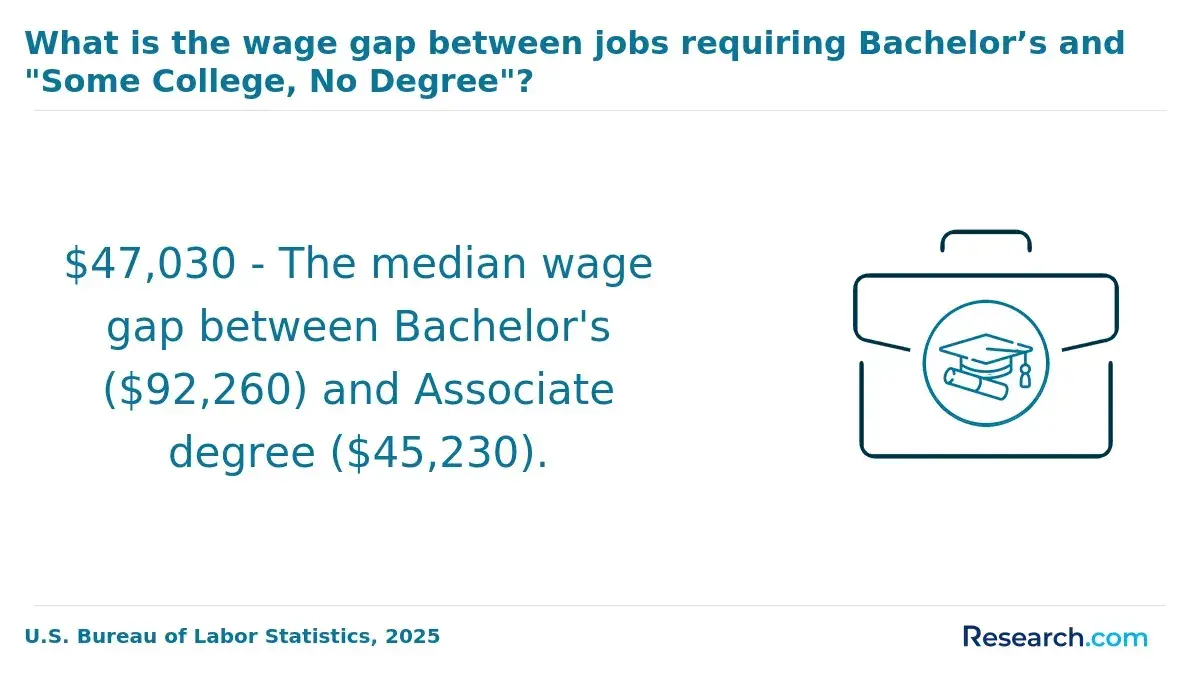
Stable community health careers require at minimum an associate degree in health education, public health, or closely related fields, with bachelor's degrees necessary for many traditional health educator and preventive care roles.
Employers consistently prioritize candidates holding accredited degrees because foundational expertise in health behavior theories, cultural competence, and program planning remains critical for sustained job effectiveness and flexibility amid workforce shifts. Certification like Certified Health Education Specialist (CHES) enhances prospects but usually comes after degree completion rather than replacing formal education.
Associate degrees cater to those aiming for entry-level roles such as wellness coordinators or community health aides, particularly in underserved regions where immediate workforce needs persist.
However, bachelor's degrees unlock access to leadership and program development positions that are expanding, driven by a 30% projected increase in demand for preventive and wellness workers by 2030, contrasting with the automation of about 20% of routine tasks. This dynamic reflects the enduring necessity of degree-backed skills in relational and analytical functions AI cannot replicate.
For working professionals, hybrid and part-time degree programs offer practical pathways to recredential without abandoning employment, though they often extend time to completion. Employers expect proficiency in data analysis and health communication-skills rarely gained solely through on-the-job training.
Real-world hiring further favors candidates with practicum experience integrated into their degrees, with those lacking it facing slower placement or lower starting salaries.
Students evaluating community health education requirements in the United States should weigh the upfront investment against reliable wage growth tied to credential attainment. Scholarships and employer partnerships may offset costs. For those considering RN to BSN online programs, research.com provides relevant affordability data supporting informed decisions.
How do online community health programs compare to campus-based options for career resilience?
Choosing between online and campus-based community health programs requires evaluating real-world applicability, employer expectations, and personal circumstances rather than assumed equivalence.
Campus programs typically provide richer, in-person practicum experiences and direct networking, which are critical for roles involving close client interaction, such as counselors working in local clinics. These opportunities offer immediate skill validation and community integration that employers often prioritize.
Online programs, while flexible and suited for working adults or career changers, demand proactive student effort to secure quality internships and demonstrate practical competence. Without hands-on experience, graduates may face skepticism from employers despite the medium-to-low automation risk in healthcare and social services occupations identified in Brookings' 2024 analysis.
Decision-makers should weigh:
- Cost and logistical savings of online learning versus the value of immediate mentorship and direct supervision on campus.
- The necessity for online students to actively seek social immersion and nuanced communication practice to develop empathy essential for fieldwork.
- The importance of recognized certifications and verifiable field experience to offset perceived limitations of virtual training.
This balance between experiential learning and accessibility determines candidates' career resilience, shaping workforce entry paths that acknowledge both automation challenges and the enduring need for complex human interaction.
What courses and skills help community health majors stay ahead of automation risks?
Advanced clinical decision-making skills directly determine employability in community health roles exposed to automation risks. The World Health Organization's projection of a significant global shortfall in health workers by 2030 intensifies demand for professionals capable of nuanced judgment that AI cannot replicate.
This creates a critical divide between generic health training and advanced clinical community skill sets validated by certifications and practicum experience.
Key competencies include:
- Diagnostic reasoning tailored to complex, resource-limited settings where rigid protocols fall short.
- Data literacy for interpreting and leveraging health informatics rather than competing with digital systems.
- Cultural and behavioral health insights essential for designing individualized patient interventions beyond algorithmic empathy.
- Policy navigation and program implementation that unify clinical judgment with administrative agility.
For instance, rural public health nurses regularly adapt care plans amid fluctuating patient needs and scarce resources, situations where automation offers limited context awareness. Employers prioritize applicants with proven advanced clinical capabilities over those with broad but superficial public health education.
Meanwhile, students must weigh broader community health knowledge against focused clinical expertise, as graduate-level training in chronic disease management and emergency response correlates strongly with long-term job security in a tightening labor market documented by government and health research sources.
How do accreditation and program quality affect career stability in community health?
Career stability in community health is increasingly tied to program accreditation and educational quality because employers demand verified competencies tied to evolving job requirements. Accreditation signals that a program meets rigorous standards in curriculum, faculty, and clinical experience, directly affecting employer trust and workforce readiness.
For instance, a candidate trained in an accredited community health program will likely require less onboarding for AI-augmented documentation and telehealth operations, reducing organizational training costs and improving retention.
Workforce data indicate that while automation risk is moderate for community health workers, up to 60% of time spent on administrative tasks can be saved through AI tools. Accredited programs that incorporate digital health training position graduates for practical adaptation to these shifts, unlike nonaccredited programs where skill gaps can cause underemployment and unstable contracts.
Key implications include:
- Choosing accredited programs lowers the risk of credential rejection by employers or certifying bodies.
- High-quality training embeds essential tech proficiency, critical as administrative automation grows but human-centered services remain irreplaceable.
Graduates from lower-quality programs often face integration challenges in regulated environments, limiting career mobility.In practical terms, community health employers integrating telehealth workflows explicitly seek applicants versed in AI-augmented documentation from trusted programs to ensure immediate workplace effectiveness without costly retraining.
What are the typical salaries for community health careers least likely to be automated?
Community health roles least susceptible to automation command salaries significantly above the national average, signaling the premium employers place on nuanced human skills.
According to 2024 BLS data assessed in an economic resilience context, medical and technical health occupations earn approximately $83,090 annually-about 67% more than the $49,500 national average. This wage gap is attributed to the complex interpersonal judgment and cultural competence these roles demand, qualities that automation cannot replicate.
For example, a public health nurse working with underserved populations or a healthcare social worker designing tailored care plans routinely receive compensation at or above this threshold due to their capacity for critical decision-making and empathetic engagement.
Candidates with clinical expertise combined with practicum experience and interdisciplinary training are better positioned for these roles, though advanced certifications raise entry barriers.
Employers particularly value skills that integrate problem-solving with cultural sensitivity, particularly in contexts such as rural health initiatives or chronic disease management.
These environments highlight the importance of sustained community interaction that technology cannot substitute. Students must weigh tradeoffs like longer educational pathways against the financial and job security benefits evident in roles resistant to AI or robotic automation.
What certifications or licenses strengthen job security for community health professionals?
Certification and licensure remain pivotal leverage points in community health career resilience, especially given the minimal automatability of key practitioner functions. Credentials like Certified Health Education Specialist (CHES) and Certified Community Health Worker (CCHW) do more than signal knowledge; they underpin trust-building and culturally nuanced interventions that automated systems cannot replicate.
For example, migrant health services rely heavily on CCHW-certified professionals to maintain community relationships beyond algorithmic scope.
Licenses such as Registered Nurse (RN) and Licensed Practical Nurse (LPN) expand authority, allowing clinical assessments and interventions vital to integrated community and clinical care.
Data from the Society for Human Resource Management highlights that only 3% of healthcare practitioner roles have substantial tasks automatable without human judgment barriers, contrasting sharply with higher tech-industry risks.
Employers increasingly seek candidates with stacked certifications that blend behavioral health, epidemiology, and data literacy alongside community engagement. A CHES combined with mental health first aid or medical interpreting credentials equips professionals for roles demanding multilingual communication and complex interpersonal judgment-skills that machines cannot substitute.
Practically, candidates must balance licensure costs and timelines against sector-specific employability gains. In rural contexts, multi-licensure can enhance adaptability to shifting service needs, providing stability where purely technical skills fall short.
How can students choose a community health program aligned with future-proof career goals?
Programs emphasizing interpersonal skills and critical decision-making offer greater insulation against automation risks in community health roles. Research indicates healthcare sectors, particularly community health, face notably less AI-driven job displacement compared to others-partly due to the irreplaceable need for empathy and nuanced judgment.
For instance, outreach work in underserved urban settings demands trust-building and cultural competency that AI tools cannot replicate effectively.
Students should prioritize curricula combining practical training in patient communication, interdisciplinary coordination, and social determinants of health while maintaining balanced exposure to digital health tools.
Employers increasingly value candidates who exhibit measurable soft skills alongside knowledge in health behavior and policy, enabling adaptive responses within evolving service environments.
There are tradeoffs when programs focus predominantly on data analytics or automated processes; such specializations risk obsolescence as automation advances.
Assessing program outcomes-such as graduate employment in patient-centered roles rather than solely technical or administrative positions-is critical. Verifying program accreditation and alignment with emerging industry-recognized certifications maximizes long-term career viability.
In this context, decision-making should weigh immediate technical proficiencies against enduring human-centered competencies to ensure resilience in a dynamic labor market.
Other Things You Should Know About Community Health
Workload in community health careers varies significantly based on the setting and population served, affecting automation resilience. Roles involving individualized outreach and complex social assessments face unpredictable demands that technology cannot easily replicate. Professionals should prioritize positions in diverse, high-touch environments where human judgment and adaptability are critical, as these factors limit automation's ability to replace essential tasks.
Specializing in specific community health niches, such as maternal health or chronic disease management, can improve employability in targeted segments but narrows flexibility if job market shifts occur. Generalist training offers broader entry points across various organizations but may struggle to demonstrate distinctive skills that employers increasingly value. Prospective students should weigh the stability benefits of adaptable generalist competencies against the higher immediate demand for specialists in evolving, underserved areas.
Advanced degrees improve access to leadership, policy, or research roles but do not guarantee immunity from routine automation risks. Frontline community health roles emphasize practical experience and interpersonal effectiveness over academic credentials alone. Candidates should assess their career goals and prefer advanced education pathways only if they target functions that require strategic oversight or specialized expertise beyond entry-level responsibilities.
References
- Community Health Worker https://explorehealthcareers.org/careers/allied-health-professions/community-health-worker/
- South Suburban College https://www.ssc.edu/academics/programs-of-study/allied-health-careers/community-health-worker/
- Public Health Online | Online Public Health Degrees https://www.publichealthonline.org/
- How to Become a Community Health Nurse https://www.allnursingschools.com/specialties/community-health-nurse/
- Top 25 Online MPH Community Health Degree Programs - MPH Online https://www.mphonline.org/best-online-mph-community-health/
- CHW Career Paths: Good Skills, Roles, and Growth Opportunities - Community Health Worker Training https://chwtraining.org/chw-career-paths/
- Top Healthcare, IT, and Business Jobs Safest from AI & Robot Automation https://ccitraining.edu/blog/jobs-safe-from-ai-automation/
- 9 AI-Proof Healthcare Jobs to Consider https://www.stepful.com/post/ai-proof-healthcare-jobs
- Will Community Health Workers be replaced? https://willrobotstakemyjob.com/community-health-workers
- What Skills Are Needed for Public Health Jobs? https://zabeelinstitute.ae/blog/skills-needed-for-public-health-jobs/