2027 Best AI Enablement Courses Online

Co-Founder and Chief Data Scientist
Many professionals with undergraduate degrees outside STEM fields struggle to find flexible and accredited ways to enter the AI industry. Traditional degree programs often require significant time and financial investment, which may not suit working individuals seeking career pivots. This gap limits access to vital skills needed in a rapidly evolving market. Identifying reputable, convenient, and industry-relevant AI enablement courses is critical for those aiming to transition effectively.
This article reviews the best online AI enablement courses designed to bridge that gap, helping readers choose programs that align with their schedules, backgrounds, and career aspirations.
Key Things You Should Know
- Top AI enablement courses in 2026 focus on practical skills, covering machine learning, data ethics, and AI integration, with over 65% emphasizing hands-on projects and real-world problem solving.
- Demand for AI professionals in the U.S. is projected to grow by 35% through 2030, making upskilling through online courses critical for career advancement in the technology and data science fields.
- Leading platforms offer flexible schedules and updated curricula reflecting 2024-2025 research breakthroughs, ensuring learners have access to the latest AI tools and industry-standard programming languages.
Advance Your Career with AI Online Courses
Artificial Intelligence: Implications for Business Strategy
This program provides an introduction to Artificial Intelligence and their implications for business strategy. Earn an official digital certificate.

Oxford Artificial Intelligence Programme
Explore this Oxford Artificial Intelligence programme offered in a flexible learning environment and explore topics like machine learning, automation, and robotics.

Implementing Agentic AI: Building Your Organizational Playbook
This online MIT Agentic AI course offers a practical approach to deploying AI agents in your organization, including a custom playbook. 3 weeks, exclusive launch price.

AI Adoption: Driving Business Value and Impact
This online MIT AI Adoption: Driving Business Value and Impact offers practical frameworks to close the gap between AI potential and business reality.

Artificial Intelligence in Pharma and Biotech
Discover the applications and limitations of artificial intelligence in pharma and biotech with this MIT online short course.

What are AI enablement courses online?
AI enablement courses online provide essential training tailored for non-technical professionals aiming to develop practical skills in working with AI technologies. These courses focus on simplifying AI concepts, teaching how to use AI tools effectively, and exploring AI's role in transforming business functions, without demanding extensive programming knowledge. This approach benefits employees in areas like marketing, HR, operations, and management by enabling them to engage in AI-driven projects and decision-making.
Typical subjects include foundational machine learning principles, data literacy, AI-powered software platforms, ethics in AI, and project management. Through these topics, learners gain the ability to spot AI integration opportunities, collaborate with technical teams, and support successful AI adoption in their organizations. Many of the best online courses for AI skills training also feature specialized modules on AI applications in fields such as customer service, supply chain management, and healthcare administration.
For example, a marketing professional might apply AI tools for customer segmentation, while an operations manager could leverage predictive analytics for inventory control. According to IBM's Global AI Adoption Index 2024, 55% of organizations have increased investments in AI skills development for non-technical staff, signaling a growing emphasis on accessible workforce training.
Prospective students interested in professional growth should seek courses with clear learning objectives, practical applications, and current content aligned with industry trends. To better understand the practical uses of AI, individuals can explore what is applied artificial intelligence.
Advance Your Career with AI Online Courses
Artificial Intelligence: Implications for Business Strategy
This program provides an introduction to Artificial Intelligence and their implications for business strategy. Earn an official digital certificate.
Oxford Artificial Intelligence Programme
Explore this Oxford Artificial Intelligence programme offered in a flexible learning environment and explore topics like machine learning, automation, and robotics.
Implementing Agentic AI: Building Your Organizational Playbook
This online MIT Agentic AI course offers a practical approach to deploying AI agents in your organization, including a custom playbook. 3 weeks, exclusive launch price.
Which accreditation matters for AI training programs?
Accreditation remains essential when choosing the best AI training program accreditation to ensure curriculum quality and credible outcomes. Recognized accreditors like the Accreditation Board for Engineering and Technology (ABET), regional bodies such as the Middle States Commission on Higher Education, or professional institutions like IEEE, provide assurance regarding the rigor and relevance of a program. Programs backed by these organizations cover critical AI competencies, including machine learning, data ethics, and algorithm design, which employers increasingly value as proof of actual skills.
Several top recognized AI certification bodies offer additional credentials that enhance practical expertise. For instance, the Association for Computing Machinery (ACM) and corporations like IBM and Google provide certifications focused on real-world applications such as machine learning frameworks and natural language processing. These certifications complement formal degrees, improving a candidate's competitiveness in the job market.
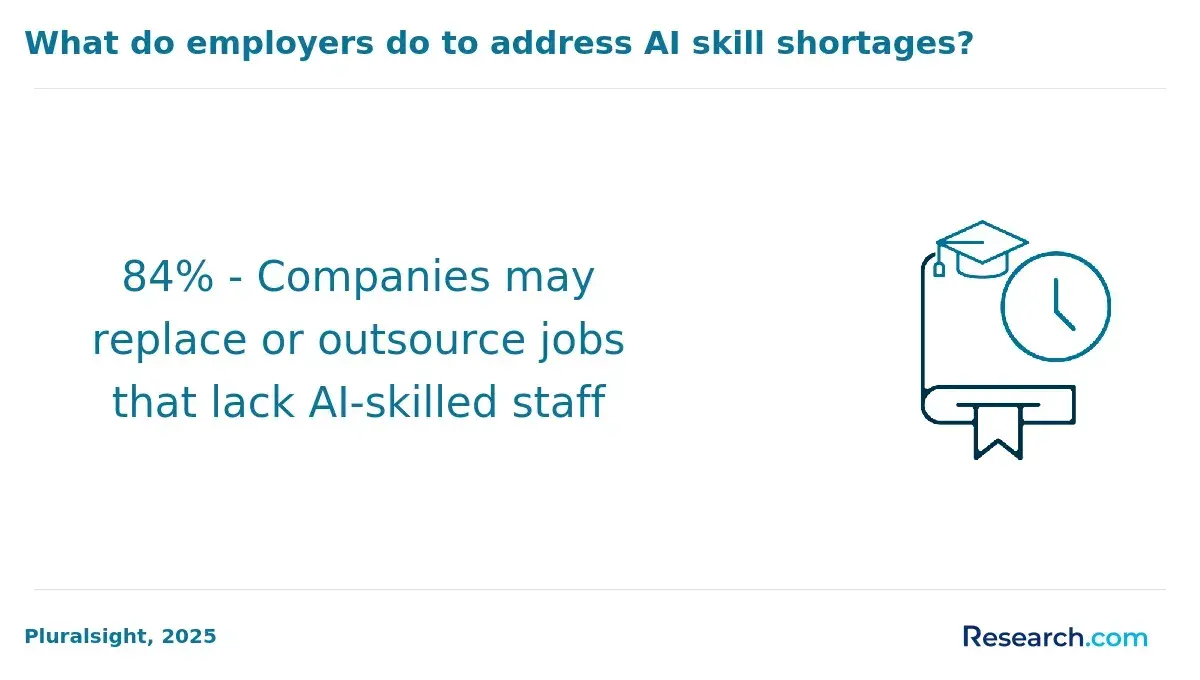
The rising demand for AI literacy is significant. LinkedIn's 2025 Workplace Learning Report highlights that job postings requiring AI skills increased 2.1x year-over-year between 2023 and 2024, with applicants having generative AI skills being 29% more likely to secure knowledge-work roles. This surge underscores the advantage of enrolling in accredited programs or obtaining recognized certifications to boost both employability and career advancement.
For those considering flexible educational options, exploring a mechanical engineering program online may also offer valuable foundational knowledge applicable to AI and related fields.
How do you choose a reputable AI course?
Choosing the best artificial intelligence course online begins with verifying the credentials of the institution or instructor. Programs offered by established universities or industry-recognized organizations tend to deliver more reliable content. Look for detailed course descriptions focusing on skills such as machine learning algorithms, natural language processing, or AI ethics rather than broad generalities.
Hands-on projects and real-world case studies are essential to deepen understanding beyond theory. Courses featuring coding assignments with Python libraries like TensorFlow or practical business applications improve both skill retention and employability. When considering target audiences, some courses cater to beginners with no programming background, while others require a strong foundation in statistics, linear algebra, or programming languages. Matching the course to your skill level optimizes learning efficiency.
Top accredited artificial intelligence training programs in the US often emphasize business and leadership skills in AI. An MIT Sloan Management Review-BCG survey found companies with senior leaders trained in AI were 1.7 times more likely to realize major financial benefits from AI initiatives, highlighting the strategic advantage of AI enablement. It is also important to evaluate course duration, flexibility, accreditation, and certification options, which add valuable credibility to your resume.
For deeper educational pathways, consider an online master in data science program, which integrates AI training with broader data expertise and offers a structured curriculum for career advancement.
What skills do AI enablement courses teach?
AI enablement courses provide essential AI skills development for business applications, equipping learners with programming languages like Python and frameworks such as TensorFlow or PyTorch. These skills enable building machine learning models and neural networks, supported by expertise in data preprocessing, cleaning, and feature engineering for accurate AI outputs.
Training covers algorithms for supervised, unsupervised, and reinforcement learning, helping students select and optimize models for various applications. Practical machine learning and data analysis skills are developed alongside experience with cloud platforms like AWS, Azure, and Google Cloud, focusing on deployment and scalability critical for real-world AI solutions.
Courses also teach model evaluation techniques using precision, recall, and ROC-AUC metrics to ensure quality performance. Emphasis on explainability and ethical considerations trains students to identify biases and societal impacts of AI systems.
Automation and integration skills are included, guiding learners to embed AI tools within existing software infrastructures. This is increasingly important given the projected 39% growth in AI and machine learning specialist roles between 2025 and 2029, adding about 1.2 million new jobs worldwide, according to the World Economic Forum's Future of Jobs Report 2025.
Some programs extend beyond engineering to AI strategy, preparing project managers and business leaders to communicate effectively with technical teams and align AI initiatives with business goals. Students also learn to overcome challenges such as data scarcity, model overfitting, and deployment hurdles, readying them for complex AI projects.
For those interested in specialized roles, understanding what is an AI trainer can be a valuable career path that ties together education and practical expertise.
Are online AI courses better than campus programs?
Online AI courses provide more flexibility, cost-efficiency, and up-to-date content compared to traditional campus programs. According to a 2024 McKinsey survey, 79% of knowledge workers using generative AI tools gained their skills through online courses or self-directed digital training rather than formal degrees. This trend emphasizes the shift toward digital learning for practical AI expertise.
While campus programs offer structured curricula and faculty access, they may struggle to keep pace with fast-moving AI technologies. Online courses frequently update content with the latest tools like prompt engineering, include hands-on projects, and specialize in areas such as natural language processing or computer vision. This allows learners to tailor education to specific career goals.
Working professionals often prefer online learning due to asynchronous schedules, affordability, and community forums that support networking and mentorship similar to campus experiences. Still, success in online programs requires strong self-discipline and time management skills. Hybrid programs attempt to combine in-person resources with online flexibility but generally come at a higher cost.
With 65% of organizations now integrating generative AI into at least one business function, rapid skill acquisition through online education is vital. Prospective students should seek courses offering practical projects, industry-recognized certifications, and regular updates aligned with AI industry standards.
What are the admission requirements for AI courses?
Admission requirements for AI courses vary based on course type, provider, and learner background. Beginner or non-technical courses, often designed for marketing, HR, or operations professionals, usually require only a high school diploma or equivalent and basic digital literacy. According to Microsoft and LinkedIn's 2024 Work Trend Index report, 3 in 4 workers using AI save about 1.2 hours per day by gaining skills through short online trainings instead of traditional degrees.
More technical or advanced AI programs, such as professional certifications or college-level classes, typically expect:
- Foundational knowledge in mathematics, including statistics or linear algebra
- Basic programming skills in languages like Python
- Prior coursework or experience in computer science or related fields for graduate-level studies
Applicants may also need to submit a résumé or letter of intent outlining their AI education goals. Some specialized topics like machine learning or deep learning can require standardized test scores or course completion certificates.
Many platforms now offer flexible entry points like modular courses or micro-credentials that waive strict prerequisites, recommending familiarity with digital tools and data concepts instead.
Prospective students should review specific admission criteria carefully and consider which course type best fits their skills and career objectives in AI education.
How long do AI enablement courses usually take?
AI enablement courses vary widely in length, typically lasting from a few weeks to several months, depending on the program's depth and delivery. Shorter offerings of about 4 to 8 weeks focus on core concepts and practical skills, ideal for beginners or professionals seeking a quick update. More extensive professional certificates and specializations can span 3 to 6 months, requiring 5 to 10 hours weekly, providing a deeper understanding of AI principles and hands-on experience.
Course format significantly affects duration and learning pace. Self-paced courses allow learners to advance according to their own schedules, while instructor-led programs follow fixed timelines with structured guidance and opportunities for peer interaction. Intensive boot camps compress material into a few weeks of full-time study, suiting individuals able to commit focused time.
Career impact correlates highly with program length and commitment. Coursera's 2025 Learner Outcomes Survey reports that 44% of learners completing AI or data specializations experienced career advancements like promotions or new jobs within six months, and 29% received salary increases. This data underscores the value of comprehensive AI education for career growth.
Prospective students should align course duration with their career goals, current commitments, and desired skill gains to maximize benefits.
What do AI enablement courses cost online?
AI enablement courses online come in diverse formats and prices, reflecting a range of content depth and provider types. Entry-level courses on platforms such as Coursera or Udemy often cost between $20 and $50. These options focus on foundational skills and concepts and are ideal for self-paced learners or those exploring AI without a significant financial commitment.
More extensive programs-like professional certificates and nanodegrees-usually range from $300 up to $2,000. These tend to provide structured learning paths, practical projects, and sometimes mentorship, making them well-suited for professionals aiming for skill specialization or career growth.
University-affiliated AI courses and bootcamps with credit or certification often fall between $2,000 and $10,000. These options offer rigorous curricula with recognized credentials that can significantly enhance a resume but require a greater investment of time and money.
Corporate AI academies and internal training programs are becoming a cost-efficient choice for employees at large organizations. According to Deloitte's 2024 State of Generative AI in the Enterprise survey, 47% of leading adopters have launched internal academies or structured learning initiatives. These companies were 2.5 times more likely to report very high productivity gains than peers without such programs.
When selecting a course, consider your priorities-whether accredited certification, practical experience, or quick skill upgrades-as these factors strongly influence both pricing and course structure.
What jobs can AI enablement training lead to?
Training in AI enablement opens doors to diverse career paths that emphasize expertise in AI tools, data analysis, and automation. Key roles include AI/ML engineer, data scientist, AI product manager, and AI consultant, each requiring knowledge of machine learning algorithms, AI deployment, and problem-solving strategies. For instance, AI product managers work on embedding AI features into products, while consultants focus on enhancing business efficiency through AI.
The field also extends beyond technical positions to areas like AI ethics, policy advising, and AI sales engineering. Ethics professionals ensure responsible AI use by evaluating societal impacts, whereas sales engineers blend technical skills with client management to advance AI solutions. Many industries such as healthcare, finance, manufacturing, and retail increasingly rely on AI skills for jobs like automation specialists and business intelligence analysts.
AI enablement training meets a broad market demand by preparing professionals to integrate, scale, and uphold ethical AI standards globally. According to recent reports, over 10 million people worldwide have accessed free or affordable AI courses, with more than 40% from emerging markets. This trend highlights AI's expanding accessibility and the growing variety of career opportunities fueled by AI knowledge.
What salaries and job outlook follow AI training?
Salaries for professionals trained in artificial intelligence are strong and growing due to high demand. Entry-level roles such as AI analyst or machine learning engineer typically start with annual salaries between $85,000 and $110,000 in the U.S. Mid-career roles like AI developers and data scientists often earn from $120,000 to $160,000, while senior AI specialists and architects can surpass $180,000. Experts in specialized areas such as AI ethics, natural language processing, or computer vision may command salaries over $200,000, especially in major tech hubs.
The PwC 2024 Global CEO Survey reveals that 52% of CEOs anticipate that at least 20% of their workforce will require upskilling or reskilling in AI and automation within three years. Additionally, 70% of CEOs plan large expansions in AI training programs, fueling consistent demand for skilled professionals.
Artificial intelligence enablement training opens diverse career paths including roles in data engineering, AI operations, and applied machine learning. Not all positions are technical; business analysts with AI knowledge are also well-compensated and strategically important. Prospective learners should seek courses with hands-on projects and employer-recognized certifications, focusing on rapidly evolving AI subfields to remain competitive.
Upskilling in artificial intelligence helps current tech professionals maintain relevance and access higher salaries across sectors such as finance, healthcare, manufacturing, and government.
Other Things You Should Know About Artificial Intelligence
The top online courses for AI enablement in 2027 include "AI for Everyone" on Coursera, "Deep Learning Specialization" by Andrew Ng on Coursera, and "Artificial Intelligence: Business Strategies and Applications" on edX. These courses offer comprehensive learning experiences tailored for varying skill levels and career goals.
While AI can automate routine and repetitive tasks, it is unlikely to replace all human jobs completely. Many roles require creativity, critical thinking, and emotional intelligence, which AI currently cannot replicate. Instead, AI often changes job roles by augmenting human work and creating new opportunities within the workforce.
Artificial intelligence systems rely on large volumes of data, raising concerns about privacy and security. Proper data governance and ethical guidelines are essential to protect personal information. Organizations implementing AI must ensure transparency and compliance with regulations to mitigate risks related to data misuse.
Ethical concerns around artificial intelligence include bias in algorithms, accountability, and the potential for misuse. AI must be developed and deployed responsibly to avoid reinforcing discrimination or causing unintended harm. Ongoing dialogue among technologists, policymakers, and communities is crucial to address these issues effectively.
References
- Artificial Intelligence Course Guide: Eligibility, Admission Process, Scope & Careers https://www.tmu.ac.in/blog/artificial-intelligence-course-details-admission-scope-and-eligibility-criteria
- Best AI Courses Online: Free and Paid Options Compared https://hakia.com/news/best-ai-courses-online/
- Blog https://admissiongoals.com/post/ai-machine-learning-programs-europe-admission-guide-international-students
- AI Training & Enablement for Software Development Teams https://tsh.io/services/ai-enablement
- AI Enablement Engineer: The Highest-Leverage Role in Tech https://preset.io/blog/ai-enablement-engineer/
- How AI is challenging the credibility of some online courses https://theconversation.com/how-ai-is-challenging-the-credibility-of-some-online-courses-264851
- The EU AI Act: What Associations Need to Know About AI in Education and Certification Programs - Dennison & Associates https://www.dennison-associates.com/eu-ai-act-what-associations-need-to-know/
- University Degree vs AI Bootcamp: Which is Best Career Path? https://agilefever.com/university-degree-vs-ai-bootcamp-which-is-best/
- AI Literacy Programs in Europe – Supporting Article 4 of the EU AI Act https://artificialintelligenceact.eu/ai-literacy-programs/
- AI Training Jobs Guide: Roles, Pay, and Career Paths - AI Training Inc https://aitraininginc.com/ai-training-jobs/