2027 Best AI Courses for Business Owners

Co-Founder and Chief Data Scientist
Many business owners struggle to leverage artificial intelligence effectively due to limited time, technical background, or unclear pathways to acquire relevant skills. This gap often hinders their ability to innovate or optimize operations using emerging technologies. Finding flexible, accredited courses tailored for professionals transitioning from unrelated fields can be challenging but is essential to stay competitive. This article explores the best AI courses designed specifically for business owners seeking to pivot into artificial intelligence, focusing on flexibility, accreditation, and practical application to help overcome these obstacles and achieve meaningful career growth.
Key Things You Should Know
- Top AI courses for business owners in 2026 focus on practical applications, with over 65% integrating hands-on projects to boost real-world skills.
- Enrollment in AI business courses increased by 40% in 2025, reflecting growing demand among U.S. professionals aiming to leverage AI for competitive advantage.
- Courses emphasize ethical AI use, with 78% including modules on fairness and transparency to ensure responsible decision-making in business contexts.
Advance Your Career with AI Online Courses
Artificial Intelligence: Implications for Business Strategy
This program provides an introduction to Artificial Intelligence and their implications for business strategy. Earn an official digital certificate.

Oxford Artificial Intelligence Programme
Explore this Oxford Artificial Intelligence programme offered in a flexible learning environment and explore topics like machine learning, automation, and robotics.

Implementing Agentic AI: Building Your Organizational Playbook
This online MIT Agentic AI course offers a practical approach to deploying AI agents in your organization, including a custom playbook. 3 weeks, exclusive launch price.

AI Adoption: Driving Business Value and Impact
This online MIT AI Adoption: Driving Business Value and Impact offers practical frameworks to close the gap between AI potential and business reality.

Artificial Intelligence in Pharma and Biotech
Discover the applications and limitations of artificial intelligence in pharma and biotech with this MIT online short course.

What are the best types of AI courses specifically for business owners?
The best ai courses for business owners emphasize practical applications, strategic decision-making, and ethical considerations instead of deep technical training. Programs that combine fundamental ai concepts with their direct business impact-like automation, data-driven marketing, customer insights, and operational efficiency-offer the most value. These courses often highlight how ai can optimize revenue, reduce expenses, and enhance customer experience.
Top ai training programs for entrepreneurs include content on integrating ai-driven automation tools such as robotic process automation (RPA) to streamline repetitive tasks. Training in ai-powered analytics also enables business leaders to interpret data effectively and use it for competitive advantage.
AI ethics and governance are critical topics, helping business owners manage risks and stay compliant with privacy laws and regulations. Courses addressing responsible ai use strengthen consumer trust and reduce legal exposure.
A recent IBM report notes that a majority of CEOs already see significant value from ai and automation, with many expecting measurable financial benefits soon. Courses that feature case studies, industry-specific scenarios, and hands-on tools, rather than purely theoretical material, align best with measurable return on investment.
Modular and micro-credential courses focusing on ai strategy, digital transformation, and change management offer a flexible, step-by-step learning path. For those seeking broader academic options, consider exploring an accelerated computer science degree online to deepen technical and business expertise.
Advance Your Career with AI Online Courses
Artificial Intelligence: Implications for Business Strategy
This program provides an introduction to Artificial Intelligence and their implications for business strategy. Earn an official digital certificate.
Oxford Artificial Intelligence Programme
Explore this Oxford Artificial Intelligence programme offered in a flexible learning environment and explore topics like machine learning, automation, and robotics.
Implementing Agentic AI: Building Your Organizational Playbook
This online MIT Agentic AI course offers a practical approach to deploying AI agents in your organization, including a custom playbook. 3 weeks, exclusive launch price.
How can AI courses help business owners automate, grow revenue, and improve decisions?
AI courses equip business owners with practical skills that drive automation and revenue growth. By learning to deploy AI-powered chatbots and automate finance operations like invoicing and fraud detection, entrepreneurs can streamline customer service and reduce manual workloads. These courses also improve supply chain efficiency through AI-driven forecasting, helping to minimize overstock or understock scenarios.
Mastering AI tools enables business owners to analyze customer behavior in real time, tailoring marketing campaigns with customer segmentation and optimizing pricing models. This targeted approach enhances conversion rates and boosts customer retention, key aspects of AI courses for business automation and revenue growth.
Improved decision-making is a major benefit of artificial intelligence training. Business owners learn to leverage predictive analytics and machine learning algorithms to identify trends and forecast outcomes with greater accuracy. This data-driven strategy reduces reliance on intuition, lowering risks and supporting smarter operational planning.
According to LinkedIn Learning's Workplace Learning Report, although 92% of organizations invest in AI-related training, only 27% of employees know which AI skills are essential. Therefore, targeted AI courses tailored to specific business needs are critical for improving performance.
Completing AI courses enables business owners to:
- Automate finance operations such as invoicing and fraud detection
- Enhance supply chain efficiency with AI-driven forecasting
- Utilize customer segmentation for precise marketing
- Implement intelligent decision-support systems for operational planning
Those exploring educational options may also consider the cheapest engineering degree to supplement their technical background and better understand the technologies behind AI-driven solutions.
What should business owners look for when choosing a reputable AI course provider?
Business owners seeking the best ai courses for business owners in the US should focus on measurable outcomes and practical relevance. For instance, MIT Sloan's "AI for Business" programs showed that 83% of participants launched at least one ai initiative within a year, with 45% reporting revenue growth tied to these projects. Such statistics emphasize the value of evidence-backed success metrics in course selection.
Top-rated ai training programs for entrepreneurs often offer tailored content addressing specific business challenges like customer segmentation, process automation, or predictive analytics. These curricula typically balance foundational theory with hands-on projects or real-world case studies, enabling immediate application of skills to improve operations and decision-making.
Consider the expertise of instructors and course designers, prioritizing providers linked to respected academic institutions or industry leaders to ensure up-to-date content and expert insights. Ongoing support options such as mentorship, alumni networks, or discussion forums can further enhance implementation success beyond course completion.
Flexible course formats and durations allow busy executives to fit learning into their schedules effectively. It is also important that courses cover widely used tools and programming languages to maximize workplace relevance.
Transparent pricing and recognized certification validate the investment and bolster professional credibility. For those evaluating further education options, exploring ms data science online programs can complement AI knowledge with advanced data analytics skills.
How do non-degree AI bootcamps and certificates compare with AI degrees for business use?
Non-degree artificial intelligence bootcamps for business owners provide focused, practical training with an emphasis on real-world applications. Unlike traditional AI degrees, which combine theory, research, and broader computer science topics over several years, these bootcamps deliver actionable skills in just weeks or months. This format proves ideal for business owners seeking rapid upskilling to enhance automation, data analysis, and customer insights.
Business learners often experience tangible career benefits from such programs. Coursera's 2024 Impact Report found that 44% of those completing AI courses gained pay increases or promotions within 12 months, outperforming the 29% gain seen with non-AI business courses. Certificate programs versus artificial intelligence degrees in business applications demonstrate their value by equipping learners with competence in machine learning, natural language processing, and data-driven decision-making without the time and expense of a full degree.
AI degrees, however, offer greater depth and recognition. They deliver strong foundations in mathematics, algorithm design, and ethics, suitable for leadership roles or complex AI development. Corporations often prefer these formal credentials for hiring and advancement. Yet, bootcamps' business-focused curriculum can more quickly translate into innovative, measurable results.
Business owners should assess their needs carefully: choose bootcamps for quick, practical learning, especially if budget or time is limited, or select degrees for comprehensive expertise. For those also interested in a broader tech background, an accelerated cyber security degree online can complement AI skills, opening additional career pathways.
What AI skills and topics should a business-focused AI curriculum include?
A business-focused artificial intelligence curriculum blends technical knowledge with strategic business applications. Core technical topics include machine learning fundamentals, data analytics, and natural language processing. These areas build a foundation for understanding AI model development and practical use. Hands-on experience with tools such as Python, TensorFlow, or cloud-based AI platforms enhances skill-building.
On the business side, courses should explore AI-driven decision-making, workflow automation, and customer experience improvements using chatbots or recommendation engines. For instance, predictive analytics can help optimize inventory management and personalize marketing, turning AI insights into tangible business results.
Ethical issues and regulatory compliance are critical components. Topics like AI bias, data privacy regulations, and transparent governance prepare learners to manage risks and foster trust-important in sensitive sectors like finance and healthcare.
Effective AI adoption also requires skills in interpreting AI outputs and bridging communication between technical and business teams. Training in AI project management and change management helps overcome organizational barriers.
A McKinsey Global Survey highlights that companies using AI in at least one business function are 1.6 times more likely to achieve revenue increases of 10% or more compared to non-adopters. This underscores the value of AI literacy for driving business growth.
How do online, hybrid, and on-campus AI programs differ for busy professionals?
Online, hybrid, and on-campus artificial intelligence programs each offer unique benefits for professionals balancing career and education. Online learning provides the greatest flexibility, enabling access to coursework anytime without commuting. This format suits those needing to study outside traditional hours or while traveling. However, it may limit opportunities for live discussions or hands-on labs crucial for mastering technical AI skills.
Hybrid programs blend online study with scheduled in-person sessions, offering a balance of flexibility and direct interaction. Participants often engage in workshops and group projects during on-site days, which supports networking and mentorship without full campus attendance demands.
On-campus programs offer an immersive and structured environment with direct faculty and peer support. This format favors intensive learning of complex topics like AI algorithms and deployment but requires significant time commitment, which can be challenging for working professionals without employer support or leave.
When choosing a format, professionals should consider their job schedules, learning preferences, and need for practical experience. For example, small business owners applying AI tools may prefer online courses. Google's AI Essentials for Small Business initiative showed a 40% reduction in routine task time post-training, illustrating how well-designed online programs can effectively deliver actionable skills for busy learners.
What are typical admission requirements for AI certificates, bootcamps, and degree programs?
Admission requirements for AI certificates, bootcamps, and degree programs vary widely depending on the program type and level. Certificates and bootcamps typically have minimal prerequisites such as a high school diploma, basic math skills, and some programming knowledge. Many bootcamps expect familiarity with Python or a similar language but often include foundational modules for beginners. These programs aim to quickly build skills suited for working professionals.
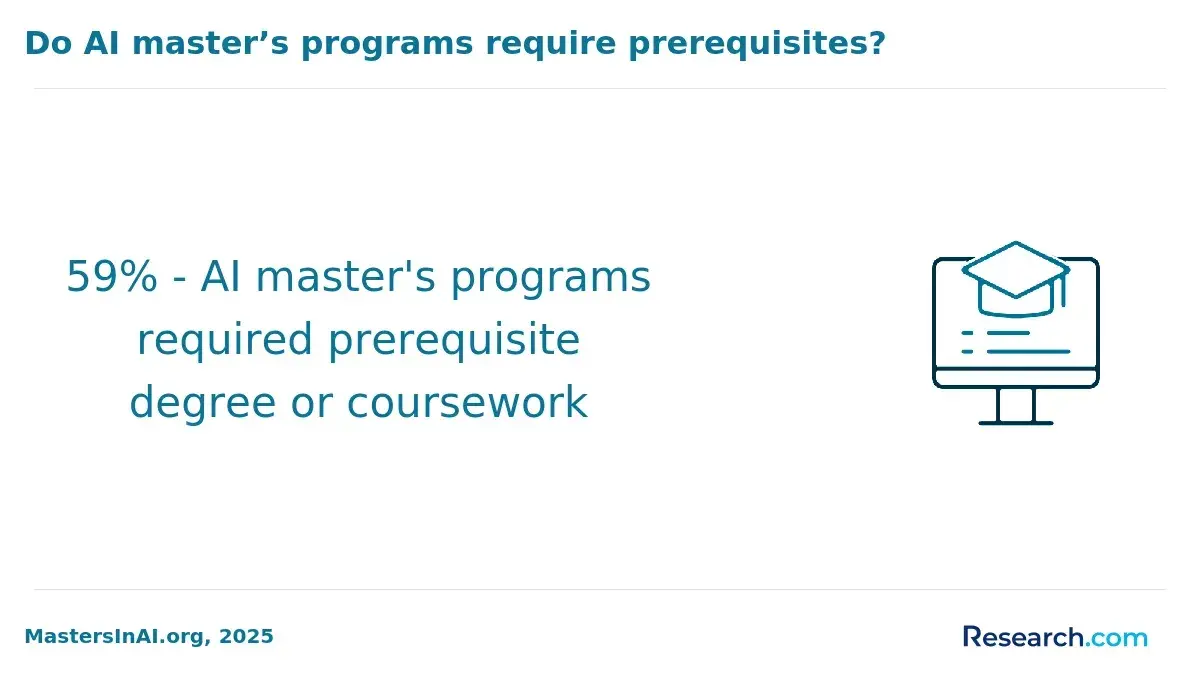
Degree programs, especially bachelor's and master's degrees in AI, have more stringent requirements. Bachelor's programs often require strong academic performance in math and science along with standardized test scores like the SAT or ACT. Master's programs typically require an undergraduate degree in computer science, engineering, or a related STEM field, plus GRE scores, letters of recommendation, and a statement of purpose detailing AI interests.
Some institutions offer accelerated or part-time AI programs tailored to professionals, replacing traditional academic prerequisites with documented work experience. Competitive programs may also review portfolios showcasing coding projects, research, or internships as part of the evaluation process.
The World Economic Forum's 2024 report forecasts AI and related technologies will create 69 million new jobs globally by 2028 while displacing 83 million, placing AI skills among the top in-demand technical competencies. This drives the growing emphasis on both technical proficiency and practical experience in AI admissions.
How long do popular AI programs for business owners take and what do they cost?
Popular AI programs for business owners vary widely, from brief workshops lasting a few hours to expansive courses that span several months. Many foundational certificate courses typically run 6 to 12 weeks, demanding about 5 to 10 hours weekly. Flexible online options often allow learners to complete material within 40 to 60 total hours. Executive education programs can extend to 3 or 6 months and focus on strategic AI applications in business.
Costs range significantly depending on the program's intensity and provider:
- Entry-level courses aimed at business professionals can start between $300 and $500.
- Mid-tier certificate programs from recognized universities or reputable platforms usually fall between $1,000 and $3,000.
- Specialized executive programs or in-depth training may exceed $5,000.
Free AI courses exist but often lack the depth and applied business focus needed for impactful learning. A 2024 PwC survey highlights that companies allocating at least 5% of their digital budgets to AI skills development experience 3.5 times greater odds of positive returns on AI ventures relative to those investing less than 1%.
When choosing programs, consider both time commitments and intended outcomes:
- Shorter options suit those requiring rapid AI literacy to support decision-making.
- Longer courses benefit professionals aiming to lead AI-driven transformation or strategy implementation.
Costs can sometimes be offset through employer sponsorships, scholarships, or bundled offerings. Quality training investments align strongly with improved business outcomes, making it a vital consideration for those seeking to leverage AI effectively in their careers.
What careers, roles, and salary ranges can AI-educated business owners realistically pursue?
AI-educated business owners can pursue roles blending managerial skills with technical expertise, boosting their market value and salary potential. Key positions include AI product managers, AI strategy consultants, data-driven business analysts, and AI operations leads. These roles require both business insight and technical fluency to align AI development with business goals.
Salary ranges vary widely by experience, industry, and company size:
- Entry-level AI business analysts earn $70,000 to $90,000 annually
- AI product managers and strategy consultants make between $110,000 and $160,000
- Senior AI operations leads or directors often exceed $180,000
- AI ethics and compliance roles offer $90,000 to $130,000, reflecting growing demand for responsible AI governance
Entrepreneurs leveraging AI education frequently launch ventures specializing in automation, AI-enhanced marketing, or predictive analytics, with potential for rapid scaling. According to Gartner's research, business owners with AI skills are 2.7 times more likely to move AI pilots into production successfully, highlighting a strong competitive edge.
Skills in predictive modeling, natural language processing, and machine learning fundamentals help leaders negotiate better vendor contracts and oversee AI projects effectively. Prospective students should focus on roles that combine strategic vision with technical proficiency to maximize business impact and career growth.
Are there industry-recognized AI certifications and ethical standards relevant to business leaders?
Industry-recognized AI certifications tailored for business leaders include the Certified AI Practitioner (CAIP) and the AI Ethics Professional Certification. These programs cover AI governance, risk management, and ethical frameworks, helping executives implement AI responsibly by addressing issues such as bias, transparency, and accountability.
Ethical standards from leading organizations like the Institute of Electrical and Electronics Engineers (IEEE) and the Partnership on AI prioritize fairness, privacy, and human-centered AI design. Business owners can use these guidelines to align AI initiatives with societal values and regulatory requirements, which is increasingly important due to heightened scrutiny on AI's societal effects.
Frameworks such as the European Commission's Ethics Guidelines for Trustworthy AI and the U.S. National AI Initiative Act's principles provide essential direction for safer, ethical AI adoption across industries.
With corporate investment in AI-driven training expanding at a 32% CAGR through 2030 and expected to surpass $35 billion globally (HolonIQ), gaining formal AI and ethics credentials equips business leaders to stay competitive and foster AI literacy.
When selecting courses, prioritize programs combining technical AI expertise with ethics, compliance, and strategic leadership skills to confidently guide AI integration within organizations.
Other Things You Should Know About Artificial Intelligence
Businesses often encounter data quality and integration issues when implementing artificial intelligence. Additionally, there is a significant demand for skilled professionals who can develop and maintain AI systems. Ethical concerns and regulatory compliance also present challenges that companies must address to ensure responsible AI use.
Artificial intelligence can support and enhance human decision-making, especially by processing large data sets and identifying patterns. However, it is not designed to fully replace human judgment, as contextual understanding and ethical considerations remain essential components of effective business decisions.
AI is changing many job roles by automating routine tasks and enabling employees to focus on higher-level strategic work. While some roles may be reduced or transformed, new positions in AI management, data analysis, and ethical oversight are emerging to support AI integration within organizations.
In 2027, top AI courses for business owners include "AI for Business Leaders" on Coursera, MIT Sloan's "Artificial Intelligence in Business: Creating Value with Machine Learning," and Udemy's "AI for Business: Business Applications of Artificial Intelligence." These courses focus on integrating AI to optimize business strategy and operations.
References
- AI Certification vs. Traditional Degree: What Actually Gets You Hired in 2026? https://www.nplus.global/blogs/ai-certification-vs-traditional-degree/
- The 11 Best AI & Machine Learning Bootcamps of 2025 | Course Report https://www.coursereport.com/best-ai-machine-learning-bootcamps
- How to Choose the Right AI Tools for Your Business https://www.clearobject.com/how-to-choose-the-right-ai-tools-for-your-business/
- How Businesses Use AI to Increase Revenue: 9 Proven Strategies https://www.ucertify.com/blog/how-businesses-use-ai-to-increase-revenue/
- AI Certificate vs. Degree: Which One Is Right for You - IABAC https://iabac.org/blog/ai-certificate-vs-degree-which-one-is-right-for-you
- AI-Driven Business Growth: 5 Key AI Solutions for Revenue https://aisera.com/blog/increase-revenue-with-ai/
- Understanding AI: AI tools, training, and skills https://ai.google/learn-ai-skills/
- What are the requirements for completing the Introduction to AI and Building AI courses? https://www.elementsofai.com/ie/faq/what-are-the-requirements-for-completing-the-introduction-to-ai-and-building-ai-courses
- AI training and tools for small businesses | Grow with Google https://grow.google/ai-for-small-businesses/
- AI Careers - Top AI Jobs with Education Requirements and Pay https://aidegreeprograms.org/ai-careers/