2027 Best AI Courses for Computer Science Students With Certificates

Co-Founder and Chief Data Scientist
Many computer science students face challenges transitioning into artificial intelligence due to the rapid evolution of the field and a lack of updated skills. The complexity of AI concepts combined with the need for recognized accreditation can stall career progress. Additionally, balancing full-time commitments with quality learning options adds to the difficulty of gaining relevant expertise.
This article addresses these challenges by identifying top AI courses that offer flexible learning and certification, ensuring students acquire practical knowledge and credentials to confidently enter the AI industry and advance their professional goals.
Key Things You Should Know
- Top AI courses in 2026 emphasize practical skills, offering accredited certificates that 78% of employers recognize as valuable for computer science career advancement.
- Emerging AI topics like generative models and ethical AI are integrated into curricula, reflecting 2025 industry demands and research trends.
- Online platforms provide flexible learning with average course durations of 8-12 weeks, offering affordable options under $500 to support diverse student budgets.
Advance Your Career with AI Online Courses
Artificial Intelligence: Implications for Business Strategy
This program provides an introduction to Artificial Intelligence and their implications for business strategy. Earn an official digital certificate.

Oxford Artificial Intelligence Programme
Explore this Oxford Artificial Intelligence programme offered in a flexible learning environment and explore topics like machine learning, automation, and robotics.

Implementing Agentic AI: Building Your Organizational Playbook
This online MIT Agentic AI course offers a practical approach to deploying AI agents in your organization, including a custom playbook. 3 weeks, exclusive launch price.

AI Adoption: Driving Business Value and Impact
This online MIT AI Adoption: Driving Business Value and Impact offers practical frameworks to close the gap between AI potential and business reality.

Artificial Intelligence in Pharma and Biotech
Discover the applications and limitations of artificial intelligence in pharma and biotech with this MIT online short course.

What are the best AI courses for computer science students that include verified certificates?
Top ai certification programs for computer science students offer verified certificates that combine rigorous content with practical applications. Platforms like Coursera, edX, and Udacity provide comprehensive curricula taught by experts from prestigious universities. For instance, Coursera's "AI For Everyone" by Andrew Ng covers foundational knowledge ideal for beginners, while the "Deep Learning Specialization" dives deep into advanced neural networks, both awarding verified certificates upon completion.
These programs address key industry needs, teaching skills in machine learning, natural language processing, and computer vision. Courses like MIT's "Principles of Machine Learning" on edX emphasize mathematical foundations alongside coding exercises for strong transferable skills. Udacity's "AI Programming with Python" Nanodegree blends programming with algorithm design for hands-on learning. Choosing courses with project-based assessments is essential for ensuring skill quality in real-world contexts.
Certification validates expertise recognized by hiring managers in a competitive job market. According to LinkedIn's Global Skills Report 2024, there is a 21× faster growth in employer demand for AI and machine learning skills compared to overall skills. This supports the value of pursuing the best artificial intelligence courses for computer science students with verified certificates to boost career prospects.
Working professionals and graduates should also consider programs offering collaboration tools, mentor support, and updated content reflecting the latest AI trends. These verified certificates increase chances for meaningful interviews and growth within AI and computer science fields. For those exploring degree options alongside certifications, exploring accelerated computer science programs can provide additional pathways into the field.
Advance Your Career with AI Online Courses
Artificial Intelligence: Implications for Business Strategy
This program provides an introduction to Artificial Intelligence and their implications for business strategy. Earn an official digital certificate.
Oxford Artificial Intelligence Programme
Explore this Oxford Artificial Intelligence programme offered in a flexible learning environment and explore topics like machine learning, automation, and robotics.
Implementing Agentic AI: Building Your Organizational Playbook
This online MIT Agentic AI course offers a practical approach to deploying AI agents in your organization, including a custom playbook. 3 weeks, exclusive launch price.
How do AI certificate courses differ from full AI degrees for computer science majors?
AI certificate courses and full AI degrees differ notably in scope, duration, and career outcomes for computer science students. Certificate courses typically offer focused training on specialized skills such as machine learning, natural language processing, or computer vision. These programs usually last from weeks to a few months, allowing professionals to quickly boost expertise without a long-term commitment. For instance, the Stanford Machine Learning Specialization on Coursera has been shown to increase learners' chances of job advancement or salary raises by 54% within a year.
In contrast, degree curricula cover a broad foundation including mathematics, algorithms, data structures, and comprehensive AI topics, often incorporating research components. Full degrees-bachelor's or master's-require two to four years of study and prepare students for advanced roles, research, or leadership positions in AI.
Key differences between AI certification programs and degree curricula include:
- Time commitment: certificates take weeks or months; degrees require years.
- Depth of knowledge: certificates provide targeted skills; degrees offer in-depth theoretical and practical understanding.
- Career impact: certificates enable rapid skill enhancement or career pivots; degrees facilitate access to advanced positions and academia.
When deciding between certificates and degrees, consider your career goals and time availability. Certificates suit professionals seeking immediate upskilling, whereas degrees support long-term expertise. For related educational options, see mechanical engineering degrees online.
Overall, ai certificate courses vs full ai degrees for computer science students depends on whether quick certification or comprehensive education better fits one's ambitions.
What types of AI certificates can computer science students earn online or on campus?
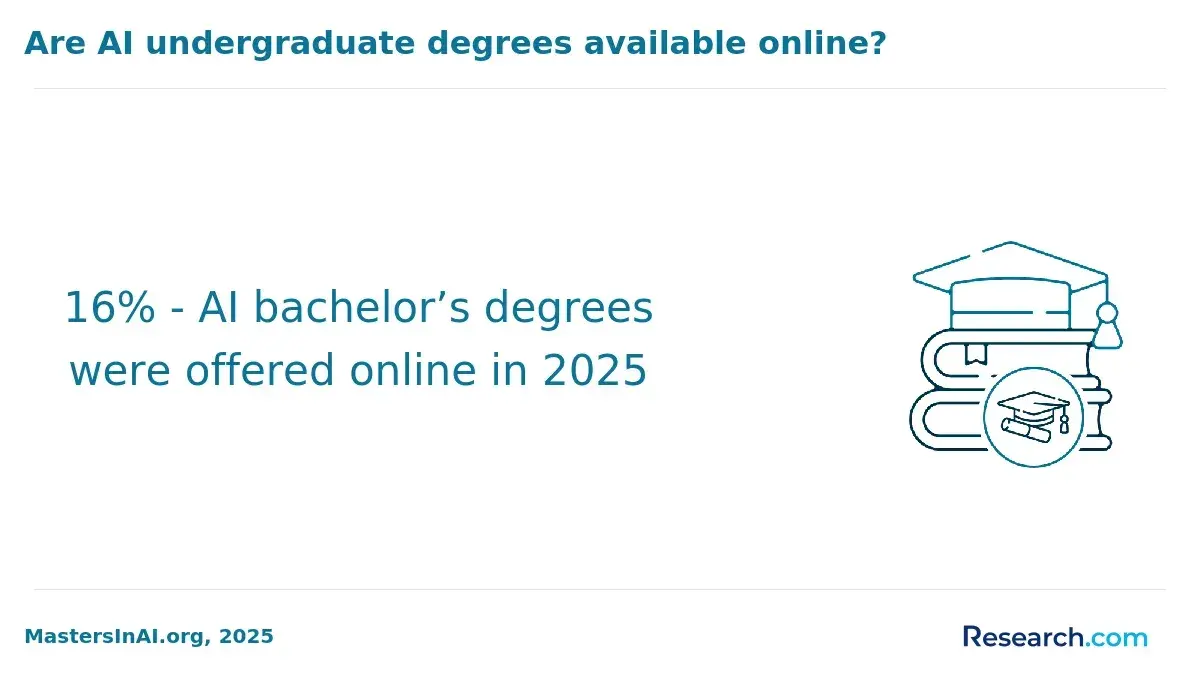
Computer science students seeking AI certification programs for computer science students can choose from various options online or on campus, tailored to different expertise levels and career aims. These typically include professional certificates focused on machine learning, deep learning, natural language processing, data science, and AI engineering-especially practical skills in deploying and maintaining AI models. This practical focus addresses a major challenge; IBM's 2024 AI Skills Gap report finds that 63% of employers struggle to find qualified candidates in this area.
Certificates are categorized as foundational, intermediate, and advanced. Foundational programs cover basics such as AI theory, Python programming, and introductory machine learning. Intermediate certificates explore neural networks, computer vision, and reinforcement learning. Advanced options focus on specialized areas like AI system deployment, ethical AI, and applied AI in industries such as healthcare or finance. Modular certificates enable stacking credentials in AI subfields, boosting competitiveness for in-demand positions.
Campus-based certificates often feature hands-on labs and capstone projects, ideal for students wanting practical experience. Online certifications provide flexibility and access to prestigious programs like IBM's Applied AI or Google's Professional Machine Learning Engineer certificate, which benefit professionals balancing work and study. Given that 51% of organizations plan to hire AI engineers by 2026, certificates emphasizing deployment and model management are crucial.
Students interested in related tech fields might also explore a range of specialized offerings, including video game programs, which complement AI education in innovative ways.
How can I evaluate the accreditation and credibility of AI courses with certificates?
Evaluating the accreditation standards for AI courses with certificates involves verifying the legitimacy of the institution offering the program. Accredited universities and respected professional organizations usually provide trustworthy certification. Check that the course is recognized by the U.S. Department of Education or the Council for Higher Education Accreditation (CHEA). Partnerships with established academic institutions or industry leaders enhance a course's credibility.
Assess the curriculum to ensure it covers both foundational and advanced ai topics that align with current industry standards. Investigate the instructors' qualifications by reviewing their published research, professional experience, and affiliations. Transparent programs typically offer detailed profiles of their teaching staff, ensuring students understand the expertise behind the coursework.
Assessing the credibility and recognition of AI certification programs also requires examining their professional impact. For example, Harvard's Professional Certificate in Computer Science for AI shows how certificates can influence outcomes-graduates in AI roles earn notably higher starting salaries compared to peers. Additionally, value employer recognition by checking for partnerships with tech companies or endorsements from professional bodies such as IEEE or ACM. Practical components like hands-on projects or capstone assessments signal rigorous evaluation.
Seek independent reviews and alumni feedback from forums, LinkedIn endorsements, or educational platforms to gauge real-world applicability and respectability in hiring environments. Students interested in specialized fields might also find relevant information about military friendly online cybersecurity degree programs, which reflect considerations similar to those for AI education pathways.
What core AI topics and skills should the best certificate-bearing courses cover?
Top AI certificate programs for computer science students focus on foundational skills and practical knowledge relevant to today's tech industry. Key subjects include machine learning algorithms-covering supervised, unsupervised, and reinforcement learning-and the essential math behind them, such as linear algebra and probability.
Mastering neural networks and deep learning is critical. According to DeepLearning.AI's 2024 Learner Outcomes report, 43% of graduates from their Deep Learning Specialization apply neural networks within a year, highlighting the importance of architectures like convolutional neural networks (CNNs), recurrent neural networks (RNNs), and transformers, widely used in computer vision and natural language processing.
Hands-on experience with frameworks like TensorFlow or PyTorch enhances practical skills, including data preprocessing, feature engineering, and model evaluation. Ethical AI concerns such as bias reduction and data privacy are crucial topics, given their real-world impact. Students also benefit from learning deployment techniques involving containerization and cloud services, preparing them for industry demands.
A strong AI certificate offers the expertise needed for competitive roles in tech. For more information, visit DeepLearning.AI, a trusted resource in this evolving field.
How do online, hybrid, and campus-based AI certificate courses compare for CS students?
Online, hybrid, and campus-based AI certificate courses each offer unique benefits suited to different learning preferences and career goals. Online courses provide flexibility and easy access, enabling students to learn alongside work or other commitments. These programs often update their curricula regularly to keep pace with advances in AI, a rapidly evolving field. However, they may lack direct interaction with instructors and peers, which can limit networking.
Hybrid options combine remote learning with on-campus experiences, allowing students to engage in in-person labs and collaborations while enjoying the convenience of online coursework. This balance benefits those who want flexibility but also value hands-on practice with AI topics such as neural networks and machine learning algorithms.
Campus-based AI certificate programs provide immersive environments with face-to-face access to professors, research opportunities, and cutting-edge resources. They promote deeper engagement and mentorship essential for mastering complex AI subjects. The trade-offs include higher costs and less schedule flexibility due to commuting or relocation requirements.
For instance, MIT Professional Education's certificate in machine learning and artificial intelligence demonstrates the value of high-quality credentials, with 89% of alumni securing role advancement, promotions, or new jobs within two years. Students should consider their preferred learning style, availability, and career objectives when choosing the course format that best supports their AI specialization and certification goals.
What are typical admission requirements and prerequisites for AI courses with certificates?
Admission to AI certificate courses typically requires foundational knowledge in computer science and programming, with Python being the most common language. Candidates should have a basic understanding of data structures, algorithms, and mathematics such as linear algebra, calculus, and probability. For instance, Harvard's CS50's Introduction to AI with Python offers an accessible entry point by combining Python programming with fundamental AI concepts for learners with prior coding experience.
Advanced courses often demand prior completion of relevant coursework or demonstrated skills in machine learning, statistics, or software engineering. Some programs ask for transcripts, coding challenge completion, or passing placement tests to confirm readiness.
Students without a technical background might need to undertake preparatory studies in programming or math before starting AI certificate courses. Working professionals are advised to review course prerequisites carefully to identify gaps requiring supplementary study.
Data from Harvard CS50's Introduction to AI with Python edX program revealed learners who completed this introductory course were 3.2× more likely to progress to intermediate or advanced AI/ML courses within six months compared to those finishing general computer science introductions. This highlights the value of strong foundational skills in advancing AI education.
How long do AI certificate courses take, and what do they cost for students?
AI certificate courses vary in length, typically lasting between 3 and 12 months depending on the program's depth and format. Shorter, self-paced online courses can be completed in 3 to 6 months with a weekly commitment of 5 to 10 hours. More extensive professional certificates, especially those offered by leading tech companies or universities, may take up to a year and often include hands-on projects and capstone assignments alongside theoretical learning.
The cost for AI certificate programs ranges widely, generally between $300 and $2,500. Certificates from major providers like Google and Microsoft usually cost under $1,000, making them accessible options for U.S. students pursuing tech careers. Many programs also offer financial aid or monthly payment plans to help accommodate different budgets.
Students should weigh the balance of cost, duration, and accreditation. Industry-recognized certificates from Big Tech companies deliver tangible career benefits. For instance, Google's Career Certificates Impact Report shows that 75% of U.S. learners who completed their advanced data and AI certificates experienced positive career outcomes, such as promotions or new jobs, within six months.
Choosing the right AI course depends on your time availability and career ambitions. Working professionals might prefer shorter, part-time options, while recent graduates may find longer courses helpful for deeper skill development. Verifying the certificate's job market value, especially from reputable providers, is essential before enrollment.
Which AI certificates help the most with software, data, and machine learning career paths?
AI certificates emphasizing rigorous theoretical and research-based knowledge provide significant career leverage in software development, data science, and machine learning. Graduate-level programs in machine learning theory and advanced AI algorithms produce professionals skilled at complex problem solving and innovation. According to the 2024 AI Index Report from Stanford, 65% of recent generative AI research papers at top conferences were authored by individuals from universities with strong theory-based curricula.
Certificates tied to university-level courses in statistical learning, optimization, and probabilistic models offer foundational skills useful for software engineers building AI systems and data scientists creating predictive models. Topics such as convex optimization and deep probabilistic models prepare candidates to develop scalable, interpretable machine learning solutions.
Applied certificates in practical AI programming with tools like Python, TensorFlow, or PyTorch complement theory but are less distinctive on their own. Employers value professionals who understand the theory behind algorithms to innovate, debug, and optimize beyond mere implementation.
Data professionals benefit from certifications that combine machine learning theory with hands-on data wrangling and visualization to convert insights into business impact. Software engineers often gain by learning AI integration within larger systems, focusing on architecture and deployment.
Specialized tracks in reinforcement learning, natural language processing, or computer vision can boost careers in niche areas. Certificates from accredited institutions that blend graduate-level theoretical coursework with applied projects yield recognized expertise across AI career paths.
What AI-related salaries and job outlook can CS students expect after earning certificates?
Computer science students earning certificates in artificial intelligence benefit from strong salary prospects and accelerated job growth. The U.S. Bureau of Labor Statistics projects a 23% increase in employment for computer and information research scientists-many specializing in AI-between 2022 and 2032, which is nearly five times faster than the average for all occupations.
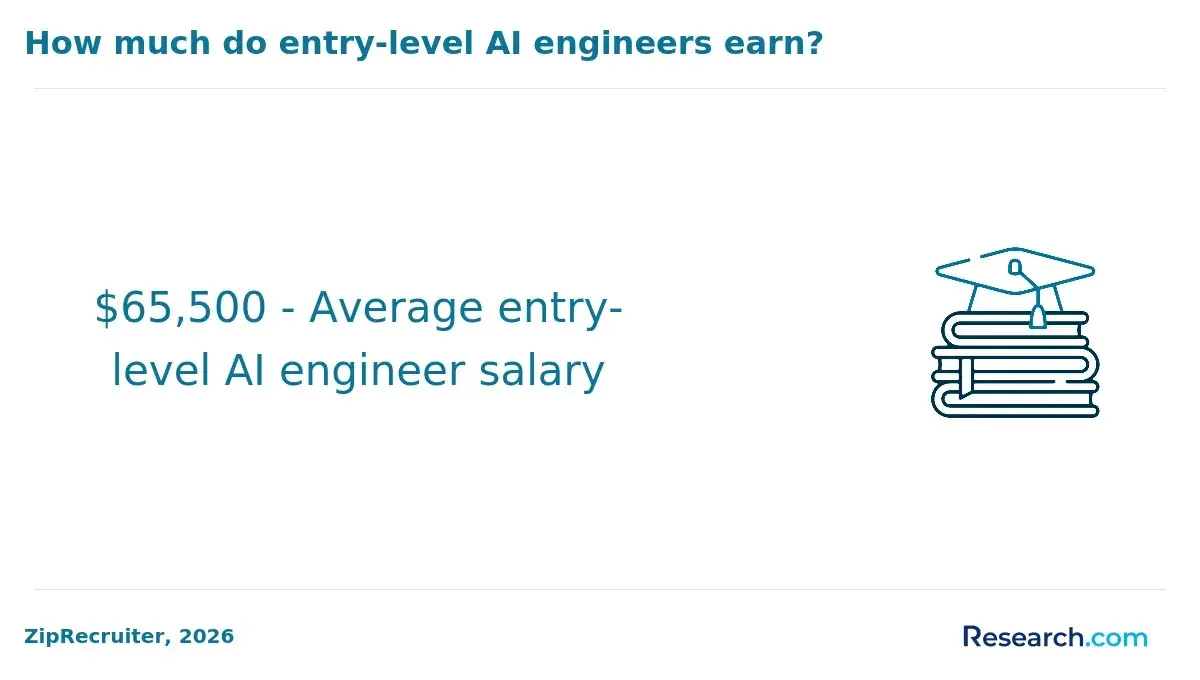
Salary ranges vary by role and experience: entry-level AI engineers, data scientists, or machine learning specialists typically start above $90,000 annually; mid-career professionals often earn over $130,000, and senior or leadership roles frequently surpass $170,000. Skills in natural language processing, computer vision, and reinforcement learning can lead to even higher compensation.
Job opportunities extend beyond traditional tech companies, including healthcare, finance, automotive, and government sectors. For instance, AI specialists working on automated diagnostic tools or fraud detection systems command competitive salaries due to their domain expertise.
The continued expansion of AI applications supports ongoing career growth, making artificial intelligence expertise a valuable asset for computer science professionals entering the job market.
Other Things You Should Know About Artificial Intelligence
Python is the most widely used programming language in artificial intelligence due to its simplicity and strong library support for machine learning, such as TensorFlow and PyTorch. Other languages frequently utilized include R, Java, and C++, each selected based on specific AI projects or performance requirements.
While some foundational knowledge in computer science, especially in programming and basic algorithms, helps in learning artificial intelligence effectively, many beginner-friendly AI courses provide introductory material. However, a solid grasp of mathematics, particularly linear algebra, probability, and statistics, is often essential for deeper AI understanding.
Ethical considerations in artificial intelligence include ensuring fairness, transparency, and accountability in AI systems. Data privacy, avoiding biased algorithms, and addressing potential job displacement are critical issues that developers and users should address to promote responsible AI deployment.
To effectively learn AI in 2027, foundational skills include a strong grasp of mathematics, particularly linear algebra and statistics, proficiency in programming languages such as Python, and an understanding of algorithms and data structures. These skills form the basis for comprehending complex AI concepts and applications.
References
- Top 7 artificial intelligence courses 2025: Comparison of the best online programs https://xd-i.com/en/data-en/ai-courses/
- Certifications in AI that would allow you standout in job hunting https://community.deeplearning.ai/t/certifications-in-ai-that-would-allow-you-standout-in-job-hunting/871654
- 3 Ways to Tell if Your AI Certification is Credible - Bizzuka https://www.bizzuka.com/3-ways-to-tell-if-your-ai-certification-is-credible/
- qa.com | Top 10 Must Have AI Certifications in 2026 https://www.qa.com/browse/certifications/ai-certifications/
- Degree Programs in Artificial Intelligence | ComputerScience.org https://www.computerscience.org/degrees/artificial-intelligence/
- AI Courses & Certifications https://www.intel.com/content/www/us/en/developer/topic-technology/artificial-intelligence/training/overview.html
- Artificial Intelligence vs. Computer Science | University of Bridgeport https://www.bridgeport.edu/news/artificial-intelligence-ai-vs-computer-science-degree-whats-the-difference/
- Ultimate Guide: How to Choose the Right AI Training Course to Boost Your Career - ONLC https://www.onlc.com/blog/how-to-choose-ai-training-courses/
- Artificial Intelligence Foundations Online Certificate | UMGC https://www.umgc.edu/online-degrees/undergraduate-certificates/artificial-intelligence-foundations
- Top 10 AI certifications and courses for 2025 https://www.techtarget.com/whatis/feature/10-top-artificial-intelligence-certifications-and-courses