2027 Best Wharton Online Machine Learning Courses

Co-Founder and Chief Data Scientist
Professionals seeking to enter the artificial intelligence field often face challenges finding flexible, reputable education options that fit around full-time jobs and unrelated undergraduate backgrounds. Many courses lack the rigorous accreditation and practical application needed to advance a career. Without structured learning from a trusted institution, navigating the technical and theoretical demands of machine learning can become overwhelming.
This article evaluates top-tier Wharton online machine learning courses designed to accommodate busy schedules while providing credible credentials. It aims to guide prospective students in selecting programs that effectively bridge their skills gap and foster a successful transition into the artificial intelligence industry.
Key Things You Should Know
- Wharton's 2026 online machine learning courses emphasize practical applications in business, blending data science with leadership skills to prepare students for AI-driven decision-making roles.
- Programs are designed for professionals, offering flexible schedules and a curriculum updated with 2025 advancements in machine learning algorithms and ethical AI practices.
- Completion rates for Wharton's online data science courses surpassed 70% in 2025, reflecting strong student engagement and increasing industry demand for certified AI expertise.
Advance Your Career with AI Online Courses
Artificial Intelligence: Implications for Business Strategy
This program provides an introduction to Artificial Intelligence and their implications for business strategy. Earn an official digital certificate.

Oxford Artificial Intelligence Programme
Explore this Oxford Artificial Intelligence programme offered in a flexible learning environment and explore topics like machine learning, automation, and robotics.

Implementing Agentic AI: Building Your Organizational Playbook
This online MIT Agentic AI course offers a practical approach to deploying AI agents in your organization, including a custom playbook. 3 weeks, exclusive launch price.

AI Adoption: Driving Business Value and Impact
This online MIT AI Adoption: Driving Business Value and Impact offers practical frameworks to close the gap between AI potential and business reality.

Artificial Intelligence in Pharma and Biotech
Discover the applications and limitations of artificial intelligence in pharma and biotech with this MIT online short course.

What are the best Wharton online machine learning courses and who are they for?
The best Wharton online machine learning programs for professionals offer tailored curricula for early-career individuals, managers in finance and technology, and graduates aiming to enhance data-driven decision-making. Courses like "Machine Learning for Business Professionals" and "AI and Machine Learning Foundations" focus on practical business applications rather than solely coding skills.
These top Wharton machine learning courses suited for business leaders emphasize real-world challenges, including financial risk modeling and customer segmentation. Business analysts can learn to interpret algorithmic results strategically, while data scientists gain tools for refining predictive models.
Designed for those seeking structured guidance in integrating machine learning with management, these programs support professionals without programming backgrounds who need to influence AI initiatives. They provide case studies and frameworks that aid leadership in AI-driven projects.
According to McKinsey's 2025 Global AI Survey, organizations with advanced AI capabilities, such as those employing many Wharton graduates, are 2.6 times more likely to achieve at least 20% EBIT improvements from AI. This highlights Wharton's emphasis on business impact along with technical knowledge. For individuals pursuing a degree in AI, these courses bridge the gap between technical expertise and strategic application, delivering measurable benefits across industries.
Advance Your Career with AI Online Courses
Artificial Intelligence: Implications for Business Strategy
This program provides an introduction to Artificial Intelligence and their implications for business strategy. Earn an official digital certificate.
Oxford Artificial Intelligence Programme
Explore this Oxford Artificial Intelligence programme offered in a flexible learning environment and explore topics like machine learning, automation, and robotics.
Implementing Agentic AI: Building Your Organizational Playbook
This online MIT Agentic AI course offers a practical approach to deploying AI agents in your organization, including a custom playbook. 3 weeks, exclusive launch price.
How does Wharton's online machine learning training compare with full degree programs?
Wharton's online machine learning courses offer practical, focused upskilling designed primarily for mid-career and senior professionals. Unlike full degree programs that often take years and delve deeply into theory and research, Wharton's training emphasizes applied skills such as supervised learning, model deployment, and AI-driven business strategy. This approach suits those who want accelerated mastery without the lengthy commitment of a full academic degree.
According to a recent Emeritus-Wharton report, 72% of students in Wharton's analytics and AI offerings have eight or more years of professional experience. This contrasts with full degrees that typically attract early-career learners developing core technical expertise. The Wharton online machine learning courses vs full degree programs US debate highlights differences such as:
- Duration: Weeks or months versus multiple years, enabling faster skill acquisition and workforce impact.
- Curriculum focus: Applied machine learning and business leadership versus rigorous theoretical foundations.
- Flexibility: Asynchronous or hybrid scheduling accommodates working professionals' needs.
- Credential value: Certificates signal practical competence, while degrees carry broader academic prestige and research opportunities.
Prospective learners should assess their career goals carefully. For foundational knowledge or research careers, full degrees remain appropriate. However, Wharton's online training suits those needing targeted, rapid upskilling to lead AI initiatives or embed machine learning into existing roles.
When considering costs related to technical fields, it can be useful to compare with other disciplines; for example, understanding mechanical engineering degree cost provides context for investment decisions. Cost and benefits of Wharton machine learning online training balance practical skill elevation with efficient time use, crucial for many established professionals aiming to stay competitive in evolving AI landscapes.
What topics and skills do Wharton online machine learning courses actually cover?
Wharton online machine learning course curriculum and practical applications cover a broad range of key topics, including supervised and unsupervised learning, neural networks, reinforcement learning, and natural language processing. The programs prioritize hands-on skills like data preparation, feature engineering, model evaluation, and deployment strategies, enabling learners to create effective machine learning models.
These courses also address the increasing demand for AI strategy in business, reflecting the fact that 79% of AI-leading firms struggle to align AI with business goals, while only 23% provide formal AI training for executives. As a result, Wharton's offerings include modules on AI-driven decision-making, governance, and ethical considerations to help bridge this gap.
Practical applications taught include customer segmentation, predictive analytics, fraud detection, and automation, supported by real-world case studies from finance, healthcare, and marketing. Proficiency in programming languages such as Python and use of frameworks like TensorFlow or PyTorch are integral parts of the training.
Students aiming for leadership roles benefit from content on AI policy, change management, investment evaluation, and effective communication of AI value to non-technical audiences. These insights align well with the key skills gained from Wharton's online machine learning programs in the United States.
Those interested in complementing their machine learning knowledge with additional technical skills may consider a cybersecurity online degree as part of a broader strategic expertise portfolio.
How do Wharton online AI and machine learning courses work in practice?
Wharton online machine learning course curriculum and practical applications focus on blending video lectures, case studies, and interactive assignments that align with real business challenges. These courses emphasize applied learning, enabling participants to develop skills for designing and managing machine learning solutions within organizations.
Managers, for example, learn how to translate business problems into machine learning tasks, evaluate model outcomes, and supervise AI-driven projects without deep programming knowledge. The Wharton AI and machine learning online learning experience in the United States often includes cohort-based formats that foster peer collaboration and instructor feedback through discussion forums and live Q&A sessions.
Simulated projects utilize tools like Python, TensorFlow, or Azure ML, allowing students to gain hands-on experience in data preparation, algorithm selection, and interpreting results. This approach helps balance technical feasibility with strategic business goals.
Flexible schedules and modular content delivery accommodate busy professionals, letting students progress at their own pace. A distinctive component is the focus on AI governance, ethics, and leadership, ensuring awareness of compliance and risk management alongside technical skills.
This practical orientation aligns with Gartner's forecast that 80% of organizations will embed AI-fluent business managers by 2027.For those interested in related fields, exploring the best cybersecurity courses can provide complementary expertise valuable in today's tech-driven workplace.
What are the admission requirements and recommended background for these courses?
Admission to Wharton's online machine learning courses typically requires a strong quantitative foundation and relevant professional or academic experience. Applicants need proficiency in core mathematics such as linear algebra, calculus, probability, and statistics. Programming skills in Python or R are often mandatory because they are essential for practical applications within Wharton's curriculum.
Those with backgrounds in finance, economics, engineering, computer science, or data science have an edge. For example, professionals aiming to apply machine learning in financial modeling benefit from a mix of quantitative finance knowledge and coding ability. The CFA Institute's 2024 FinTech survey highlights that 77% of investment professionals consider machine learning a highly impactful skill by 2028, but only 18% feel adequately proficient currently.
Most programs require a bachelor's degree or equivalent, with some recommending prior experience in data analysis or introductory machine learning. Work experience can also be significant, especially for executive or professional development tracks. Candidates without coding experience should complete foundational programming courses beforehand.
Key questions for applicants include:
- Do you have a firm grasp of the mathematics behind machine learning algorithms?
- Can you confidently program in relevant languages?
- Is your professional experience aligned with applying machine learning in your domain?
Meeting these requirements prepares students to engage deeply with advanced material and leverage machine learning effectively in finance and related quantitative disciplines.
How long do Wharton online machine learning courses take and how much do they cost?
Wharton online machine learning courses typically last between 4 and 12 weeks, depending on the depth and structure. A popular option, the marketing and customer analytics course, runs about 6 weeks, providing a focused curriculum ideal for working professionals seeking practical skills without a large time commitment. More advanced programs can extend up to 3 months, covering machine learning algorithms, deployment, and applications in greater detail.
Course costs vary widely, generally ranging from $2,000 to $4,000. Shorter specializations or micro-credentials start near $2,000, while comprehensive certificates or advanced professional courses approach $4,000. Financial aid and payment plans are often available to support accessibility.
For example, the Wharton Online Marketing & Customer Analytics course fits this pricing and is recognized for measurable impact-companies using ML-driven personalization report revenue lifts of 10-20% and up to 30% higher marketing ROI, as highlighted in a 2024 McKinsey marketing analytics study.
Prospective students should weigh their time availability and career goals when choosing a course. Those seeking quick application of machine learning in marketing or operations may prefer the 6-week option, gaining practical skills with immediate benefits. Others aiming for a broader or more technical foundation may invest in lengthier programs. Aligning cost and duration with career advancement potential is essential.
How do Wharton's online machine learning offerings fit into U.S. accredited education pathways?
Wharton's online machine learning courses effectively combine practical industry applications with U.S. accredited education pathways. These offerings often serve as essential components in professional certificates, micro-credentials, or continuing education units valued by both employers and academic institutions. Students gain applied skills complementing formal degrees in business, data science, or engineering.
Key topics include forecasting and inventory optimization techniques vital for operations, supply chain, and pricing roles. The operational impact is supported by Boston Consulting Group's 2024 supply chain AI report, revealing that companies using machine learning reduce stockouts by up to 35% and lower inventory holding costs by 15-25% compared to traditional methods.
Wharton's curriculum equips professionals and recent graduates with measurable tools to address real-world challenges and elevate careers in supply chain management. These courses also integrate smoothly into established U.S. credential frameworks, allowing learners to enhance their resumes without enrolling in lengthy degree programs.
They provide foundational knowledge that can lead to advanced studies and specialization in AI-driven analytics. For working professionals exploring effective ways to upgrade skills and advance in AI-focused fields, Wharton's offerings present a rigorous yet flexible option, balancing academic credibility with direct industry relevance.
What AI and machine learning careers can Wharton online course completers pursue?
Wharton online machine learning courses prepare graduates for diverse roles in AI, spanning technical, strategic, and leadership positions. Career opportunities include machine learning engineer, data scientist, AI product manager, AI strategy consultant, and chief AI officer. These roles require expertise in algorithms, data analytics, and the practical application of AI aligned with business goals.
For professionals lacking a technical background, Wharton's programs also support advancement into leadership roles that oversee AI initiatives. The 2024 IBM Global AI Adoption Index finds that 61% of C-suite executives see "lack of AI leadership skills and understanding" as a major barrier to AI scaling, despite 42% having launched AI projects. This gap highlights the demand for leaders who can connect AI development with broader business strategy.
Career paths enabled by Wharton online courses include:
- Machine learning engineer: Designing and deploying models in practical AI applications.
- Data scientist: Analyzing large datasets to drive AI-powered decisions.
- AI product manager: Leading AI product development with a mix of technical and market insight.
- AI strategy consultant: Advising on AI integration for operational improvements and competitive edge.
- Chief AI Officer or AI program lead: Steering enterprise-wide AI adoption, especially with executive training.
Wharton's curriculum emphasizes ethical AI use, data governance, and quantitative analysis, preparing graduates to tackle issues like algorithmic bias and explainability. This foundation is valuable across sectors including finance, healthcare, marketing, and supply chain management.
What salary ranges and job outlook can students expect in AI and machine learning fields?
Professionals skilled in artificial intelligence and machine learning often earn significantly higher salaries compared to peers without these competencies. Data shows a median salary premium of 18% to 22% across U.S. roles, increasing to 27% in finance and consulting sectors where AI expertise is highly sought after.
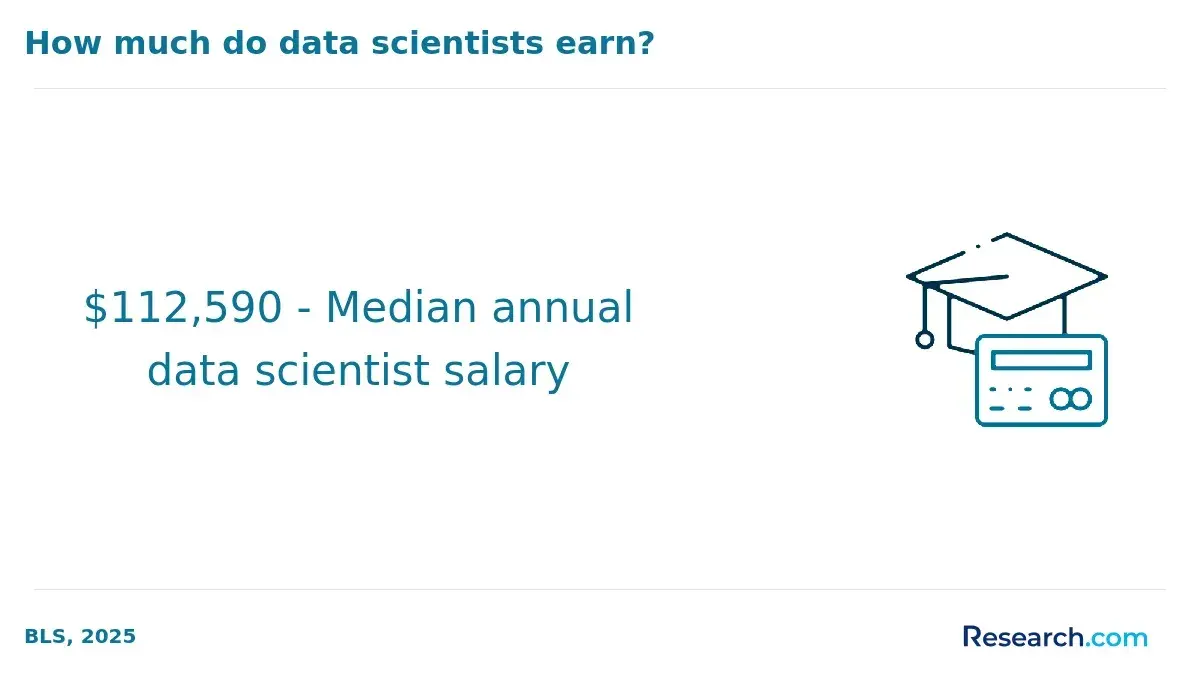
Salary ranges vary by role and experience: entry-level machine learning engineers typically earn between $85,000 and $110,000 annually; mid-level data scientists or AI specialists command salaries from $120,000 to $160,000; senior positions such as AI research scientists or machine learning architects can exceed $180,000, often reaching $220,000 or more in competitive markets.
Job growth in AI and machine learning remains strong, fueled by investments in automation, predictive analytics, and intelligent systems across industries like finance, healthcare, and technology. Employers increasingly value verified credentials such as Wharton's AI and ML programs combined with hands-on experience and domain knowledge to boost career prospects and earning potential.
- Focus on practical skills with real-world tools
- Combine AI credentials with expertise in finance or consulting
- Stay updated with evolving AI technologies for sustained growth
How should students choose between Wharton's online machine learning options and competitors?
Professionals comparing Wharton's online machine learning courses with other providers should weigh factors like program content, instructional expertise, and career alignment. Wharton excels at blending machine learning fundamentals with business strategy, appealing to those seeking leadership roles in data-driven environments.
Meanwhile, some competitors offer more technical depth in areas such as deep learning or computer vision, suited for students focused on developing pure technical skills. Key considerations include:
- Learning objectives: Determine whether a broad interdisciplinary perspective (Wharton's strength) or a specialized technical curriculum better matches your career goals.
- Instructor quality: Wharton's faculty combine academic knowledge with industry experience, catering to business-focused applications.
- Course format and flexibility: Assess live versus asynchronous options and total time commitment to fit your schedule.
- Career resources: Wharton provides a strong alumni network and targeted placement support, especially in finance and consulting.
- Cost and return on investment: With AI and machine learning roles expected to increase by 39% by 2028, according to a 2024 World Economic Forum report, prioritize programs that align skills with market demand.
For example, working professionals aiming for managerial positions in AI-driven companies might prefer Wharton's integrated business approach. In contrast, those targeting research scientist roles could choose courses emphasizing rigorous algorithm development. Aligning your choice with career ambitions and institutional strength is essential for maximizing outcomes in this rapidly expanding field.
Other Things You Should Know About Artificial Intelligence
For beginners in 2027, Wharton's "AI for Business" provides a comprehensive introduction to machine learning principles. It covers foundational concepts and practical applications, making it suitable for those new to the field. The course offers a balance of theory and hands-on experience to build confidence in utilizing machine learning in business contexts.
Artificial intelligence influences job markets by automating routine tasks, which can displace certain roles while creating demand for AI-related skills and new jobs. Sectors like manufacturing, finance, and healthcare are experiencing shifts, requiring workers to adapt through reskilling or upskilling. The net effect varies by industry and region, with some jobs transformed rather than eliminated.
Artificial intelligence is a broad field focused on creating systems capable of performing tasks that typically require human intelligence. Machine learning is a subset of AI that uses algorithms to enable systems to learn from data and improve performance over time without explicit programming. Essentially, machine learning is one approach to achieving AI functionality.
While some AI systems operate with a high degree of autonomy, fully autonomous AI remains limited and context-dependent. Most current AI applications require human oversight to manage unpredictability and ethical considerations. Full autonomy is an ongoing research goal, particularly in areas like self-driving cars and automated decision-making frameworks.
References
- Portal Error Not-found https://asia.citi.com/wealthinsights/education/wharton-real-threat-business-schools-artificial-intelligence
- What I learned from AI For Business Course by Wharton Online - AI Lab Venture https://ailabventure.com/what-i-learned-from-ai-for-business-course-by-wharton-online-course/
- Top 26 Careers in AI and Machine Learning: Roles, Salaries, Skills, and 2026 Outlook - AscendurePro https://ascendurepro.com/careers-in-ai-and-machine-learning/
- WHARTON ONLINE LAUNCHES BEST-IN-CLASS AI FOR DECISION MAKING CERTIFICATE PROGRAM https://www.prnewswire.co.uk/news-releases/wharton-online-launches-best-in-class-ai-for-decision-making-certificate-program-301698067.html
- High School Classes Required for College Admission - National Association for College Admission Counseling (NACAC) https://www.nacacnet.org/high-school-classes-required-for-college-admission/
- How elite business schools like Wharton are overhauling curriculum as AI reshapes Wall Street bankers' futures https://www.businessinsider.com/ai-elite-business-schools-wharton-overhauling-curriculum-2025-11
- Wharton Online Launches Best-In-Class AI for Decision Making Certificate Program https://techrseries.com/hr/wharton-online-launches-best-in-class-ai-for-decision-making-certificate-program/
- How the Wharton AI Course Prepares You for the C-Suite - Emeritus Online Courses https://emeritus.org/blog/wharton-ai-course-c-suite/
- 20+ Best Free Machine Learning Courses: Learn from Stanford, MIT and Google Without Paying Tuition – DataTalks.Club https://datatalks.club/blog/free-machine-learning-courses.html
- How Much Does it Cost to Learn Machine Learning? https://blog.nobledesktop.com/learn/machine-learning/machine-learning-cost-to-learn