2027 Best AI Courses for Telecom Customer Experience Teams

Co-Founder and Chief Data Scientist
Telecom customer experience teams often struggle to leverage cutting-edge technologies to meet rising consumer expectations for personalized, rapid support. Without targeted training, teams find it difficult to integrate artificial intelligence tools that analyze data and automate responses, leading to inefficiencies and missed opportunities. The challenge intensifies as the telecom landscape evolves, demanding skills that bridge technical knowledge and customer-centric strategies.
This article explores the best AI courses tailored for telecom customer experience professionals, highlighting flexible, accredited programs designed to equip learners with practical skills that drive measurable improvements in service and operational performance.
Key Things You Should Know
- AI courses tailored for telecom customer experience teams focus on natural language processing and predictive analytics, enhancing customer interaction and reducing churn by up to 25%.
- Top programs in 2026 emphasize hands-on projects using real telecom data to improve troubleshooting, personalization, and automated support systems.
- Certification from recognized platforms correlates with a 30% higher job placement rate in telecom AI roles, reflecting industry demand and skill relevance.
Advance Your Career with AI Online Courses
Artificial Intelligence: Implications for Business Strategy
This program provides an introduction to Artificial Intelligence and their implications for business strategy. Earn an official digital certificate.

Oxford Artificial Intelligence Programme
Explore this Oxford Artificial Intelligence programme offered in a flexible learning environment and explore topics like machine learning, automation, and robotics.

Implementing Agentic AI: Building Your Organizational Playbook
This online MIT Agentic AI course offers a practical approach to deploying AI agents in your organization, including a custom playbook. 3 weeks, exclusive launch price.

AI Adoption: Driving Business Value and Impact
This online MIT AI Adoption: Driving Business Value and Impact offers practical frameworks to close the gap between AI potential and business reality.

Artificial Intelligence in Pharma and Biotech
Discover the applications and limitations of artificial intelligence in pharma and biotech with this MIT online short course.

What are the best AI courses for telecom customer experience teams and who are they for?
Top AI programs designed for telecom customer service professionals emphasize practical skills like machine learning, natural language processing (NLP), and predictive analytics applied to telecom data. These courses benefit customer support managers, data analysts, and product developers by enhancing customer interactions through AI solutions.
Programs that use real-world telecom datasets tackle challenges such as churn prediction, automated ticketing, and sentiment analysis, directly boosting operational efficiency.
The best AI training courses for telecom customer experience teams often blend foundational AI concepts with telecom-specific case studies. For example, courses on chatbot development using NLP empower service teams to reduce response times and manage higher volumes, supporting findings that telecom operators leveraging AI can cut service costs by 30% and raise customer satisfaction 10-15 points by 2028.
Advanced programs focusing on deep learning and reinforcement learning are ideal for telecom data scientists and engineers aiming to optimize network management and personalize customer journeys. Meanwhile, entry-level courses help customer experience analysts interpret AI-driven insights without requiring deep technical expertise.
Key topics to consider include AI ethics in customer data use, designing automation workflows, and integrating AI tools with CRM platforms. Hands-on projects featuring telecom-specific use cases provide significant career advantages.
U.S. professionals should seek accredited programs with industry partnerships or endorsements to ensure relevant, up-to-date content. Exploring an affordable data science degree can be a practical first step toward these opportunities.
Advance Your Career with AI Online Courses
Artificial Intelligence: Implications for Business Strategy
This program provides an introduction to Artificial Intelligence and their implications for business strategy. Earn an official digital certificate.
Oxford Artificial Intelligence Programme
Explore this Oxford Artificial Intelligence programme offered in a flexible learning environment and explore topics like machine learning, automation, and robotics.
Implementing Agentic AI: Building Your Organizational Playbook
This online MIT Agentic AI course offers a practical approach to deploying AI agents in your organization, including a custom playbook. 3 weeks, exclusive launch price.
How can AI skills specifically improve telecom customer experience, retention, and NPS performance?
AI skills are revolutionizing telecom customer experience by enabling personalized and efficient interactions that boost retention and improve Net Promoter Scores (NPS). AI-driven strategies for telecom customer retention include powerful analytics that quickly analyze large datasets to identify user pain points and usage patterns, often missed by manual methods.
This insight allows companies to tailor offers and support, reducing churn. AI chatbots and virtual assistants manage routine questions instantly, freeing human agents for more complex issues and cutting wait times, which enhances customer perception.
Training in natural language processing and machine learning enables telecom teams to apply sentiment analysis to customer feedback, addressing dissatisfaction proactively. Improving NPS with AI in telecom customer experience also involves AI recommendation engines that suggest optimal plans or upgrades based on individual usage data, making marketing more relevant and effective. According to surveys, more than half of service professionals use AI daily, highlighting the need for continuous AI education in this field.
AI expertise supports predictive network maintenance to minimize outages and improve loyalty. Skills in AI tool integration and data visualization help present insights clearly to stakeholders, fostering data-driven decisions. Practical AI applications in telecom include complaint routing, churn prediction, and customizable customer journeys—all key to superior service delivery and meeting rising expectations.
For those interested in expanding their capabilities, exploring online mechanical engineering degrees can provide relevant technical foundations that complement AI expertise in telecom and beyond.
What types of AI training paths exist for telecom CX teams (short courses, certificates, degrees)?
Telecom customer experience (CX) teams in 2026 can pursue three main AI training options: short courses, certificate programs, and degree paths. Short courses in artificial intelligence for telecom CX teams typically last from a few days to a couple of weeks and target specific skills such as deploying generative AI chatbots or data analysis. These programs help reduce call volumes by 20-40% and improve first-contact resolution rates by 10-25%, according to IBM research.
Certificate programs provide more in-depth study over several months, covering foundational AI concepts, practical telecom applications, and hands-on projects. Certificates in areas like natural language processing or machine learning are designed to solve common CX challenges, including automating interactions and usage pattern analysis. They offer valuable credentialing to support career growth without the time commitment of full degrees.
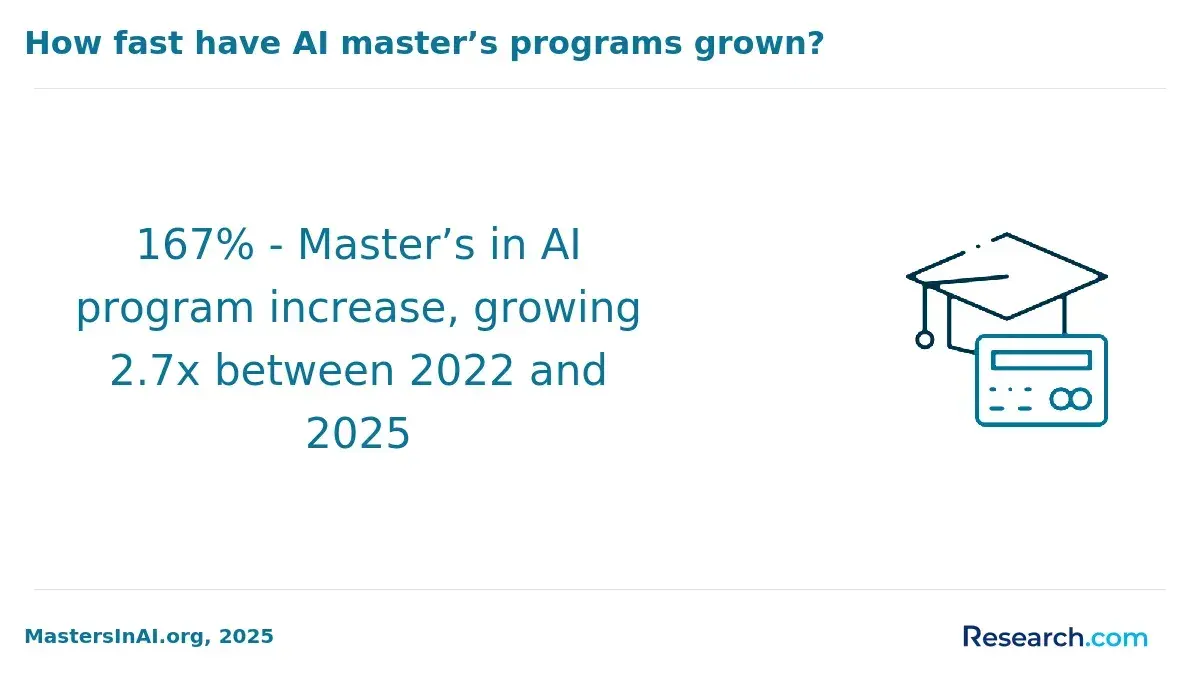
Degree programs, such as bachelor's or master's degrees in artificial intelligence, data science, or related fields, suit those targeting leadership or developer roles. These degrees cover ethical considerations, algorithm design, and large-scale system integration, preparing students to design AI-enhanced telecom CX strategies that improve KPIs. Prospective students interested in tech fields can also explore a game design and development degree as an alternative path.
Choosing among AI certification programs for telecom customer experience depends on one's career goals, prior experience, and time availability. Short courses offer quick upskilling, certificates provide a solid balance of depth and flexibility, and degrees build a strong foundation for strategic roles in AI-driven telecom innovation.
How do online AI programs for telecom customer experience compare with on-campus options?
Online AI courses versus on-campus telecom training present distinct advantages suited to different professional needs. Online programs offer greater flexibility and are designed to fit busy schedules, making them ideal for telecom customer experience teams seeking to enhance practical skills without relocating.
These courses frequently incorporate cutting-edge content such as chatbots, predictive analytics, and personalization techniques, leveraging real-world telecom data sets and simulations for hands-on learning.
In contrast, on-campus telecom training emphasizes deeper theoretical foundations, face-to-face interaction, and mentorship. This format suits individuals targeting research or managerial roles requiring broad AI expertise. Campus programs often include lab sessions and direct instructor feedback, fostering immersive engagement but with less immediate alignment to evolving industry applications.
Flexibility and effectiveness of AI programs for telecom customer experience are critical considerations. Telecom operators applying AI-driven personalization in marketing have reported revenue growth of 5-15% and marketing efficiency improvements of 10-30%, highlighting the value of practical AI skills. Choosing the right training path depends on career goals, whether fast application or foundational knowledge is prioritized.
Key differences include:
- Online programs provide flexible pacing and updated industry content.
- On-campus courses offer deeper theoretical foundations and face-to-face interaction.
- Online options often use case studies reflecting current telecom AI deployments.
- Campus learning suits those targeting research or managerial roles requiring broad AI expertise.
For those interested in expanding skills through flexible learning, exploring cyber security online courses can also complement knowledge relevant to telecom and AI-driven customer experience roles.
What should a strong AI curriculum for telecom customer experience analytics and automation include?
A strong AI curriculum designed for telecom customer experience analytics and automation blends foundational knowledge with industry-specific applications. Key subjects include machine learning algorithms, natural language processing (NLP), and predictive analytics, which equip students to handle large-scale customer interaction data efficiently. Practical skills in data engineering and real-time processing are integral, addressing the unique challenges of telecom data volume and velocity.
Courses often explore automation technologies like robotic process automation (RPA) and AI-driven chatbots in customer support. Emphasis on sentiment analysis and customer segmentation models helps tailor personalized engagement strategies. Hands-on projects simulate telecom scenarios such as network fault prediction and customer churn forecasting, reinforcing relevant expertise.
Ethical considerations around AI use—data privacy and bias mitigation—are essential components. Additionally, training covers AI integration with customer relationship management (CRM) systems and omni-channel communication platforms to support smooth deployment.
A TM Forum analysis revealed telcos using AI to proactively manage at-risk customers achieved churn reductions of 15-20% and net promoter score (NPS) improvements between 10 and 20 points. This highlights the value of practical AI skill sets that directly impact business performance.
Curriculum variations address diverse learner interests, focusing on:
- Advanced analytics for network quality and customer behavior prediction
- Automation workflows to reduce manual support tasks
- Real-time AI monitoring tools for rapid incident response
- Cross-disciplinary training combining AI with telecom infrastructure knowledge
Clear focus on measurable outcomes prepares students to contribute effectively to telecom companies aiming to boost customer loyalty and operational efficiency through AI.
How do I evaluate accreditation and industry recognition for AI programs serving telecom CX roles?
When selecting AI programs for telecom customer experience (CX) roles, accreditation and industry recognition are vital indicators of quality. Verify if the program holds accreditation from respected bodies like ABET, AACSB, or regional educational authorities to ensure academic rigor and relevance.
Industry recognition often comes from partnerships with leading telecom companies or AI organizations. Programs linked to groups such as the Telecom Infra Project or AI divisions within GSMA usually provide telecom-specific skills that address real-world CX challenges.
Key telecom AI applications include natural language processing for chatbots and predictive analytics for customer churn. The 2024 Capgemini report notes only 27% of telecom firms consider their customer-facing teams "data proficient," while 72% cite poor data skills as a barrier to advancing AI in CX. This highlights the need for programs emphasizing data proficiency and practical AI use in telecom contexts.
Evaluate faculty expertise, especially involvement in current telecom AI initiatives, and check alumni success in telecom roles. Also, seek programs offering certifications or continuing education credits recognized within telecom, which enhance career growth and immediate applicability.
What are the typical admission requirements and time commitments for AI courses for telecom CX staff?
Admission requirements for AI courses designed for telecom customer experience (CX) teams vary widely. Many introductory or no-code/low-code programs require no prior coding experience, making them accessible to CX professionals without formal programming backgrounds. More advanced courses often ask for basic knowledge of data analytics, statistics, or scripting languages like Python or SQL.
Some institutions also consider a bachelor's degree in a relevant field or prior work experience in telecom or customer service valuable. Certificates in digital tools can further enhance admission chances.
Time commitments differ across formats: short no-code AI courses or micro-credentials typically range from 5 to 20 hours, allowing flexible completion within weeks. Professional certificate programs or boot camps demand 50 to 200 hours over months, including hands-on projects. Part-time academic degrees specializing in AI for telecom CX usually require one to two years.
Gartner projects that by 2026, at least 80% of new citizen-developer projects in enterprises will integrate some form of AI assistance or embedded AI. Telecom CX staff should focus on programs that combine practical no-code platform skills with foundational AI knowledge to maximize workplace impact within limited learning time. Employers increasingly favor candidates demonstrating both ai fluency and telecom industry expertise.
How much do AI courses for telecom customer experience professionals cost, and what funding exists?
AI courses for telecom customer experience professionals vary widely in price, from free introductory classes to advanced programs exceeding $5,000. Entry-level online courses generally range from $0 to $300 and are ideal for foundational knowledge. More in-depth professional certificates or bootcamps often cost between $1,000 and $4,000.
University-affiliated or specialized training typically involves higher investment due to the technical depth and industry applications covered. Flexible pricing options, including subscription models at $30 to $100 per month, provide additional affordability for ongoing learning.
Financial support is often available to ease the cost barrier. Many employers fund AI training as part of workforce development, while tuition reimbursement and professional development budgets are worth exploring. Government grants, such as those from the Workforce Innovation and Opportunity Act (WIOA), can help eligible individuals access training. Scholarships and need-based financial aid offered by some programs should also be considered during enrollment.
Investing in AI education yields tangible benefits. Studies show telco companies using AI for customer care and network issue resolution achieve up to 40% faster handling times and a 20% boost in customer satisfaction. This demonstrates the value of trained professionals driving measurable improvements.
When choosing courses, consider:
- Course scope: technical AI skills versus customer experience strategy.
- Certification value: recognized credentials enhance career opportunities.
- Modality: self-paced online versus instructor-led formats impact cost and duration.
What telecom customer experience job roles use AI skills, and what salaries can professionals expect?
Telecom companies increasingly depend on AI expertise across multiple job roles to enhance customer experience. Key positions include data analysts who interpret customer data patterns, AI specialists or machine learning engineers who develop predictive models, and customer experience managers leveraging AI insights for personalized support.
Roles such as chatbot developers and voice recognition engineers create AI-driven tools to automate interactions, while network operations analysts use AI to detect and resolve disruptions proactively.
Salary ranges vary by role and experience, typically as follows:
- Entry-level data analysts: $60,000-$75,000 annually
- AI specialists and machine learning engineers: $100,000-$140,000
- Customer experience managers with AI skills: $85,000-$110,000
- Chatbot developers and voice recognition engineers: $90,000-$130,000
- Network operations analysts: $70,000-$95,000
A Deloitte study highlights the strategic value of cross-functional AI champion roles, showing that organizations employing such experts are 2.5 times more likely to achieve AI return on investment goals. Combining telecommunications experience with AI expertise drives career growth and operational improvements.
For those seeking advancement, pursuing education focused on AI applications in telecom—such as natural language processing and AI-powered analytics—is essential. Demonstrating cross-disciplinary skills boosts job prospects and earning potential in this evolving sector.
Which AI certifications and vendor-specific credentials are most valuable in telecom customer experience?
In telecom customer experience, the most valuable artificial intelligence certifications combine solid foundational knowledge with vendor-specific expertise that drives operational efficiency and personalization. Certifications like the Certified Artificial Intelligence Practitioner (CAIP) validate broad competence in AI areas such as natural language processing and machine learning, which are essential for automating customer interactions and predictive analytics.
Vendor-specific credentials boost career potential by focusing on practical telecom applications. Google Cloud's Professional Machine Learning Engineer certification teaches deploying models for telecom data and customer behavior analysis. Microsoft's Azure AI Engineer Associate credential is key for professionals using Azure Cognitive Services in customer platforms. AWS Certified Machine Learning - Specialty emphasizes scalable AI solutions in cloud environments.
Conversational AI certifications, such as IBM's Watson Assistant certification, impart critical skills for building chatbots and virtual assistants that enhance customer engagement and shorten response times.
LinkedIn's 2024 Workplace Learning Report highlights that roles requiring generative AI skills offer salaries 18-27% higher on average in customer-facing and operations jobs, demonstrating the financial advantage of targeted AI upskilling.
For telecom CX professionals, pairing general artificial intelligence certifications with vendor-specific credentials related to telecom cloud platforms and conversational AI tools delivers strong ROI. This approach ensures both deep theoretical understanding and hands-on expertise to optimize complex customer journeys.
Other Things You Should Know About Artificial Intelligence
In 2027, top courses for telecom customer experience teams include "AI for Customer Experience" by Coursera, "AI & Data Science for Telecom" by edX, and "AI Innovations in Telecom" by Udemy. These courses cover AI tools and strategies to enhance customer interaction and service delivery in telecom industries.
AI enhances customer service by automating responses through chatbots, personalizing interactions based on customer data, and analyzing sentiment to prioritize support. It helps telecom companies reduce wait times and improve issue resolution by predicting customer needs and routing inquiries efficiently. AI also supports self-service tools, enabling customers to find answers without direct human intervention.
Ethical concerns with AI include data privacy, bias in algorithms, transparency, and accountability for automated decisions. In telecom customer experience, improper data handling or biased AI models can harm customers or lead to unfair treatment. Organizations must implement governance frameworks to ensure AI systems operate fairly and respect customer rights.
AI can automate repetitive and routine tasks, but it is unlikely to fully replace human roles in telecom customer experience. Instead, AI augments human agents by handling simple inquiries and providing data-driven insights, allowing staff to focus on complex problems and relationship building. The demand for AI-literate professionals who can manage and optimize these systems is growing.
References
- Benefits Of AI In The Future Of Customer Service https://www.oliverwyman.com/our-expertise/insights/2025/apr/future-of-customer-service-ai.html
- Top 5 Courses for AI Customer Service Mastery 2025 https://getzowie.com/blog/top-cs-cx-courses
- AI Training & Certification for Employees: How HR Should Evaluate Providers | Sprad Blog https://sprad.io/blog/ai-training-certification-for-employees-how-hr-should-evaluate-providers
- Generative AI in Telecom: Use Cases & Examples https://masterofcode.com/blog/generative-ai-chatbot-in-telecom-success-stories-and-potential-use-cases
- AI-powered end-to-end solution for customer experience https://www.tmforum.org/catalysts/projects/C25.0.845/aipowered-endtoend-solution-for-customer-experience
- AI Training: How to Upskill Your Customer Experience Teams for AI https://www.salesforce.com/blog/ai-education-reskill-customer-experience/
- Comarch - Global IT Business Products Provider https://www.comarch.com/telecommunications/blog/ai/params/btag/machine+learning+in+telecom/
- Vendor Neutral and Vendor Specific Certification - IAM Certification https://identitymanagementinstitute.org/vendor-neutral-and-vendor-specific-certification/
- MicroCourse AI for CX - The CX Academy https://thecxacademy.org/microcourse-ai-for-cx/
- AI Training with Funding: How to Finance Your Skill Development https://www.rbreme.com/en/blog/ai-training-funding-guide