2027 How to Become a Licensed Pharmacist in Arkansas

Co-Founder and Chief Data Scientist
Becoming a pharmacist in Arkansas is a regulated professional pathway, not just a degree decision. You need the right pharmacy education, supervised experience, national and state law exams, a background check, and ongoing continuing education after licensure. Missing one requirement can delay your start date, increase costs, or create problems when you try to renew your license.
This guide is for students planning a pharmacy career, career changers comparing healthcare paths, and graduates preparing for Arkansas licensure. It explains the Arkansas pharmacist licensing process from Pharm.D. admission through exams, fees, renewal, salary expectations, technology trends, and career options. As of 2024, Arkansas is home to more than 6,000 pharmacists, so understanding the requirements early can help you plan a realistic timeline and avoid costly mistakes.
Quick answer: How do you become a licensed pharmacist in Arkansas?
To become a licensed pharmacist in Arkansas, you generally need to earn a Doctor of Pharmacy (Pharm.D.) from an accredited pharmacy school, complete required internship training, pass the North American Pharmacist Licensure Examination (NAPLEX), pass the Arkansas pharmacy law exam through the Multistate Pharmacy Jurisprudence Examination (MPJE), submit an application to the Arkansas State Board of Pharmacy, complete fingerprinting and a background check, and maintain your license through continuing education.
Key things to know before you start
- The required professional degree is the Pharm.D. Pharmacy licensure requires a Doctor of Pharmacy from an accredited school.
- Two exams matter most. Arkansas candidates must pass the NAPLEX and the MPJE, which covers pharmacy laws and regulations.
- Supervised experience is part of the pathway. Arkansas requires internship training, and some hours may be completed during pharmacy school.
- Licensure includes screening. Fingerprinting and a background check are part of the application process.
- Costs go beyond tuition. Budget for tuition, books, living expenses, exam fees, application charges, fingerprinting, and renewals.
- Licensure is not a one-time task. Pharmacists must complete continuing education to keep practicing legally.
- What is a licensed pharmacist?
- How long does it take to become a licensed pharmacist in Arkansas?
- How do I get a pharmacy degree in Arkansas?
- What are the requirements to become a licensed pharmacist in Arkansas?
- How much does it cost to become a licensed pharmacist in Arkansas?
- Can I get my pharmacist’s license online in Arkansas?
- What is the job description of a licensed pharmacist in Arkansas?
- What continuing education opportunities are available for pharmacists in Arkansas?
- What do I do if my pharmacist’s license expires in Arkansas?
- How are emerging healthcare technologies shaping the role of licensed pharmacists in Arkansas?
- Is pharmacy school worth it?
- How much do licensed pharmacists in Arkansas make?
- How can you boost your income as a licensed pharmacist in Arkansas?
- What is the job outlook for licensed pharmacists in Arkansas?
- How can pharmacists use healthcare administration knowledge to expand their careers?
- Can licensed pharmacists expand their clinical expertise by becoming nurse practitioners?
- Can additional academic credentials broaden a pharmacist’s career opportunities in Arkansas?
- Can pharmacists benefit from dual licensing in Arkansas?
- What is a licensed pharmacist’s career path in Arkansas?
- Are there alternative healthcare careers for licensed pharmacists in Arkansas?
- How can cross-disciplinary skills improve pharmacy practice in Arkansas?
- How can experienced pharmacists transition into substance abuse counseling?
- How can pharmacists integrate nutrition counseling into their practice?
What is a licensed pharmacist?
A licensed pharmacist is a healthcare professional legally authorized to prepare and dispense medications, evaluate prescriptions, counsel patients, monitor drug interactions, support medication therapy management, and follow state and federal pharmacy regulations. In Arkansas, a pharmacist must meet education, experience, examination, and licensing requirements before practicing independently.
Pharmacists are often associated with retail pharmacies, but their role is broader. They work in hospitals, clinics, long-term care facilities, specialty pharmacies, pharmaceutical organizations, and community health settings. Many pharmacists also administer vaccines, support chronic disease management, review medication regimens, and collaborate with physicians, nurses, and other healthcare providers.
The basic Arkansas pharmacist pathway
- Complete pre-pharmacy coursework. Before entering a Pharm.D. program, students complete required science, math, and general education prerequisites.
- Earn an accredited Pharm.D. The Doctor of Pharmacy is the professional degree required for pharmacist licensure. Students comparing flexible options can review online Pharm.D. program options, but they should confirm accreditation and Arkansas licensure compatibility.
- Complete internship training. Arkansas requires supervised experience, and some internship hours may be built into pharmacy school rotations.
- Pass required exams. Candidates must pass the NAPLEX and the MPJE.
- Apply through the Arkansas State Board of Pharmacy. The application process includes education verification, exam scores, fees, and background screening.
- Maintain the license. Pharmacists must complete continuing education and renew on time.
How long does it take to become a licensed pharmacist in Arkansas?
The path to becoming a licensed pharmacist in Arkansas can take at least 6 years, depending on how quickly you complete prerequisites, whether you enter pharmacy school after two years of undergraduate study or after earning a bachelor’s degree, and how efficiently you complete internship and licensing requirements.
| Stage | Typical time involved | What to plan for |
| Pre-pharmacy coursework | Often about 2 years, depending on the student’s starting point | Complete required science, math, and general education courses before Pharm.D. entry. |
| Pharm.D. program | Usually about four years | Complete classroom, lab, patient care, and clinical rotation requirements. |
| Internship training | At least 2,000 hours | Up to 1,500 hours can be included in the pharmacy curriculum, which may reduce post-graduation time. |
| Licensure exams and application | Varies by exam scheduling and application processing | Plan to take exams soon after graduation, ideally within six months, and prepare for the required passing score of at least 75. |
In practice, many candidates should expect a total timeline of about four to eight years from the start of pharmacy education to Arkansas licensure. The shorter end usually applies to students who enter a Pharm.D. program after completing prerequisites efficiently. The longer end may apply to students who first complete a bachelor’s degree, study part time, repeat prerequisite courses, delay exams, or need extra time to complete internship documentation.
If you are still exploring pharmacy-related careers and want a faster entry point into the field, compare pharmacist training with pharmacy technician education. Research.com’s guide to the best pharmacy technician associate degrees online can help you understand a shorter support-role pathway.

How do I get a pharmacy degree in Arkansas?
To qualify for pharmacist licensure, you need a Doctor of Pharmacy from an accredited pharmacy program. In Arkansas, the University of Arkansas for Medical Sciences (UAMS) College of Pharmacy is a major in-state option and offers a Pharm.D. curriculum designed to prepare graduates for clinical practice, community pharmacy, interprofessional teamwork, and licensure exams.
UAMS pre-pharmacy requirements to understand
According to UAMS pre-pharmacy requirements, applicants must complete 60 semester hours of prerequisite coursework before beginning the Pharm.D. program. These prerequisite courses include foundational science and math subjects that prepare students for advanced pharmacy training.
- College Algebra
- General Chemistry with labs
- Organic Chemistry with labs
- Biology with labs
- Microbiology with lab
- 9 credit hours selected from areas such as Anatomy, Physiology, or Statistics
- 20 credit hours of general electives
Students may complete these courses online or in person, but each course must be completed with at least a C. Applicants may apply before all prerequisites are finished, but they must complete them by the end of the spring semester before fall entry. Students with coursework from a foreign institution should expect transcript evaluation as part of the process.
How to choose a pharmacy school for Arkansas licensure
| Question to ask | Why it matters |
| Is the Pharm.D. program accredited by ACPE? | Accreditation is essential for licensure eligibility and signals that the program meets pharmacy education standards. |
| Does the program help students complete internship hours? | Because Arkansas requires at least 2,000 hours, built-in rotations can make the licensing timeline more manageable. |
| Where are clinical rotations located? | Rotation sites affect travel, scheduling, housing costs, and exposure to community, hospital, and clinical pharmacy practice. |
| How does the school prepare students for the NAPLEX and MPJE? | Exam preparation support can reduce delays between graduation and licensure. |
| What is the full cost of attendance? | Tuition alone does not capture books, supplies, fees, living expenses, transportation, and exam costs. |
Students who are comparing pharmacy-related earnings before committing to a Pharm.D. may also find Research.com’s pharmacy technician salary guide useful for understanding the difference between technician and pharmacist roles.
What are the requirements to become a licensed pharmacist in Arkansas?
The core requirements for becoming a licensed pharmacist in Arkansas are an accredited Pharm.D., required internship hours, passing scores on the NAPLEX and MPJE, an application to the Arkansas State Board of Pharmacy, fingerprinting, background screening, and compliance with renewal and continuing education rules after licensure.
| Requirement | What it means for applicants | Common mistake to avoid |
| Accredited Pharm.D. | You must complete a Doctor of Pharmacy program that meets licensure standards. | Assuming any online or out-of-state pharmacy program automatically qualifies for Arkansas licensure. |
| Internship training | Arkansas requires at least 2,000 hours, with up to 1,500 hours potentially completed through the pharmacy curriculum. | Waiting until after graduation to confirm how your hours are documented. |
| NAPLEX | This national exam measures pharmacy practice knowledge and readiness. | Delaying the exam too long after graduation and losing study momentum. |
| MPJE | This exam evaluates knowledge of pharmacy law, including Arkansas-specific requirements. | Studying only national law concepts and underpreparing for state rules. |
| Background check and fingerprinting | Applicants must complete screening as part of the licensing process. | Failing to budget time for processing before a planned start date. |
| Continuing education and renewal | Pharmacists must keep learning and renew the license to continue practicing. | Letting the renewal deadline pass or failing to keep CE documentation. |
After initial licensure, staying compliant becomes part of the job. Arkansas renewal requirements are especially important because a lapsed license can disrupt employment, limit your ability to practice, and create additional administrative steps. Pharmacists who want to compare pharmacy with other high-earning healthcare roles can review Research.com’s highest-paying medical careers list.
How much does it cost to become a licensed pharmacist in Arkansas?
The largest cost of becoming a pharmacist is pharmacy school. A Pharm.D. program from an accredited institution can cost between $20,000 and $50,000 yearly, depending on whether the school is public or private and whether the student qualifies for in-state tuition. Students should also budget for textbooks, lab supplies, technology, transportation, housing, and living expenses.
| Cost category | Amount stated | Planning note |
| Pharm.D. tuition | Between $20,000 and $50,000 yearly | Compare total cost of attendance, not just tuition. |
| NAPLEX | About $75 | Budget for exam preparation materials as well, if needed. |
| MPJE | Around $45 | State law preparation is important because the exam is not only clinical. |
| License application | Roughly $100 | Check the current Arkansas State Board of Pharmacy fee schedule before applying. |
| Background check and fingerprinting | Between $50 and $100 | Processing time can affect when you are cleared to practice. |
| Initial licensing fee | About $75 | This is separate from tuition and exam costs. |
| Annual renewal | About $75 yearly | Renewal is an ongoing professional cost. |
When tuition, living expenses, supplies, exams, application costs, and licensing fees are combined, the total investment can easily exceed $100,000. Before enrolling, estimate your expected borrowing, compare financial aid packages, ask about scholarships, and calculate how long repayment may take under realistic Arkansas salary expectations.
Some students work in pharmacy support or related healthcare roles while preparing for pharmacy school. Shorter credentials may help students gain healthcare experience or income before committing to a Pharm.D.; Research.com’s guide to quick medical certifications online can help you compare those options.
The chart below lists the most common highest educational attainment of current licensed pharmacists in the US, as reported by Zippia in 2024.
Can I get my pharmacist’s license online in Arkansas?
You cannot complete every part of Arkansas pharmacist licensure fully online. Some coursework may be available online through accredited Pharm.D. programs, but pharmacy training requires supervised practice, clinical rotations, exams, fingerprinting, and state board approval. The practical portions of pharmacy education are especially important because pharmacists make safety-critical medication decisions.
| Licensure component | Can it be completed online? | What to verify |
| Didactic Pharm.D. coursework | Sometimes, depending on the program | Confirm ACPE accreditation and Arkansas licensure eligibility. |
| Labs and simulations | May be partly online or hybrid | Ask whether in-person attendance is required and where. |
| Clinical rotations | No, these require supervised practice settings | Confirm rotation sites, travel expectations, and Arkansas placement options. |
| NAPLEX and MPJE preparation | Yes, study resources may be online | Make sure materials include Arkansas law content for the MPJE. |
| Licensure application steps | Some paperwork may be submitted electronically | Fingerprinting, background checks, and board procedures may require specific steps beyond online forms. |
Online or hybrid learning can be useful for students balancing school, work, or family responsibilities. However, the safest decision is to treat flexibility as one factor, not the only factor. Accreditation, rotation quality, licensure alignment, student support, faculty access, exam preparation, and total cost are all more important than convenience alone.
What is the job description of a licensed pharmacist in Arkansas?
A licensed pharmacist in Arkansas is responsible for safe medication use. The job combines clinical judgment, legal compliance, patient counseling, inventory control, documentation, and collaboration with other healthcare professionals.
- Review prescriptions. Pharmacists verify prescriptions for accuracy, appropriateness, dosage, allergies, interactions, and potential safety concerns.
- Prepare and dispense medications. They measure, compound, label, and dispense medications according to pharmacy standards and legal requirements.
- Counsel patients. Pharmacists explain how to take medications, what side effects to monitor, how to store prescriptions, and when to contact a healthcare provider.
- Support medication therapy management. They help patients and providers evaluate whether medication regimens are effective, safe, and manageable.
- Coordinate with healthcare teams. Pharmacists work with physicians, nurses, and other providers to improve treatment plans and prevent medication-related problems.
- Manage inventory and controlled substances. They ensure medications are stocked, stored properly, tracked accurately, and handled according to law.
- Maintain records. Accurate documentation supports patient safety, insurance processes, controlled substance compliance, and continuity of care.
What continuing education opportunities are available for pharmacists in Arkansas?
Continuing education is required for pharmacists who want to keep an Arkansas license active and practice safely. CE helps pharmacists stay current with drug therapies, patient safety standards, pharmacy law, immunization practices, controlled substance rules, technology, and clinical care models.
The continuing education information cited for Arkansas includes 30 hours of continuing education every two years, with at least 12 of those hours completed through live CE sessions. The article also references renewal planning in terms of 15 hours of continuing education every year, with at least 9 live contact hours. Because CE rules can be updated and may be interpreted differently by reporting cycle, pharmacists should verify current requirements directly with the Arkansas State Board of Pharmacy before renewal.
| CE area | Why it is useful for Arkansas pharmacists |
| Pharmacotherapy updates | Helps pharmacists evaluate new medications, dosing guidance, safety warnings, and treatment standards. |
| Pharmacy law and ethics | Supports compliance with state and federal rules, including controlled substance obligations. |
| Patient care innovation | Prepares pharmacists for expanded roles in medication therapy management, chronic disease support, and preventive care. |
| Rural and underserved care | Helps pharmacists address access gaps in communities where local pharmacies may be an important healthcare touchpoint. |
| Interprofessional education | Improves collaboration with physicians, nurses, counselors, dietitians, and other healthcare professionals. |
Some pharmacists use continuing education as a bridge into adjacent healthcare work. For example, skills in patient counseling, documentation, and medication adherence may be relevant to behavioral health roles; Research.com’s guide on how to become a mental health counselor in Arkansas explains one such career transition.
What do I do if my pharmacist’s license expires in Arkansas?
If your Arkansas pharmacist license expires, do not continue practicing until you understand your status and renewal options. Practicing without a valid license can expose you to discipline, fines, employment problems, and board action. The first step is to contact or review instructions from the Arkansas State Board of Pharmacy and begin the appropriate renewal or reinstatement process.
- Confirm your license status. Check whether the license is expired, inactive, suspended, or subject to another board status.
- Review the renewal instructions. Use the Arkansas State Board of Pharmacy’s current guidance, because required steps may depend on how long the license has been expired.
- Gather CE documentation. Have proof of completed continuing education ready before you submit renewal materials.
- Prepare for fees. Renewal, late, or reinstatement-related charges may apply, so verify the current fee schedule.
- Complete any required screening. If the license has been expired for an extended period, additional documentation or background screening may be required.
- Wait for confirmation before practicing. Do not assume submission equals approval.
The best prevention strategy is simple: track renewal dates, save CE certificates in one place, and review board notices before the deadline. Employers may remind staff about renewal, but the legal responsibility belongs to the pharmacist.
How are emerging healthcare technologies shaping the role of licensed pharmacists in Arkansas?
Technology is changing how pharmacists manage prescriptions, communicate with patients, and monitor medication safety. Electronic prescribing, automated dispensing systems, pharmacy management software, telepharmacy models, digital refill tools, and medication synchronization platforms can improve workflow and reduce some manual tasks. They also require pharmacists to understand data accuracy, privacy, system alerts, and the limits of automation.
In Arkansas, technology may be especially relevant in rural areas where pharmacy access can be uneven. Telepharmacy and digital patient communication tools can help extend services, but they do not remove the need for clinical judgment, careful counseling, or regulatory compliance. Pharmacists who want to broaden their patient communication skills in healthcare may also find Research.com’s guide on how to become a marriage and family therapist in Arkansas useful for understanding a different patient-facing profession.
Is pharmacy school worth it?
Pharmacy school can be worth it for students who are committed to medication-focused patient care, willing to complete a demanding doctoral program, and financially prepared for the cost. It may not be the best fit for students who want a short training pathway, dislike chemistry and clinical decision-making, or are uncomfortable with licensing exams and continuing education requirements.
| Pharmacy school may be worth it if... | You may want another path if... |
| You want a licensed healthcare career centered on medications and patient safety. | You want to enter the workforce quickly with minimal schooling. |
| You are prepared for a Pharm.D. curriculum, rotations, exams, and CE. | You are not ready for a major tuition and time commitment. |
| You are interested in community, hospital, clinical, specialty, or administrative pharmacy roles. | You prefer direct bedside care, counseling, or public health work more than medication management. |
| You have compared likely salary with total borrowing and living costs. | You are relying on salary averages without calculating debt repayment and local job availability. |
Before enrolling, compare total cost, expected debt, Arkansas salary data, local job demand, and your preferred work setting. For a deeper return-on-investment discussion, read Research.com’s guide: Is pharmacy school worth it?
How much do licensed pharmacists in Arkansas make?
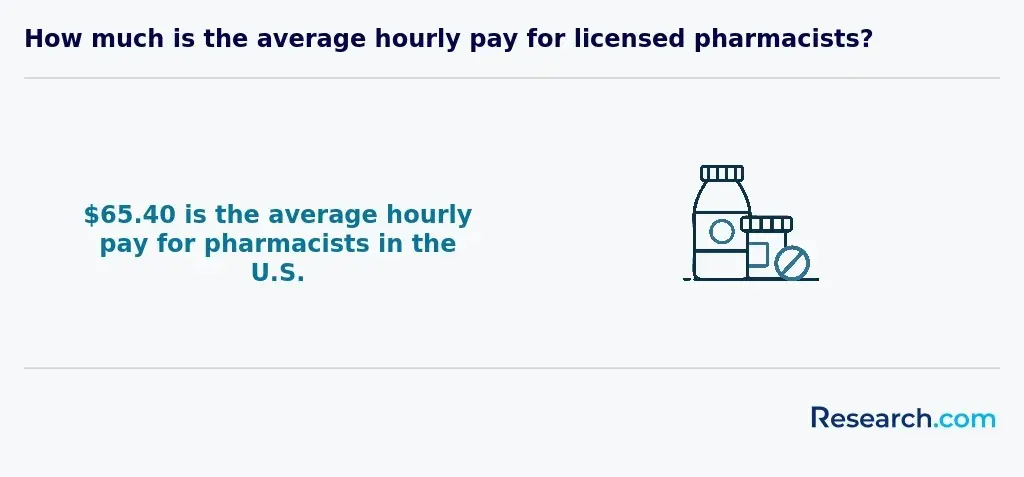
As of 2024, pharmacists in Arkansas earned an average annual salary of about $128,600. The national average was around $134,790. Some states, including California and Alaska, can pay significantly more, up to $157,280, and Napa, California, was cited with an average pharmacist salary of $182,380.
These figures are useful benchmarks, but they are not guarantees. Actual pay depends on practice setting, employer type, location, experience, credentials, shifts, leadership responsibilities, and whether the pharmacist works in retail, hospital, clinical, specialty, or administrative roles.
Factors that can affect pharmacist pay
- Practice setting: Hospital, specialty, industry, retail, and management roles may pay differently.
- Experience: New graduates often start below experienced pharmacists or managers.
- Certifications and residency: Advanced training can support access to specialized or clinical roles.
- Geography: Salaries vary across states, metro areas, and rural communities.
- Schedule: Evening, weekend, overnight, or high-demand shifts may affect compensation.
- Leadership duties: Pharmacy managers and directors may earn more because they oversee staff, compliance, budgets, and operations.
How can you boost your income as a licensed pharmacist in Arkansas?
Pharmacists can improve earning potential by building skills that employers value and by choosing roles strategically. Higher income is not automatic, but pharmacists who combine clinical expertise, leadership ability, technology fluency, and strong patient outcomes may have more options.
- Pursue specialization. Areas such as oncology, pediatrics, ambulatory care, infectious disease, or pharmacotherapy may support advanced roles.
- Complete residency or advanced certification. These credentials can strengthen applications for clinical and hospital positions.
- Move into management. Pharmacy managers, directors, and operations leaders combine pharmacy knowledge with staffing, compliance, and business responsibilities.
- Develop technology skills. Experience with automated dispensing, electronic prescribing, telepharmacy, and pharmacy analytics can be valuable.
- Negotiate using market data. Compare salary benchmarks by setting, location, and responsibility level before accepting an offer.
- Consider geographic flexibility. Some states and cities offer higher average salaries, though cost of living and licensure transfer requirements matter.
For broader salary and career planning, Research.com’s pharmacist career guide explains how to become a pharmacist and what factors shape compensation.
What is the job outlook for licensed pharmacists in Arkansas?
The job outlook for pharmacists in Arkansas is shaped by healthcare access needs, an aging population, prescription demand, rural health gaps, retirements, and evolving pharmacist responsibilities. The cited outlook notes that demand for pharmacists is expected to rise by around 5% over the next ten years, and nationwide, 18,300 new pharmacist positions are opening up.
Pharmacy employment is not the same in every setting. Retail pharmacy can be affected by automation, consolidation, store closures, and changing reimbursement models, while hospitals, clinics, specialty pharmacies, and ambulatory care settings may value pharmacists with clinical training and collaborative care experience. New graduates should pay attention to local openings, residency expectations, employer requirements, and geographic flexibility.
| Trend | How it affects Arkansas pharmacists |
| Aging population | More patients may need help managing multiple medications and chronic conditions. |
| Rural healthcare needs | Community pharmacists may serve as accessible healthcare professionals in areas with limited provider access. |
| Technology and automation | Routine dispensing tasks may become more automated, increasing the value of clinical judgment and patient counseling. |
| Healthcare team-based care | Pharmacists with strong communication and clinical documentation skills may contribute more directly to patient management. |
| Retirements and turnover | Some openings will come from pharmacists leaving the workforce or changing careers. |
How can pharmacists use healthcare administration knowledge to expand their careers?
Healthcare administration knowledge can help pharmacists move beyond dispensing and into operations, compliance, finance, quality improvement, and leadership. Pharmacists who understand billing workflows, documentation, reimbursement, staffing, inventory controls, and regulatory audits may be better prepared for management or health-system roles.
For pharmacists interested in the administrative side of healthcare, learning about medical billing and coding in Arkansas can provide useful context on documentation, claims, revenue cycle processes, and compliance expectations.
Can licensed pharmacists expand their clinical expertise by becoming nurse practitioners?
A pharmacist who wants a broader diagnostic and direct-care role may consider nursing and advanced practice pathways, including becoming a nurse practitioner. This is not a shortcut; it requires meeting nursing education, clinical, and licensure requirements separately from pharmacy licensure. However, a pharmacist’s medication expertise can be valuable if they later work in an advanced clinical role.
Anyone considering this transition should compare the scope of practice, time commitment, cost, licensure rules, and patient care responsibilities. Research.com’s guide on how to become a nurse practitioner in Arkansas explains that separate pathway in more detail.
Can additional academic credentials broaden a pharmacist’s career opportunities in Arkansas?
Additional credentials can help pharmacists move into specialized care, research, teaching, informatics, administration, public health, or interdisciplinary practice. The right credential depends on the career goal. A residency may help with clinical pharmacy roles, while business or healthcare administration training may support leadership. Nursing education may be relevant for pharmacists considering a separate clinical license.
Pharmacists evaluating complementary clinical education can review the top nursing schools in Arkansas to understand how nursing programs compare with pharmacy training and whether a second healthcare credential supports their goals.
Can pharmacists benefit from dual licensing in Arkansas?
Dual licensing can benefit some pharmacists, but only when it matches a clear career plan. A second license may expand clinical authority, improve interdisciplinary collaboration, or open access to roles that require a different professional scope. However, it also adds tuition, exams, clinical hours, renewal duties, continuing education, and regulatory obligations.
Pharmacists considering a nursing credential should first review Arkansas nursing licensure requirements and compare them with pharmacy licensure. The decision should be based on scope of practice, career return, cost, and whether employers in your target setting value the combined background.
What is a licensed pharmacist’s career path in Arkansas?
Licensed pharmacists in Arkansas can build careers in community pharmacies, hospitals, clinics, specialty care, management, research, academia, industry, and public health. The best path depends on whether you prefer direct patient counseling, clinical decision-making, business leadership, research, or systems-level healthcare work.
| Career path | Main responsibilities | Best fit for pharmacists who... |
| Community pharmacist | Dispense prescriptions, counsel patients, provide immunizations or screenings, and manage medication questions. | Enjoy frequent patient interaction and community-based care. |
| Hospital pharmacist | Review inpatient medications, support clinical teams, verify dosing, monitor interactions, and prepare specialized therapies. | Want to work closely with physicians and nurses in acute care settings. |
| Clinical pharmacist | Provide direct medication management, support treatment planning, and specialize in areas such as oncology or cardiology. | Prefer patient-centered clinical work over traditional dispensing. |
| Pharmacy manager | Oversee staff, workflow, compliance, inventory, customer service, and business operations. | Want leadership responsibilities and operational decision-making. |
| Pharmaceutical researcher | Support drug development, safety evaluation, clinical trials, or academic research. | Are interested in evidence, innovation, and scientific problem-solving. |
The chart below lists the top-paying industries for licensed pharmacists, as reported by the BLS in 2024.
Are there alternative career paths in healthcare for licensed pharmacists in Arkansas?
Pharmacists who want to stay in healthcare but move away from traditional pharmacy roles can consider counseling, healthcare administration, nursing, public health, nutrition, substance abuse support, informatics, pharmaceutical industry roles, or teaching. The best alternative depends on whether the pharmacist wants more patient counseling, more leadership, more clinical authority, or more research and policy work.
For example, pharmacists often develop strong patient communication skills, which may be useful in counseling-related careers. Those considering this direction can review Research.com’s guide on how to become a therapist in Arkansas to understand the education and licensing requirements for counseling roles.
How can cross-disciplinary skills improve pharmacy practice in Arkansas?
Cross-disciplinary skills can make pharmacists more effective collaborators. Knowledge of nursing workflows, behavioral health, nutrition, billing, public health, and chronic disease management can improve medication counseling and help pharmacists communicate more effectively with other providers.
For pharmacists who want a stronger understanding of bedside care and clinical communication, Research.com’s guide on how to become a registered nurse in Arkansas can help explain the nursing pathway and how it differs from pharmacy practice.
How can experienced pharmacists transition into substance abuse counseling?
Pharmacists often understand controlled substances, medication adherence, withdrawal risks, patient education, and documentation. Those skills can be relevant to substance abuse counseling, but the transition requires separate behavioral health training, supervised experience, and certification or licensure steps.
This route may be meaningful for pharmacists who want to work more directly with addiction recovery, community health, and behavioral care. To understand the required pathway, review Research.com’s guide on how to become a substance abuse counselor in Arkansas.
How can pharmacists integrate nutrition counseling into their practice?
Pharmacists can support better patient outcomes by understanding basic nutrition principles, supplement safety, food-drug interactions, and chronic disease counseling. Nutrition knowledge can be especially helpful when working with patients who manage diabetes, hypertension, cardiovascular conditions, gastrointestinal issues, or multiple medications.
Pharmacists should stay within their professional scope and collaborate with registered dietitians when patients need individualized nutrition therapy. Creating referral relationships, documenting supplement use, and asking about diet-related medication concerns can make pharmacy care more complete. Pharmacists interested in the dietetics profession can explore Research.com’s guide on how to become a registered dietician in Arkansas.
Common mistakes to avoid when pursuing pharmacist licensure in Arkansas
| Mistake | Why it can hurt you | Better approach |
| Choosing a program without checking accreditation | An unqualified program can create licensure problems. | Confirm ACPE accreditation before enrolling. |
| Looking only at tuition | Fees, living costs, books, transportation, rotations, and exams can significantly increase total cost. | Compare full cost of attendance and expected borrowing. |
| Assuming online coursework means online licensure | Clinical rotations, exams, fingerprinting, and board approval still apply. | Ask exactly which requirements are online, hybrid, or in person. |
| Waiting too long to take licensure exams | Delays can slow employment and increase stress after graduation. | Plan exam preparation before graduation and schedule early when eligible. |
| Ignoring Arkansas pharmacy law | The MPJE includes law content that many students underestimate. | Study Arkansas-specific rules, not just general pharmacy law. |
| Failing to track CE and renewal dates | A lapsed license can interrupt your ability to practice. | Save CE records and set renewal reminders well before the deadline. |
Questions to ask before committing to pharmacy school
- Is the Pharm.D. program accredited and accepted for Arkansas licensure?
- How many internship hours are built into the curriculum?
- Where are clinical rotation sites, and will travel or relocation be required?
- What is the total cost of attendance, including fees and living expenses?
- What support does the school provide for the NAPLEX and MPJE?
- What percentage of graduates pursue community, hospital, clinical, or residency pathways?
- How much debt would you need to take on, and how does that compare with Arkansas salary expectations?
- Would a shorter healthcare path, such as pharmacy technician training, nursing, counseling, or administration, better fit your goals?
Related Articles for Nearby States
- 2027 How to Become a Licensed Pharmacist in Missouri
- 2027 How to Become a Licensed Pharmacist in Oklahoma
- 2027 How to Become a Licensed Pharmacist in Tennessee
- 2027 How to Become a Licensed Pharmacist in Mississippi
- 2027 How to Become a Licensed Pharmacist in Louisiana
- 2027 How to Become a Licensed Pharmacist in Texas
- 2027 How to Become a Licensed Pharmacist in Kentucky
- 2027 How to Become a Licensed Pharmacist in Kansas
- 2027 How to Become a Licensed Pharmacist in Alabama
- 2027 How to Become a Licensed Pharmacist in Illinois
References
- Arkansas Department of Health. (n.d.). Arkansas State Board of Pharmacy. Boards. Arkansas Department of Health.
- Arkansas Secretary of State (SOS). (2003). Regulation 2 — Pharmacists. SOS.
- Bureau of Labor Statistics (BLS). (2024a). 29-1051 Pharmacists. Occupational Employment and Wages, May 2023. BLS.
- Bureau of Labor Statistics (BLS). (2024b). Pharmacists. Occupational Outlook Handbook. BLS.
- Bureau of Labor Statistics (BLS). (2024c). Arkansas. May 2023 State Occupational Employment and Wage Estimates. BLS.
- Justia US Law. (2023). Arkansas Code of 1987 (2023). Justia.
- Pharmacy Workforce Center. (2024). Pharmacy Demand Report (PDR). Pharmacy Workforce Center.
- Philadelphia College of Osteopathic Medicine (PCOM). (2024). How Much Do Pharmacists Make?. Pharmacy Issues and Topics. PCOM.
- University of Arkansas for Medical Sciences (UAMS). (n.d.). Pre-Pharmacy Requirements. Admissions. UAMS.
- Wolters Kluwer. (n.d.). What license does a pharmacist need?. Wolters Kluwer.
- Zippia. (2024). Pharmacist Demographics and Statistics in the US. Zippia.
Key Insights
- Arkansas pharmacist licensure requires a Pharm.D., internship training, the NAPLEX, the MPJE, background screening, and approval from the Arkansas State Board of Pharmacy.
- The pathway can take at least 6 years and commonly falls within a four-to-eight-year planning window, depending on prerequisites, Pharm.D. timing, internship hours, and exam scheduling.
- Cost planning is essential. Pharm.D. tuition alone can run between $20,000 and $50,000 yearly, and total education and licensure costs can easily exceed $100,000.
- Online coursework may help with flexibility, but Arkansas pharmacist licensure cannot be completed entirely online because clinical rotations, exams, fingerprinting, and board review are still required.
- As of 2024, pharmacists in Arkansas earned about $128,600 on average, compared with a national average of around $134,790, but actual pay depends heavily on role, employer, location, specialization, and experience.
- Continuing education is not optional. Pharmacists should verify the current Arkansas CE cycle directly with the board and keep documentation organized to avoid renewal problems.
- The strongest pharmacy candidates plan beyond licensure: they compare practice settings, consider residency or specialization, build technology skills, and choose credentials that match a clear career goal.
Other Things You Should Know About Becoming a Licensed Pharmacist in Arkansas
In 2027, the process to become a licensed pharmacist in Arkansas includes earning a Doctor of Pharmacy (Pharm.D.) degree, passing the NAPLEX and MPJE exams, completing intern hours, and applying through the Arkansas State Board of Pharmacy.
To become a licensed pharmacist in Arkansas in 2027, you must complete a Doctor of Pharmacy (Pharm.D.) program from an accredited college. Following this, you must pass the North American Pharmacist Licensure Examination (NAPLEX) and the Multistate Pharmacy Jurisprudence Examination (MPJE).