2027 Paralegal Programs for Administrative Assistants With No Law Firm Experience

Co-Founder and Chief Data Scientist
Administrative experience can be a strong starting point for paralegal work, but choosing the wrong program can add unnecessary tuition or leave important legal skills uncovered. This guide is for administrative assistants who have not worked in a law firm and want to decide whether a certificate, associate degree, or another route makes sense. It explains what employers may expect, which skills you still need to learn, and how to compare programs around a working schedule and budget.
Key Things You Should Know
- You do not generally need law firm experience to enter a paralegal program; admissions prerequisites depend on the specific certificate or degree.
- Choose a certificate if you already have substantial college education and meet its prerequisites; consider an associate degree if you need both general education and paralegal coursework.
- The U.S. median pay for paralegals and legal assistants was $62,890 in May 2025. BLS projects 0% job growth for 2025-2035 but about 40,800 openings per year; neither figure predicts an individual graduate's prospects.
What Are Paralegal Programs for Administrative Assistants Without Law Firm Experience?
These are paralegal education programs that admit qualified applicants without prior legal employment. They teach students to support lawyers through legal research, document preparation, case organization, and communication. The credential might be an undergraduate certificate, an associate degree, or a bachelor's degree; the title alone does not reveal its admissions requirements or academic level.
Administrative assistants may already know how to manage calendars, protect sensitive information, track deadlines, and prepare polished documents. Paralegal coursework adds legal terminology, research methods, court and agency procedures, and the judgment to recognize when an issue must go to a supervising lawyer. Paralegals do not become attorneys through these programs and generally cannot independently give legal advice or represent clients.
Can Administrative Assistants Become Paralegals Without Legal Work Experience?
Yes. Prior law firm employment is not a universal admissions or hiring requirement. Employers may nevertheless prefer applicants who can demonstrate legal research, writing, and familiarity with their practice area. An administrative background helps most when you can connect specific work - such as deadline tracking or handling confidential records - to the duties in a job posting.
An entry-level legal assistant or legal administrative role can be another route into a legal workplace. It may let you test the transition and learn local procedures while studying. Do not assume, however, that an administrative job automatically includes substantive paralegal duties or that a new credential guarantees a paralegal position. Ask prospective employers what training and supervision they provide for career changers.
What Education Do You Need to Become a Paralegal?
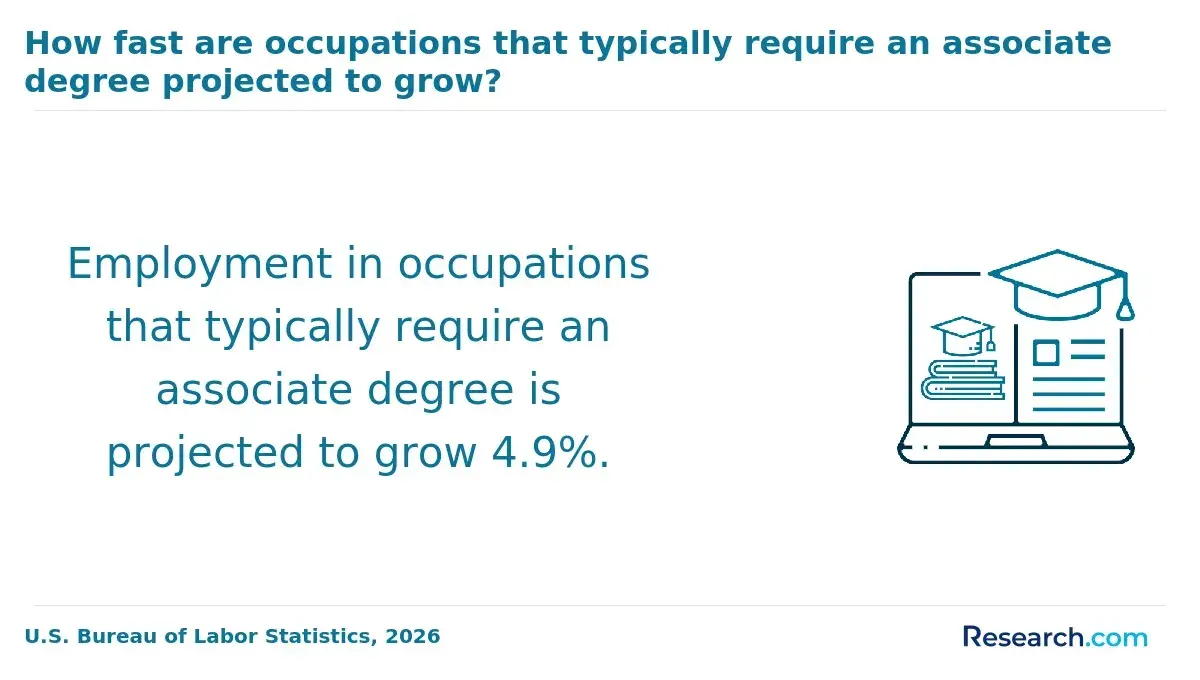
There is no single nationwide degree or license required for every paralegal job. Education expectations vary by employer, role, and state. The U.S. Bureau of Labor Statistics describes an associate degree in paralegal studies as a typical entry route, while some employers hire people with a bachelor's degree and a paralegal certificate. Review job postings in the location and practice area where you intend to work before selecting a credential.
A paralegal certificate is an educational award from a school. It is different from professional certification, a credential granted under the requirements of an organization or state system. For example, NALA awards the Certified Paralegal credential to eligible candidates who meet its current requirements; finishing a certificate program does not automatically award it.
A master's in legal studies is another, usually more extensive, option for professionals seeking legal knowledge. It is generally unnecessary as a first credential for entry-level paralegal work, and it does not qualify its holder to practice law. If your goal later shifts toward a broader regulatory or management role, compare that opportunity cost with legal studies master's study on a faster schedule.
Which Paralegal Degree or Certificate Path Is Best for Administrative Assistants?
Your previous education is the most useful starting point. The comparison below separates the academic routes from the professional certification you might pursue later.
| Path | Potential fit | Main trade-off to check |
| Paralegal certificate | Someone who already meets the program's college-level prerequisites and wants focused legal coursework | Some certificates require a prior degree or credits; credit value and financial aid eligibility vary |
| Associate degree in paralegal studies | Someone seeking general education alongside legal training | Usually more coursework than a focused certificate; transfer to a later degree is not automatic |
| Bachelor's degree with paralegal coursework | Someone who also wants a bachelor's degree or is completing one | A larger time and tuition commitment may not be necessary for the target job |
If you have little college credit, start by comparing associate programs and their transfer policies; a guide to online paralegal associate degrees can help you build a shortlist. If you already hold a degree, ask certificate programs whether it satisfies their prerequisites. Compare the actual curriculum and local job requirements before paying for a longer route.
Are Online or Campus-Based Paralegal Programs Better for Working Adults?
Neither format is automatically better. Online study can reduce commuting, while campus classes may make scheduled practice and instructor contact easier. An online program can still require live meetings, timed exams, campus visits, or an in-person internship. A campus program may offer evening classes that fit a full-time job better than an online program's daytime sessions.
Ask for the current course schedule and internship rules, not just the delivery label. In particular, confirm whether classes are self-paced or held at set times; whether required courses run every term; who finds internship placements; and whether your present workplace could qualify. If a program offers practical assignments, ask what research and document tasks students actually complete and how instructors assess them. Mention of legal software in a course description does not, by itself, establish hands-on training.
What Courses Do Paralegal Programs Typically Include?
Programs commonly cover legal research and writing, civil litigation, contracts, ethics, and legal terminology. Many also offer subjects such as family law, real estate, business law, or criminal law. Course titles vary, so examine descriptions and required assignments rather than judging a program by the length of its catalog.
For an administrative assistant, the strongest bridge courses require you to find and check legal authorities, draft or revise documents, organize case information, and work through realistic deadlines. Ethics instruction should address confidentiality, conflicts, supervision, and the boundary between supporting an attorney and giving legal advice. Technology training is most useful when students use a tool for assessed work; access to a platform or a passing mention of it is not the same as proficiency.
What Are the Admission Requirements for Paralegal Programs?
Requirements depend on the credential and institution. An associate program may admit applicants with a high school diploma or equivalent, while a certificate may require a bachelor's degree, earlier college credits, or specified general education courses. Programs may also request transcripts and an application; do not assume that legal work experience is required unless the published rules say so.
Check whether each prerequisite must be complete before admission or can be taken during the program. If an essay is a barrier, review legal studies application options without a personal statement, then confirm the current requirements for the particular paralegal credential you want. An easier application does not establish that a program meets your career or transfer goals.
How Long Do Paralegal Programs Take and How Much Do They Cost?
A focused certificate can take less time than an associate degree, but published completion times may assume full-time study and a particular course sequence. A working adult should request a term-by-term plan for their intended course load, including prerequisites and any internship. Delayed availability of one required class can matter more than an advertised minimum completion time.
There is no reliable single price for "a paralegal program." Compare each school's current tuition and mandatory fees for the entire credential, then add books, technology or research-platform charges, travel, and internship expenses where applicable. Ask for the applicable 2026-27 cost schedule. A lower advertised tuition price may cover fewer credits or exclude substantial required charges.
Federal aid eligibility depends on the institution, the particular program, and the student; do not assume a noncredit or short certificate qualifies. Request the school's program-specific aid information and compare net cost before borrowing. A payment plan may change when bills are due without reducing the total price. If cash flow is the obstacle, investigate paying online paralegal tuition in monthly installments and verify any plan fees with the school.
What Paralegal Jobs, Salaries, and Career Growth Can Graduates Expect?
Graduates may seek paralegal or legal assistant roles in law firms, corporate legal departments, government offices, and other organizations with legal teams. Entry-level duties can include assembling records, checking citations, maintaining files, and preparing drafts under attorney supervision. The balance of administrative and substantive work differs by employer, so read job descriptions closely.
The Bureau of Labor Statistics reports median annual pay of $62,890 in May 2025 for the combined occupation of paralegals and legal assistants. That is a national midpoint across experience levels and employers, not an expected starting salary for a new graduate. BLS projects 0% growth for 2025-2035, yet about 40,800 openings per year, largely as workers leave the occupation or change jobs. The combined classification cannot predict prospects for a specific entry-level title or local market.
Over time, experience may support work on more complex matters or a move into a particular practice area. For your first search, compare local postings for the skills they request and look for positions that value your existing administrative strengths alongside newly learned legal skills.
How Can You Choose an Accredited and Reputable Paralegal Program?
Start with two separate checks. Institutional accreditation concerns the school; verify its current status through a recognized accreditor or U.S. Department of Education resources. ABA approval applies to qualifying paralegal education programs, not to the entire school or its graduates. Use the American Bar Association's current paralegal program directory to verify any approval claim. ABA approval can matter to a prospective employer, but it is not a universal requirement for paralegal employment.
Before committing, request the current catalog, a full cost estimate, course schedule, internship policy, and written answers about transfer credit or aid. The receiving institution decides whether earlier coursework transfers. If ABA approval matters to you and price is a constraint, use budget-friendly ABA-approved paralegal programs as a starting shortlist, then recheck each program's status, format, and current charges directly.
Be wary of promises of guaranteed jobs, automatic professional certification, or an "ABA-certified" graduate - the ABA does not certify individual paralegals. The best final choice is the program whose verified prerequisites, assessed legal-skills work, schedule, and total cost match the jobs you plan to pursue.
Other Things You Should Know About Law & Paralegal
No. The bar exam is part of qualifying to practice as an attorney, not a general requirement for paralegal employment. Other credential rules may vary by state or certifying organization.
There is no nationwide paralegal typing-speed requirement. An employer may test typing or document-production skills, so check the posting and practice the tasks it names.
Not automatically under a single nationwide rule. School policies, employer background checks, the nature of the position, and applicable state rules can differ. Ask about any relevant placement restrictions before paying tuition.
Association membership is not a general requirement for working as a paralegal. It may provide networking or education opportunities, but evaluate its cost separately from any credential requirements.
References
- Law Student Internship and Externship Opportunities | dol.gov https://www.dol.gov/agencies/sol/careers/internships
- Types of Financial Aid: Grants, Work-Study, and Loans | studentaid.gov https://studentaid.gov/understand-aid/types
- How Long Does It Take to Become a Paralegal? | Pepperdine Caruso School of Law https://law.pepperdine.edu/blog/posts/how-long-to-become-paralegal.htm
- Credit for Prior Learning | University of Arizona Catalog https://catalog.arizona.edu/policy/courses-credit/credit/credit-prior-learning
- Paralegal Certificate vs. Degree: Which Is Right for You? | Online Paralegal Studies Certificate Program https://paralegalonline.bu.edu/articles/paralegal-certificate-vs-degree/
- Paralegal Studies | Monroe Community College https://www.monroecc.edu/academics/programs/paralegal-studies/index.html
- Paralegal Certification vs. Degree: What's the Difference? | Bryan University Online© https://bryanuniversity.edu/faq/the-difference-between-a-paralegal-certification-and-degree/
- Transfer Students | Office of the Executive Vice President and Provost | UNLV https://www.unlv.edu/provost/gen-ed/transfer
- Certified Paralegal (Voucher Included) | CSUSB https://www.csusb.edu/pace/certificates/ed2go-career-training-certificates/certified-paralegal-voucher-included
- How to Become a Paralegal: 2025 Step-by-Step Guide | UC News https://www.online.uc.edu/blog/how-to-become-paralegal.html