2027 Hybrid vs Fully Online Esports Business Bachelor's Degree Programs

Co-Founder and Chief Data Scientist
Choosing an esports business bachelor’s degree is not only a question of major. It is also a question of format: do you want the structure and networking of campus-based experiences, or do you need the freedom to complete the degree from anywhere? That choice matters for students who work, compete, travel, care for family members, or live far from a campus with an esports business program.
Fully online programs have become especially appealing because they remove commute time and make it easier to study around a job or irregular schedule. With 68% of esports business bachelor's degree students opting for online programs in recent years, remote study is no longer a niche option. At the same time, hybrid programs can offer in-person workshops, stronger campus connections, and more direct access to faculty, peers, facilities, and career events.
This guide compares hybrid and fully online esports business bachelor’s degree programs across admissions, learning experience, flexibility, workload, tuition, employer perception, and student fit. The goal is to help you choose the format that matches how you learn, how much structure you need, and what kind of esports career you want to build.
Key Benefits of Hybrid vs Fully Online Esports Business Bachelor's Degree Programs
- Hybrid programs offer flexible scheduling with both online and scheduled on-campus sessions, supporting diverse learning preferences and structured routines more than fully online programs.
- In-person interaction in hybrid formats fosters stronger networking and collaboration, while fully online programs rely heavily on virtual communication tools.
- Hybrid degrees better accommodate balancing education with work or personal life by providing face-to-face support, although fully online programs offer maximum geographic and time flexibility.
What is a hybrid vs. a fully online esports business bachelor's degree?
A hybrid esports business bachelor’s degree combines online coursework with required in-person components. A fully online esports business bachelor’s degree delivers the program remotely, usually through a learning management system, virtual meetings, recorded lectures, discussion boards, and digital assignments. Both formats can cover similar subjects, such as esports management, event operations, sponsorship, digital marketing, business analytics, media strategy, and organizational leadership.
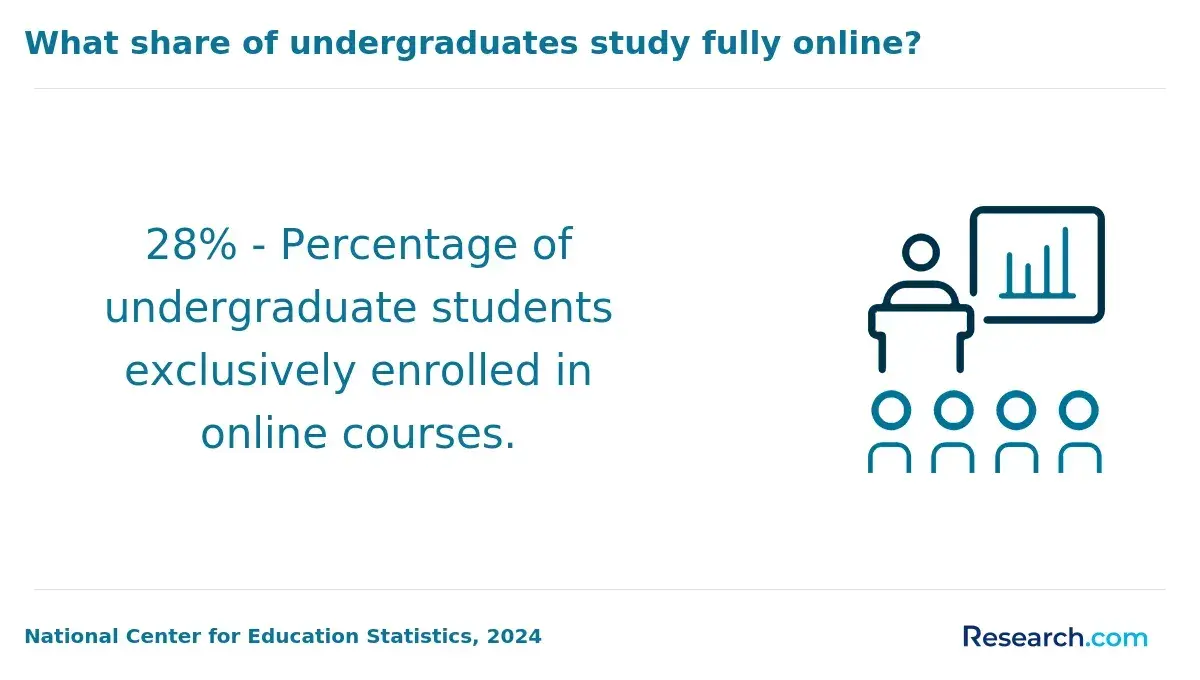
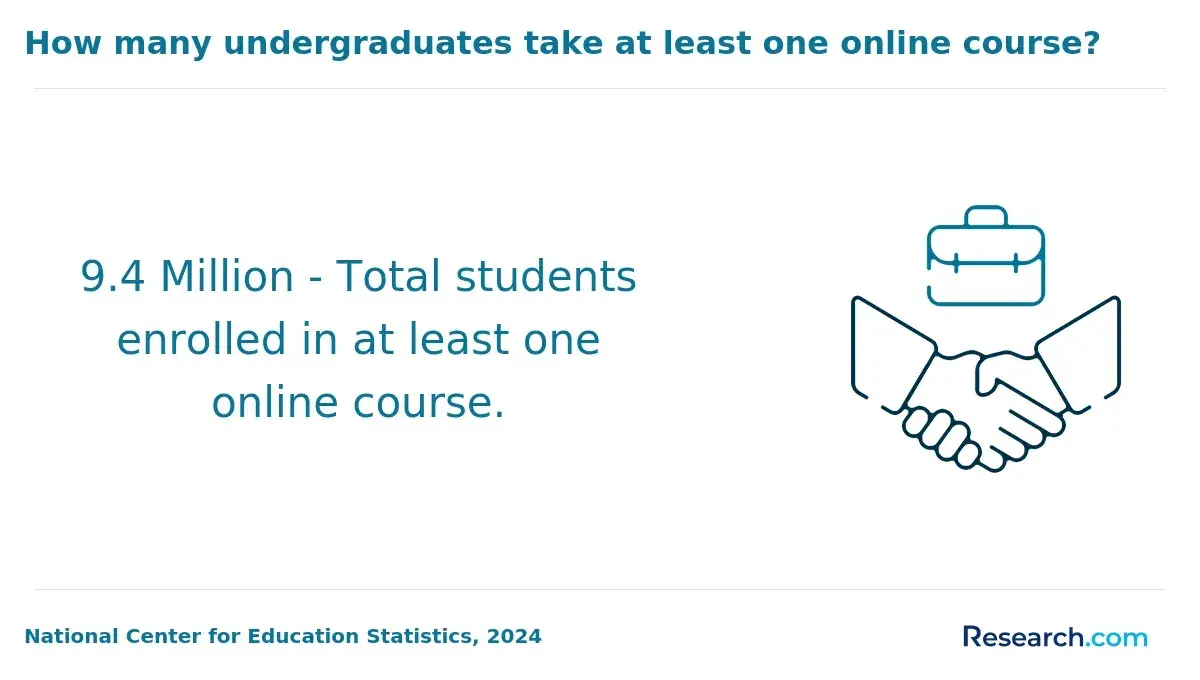
The main difference is not necessarily what you study, but how you participate. Hybrid students must be able to attend campus sessions or scheduled in-person activities. Fully online students complete the degree without campus visits, which can make the format more practical for students outside commuting distance. According to the National Center for Education Statistics, about 37% of U.S. undergraduates took at least one distance education course in 2020, showing that remote coursework has become a familiar part of higher education.
Hybrid Programs
- Delivery: Coursework is split between online modules and required in-person meetings, labs, workshops, exams, or networking events.
- Schedule: Students have less freedom than in a fully online program because some activities happen at fixed times and places.
- Interaction: Students get more direct contact with instructors and classmates, which can help with presentations, group projects, and career conversations.
- Practical learning: Hybrid formats may support hands-on activities such as event production exercises, esports venue visits, or live collaboration sessions.
- Best fit: Hybrid study works well for students who want online convenience but still value campus structure and face-to-face connection.
Fully Online Programs
- Delivery: Courses are completed remotely through recorded lectures, readings, assignments, projects, discussion boards, and occasional live video sessions.
- Schedule: Many courses use weekly deadlines rather than fixed classroom meetings, though some may include scheduled synchronous sessions.
- Interaction: Communication happens through email, video calls, chat, discussion forums, group platforms, and virtual office hours.
- Independence: Students need strong self-direction because no campus routine automatically keeps them on track.
- Best fit: Fully online study is usually the better option for students who need maximum location flexibility or who cannot reliably attend campus.
Students planning for graduate education after a bachelor’s degree may also want to compare format expectations across programs, including options described in this guide to an easy masters degree.
How does a hybrid vs. a fully online esports business bachelor's degree program work?
Hybrid and fully online esports business bachelor’s programs usually follow the same academic logic: students complete general education courses, core business classes, esports-focused coursework, electives, and sometimes a capstone, internship, or applied project. The difference is how the program organizes attendance, collaboration, deadlines, and access to learning resources.
According to the National Center for Education Statistics, more than 75% of U.S. higher education institutions have adopted online courses. That means both hybrid and fully online students are likely to use digital tools, even when a program includes campus sessions.
How Hybrid Programs Usually Work
- Online preparation: Students review readings, recorded lectures, case studies, quizzes, and assignments in the learning management system before or after campus meetings.
- Campus sessions: Required in-person meetings may be weekly, monthly, during select weekends, or tied to specific courses such as event management or presentation-heavy classes.
- Group projects: Teamwork may happen partly in person and partly online, which mirrors the hybrid communication style common in business environments.
- Faculty access: Students can often combine digital communication with face-to-face conversations during class, office hours, workshops, or campus events.
- Planning burden: Students must account for commuting, parking, travel costs, and attendance requirements before enrolling.
How Fully Online Programs Usually Work
- Remote delivery: Lectures, assignments, exams, discussions, and feedback are handled online without required campus attendance.
- Weekly rhythm: Courses often open modules on a weekly schedule, with set deadlines for discussions, quizzes, projects, and papers.
- Virtual collaboration: Students may work with classmates through shared documents, video meetings, project management platforms, and discussion boards.
- Instructor communication: Faculty support typically comes through email, announcements, virtual office hours, recorded feedback, and messaging tools.
- Self-management: Students are responsible for creating their own study routine and staying engaged without a physical classroom routine.
The benefits of fully online esports business degree programs for flexible education are strongest when students need to keep studying while working, relocating, competing, or managing family obligations. Similar delivery models appear in other online fields as well, such as programs described in this overview of online masters MFT options.
Are admission requirements different for hybrid and fully online esports business bachelor's degrees?
Admission requirements are usually similar for hybrid and fully online esports business bachelor’s degrees. Most programs ask for proof of high school completion or equivalent preparation, transcripts, an application form, and any institution-specific materials. The format affects logistics more than academic eligibility: hybrid applicants must be able to attend required campus activities, while fully online applicants must show they can access and use the required technology.
- Academic preparation: Both formats generally require a high school diploma or equivalent and transcripts that show college readiness. Transfer applicants may need college transcripts and documentation of completed credits.
- Technology readiness: Fully online students need reliable internet, a suitable computer, webcam or audio capability if required, and access to required software. Hybrid students also use online tools, but they may be able to rely more on campus computer labs or facilities.
- Location requirements: Hybrid programs may require students to live close enough to attend campus sessions or to travel at specific times. Fully online programs usually allow broader geographic access, although students should still confirm state authorization and any residency-related policies.
- Orientation: Hybrid students may have an in-person orientation or required campus start date. Fully online students usually complete orientation remotely through modules, webinars, or advising calls.
- Interviews and placement: If a program requires interviews, placement testing, or advising, hybrid applicants may have an in-person option, while online applicants typically complete these steps remotely.
- Portfolio or interest statement: Some esports business programs may ask applicants to explain their interest in esports, gaming communities, event management, marketing, or business leadership. This requirement can appear in either format.
The most common mistake is assuming “online” means easier admission. It usually does not. A fully online program can have the same academic standards as a hybrid program, and students should still review accreditation, transfer credit policies, tuition rules, course sequencing, and graduation requirements before applying.
A student applying to a fully online esports business bachelor’s degree may appreciate being able to submit documents remotely, but the process still requires organization. Transcripts, recommendations, financial aid forms, and technology checks can have different timelines. Hybrid applicants should add one more question to the checklist: “Can I reliably attend every required in-person component?” If the answer is uncertain, a fully online format may reduce avoidable enrollment problems.
Is the learning experience better in hybrid vs online esports business bachelor's degrees?
Neither format is automatically better. A hybrid esports business bachelor’s degree is often better for students who learn through live discussion, immediate feedback, and in-person collaboration. A fully online esports business bachelor’s degree is often better for students who need control over when and where they study and who are comfortable building relationships digitally.
Where Hybrid Programs Can Be Stronger
- Real-time engagement: In-person meetings make it easier to ask follow-up questions, read the room during discussions, and build rapport with faculty.
- Networking: Students may meet classmates, guest speakers, alumni, local esports organizations, or campus career staff through scheduled events.
- Hands-on practice: Courses involving event planning, venue operations, sponsorship presentations, or team-based simulations can benefit from live collaboration.
- Built-in structure: Required attendance creates a rhythm that helps some students stay accountable.
Where Fully Online Programs Can Be Stronger
- Access: Students can enroll without relocating or commuting, which is important if nearby schools do not offer esports business programs.
- Schedule control: Online learning can be easier to combine with work shifts, caregiving, competition schedules, or travel.
- Digital communication practice: Esports organizations often operate across platforms, time zones, and remote teams, so online collaboration can be career-relevant.
- Repeatable materials: Recorded lectures and digital resources allow students to revisit concepts when preparing for assignments or exams.
The quality of the learning experience depends heavily on program design. A strong online program should not feel like a folder of readings with little support. It should include clear weekly expectations, meaningful instructor feedback, active discussion, accessible advising, and applied projects. A strong hybrid program should justify its campus requirements with experiences that are genuinely better in person, not simply mandatory meetings that could have been handled online.
Which is more flexible: a hybrid or a fully online esports business bachelor's degree?
A fully online esports business bachelor’s degree is usually more flexible than a hybrid program because it removes required campus attendance. Students can complete coursework from home, work, or another location as long as they meet deadlines and technology requirements. This makes the format especially useful for working adults, students in rural areas, military-connected learners, caregivers, and students with changing schedules.
Hybrid esports business degree flexibility is more limited because in-person sessions create fixed commitments. That structure can be helpful for students who want accountability, but it can be difficult for those with unpredictable work hours, long commutes, transportation barriers, or family obligations.
Flexibility Factors to Compare
- Location: Fully online programs remove commuting. Hybrid programs require travel to campus or another approved site.
- Time: Fully online courses may include asynchronous work, while hybrid programs include scheduled in-person meetings.
- Pace: Some online programs offer more control over when students complete weekly coursework, but deadlines still apply.
- Support access: Hybrid students may have easier access to campus services in person. Online students should confirm the availability of remote advising, tutoring, library support, and career services.
- Life interruptions: Fully online programs are often easier to continue during relocation, job changes, or travel, provided the student maintains internet access.
According to a recent survey by the Online Learning Consortium, 87% of online students said asynchronous learning was a crucial factor in choosing their program. That finding reflects the main reason many students choose fully online study: not because it is less demanding, but because it is easier to fit into a complicated life.
Students comparing flexible degree models across fields may also find it useful to review accelerated marriage and family therapy programs, which show how online and accelerated formats can affect scheduling expectations.
What is the workload for hybrid vs fully online esports business bachelor's degrees?
The workload for hybrid and fully online esports business bachelor’s degrees is usually comparable when the programs carry the same credit value and academic level. The difference is how the workload feels. Hybrid students divide their time between campus attendance and online assignments. Fully online students spend more of their time managing independent study, virtual discussions, and digital deliverables.
According to the Online Learning Consortium, students in these program types typically dedicate between 8 and 12 hours weekly to coursework. Students should treat that estimate as a planning baseline, not a guarantee. Project-heavy weeks, exams, group assignments, and capstone work can require more time.
Hybrid Workload
- Scheduled class time: Students must reserve time for in-person meetings, labs, workshops, or exams.
- Commute time: Travel can add several practical hours to the weekly commitment, even though it is not listed as coursework.
- Online assignments: Students still complete readings, posts, quizzes, papers, presentations, and projects through digital platforms.
- Group coordination: Hybrid teams may meet in person, online, or both, which can help collaboration but also adds scheduling complexity.
Fully Online Workload
- Independent pacing: Students decide when to watch lectures, read materials, and complete assignments within course deadlines.
- More self-monitoring: Without campus meetings, students need a reliable system for tracking due dates and weekly tasks.
- Digital participation: Discussion boards, peer replies, video meetings, and group projects can take significant time.
- Reduced travel burden: Time that would have gone to commuting can be used for study, work, or personal responsibilities.
Students should review sample syllabi before enrolling if available. Look for the number of weekly assignments, group projects, exams, live session requirements, and major papers or presentations. A program that looks flexible on paper may still be demanding if several courses require frequent synchronous meetings or intensive team projects.
How does tuition compare for hybrid vs online esports business bachelor's degrees?
Tuition can vary widely by institution, residency policy, credit requirements, student fees, and whether the school charges different rates for online, hybrid, in-state, or out-of-state enrollment. A report by the National Center for Education Statistics revealed that online programs often charge 10% to 15% less per credit than hybrid or on-campus programs. Even so, students should compare total cost of attendance, not only per-credit tuition.
- Per-credit tuition: Fully online programs may have lower per-credit rates because they do not rely as heavily on physical classroom use. Hybrid programs can cost more when they include both online infrastructure and campus-based instruction.
- Required fees: Hybrid students may pay campus fees, facility fees, parking costs, lab charges, or other in-person service fees. Online students may pay technology or distance learning fees instead.
- Travel costs: Hybrid students should budget for commuting, fuel, transit, parking, meals, or occasional lodging if campus sessions are not nearby.
- Equipment costs: Fully online students may need reliable home technology, including a computer, internet service, webcam, headset, and required software. Hybrid students may be able to use some campus resources.
- Residency rules: Some schools charge different rates based on residency status. Online students should verify whether distance learners receive a separate online tuition rate.
- Credit requirements: Total cost depends on the number of credits required to graduate and how many transfer credits the program accepts.
- Payment options: Some online programs offer installment plans or flat-rate tuition structures, while hybrid programs may follow more traditional semester billing.
The safest way to compare costs is to request a full program estimate from each school. Ask for tuition, required fees, estimated books and materials, technology requirements, travel costs, and any expenses tied to internships, residencies, exams, or campus events. Students should also confirm whether financial aid eligibility differs by enrollment intensity, term structure, or program format.
A hybrid esports business graduate may find that the “extra” costs are not obvious at first. Campus fees, parking, and travel can change the real price of the degree. Fully online students should not assume their path is cost-free beyond tuition either; dependable technology and internet access are essential academic tools.
Do employers prefer hybrid or fully online esports business bachelor's degrees?
Most employers care more about the school’s credibility, the student’s skills, internship or project experience, and professional readiness than whether the degree was completed hybrid or fully online. A 2023 survey by the National Association of Colleges and Employers (NACE) found that 82% of employers now view online degrees from reputable schools as equally valid to traditional degrees. That does not mean format never matters, but it usually matters less than evidence of competence.
- Institution reputation: Employers are more likely to respect a degree from a reputable, properly accredited institution with clear academic standards.
- Relevant skills: Esports employers look for practical ability in areas such as event coordination, sponsorship support, marketing, community management, analytics, operations, and communication.
- Applied experience: Internships, capstones, tournament support, campus esports work, freelance projects, or volunteer event experience can strengthen either type of degree.
- Hybrid advantages: Hybrid students may have more in-person networking, presentation practice, and access to campus-based esports events or facilities.
- Online advantages: Fully online students can show discipline, remote collaboration ability, digital communication skills, and comfort working across virtual platforms.
- Role fit: Hybrid experience may help students targeting onsite event operations or venue-based roles. Fully online experience may align well with remote marketing, community, content, analytics, or digital operations work.
Students should not rely on the degree format alone to impress employers. Build a portfolio of projects, document measurable outcomes, participate in esports communities, practice professional communication, and seek internships or applied experiences whenever possible. A polished resume showing what you can do will usually matter more than whether your classes met on campus or online.
Students considering other remote-friendly business pathways can compare how employers evaluate online credentials in related fields, including a project manager degree online.
Who should choose a hybrid vs. a fully online esports business bachelor's degree?
Choose a hybrid esports business bachelor’s degree if you want a structured routine, can travel to campus reliably, and value in-person networking. Choose a fully online esports business bachelor’s degree if flexibility, location independence, and schedule control are your top priorities. The right answer depends less on which format sounds better and more on which one you can complete successfully.
A Hybrid Program May Be the Better Fit If You:
- Learn best in person: You benefit from live classroom discussion, immediate feedback, and face-to-face group work.
- Want campus connections: You plan to use campus facilities, career services, esports clubs, faculty office hours, or local networking events.
- Need external structure: Scheduled class meetings help you stay disciplined and separate school from home life.
- Live near campus: You can attend required sessions without major travel costs or schedule disruption.
- Want event-focused experience: You are interested in roles tied to live tournaments, venue operations, production support, or onsite esports management.
A Fully Online Program May Be the Better Fit If You:
- Work irregular hours: You need to study around shifts, freelance work, competition schedules, or family responsibilities.
- Live far from campus: You cannot relocate or commute to a school that offers esports business coursework.
- Are self-directed: You can manage deadlines, ask for help early, and stay engaged without in-person reminders.
- Prefer digital collaboration: You are comfortable using video calls, messaging tools, shared documents, and online project platforms.
- Need maximum flexibility: You want the option to continue studying through travel, relocation, or changing work demands.
Students comparing esports business with broader business options may also want to review an online college business degree to see how online business programs differ in cost, format, and focus.
If you plan to continue beyond the bachelor’s level, it may also help to compare future graduate options, including programs described in this guide to the shortest online masters degree.
How can I succeed in a hybrid vs. a fully online esports business bachelor's degree program?
Success in either format depends on consistency, communication, and applied practice. Hybrid students need to make the most of campus time. Fully online students need to create their own structure and be visible in virtual spaces. In both formats, the students who do best usually treat the degree like professional preparation, not just a set of courses.
- Build a weekly schedule: Block time for lectures, readings, discussions, assignments, group work, and review. Hybrid students should include commute time. Online students should create fixed study blocks even when classes are asynchronous.
- Participate before you need help: Ask questions early, attend office hours, contribute to discussions, and introduce yourself to instructors. Visibility matters more in online courses because silence can be mistaken for disengagement.
- Use the right tools: Keep a calendar, task list, cloud storage system, and project tracker. Esports business students should also become comfortable with communication and collaboration platforms commonly used in digital teams.
- Turn assignments into portfolio pieces: Save strong projects, presentations, marketing plans, event proposals, sponsorship analyses, and capstone work. Employers respond well to evidence of practical ability.
- Plan group work carefully: Set meeting times, responsibilities, deadlines, and communication rules at the start of each project. Online teams should document decisions so no one loses track.
- Use support services: Hybrid students should take advantage of campus tutoring, labs, advising, and career events. Fully online students should confirm how to access tutoring, library help, academic advising, and career services remotely.
- Create a professional network: Join esports communities, attend webinars, connect with classmates, follow industry organizations, and look for volunteer or internship opportunities.
- Protect your study environment: Whether you study on campus or at home, reduce distractions, keep materials organized, and set boundaries around school time.
- Check accreditation and policies: Before enrolling and while progressing, understand transfer credit rules, academic standing requirements, financial aid conditions, and graduation deadlines.
The biggest risk in a hybrid program is underestimating the time required for in-person obligations. The biggest risk in a fully online program is falling behind because no one is physically expecting you in class. Build systems that address the weakness of your chosen format.
What Graduates Say About Hybrid vs Fully Online Esports Business Bachelor's Degree Programs
- : "Choosing a fully online esports business bachelor's degree was a game-changer for me because I could keep my part-time job while staying on track academically. Being able to access lectures and assignments on my schedule helped me manage busy weeks. The digital marketing and event management skills I developed now support my work as an esports coordinator. —Vance"
- : "The hybrid format gave me the balance I needed. I wanted the convenience of online coursework, but I also valued meeting people face to face. Group projects that moved between in-person and virtual collaboration helped me build communication habits I use now in a role that includes both remote coordination and onsite event planning. —Marvin"
- : "A fully online esports business degree let me learn with peers from different locations, which broadened my view of the industry. The adjustment to virtual teamwork and independent study was challenging at first, but it prepared me for remote collaboration. The program’s focus on esports economics and management strategy helped me move toward leadership opportunities in digital esports organizations. —Parker"
Other Things You Should Know About Esports Business Degrees
Hybrid programs in 2027 often provide local internship opportunities through campus partnerships, allowing direct industry experience. Fully online programs might connect students with nationwide virtual internships, offering flexibility but potentially less hands-on experience. Choosing depends on personal preference for location and mode of practical learning.
For a fully online esports business bachelor's degree, students generally need a reliable computer with up-to-date software, high-speed internet access, and a webcam for virtual meetings. Additional tools might include a headset, specific esports or business software, and a secure learning management system (LMS) compatible with the program's platform.
Hybrid programs often provide more in-person networking opportunities through on-campus events, clubs, and face-to-face interaction with peers and faculty. Fully online programs offer virtual networking options such as online discussion boards, webinars, and digital career fairs, but some students may find these less personal compared to hybrid settings.
References
- eSports Degrees Taken Seriously | Immersive-FX https://immersive-fx.com/articles/esports-degrees-taken-seriously/
- What Does Hybrid Online Course Mean? Exploring the Future of Education and E-Commerce https://tevello.com/blogs/online-courses/what-does-hybrid-online-course-mean-exploring-the-future-of-education-and-e-commerce
- Remote And Hybrid Work In The Esports Industry Statistics https://worldmetrics.org/remote-and-hybrid-work-in-the-esports-industry-statistics/
- Game Business & Esports Bachelor's Degree https://www.fullsail.edu/degrees/game-business-esports-bachelor
- Bachelor's Degree in Esports Business https://kamk.fi/en/koulutukset/bachelors-degree-in-esports-business/
- Hybrid vs. fully online: how different teaching models impact satisfaction https://www.amba-bga.com/insights/hybrid-vs-fully-online-how-different-teaching-models-impact-satisfaction
- Online Bachelor of Business Administration and Digital Innovation with Sports and eSports Management https://www.global-business-school.org/programs/bachelor-europe-bachelor-of-business-administration-online/online-bachelor-of-business-administration-and-digital-innovation-with-sports-and-esports-management/
- Hybrid learning - what is it and why is it a game changer? https://www.cegos.uk/hybrid-learning-what-is-it-and-why-is-it-a-game-changer
- International Esports Business & Digital Media BA Hons https://www.studentcrowd.com/college-of-esports/international-esports-business-digital-media-ba-hons-c98778
- Why Esports/Gaming is Good for Students, Schools and Employers - Future Tech https://www.ftei.com/news/why-esports-gaming-is-good-for-students-schools-and-employers/