2027 Self-Paced Online Esports Business Bachelor's Degree Programs

Co-Founder and Chief Data Scientist
Choosing a self-paced online esports business bachelor's degree is mainly a question of fit: can you manage an independent learning schedule, and will the credential help you move into the business side of esports without pausing your career? These programs are built for adults who need flexibility, including career changers, military learners, parents, and working professionals whose undergraduate background may not match the roles they now want.
The appeal is clear. With 63% of learners in self-paced online esports business bachelor's degree programs citing schedule adaptability as their primary reason for enrollment, flexibility is not a minor feature; it is often the reason students choose this route at all. A well-designed program can help students build business, marketing, operations, analytics, and event management skills for esports-related careers while studying on a schedule they can realistically maintain.
This guide explains how self-paced esports business bachelor's programs work, how they differ from standard online degrees, what to check for accreditation and financial aid, how transfer credit and prior learning can affect cost and completion time, and which specializations may align with different career goals.
Key Benefits of Self-Paced Online Esports Business Bachelor's Degree Programs
- Self-paced online esports business bachelor's degrees offer flexibility, enabling working professionals to balance studies with job commitments by accessing coursework anytime, anywhere.
- Accelerated skill acquisition is possible through competency-based models, allowing students to progress upon mastery, reducing time-to-degree compared to traditional programs.
- These programs provide cost-effective pathways with lower tuition rates and options for transfer credits and prior learning assessments, supporting affordable attainment of accredited esports business credentials.
What Are Self-Paced Online Esports Business Bachelor's Degree Programs, and How Do They Differ From Traditional Online Formats?
Self-paced online esports business bachelor's degree programs are undergraduate programs that let students move through coursework with more control over timing than a standard semester-based online degree. Instead of attending classes on a fixed weekly schedule or progressing with the same cohort, students usually complete modules, projects, exams, or competencies when they are ready.
The main difference is structure. Traditional online programs may still follow academic terms, weekly due dates, group discussions, and scheduled instructor interaction. Self-paced programs shift more responsibility to the student. That can be a major advantage for working adults, but it can also be a challenge for learners who rely on external deadlines to stay on track.
Key features of self-paced esports business programs
- Open Enrollment: Some programs allow students to begin outside the traditional semester calendar, which can shorten the waiting period before starting coursework.
- Flexible Timelines: Students may accelerate through familiar material or slow down when work, family, or difficult courses require more time.
- Milestone-Based Progression: Advancement often depends on completing assessments or demonstrating mastery rather than simply attending class for a set number of weeks.
- On-Demand Support: Faculty, mentors, advisors, or tutors may be available, but students typically need to request help instead of relying on scheduled class meetings.
- Higher Self-Management Requirements: The format rewards students who can plan weekly study time, track requirements, and ask questions early.
Self-paced vs. traditional online formats
| Feature | Self-paced online format | Traditional online format |
| Schedule | Student controls much of the pace | Courses follow set terms and deadlines |
| Class interaction | Often less frequent and more self-directed | Usually includes scheduled discussions or weekly activities |
| Best fit | Disciplined learners with changing schedules | Students who want more structure and peer rhythm |
| Main risk | Falling behind without fixed deadlines | Less flexibility during busy work or personal periods |
Self-paced study can work especially well in esports business because the field values practical skills, adaptability, and business awareness. Students may study topics such as sponsorship, digital marketing, tournament operations, gaming communities, analytics, and team management while continuing to build experience outside school.
Before enrolling, compare transfer credit policies, prior learning assessments, tuition models, and financial aid rules. Similar flexible formats are appearing in technical fields as well, including the online artificial intelligence degree, which reflects a broader shift toward skills-based online education.
Which Accredited Institutions Offer Self-Paced Online Esports Business Bachelor's Degree Programs?
Accredited self-paced online esports business bachelor's options are often offered through business, management, sport management, or related degree programs with esports coursework, concentrations, or electives. When comparing schools, confirm both institutional accreditation and the exact program format. “Online” does not always mean “self-paced,” and some programs use accelerated terms rather than true competency-based pacing.
Several regionally accredited institutions are commonly considered by students seeking flexible esports business-related study. The programs below differ in tuition structure, pacing, transfer credit policies, and how directly they focus on esports.
- Western Governors University: Accredited by the Northwest Commission on Colleges and Universities (NWCCU), WGU offers a competency-based Esports Business-related bachelor's degree charged by six-month term subscriptions instead of per credit. Students follow personalized pacing, with average completion times ranging from about 2.5 to 3 years depending on transfer credits and prior experience.
- Purdue University Global: Regionally accredited by the Higher Learning Commission (HLC), Purdue Global provides an Esports Business concentration within its online business bachelor's programs. Tuition is charged per credit hour, with discounts available for transfer students. Flexible pacing and prior learning assessments typically allow students to finish in 3 to 4 years.
- Southern New Hampshire University: Accredited by the New England Commission of Higher Education (NECHE), SNHU offers a fully online Esports Business bachelor's degree with a per-credit tuition model. Continuous enrollment and accelerated terms help many students complete their degrees in as little as 3 years. Transfer credits and military benefits are widely accepted.
- Capella University: Accredited by the Higher Learning Commission (HLC), Capella features a competency-based FlexPath option for its online Esports Business-related bachelor's degree. Students pay a flat fee per term and progress at their own pace. Average completion varies from 2 to 3 years based on prior learning credits.
- Colorado State University Global: Also accredited by the HLC, CSU Global offers an online business administration bachelor's degree with Esports Business electives. Tuition is per credit with no scheduled class times, allowing independent progression. Average completion time is around 3 years, aided by generous transfer credit and professional experience recognition policies.
Students should not choose a school based only on the word “esports.” A broader business program with esports electives may be a stronger fit for students who want wider career mobility, while a more specialized esports curriculum may suit students committed to gaming, events, sponsorship, or team operations. Those comparing adjacent business pathways may also want to review an online business administration degree to understand how general business training compares with an esports-focused route.
When narrowing choices, ask each school for a written transfer credit estimate, the full tuition and fee schedule, the pacing rules, and confirmation that the program is eligible for the type of financial aid you plan to use. Students comparing affordability across fields can also review online psychology degree listings as a reference point for how online program costs and formats vary.
How Long Does It Take to Complete a Self-Paced Online Esports Business Bachelor's Degree?
A self-paced online esports business bachelor's degree may take as little as 18 months for students who bring substantial transfer credits and can study intensively. Other students follow a more traditional timeline of three to four years. The biggest advantage of the self-paced model is not that it guarantees a faster degree; it gives students more control over how quickly they move.
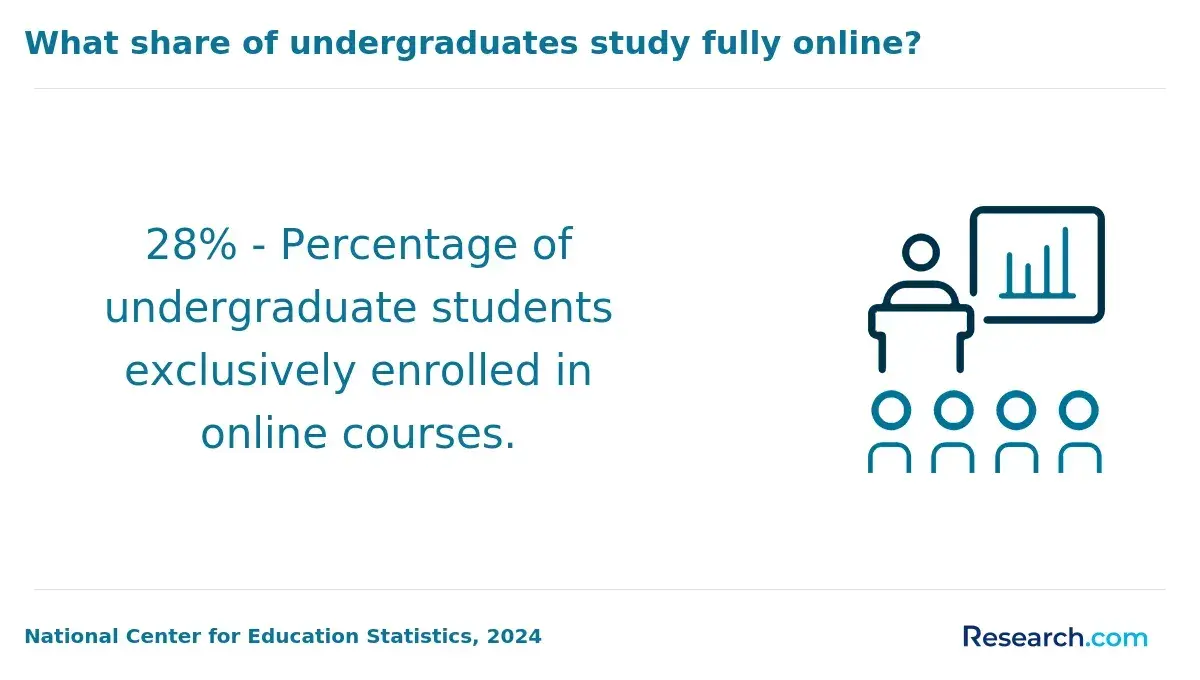
The National Center for Education Statistics notes that average completion time for online bachelor's degrees hovers near four years. Self-paced programs create more variation because the timeline depends on prior credits, weekly study hours, assessment performance, and the school’s academic policies.
Factors that affect completion time
- Transfer Credits: Previously completed college courses can reduce the number of credits still required, especially for students with associate degrees or prior general education coursework.
- Prior Learning Assessments: Some schools award credit for professional experience, military training, certifications, exams, or portfolio reviews, which may allow students to skip material they already know.
- Weekly Study Hours: Students who can consistently devote more hours each week usually finish faster. Students balancing full-time work, caregiving, or travel may need a slower pace.
- Program Structure: Competency-based programs may let students advance after proving mastery, while other online programs still require completion of term-based courses.
- Course Sequencing: Some esports business courses may need to be taken in a specific order, which can limit acceleration even in a flexible program.
- Support Services: Academic advising, career counseling, tutoring, and time management resources can help students maintain progress and avoid stalled enrollment.
One professional described the adjustment this way: “Initially, adjusting to managing my own schedule was challenging-without the structure of traditional classes, staying motivated required discipline.” He said frequent advisor check-ins and weekly goals helped him stay focused. “It wasn't just about how fast I could move but knowing what I needed to master at each stage,” he explained.
The practical takeaway is to build a realistic schedule before enrolling. Estimate weekly study time, identify busy work seasons, and ask the school how long students with your transfer profile typically take to finish.
What Are the Admission Requirements for Self-Paced Online Esports Business Bachelor's Degree Programs?
Admission requirements for self-paced online esports business bachelor's programs are usually similar to other online bachelor’s programs, but open-enrollment schools may be more flexible than selective institutions. Requirements vary, so applicants should confirm details directly with each admissions office before assuming eligibility.
- High School Diploma or GED: Most programs require proof of high school completion or a GED. Schools commonly request official transcripts.
- Minimum GPA Expectations: Many programs expect a GPA around 2.5 to 3.0 on a 4.0 scale. Open-enrollment or rolling-admission programs may offer more flexibility for returning students or applicants with older academic records.
- Prerequisite Coursework: Some programs may prefer or require prior coursework in business, communication, technology, math, or writing. Students without these courses may need to complete foundational classes first.
- Open-Enrollment Versus Selectivity: Open-access programs reduce barriers to entry and may suit adult learners who need a practical path back to school. More selective programs may require stronger academic records but can offer smaller cohorts or more structured support.
- Transfer Documentation: Students seeking transfer credit should gather official transcripts from every prior college attended. Missing transcripts can delay admission or credit evaluation.
- Application Strengthening Tips: Applicants with weaker GPAs can improve their file by emphasizing relevant work, leadership, event experience, gaming community involvement, business experience, recommendations, or completed bridge courses.
Students should compare admissions standards alongside financial aid eligibility and credit transfer rules. A program that is easy to enter is not automatically the best choice if it accepts few transfer credits, offers limited support, or lacks the accreditation needed for long-term goals. Related credentials, such as online bookkeeping certification, may also help students build complementary business skills before or during a bachelor's program.
How Much Does a Self-Paced Online Esports Business Bachelor's Degree Cost, and What Affects Tuition?
The cost of a self-paced online esports business bachelor's degree depends on tuition model, transfer credit, pace, fees, and financial aid. Most bachelor's programs require about 120 credits, so even small differences in per-credit pricing can have a major impact on total cost.
- Per-Credit Tuition: Most programs price tuition per credit hour, typically between $300 and $600. With about 120 credits needed for a bachelor's degree, total tuition often ranges from $36,000 to $72,000 before aid, transfer credit, and fees.
- Flat-Rate Subscription: Some schools charge a fixed fee for a set period, such as a term, and allow students to complete as much coursework as they can during that time. This can reduce costs for fast-moving students but become expensive for students who progress slowly.
- Bundled Fees: Some institutions combine technology, course materials, software access, and other charges into one fee. This can simplify billing but may make it harder to compare schools.
- Hidden Expenses: Students should ask about exam proctoring, software licenses, textbooks, hardware requirements, graduation fees, and transcript fees. These costs can add several hundred to thousands of dollars beyond advertised tuition.
- Pacing Influences Cost: In subscription models, time directly affects cost. In per-credit models, pacing may matter less for tuition but can affect fees, living costs, and opportunity cost.
- Transfer Credits and Prior Learning: Accepted credits reduce the number of courses needed, which can lower tuition and shorten the timeline.
- Financial Aid Opportunities: Accredited online esports business programs may qualify for scholarships and federal financial aid, but students should verify eligibility before enrolling.
Questions to ask before comparing prices
- Is tuition charged per credit, per term, or through a subscription model?
- How many of my prior credits will apply to the degree?
- Are esports-related courses included in standard tuition?
- Are software, technology, or proctoring fees separate?
- Will slowing down increase my total cost?
- What happens financially if I pause enrollment?
One graduate described the cost decision as “balancing speed and quality.” She noted, “I had to be mindful not just of tuition per credit but of the extra fees that crept in.” Her advice to applicants was to review every fee in writing and avoid assuming that flexibility automatically means lower cost. As she put it, “the real investment isn't just in dollars but also in time and effort.”
What Financial Aid Options Are Available for Self-Paced Online Esports Business Bachelor's Programs?
Students in self-paced online esports business bachelor's programs may be able to use federal, state, institutional, and private aid, but eligibility depends on accreditation, enrollment status, program design, and how the school measures academic progress. This is especially important in competency-based education programs, where schools may need to translate competencies into credit-hour equivalencies for aid purposes.
According to Federal Student Aid, more than 60% of undergraduate online learners receive some type of federal financial assistance, though qualification rules vary by program. Students should complete the Free Application for Federal Student Aid (FAFSA) if they want to be considered for federal grants, loans, or other aid for which they may qualify.
- Federal Aid Requirements: Federal grants and loans may be available when the school and program meet federal eligibility rules. For self-paced and CBE programs, students should confirm how credit hours, satisfactory academic progress, and enrollment intensity are calculated.
- State Aid Opportunities: State grants and scholarships vary by residency, approved institution lists, enrollment status, and program type. Online students should not assume state aid applies automatically.
- Institutional Assistance: Colleges may offer scholarships, tuition discounts, military benefits, employer partnerships, or payment plans for adult and online learners.
- Industry-Specific Scholarships: Esports organizations, gaming companies, teams, leagues, or professional associations may sponsor scholarships for students pursuing esports business or related fields.
- Employer Tuition Assistance: Working students should ask whether their employer offers tuition reimbursement or professional development funding, especially if their current role connects to marketing, operations, analytics, events, or media.
- Disbursement and Eligibility: Self-paced formats can affect when aid is released and what happens if a student completes coursework faster or slower than planned.
Before enrolling, contact the financial aid office and ask for program-specific answers. Confirm whether the program is aid-eligible, how aid is disbursed, what pace you must maintain, and whether changing your enrollment speed could affect loans, grants, scholarships, or deferment status.
How Do Competency-Based Education (CBE) Models Work in Self-Paced Online Esports Business Programs?
Competency-based education (CBE) allows students to progress by demonstrating that they have mastered defined skills or knowledge areas. In a self-paced online esports business program, this may mean completing projects, exams, case analyses, portfolios, business plans, event proposals, sponsorship strategies, or analytics assignments instead of simply finishing weekly lectures.
The model can be efficient for students who already have relevant experience in business, marketing, gaming communities, content creation, event coordination, or team operations. It can also be demanding because students must manage their own progress and prove mastery through assessments.
How CBE differs from a standard course model
| Element | CBE model | Traditional online model |
| Progress | Based on demonstrated mastery | Based on course schedule and completed assignments |
| Assessment | Projects, exams, portfolios, or performance tasks | Weekly assignments, discussions, quizzes, and exams |
| Pacing | Often more flexible | Usually tied to term dates |
| Support | Mentors, coaches, faculty feedback, or advising | Instructor-led course structure |
For financial aid, CBE programs may be structured in different ways. Direct assessment programs award credit based on mastery without relying on traditional credit hours and require distinct federal approval. Credit-hour-equivalent programs connect competencies to conventional credits, which can make financial aid administration more straightforward.
Examples of CBE-based Esports Business programs include Western Governors University, where learners complete performance assessments supported by dedicated mentors, and Purdue University Global, which combines skill-building with frequent faculty check-ins. The esports industry is projected to grow annually by 15%, so programs that emphasize practical skills may appeal to students seeking roles in a fast-changing field.
- Mastery Focus: Students advance by proving they can apply business concepts to esports-related problems and scenarios.
- Financial Aid Structures: Direct assessment and credit-hour-equivalent programs may be treated differently for federal aid, so students should verify eligibility before enrolling.
- Assessment & Support: Projects, exams, and portfolios are common, with mentors or faculty helping students interpret expectations and improve submissions.
- Industry Recognition: Employers may value practical evidence of skills, especially when coursework produces work samples related to sponsorship, analytics, operations, or marketing.
- Student Suitability: CBE works best for disciplined learners who can set goals, meet assessment standards, and seek help before they fall behind.
What Accreditation Should a Self-Paced Online Esports Business Bachelor's Program Hold?
A self-paced online esports business bachelor's program should be offered by an institution with recognized accreditation. Accreditation matters because it can affect federal financial aid eligibility, credit transfer, graduate school admission, and employer confidence in the degree.
Regional accreditation is generally the strongest and most widely accepted form of institutional accreditation for bachelor's degrees. The U.S. Department of Education recognizes six regional accrediting bodies: Middle States Commission on Higher Education, New England Commission on Higher Education, Higher Learning Commission, Northwest Commission on Colleges and Universities, Southern Association of Colleges and Schools Commission on Colleges, and Western Association of Schools and Colleges Senior College and University Commission.
National accreditation is more common among vocational or technical schools. It may be legitimate, but credits from nationally accredited institutions may be harder to transfer into regionally accredited schools, and some graduate programs or employers may view the credential differently. Non-accredited programs carry the greatest risk because students may lose access to federal aid, transfer pathways, and recognized academic standing.
- Regional Accreditation: Often the preferred standard for bachelor's programs because it supports stronger credit transfer, financial aid access, and employer recognition.
- National Accreditation: May be appropriate for some career-focused institutions but can limit transfer and graduate school options.
- Accrediting Bodies: The six regional agencies oversee institutional quality across different regions and signal academic legitimacy.
- Programmatic Accreditation: Some business schools or departments may hold additional program-level accreditation, though this is less common for esports-specific programs.
- Risks of Non-Accreditation: Students may face problems with credit transfer, financial aid, employer acceptance, and future education plans.
- Verification Resources: Confirm accreditation through official U.S. Department of Education and CHEA databases before committing to any program.
Accreditation should be checked early, not after admission. Students planning long-term career or graduate study should also consider how the degree fits future goals; salary and career planning resources, such as forensic psychology degree career information, can be useful examples of how credential choice affects professional pathways in other fields.
How Many Transfer Credits Can Be Applied Toward a Self-Paced Online Esports Business Bachelor's Degree?
Many self-paced online esports business bachelor's programs allow students to apply prior college credit toward degree requirements. The exact number depends on the institution, the age and relevance of prior coursework, grades earned, accreditation of the previous school, and how well courses match the new degree plan.
Some generous programs accept up to 90 transfer credits. Because a bachelor's degree commonly requires about 120 credits, this can substantially reduce remaining coursework, tuition, and time to graduation. However, students should not assume that all credits will apply. A course may transfer as elective credit but still not satisfy a required business, esports, or general education category.
- Transfer Credit Limits: Many programs allow up to 90 transfer credits, which may shorten the path to graduation and lower tuition costs.
- Military Credit Acceptance: Schools that follow ACE guidelines may award academic credit for military training and professional learning.
- Community College Agreements: Articulation agreements can make it easier for students from two-year colleges to understand which courses will count.
- Accreditation Impact: Credits from regionally accredited institutions are often easier to transfer than credits from nationally accredited or unaccredited schools.
- Grade Requirements: Schools may require minimum grades for transfer courses, especially for major requirements.
- Evaluation Before Enrollment: A formal transfer credit review is the only reliable way to know how many credits will apply.
Students should request a written transfer evaluation before enrolling and compare the results across schools. A program with lower tuition may cost more overall if it accepts fewer credits. Students thinking beyond the bachelor's degree can also compare valuable master's degrees to understand how undergraduate credit choices may affect later academic planning.
Can Students Earn Credit Through Prior Learning Assessment in Self-Paced Online Esports Business Programs?
Yes. Many self-paced online esports business programs allow students to earn credit through Prior Learning Assessment (PLA), which evaluates college-level learning gained outside a traditional classroom. PLA can be especially useful for adults with experience in business operations, event planning, marketing, streaming, content production, military service, team coordination, analytics, or gaming communities.
Institutions may evaluate prior learning through portfolio submissions, proctored challenge exams, standardized exams such as CLEP and DSST, industry certifications, military training records, or ACE credit recommendations. Approval is not automatic. Students must show that their experience matches specific course outcomes.
- Flexible Credit Options: PLA may include exams, portfolios, certifications, and documented professional or military learning.
- ACE Credit Recommendations: ACE recommendations can help translate military and professional training into potential college credit.
- Institutional Credit Limits: Western Governors University permits up to about 75% of degree credits via PLA. Southern New Hampshire University accepts CLEP, DSST, and portfolios, allowing transfer of as many as 90 credits. Thomas Edison State University encourages comprehensive learning portfolios and ACE credit recommendations.
- Submission and Evaluation: Strong submissions connect job duties, projects, certifications, and outcomes directly to course competencies.
- Significant Student Impact: Recent studies reveal that 60% of non-traditional learners utilize PLA to reduce both time-to-degree and tuition expenses.
How to improve the chance of PLA approval
- Collect job descriptions, performance reviews, certificates, training records, project samples, and supervisor letters.
- Match each experience to a specific course outcome instead of submitting a general resume.
- Ask whether PLA credits count toward major requirements, electives, or only general education.
- Confirm fees for portfolio reviews or exams before deciding whether PLA will save money.
- Request policies in writing, including maximum PLA credits and appeal options.
PLA can be valuable, but it should be part of a larger degree plan. The goal is not simply to earn the maximum number of credits; it is to avoid repeating what you already know while still completing the coursework needed for esports business roles.
What Concentrations or Specializations Are Available in Self-Paced Online Esports Business Bachelor's Programs?
Self-paced online esports business bachelor's programs may offer concentrations that prepare students for different parts of the esports economy. The best specialization depends on whether a student wants to work with brands, events, teams, data, media, or startups. It also affects the type of portfolio a student should build while enrolled.
- Esports Marketing and Sponsorship: This track focuses on brand partnerships, audience development, campaigns, fan engagement, and sponsorship value. Graduates typically pursue careers in marketing management or sponsorship coordination, with median salaries near $65,810 annually according to BLS figures for marketing managers.
- Event Management and Production: This specialization prepares students to plan tournaments, coordinate venues or broadcasts, manage logistics, and support live or digital events. Careers in this area offer median salaries around $50,600, reflecting coordination and operational responsibilities.
- Team and Player Management: This path emphasizes athlete representation, contract negotiation, team operations, player support, and organizational logistics. Some programs require sports management certification, and professionals in these roles earn roughly $68,000 per year.
- Game Analytics and Business Intelligence: This concentration focuses on interpreting gameplay, audience, financial, and operational data to guide decisions. Data analysts in esports command median salaries of about $73,000 and must be skilled in specialized analytics software.
- Entrepreneurship and Esports Startups: This option supports students who want to launch ventures, manage products, build communities, or lead emerging esports businesses. It usually includes finance, strategy, innovation, and business planning coursework, with variable earnings.
How to choose a concentration
- Choose marketing and sponsorship if you enjoy branding, audience growth, and partnership strategy.
- Choose event management if you are comfortable with logistics, deadlines, vendors, and live production pressure.
- Choose team and player management if you want to work closely with organizations, athletes, and contracts.
- Choose analytics if you like data, dashboards, performance metrics, and evidence-based decisions.
- Choose entrepreneurship if you want broader business training and are comfortable with risk and uncertain earnings.
Students should also check whether a concentration requires internships, capstones, software tools, or certifications. Those requirements can improve career readiness, but they may also affect time to completion in a self-paced program.
What Graduates Say About Self-Paced Online Esports Business Bachelor's Degree Programs
- : "The self-paced format made the degree possible while I was working full time. I could move faster when my schedule was lighter and slow down during busy periods. The affordable tuition mattered, but the biggest benefit was applying what I learned to a management role in a major esports organization. — Vance"
- : "I chose an online esports business degree because I needed control over my schedule. The cost was reasonable compared with traditional options, and the program helped me understand the industry beyond gaming itself. The networking opportunities also gave me more confidence about pursuing esports business roles. — Marvin"
- : "Coming into esports from another background, I needed a practical way to build credibility. Being able to revisit difficult topics at my own pace helped me learn the business side more thoroughly. Finishing the program strengthened my resume and helped me target roles that fit my goals. — Parker"
Other Things You Should Know About Esports Business Degrees
Self-paced online esports business bachelor's programs commonly utilize learning management systems (LMS) such as Canvas, Blackboard, or Moodle. These platforms allow students to access course materials, submit assignments, and participate in asynchronous discussions. Additionally, programs may incorporate video lectures, interactive simulations, and virtual collaboration tools tailored to esports industry topics like event management and digital marketing.
These programs offer flexibility by allowing students to progress through coursework at their own speed, which accommodates varying work schedules. Many institutions provide academic advising, tutoring services, and peer communities specifically designed for adult learners. Some programs also accept transfer credits and prior learning assessments, reducing the time and cost required to earn the degree.
Self-paced online esports business programs in 2027 align with industry trends by offering curriculum focused on digital marketing, data analytics, and event management. These programs emphasize skills needed for employment roles such as esports marketing manager, tournament organizer, and analytics coordinator, catering to the growing demand for qualified professionals in the industry.
References
- Bachelor's Degree in Esports Business https://kamk.fi/en/koulutukset/bachelors-degree-in-esports-business/
- Why You Need a Competency-Based Education Model—And How to Create One https://www.openlms.net/blog/education/why-competency-based-education-how-to-implement/
- Game Business & Esports Bachelor's Degree https://www.fullsail.edu/degrees/game-business-esports-bachelor
- The Business of Esports Specialization https://algomau.ca/academics/faculty-of-business-economics/the-business-of-esports-specialization/
- Online Bachelor of Business Administration Degree: Benefiets https://edglobalacademy.com/benefits-of-earning-an-online-bachelor-of-business-administration-degree/
- Understanding Competency-Based Education https://edquip.co/blog/understanding-competency-based-education
- 5 Advantages of Self-Paced Online Learning for Professionals - Go Degree https://www.godegree.com/benefits-of-self-paced-online-courses-for-professionals/
- Competency-based education (CBE): A landscape overview https://feedbackfruits.com/blog/competency-based-education-higher-education-a-landscape-overview
- Prior Learning & Experience Credit https://online.champlain.edu/admission/prior-learning-experience-credit
- Investigating is one of the pillars of the University: carrying the knowledge beyond, to transfer the knowledge. https://www.udg.edu/en/fep/Informacio-academica/credits-de-reconeixement-academic/detall