2027 Regional vs National Accreditation for Online Esports Business Bachelor's Degrees

Co-Founder and Chief Data Scientist
Choosing an online esports business bachelor’s degree is not only a question of curriculum, cost, or schedule. Accreditation can shape whether your credits transfer, whether graduate schools recognize your degree, whether you qualify for aid, and how employers interpret your credential. That matters especially for working adults, veterans, transfer students, and career changers who cannot afford to lose time or money on a program that does not support their next step.
The main decision is whether to enroll in a regionally accredited school, which is often more widely accepted across higher education, or a nationally accredited institution, which may offer flexible admission policies and career-focused program design. About 65% of esports business students report concern over their degree's recognition when entering the competitive job market, so this guide focuses on the practical consequences of that choice.
Below, you will learn how regional and national accreditation differ for online esports business bachelor’s degrees, which agencies to verify, how tuition and aid can vary, what transfer students should expect, and how accreditation may affect jobs and graduate study.
Key Benefits of Regional vs National Accreditation for Online Esports Business Bachelor's Degrees
- Regional accreditation is widely recognized by employers and graduate schools, offering higher credibility for online esports business degrees compared to many nationally accredited programs.
- Credits from regionally accredited institutions generally transfer more easily to other colleges, facilitating continued education or degree completion across different schools.
- National accreditation may suit students aiming for direct vocational roles, while regional accreditation better supports those targeting academic advancement and diverse career paths.
What Is the Difference Between Regional and National Accreditation for an Online Esports Business Bachelor's Degree?
Regional and national accreditation are both forms of institutional quality review, but they are not treated the same way by colleges, employers, graduate schools, and transfer-credit evaluators. For an online esports business bachelor’s degree, the difference is less about whether the program is online and more about how widely the institution’s credential is accepted.
Regional accreditation is granted by accrediting organizations that historically reviewed colleges and universities within broad geographic areas. It is commonly associated with nonprofit and public institutions, academic degree programs, general education requirements, institutional stability, and transfer pathways. Over 60% of degree-granting postsecondary institutions hold regional accreditation, which helps explain why it carries strong influence across higher education.
National accreditation typically applies to career-focused, vocational, technical, or distance education institutions. These schools may be designed for adult learners, online delivery, accelerated schedules, and direct workforce preparation. In esports business, a nationally accredited program may emphasize applied skills such as event operations, team management, sponsorship coordination, content monetization, and gaming industry workflows.
| Factor | Regional Accreditation | National Accreditation |
| Common institutional profile | Public universities, nonprofit colleges, and traditional degree-granting institutions | Career-focused, technical, vocational, or distance education institutions |
| Credit transfer | More likely to be accepted by other colleges, especially regionally accredited schools | May be limited or reviewed more strictly by regionally accredited institutions |
| Graduate school pathway | Usually the safer choice for students planning a master’s degree | May require case-by-case review and may not meet some graduate admission policies |
| Program style | Often broader, with business foundations, general education, and academic writing | Often more career-directed, with practical and industry-specific coursework |
| Best fit | Students who want maximum portability, transfer options, and graduate school flexibility | Students focused on immediate career skills, flexible entry, or applied training |
The most important practical difference is portability. Credits from regionally accredited institutions are more likely to transfer to other colleges and to meet graduate school expectations. Credits from nationally accredited schools can still have value, but they may face additional review, fewer transfer approvals, or restrictions when moving into a regionally accredited program.
For career planning, accreditation type should be weighed alongside the curriculum, faculty experience, internship access, esports industry partnerships, student support, and total cost. Students comparing online business pathways may also find it useful to review broader online graduate business pricing examples, such as affordable online MBA options, to understand how accreditation and cost often interact across business education.
Which Agencies Provide Regional Accreditation for Online Esports Business Bachelor's Degrees?
For an online esports business bachelor’s degree, you should verify the accreditation of the institution offering the degree, not just the program title or marketing page. Regional accreditation is awarded by recognized agencies that evaluate colleges and universities for academic quality, governance, finances, student support, assessment practices, and institutional effectiveness.
This form of accreditation is widely respected, with over 90% of traditional institutions holding regional accreditation. That matters because an esports business degree still rests on core business competencies such as accounting, marketing, management, analytics, communication, law, and strategic planning.
The main regional accrediting bodies to know include:
- Middle States Commission on Higher Education (MSCHE): Serves institutions in New York, New Jersey, Pennsylvania, Delaware, Maryland, and Washington D.C. MSCHE evaluates institutional quality, student learning, governance, and long-term effectiveness, including online delivery.
- New England Commission of Higher Education (NECHE): Accredits colleges in Connecticut, Maine, Massachusetts, New Hampshire, Rhode Island, and Vermont. NECHE reviews both campus-based and online education against institutional standards.
- Higher Learning Commission (HLC): Covers 19 states across the Midwest and Great Plains, including Illinois, Indiana, and Michigan. HLC reviews academic quality, continuous improvement, and institutional capacity, including distance education operations.
- Southern Association of Colleges and Schools Commission on Colleges (SACSCOC): Oversees institutions in southern states such as Texas, Florida, and Georgia. SACSCOC focuses on teaching quality, student services, administrative effectiveness, and evidence-based institutional improvement.
- Western Association of Schools and Colleges Senior College and University Commission (WSCUC): Accredits institutions mainly in California, Hawaii, and some Pacific territories. WSCUC reviews academic rigor, institutional sustainability, and student outcomes across delivery formats.
- Northwest Commission on Colleges and Universities (NWCCU): Covers Alaska, Idaho, Montana, Nevada, Oregon, Utah, and Washington. NWCCU evaluates institutional mission, educational effectiveness, student achievement, and support for online learners.
Do not rely only on a school’s claim that it is “accredited.” Confirm the accreditor’s name, then check whether that agency is recognized by the U.S. Department of Education or the Council for Higher Education Accreditation. Also confirm that the online bachelor’s degree is offered by the accredited institution and that the program is currently active.
Students who are comparing online degree formats in other fields can see how accreditation and delivery models are discussed in related options such as accelerated online psychology degree programs, but esports business students should still verify the specific school and credential they plan to pursue.
What Are the Main National Accrediting Bodies for Online Esports Business Bachelor's Degree Programs?
National accreditation is usually connected to institutions with a career, technical, occupational, or distance-learning mission. In esports business education, this can mean programs built around job-ready skills, shorter academic terms, online-first delivery, and direct preparation for roles in gaming, events, media, operations, or digital business.
According to the Council for Higher Education Accreditation (CHEA), national accreditors are essential in maintaining standards for institutions serving diverse and non-traditional student populations. The national accrediting organizations most relevant to online esports business bachelor’s degree programs include:
- Accrediting Commission of Career Schools and Colleges (ACCSC): Accredits postsecondary career schools, including institutions that focus on applied and technical education. A school with esports business coursework may fall under this type of career-centered review.
- Distance Education Accrediting Commission (DEAC): Specializes in institutions that primarily deliver education online or through distance learning. DEAC is especially relevant when evaluating fully online esports business programs.
- Council on Occupational Education (COE): Accredits institutions focused on workforce development, occupational education, and technical training. Its standards emphasize practical preparation and employment-oriented outcomes.
- Accrediting Bureau of Health Education Schools (ABHES): Primarily focuses on health education. It is less commonly relevant to esports business, but students may encounter it when researching career-focused institutions with multiple program areas.
National accreditation can signal that a school has passed a recognized quality review, but students should not assume it carries the same transfer or graduate school acceptance as regional accreditation. The safest approach is to ask three direct questions before enrolling:
- Will credits from this institution transfer to regionally accredited colleges?
- Have graduates been admitted to the graduate programs I might want later?
- Do employers in my target esports business roles recognize this school and credential?
If the school cannot provide clear answers, written policies, or examples of graduate and transfer outcomes, treat that as a warning sign and compare other accredited options.
How Do Admission Requirements Vary by Accreditation Type for an Online Esports Business Bachelor's Degree?
Admission requirements often differ because regionally and nationally accredited institutions serve different student populations and use different academic models. Neither approach is automatically better for every student. The right fit depends on your academic record, work schedule, transfer history, and long-term goals.
Regionally accredited online esports business bachelor’s degree programs usually follow a traditional undergraduate admissions process. Applicants typically need a high school diploma or equivalent, official transcripts, and sometimes standardized test scores, recommendation letters, or a personal essay. About 65% of admitted students in these programs have a minimum GPA around 3.0, which points to a moderate academic expectation.
These requirements can feel time-consuming, but they also signal that the school is screening for college readiness. Students who plan to transfer credits later, apply to graduate school, or pursue management roles may benefit from the stronger academic structure and broader recognition associated with regional accreditation.
Nationally accredited programs are often more flexible. They may accept students with a GED, professional experience, prior career training, or a less traditional academic background. Some programs do not require test scores, recommendation letters, or lengthy essays. This can help working adults, military-affiliated students, career changers, and students returning to college after a long break.
| Admission factor | Regionally accredited programs | Nationally accredited programs |
| Academic screening | Often more formal and selective | Often more open-access or career-focused |
| Typical documents | Official transcripts, application, and sometimes essays or recommendations | Transcripts or proof of completion, with fewer supplemental materials in many cases |
| Best for | Students with solid academic records and future transfer or graduate goals | Students seeking quicker entry, flexible scheduling, or applied career preparation |
| Main risk | More steps before enrollment | Potential limits on transfer, recognition, or graduate school eligibility |
One graduate of an online esports business bachelor’s degree described the choice this way: the traditional admission steps were demanding at first, especially collecting transcripts and preparing essays, but they helped clarify expectations. Friends in nationally accredited programs had a faster, less formal process that fit their work schedules better. Her conclusion was direct: “Understanding the different paths helped me choose a program that matched both my academic readiness and personal circumstances.”
How Does Online Esports Business Bachelor's Degree Tuition Differ by Accreditation Type?
Tuition for an online esports business bachelor’s degree varies by institution, state residency rules, credit requirements, fees, and delivery model. Accreditation type can influence pricing because regionally accredited and nationally accredited schools often operate with different missions and cost structures.
According to national data, tuition and fees at four-year public institutions with regional accreditation are generally higher than those at nationally accredited schools. For online esports business bachelor’s degree tuition, regionally accredited public universities typically fall between $12,000 and $25,000 annually, while nationally accredited programs tend to range from $7,000 to $15,000 annually.
- Pricing models: Regionally accredited institutions often charge by credit hour and may add technology, student service, online course, graduation, or transcript fees. Nationally accredited schools may advertise flat-rate or all-inclusive tuition, but students should still verify what is excluded.
- Included fees: A lower advertised tuition rate does not always mean a lower total cost. Ask whether books, esports software, proctoring, exams, portfolio tools, or course materials are included.
- Time to completion: A program with a lower annual price may cost more if credits do not transfer or if the degree takes longer than expected. Conversely, an accelerated program can reduce opportunity cost if it is recognized by employers and supports your goals.
- Long-term value: Regional accreditation may justify a higher price for students who need transfer flexibility, graduate school eligibility, or broad employer recognition. National accreditation may be a practical option for students focused on immediate applied skills and lower upfront tuition.
- Cost comparison: Students comparing esports business with other online business pathways can review business administration degree online cost information to understand how tuition ranges, fees, and affordability factors are commonly evaluated.
Before enrolling, request a full cost sheet showing tuition, fees, required materials, transfer-credit limits, military or employer discounts, and refund policies. If you are comparing gaming-related online programs, resources on affordable online video game design degree programs can also help you think through how cost differs across adjacent fields.
Can I Get Financial Aid for Both Types of Accredited Online Esports Business Bachelor's Degrees?
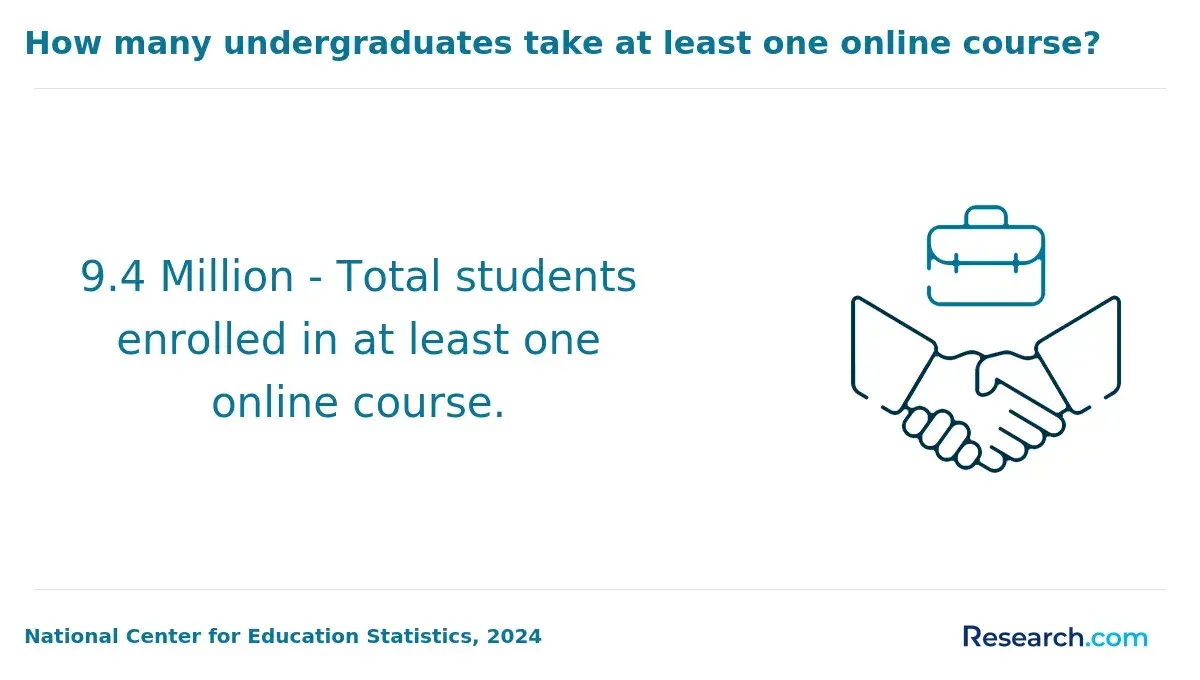
Yes, students may be able to receive financial aid at both regionally and nationally accredited institutions, but accreditation alone is not enough. The school must be recognized by the appropriate authorities and must participate in the aid program you want to use. Approximately 85% of U.S. college students rely on some form of financial assistance, so confirming eligibility early is essential.
- Federal aid: Both regionally and nationally accredited institutions may qualify to offer federal aid if they are recognized by the U.S. Department of Education and participate in federal student aid programs. Regionally accredited schools tend to have broader and more consistent participation in programs such as Pell Grants and Direct Loans.
- State aid: State scholarships and grants often follow federal eligibility rules, but some states set stricter conditions. Certain programs may favor or require enrollment at regionally accredited institutions, which can limit options for students at nationally accredited schools.
- Institutional scholarships: Schools in both categories may offer internal grants or scholarships. Regionally accredited universities often have larger scholarship pools, but nationally accredited schools may offer career-focused discounts, payment plans, or targeted awards.
- Private loans and scholarships: Private funding may be available regardless of accreditation type, but lenders and scholarship committees may consider institutional recognition, academic rigor, and degree portability when making decisions.
- Veterans and employer assistance: Veterans benefits and employer tuition reimbursement usually require enrollment at an approved or recognized institution. Regional accreditation is widely accepted, while nationally accredited programs may require additional verification depending on the benefit provider or employer policy.
The safest process is to complete the aid check before submitting an enrollment deposit. Ask the financial aid office whether the exact online esports business bachelor’s program qualifies for federal aid, state aid, veterans benefits, employer reimbursement, and institutional scholarships. Get the answer in writing when possible.
Can I Transfer Credits From a Nationally Accredited to a Regionally Accredited Online Esports Business Bachelor's Degree?
You may be able to transfer credits from a nationally accredited institution into a regionally accredited online esports business bachelor’s degree, but it is often difficult and never guaranteed. The receiving school controls the decision.
Regionally accredited institutions typically prefer credits from other regionally accredited colleges. When they review credits from nationally accredited programs, they may examine course descriptions, syllabi, instructor qualifications, learning outcomes, credit hours, grading standards, and whether the course matches their curriculum. Even then, some credits may transfer only as electives, not as major requirements.
A common pattern in U.S. higher education is that regionally accredited schools routinely accept credits from other regionally accredited institutions but frequently limit or decline credits from nationally accredited programs. This can mean repeating coursework, extending your graduation timeline, and paying for credits twice.
How to protect yourself before transferring
- Ask the receiving school for a preliminary transfer evaluation before enrolling.
- Save syllabi, course catalogs, assignments, and official transcripts from every prior course.
- Confirm whether transferred credits will apply to general education, business core, esports major courses, or electives only.
- Ask whether there is a maximum number of transfer credits allowed.
- Get transfer decisions in writing when possible.
A student currently enrolled in an online esports business bachelor’s degree described the process as “more complicated than anticipated.” He said early communication with the registrar helped, but many courses required detailed syllabi and additional documentation. “It felt frustrating at times,” he said, “because some courses I valued didn't easily fit their criteria.” His experience illustrates the main lesson: transfer planning should happen before you commit, not after you have already paid for courses.
Does Accreditation Type Affect Job Opportunities After an Online Esports Business Bachelor's Degree?
Accreditation type can affect job opportunities, but its impact depends on the employer, the role, and how competitive the applicant pool is. Nearly 90% of employers prioritize candidates with degrees from accredited institutions, treating accreditation as a signal that the school met recognized quality standards.
Regional accreditation is often easier for employers to recognize because it is common among public universities, nonprofit colleges, and traditional degree-granting institutions. For corporate roles in esports, gaming, sports management, media, or entertainment, a regionally accredited degree may reduce questions about academic quality.
Nationally accredited degrees can still support employment, especially when the program builds practical skills and the student has relevant experience, internships, certifications, a portfolio, or industry contacts. However, graduates may need to explain the credential more clearly when applying to employers unfamiliar with nationally accredited institutions.
- Employer perception: Regional accreditation is often viewed as the more portable credential. National accreditation may be seen as more vocational or specialized, which can help in some applied roles but create questions in others.
- Industry expectations: Strategic management, business development, partnerships, analytics, and corporate operations roles may favor broader business preparation. Event coordination, content operations, tournament support, and team logistics roles may place heavier weight on hands-on experience.
- Hiring filters: Some employers use automated systems or HR screening criteria that look for accredited degrees. A regionally accredited institution may pass these filters more easily, while nationally accredited graduates should make skills, projects, and outcomes highly visible.
- Role-specific fit: In esports business, the degree is only one part of the profile. Employers also look for communication skills, data literacy, sponsorship knowledge, digital marketing ability, event experience, and understanding of gaming communities.
Students comparing esports business with adjacent fields may also review online sports management degree options to see how accreditation, industry fit, and career pathways are evaluated in a related business area.
Will Accreditation Affect Eligibility for Advanced Degrees After an Online Esports Business Bachelor's Degree?
Yes. Accreditation can strongly affect whether an online esports business bachelor’s degree is accepted for graduate admission. Graduate schools often prefer applicants with degrees from regionally accredited institutions because those credentials align with widely used academic standards. Studies show that over 90% of reputable graduate programs in the U.S. favor admissions of students with degrees from regionally accredited schools.
If you plan to pursue an MBA, a master’s in sports management, a master’s in data analytics, a graduate certificate, or another advanced business credential, regional accreditation is generally the safer option. A nationally accredited bachelor’s degree may still be considered by some graduate schools, but acceptance can be inconsistent and may require individual review.
- Admissions recognition: Regional accreditation is broadly accepted by graduate programs. National accreditation may require case-by-case evaluation, and some graduate schools may not recognize it for admission.
- Institutional policies: Each graduate school sets its own rules. Some specify regional accreditation in their admissions requirements, while others use broader language or allow exceptions.
- Prerequisite review: Graduate programs may evaluate whether your undergraduate coursework included sufficient business, quantitative, writing, or general education preparation. Accreditation type can influence how much scrutiny your transcript receives.
- Transfer and bridge coursework: If a nationally accredited degree is accepted, you may still need extra prerequisites, foundation courses, or documentation before starting graduate-level work.
Before enrolling in an online esports business bachelor’s program, identify several graduate programs you might pursue later and ask their admissions offices whether they accept degrees from the institution you are considering. Do not rely only on the undergraduate school’s general statement that graduates “may pursue advanced study.”
Military-affiliated students who want online options with support services can also compare military friendly online colleges when evaluating accreditation, transfer policies, and future graduate pathways.
How Do I Choose Between Regional vs National Accreditation for an Online Esports Business Bachelor's Degree?
Choose regional accreditation if you want the broadest long-term flexibility. Choose national accreditation only after confirming that the program’s career focus, cost, transfer limits, and recognition align with your goals. Over 60% of prospective online students report that accreditation status significantly influences their school choice, and for good reason: it can affect transfer credit, financial aid, graduate school admission, and employer perception.
Choose regional accreditation if:
- You may transfer to another college later.
- You plan to apply to graduate school.
- You want a credential with broad academic recognition.
- You are pursuing business leadership, strategy, analytics, or corporate roles.
- You want fewer questions about degree legitimacy from employers or admissions offices.
Consider national accreditation if:
- You need flexible admission requirements or a career-focused schedule.
- You are focused on immediate applied skills rather than graduate study.
- You have confirmed that your target employers recognize the school.
- You understand that transfer credits may be limited.
- The total cost, curriculum, and student support make sense for your situation.
Use this checklist before enrolling
- Verify the school’s accreditor through the U.S. Department of Education or the Council for Higher Education Accreditation.
- Confirm that the institution, not just a department or marketing partner, is accredited.
- Ask how many prior credits can transfer and where they will apply in the degree plan.
- Check whether the program qualifies for federal, state, veterans, employer, or institutional aid.
- Review the esports business curriculum for business fundamentals, not only gaming-related electives.
- Ask for graduate school placement examples if advanced study is part of your plan.
- Compare total cost, including fees, books, technology, and repeated credits.
- Look for internships, industry projects, career coaching, and portfolio opportunities.
The best choice is not the accreditation label alone. It is the accredited program that protects your future options while giving you the skills, support, and affordability you need to finish the degree.
What Graduates Say About Regional vs National Accreditation for Online Esports Business Bachelor's Degrees
- : "Choosing a regionally accredited online esports business degree was important to me because I wanted to ensure my education would be respected by employers nationwide. The flexibility of the online format allowed me to balance work and study, though it required strong self-discipline. In the end, graduating from a regionally accredited program opened doors to roles in major gaming companies that value this level of accreditation. —Vance"
- : "Enrolling in a nationally accredited online esports business bachelor's program gave me access to diverse coursework tailored to the fast-evolving gaming sector. While some peers questioned the prestige compared to regional accreditation, I found the convenience and targeted curriculum invaluable. My degree helped me land a managerial position in a startup, proving that practical skills gained online truly matter in the esports industry. —Marvin"
- : "Reflecting on my journey through an online esports business bachelor's degree with regional accreditation, the comprehensive curriculum and credible credential have greatly benefited my career progression. There were challenges in online networking compared to traditional campuses, but the program's reputation reassured employers about my qualifications. Today, I confidently advise others that regional accreditation paired with focused esports studies is a solid foundation for success. —Parker"
Other Things You Should Know About Esports Business Degrees
Regionally accredited degrees are generally more widely recognized by employers across the United States. This is because regional accreditation tends to have higher standards for academic rigor and institutional quality, which many employers trust. However, some employers familiar with the esports industry may also recognize nationally accredited programs if they align well with industry needs.
In 2027, regionally accredited degrees generally offer superior credit transfer opportunities compared to nationally accredited ones. Credits from regionally accredited programs are more widely accepted by other institutions, enhancing students' flexibility in pursuing further education or transferring to different programs.
Accreditation type typically does not directly affect eligibility for professional esports certifications, which are awarded by industry organizations rather than academic institutions. However, a regionally accredited esports business degree may provide a stronger foundation in business principles that can enhance learning and success in certification programs.
Online esports business degrees with national accreditation may offer fewer networking opportunities compared to those with regional accreditation. Regional schools often have established alumni networks and partnerships with local and national businesses. Nationally accredited institutions sometimes focus more on vocational training and may have smaller or less diverse networks within the esports business field.
References
- Global Distance Learning Associations & Accreditation Bodies | ECICEL https://ecicel.org/associations/
- Regional vs National Accreditation: What This Means for You https://www.uopeople.edu/blog/regional-vs-national-accreditation-whats-the-difference/
- Why it Matters https://ps.sckans.edu/news/view/109/
- Investigating is one of the pillars of the University: carrying the knowledge beyond, to transfer the knowledge. https://www.udg.edu/en/estudia/Acces/Acces-a-graus/Des-de-cicles-formatius/Reconeixement-de-credits-de-cicles-formatius-de-grau-superior/Detall
- Understanding the Difference Between Regional and National Accreditation https://www.qahe.org/article/understanding-the-difference-between-regional-and-national-accreditation/
- Unlocking the Benefits of Regional Accreditation for Online Universities https://www.continents.us/benefits-of-regional-accreditation-for-online-universities/
- Bachelor's Degree in Esports Business https://kamk.fi/en/koulutukset/bachelors-degree-in-esports-business/
- AAA https://aaa-accreditation.org/adcp/CertificateDetails/dxmGmkfxIKf6Cs5g7O3H
- List of Online Colleges with Regional Accreditation https://www.onlineu.com/resources/accreditation/regional-accreditation
- When is accreditation important in undergrad? https://talk.collegeconfidential.com/t/when-is-accreditation-important-in-undergrad/3609439