2027 Choosing a BS in Business Administration for Business Roles in Consumer Goods Companies
Audited and Verified:
Our Editorial and Data Verification Process
Research.com uses government datasets, official education statistics and primary institutional information to support its career and degree guides. Our review process checks factual accuracy, occupational definitions, source dates and the requirements associated with the credentials discussed.
How This Article Was Fact-Checked
Our editorial team verifies salary estimates, employment projections, education requirements and program information against original data providers and official organizations. Salary figures are checked against the relevant occupational definitions and reporting periods. Information about licensure, accreditation and required in-person training is reviewed separately.
Fact-checked and verified on:

Co-Founder and Chief Data Scientist
A consumer goods company needs people who can turn customer demand into products on shelves and profitable sales. A BS in Business Administration can prepare you for parts of that work, but the right courses and experience depend on whether you want to enter marketing, sales, supply chain, finance, or another function.
This guide is for prospective and returning students comparing degree options. It explains what to look for in a program, how to build evidence of job-ready skills, and when a more specialized path may serve you better.
Key Things You Should Know
- A BS in Business Administration is a flexible route into consumer goods business functions, but relevant projects, internships, or work experience matter alongside the degree.
- Choose courses by target role: customer research and pricing for marketing; forecasting, inventory, and procurement for supply chain; or accounting and analysis for finance.
- The U.S. Bureau of Labor Statistics projects 18% employment growth for logisticians from 2025 to 2035, but that occupation-wide projection does not predict hiring at any particular consumer goods company.
What is a BS in Business Administration for consumer goods careers?
A BS in Business Administration is an undergraduate degree covering business functions such as accounting, marketing, management, finance, and operations. In consumer goods, those functions support products people buy and use, from packaged foods and household supplies to apparel and personal care items. Companies may sell through retailers, online marketplaces, their own websites, or a combination of channels.
The degree is usually broad rather than an industry credential. Its value depends on whether you can connect general business concepts to decisions such as estimating demand, understanding retailer requirements, evaluating a promotion, or managing inventory.
A BS, BBA, and specialized marketing or supply chain bachelor's degree can have different requirements even when their course titles overlap. Compare the actual curriculum, not the initials alone; ranked school options for studying business online can be a starting list, not a substitute for reviewing each program.
What careers can a business administration degree lead to in consumer goods?
Start with the work you want to do, not a management title. The table distinguishes accessible starting points from responsibilities that generally require stronger functional experience.
| Function | Possible starting role | Evidence employers may value |
| Marketing and insights | Marketing coordinator or research assistant | Customer research, spreadsheet analysis, and clear presentation of findings |
| Sales and retail accounts | Sales operations or account coordinator | Reporting, retailer communication, and promotion tracking |
| Supply chain | Inventory, purchasing, or logistics coordinator | Demand analysis, order accuracy, and process documentation |
| Finance | Financial operations or budgeting assistant | Accounting fundamentals, reconciliations, and variance analysis |
Brand managers, sales managers, and operations managers typically take responsibility for budgets, teams, or major decisions after gaining relevant experience. If your target is primarily recruiting, benefits, or employee relations at a consumer goods employer, compare the business degree with college pathways into human resources. For any target role, read current postings and identify which required skills you can demonstrate through coursework and which require supervised work.
What should you look for in an accredited business administration program?
First, confirm the institution's recognized accreditation and the exact degree it awards. If a school advertises AACSB, ACBSP, or IACBE accreditation, check whether that accreditation covers the business unit or program you would enter. Institutional accreditation and business-specific accreditation answer different questions; neither proves that graduates obtain consumer goods jobs.
Next, examine course availability, advising, career support, and access to relevant employers.
Ask for the current catalog and a sample degree plan showing when marketing, analytics, and operations courses run. Find out whether internships are available, required, or optional, and whether the school reports outcomes for business students rather than all graduates combined. If federal aid is important, verify the institution's participation and your eligibility; a list of business administration colleges participating in federal aid programs can help narrow schools to investigate.
A useful curriculum connects the business core to product and channel decisions. Accounting and finance help you distinguish sales from margin; marketing addresses customer segments and promotions; operations covers inventory and suppliers; and statistics helps you assess demand estimates rather than accept a forecast uncritically. Look for spreadsheet work, communication assignments, and projects that require you to explain assumptions.
For a marketing goal, prioritize market research, pricing, and digital measurement. For supply chain roles, look for forecasting, procurement, and operations analytics. An official concentration may provide a coherent sequence, but an elective cluster is not automatically a concentration. Ask whether the relevant courses require prerequisites, run regularly, or add credits to graduation.
A strong applied assignment might compare publicly available product prices and explain what cannot be inferred about a company's costs or profits. If you instead want to lead implementation schedules and cross-functional projects, explore transfer-friendly undergraduate project management schools and compare with business curriculums; the better option depends on the work you want to perform and how prior credits apply.
Either format can work. Online study may make it easier to remain employed, while campus study may provide more routine access to classmates, faculty, and local recruiting events. Neither format automatically supplies consumer goods experience.
Before enrolling online, check live-session times, group-project expectations, exam proctoring, internship rules, and whether required electives run in the terms you need. On campus, check commuting time and whether work hours conflict with recruiting or classes.
If supply chain is your clear target and speed is a priority, compare business programs with online colleges with accelerated supply chain bachelor's study. An advertised faster schedule only helps if its pace, prerequisites, and transfer evaluation fit your circumstances.
Requirements vary by school and by entry route. First-year applicants commonly submit secondary-school records; transfer applicants submit prior college transcripts. A school may also set GPA standards or require preparation in mathematics, accounting, economics, or statistics before admission to the major or enrollment in advanced courses. Admission to the university does not necessarily mean admission to every business concentration.
If you have prior college work, request an official evaluation showing which credits satisfy general education, business core, and elective requirements. Then ask an adviser about remaining prerequisites and course sequencing. Application costs are a separate consideration: accredited online colleges without application fees may reduce the cost of applying, but you still need to verify program fit and other charges.
A bachelor's degree commonly takes about four years of full-time study from the beginning. Transfer credit, part-time enrollment, prerequisite gaps, and course availability can change the timeline substantially. An accepted credit may count only as an elective, so obtain a degree audit before estimating your finish date.
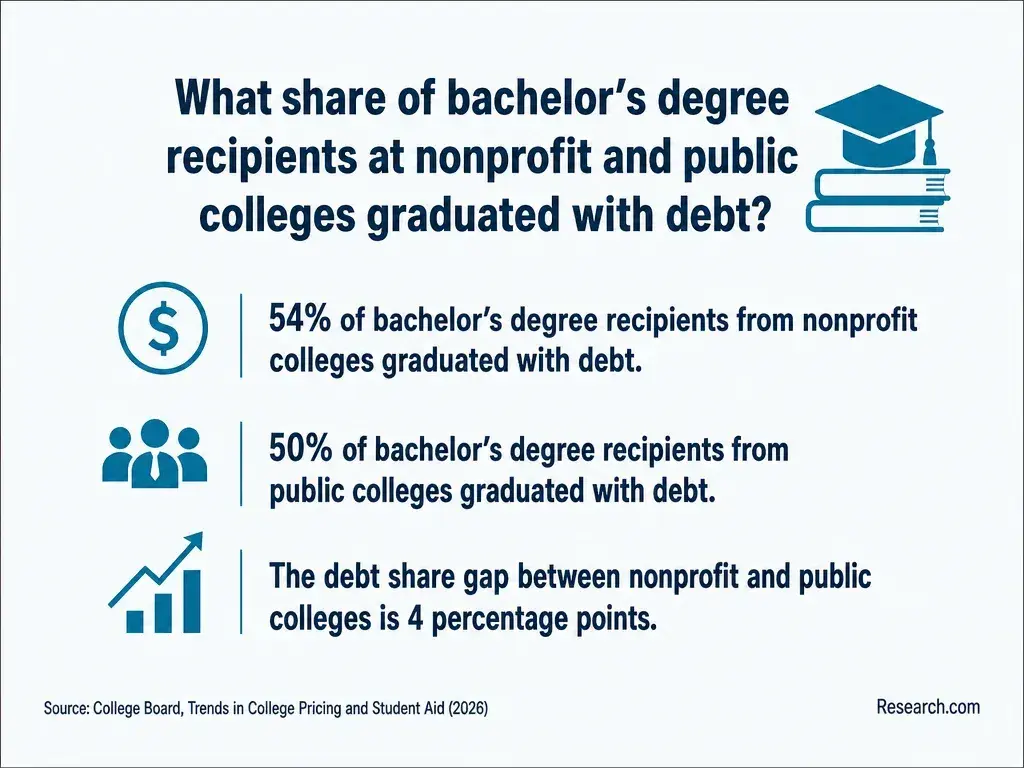
For cost, compare the price of remaining requirements, not just advertised tuition. Include mandatory fees, books and software, travel or proctoring, and any earnings you would give up to attend. Ask each school for its current charges and a term-by-term plan, then compare the likely borrowing and payment schedule.
Resources on how to reduce tuition spending on an online business administration degree are most useful after you know which schools will apply your credits to graduation requirements.
Certifications can strengthen a specific skill set, but none is a universal requirement for consumer goods business roles. Depending on your target function, investigate credentials in supply chain, project management, analytics, or a relevant software platform. Check the issuing organization's eligibility rules, assessment, renewal obligations, and employer recognition before paying for one; a business course alone does not award a separate certification.
If your goal is coordinating product launches or operational changes, supervised project experience may be more persuasive than collecting credentials without application. Compare a short course or certification with affordable online project management degrees only if you need deeper project-focused education or a bachelor's degree itself.
Pay depends on occupation, experience, employer, and location; there is no single salary for a consumer goods business graduate. The U.S. Bureau of Labor Statistics reports a May 2025 median annual wage of $82,320 for logisticians. That is an occupation-wide midpoint across industries and experience levels, not an entry-level offer or a figure specific to consumer goods.
Use the occupation closest to your intended work when weighing education costs, and check local job postings for actual requirements. If project coordination is your goal, compare its likely entry route with the expense of additional study; guidance on budgeting for online project management college study can help frame that separate investment. Do not use a manager's median wage to justify borrowing for a first coordinator job.
What is the job outlook for business careers in consumer goods?
Consumer goods companies hire across functions, so an occupation-specific projection is more useful than a claim about the industry as a whole. The Bureau of Labor Statistics projects 7% U.S. employment growth for market research analysts from 2025 to 2035. That suggests continuing demand for research skills across industries, but it does not measure openings at consumer goods employers or guarantee a position for graduates.
Compare that outlook with local openings and the skills named in postings. For example, an employer may want experience interpreting customer data, working with retail accounts, or coordinating inventory.
If your interests shift toward the people function instead, investigate using existing credits in a human resources degree before assuming a general business path is the shortest route. The soundest next step is to choose a target function, verify the degree's required courses and total cost, and plan how you will gain relevant experience while studying.
Other Things You Should Know About Business Administration
No. A retailer sells products to shoppers, while a consumer goods company typically develops, sources, markets, or supplies them. The organizations collaborate, and experience on either side can help you understand the other's needs.
Not for every role. Marketing, sales operations, and finance have different technical needs from production or quality assurance. Learn how the product reaches customers, then check the requirements of your target job.
It can be, especially if you can explain what you learned about merchandising, inventory, promotions, or customer behavior. Describe your actual responsibilities rather than presenting retail experience as brand-side experience.
No. Category management often concerns a group of products, including assortment and performance decisions. Read the job description to determine whether the position includes staff supervision and what experience it requires.
- Business degree jobs: Career paths for graduates | About the University of Cincinnati https://www.uc.edu/blog/business-degree-jobs.html
- Case Competitions - USC Marshall https://students.marshall.usc.edu/current-students/leadership-development-and-student-organizations/case-competitions
- What is Supply Chain Management? Components and Careers | SCU https://www.scu.edu/business/blog/business-concepts/what-is-supply-chain-management/
- Case Competitions | CSU College of Business https://biz.colostate.edu/student-experience/case-competitions
- What Jobs Can You Get With a Business Degree? | snhu.edu https://www.snhu.edu/about-us/newsroom/business/what-jobs-can-you-get-with-a-business-degree
- Top Jobs with a Business Administration Degree | Florida National University (FNU) https://www.fnu.edu/8-jobs-business-administration-degree/
- Supply Chain Management Jobs: Career Paths & Salary | Arkansas State University Online https://degree.astate.edu/online-programs/business/mba/supply-chain-management/logistics-career-paths/
- What Does a Data Analyst Do? Roles, Skills & Tools Explained | Syracuse University https://ischool.syracuse.edu/what-does-a-data-analyst-do/
- 5 key reasons why data analytics is important to business | upenn.edu https://lpsonline.sas.upenn.edu/features/5-key-reasons-why-data-analytics-important-business
- What Do Employers Look for in New Business Graduates? | sbs.edu https://www.sbs.edu/blog/what-do-employers-look-for-in-new-business-graduates/