2027 Choosing a BS in Business Administration: How to Check a Transfer Agreement That Covers Some Majors but Not Your Focus
Audited and Verified:
Our Editorial and Data Verification Process
Research.com uses government datasets, official education statistics and primary institutional information to support its career and degree guides. Our review process checks factual accuracy, occupational definitions, source dates and the requirements associated with the credentials discussed.
How This Article Was Fact-Checked
Our editorial team verifies salary estimates, employment projections, education requirements and program information against original data providers and official organizations. Salary figures are checked against the relevant occupational definitions and reporting periods. Information about licensure, accreditation and required in-person training is reviewed separately.
Fact-checked and verified on:

Co-Founder and Chief Data Scientist
A transfer agreement can name the business majors it covers while leaving out the focus you want. For a student finishing an associate degree or returning to college, that omission can change which courses count toward a BS in Business Administration, and how long completion takes.
This guide explains how to read the agreement, distinguish a covered major from an uncovered concentration, and obtain a degree audit before committing. You'll be able to compare a different focus, an individual transfer evaluation, or another school using the credits that actually satisfy graduation requirements.
Key Things You Should Know
- Match the agreement's named receiving degree, major, concentration, partner college, and effective catalog year to your own plans; "business" or "2+2" alone does not establish coverage.
- If your focus is excluded, request an individual evaluation showing credits applied to general education, the business core, concentration, electives, and residency - not just a total of accepted credits.
- Compare remaining required courses, their availability, and total completion cost before changing your focus or school. Only the receiving institution can approve the final credit application and graduation path.
What Is a Transfer Agreement for a Business Administration Degree?
A transfer agreement is a documented arrangement between a sending college and a receiving institution. It may identify transferable courses, course-to-course equivalencies, admission conditions, or a planned route from an associate degree into a particular bachelor's degree. An articulation agreement may address individual courses, while a program-to-program agreement can map an entire pathway. Neither should be read as a promise that every accepted credit will fulfill your chosen concentration.
The exact credential matters. An AA or AS designed for transfer may map differently from an AAS; a BS in Business Administration may also have requirements different from a BBA or specialized accounting degree. If you are still planning courses at the sending college, check the receiving program's prior education requirements for business administration applicants alongside the agreement. Admission to the university, admission to the business major, transfer-credit acceptance, and satisfaction of degree requirements are separate decisions.
How Can You Tell Whether a Transfer Agreement Covers Your Business Major?
Start with the agreement's scope, not its headline. Compare the sending institution, receiving campus or online program, degree title, named majors, effective dates, and any required associate credential against your intended enrollment term. Then check whether your focus is a separately named major, an official concentration within business administration, or simply a group of electives. A reference to "business administration" does not necessarily include a separately administered finance or HR major.
These distinctions explain why an agreement can appear relevant without protecting the pathway you intend to follow.
| What the agreement names | What it establishes | What remains uncertain |
| Your exact degree and concentration | A published pathway may apply if you meet its stated conditions. | Your individual courses, grades, catalog rights, and final degree audit. |
| Business administration, but no concentrations | The general major may be covered. | Whether concentration prerequisites or required courses are covered. |
| Other business majors only | Those named pathways may apply. | Whether your intended major can use any of their mapped courses. |
Ask the transfer office or business adviser to identify the applicable agreement by name and effective term in writing. A related example of why exact program rules matter is the variation in human resources bachelor's residency and transfer rules; do not borrow one program's credit limits for another.
What Should You Check When a Transfer Agreement Excludes Your Intended Focus?
Exclusion from a published pathway does not necessarily mean you cannot transfer or pursue that focus. It means the agreement does not establish the result. Ask for an individual evaluation under the receiving school's current catalog before assuming that a switch to a covered major will save time.
Use the following checks to compare an uncovered focus with a covered alternative on the same basis:
- Identify the uncovered requirement: Is the difference in admission eligibility, a prerequisite, a concentration course, or the degree title itself?
- Request a degree audit for each option, showing accepted credits separately from credits applied to general education, business core, focus, and electives.
- Check prerequisites, minimum grades, course recency, upper-division and residency rules, and whether substitutions require department approval.
- Map remaining courses by term, including courses offered only periodically or in a specific sequence.
- Compare remaining tuition and fees, aid eligibility, and the career value of each focus; ask for written approval of any exception before relying on it.
If supply chain is your intended focus but only general business is covered, compare the extra coursework with the specialized pathway rather than choosing solely by the agreement's label. A resource for comparing supply chain degrees by cost and length can help frame that alternative, but your evaluated credits determine your actual comparison.
The receiving institution's official evaluation is the controlling record. A public equivalency tool or adviser's estimate is useful for planning, but it may not resolve whether an accounting course satisfies the business core, whether statistics fulfills a quantitative prerequisite, or whether a course fits your concentration.
Gather evidence before requesting the evaluation so the appropriate department can review disputed courses:
- Send official transcripts from every institution attended and identify your intended BS, concentration, delivery format, and enrollment term.
- Provide course descriptions or syllabi for uncertain business, math, statistics, and economics courses, particularly if titles or credit systems differ.
- Request the written credit evaluation and degree audit; mark each course as satisfying a requirement, counting as an elective, or not receiving credit.
- Ask the business department about equivalency or substitution appeals, and obtain the decision in writing before registering for a replacement course.
Check quarter-to-semester conversions, repeat-course rules, limits on lower-division work, and required credits completed at the receiving school. If you have not applied yet, colleges with no upfront application payment may make it easier to seek multiple evaluations; confirm whether each school evaluates transcripts before admission or only afterward.
Institutional accreditation applies to the institution within the accreditor's recognized scope; it is not a separate guarantee that every business concentration has specialized accreditation. AACSB, ACBSP, and IACBE are business accreditors with their own scopes. If specialized accreditation matters to you, verify the receiving school's listing and whether the relevant business unit, degree level, and program are included. Accreditation alone does not decide course equivalencies or employment outcomes.
For a transfer decision, also confirm that the specific campus or online option awards the degree you want and is eligible for the aid you intend to use. You can check FAFSA eligibility at online business administration schools as a starting point, then verify institutional aid participation and your own eligibility with the financial-aid office. Do not assume that accreditation or an agreement guarantees aid.
There is no universally best concentration. For a transfer student, the stronger choice aligns with a target function and has a workable remaining course sequence. Accounting may deepen financial reporting preparation; marketing may emphasize customer research and campaigns; HR may focus on staffing and workplace practices; operations or supply chain may develop process and logistics skills. Compare the required courses and applied projects, not just the concentration name.
If a general business pathway accepts more of your credits, determine what you would give up by leaving the intended focus. A specialized degree can be more appropriate when the target role requires deeper functional study, even if its transfer path is less convenient. For example, compare an operations concentration's courses with affordable online project management degrees if project coordination is your goal. Neither a concentration nor a project management course automatically supplies a professional certification or managerial experience.
A BS in Business Administration commonly combines general education, a business core, concentration or elective courses, and sometimes a capstone. The core may include accounting, economics, statistics, finance, marketing, management, operations, and business law. Actual requirements and prerequisite order vary by institution and catalog year; the receiving school's degree audit - not a typical course list, determines what remains for you.
Pay particular attention to sequences. A transferred introductory accounting course may count as elective credit without meeting the prerequisite for an upper-level finance course, creating a delay that a raw credit total conceals. If you need to study while employed, explore business administration colleges for working professionals, but ask which remaining courses are offered in the terms you can attend. A workable curriculum is one you can actually complete in order.
Delivery format does not by itself change whether an agreement covers your focus. A school may use different admissions, course-availability, residency, or concentration rules for its online and campus options. Verify the program and format named in the agreement, then ask whether every course on your remaining degree audit is available through that format.
Online study may reduce commuting but still involve scheduled discussions, group presentations, proctored exams, or fixed deadlines. Campus study may offer different course sections and access to local internships. When comparing online business degrees with lower tuition, include technology fees, required visits, and any delay caused by limited online offerings. Flexibility is valuable only if the required courses fit your schedule.
Your completion cost depends on the requirements left after evaluation, not simply the number of credits a school accepts. Compare tuition and mandatory fees for remaining courses, books and software, travel or proctoring, and any additional terms caused by prerequisites or infrequent course offerings. A covered major can still cost more if its required courses take longer to schedule than those in an individually evaluated, uncovered focus.
Request a term-by-term plan and a school-specific cost estimate for each option. Ask the financial-aid office how your enrollment intensity, eligible courses, and satisfactory academic progress affect aid; employer reimbursement may have separate timing and grade conditions. An online project management undergraduate funding guide can help identify aid questions if you are comparing that alternative, but it cannot establish the award or cost of your business administration program.
What Jobs, Salaries, and Certifications Can a Business Administration Degree Lead To?
A business administration graduate might pursue coordinator or specialist work in operations, HR, marketing, purchasing, or projects, depending on prior experience and demonstrated skills. Employers may look for spreadsheets, financial literacy, communication, and relevant work samples; the degree or concentration alone does not confer a management title.
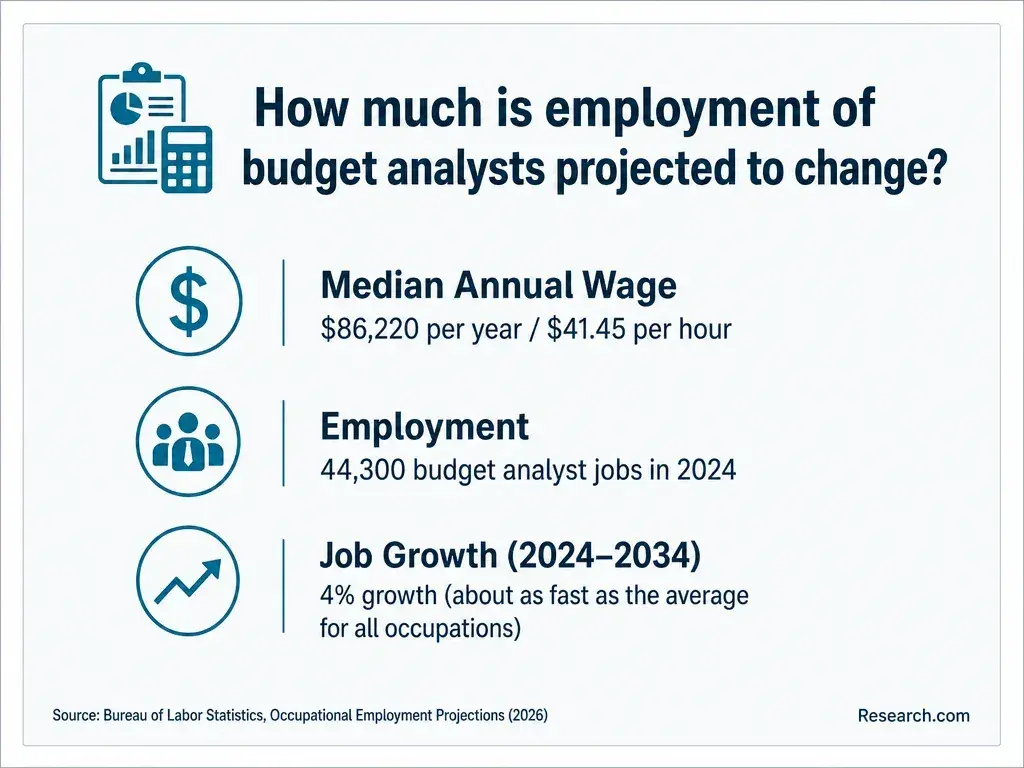
For context, the U.S. Bureau of Labor Statistics reports a May 2025 median annual wage of $78,760 for market research analysts and projects 7% employment growth for that occupation from 2025 to 2035. That is an occupation-wide median, not an expected starting salary for a marketing concentration graduate. Evaluate job postings for your target role and location before using salary figures to justify extra terms of study.
Accounting licensure, HR credentials, and project management certifications have requirements separate from the bachelor's degree; verify them with the relevant licensing or certifying body. If the jobs you want accept a broad business degree, compare the extra cost of your preferred focus with economical college choices for business administration majors and opportunities to gain relevant experience. If postings require specialized preparation, preserving that focus may be worth more than the simplest transfer pathway.
Other Things You Should Know About Business Administration
Possibly. Check whether the agreement requires the completed credential or permits course-by-course transfer. Ask the sending college whether leaving early affects your ability to earn the associate degree.
Ask the registrar which catalog and agreement terms apply to continuing students and whether you must meet conditions to retain them. Keep dated copies of the agreement and your approved degree audit.
Usually you can request a change, but the business school may impose admission, prerequisite, or capacity rules. Obtain a new degree audit before changing; previously applied credits may move into elective categories.
Sometimes. Obtain written preapproval from the receiving institution before enrolling elsewhere, especially for upper-level business courses and courses subject to residency requirements.
- School-Determined Requirements - FSA Partner Connect https://fsapartners.ed.gov/knowledge-center/fsa-handbook/2026-2027/vol1/ch1-school-determined-requirements
- Transfer Dispute - Texas Higher Education Coordinating Board https://www.highered.texas.gov/transfer-dispute/
- .14 Evaluation and Review Process for Transfer of Courses and Credits. | Library of Maryland Regulations https://regs.maryland.gov/us/md/exec/comar/13B.06.02.14
- Western Washington University Guaranteed Transfer Admission Agreement | Seattle Colleges https://www.seattlecolleges.edu/programs/college-transfer/transfer-agreements/western-washington-university-guaranteed-transfer
- Transfer Credit Evaluation | University of Arizona Office of the Registrar https://registrar.arizona.edu/records-enrollment/transfer-credit/transfer-credit-evaluation
- Changing Majors | Registrar | University of Delaware https://www.udel.edu/academics/registrar/students/student-records/majors-change/
- Ivy College of Business | Iowa State University Catalog https://catalog.iastate.edu/collegeofbusiness/
- Academic Policies and Procedures | buffalo.edu https://catalogs.buffalo.edu/content.php
- Transfer Admissions Requirements | Florida Atlantic University https://www.fau.edu/admissions/transfer/how-to-apply/admissions-requirements/
- Transfer Course Evaluation Process - Registrar-UMD https://registrar.umd.edu/transfer-credit/transfer-course-evaluation-process