2027 Cheapest Accredited Online Addiction Psychology Degree Programs: Tuition, Fees, and Financial Aid

Co-Founder and Chief Data Scientist
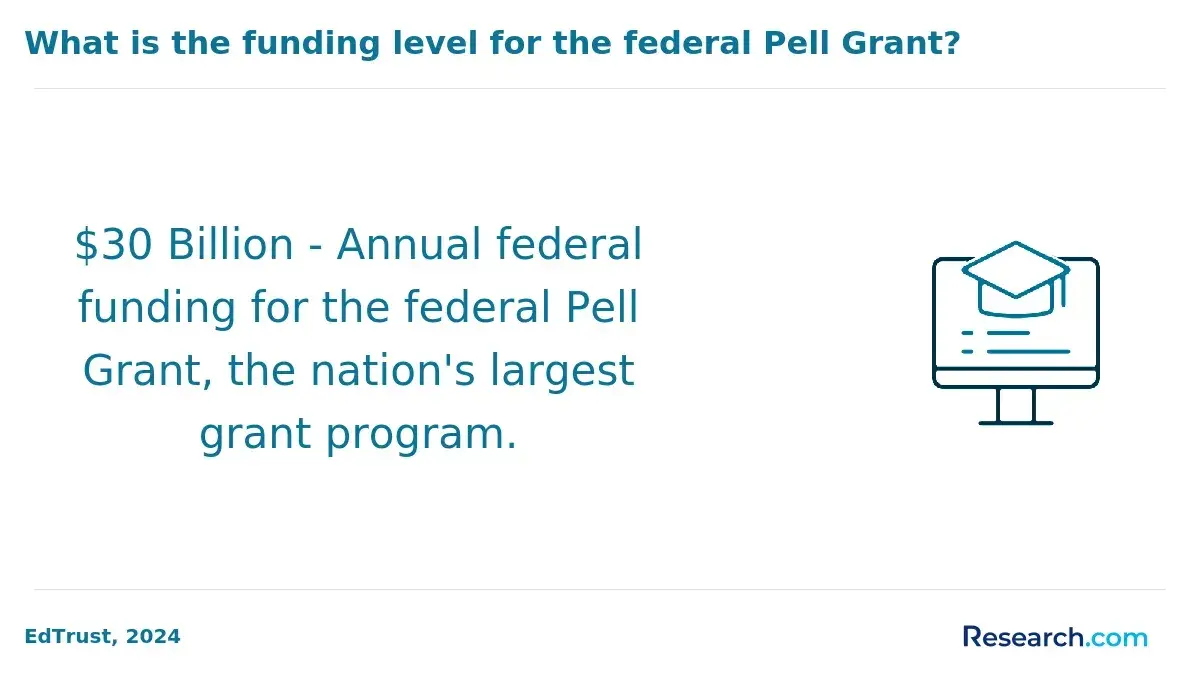
The cheapest online addiction psychology degree is not always the one with the lowest advertised tuition. Students must compare accreditation, mandatory fees, transfer policies, financial aid, and the net price after grants or scholarships. This matters because the federal Pell Grant maximum is $7,395 for the 2025-2026 award year, which can substantially reduce costs for eligible online students.
This guide is for cost-conscious students comparing accredited online addiction psychology, addiction studies, substance use counseling, and related behavioral health programs. It explains how to identify genuinely affordable options and avoid hidden costs before enrolling.
Key Things You Should Know
- The lowest published online tuition routes are usually public or competency-based institutions, but students should compare full-program tuition, mandatory online fees, transfer-credit limits, and practicum costs before deciding.
- Affordable accredited options commonly fall around $30,000 to $47,000 in tuition before aid for a 120-credit bachelor's degree, while some private or quarter-credit programs can exceed $60,000 before fees and financial aid.
- Net price matters more than sticker price: FAFSA-based grants, state aid, institutional scholarships, employer tuition benefits, and accepted transfer credits can make a higher-tuition program less expensive out of pocket.
What Are the Cheapest Accredited Online Addiction Psychology Degree Programs?
Accredited online addiction psychology degree programs are usually offered under related names such as addiction studies, substance use counseling, behavioral health, human services, psychology with an addictions concentration, or addiction counseling and prevention. A true "addiction psychologist" career normally requires graduate education and state licensure, but a bachelor's degree can prepare students for entry-level behavioral health roles, certified alcohol and drug counseling pathways in some states, or graduate study.
The table below compares online, institutionally accredited programs that are relevant to addiction psychology and substance use counseling. Tuition estimates are tuition-only unless a school publishes a single all-inclusive rate; students should request a current fee sheet because online, technology, course, assessment, graduation, background-check, and practicum fees may change by term.
| School | Relevant online program | Accreditation to verify | Published tuition basis | Estimated tuition before aid | Cost notes |
| University of Maine at Augusta | Mental Health and Human Services degree with addiction-related study options | Institutional accreditation | Lower public-university per-credit tuition, with rates varying by residency and program status | Often among the lower-cost public options when students qualify for the lowest online or in-state rate | Check residency rules, online fees, and whether addiction-focused coursework meets your state's credential requirements |
| Fort Hays State University | Online psychology degree with addiction counseling-related coursework or certificate options | Institutional accreditation | Low published online undergraduate tuition per credit | About $31,000 in tuition for 120 credits at a $257.33 per-credit rate | Best for students who want a psychology foundation plus addiction counseling preparation; confirm whether the addiction option is embedded in the degree or added separately |
| Northwestern State University of Louisiana | Bachelor's in Addiction Studies | Institutional accreditation | Online undergraduate tuition commonly priced by credit hour | About $45,000 in tuition for 120 credits at a $375 per-credit rate | Direct addiction studies curriculum; ask about supervision, internship, and state credential alignment |
| Colorado State University Global | Bachelor's in Human Services with Addiction Studies specialization | Institutional accreditation | Flat online undergraduate tuition per credit | About $45,000 in tuition for 120 credits at a $375 per-credit rate | Flat-rate online pricing can help out-of-state students, but specialization requirements and fees should be confirmed |
| University of South Dakota | Bachelor's in Addiction Counseling and Prevention | Institutional accreditation | Public-university online tuition by credit hour | Often in the mid-$40,000 range before aid for a full 120-credit bachelor's path, depending on the active tuition schedule | Strong fit for students seeking addiction counseling preparation; verify practicum expectations and state reciprocity |
| National University | Psychology-related bachelor's option with addiction studies coursework or specialization where available | Institutional accreditation | Quarter-unit tuition | About $66,600 in tuition for 180 quarter units at a $370 quarter-unit rate | Accelerated course formats may appeal to working adults, but total quarter-unit cost should be compared carefully |
| Purdue Global | Bachelor's in Psychology in Addictions | Institutional accreditation | Quarter-credit tuition | About $66,780 in tuition for 180 quarter credits at a $371 quarter-credit rate | Program name aligns closely with the search term, but students should compare transfer-credit acceptance and fee policies |
For many students, the cheapest accredited online addiction psychology path is not a private program with the closest title match; it may be a lower-cost public university psychology, behavioral health, human services, or addiction studies degree that includes the coursework required for the student's intended credential. The best value depends on whether the program fits your state's certification rules, your transfer credits, and your need for supervised field experience.
One common mistake is ranking schools by a single per-credit price. A $257 per-credit rate can become less attractive if few transfer credits apply, while a $375 per-credit program may be cheaper for a student who transfers 60 credits and avoids repeating general education courses.
How Were the Cheapest Online Addiction Psychology Degree Programs Ranked?
Cheapest-program rankings should be based on the cost a student is likely to pay to complete the credential, not simply the tuition number featured on a marketing page. For addiction psychology and addiction counseling programs, the ranking process should also account for accreditation and whether the curriculum is relevant to substance use disorder treatment, counseling ethics, assessment, prevention, case management, and supervised practice.
A practical ranking method should apply these criteria in order. This sequence helps students avoid unaccredited programs and misleadingly low tuition quotes.
- Confirm institutional accreditation through a recognized U.S. accreditor before comparing prices.
- Identify whether the program is fully online, mostly online, or online with required in-person fieldwork, labs, orientations, or internships.
- Calculate full-program tuition using the number of credits still needed after transfer evaluation, not the published 120-credit catalog path if you already have college credit.
- Add mandatory online, technology, course, assessment, clinical placement, graduation, transcript, and background-check fees when available.
- Check whether online students qualify for FAFSA-based federal aid, state aid, institutional scholarships, military benefits, employer tuition reimbursement, or payment plans.
- Compare licensure or certification alignment, especially if you want to become a substance abuse counselor, alcohol and drug counselor, or graduate-level mental health professional.
- Review student outcomes such as retention, completion, graduate-school preparation, field placement support, and career services instead of assuming the lowest price is the best value.
The strongest low-cost choice is the accredited program that lets you finish with the fewest paid credits while still meeting your academic and career requirements. This is why a ranking should consider transfer policy and practicum fit as heavily as advertised tuition.
How Can You Verify the Accreditation of an Online Addiction Psychology Degree Program?
Accreditation is the first affordability filter because unaccredited programs may not qualify for federal financial aid, may not transfer easily, and may not meet employer or licensing-board expectations. For online addiction psychology students, the most important baseline is institutional accreditation from a U.S. Department of Education-recognized accreditor.
Use this checklist before applying or paying a deposit. It separates accreditation claims from verifiable evidence.
- Search the school in the U.S. Department of Education's official accreditation database and confirm the institution name, accreditor, and active status.
- Check the school's financial aid page to confirm participation in federal student aid programs and to find the correct school code for FAFSA.
- Ask the program director whether the addiction studies, psychology, human services, or counseling curriculum is included within the accredited institution's approved offerings.
- If your goal is licensure or certification, contact your state licensing or credentialing board and ask whether the program's coursework and field hours meet current requirements.
- Confirm whether any required internship, practicum, or supervised field experience can be completed in your state.
- Save written responses from admissions, financial aid, and program staff before enrolling.
Programmatic accreditation can matter for certain counseling degrees, especially at the graduate level, but bachelor's-level addiction studies programs do not always have a separate specialized accreditor. The key is to verify that the institution is accredited and that the curriculum fits your intended credential or graduate-school plan.
A red flag is a school that says it is "licensed," "approved," or "internationally accredited" without naming a recognized U.S. institutional accreditor. Those terms may not protect your ability to receive federal aid, transfer credits, or qualify for state credentials.
How Much Does an Accredited Online Addiction Psychology Degree Really Cost?
The real cost of an accredited online addiction psychology degree includes tuition, mandatory fees, books, software, background checks, field placement costs, loan fees, and the opportunity cost of time away from work. Tuition is the published price for instruction. Mandatory fees are charges students cannot opt out of. Total program cost is the full price before aid. Net price is what remains after grants and scholarships are subtracted.
The table below shows how different cost categories affect the amount a student may actually pay. This matters because two programs with similar tuition can produce very different bills once fees and transfer credits are included.
| Cost category | What it means | Why it matters for online addiction psychology students | How to compare it |
| Published tuition | The advertised per-credit, per-term, or full-program instructional charge | It is useful for a first screen but rarely represents the full cost | Multiply by the credits you still need after transfer review |
| Mandatory fees | Required technology, online, student services, assessment, graduation, or program fees | Fees can narrow or erase the savings between two tuition rates | Ask for a fee schedule for online students in your program |
| Books and materials | Textbooks, digital access codes, testing software, and course materials | Psychology and counseling courses may require current diagnostic, ethics, or assessment materials | Ask whether the program uses open educational resources or inclusive-access billing |
| Fieldwork costs | Background checks, drug screening, liability insurance, travel, and supervision-related expenses | Addiction counseling preparation may include placements or supervised experience | Confirm which costs are paid by the student and whether placements are available near you |
| Financial aid | Grants, scholarships, loans, work-study, military benefits, or employer support | A higher sticker price may become cheaper after grant aid | Compare aid offers using net price, not award size alone |
| Transfer-credit savings | Credits accepted from prior colleges, exams, military learning, or professional training | Every accepted credit can reduce both tuition and time to completion | Request an official transfer evaluation before committing |
Students comparing healthcare and behavioral health degrees often face the same problem: advertised tuition is easier to find than total net price. For example, guides to RN to BSN online programs also show why clinical requirements, transfer credits, and fees can change the real cost of an online degree.
As a rule of thumb, build your own cost worksheet before choosing a school. Include tuition for remaining credits, all mandatory fees, estimated books, one-time application or graduation charges, travel for any required fieldwork, and the amount of grant or scholarship aid that does not need to be repaid.
Which Tuition Models Make Online Addiction Psychology Degree Programs More Affordable?
Online addiction psychology programs use several tuition models, and the cheapest model depends on your schedule, transfer credits, and ability to complete courses quickly. A working adult who takes one course at a time may benefit from per-credit pricing, while a full-time student may save money with flat-rate or competency-based tuition.
The table below compares common tuition models. It shows when each model can reduce cost and when it can become risky.
| Tuition model | How it works | Best fit | Affordability risk |
| Per-credit tuition | Students pay for each credit attempted | Part-time students, transfer students, and students who need scheduling flexibility | Total cost rises if many credits do not transfer or if courses must be repeated |
| Flat-rate term tuition | Students pay one price for a credit range during a semester or term | Students who can complete a heavier course load without dropping classes | Dropping below the flat-rate threshold can make the cost per completed credit high |
| Competency-based tuition | Students pay for a subscription period and complete as many competencies as they can | Experienced adult learners with strong writing, discipline, and prior knowledge | Savings disappear if progress is slow or if financial aid rules limit pacing |
| Quarter-credit tuition | Programs use quarter credits instead of semester credits, often with shorter courses | Students who prefer accelerated course starts | Per-credit rates look lower or similar but require conversion before comparison |
| In-state or regional tuition | Public universities charge lower rates to residents or eligible regional students | Students attending an online program in their home state or a participating region | Out-of-state online students may pay more unless the school has a separate online rate |
To compare quarter-credit and semester-credit programs fairly, look at full-program tuition rather than the per-credit number alone. A 180 quarter-credit bachelor's program is commonly comparable to a 120 semester-credit bachelor's program, so the total tuition estimate matters more than the unit label.
The same logic applies across other online health programs. Students comparing FNP programs, for instance, often find that clinical placement support, state authorization, and fees can matter as much as the advertised tuition rate.
What Fees and Hidden Costs Should Online Addiction Psychology Degree Students Expect?
Hidden costs are not always deceptive; many are legitimate program expenses that simply are not shown in the headline tuition rate. Addiction psychology and addiction counseling students should pay special attention to costs tied to technology, supervised practice, and credential preparation.
Before enrolling, ask each school for a written estimate that includes these possible charges. The list is especially important for students comparing programs with similar tuition rates.
- Online learning or technology fees charged per credit, course, or term
- Student services, academic support, assessment, library, or registration fees
- Application, transcript, transfer evaluation, graduation, and diploma fees
- Books, digital access codes, e-text subscriptions, and proctored exam tools
- Background checks, drug screening, immunization documentation, or liability insurance for fieldwork
- Travel costs for internships, practicum placements, residencies, orientations, or local supervision
- Course retake charges if a required psychology, statistics, ethics, or counseling course is not passed
- State credential application, exam preparation, or certification fees after graduation
A major red flag is a school that will not provide an estimated cost of attendance for online students. Another warning sign is vague language about "optional" fees that are actually required for all students in the major.
Students should also ask whether books are included in tuition or billed separately through an inclusive-access model. Inclusive access can be convenient, but it should still be counted as part of the total cost if the charge is mandatory.
How Does FAFSA and Federal Financial Aid Work for Online Addiction Psychology Degree Programs?
FAFSA is the gateway to federal financial aid for eligible students in accredited online addiction psychology programs. Online students generally use the same federal aid process as campus students when the school participates in Title IV federal student aid and the student meets eligibility rules.
The FAFSA process changed with the redesigned form used in recent aid cycles, including the shift from Expected Family Contribution to the Student Aid Index. For students, the practical takeaway is simple: the school calculates aid by comparing its cost of attendance with your FAFSA-based eligibility and other aid sources.
Follow these steps to compare federal aid offers accurately. The goal is to identify the lowest net price, not the largest loan package.
- Confirm that the school is institutionally accredited and participates in federal student aid.
- Submit the FAFSA using the school codes for every program you are seriously considering.
- Review each school's cost of attendance, including tuition, fees, books, supplies, and living-cost allowances.
- Separate gift aid from loans: grants and scholarships reduce net price, while loans must be repaid with interest.
- Compare the remaining out-of-pocket cost after grants and scholarships, then decide whether loans or payment plans are necessary.
- Ask whether your enrollment level, such as half-time or part-time, changes aid eligibility or disbursement timing.
Federal Pell Grants can be especially important for lower-income undergraduates because they do not have to be repaid if eligibility and enrollment rules are met. The maximum Pell Grant is $7,395 for the 2025-2026 award year, but the amount a student receives depends on FAFSA results, enrollment intensity, and the school's cost of attendance.
Students comparing shorter workforce credentials can face different financial-aid rules than bachelor's degree students. For example, affordability research on accredited medical billing and coding schools online with financial aid highlights why program eligibility, not just school accreditation, must be verified.
Which Scholarships, Grants, and Tuition Benefits Can Help Pay for an Online Addiction Psychology Degree?
Scholarships, grants, and tuition benefits can reduce the net price of an online addiction psychology degree, but students need to read renewal rules carefully. A one-time $1,000 scholarship is helpful, but a renewable award or employer benefit can have a much larger effect across several years.
These funding sources are worth checking before using private loans. Each one works differently, so students should ask whether awards apply to online, part-time, transfer, or adult learners.
- Federal grants such as Pell Grants for eligible undergraduate students
- State grants for residents attending approved in-state or participating institutions
- Institutional scholarships for online learners, transfer students, military-affiliated students, first-generation students, or adult learners
- Behavioral health, counseling, human services, or recovery-focused scholarships from professional associations and community foundations
- Employer tuition reimbursement, especially for students already working in healthcare, social services, corrections, community health, or peer recovery roles
- Military tuition assistance, veterans education benefits, and spouse or dependent benefits where applicable
- Workforce development grants tied to behavioral health shortages or substance use disorder treatment needs in a state or region
Scholarships are typically merit-based, need-based, identity-based, career-based, or service-based awards. Grants are often based on financial need or public funding priorities. Both are preferable to loans when they do not require repayment, but students should confirm minimum GPA, enrollment level, renewal limits, and whether the award can be stacked with other aid.
Behavioral health students are not the only ones who benefit from targeted healthcare scholarships. Similar funding comparisons appear in graduate health fields such as a masters in dietetics, where accreditation, supervised practice, and eligibility rules also affect the true price of the credential.
Can Transfer Credits, Prior Learning, and Competency-Based Study Lower the Cost of an Online Addiction Psychology Degree?
Transfer credits can be the biggest cost reducer for online addiction psychology students. If a school accepts 60 prior credits toward a 120-credit bachelor's degree, the student may cut the tuition bill nearly in half before considering grants or scholarships.
Students with prior college, military education, professional training, or standardized exam credit should take these steps before enrolling. The key is to get a written evaluation, not an informal estimate.
- Send official transcripts from every prior college, even if the coursework is old or unrelated.
- Ask how many credits apply to general education, major requirements, electives, and upper-division residency requirements.
- Confirm the maximum number of transfer credits allowed and the minimum number of credits that must be completed at the new school.
- Ask whether psychology, statistics, ethics, counseling, or addiction-specific courses expire after a certain number of years.
- Check whether prior learning assessment, military credit, CLEP, DSST, portfolio review, or professional credentials can reduce elective requirements.
- Compare the remaining credits and remaining cost across schools after official transfer review.
Competency-based study can also lower costs for disciplined students who already understand human services, behavioral health documentation, crisis response, case management, or recovery support. However, it is not automatically cheaper. It works best when students can complete multiple courses or competencies within a subscription period without sacrificing learning quality.
Accelerated formats can help students finish sooner, but speed should not come at the expense of accreditation or credential fit. That trade-off also appears in fields such as an accelerated nutrition degree online, where students must balance fast completion with supervised learning, professional standards, and total cost.
How Should Students Compare the Net Price, Quality, and Return on Investment of Online Addiction Psychology Degree Programs?
The best-value online addiction psychology degree is the one that combines an affordable net price with credible accreditation, relevant curriculum, realistic completion time, and outcomes that support your next step. For some students, that means the lowest-cost bachelor's program. For others, paying more for stronger field placement support or better state credential alignment may be the smarter financial decision.
Use the table below to compare value factors side by side. These factors help distinguish a cheap program from a program that is both affordable and useful.
| Value factor | What to look for | Why it affects ROI |
| Net price | Total cost after grants and scholarships, before optional loans | This is the clearest measure of what the degree may actually cost you |
| Transfer acceptance | High number of accepted credits that apply directly to degree requirements | Fewer remaining credits usually means lower tuition and faster completion |
| Credential alignment | Coursework and fieldwork that match state addiction counseling or behavioral health requirements | A cheap degree has limited value if it does not support your intended credential |
| Student support | Advising, tutoring, career services, practicum coordination, and online student services | Strong support can reduce the risk of delays, withdrawals, or repeated courses |
| Graduate-school preparation | Research methods, statistics, abnormal psychology, ethics, and counseling-related coursework | Students pursuing counseling, psychology, or social work graduate programs need a strong academic foundation |
| Labor-market fit | Curriculum connected to substance use treatment, mental health, case management, prevention, and recovery services | Relevant coursework can help students compete for entry-level roles or supervised experience opportunities |
Labor-market data supports careful planning. The U.S. Bureau of Labor Statistics reports a May 2024 median pay of $59,190 for substance abuse, behavioral disorder, and mental health counselors, with much faster-than-average projected growth for the occupation over the 2024-2034 period. This does not guarantee any individual salary, but it shows why students should consider both affordability and whether the program supports the credentials employers commonly request.
Before enrolling, ask schools direct questions that connect cost with quality. The answers can reveal whether a low-price program is truly a good fit.
- What is my estimated total cost after transfer credits, mandatory fees, and expected financial aid?
- Which charges are not included in published tuition?
- How many credits will I still need after official transfer evaluation?
- Does the curriculum meet addiction counseling, prevention, or behavioral health credential requirements in my state?
- Will I need in-person fieldwork, and can it be completed near where I live?
- What percentage of online students complete the program, and what support is available if I fall behind?
- Are scholarships renewable, and what GPA or enrollment level is required to keep them?
- What graduate programs or entry-level roles do students commonly pursue after completion?
The biggest mistake is treating affordability as a single number. A better decision compares total cost, net price, time to completion, accreditation, credential fit, and the likelihood that the program will help you reach your next academic or career goal.
Other Things You Should Know About Addiction Psychology
No. The title "psychologist" generally requires a doctoral degree and state licensure. An online bachelor's degree in addiction psychology, addiction studies, psychology, or human services may support entry-level behavioral health roles or prepare you for graduate study, but licensure rules vary by state.
They can be, especially when the school is institutionally accredited and the curriculum includes relevant coursework in psychology, substance use disorders, ethics, assessment, counseling skills, and case management. Employers may also look for field experience, state credentials, and graduate education depending on the role.
Some addiction studies and counseling-focused programs require fieldwork, while others do not. If supervised experience is required, students usually complete it at an approved site in their local area, but placement availability and state authorization should be confirmed before enrollment.
A bachelor's degree can qualify students for some entry-level or credential-track roles, depending on state rules. A master's degree is often needed for independent counseling licensure, clinical mental health counseling roles, or advanced practice. Students should check their state board's requirements before choosing a program level.
References
- 20 Best Value Online Master's in Addiction/Substance Abuse Counseling Programs - BestMedicalDegrees.com https://www.bestmedicaldegrees.com/rankings/best-online-masters-in-addiction-substance-abuse-counseling/
- 2025 Most Affordable Online Substance Abuse Counseling Degrees https://www.onlineu.com/most-affordable-colleges/substance-abuse-counseling-degrees
- 10 Most Affordable Master's In Addiction And Recovery - GradSchoolHub.com https://www.gradschoolhub.com/affordable/online/masters/addictions-recovery/
- Top Online Addiction Counselor Degree and Certificate Options https://www.addiction-counselors.com/online-degrees/
- NASAC Accredited Programs https://nasacaccreditation.org/accreditation/nasac-accredited-programs/
- 5 Terrific Ways to Finance your Masters in Psychology Degree https://mastersinpsychologyguide.com/articles/5-terrific-ways-to-finance-your-masters-in-psychology-degree/
- Georgia Substance Abuse Certification https://centerforaddictionstudies.com/certification-requirements/us-substance-abuse-certification/georgia/
- Financial Aid For Psychology Students | Psychology.org https://www.psychology.org/resources/financial-aid/
- 50 Most Affordable Clinical Psychology Master's Programs https://www.bestpsychologydegrees.com/top/affordable-graduate-degrees-in-clinical-psychology/
- 50+ Scholarships & Resources for Counseling Master's Students https://www.onlinemastersdegrees.org/student-resources/counseling/