2027 Cheapest Accredited Online Addiction Psychology Degree Programs That Accept FAFSA

Co-Founder and Chief Data Scientist
Choosing an online addiction psychology degree is really a cost, accreditation, and career-readiness decision. The field matters because the U.S. Bureau of Labor Statistics lists substance abuse, behavioral disorder, and mental health counselors among faster-growing counseling occupations, with a median annual wage of $59,190 in May 2024.
This guide is for students seeking an affordable, FAFSA-eligible online path into addiction counseling, behavioral health, or graduate psychology study. You'll learn how to compare tuition, net price, accreditation, transfer credit, federal aid, and career return before committing.
Key Things You Should Know
- The cheapest FAFSA-eligible online addiction-related degrees are often public university programs or low-tuition private nonprofit programs, but the best deal is the lowest net price after grants, scholarships, transfer credit, and fees, not the lowest advertised tuition.
- Federal Pell Grants can reach up to $7,395 for eligible undergraduate students in the 2025-2026 award year, but FAFSA eligibility does not mean every student receives that amount or that the full program cost will be covered.
- BLS reported a $59,190 median annual wage in May 2024 for substance abuse, behavioral disorder, and mental health counselors, while licensure requirements vary by state and may require graduate education.
Which Are the Cheapest Accredited Online Addiction Psychology Degree Programs That Accept FAFSA?
Online "addiction psychology" programs may appear under several names: addiction studies, substance abuse counseling, behavioral health, psychology with an addictions concentration, or human services with addiction counseling coursework.
The strongest low-cost options are institutionally accredited, participate in federal student aid, offer fully or mostly online coursework, and align with state addiction counseling requirements or graduate school preparation.
The table below summarizes affordable online programs commonly relevant to addiction psychology and substance use counseling pathways. Tuition changes often, so use these figures as a comparison starting point and confirm the current catalog, fees, residency rules, and federal school code before applying.
| School | Online addiction-related degree | Institutional accreditation | Published online tuition indicator | Why it may be affordable | FAFSA relevance |
| Fort Hays State University | Online psychology, sociology, or counseling-related undergraduate pathways with addiction-focused options depending on catalog availability | Higher Learning Commission | Low public online undergraduate tuition compared with many private online colleges | Often competitive for students who need a low per-credit public university rate | Institution participates in federal student aid; confirm program-level eligibility |
| Northwestern State University of Louisiana | Online Bachelor of Science in Addiction Studies | Southern Association of Colleges and Schools Commission on Colleges | Public online tuition model for eNSU students | Direct addiction studies curriculum can reduce the need for unrelated electives | Institution participates in federal student aid; confirm enrollment status and aid package |
| University of South Dakota | Online addiction counseling and prevention-related undergraduate study | Higher Learning Commission | Public university online tuition structure | Good fit for students seeking addiction counseling preparation from a public institution | Institution participates in federal student aid; check state licensure alignment |
| Washburn University | Online human services or addiction counseling-related pathway depending on catalog | Higher Learning Commission | Public university tuition with online options | May be cost-effective for transfer students and working adults | Institution participates in federal student aid; verify degree and concentration eligibility |
| Southern New Hampshire University | Online BA in Psychology with concentration options such as addictions depending on catalog | New England Commission of Higher Education | Flat online undergraduate tuition commonly published per credit | Broad online availability, frequent starts, and transfer-friendly policies can lower time to completion | Institution participates in federal student aid; aid depends on FAFSA results |
| Purdue Global | Online psychology or addictions-focused undergraduate options depending on catalog | Higher Learning Commission | Tuition commonly charged by quarter credit | Can be valuable for students with transfer credit, military benefits, or employer tuition support | Institution participates in federal student aid; compare total quarter-credit cost carefully |
The cheapest option for one student may not be cheapest for another. A public university with lower tuition can become more expensive if it accepts fewer transfer credits, while a private nonprofit program with a higher sticker price may cost less if institutional grants, employer benefits, or generous transfer policies reduce the number of credits you must pay for.
Students considering addiction psychology should also compare adjacent health and behavioral health pathways. For example, those more interested in administrative healthcare work than counseling may find that accredited medical billing and coding schools online with financial aid offer a shorter, lower-cost credential path than a full bachelor's degree.
How Does FAFSA Eligibility Work for Online Addiction Psychology Degree Programs?
FAFSA eligibility means a school and program can be considered for federal student aid, not that the degree will be free. To qualify, the institution generally must participate in Title IV federal student aid, the student must meet federal eligibility rules, and the program must be an eligible degree or certificate program under the school's aid approval.
The safest way to verify FAFSA eligibility is to check both the institution and the specific online program. Online delivery does not automatically disqualify a program, but non-degree certificates, continuing education courses, and some short training programs may not qualify for the same aid as associate, bachelor's, or master's degrees.
Before you enroll, use this process to avoid confusing "online," "accredited," and "FAFSA-eligible" as if they mean the same thing:
- Search the school in the U.S. Department of Education's Federal School Code list and confirm it has an active federal school code.
- Ask the financial aid office whether the exact online addiction psychology, addiction studies, or substance abuse counseling program is Title IV eligible.
- Confirm whether you must be enrolled at least half time to receive the aid you are counting on.
- Ask whether online students pay different tuition, fees, or residency-based rates than campus students.
- Request a written cost-of-attendance estimate that includes tuition, fees, books, technology costs, and expected aid.
A common mistake is assuming FAFSA "acceptance" means full funding. FAFSA is only the application used to determine eligibility for federal grants, loans, and work-study. Your actual aid depends on dependency status, income, enrollment intensity, remaining lifetime aid eligibility, school cost of attendance, and institutional awarding policies.
How Much Does an Online Addiction Psychology Degree Cost After Financial Aid?
The cost after financial aid is the number that matters most. Published tuition tells you what the school charges before aid, while net price estimates what you may pay after grants and scholarships. Federal loans can help cover the bill, but they lower upfront cost by creating repayment obligations later.
According to the College Board's 2024 pricing data, average published tuition and fees remain far lower at public four-year institutions for in-state students than at private nonprofit four-year institutions. For online addiction psychology students, that means public programs can be strong cost contenders, but only if the online tuition rate, transfer credit policy, and aid package work in your favor.
The table below shows how the same student could see very different outcomes depending on tuition, grants, and transfer credits. It is an illustration of cost mechanics, not a promise of aid or a ranking of specific schools.
| Cost factor | Lower-cost scenario | Higher-cost scenario | What to compare |
| Tuition rate | Public online per-credit rate | Private or quarter-credit model with higher total cost | Multiply tuition by required credits, not just by one term |
| Transfer credits | 60 accepted credits from a community college | 15 accepted credits from prior coursework | More accepted credits can outweigh a higher per-credit price |
| Grant aid | Pell Grant plus institutional scholarship | Loans only | Grants reduce cost; loans defer cost |
| Fees and materials | Low online fees and mostly digital materials | Technology fees, course fees, and paid platforms | Ask for a full cost-of-attendance estimate |
| Enrollment pace | Year-round schedule that shortens completion time | Part-time pace that extends fees and delays earnings | Balance speed with workload and aid eligibility |
Students should calculate three numbers before choosing: total program cost, expected grants and scholarships, and maximum likely borrowing. If a school only discusses monthly payment size without giving total cost and loan estimates, treat that as a red flag and request a full written breakdown.
Which Affordable Online Addiction Psychology Degree Programs Offer the Best Value?
The best value is usually not the cheapest tuition line. For addiction psychology, value comes from the intersection of accredited coursework, state-relevant counseling preparation, faculty support, fieldwork options, transfer acceptance, and a manageable debt load.
Use the table below to compare value signals across affordable online programs. These factors matter because addiction counseling and behavioral health jobs may require supervised experience, certification, or licensure beyond the degree itself.
| Value factor | Why it matters | Best-fit student | Potential red flag |
| Direct addiction studies curriculum | Reduces the need to piece together unrelated psychology electives | Students focused on substance use counseling or prevention | Program does not map to state credential requirements |
| Psychology major with addiction concentration | Provides broader preparation for graduate study | Students considering a master's in counseling, psychology, or social work | Concentration is too small to satisfy addiction counselor coursework expectations |
| Low per-credit tuition | Controls cost before aid and before borrowing | Students with limited grant eligibility | Extra fees erase the tuition advantage |
| Generous transfer policy | Can remove semesters of tuition from the bill | Community college graduates and returning adults | School accepts credits only as electives, not major requirements |
| Fieldwork support | Helps students meet practicum or supervised experience expectations | Students pursuing addiction counseling credentials | Online students must find placements with little school assistance |
A more expensive program may be worth choosing if it accepts substantially more transfer credit, has better advising for licensure, or offers field placement support in your state. A cheaper program may be the better value if your goal is an undergraduate foundation before graduate school and you can keep borrowing low.
Students comparing healthcare education investments may also want to look at nursing pathways, where clinical requirements and ROI work differently. For instance, an RN to BSN online pathway is designed for licensed nurses advancing an existing credential, while an addiction psychology degree is usually a starting point for behavioral health or graduate counseling preparation.
Are the Cheapest Online Addiction Psychology Degree Programs Properly Accredited?
Accreditation is nonnegotiable. For FAFSA purposes, the school must be institutionally accredited by an agency recognized by the U.S. Department of Education and must participate in federal student aid. For career purposes, the program should also be acceptable to employers, graduate schools, and any state boards connected to addiction counseling credentials.
There is an important distinction between institutional accreditation and programmatic accreditation. Institutional accreditation applies to the college or university. Programmatic accreditation applies to a specific degree, and it is more common in counseling, social work, nursing, and psychology graduate programs than in undergraduate addiction studies programs.
To verify accreditation without relying on marketing language, follow these steps:
- Look up the school in the U.S. Department of Education's Database of Accredited Postsecondary Institutions and Programs.
- Confirm the accreditor listed on the school's website matches the federal database.
- Ask whether the online program is included under the institution's accreditation scope.
- For counseling or licensure goals, ask the relevant state board whether the degree's coursework can satisfy educational requirements.
- Keep copies of catalog pages, course descriptions, and accreditation statements for future credential reviews.
Be cautious with programs that advertise "certification" without explaining whether the credential is recognized by your state. Addiction counseling requirements can differ widely, and some states require specific supervised hours, exams, or graduate-level education for independent practice.
What FAFSA Grants and Federal Aid Can Pay for an Online Addiction Psychology Degree?
Federal aid can make an online addiction psychology degree more affordable, but different aid types work in different ways. Grants and scholarships reduce what you pay; loans must be repaid; work-study depends on school availability and job placement.
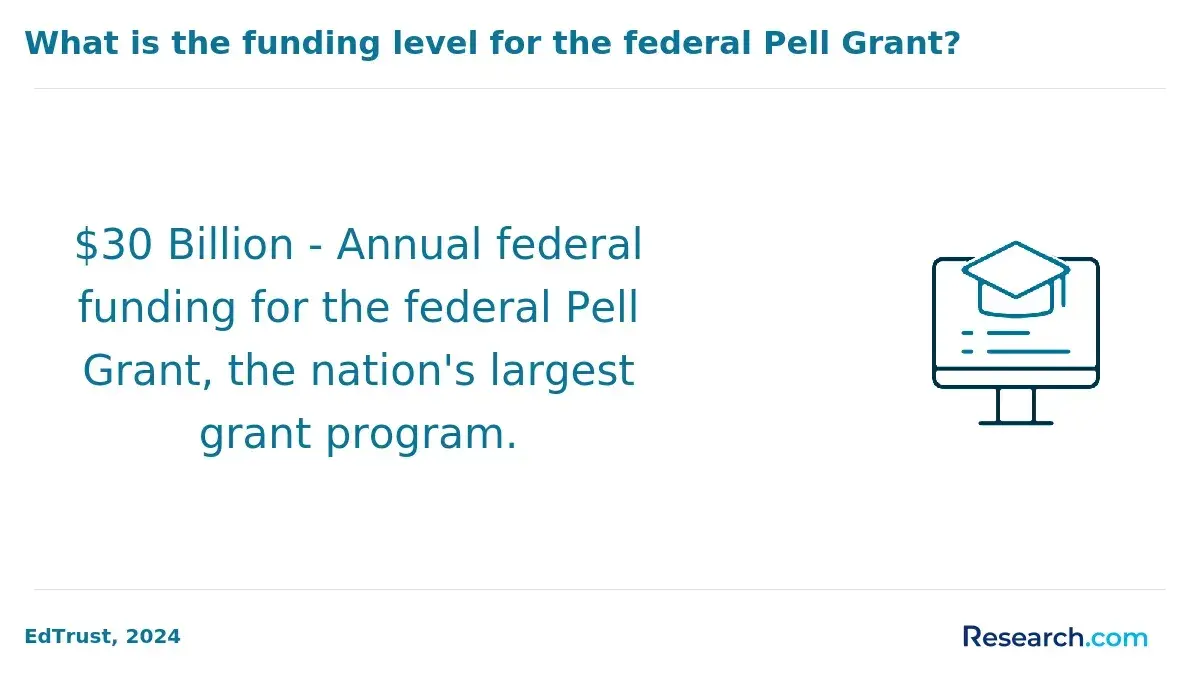
For undergraduate students, the Pell Grant is often the most important federal grant because it does not have to be repaid when eligibility rules are met. The maximum Pell Grant for the 2025-2026 award year is $7,395, which can significantly reduce annual cost at low-tuition public online programs but may cover only a portion of tuition at higher-cost schools.
Here are the major FAFSA-linked aid types students should understand before enrolling:
- Federal Pell Grant: Need-based undergraduate grant for eligible students who have not already earned a bachelor's degree in most cases.
- Federal Supplemental Educational Opportunity Grant: Campus-based grant for students with exceptional financial need, available only at participating schools with limited funds.
- Direct Subsidized Loan: Need-based undergraduate loan where the government generally pays interest while the student is in school at least half time.
- Direct Unsubsidized Loan: Loan available to undergraduate and graduate students, with interest accruing from disbursement.
- Federal Work-Study: Part-time employment aid available through participating schools, but not guaranteed to every eligible student.
- PLUS Loans: Federal loans for eligible graduate students or parents of dependent undergraduate students, usually requiring a credit check.
Do not treat loans as discounts. If two programs have similar academic quality but one requires substantially less borrowing, the lower-debt option usually gives you more flexibility after graduation, especially in entry-level behavioral health roles.
How Do Transfer Credits Lower the Cost of an Online Addiction Psychology Degree?
Transfer credit is one of the most powerful ways to lower the real cost of an online addiction psychology degree. If a bachelor's degree requires 120 credits, entering with an approved associate degree or prior general education credits can cut the number of credits you pay for at the four-year institution.
Transfer policies vary more than students expect. A school may accept credits toward total graduation requirements but not toward the addiction studies major, which means the savings may be smaller than the transfer credit number suggests.
Before choosing a program, ask admissions for a formal transfer evaluation and clarify these points:
- How many credits will transfer into the degree, not just into the university?
- Which transferred courses satisfy major, concentration, general education, or elective requirements?
- Is there a maximum number of community college credits the program will accept?
- Are old psychology, biology, statistics, or counseling courses subject to expiration rules?
- Will transfer credits affect financial aid eligibility, satisfactory academic progress, or enrollment intensity?
- Does the school offer credit for military training, professional certifications, prior learning assessment, or standardized exams?
A higher-tuition program that accepts 75 credits may cost less than a lower-tuition program that accepts only 30. This is especially important for adult learners who already completed general education courses years ago.
Transfer strategy also matters in nearby health fields. If you are comparing behavioral health with nutrition or wellness careers, an accelerated nutrition degree online can show how prior credits and compressed schedules may change the total cost and completion timeline.
Which Students Benefit Most From a Low-Cost Online Addiction Psychology Degree With FAFSA?
A low-cost online addiction psychology degree with FAFSA is often best for students who need flexibility, want to limit debt, and are comfortable verifying credential requirements before they enroll. It can be a smart entry point for substance use prevention, case management, behavioral health support, community outreach, or graduate counseling preparation.
This pathway is especially practical for these groups:
- Community college transfer students: They may be able to complete upper-division addiction studies or psychology coursework online at a lower total cost.
- Working adults: Online asynchronous classes can make it easier to keep income while earning the degree.
- Students planning graduate school: A lower-cost bachelor's degree can preserve borrowing capacity for a master's program that may be required for licensure.
- Human services workers: Current case aides, peer support workers, or recovery staff may use the degree to qualify for advancement or credentialing steps.
- Students with strong local placement options: Those who can complete practicum or supervised experience near home may avoid relocation costs.
Students should avoid choosing primarily by low price if they need a program that meets a specific state licensure standard and the school cannot document alignment. The cheapest degree is not a good deal if it delays certification, blocks graduate admission, or forces you to repeat coursework elsewhere.
Cost and credential fit also differ across health professions. Someone who already holds a nursing license may get a clearer advancement path from FNP programs, while addiction psychology is usually better for students focused on counseling, behavioral health, or substance use services.
How Does the Cost of an Online Addiction Psychology Degree Affect Career ROI?
Career ROI depends on the relationship between total cost, debt, time to completion, and the credential needed for your target role. In addiction psychology, a bachelor's degree can support entry-level behavioral health and human services roles, but many counseling licenses and independent clinical roles require a master's degree, supervised hours, and a state exam.
The BLS reported a median annual wage of $59,190 in May 2024 for substance abuse, behavioral disorder, and mental health counselors. This figure is useful as a labor-market benchmark, but it does not represent a guaranteed salary for bachelor's graduates because pay varies by state, employer, license level, and experience.
The table below explains how degree level affects cost and ROI decisions. Use it to decide whether the cheapest undergraduate program is enough for your goal or whether you should plan financially for graduate school too.
| Education level | Common role direction | ROI consideration | When low cost matters most |
| Associate degree or certificate | Peer support, behavioral health aide, entry-level human services support depending on state rules | Lower cost and faster entry, but limited advancement in many counseling tracks | When testing the field before committing to a bachelor's degree |
| Bachelor's degree | Case management, prevention, addiction studies, human services, graduate school preparation | Stronger foundation, but may not meet independent counseling licensure requirements | When minimizing debt before a required master's degree |
| Master's degree | Licensed counseling, clinical mental health counseling, marriage and family therapy, social work, or psychology-related practice depending on state | Higher cost but often necessary for clinical licensure pathways | When the undergraduate degree is kept affordable enough to preserve graduate school options |
ROI improves when students avoid unnecessary borrowing, choose a program aligned with their state requirements, and complete the degree without paying for excess credits. If you expect to pursue graduate clinical training, the most affordable bachelor's degree that meets prerequisite and graduate admission needs may be the strongest financial choice.
Nutrition, counseling, nursing, and behavioral health careers each have different education-to-earnings patterns. Students comparing clinical-adjacent graduate options may want to review a masters in dietetics pathway as a contrast because dietetics has its own accreditation, supervised practice, and credentialing structure.
How Should Students Choose the Cheapest FAFSA-Eligible Online Addiction Psychology Degree?
The right program is the cheapest option that still meets your academic, financial, and career requirements. Start with accreditation and FAFSA eligibility, then compare total net cost, transfer credit, fieldwork, licensure relevance, and student support.
Use this decision sequence before applying or depositing:
- Define your target outcome: entry-level behavioral health work, addiction counseling credential, graduate school, or general psychology foundation.
- Shortlist only institutionally accredited schools that participate in federal student aid.
- Ask each school whether the exact online program is FAFSA-eligible and whether online students receive the same aid consideration as campus students.
- Request a full cost-of-attendance estimate, not just tuition per credit.
- Submit transcripts early and compare official transfer evaluations across schools.
- Check your state's addiction counseling or behavioral health credential requirements before choosing a curriculum.
- Estimate debt at graduation using grants first, then scholarships, then loans only if needed.
- Compare completion support, advising access, course availability, and practicum guidance.
- Ask about graduation rates, career services, and graduate school placement support where available.
- Choose the program with the best combination of low net cost, acceptable credential alignment, and realistic completion timeline.
Be wary of programs that pressure you to enroll before you receive a transfer evaluation or aid estimate. Also avoid assuming that a psychology degree, addiction studies degree, and counseling degree are interchangeable; employers and state boards may treat them differently.
Other Things You Should Know About Addiction Psychology Programs
Many programs offer online coursework, but practicum, internship, or supervised experience requirements may need to be completed in person near your location. Always ask whether the school helps online students arrange local placements.
It depends on your state and the level of practice you want. Some addiction counseling credentials are available below the master's level, while independent clinical counseling roles commonly require graduate education, supervised hours, and an exam.
Undergraduate programs usually require a high school diploma or equivalent, transcripts, and an application. Transfer programs may require college transcripts and minimum GPA standards. Graduate programs typically require a bachelor's degree and may ask for references, a statement of purpose, or prerequisite coursework.
No. Addiction studies usually focuses more directly on substance use, prevention, treatment systems, and counseling skills, while psychology covers broader human behavior, research, cognition, development, and mental processes. Either can be useful, but the better choice depends on your career and licensure goal.
References
- Best Part-Time Addiction Counseling Programs | 2026 Guide https://www.addiction-counselors.com/blog/part-time-addiction-counseling-programs/
- Best Online Master's In Addiction & Recovery 2025 https://www.psychology.org/degrees/addictions-and-recovery/masters/
- 10 Most Affordable Master's In Addiction And Recovery - GradSchoolHub.com https://www.gradschoolhub.com/affordable/online/masters/addictions-recovery/
- Guide To Online Addiction Counseling Degrees https://www.accreditedschoolsonline.org/counseling/bachelors/addiction-counseling/
- Online Substance Abuse Counseling Associates Degree - AS in Counseling https://addiction-counselor.org/degrees/associates/
- 2025 Most Affordable Online Substance Abuse Counseling Degrees https://www.onlineu.com/most-affordable-colleges/substance-abuse-counseling-degrees
- Financial Aid for Psychology Students https://www.onlinepsychologydegrees.com/financial-aid/
- 2025's Most Affordable Online Master’s Degrees in Psychology https://www.onlinemastersdegrees.org/most-affordable/psychology-programs/