2027 Online Addiction Psychology Degree Programs With No Personal Statement or Admissions Essay Required

Co-Founder and Chief Data Scientist
An online addiction psychology degree can be appealing when you want a streamlined application without drafting a personal statement. In practice, "no essay required" usually removes one admissions document, not the school's review of transcripts, GPA, prerequisites, or identity and residency records. This matters for students balancing work, recovery-related responsibilities, or transfer planning. The U.S. Bureau of Labor Statistics projects 19% employment growth for substance abuse, behavioral disorder, and mental health counselors from 2023 to 2033, making careful program selection especially important. This guide explains how to confirm a no-essay policy and compare quality, cost, and career alignment.
Key Things You Should Know
- A true no-essay policy means the standard degree application does not require a personal statement; it does not mean automatic, open, or guaranteed admission because transcripts, GPA, prerequisites, and conduct disclosures may still be reviewed.
- Essay-optional and essay-waived policies are different: optional essays may strengthen a borderline application, while a waiver may apply only to a term, applicant group, or pathway; honors, clinical placements, and scholarships can still request written materials.
- For career planning, distinguish an addiction-focused psychology degree from a counseling licensure program: BLS projects 19% growth from 2023 to 2033 for substance abuse, behavioral disorder, and mental health counselors, but state licensure commonly requires graduate education and supervised experience beyond a bachelor's degree.
What Does No Personal Statement or Admissions Essay Required Mean for Online Addiction Psychology Degree Programs?
A no-personal-statement or no-admissions-essay program does not ask applicants to submit a written narrative about their background, goals, academic record, or interest in addiction psychology as part of the standard admissions file. The institution instead makes its initial decision using objective records, most often prior coursework and academic standing.
"Addiction psychology" may describe several academic options rather than one standardized degree title. Students may find an online bachelor's degree in psychology with an addiction studies concentration, a behavioral health degree, a substance use disorder certificate, or a graduate counseling program with addictions coursework. The admissions policy can differ by degree level, concentration, and applicant type, even within the same university.
No-essay admissions can save time, but it removes an opportunity to explain circumstances such as a low early GPA, a career change, or a break in enrollment. Applicants with nontraditional records should ask whether the school accepts an optional statement or permits an advisor to add context to the file.
What Admissions Requirements Do Online Addiction Psychology Degree Programs Use Instead of an Essay?
Schools commonly replace an essay with documentation that shows academic readiness and eligibility. Requirements vary substantially between associate, bachelor's, certificate, and graduate programs, so applicants should use the requirements for their exact online program rather than relying on a general university admissions page.
The following comparison shows the documents that commonly drive a no-essay admissions review and why each one matters.
| Requirement | How schools use it | What applicants should confirm |
| Official or unofficial transcripts | Verifies completed education, grades, transfer work, and degree eligibility. | Whether unofficial transcripts are enough for an initial decision and when official copies are due. |
| Minimum GPA | Sets an academic threshold or guides holistic review. | Whether the GPA is cumulative, transfer-only, prerequisite-only, or calculated differently. |
| Prerequisite courses | Confirms preparation for psychology, statistics, biology, or human services coursework. | Required grade minimums and whether equivalent transfer courses will count. |
| Application and residency information | Establishes identity, tuition classification, and eligibility for institutional processes. | Deadlines, application fees, and documentation needed for online students. |
| Recommendation or professional materials | May be required more often at graduate level or for field-based pathways. | Whether these items apply to the degree, a practicum, or only conditional admission. |
Standardized test policies are separate from essay policies. A program can be test-optional and still require an essay, or no-essay and still request scores in limited situations. Graduate programs may also require a resume, relevant coursework, or an interview, particularly when preparing students for counseling or clinical practice.
Students considering adjacent healthcare pathways should similarly separate admissions simplicity from curriculum requirements. For example, accredited medical billing and coding schools online with financial aid may have different prerequisites and professional outcomes than psychology-based programs.
Who Is a Good Fit for Online Addiction Psychology Degree Programs With No Admissions Essay?
A no-essay pathway can fit applicants whose transcripts already demonstrate readiness and who want to apply efficiently to several programs. It may be particularly practical for working adults, community college transfers with organized records, and students returning to school after completing general education courses.
It is less ideal when a written statement is the strongest part of an applicant's profile. Someone with a GPA below the stated minimum, limited relevant coursework, a disciplinary history requiring context, or a major shift from another field may benefit from a program that invites a thoughtful explanation. An essay-required program is not automatically more selective or better; it may simply give applicants another way to show fit.
Career fit matters more than application length. A bachelor's degree may support entry-level behavioral health, case management, prevention, community outreach, or research-support roles, depending on employer requirements. It generally does not independently qualify a graduate for independent clinical counseling licensure. The BLS reported a 2023 median annual wage of $53,710 for substance abuse, behavioral disorder, and mental health counselors; that occupation typically requires a master's degree and state-specific licensure, so readers should not treat bachelor's-level outcomes as equivalent.
Students interested in patient-facing health careers may also compare the structure and clinical expectations of RN to BSN online options, which serve licensed nurses and are not a substitute for addiction counseling education.
What Is the Difference Between No-Essay, Essay-Optional, and Essay-Waived Addiction Psychology Degree Admissions?
Admissions wording can sound similar while producing very different application strategies. Read the policy for the specific program and intake term, then check whether it applies to all applicants or only to those who meet stated academic conditions.
This table separates the most common policies so applicants know when written material can still influence admission.
| Policy | What it means | Best response |
| No essay required | The standard application does not request an admissions essay or personal statement. | Submit complete records promptly and ask whether any later program, practicum, or scholarship application has writing requirements. |
| Essay-optional | The essay is not mandatory, but the admissions office may review one if submitted. | Consider submitting a focused statement when it adds meaningful context or demonstrates strong preparation. |
| Essay-waived | An essay requirement has been removed for a defined group, term, transfer agreement, or application route. | Confirm the waiver in writing because it may not apply to every applicant or future term. |
| Essay required | A written statement is part of the complete application. | Plan time to address the prompt directly and connect your goals to the program. |
A common mistake is treating an essay waiver as a permanent university-wide rule. Another is assuming that an optional essay cannot help. If your record already clearly meets admission standards, omitting an optional essay may be reasonable; if the file needs context, a concise and well-supported statement can be useful.
Are Online Addiction Psychology Degree Programs With No Admissions Essay Easier to Get Into?
Not necessarily. Eliminating an essay makes an application less writing-intensive, but admissions difficulty depends on the institution's capacity, minimum GPA, prerequisite standards, transfer-credit review, and the number of qualified applicants. A school may use a straightforward process while maintaining firm academic thresholds.
Applicants should distinguish simplified admissions from open admissions. Open-admission institutions generally admit most applicants who meet basic eligibility conditions, while no-essay institutions may still deny, defer, or conditionally admit students based on academic records. Conditional admission can require a student to earn a specified GPA in early coursework before progressing normally.
The practical trade-off is that a no-essay program may provide fewer ways to explain a weak transcript. Before applying, ask the admissions office whether it considers grade trends, allows an optional statement, offers conditional admission, or has a formal appeal process. Do not choose solely on the absence of an essay; compare the degree's curriculum, academic support, field experiences, and suitability for your intended role.
How Can You Verify Accreditation and Quality in No-Essay Online Addiction Psychology Degree Programs?
Accreditation is more important than application convenience. First, verify that the institution holds recognized institutional accreditation, then determine whether the degree's curriculum aligns with your planned next step. Programmatic accreditation is not universal for addiction-focused psychology degrees, and counseling accreditation requirements are more relevant when pursuing a graduate pathway toward counseling licensure.
Use the following checks before paying an application fee or accepting admission. They help identify whether an online program has credible oversight and whether it can support your longer-term academic or professional plans.
- Confirm institutional accreditation through the school's accreditation disclosure and the U.S. Department of Education or CHEA databases.
- Review the exact online curriculum, including psychology, addiction, ethics, research methods, statistics, and any practicum or internship expectations.
- Ask whether online students receive the same transcripted degree, faculty access, library services, tutoring, and career support as campus students.
- Check your state's rules before assuming the program meets substance use counseling, behavioral health, or professional licensure education requirements.
- Request written clarification about transfer credit, graduation requirements, and whether the program is authorized for students in your state.
Quality review is especially important if you may later seek a master's degree. Related graduate health programs, such as masters in dietetics, also illustrate why students should verify profession-specific educational requirements rather than relying on a broad degree title.
How Does the Application Process Work for Online Addiction Psychology Degree Programs With No Personal Statement?
The process is usually shorter because the applicant does not need to draft and revise an admissions narrative, but transcript collection and transfer evaluation can still take time. Some schools offer multiple start dates, while others use traditional semester deadlines; neither format changes the need to submit a complete file.
Follow these steps to avoid an incomplete application or a mistaken assumption about the essay policy.
- Select the exact degree level, concentration, and online delivery format that matches your intended career or graduate-school plan.
- Read the program-specific admissions page and save the stated policy on essays, recommendations, GPA, prerequisites, fees, and deadlines.
- Create the application account and accurately report prior colleges, military education, and any dual-enrollment coursework.
- Order transcripts from every required institution, including colleges where you withdrew or earned few credits if the school requires full academic history.
- Submit any required identity, residency, immunization, background, or technology-readiness documentation.
- Check the applicant portal until the file is marked complete, then ask whether the decision is final, conditional, or pending transcript evaluation.
- Review the admission offer alongside total tuition, transfer-credit results, financial aid, and state authorization before enrolling.
A school can request additional materials after reviewing an application. For example, it may seek clarification on a transcript discrepancy, proof of prerequisite completion, or an explanation connected to a professional program requirement. That possibility does not necessarily mean the advertised no-essay policy was inaccurate.
Can Transfer and Adult Students Apply to Online Addiction Psychology Degree Programs Without an Essay?
Yes, many no-essay online programs accept transfer and adult applicants, but their requirements may differ from those for first-time college students. Transfer review often focuses heavily on official transcripts, transferable credit, course equivalencies, and the GPA earned at prior institutions. Adult applicants may also need to document prior learning, military experience, or a high school credential if they have limited college credit.
Transfer credit can affect both completion time and total cost more than an essay policy does. Ask whether the school has a maximum number of transferable credits, a residency-credit requirement, a minimum grade for psychology or statistics courses, and a deadline for submitting transcripts. Never assume that a course with a similar title will satisfy an addiction studies or research-methods requirement.
Adult learners changing careers should compare the program's pace, asynchronous course design, academic advising, and required live sessions. If you are also exploring public-health or wellness education, an accelerated nutrition degree online may have a different timeline and prerequisite structure, so evaluate each path against the role you actually want.
Do No-Essay Online Addiction Psychology Degree Programs Affect Tuition, Financial Aid, or Scholarships?
No-essay admissions policies do not inherently reduce tuition, increase financial aid, or make a program eligible for aid. Tuition is determined by the institution, residency classification, credit load, fees, transfer credits, and sometimes whether online students pay a separate rate. Compare the published cost per credit and required fees, then estimate the full number of credits you will actually need after transfer evaluation.
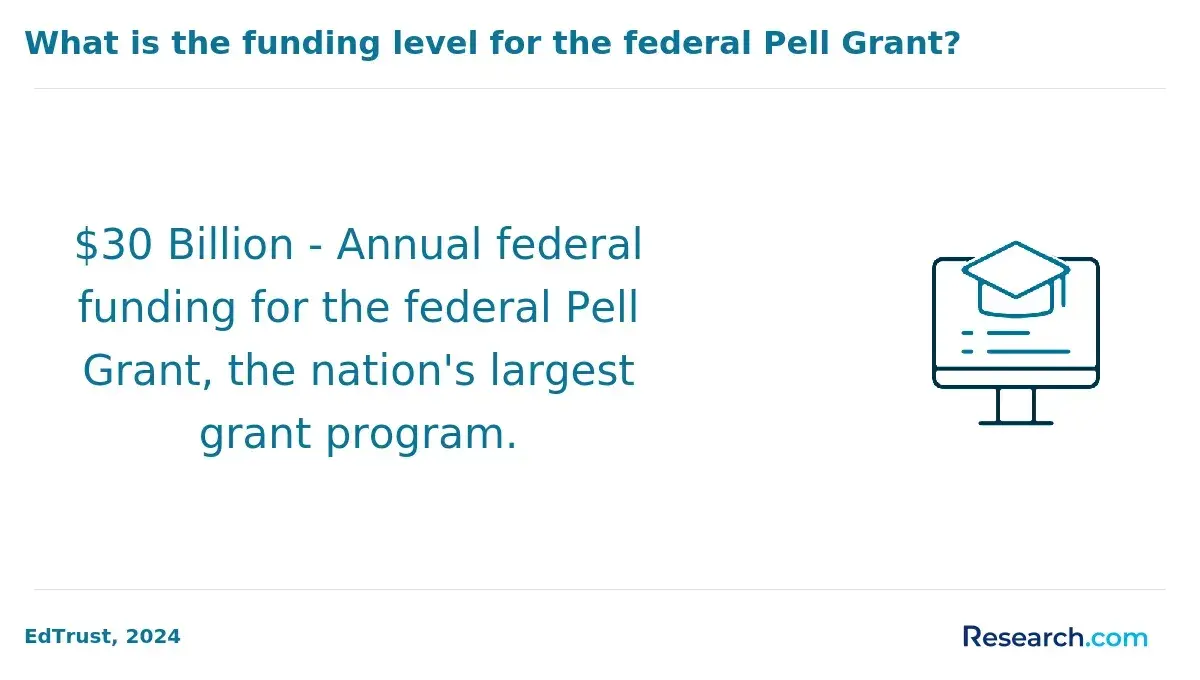
Federal aid eligibility depends on factors such as enrollment, satisfactory academic progress, and the information submitted through the Free Application for Federal Student Aid. Institutional grants and outside scholarships may have separate deadlines and eligibility rules. An admissions essay may be unnecessary while a scholarship essay, short-answer response, recommendation, or interview remains mandatory.
Before committing, request a written aid offer and distinguish grants and scholarships from loans. Check whether awards renew each year, what GPA or enrollment level is required to keep them, and whether the quoted tuition excludes books, proctoring, technology, practicum, or graduation fees. A quick application should never replace a full net-cost comparison.
For students comparing healthcare-adjacent credentials, FNP programs have distinct clinical and licensure costs, which should be evaluated separately from a psychology or addiction studies degree.
How Should You Compare Online Addiction Psychology Degree Programs With No Admissions Essay?
Compare programs on the outcome you need, not merely on how quickly you can submit an application. A strong option should fit your current education, budget, schedule, state, and intended career level. If your goal is licensed counseling, map the bachelor's degree to the graduate program and supervised-practice requirements you will later need.
Use this comparison framework when narrowing a list of no-essay programs. It highlights the questions most likely to affect value after admission.
| Comparison factor | What to review | Why it matters |
| Admissions policy | Whether no-essay status applies to your degree, term, and applicant category. | Prevents confusion between a permanent no-essay policy and a limited waiver. |
| Academic fit | Degree title, addiction-focused courses, faculty expertise, electives, and capstone requirements. | Shows whether the curriculum supports behavioral health work or graduate-school preparation. |
| Accreditation and authorization | Institutional accreditation and permission to enroll students in your state. | Supports transferability, aid access, and future educational planning. |
| Total cost | Per-credit tuition, required credits after transfer, fees, aid, and scholarship renewal terms. | Reveals affordability beyond advertised tuition or application convenience. |
| Student support | Advising, tutoring, accessibility services, technical support, career resources, and placement guidance. | Online learners may need dependable support throughout the program. |
| Career and licensure alignment | Roles the degree supports and any graduate education or state credential required afterward. | Helps avoid enrolling in a program that cannot meet your intended professional goal. |
When speaking with an admissions advisor, ask for answers in writing: Is an essay required for my applicant type? Can I submit one voluntarily? Which prerequisites apply? How many credits are likely to transfer? Does the curriculum meet any state-specific educational standard relevant to my goal? These questions expose common red flags, including vague promises about licensure, unclear total costs, and an inability to explain who teaches online courses.
Other Things You Should Know About Addiction Psychology
Not always. A policy may apply only to undergraduate applicants, students meeting a GPA threshold, transfer students from partner colleges, or a particular start term. Confirm the rule for your exact program and applicant category before applying.
Yes. The school may request clarification about academic records, prerequisites, conduct disclosures, or special circumstances. Separate applications for honors programs, internships, practicum placements, or graduate study may also include written requirements.
They may. Scholarship selection often uses separate criteria and can require essays, short responses, recommendations, or proof of community involvement. Review scholarship instructions independently from the degree admissions checklist.
Usually not by itself. Licensure rules vary by state, but independent clinical counseling roles commonly require a relevant master's degree, supervised post-degree experience, examinations, and a state credential. A bachelor's degree can be a foundation for entry-level behavioral health work or graduate study.
References
- Financial Aid for Psychology Students https://www.onlinepsychologydegrees.com/financial-aid/
- 2025 Most Affordable Online Substance Abuse Counseling Degrees https://www.onlineu.com/most-affordable-colleges/substance-abuse-counseling-degrees
- Substance Abuse Counselor https://onlinecounselingprograms.com/become-a-counselor/counseling-careers/substance-abuse-counselor/
- How to Become a Substance Abuse Counselor | 2026 https://www.publichealthonline.org/addiction/
- Top Online Addiction Counselor Degree and Certificate Options https://www.addiction-counselors.com/online-degrees/
- How to Write a Personal Statement (Tips + Essay Examples) | College Essay Guy https://www.collegeessayguy.com/blog/personal-statement
- What's the Difference Between an Addiction Counseling and a Psychology Degree? - City Vision University https://www.cityvision.edu/difference-between-addiction-studies-and-psychology-degree/
- Best Online Bachelor's In Addiction & Recovery 2025 https://www.psychology.org/degrees/addictions-and-recovery/bachelors/
- College Personal Statement Examples and Writing Tips - Wordvice https://wordvice.com/blog/examples-of-successful-college-personal-statements/
- Personal statement advice: Tell a story, experts say https://thedo.osteopathic.org/2014/11/personal-statement-advice-tell-story-experts-say/