2027 Cheapest Way to Get a Teaching Credential in New York City: Degree Requirements & Certification

Co-Founder and Chief Data Scientist
Becoming a teacher in New York City can be a strong long-term career move, but the route to certification is not always simple or cheap. Candidates often have to compare master’s programs, alternative certification pathways, testing fees, fieldwork requirements, and state certification rules before they know what they will actually pay.
The cost matters because many future teachers must invest in preparation before earning a full-time classroom salary. In 2024, the average starting salary for a New York City public school teacher was $61,070, yet traditional graduate programs can create substantial upfront debt. The best strategy is not always choosing the lowest advertised tuition. It is choosing the lowest-cost pathway that still leads to the correct New York State teaching certificate, supervised classroom experience, and a realistic path into employment.
This guide explains the cheapest ways to earn a teaching credential in New York City, including CUNY programs, alternative certification, fellowships, online options, financial aid, and loan forgiveness. It also shows what to check before enrolling so you do not spend money on a program that fails to meet certification or career goals.
Quick Answer: Cheapest Teaching Credential Programs in New York City
- The most affordable routes are usually alternative certification programs, teaching fellowships, subsidized pathways, and low-tuition public institutions rather than private graduate programs.
- NYC public schools continue to need certified teachers, especially in high-need schools and shortage areas.
- The starting salary for a teacher with a bachelor's degree exceeds $63,000, making low-debt certification especially important for long-term return on investment.
- Traditional graduate programs are often the highest-cost pathway, while programs such as NYC Teaching Fellows, NYC Teaching Collaborative, Transitional B routes, and selected CUNY options can reduce costs.
- Before enrolling, candidates should verify New York State Education Department approval, certification area, student teaching or residency requirements, test preparation support, and whether tuition aid requires a service commitment.
- Academic requirements for NYC teachers
- Certification requirements in New York City
- Cost of teaching credential programs in NYC
- Timeline to earn a New York teaching certificate
- Affordable schools and programs in New York City
- Online vs. traditional teaching programs in NYC
- Challenges in low-cost teaching credential pathways
- ROI factors for affordable teaching credentials
- Benefits of special education credentials in NYC
- Complementary certifications for NYC teachers
- Ways to reduce teaching program costs
- Financial aid organizations and programs for teachers
- Is a New York City teaching credential worth it?
- Post-certification career support
- Alternative pathways to NYC teacher certification
What are the academic requirements for teachers in New York City?
New York City teachers must meet New York State academic standards because teacher certification is controlled at the state level. The basic academic requirement is a bachelor's degree. The degree may be in education, but it can also be in the subject you plan to teach, which is important for career changers who already hold a degree in another field.
For most candidates, the first goal is the Initial Certificate. This allows a new teacher to begin working while building the experience and graduate education needed for the Professional Certificate. Candidates who want long-term stability should plan for a master's degree because the Professional Certificate generally requires graduate-level study in addition to classroom experience.
| Requirement | What it means for candidates | Cost planning tip |
| Bachelor's degree | You need an undergraduate degree before entering most certification pathways. | If you already have a bachelor's degree, compare career-changer and Transitional B routes before paying for a full traditional program. |
| Approved teacher preparation program | The program should align with New York State requirements and lead to the certificate area you need. | Confirm approval before enrolling; low tuition is not useful if the program does not lead to certification. |
| Student teaching | A full semester of student teaching must last at least 14 weeks and include a minimum of 20 school days. | Ask whether placements are included, whether unpaid time is required, and how working adults are supported. |
| Field observation | At least 100 clock hours of field observation are required before student teaching. | Budget time as well as money; field hours can affect work schedules and childcare needs. |
| Required workshops | Candidates must complete training in Child Abuse Identification and Reporting, the Dignity for All Students Act (DASA), and School Violence Prevention and Intervention. | Ask whether workshop costs are included in tuition or billed separately. |
Teachers certified in another state may have another option. Candidates with three or more years of certified teaching experience may qualify through endorsement, depending on whether they satisfy New York requirements. This can reduce duplicated coursework, but applicants should confirm requirements directly through the state certification system.
If you are weighing whether a graduate education degree will expand your options beyond the classroom, Research.com also explains career paths available with a master's in education.
What are the certification requirements for teachers in New York City?
New York City does not issue its own teaching certificates. The New York State Education Department (NYSED) manages certification for teachers working in NYC public schools, charter schools, and other educational settings that require state credentials. A school may hire you only if your credential matches the role, grade band, and subject area required for the position.
The certification process includes education, exams, safety clearances, state application steps, and employment application steps. Candidates should treat these as separate tasks because completing a degree does not automatically mean they are certified or hired.
- Complete fingerprinting and background clearance through IdentoGo. This is required before working with students and before many field placements.
- Register for and pass the New York State Teacher Certification Exams. Exam requirements depend on the certificate area, grade level, and subject.
- Apply through the NYSED TEACH online system. This is where candidates submit certification applications and track state review.
- Apply separately for NYC public school jobs through the NYC Department of Education. Certification eligibility and employment application are not the same process.
- Receive the Initial Certificate after all requirements are met. The Initial Certificate is valid for five years.
To move from the Initial Certificate to the Professional Certificate, teachers must earn a master's degree and complete three years of full-time teaching experience, including at least one year of mentored teaching. To maintain the Professional Certificate, educators must complete 100 hours of continuing professional development every five years.
Some teachers add related credentials later to move into school library, media, literacy, or instructional support roles. For example, a master's of library science online may be relevant for educators who want to broaden their school-based career options, provided the program aligns with their state credential goals.
How much do teaching credential programs cost in New York City?
The cost of becoming certified in New York City depends heavily on the pathway. The most expensive route is often a traditional graduate teaching program at a private institution. Graduate-level education courses can exceed $2,000 per credit, and a full Master of Arts in Teaching degree frequently costs between $67,000 and $77,000.
Lower-cost options exist, but candidates must compare the full cost of attendance rather than tuition alone. Certification exams, workshops, background checks, transportation, unpaid fieldwork, textbooks, technology, and lost work hours can all affect affordability.
| Pathway | Typical cost issue | Best fit |
| Traditional graduate program | Often the highest tuition route, especially at private universities. | Candidates who want a structured campus-based program and can access scholarships, employer aid, or savings. |
| CUNY or public university program | Usually more affordable than many private options, but costs vary by residency, degree level, and aid. | Students seeking a recognized program with lower public tuition and access to NYC school placements. |
| Alternative certification | May reduce upfront tuition by allowing candidates to teach while completing requirements. | Career changers and candidates willing to work in high-need settings. |
| Teaching fellowship | Often includes subsidized tuition and paid teaching, but usually requires service in designated schools or subjects. | Candidates who want the lowest-debt route and are committed to NYC public school teaching. |
| Tuition-free or subsidized extension programs | May require eligibility and a teaching commitment. | Current educators adding a high-need certification area. |
Financial aid can lower the final price. University scholarships, including opportunities through NYU Steinhardt, may reduce tuition by thousands of dollars. Some district and charter school networks provide subsidies of approximately $15,000. The New York State Education Department also allocates funds that may help with tuition and test preparation fees.
The NYC Extended Certification Program is one of the most cost-conscious options for eligible educators because it provides graduate courses at no cost. Participants must commit to teaching for two years in the new high-need certification area. Separate state application fees for certification are generally low compared with tuition, commonly ranging from $35 to $100.
Cost should be evaluated alongside work conditions and long-term sustainability. New York has one of the lowest student-to-teacher ratios in the US, which can affect classroom experience and professional satisfaction for certified educators.
How long does it take to get a teaching certificate in New York City?
Most teacher certification programs in New York City take one to two years to complete. That timeline usually includes graduate coursework, field observation, required workshops, exam preparation, and student teaching. Candidates must also complete fingerprinting clearance and register for the required New York State Teacher Certification Exams before entering many student teaching placements.
After an application is submitted, processing time is another factor. The NYC teacher certification processing time requirements currently average around 16 weeks after the application reaches "ready for review" status. Applying too late can delay hiring, so many candidates begin preparing certification documents while still enrolled in their program.
| Stage | What happens | How to avoid delays |
| Before enrollment | Choose a certification area and confirm program approval. | Use NYSED requirements before comparing tuition. |
| During the program | Complete coursework, workshops, field hours, and exam preparation. | Track each requirement in writing and keep proof of completion. |
| Student teaching or residency | Complete supervised classroom experience. | Ask how placements are assigned and whether placements fit your schedule. |
| Certification application | Submit materials through the TEACH system. | Apply as soon as the program allows and monitor status updates. |
| Initial Certificate period | Teach while completing long-term professional requirements. | Plan early for the master's degree, three years of full-time teaching, and one year of mentored teaching. |
The Initial Certificate is valid for five years. During that window, teachers work toward the Professional Certificate by completing a master's degree, three years of full-time teaching experience, and one year of mentored teaching. Candidates looking for lower-cost graduate study can compare the most affordable online education degrees as part of a broader cost-control plan.
Are there schools in New York City offering affordable teaching programs?
Yes. New York City has several lower-cost teacher preparation options, especially through public institutions and alternative certification programs. The right choice depends on whether you are a first-time college student, a bachelor's degree holder changing careers, a paraprofessional, or a current teacher adding another credential.
| Program or school | Affordability details stated | Why it may be a good option |
| CUNY Hunter College | Average tuition of $6,930 per year; 93% of students receive support. | Offers teacher preparation with online and hybrid options, supervised experiences in NYC or New York State schools, and occasional application fee waivers. |
| CUNY Brooklyn College | Average tuition of $6,930 annually; 97% of students benefit from financial aid. | Provides affordable preparation, local partnerships, hands-on teaching experience, and training for education roles including classroom and administrative pathways. |
| NYC Teaching Fellows Program | Participants work as full-time teachers while paying subsidized tuition. | Designed for high-need public schools and includes training, mentoring, a pathway to a master's degree, and state certification support. |
New York State's expansion of the Tuition Assistance Program and the NYS Opportunity Promise may also help eligible adults aged 25–55 by covering free tuition, fees, books, and supplies at public community colleges. This can be useful for candidates completing prerequisite coursework or entering education-related pathways, but students should confirm how each benefit applies to teacher certification.
Educators who want related graduate study in school information, library, or instructional resource roles can also review the most affordable online MLIS programs when comparing complementary education credentials.
Are online teaching programs cheaper than traditional ones in New York City?
Online teaching programs can be cheaper, but only if they are properly aligned with New York certification requirements. In New York City, on-campus programs typically charge between $20,000 and $30,000 annually, while many accredited online options through state universities or alternative certification providers may cost less than $10,000 for the full program.
The savings may come from more than tuition. Online learners may avoid or reduce commuting costs, campus fees, housing costs, relocation expenses, and schedule conflicts that force them to cut work hours. For working adults, this flexibility can make certification more financially realistic.
| Option | Potential advantages | Risks to check before enrolling |
| Online program | Lower total cost, flexible schedule, fewer transportation and relocation expenses. | Must meet New York State certification requirements and provide approved field placements. |
| Campus program | In-person advising, local school partnerships, face-to-face faculty support. | May cost more and may be harder to schedule around full-time work. |
| Hybrid program | Combines online coursework with local classroom experience. | May still require set meeting times, travel, or specific placement availability. |
The main mistake is assuming that “online” automatically means “accepted for NYC teaching.” Before paying an application fee, ask whether the program leads to the exact New York certificate you need, how student teaching is arranged, and whether graduates are recommended for certification through NYSED.
What challenges might candidates encounter during the affordable teaching credential process in New York City?
Low-cost pathways can reduce debt, but they are not always easier. Candidates may have to balance intensive coursework, exam preparation, teaching responsibilities, family obligations, and limited time for unpaid fieldwork. Alternative pathways can be especially demanding because candidates may begin working in schools while still completing certification requirements.
- Documentation delays: Missing transcripts, workshop records, test scores, or fingerprinting clearance can slow certification review.
- Hidden expenses: Textbooks, exam fees, transportation, childcare, technology, and application costs can add up even in subsidized programs.
- Placement constraints: Fieldwork and student teaching may require daytime availability, which can be difficult for working adults.
- Service commitments: Fellowships and tuition subsidies may require teaching in high-need schools or subjects for a set period.
- Exam readiness: Retaking certification exams can increase both cost and timeline.
Candidates moving from another profession may find it useful to compare certification-heavy career paths. For example, Research.com outlines how to become a substance abuse counselor in New York City, which can help readers understand how licensing, documentation, and supervised experience differ across public-service careers.
What factors influence the return on investment for affordable teaching credentials?
The cheapest credential is not always the best value. Return on investment depends on whether the program leads to certification, paid employment, salary advancement, and long-term career mobility. A very low-cost program can become expensive if it delays certification or does not match the subject area where you intend to teach.
| ROI factor | Why it matters | Question to ask |
| NYSED approval | Certification eligibility is the foundation of ROI. | Does this program lead to the exact New York State certificate I need? |
| Tuition after aid | Sticker price may not reflect scholarships, subsidies, or required fees. | What will I owe after grants, scholarships, employer aid, and required fees? |
| Ability to earn while studying | Paid teaching or residency options can reduce opportunity cost. | Can I work in a classroom while completing requirements? |
| Mentorship and placement support | Strong coaching can improve retention and classroom readiness. | Who supports me during fieldwork, residency, or my first year of teaching? |
| Career pathway | Some credentials lead to higher-need or more flexible roles. | Will this credential qualify me for roles that NYC schools are actively hiring for? |
If your main goal is minimizing the cost of entry, compare program tuition, financial aid, and service commitments with the guidance in Research.com's guide to the cheapest way to become a teacher in New York City.
What advantages do special education teaching credentials offer in New York City?
A special education credential can improve hiring flexibility because New York City schools serve students with a wide range of learning, behavioral, developmental, and accessibility needs. Teachers with this credential are prepared to support individualized education plans, inclusive classrooms, specialized instruction, collaboration with families, and coordination with school support teams.
Special education is not simply a backup option. It requires patience, legal awareness, documentation skills, classroom management ability, and strong collaboration. Candidates considering this route should review the special education teacher requirements in New York City before choosing a program, because the certificate area, grade band, and fieldwork expectations matter.
What role do complementary certifications play in advancing your teaching career in NYC?
Additional credentials can help teachers move into specialized roles, support students with more complex needs, or qualify for leadership-adjacent responsibilities. Complementary certifications may be useful in areas such as special education support, literacy, bilingual education, school library services, behavior intervention, or instructional coaching.
The value depends on fit. A credential should solve a clear career problem: qualifying for a shortage area, improving classroom effectiveness, supporting advancement, or meeting requirements for a desired role. For educators interested in behavior-focused support, Research.com's guide to BCBA education requirements in New York City explains another credentialed pathway that may complement work with students who need behavioral intervention.
How can students lower the cost of attending teaching programs in New York City?
Reducing the cost of teacher preparation requires planning before enrollment, not after the bill arrives. Candidates should compare program approval, net price, available aid, transfer credit, scheduling flexibility, and whether the pathway allows paid teaching while completing requirements.
- Apply early to low-cost public options. Submit applications to CUNY institutions before June 30, 2027, if eligible candidates can benefit from waived application fees.
- Compare alternative certification routes. New York's Transitional B program may allow candidates with a bachelor's degree to teach while finishing certification requirements.
- Review fellowship options. Programs such as NYC Teaching Fellows may offer subsidized tuition for career changers and school staff.
- Choose flexible formats carefully. Online or hybrid courses can reduce commuting and housing costs, but they must still meet NYSED requirements.
- Ask about transfer credits. Prior college coursework may shorten the program and reduce tuition.
- Apply for state-specific scholarships. The New York State Math and Science Teaching Incentive Scholarship may be relevant for eligible candidates in those fields.
- Use free or low-cost academic resources. New York Public Library resources may reduce textbook and study-material expenses.
- Compare SUNY and CUNY options. Public university programs may combine lower tuition with recognized teacher preparation.
-
: "
One New York City teacher described reducing credential costs by applying to several scholarship programs, transferring undergraduate credits, taking evening classes while working part time, and choosing a subsidized certification route. His main lesson was practical: the savings came from asking detailed questions early and documenting every credit, fee, and aid option before committing.
"
Are there organizations in New York City that provide financial aid for teachers?
Yes. Financial aid and forgiveness programs can make teacher certification more affordable, especially for candidates who commit to high-need schools, high-need subjects, or public service. Eligibility rules vary, so candidates should confirm requirements before relying on any program to cover costs.
- NYC Department of Education Recruitment Incentives: The DOE may use financial incentives to attract teachers to specific roles, including one-time bonuses or salary differentials for certified educators in designated high-need schools or subject areas.
- New York State Teacher Loan Forgiveness Program: This program can reduce student loan debt for certified teachers who work full time in a designated high-need school district or subject-shortage area.
- Public Service Loan Forgiveness (PSLF) Program: PSLF can cancel the remaining balance on federal Direct Loans after 120 qualifying payments while the borrower works full time in a public school or other qualifying public-service setting.
- NYC Teaching Fellowships: Programs such as NYC Teaching Fellows and NYC Teaching Collaborative may cover most or all tuition costs for a master's degree while providing intensive preparation for teaching in high-need public schools.
The most effective financial strategy is to combine a low-cost program with aid that matches your intended career path. A fellowship may be financially powerful if you are committed to teaching in the required setting. Loan forgiveness may be valuable if you plan to remain in public education long enough to meet the terms. A traditional program may still make sense if scholarships substantially reduce the cost and the program has strong placement support.
Is investing in a teaching credential in New York City worth it?
A New York City teaching credential can be worth the investment if you choose a pathway that keeps debt manageable and leads to a certificate area with strong hiring prospects. The credential is a required professional asset for many teaching roles, and NYC's salary scale can make the return stronger for candidates who avoid unnecessary borrowing.
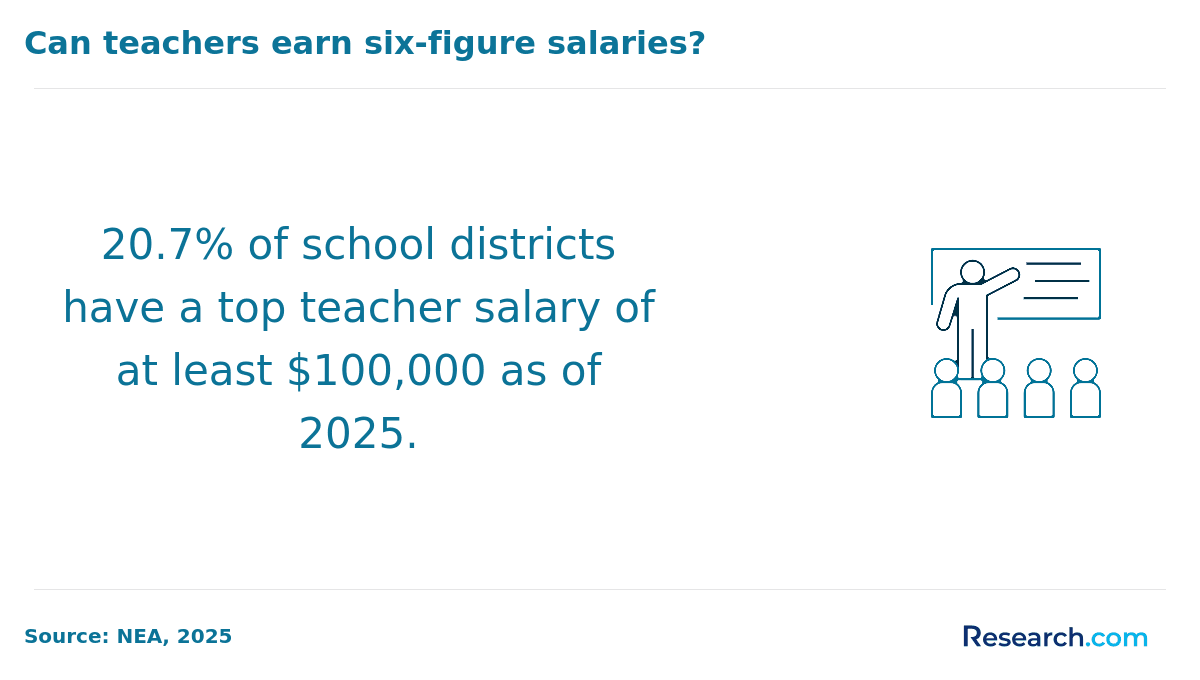
- Salary potential: Starting salaries hover around $50,077, and the average teacher salary reaches $95,615, ranking second nationally. Teachers holding a master's degree with 1-5 years of experience can expect approximately $74,080. A first-year teacher's starting pay exceeds $63,000, and the salary structure can reward additional education and experience.
- Career stability: Credentialed teachers have access to public school roles, advancement pathways, and a defined certification structure. Salaries are projected to increase by 3% nationally in the 2024-25 school year.
- Advancement options: Teachers may move into instructional leadership, specialized student support, curriculum work, administration, or doctoral-level education roles. Candidates considering advanced study can compare the cheapest EDD programs to control the cost of future credentials.
The credential is less likely to feel worth it if you overpay for preparation, choose a program that does not match your certification goal, or enter teaching without understanding the workload. It is more likely to pay off when the pathway is affordable, the certificate aligns with NYC hiring needs, and you plan to remain in education long enough to benefit from the salary schedule and loan forgiveness options.
Do affordable teaching programs offer robust post-certification career support?
Many affordable teaching programs do provide career support, but the quality varies. Candidates should not assume that a lower-cost program means weaker support, nor should they assume that a high-cost program guarantees placement. The best programs help candidates move from coursework into certification, interviews, classroom placement, mentoring, and early-career retention.
Useful support may include job placement advising, certification application guidance, resume and demo lesson preparation, mentor teacher access, alumni networks, hiring events, and professional development after graduation. Before enrolling, ask for specific examples of where recent graduates teach and what support is available during the first year in the classroom.
Educators who are also considering adjacent helping professions can compare requirements with Research.com's guide on how to become a marriage and family therapist in New York City, especially if they are deciding between classroom teaching and counseling-oriented careers.
Are there alternative pathways aspiring educators in New York City can take to obtain credentials?
Alternative certification pathways are often the cheapest and fastest practical routes for candidates who already have a bachelor's degree. These programs are designed to move qualified adults into classrooms while they complete certification and, in many cases, graduate coursework.
| Alternative pathway | How it works | Who should consider it |
| NYC Teaching Fellows | Participants receive classroom training, coaching from experienced educators, reduced tuition, and a full salary while working toward a master's degree and certification. Starting pay in early 2025 was $66,733 for bachelor's degree holders and $75,017 for those with a master's. | Career changers who want a paid, subsidized route into high-need NYC public schools. |
| NYC Teaching Collaborative | Candidates complete a four-month residency-style training period with mentor teachers before leading their own classrooms. | Applicants who want more structured pre-service classroom practice before becoming the teacher of record. |
| Transitional B Certificate Programs | Bachelor's degree holders can teach while completing certification requirements through an approved alternative program. | Adults who want to earn income and classroom experience while finishing credential requirements. |
Alternative routes can be excellent value, but they require commitment. Candidates should be ready for intensive training, high-need school placements, rapid classroom responsibility, and strict certification deadlines. The trade-off is that these routes may reduce debt and shorten the time between preparation and paid teaching.
Common mistakes to avoid when choosing a low-cost NYC teaching credential program
- Choosing by tuition alone: Low tuition does not help if the program does not lead to the right New York State certificate.
- Ignoring total cost: Exams, workshops, books, commuting, technology, and unpaid student teaching can change the real price.
- Assuming online programs automatically qualify: Online programs must still meet NYSED requirements and provide approved fieldwork or placements.
- Missing certification deadlines: Waiting too long to apply through TEACH can delay employment even after graduation.
- Overlooking service commitments: Subsidized programs may require teaching in specific schools, subjects, or shortage areas.
- Failing to ask about placement support: Strong mentoring and hiring support can matter as much as tuition.
- Borrowing for a program without calculating salary fit: Compare debt payments with expected entry-level salary and cost of living before enrolling.
Key Insights
- The cheapest way to become a teacher in New York City is usually not a traditional private graduate program. Alternative certification, fellowships, subsidized pathways, and public university programs often provide better value.
- Certification is controlled by NYSED, not by NYC schools. Always confirm that a program leads to the exact certificate, grade band, and subject area you need.
- Program cost should include tuition, fees, exams, workshops, fieldwork, transportation, lost work time, and the timing of certification processing.
- Online programs can reduce costs, but only if they are accredited, approved for New York certification, and able to arrange valid classroom placements.
- NYC Teaching Fellows, NYC Teaching Collaborative, and Transitional B programs can be strong options for bachelor's degree holders who want to teach while completing requirements.
- A teaching credential can be worth the investment when debt stays low, the certificate matches hiring demand, and the candidate plans to remain in education long enough to benefit from salary growth, mentoring, and possible loan forgiveness.
Related Articles for Nearby Cities
- 2027 Cheapest Way to Get a Teaching Credential in Jersey City, NJ: Degree Requirements & Certification
- 2027 Cheapest Way to Get a Teaching Credential in Newark, NJ: Degree Requirements & Certification
- 2027 Cheapest Way to Get a Teaching Credential in Philadelphia, PA: Degree Requirements & Certification
- 2027 Cheapest Way to Get a Teaching Credential in Baltimore, MD: Degree Requirements & Certification
- 2027 Cheapest Way to Get a Teaching Credential in Boston, MA: Degree Requirements & Certification
- 2027 Cheapest Way to Get a Teaching Credential in Washington DC: Degree Requirements & Certification
- 2027 Cheapest Way to Get a Teaching Credential in Richmond, VA: Degree Requirements & Certification
- 2027 Cheapest Way to Get a Teaching Credential in Virginia Beach, VA: Degree Requirements & Certification
- 2027 Cheapest Way to Get a Teaching Credential in Buffalo, NY: Degree Requirements & Certification
- 2027 Cheapest Way to Get a Teaching Credential in Norfolk, VA: Degree Requirements & Certification
References:
- Fordham University, Graduate School of Education. (n.d.). How to become a teacher in New York. fordham.edu
- New York City Department of Education. (n.d.). Alternative routes to certification. teachnyc.net
- New York State Education Department. (n.d.). Alternative teacher certification programs. nysed.gov
- New York State Education Department. (n.d.). Pathways to certification: Which pathway is right for me? highered.nysed.gov
- New York State Education Department. (n.d.). Search certification requirements. eservices.nysed.gov
- NYC Teaching Collaborative. (n.d.). Learn about our training. nycteachingcollaborative.org
- NYC Teaching Fellows. (n.d.). New York City Teaching Fellows. nycteachingfellows.org
- Relay Graduate School of Education. (n.d.). New York program offerings. support.relay.edu
- Study.com. (n.d.). How much a New York teaching license is going to cost you. study.com
Other Things You Should Know About the Cheapest Way to Get a Teaching Credential in New York City
To obtain a teaching credential in New York City in 2027, candidates must pass the Educating All Students (EAS) test and the Content Specialty Test (CST) for their subject area. These exams assess both pedagogical knowledge and subject-specific expertise.
You must have at least a bachelor's degree from an accredited institution to qualify for a teaching credential in New York City in 2027. Additional educational requirements may involve coursework specific to the subject you wish to teach.
NYC teacher certification requires NYSED fingerprint clearance through the state’s IdentoGO process before you can be hired or fully certified. Districts and approved programs also review your criminal history, and school employers may require child abuse registry checks and employment verification.