2027 How to Become a Special Education Teacher in Texas: Requirements & Certification

Co-Founder and Chief Data Scientist
Becoming a special education teacher in Texas means preparing for a high-need teaching role with strict certification rules, significant classroom responsibility, and strong demand across public school districts. The need is clear: the Texas Education Agency (TEA) reported that 703,058 students received special education services in the 2022-23 academic year, and special education remains a critical shortage area for the 2024-25 school year.
This guide explains how to become a special education teacher in Texas, including degree options, certification steps, timelines, licensing requirements, salaries, job demand, professional development, and career advancement paths. It is designed for future teachers, career changers, current educators considering special education, and out-of-state teachers who want to understand the Texas pathway before committing time and money.
Quick answer: How do you become a special education teacher in Texas?
To become a special education teacher in Texas, you typically need a bachelor’s degree, completion of a state-approved educator preparation program, student teaching or supervised field experience, passing scores on required Texas educator certification exams, a background check with fingerprinting, and certification through the state. Career changers with a non-education bachelor’s degree may qualify through an alternative certification program.
The full process commonly takes about five to seven years, depending on whether you complete certification as part of an undergraduate degree, enter an alternative certification program, or pursue graduate study. Once certified, Texas teachers must renew their license every five years through continuing education.
Key things to know before choosing this career
- Demand is strong: Texas Labor Market Information projects special education teacher employment to grow by 11% to 13% through 2032, depending on grade level and role.
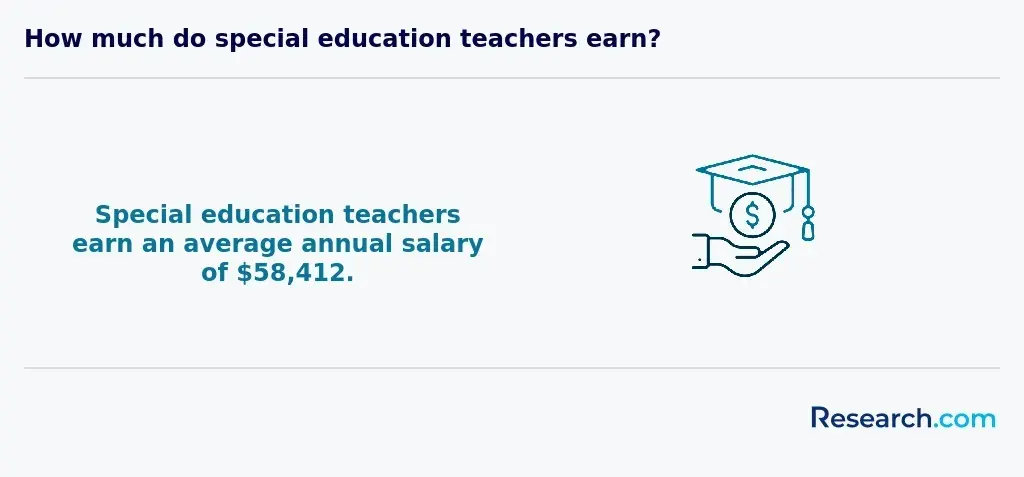
- Pay varies widely: Special education teachers in Texas commonly earn between $46,000 and $66,000 annually on average, with higher earning potential in some districts and for experienced educators.
- Certification matters: In the 2023-24 school year, 33.8% of newly hired Texas teachers were non-certified, according to TEA. Proper certification can help candidates stand out and better prepare for special education responsibilities.
- Large districts hire regularly: Houston Independent School District (ISD), Dallas ISD, and Austin ISD are among the major employers seeking qualified special education professionals.
- Professional development is ongoing: Organizations such as the Texas Council for Exceptional Children (CEC), TEA workshops, and national special education groups help teachers stay current on instructional strategies, compliance, and behavior supports.
- What are the educational requirements to be a special education teacher in Texas?
- How long does it take to become a special education teacher in Texas?
- What are the licensing requirements for special education teachers in Texas?
- What is the demand for special education teachers in Texas?
- How much do special education teachers in Texas earn?
- What professional development opportunities are available for special education teachers in Texas?
- Are there advanced roles for experienced special education teachers in Texas?
- What are the biggest challenges faced by special education teachers in Texas?
- How do Texas’s special education laws impact teachers?
- How can special education teachers transition into higher education roles?
- How can technology and digital tools enhance special education teaching in Texas?
- How can collaborating with school psychologists benefit special education teaching in Texas?
- How can special education teachers transition to substance abuse counseling roles?
- Can early childhood education opportunities benefit your special education career in Texas?
- How can mentorship and professional networks enhance career sustainability for special education teachers in Texas?
- How can achieving a BCBA certification advance your career as a special education teacher in Texas?
- How do school counselors complement special education efforts in Texas?
- Are there scholarships and grants available for special education teachers in Texas?
- What are alternative career pathways for special education teachers in Texas?
- What alternative careers can special education teachers pursue?
- Can dual certifications enhance career opportunities for special education teachers in Texas?Alternative career overviewCareer pathway detailsScholarships and grantsAdditional career options
What are the educational requirements to be a special education teacher in Texas?
Texas special education teachers need formal preparation in instruction, disability services, assessment, behavior support, and legal compliance. The exact route depends on whether you are starting college, already have a bachelor’s degree, or are adding special education certification to an existing teaching credential.
- Bachelor’s degree: A bachelor’s degree is the standard starting point. Many candidates major in special education, education, psychology, or a related field. Students comparing flexible options may want to review online bachelor’s in education programs that can support a teaching pathway.
- Educator preparation program: Texas requires teacher candidates to complete approved preparation before certification. This may be built into an undergraduate education degree or completed separately through an alternative certification program.
- Minimum GPA: Many programs expect a cumulative GPA of around 2.75 or higher, although graduate programs and selective institutions may set a higher standard.
- Field experience: Student teaching, internships, or practicums are essential because special education teachers must learn how to manage IEPs, adapt lessons, collect progress data, and support students in real classrooms.
- Optional master’s degree: A master’s in special education is not required for initial entry, but it can deepen expertise, support leadership goals, and help experienced teachers move into specialized roles.
- Alternative certification: Candidates who already hold a non-education bachelor’s degree may use an alternative certification program to transition into teaching while completing required coursework and supervised teaching.
Which education path makes the most sense?
| Path | Best for | What to consider |
| Traditional bachelor’s degree with teacher preparation | Students beginning college who already know they want to teach | This route usually combines coursework, fieldwork, and certification preparation in one plan. |
| Alternative certification program | Career changers with a bachelor’s degree in another field | Review admission rules, supervised teaching requirements, exam preparation, and district hiring policies before enrolling. |
| Master’s degree in special education | Current teachers or candidates seeking advanced expertise | This can strengthen knowledge but is usually not the fastest route to initial classroom eligibility. |
| Additional certification area | Teachers who want more grade-level or subject flexibility | Dual certification can improve assignment options, but it adds testing and preparation responsibilities. |
Who should choose special education teaching in Texas?
This career is a strong fit for people who are patient, organized, legally detail-oriented, and comfortable collaborating with families, general education teachers, administrators, and related service providers. It is especially suited to educators who want to individualize instruction rather than follow a single classroom model for every student.
Who may want to consider a different education path?
Special education may not be the best fit if you want minimal paperwork, limited family communication, or a predictable daily routine. The role can be deeply meaningful, but it requires documentation, compliance awareness, emotional resilience, and frequent problem-solving.
How long does it take to become a special education teacher in Texas?
The timeline depends on your current education level. A first-time college student usually follows a longer path than a career changer who already has a bachelor’s degree. Most candidates should expect a multi-step process that includes a degree, preparation program, supervised teaching, exams, and certification review.
- Undergraduate degree: A bachelor’s degree typically takes four years.
- Teacher preparation program: If the preparation program is completed after a degree, it may take an additional semester or two, often six months to a year.
- Student teaching or internship: Many programs require a full semester of classroom-based practice, usually around four to five months.
- Certification exams: Preparing for the Texas Examinations of Educator Standards (TExES) can take a few weeks to a couple of months, depending on readiness and study time.
- Advanced credentials: A master’s degree or additional specialization can add another one to two years.
Overall, becoming a special education teacher in Texas commonly takes about five to seven years. The Charles Butt Foundation found that 86% of Texas teachers consider the time required to complete their program when choosing a certification pathway, which makes program length and flexibility important decision factors.
| Candidate situation | Likely route | Typical timing from the article data |
| No bachelor’s degree yet | Complete a bachelor’s degree with teacher preparation and student teaching | Four years plus certification steps, commonly contributing to a five to seven year pathway |
| Bachelor’s degree in another field | Enter an alternative certification program | Often six months to a year for preparation, plus internship and exams |
| Already certified teacher | Add special education certification or pursue additional preparation | Timeline depends on exam readiness, district requirements, and any required coursework |
| Teacher seeking leadership or specialization | Complete a master’s degree or additional certification | Another one to two years may be needed |
How to shorten the timeline responsibly
- Choose a state-approved program that clearly maps coursework, fieldwork, and exam timing.
- Ask whether student teaching is embedded in the degree or completed afterward.
- Confirm whether prior coursework, transfer credits, or professional experience can reduce requirements.
- Do not choose the fastest option unless it also prepares you for certification exams and classroom responsibilities.
What are the licensing requirements for special education teachers in Texas?
Texas certification confirms that a teacher has met state expectations for classroom readiness, student safety, and professional preparation. For special education teachers, certification is especially important because the role involves legal responsibilities under IEPs, accommodations, evaluations, and federal disability protections.
- Complete an approved preparation route: Candidates must finish a state-approved educator preparation program or an eligible alternative certification program.
- Pass required exams: Texas uses certification exams, including TExES assessments, to evaluate knowledge of teaching practice and special education content.
- Complete background check and fingerprinting: Candidates must pass safety screening requirements before working with students.
- Verify academic credentials: Degrees and program completion must align with state standards for certification.
- Renew certification: Texas teaching credentials must be renewed every five years, generally through continuing education.
- Out-of-state teachers: Educators certified elsewhere must apply for Texas licensure. Their credentials are reviewed, and some may need Texas-specific assessments while others may qualify for exemptions based on eligibility.
Licensing is not just a bureaucratic step. In the 2023-24 school year, the share of non-certified teachers among newly hired educators in Texas reached 33.8%, meaning one in three new teachers lacked certification, according to TEA. For special education, where students often require individualized supports and legally documented services, completing proper certification can strengthen both teacher readiness and student support.
Licensing checklist for future Texas special education teachers
| Step | Why it matters | Question to ask before enrolling |
| Approved educator preparation | Texas requires recognized preparation before certification. | Is this program approved for Texas teacher certification? |
| Special education exam preparation | Passing exams is required before certification. | What pass-rate support, practice tests, or tutoring does the program provide? |
| Student teaching or internship | Classroom practice prepares candidates for IEPs, instruction, and collaboration. | Where are placements located, and who supervises them? |
| Background check and fingerprinting | Schools must verify student safety requirements. | When in the program should this step be completed? |
| Certification renewal | Teachers must maintain credentials every five years. | What continuing education options are available through districts or professional groups? |
What is the demand for special education teachers in Texas?
Demand for special education teachers in Texas is strong because schools need qualified educators to serve students with disabilities across grade levels. Texas has approximately 50,000 special education teachers working in different educational settings, yet shortages remain a concern.
Texas Labor Market Information projects employment for special education teachers at the kindergarten, elementary, middle, and high school levels to increase by 11% to 12% across various industries by 2032. Preschool special education teachers and others in the field are projected to grow by 12% to 13%.
Texas is expected to have approximately 40 to over 1,000 job openings for special education teachers. These openings are tied to student enrollment, retirements, career changes, and the continued need for individualized services.
Students with disabilities are increasingly served in inclusive settings, which means special education teachers often work alongside general education teachers rather than only in separate classrooms. This makes collaboration, co-teaching, documentation, and progress monitoring important job skills.
Candidates comparing state teaching markets may also review resources such as how to become a teacher in Oklahoma, but Texas candidates should always rely on Texas certification rules before choosing a program.
This chart illustrates shortage areas within SPED disciplines across the nation.
Where special education teachers are hired in Texas
- Large urban districts: Houston ISD, Dallas ISD, and Austin ISD often recruit special education teachers because of enrollment size and broad service needs.
- Suburban districts: Growing communities may need teachers for inclusion classrooms, resource support, behavior programs, and specialized services.
- Rural districts: Smaller districts may offer broader responsibilities because fewer staff members cover multiple services.
- Early childhood programs: Preschool special education roles support early intervention and developmental needs.
- Private and specialized schools: Some teachers work outside traditional public schools in environments focused on disability services or individualized instruction.
How much do special education teachers in Texas earn?
Special education teacher pay in Texas depends on grade level, district salary schedule, years of experience, location, funding, and additional responsibilities. Candidates should compare salary schedules by district rather than relying only on statewide averages.
Typical salary ranges by experience
- Entry-level (0-5 years): $40,000 - $46,000
- Mid-career (5-10 years): $50,000 - $65,000
- Experienced (10-20 years): $78,000 - $80,000
- Veteran (20+ years): $80,000 - $90,000
Average wages by special education teaching level in Texas
| Special education role | Average wage in Texas |
| Preschool | $46,840 |
| Kinder/Elementary | $63,790 |
| Middle School | $64,250 |
| Secondary School | $64,500 |
| All Other | $65,120 |
The national average for special education teachers hovers between $70,000 and $75,000, which places Texas below that benchmark. However, individual Texas salaries can differ substantially by district, region, and school assignment. Urban districts may offer higher salaries than some rural districts, but cost of living and workload should also be considered.
How to evaluate pay before accepting a job
- Review the district salary schedule for your certification area and years of experience.
- Ask whether special education stipends, hard-to-staff incentives, or extra-duty pay are available.
- Compare health insurance, retirement contributions, planning time, caseload expectations, and professional development support.
- Look beyond the first-year salary and check how pay changes after five, ten, and twenty years.
What professional development opportunities are available for special education teachers in Texas?
Professional development is essential in special education because laws, instructional tools, behavior supports, assistive technology, and evaluation practices continue to evolve. Texas special education teachers should plan for ongoing training, not just initial certification.
- National Association of Special Education Teachers (NASET): NASET offers online courses for special education professionals. These options can help teachers study topics at their own pace and earn study hours that many districts may recognize.
- Texas Council for Exceptional Children (CEC) Annual Conference: This conference gives special education professionals access to workshops, research updates, and networking with other educators.
- TEA workshops: The Texas Education Agency frequently provides training related to special education practice, including behavior management and instructional strategies. Some sessions may be low-cost or free.
- District training: Many districts provide required and optional training on IEP systems, compliance, inclusion, assistive technology, and classroom supports.
- Cross-state learning: Teachers who want to understand how requirements differ elsewhere can compare resources such as requirements for teaching in Nevada, while remembering that Texas rules control Texas certification.
Professional development topics worth prioritizing
| Topic | Why it matters for special education teachers |
| IEP development and compliance | Teachers must document services, goals, accommodations, and progress accurately. |
| Behavior intervention | Many students need structured supports that align with learning and safety needs. |
| Assistive technology | Digital and adaptive tools can improve access to instruction and communication. |
| Co-teaching and inclusion | Special education teachers often collaborate with general education teachers in shared classrooms. |
| Culturally and linguistically responsive teaching | Teachers may support students who are both disabled and multilingual learners. |
Are there advanced roles for experienced special education teachers in Texas?
Experienced special education teachers can move into leadership, diagnostic, advocacy, behavioral, and higher education roles. These paths are useful for teachers who want more influence over programs, services, teacher training, or policy while still supporting students with disabilities.
- Special Education Coordinator: Coordinates services, supports compliance, works with campuses, and helps districts align practice with state and federal requirements.
- Behavior Specialist: Designs behavior intervention plans, supports teachers, collaborates with families, and helps improve classroom environments for students with challenging behaviors.
- Educational Diagnostician: Evaluates learning needs, contributes to eligibility decisions, and plays a key role in the IEP process.
- Special Education Advocate: Helps families understand services, accommodations, and their rights within the special education system.
- University Faculty or Trainer: Teaches future educators, supports teacher preparation, and may contribute to research, curriculum design, or policy work.
Teachers exploring broader career advancement in education should identify which roles require graduate study, additional certification, district leadership experience, or specialized training.
This visual aid shows the percentage of jobs by industry available for special education teachers.
Career advancement options for Texas special education teachers
| Advanced role | Good fit for teachers who like | Common preparation focus |
| Special Education Coordinator | Program management, compliance, and campus support | Leadership, special education law, and district systems |
| Behavior Specialist | Intervention planning and classroom behavior support | Behavior analysis, data collection, and family collaboration |
| Educational Diagnostician | Assessment and eligibility work | Evaluation methods and special education procedures |
| Advocate | Family support and rights-based guidance | Special education law, communication, and case documentation |
| Higher education instructor | Teacher preparation and research-informed practice | Graduate study, teaching experience, and scholarly engagement |
What are the biggest challenges faced by special education teachers in Texas?
Special education teaching can be highly rewarding, but candidates should understand the work before entering the field. The same factors that make the role important—individualized instruction, legal documentation, family communication, and complex student needs—also make it demanding.
- Heavy workloads: Teachers may manage large caseloads, write and update IEPs, monitor progress, attend meetings, and adapt instruction for multiple needs.
- Emotional strain: Supporting students with significant academic, behavioral, or developmental challenges can lead to stress and compassion fatigue if teachers do not have adequate support.
- Resource shortages: Some teachers report limited access to current materials, technology, or support staff, which can make individualized instruction harder.
- Staffing gaps: TEA reports that 38% of special education teachers in elementary schools are out of field, increasing to 53% in middle schools and 70% in high schools. This can affect collaboration, service quality, and workload distribution.
- Compliance pressure: Teachers must follow IEP timelines, service minutes, accommodation rules, and documentation requirements while also teaching effectively.
These challenges help explain why Texas districts continue to face difficulty attracting and retaining qualified special education educators. Candidates who choose strong preparation programs, seek mentorship, and understand workload expectations are better positioned for long-term success.
Common mistakes future special education teachers should avoid
| Mistake | Why it can hurt you | Better approach |
| Choosing a program without checking Texas approval | You may complete coursework that does not lead to Texas certification. | Confirm approval with the program and state requirements before enrolling. |
| Looking only at tuition | Low tuition does not always mean strong exam support, field placement quality, or certification guidance. | Compare total cost, exam preparation, placement support, and completion requirements. |
| Assuming online programs automatically meet certification rules | Some online programs may not satisfy Texas licensure requirements. | Ask directly whether the program prepares candidates for Texas certification. |
| Ignoring workload realities | Special education involves documentation, meetings, and collaboration in addition to teaching. | Talk with current teachers about caseloads, planning time, and campus support. |
| Relying only on rankings or reputation | A well-known school may not be the best fit for your timeline, budget, or certification needs. | Compare program outcomes, flexibility, field placements, and advisor support. |
How do Texas’s special education laws impact teachers?
Special education teachers in Texas work within both federal and state legal frameworks. These rules shape eligibility, services, documentation, family rights, and classroom responsibilities. Understanding them is essential because special education is both an instructional role and a compliance-sensitive profession.
The Individuals with Disabilities Education Act (IDEA) requires eligible students with disabilities to receive a free and appropriate public education (FAPE). For teachers, this means instruction, accommodations, services, and progress monitoring must align with each student’s IEP.
The Texas Education Code (TEC) establishes state-level requirements for special education services, including how students are identified and supported. Teachers use these rules when participating in evaluations, service planning, and IEP implementation.
The Texas Administrative Code (TAC) provides additional rules that guide teacher responsibilities and district procedures. Teachers also need to understand requirements affecting limited English proficient students so that disability supports and language needs are both addressed appropriately.
In practice, these laws affect daily teaching. A Texas special education teacher must document services, implement accommodations, collaborate with families, participate in meetings, and adjust instruction based on student progress. Legal knowledge protects students and helps teachers avoid compliance errors.
How can special education teachers transition into higher education roles?
Special education teachers who want to move from K-12 schools into college teaching, teacher preparation, curriculum design, or education policy usually need advanced study and a record of professional expertise. A master’s or doctoral program can help educators build research skills, publish or present work, and qualify for adjunct or faculty roles. Teachers considering this route can explore higher education career paths to understand how academic roles differ from K-12 teaching.
How can technology and digital tools enhance special education teaching in Texas?
Technology can support special education by improving accessibility, communication, progress monitoring, and differentiated instruction. Examples include assistive communication tools, digital reading supports, behavior tracking systems, and platforms that help teachers share updates with families and service providers. Candidates comparing preparation options should ask whether programs include technology-enhanced instruction and can review teaching credential programs in Texas when evaluating cost-conscious routes.
How can collaborating with school psychologists benefit special education teaching in Texas?
School psychologists help special education teams understand student learning, behavior, evaluation results, and intervention needs. Collaboration can improve referrals, strengthen IEP planning, and help teachers connect classroom observations with assessment data. Teachers who want to understand this partnership more fully can review school psychologist requirements in Texas to see how psychologists are trained and credentialed.
How can special education teachers transition to substance abuse counseling roles?
Some special education teachers become interested in counseling-related careers because they already work with students facing behavioral, emotional, or family challenges. Moving into substance abuse counseling requires a different credentialing path and clinical preparation, but teaching experience can provide a useful foundation in communication, intervention planning, and student support. Educators considering this shift can use the guide on how to become a substance abuse counselor in Texas to compare requirements.
Can early childhood education opportunities benefit your special education career in Texas?
Early childhood experience can strengthen a special education career because early intervention often focuses on developmental milestones, communication, behavior, play-based learning, and family involvement. Teachers who understand younger learners may be better prepared for preschool special education or early elementary support roles. Candidates interested in this direction can review preschool teacher requirements in Texas for related credentialing information.
How can mentorship and professional networks enhance career sustainability for special education teachers in Texas?
Mentorship can help new special education teachers manage IEP paperwork, classroom behavior, family meetings, and collaboration with general education teachers. Professional networks also reduce isolation by giving teachers access to practical strategies, job leads, leadership opportunities, and emotional support.
Teachers who want more grade-level flexibility may also explore how to become an elementary school teacher in Texas, especially if they are interested in combining special education expertise with broader elementary instruction.
How can achieving a BCBA certification advance your career as a special education teacher in Texas?
A BCBA certification can help special education professionals specialize in behavior analysis and evidence-based intervention. This pathway may appeal to teachers who want to focus on behavior plans, data-driven supports, program consultation, or leadership roles involving students with significant behavioral needs. For credential steps, review how to become a BCBA in Texas.
How do school counselors complement special education efforts in Texas?
School counselors and special education teachers often work together to support academic planning, social-emotional needs, referrals, and family communication. Counselors can help identify broader student support needs, while special education teachers focus on disability-related services and IEP implementation. Educators who want to understand this related role can consult school counselor requirements in Texas.
Are there scholarships and grants available for special education teachers in Texas?
Tuition can be a major barrier for future special education teachers, especially for candidates who need a bachelor’s degree, alternative certification, or graduate training. Texas students should compare scholarships, grants, district support, and affordable program options before borrowing.
- Charles Butt Scholarship: This scholarship provides $8,000 to $10,000 yearly to aspiring teachers and supports efforts to strengthen and diversify the teaching workforce.
- University of Texas at Arlington: The university received federal funds worth $1.25 million to support aspiring SPED teachers. The grant will run for five years and cover 100% of tuition, fees, and other costs for six students annually.
- Teach for America: This organization may provide financial support through stipends, grants, and student loan forgiveness options for candidates committed to educational equity.
Students should also compare grants for special education programs in Texas and review affordable online education degrees if they need to reduce tuition costs while pursuing teaching credentials.
Questions to ask about financial aid
- Does the scholarship require teaching in a specific district, school type, or shortage area?
- Is the award renewable each year, and what GPA or enrollment status must be maintained?
- Does the funding cover fees, exam costs, books, or only tuition?
- Will accepting the award affect other grants or loans?
- Does the program provide certification exam support as part of the cost?
What are alternative career pathways for special education teachers in Texas?
Special education teachers develop skills that transfer into many education and human services roles: assessment, individualized planning, behavior support, family communication, documentation, and collaboration. Some teachers stay close to classroom instruction, while others move into consulting, advocacy, leadership, or related service careers.
- Private school teaching: Teachers who want a different school environment may explore how to become a private school teacher in Texas. Private schools may have smaller classes or specialized missions, but requirements can differ from public schools.
- Educational consulting: Experienced teachers can advise schools, families, or organizations on inclusion, accommodations, curriculum adaptation, and behavior supports.
- Curriculum development: Teachers with strong instructional design skills can create accessible lessons, intervention materials, or professional training resources.
- Parent advocacy: Educators who understand IEPs and special education procedures may support families navigating services and meetings.
- Administration: Roles such as Director of Special Education allow experienced professionals to influence staffing, compliance, services, and district-wide programming.
What alternative careers can special education teachers pursue?
Special education experience can support transitions into related fields such as speech therapy, counseling, behavior analysis, instructional design, and education leadership. Teachers interested in communication disorders can review how to become a speech language pathologist in Texas to understand how that pathway differs from classroom teaching.
| Alternative career | Why special education experience helps | Important caution |
| Speech-language pathology | Teachers already understand communication barriers, IEP teams, and student support plans. | This career requires its own specialized education and credentialing pathway. |
| Behavior specialist | Classroom experience helps with intervention planning and behavior data collection. | Advanced training may be expected for specialized roles. |
| Educational consultant | Teachers can advise on accommodations, inclusion, and instructional adaptation. | Credibility usually depends on experience, outcomes, and professional network. |
| Curriculum developer | Special education teachers know how to adapt content for diverse learners. | Instructional design or technology skills may be needed. |
| Advocate | IEP and family collaboration experience can translate well to advocacy work. | Advocates must understand legal boundaries and ethical responsibilities. |
Can dual certifications enhance career opportunities for special education teachers in Texas?
Dual certification can make a special education teacher more flexible because many schools need educators who understand both disability services and general academic instruction. For example, a teacher who adds an English credential may be able to support literacy instruction, inclusion classes, or secondary content needs. Teachers considering this route can review how to become an English teacher in Texas to compare requirements.
Dual certification is most useful when it aligns with your target grade level, district needs, and long-term career goals. It is less helpful if it adds cost and testing without improving the roles you actually want.
How to choose the right Texas special education teacher preparation program
The best program is not always the cheapest, fastest, or most recognizable. It is the one that fits your certification goal, budget, timeline, learning format, and field placement needs.
- Confirm Texas certification alignment: Ask whether the program is approved for the exact Texas certification you plan to pursue.
- Compare total cost: Include tuition, fees, books, exam costs, background checks, commuting, technology, and unpaid student teaching time.
- Review field placement support: Strong programs help candidates secure appropriate placements with experienced mentors.
- Ask about exam preparation: Certification exams can delay entry if you are not prepared.
- Check flexibility: Working adults may need online, hybrid, evening, or accelerated options, but flexibility should not come at the expense of certification quality.
- Evaluate support for special education practice: Look for training in IEPs, behavior supports, inclusion, assistive technology, family collaboration, and legal compliance.
- Talk to current students or graduates: Ask whether the program delivered what it promised and whether advisors were responsive.
Current trends affecting special education teachers in Texas
- Certification shortages remain a serious issue: The high share of non-certified new hires and out-of-field special education assignments shows why qualified candidates are needed.
- Inclusive education requires stronger collaboration: Many students with disabilities receive services in general education settings, increasing the importance of co-teaching and team planning.
- Technology is becoming central to access: Assistive technology, digital learning tools, and data systems are now part of many special education classrooms.
- Behavior support skills are increasingly valuable: Teachers with training in intervention planning, data collection, and positive behavior supports may have more career options.
- Financial pressure influences preparation choices: Because program length and cost matter to many candidates, scholarships, grants, and affordable education degrees can affect who enters the field.
What special education teachers in Texas say about the career
- “The most meaningful part of the job is watching a student gain a skill that once felt out of reach. Progress may come slowly, but it matters.” - Angel
- “Professional development and peer support make a real difference. Special education is too complex to do well in isolation.” - Ericka
- “The relationships with students and families are what keep me committed. The work is demanding, but the impact is personal.” - Charles
Key insights
- Texas needs qualified special education teachers: 703,058 students received special education services in the 2022-23 academic year, and special education remains a critical shortage area for the 2024-25 school year.
- The standard path includes a bachelor’s degree, approved educator preparation, field experience, required exams, background screening, and certification renewal every five years.
- Most candidates should expect the full process to take about five to seven years, although alternative certification may shorten the route for those who already hold a bachelor’s degree.
- Employment projections are favorable, with Texas Labor Market Information showing 11% to 13% projected growth through 2032 depending on role and grade level.
- Salary depends heavily on district, experience, and assignment. Reported Texas average wages include $46,840 for preschool special education teachers and $65,120 for all other special education teachers.
- Before enrolling in a program, verify Texas certification approval, total cost, student teaching requirements, exam support, and whether online coursework satisfies state requirements.
- Long-term success requires more than certification. Strong special education teachers keep building skills in IEP compliance, behavior support, collaboration, assistive technology, and family communication.
- Experienced teachers can advance into roles such as special education coordinator, behavior specialist, educational diagnostician, advocate, consultant, or higher education instructor.
Related Articles for Nearby States
- 2027 How to Become a Special Education Teacher in Louisiana: Requirements & Certification
- 2027 How to Become a Special Education Teacher in Oklahoma: Requirements & Certification
- 2027 How to Become a Special Education Teacher in Arkansas: Requirements & Certification
- 2027 How to Become a Special Education Teacher in New Mexico: Requirements & Certification
- 2027 How to Become a Special Education Teacher in Kansas: Requirements & Certification
- 2027 How to Become a Special Education Teacher in Missouri: Requirements & Certification
- 2027 How to Become a Special Education Teacher in Colorado: Requirements & Certification
- 2027 How to Become a Special Education Teacher in Mississippi: Requirements & Certification
- 2027 How to Become a Special Education Teacher in Tennessee: Requirements & Certification
- 2027 How to Become a Special Education Teacher in Arizona: Requirements & Certification
References:
- Burns, S. (2024, May 30). Retaining special education teachers. Texas Association of School Boards. https://www.tasb.org/news-insights/retaining-special-education-teachers
- Charles Butt Foundation. (2024). The 2024 Texas Teacher Poll: The Value of the Texas Teaching Profession. https://online.fliphtml5.com/tbnuo/qdmn/?search=SPECIAL+ED#p=1
- Texas Education Agency. (2023). Pocket Edition. https://tea.texas.gov/about-tea/news-and-multimedia/2022-23-tea-pocket-edition.pdf
- Texas Education Agency. (2024, March). Teacher Employment, Attrition, and Hiring. https://tea.texas.gov/texas-educators/superintendents/teacher-employment-attrition-and-hiring-march-2024.pdf TEA Pocket Edition
Other Things You Should Know About Becoming a Special Education Teacher in Texas
Texas requires an electronic fingerprint-based criminal history check through the Texas Department of Public Safety and the Texas Education Agency before certification is issued. Applicants submit fingerprints through TEA’s vendor, pay the fee, and must clear review of state and federal records to be eligible for a standard teaching certificate.
To become certified in Texas in 2027, candidates must pass the TExES Special Education EC-12 exam. This test evaluates your knowledge and skills in special education and is mandatory for certification by the Texas Education Agency.